

P0171 on 2007-2011 Lexus GS450h: System Too Lean Causes and Fixes
For the 2007-2011 Lexus GS450h, a P0171 code is most often caused by a vacuum leak from a cracked or deteriorated hose (especially the PCV hose) or a dirty Mass Airflow (MAF) sensor. Start by inspecting all vacuum lines and cleaning the MAF sensor before moving to more complex diagnostics.
- P0171 on your GS450h means the passenger-side engine bank is running lean (too much air/not enough fuel).
- Before buying any parts, thoroughly inspect all vacuum hoses for cracks, especially the PCV hose. This is the most likely cause.
- The second step should be to clean the Mass Airflow (MAF) sensor with a dedicated cleaner.
- Do not replace the expensive Air/Fuel (O2) sensor unless you have ruled out vacuum leaks and MAF sensor issues.
- If both P0171 and P0174 codes are present, the problem is likely a component that affects both engine banks, like the MAF sensor or a large intake leak.
What's Unique About the 2007-2011 Lexus GS450h
The 2GR-FSE engine in the GS450h is a sophisticated direct and port-injected V6. While the P0171 code is common across many vehicles, on this platform it's frequently traced back to simple, age-related failures like hardened rubber vacuum hoses. Owners on forums like ClubLexus often report solving this code by finding and replacing a single cracked hose, like the PCV hose, after initially suspecting more complex components. This makes a thorough visual inspection for vacuum leaks the most critical first step. A ClubLexus user with a 2007 GS450h documented a frustrating, month-long chase involving cleaning the MAF, replacing hoses, and multiple smoke tests before the code would intermittently return, highlighting the elusive nature of some vacuum leaks. Beyond forum reports, federal records show that lean conditions are a persistent concern for the brand; for instance, NHTSA ODI #10368851 describes a situation where a check engine light with code P0171 remained on for over six months despite following manufacturer recommendations.
Symptoms You May Notice
- Check Engine Light is on
- VSC and TRAC lights may also illuminate
- Hesitation or stumbling during acceleration
- Rough idle
- Slightly reduced power
- Poor fuel economy
- Rotten egg (sulfur) smell from the exhaust under heavy acceleration
- Replacing the Air/Fuel Ratio (O2) sensor before checking for vacuum leaks or cleaning the MAF sensor. The sensor is often correctly reporting a lean condition caused by something else.
Most Likely Causes
- Vacuum Leak (Cracked Hoses or Intake Gaskets) 🔴 High Probability Rubber hoses and gaskets become brittle and crack over time with exposure to engine heat. The PCV hose is a particularly common failure point mentioned by owners. The intake manifold gaskets are also a known leak source on the 2GR engine family.
How to confirm: Visually inspect all vacuum hoses connected to the intake manifold for cracks or loose connections, especially the PCV hose (Part No. 12261-31060). Listen for a hissing sound at idle. For hard-to-find leaks, a smoke test is the most effective method. 🎬 See how to find a Lexus vacuum leak using smoke Spraying brake cleaner or carb spray near suspected leak points while the engine is running can also help; a change in engine idle indicates you've found the leak.
Typical fix: Replace the specific cracked hose or failed gasket. The PCV hose is an inexpensive and common part to replace.
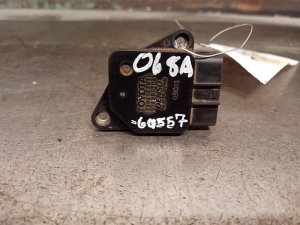
Est. part cost: $10-$50 for hoses, $50-$150 for intake gaskets - Dirty or Faulty Mass Airflow (MAF) Sensor 🟡 Medium Probability → Shop Fuel Injection Air Flow Meter The MAF sensor's delicate wires can become contaminated with oil and dirt over time, causing it to send inaccurate (lower) airflow readings to the ECU.
How to confirm: A common diagnostic step is to carefully remove the MAF sensor and clean it with a dedicated MAF sensor cleaner spray. 🎬 Watch: Simple steps to clean your Lexus MAF sensor Do not touch the sensor wires or use other chemicals like brake cleaner. If cleaning provides a temporary fix but the code returns, the sensor may be failing.
Typical fix: Clean the MAF sensor. If cleaning does not resolve the issue, replace the sensor with a high-quality unit, preferably from the original equipment manufacturer, Denso.
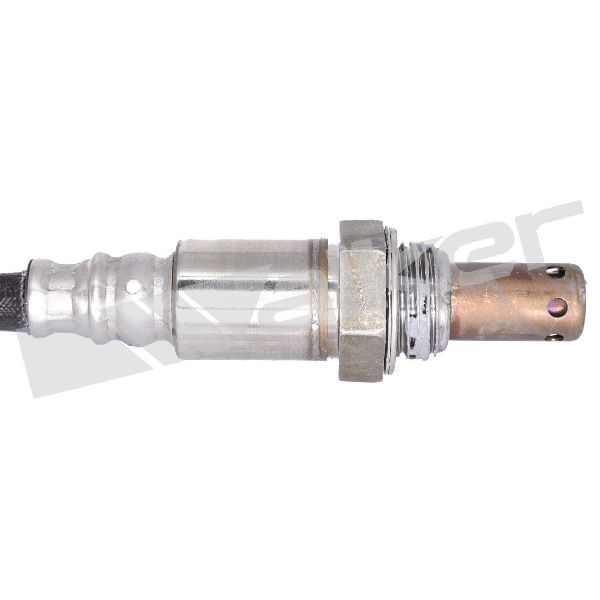
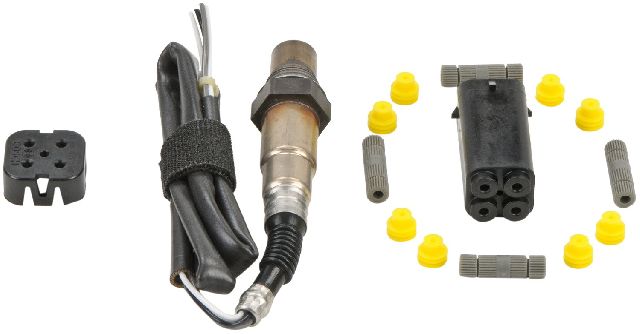
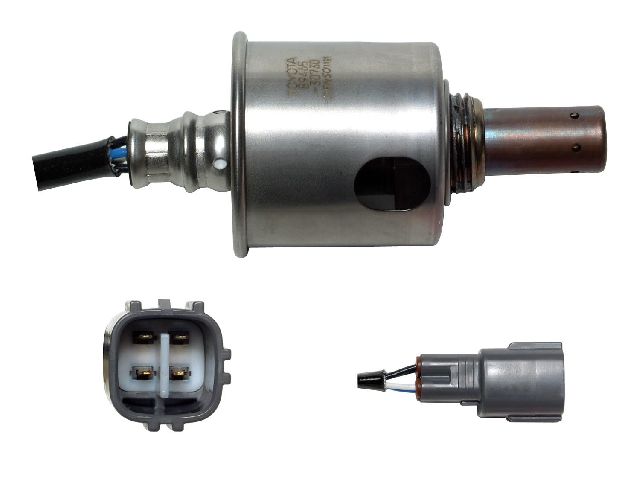
Est. part cost: $10 for cleaner, $80-$150 for a new sensor - Failing Air/Fuel Ratio Sensor (Bank 1, Sensor 1) ⚪ Low Probability → Shop Oxygen Sensor This is the primary oxygen sensor for Bank 1. While durable, these sensors can become slow to respond with age, leading to incorrect fuel trim adjustments. It's often replaced unnecessarily when the real cause is a vacuum leak.
How to confirm: This is best diagnosed with a scan tool that can graph the sensor's voltage. A healthy sensor will show rapid fluctuations. A slow or stuck reading indicates a problem. This should only be considered after ruling out vacuum leaks and MAF issues.
Typical fix: Replace the Bank 1, Sensor 1 Air/Fuel Ratio sensor. Accessing this sensor on the passenger side (rear bank) of the GS450h can be challenging and may require a special O2 sensor socket. 🎬 Watch: How to replace a Lexus Air/Fuel ratio sensor
Est. part cost: $150-$250
Rare But Worth Checking
- Low Fuel Pressure: A weak fuel pump or clogged fuel filter can cause a lean condition, but this would typically affect both engine banks and throw a P0174 code as well. A user on ClubLexus replaced their fuel filter as part of a wide-ranging diagnostic effort for P0171/P0174.
- Clogged Fuel Injectors: → Shop Fuel Injector While possible, clogged injectors on the 2GR-FSE engine are less common and would usually be accompanied by misfire codes for specific cylinders.
- Exhaust Leak: A crack or leak in the exhaust manifold or pipe before the Bank 1 A/F sensor can draw in outside air, causing the sensor to incorrectly report a lean condition to the ECU.
Diagnosis Steps
- Read the code with an OBD-II scanner and check for any other pending or active codes, especially P0174.
- Perform a thorough visual inspection of the engine bay. Look for any obviously cracked, disconnected, or brittle vacuum hoses, especially the PCV hose and the main intake air duct between the air filter and throttle body.
- With the engine running, listen carefully for any hissing sounds that would indicate a vacuum leak.
- If no obvious leaks are found, remove and clean the Mass Airflow (MAF) sensor using a dedicated MAF sensor cleaner. Allow it to dry completely before reinstalling.
- Clear the codes and drive the vehicle to see if the code returns. Note the driving conditions (e.g., idle, highway speed) if it does. One owner reported the light always came on at highway speeds between 40-60 mph.
- If the code persists, use a scan tool with live data to monitor Short Term (STFT) and Long Term (LTFT) Fuel Trims for Bank 1. Consistently high positive LTFT numbers (e.g., >15%) confirm a lean condition.
- The next step for a persistent lean code is a smoke test to definitively locate any hard-to-see vacuum leaks from components like intake manifold gaskets.
- If no vacuum leaks are found, further diagnosis would involve testing the Air/Fuel ratio sensor and checking fuel pressure, which may require professional assistance.
Parts You'll Likely Need
- PCV Hose
(OEM #12261-31060)— This hose is a very common failure point due to heat and age, causing a significant vacuum leak that triggers P0171.
Trusted brands: Lexus (OEM)
OEM price range: $20-$40
Aftermarket price range: $10-$20 - Mass Airflow (MAF) Sensor Cleaner — Cleaning a dirty MAF sensor is a low-cost, high-impact diagnostic step and often the required fix.
Trusted brands: CRC, Liqui Moly
Aftermarket price range: $10-$15 - Air/Fuel Ratio Sensor (Bank 1, Sensor 1)
(OEM #89467-30010)— If vacuum leaks and MAF issues are ruled out, a lazy or failing A/F sensor is the next likely culprit. Using the OEM Denso part (Denso 234-9051 is a common cross-reference) is highly recommended for compatibility.
Trusted brands: Denso
OEM price range: $200-$250
Aftermarket price range: $150-$200
Related Codes That Often Appear With This One
- P0174 — This code is for 'System Too Lean (Bank 2)'. If both P0171 and P0174 are present, it strongly suggests a problem that affects the entire engine, such as a major vacuum leak at the intake manifold, a faulty MAF sensor, or a fuel delivery issue.
Technical Service Bulletins (TSBs) & Recalls
- While no TSB directly targets P0171 on this specific model year, related TSBs for other Lexus vehicles with 2GR engines (like L-SB-0005-23) point to fuel pressure issues as a potential cause, though vacuum leaks remain more common for the 2007-2011 GS450h.
- Manufacturer TSB Bulletin #LSB000523 notes that certain Lexus vehicles may exhibit a MIL ON condition with DTC P0171 and/or P0174, which may be associated with a low fuel rail pressure condition (DTC P0087).
Platform-Specific Known Issues
- Aftermarket Air Intakes: → Shop Engine Air Intake Resonator Modifications like cold air intakes can be a source of P0171/P0174 codes if not installed correctly or if they include unmetered breather filters for the crankcase ventilation system, which effectively creates a large vacuum leak.
Mechanic-Grade Diagnostic Values
- Air/Fuel Ratio Sensor (Bank 1 Sensor 1) Voltage — expected: Fluctuating between 2.8V and 3.8V at idle on a scan tool. A service manual suggests a normal range is between 3.1V and 3.5V.. Failure: Voltage consistently greater than 3.8V indicates a lean condition; consistently less than 2.8V indicates a rich condition. A slow or non-fluctuating reading points to a faulty sensor.
- Mass Air Flow (MAF) Sensor Reading (Live Data) — expected: Approximately 2 to 7 g/s at idle, and 15 to 25 g/s at 2500 RPM (values are for a similar 2GR engine and should be used as a general guide).. Failure: Readings significantly lower than expected for a given RPM suggest a dirty sensor or a vacuum leak after the sensor. Readings that do not increase smoothly with engine speed indicate a failing sensor.
- Air/Fuel Ratio Sensor Heater Resistance — expected: 1.8 to 3.4 Ω at 68°F (20°C) between terminals HA1A and +B of the sensor connector.. Failure: Resistance outside of this range indicates a faulty heater element within the sensor, which can cause slow sensor warm-up and incorrect readings before the engine is fully warm.
- Total Fuel Trim (Short Term + Long Term) — expected: The sum of STFT and LTFT should be between -30% and +33%. Ideally, the Long Term Fuel Trim should be close to 1-2%.. Failure: A sustained total fuel trim value above +33% will trigger the P0171 code. This confirms the ECU is adding a large amount of fuel to compensate for a perceived lean condition.
Scan Tool Commands That Help
- Lexus Techstream: Active Test: Control the Injection Volume for A/F Sensor — This test is crucial for confirming if the A/F sensor is functioning correctly. It allows a technician to manually command the ECU to add (+25%) or subtract (-12.5%) fuel and watch the sensor's voltage response on the live data graph. If the voltage changes as expected (e.g., drops below 3.0V on enrichment, rises above 3.35V on leaning), the sensor is likely good and the problem is elsewhere. If the sensor's voltage does not respond, the sensor itself is likely faulty.
- Lexus Techstream: Active Test: Fuel Pump / SPD — Use this to verify the fuel pump can be activated on command. This helps rule out a completely dead fuel pump or relay issue, though it does not test for correct fuel pressure under load.
Wiring & Ground Locations
- Engine Ground Strap — There is a primary ground line from the lower firewall to the back of the engine block, with ground points often attached to the back of both cylinder heads.. The A/F ratio sensor, MAF sensor, and other engine sensors rely on a clean ground path to the chassis. A corroded or loose main engine ground can cause erratic voltage readings from these sensors, leading the ECU to misinterpret the air-fuel mixture and potentially set a P0171 code.
Real Owner Repair Stories
- ClubLexus user '99GS4' (1999 Lexus GS400 (similar P0171 diagnostic principles)) — Recurring P0171 code.
❌ Tried (didn't work) MAF cleaning (worked for a year, then failed), MAF replacement (rebuilt), Fixing a broken air box nipple, MAF replacement (new OEM), Throttle body cleaning, Replacing both front O2 (A/F) sensors
✅ What actually fixed it After multiple attempts, the owner did one last check for vacuum leaks using a piece of pipe as a stethoscope and found a hissing sound. The PCV hose was split on the bottom, out of sight. A temporary fix with electrical tape and a clamp made the check engine light go out immediately. The final fix was replacing the cracked PCV hose. - ClubLexus user 'FrustratedGS' (2007 Lexus GS450h) — P0171 & P0174 codes, poor acceleration, slight hesitation. CEL appeared on the highway at 40-60 mph.
❌ Tried (didn't work) Replaced air filter, Cleaned MAF sensor & replaced O-ring, Replaced leaking PCV valve hose, Cleaned fuel injectors, catalytic converter, throttle body, Replaced fuel filter, Replaced gas cap (OEM), Replaced purge valve (fixed a separate EVAP code), Performed a smoke test which found no leaks
✅ What actually fixed it The user's post is a detailed request for help and does not contain a final resolution. It is included here as a prime example of how P0171 can be elusive, persisting even after a smoke test and replacement of many common-fail parts. - NHTSA ODI #10316101 — An owner reported a MIL lamp illumination on a Lexus vehicle involving trouble codes P0171/P0174, referencing service bulletin 01905 regarding engine and engine cooling components.
"I Checked Everything" — The Actual Cause
- A ClubLexus owner with a 2007 GS450h reported having both P0171 and P0174 codes and performed a smoke test which revealed no leaks. Despite this, the codes persisted, highlighting that smoke tests are not always foolproof or that the leak may only appear under specific conditions (e.g., engine torque/flexing) not present during a static test. The owner had already replaced the PCV hose, cleaned the MAF, and replaced the fuel filter without success.
When the Usual Fixes Don't Work
- While cleaning the MAF sensor and replacing the PCV hose are the most common fixes, there are numerous documented cases on forums where these steps do not solve the problem. One 2007 GS450h owner replaced the PCV hose, cleaned the MAF, replaced the fuel filter, and even had a smoke test come back clean, yet the P0171/P0174 codes continued to return, specifically at highway speeds. This demonstrates that in some cases, the root cause can be more elusive and may not be a simple vacuum leak or dirty MAF.
OEM Part Supersession History
Unknown→12261-31060— Standard part lifecycle updates.
Heads up: This PCV hose (Ventilation Hose) is listed as compatible with the 2007-2011 GS450h.Unknown→89467-30010— Standard part lifecycle updates.
Heads up: This Air/Fuel Ratio Sensor is listed for the 2007-2011 GS450h. It fits both banks (Bank 1 and Bank 2, Sensor 1). The Denso aftermarket equivalent is often cited as 234-9051.
Model Year Variations Within This Range
- 2008+: For the 2008 model year, the GS line received a minor facelift including slight exterior revisions and interior adjustments. The navigation system was also updated from 2007 onwards. These changes are not known to directly affect the cause or diagnosis of a P0171 code.
Diagnostic Flowchart
Other Known Issues on This Vehicle
Issues unrelated to this code that are worth knowing about as an owner of this generation:
- Cracked / Sticky / Melting Dashboard and Interior Panels 🟠 Medium — Very common, especially in climates with high heat and humidity. Can occur at any mileage. (Ref: Lexus Customer Support Program ZLZ (supersedes ZLD) and TSB L-SB-0011-15 were issued to address this.)
- Water Pump Failure 🔴 High — Common failure item, often first noticed by a coolant leak at the front of the engine or a whining/rattling noise. Can lead to overheating if not addressed.
- Inverter Cooling Pump Failure 🔴 High — Less common than water pump failure, but a critical issue. Can cause the hybrid system to shut down and trigger code P0A93. This is a known issue on other Toyota/Lexus hybrids of the era.
- Hybrid Battery Degradation/Failure 🔴 High — A potential high-cost repair on any aging hybrid vehicle. Failure rate increases significantly after 10-15 years or 150,000+ miles.
- Intake Valve Carbon Buildup 🟠 Medium — An inherent issue with the 2GR-FSE's direct injection (D-4S) system. Over time, carbon deposits can build up on the intake valves, potentially causing rough idle or misfires. Typically becomes a concern at higher mileage (80,000+ miles).
Used vs. New Parts: Buying Guide for This Vehicle
When a used part is the smart pick: For this repair, used parts are generally not recommended for the key components. Rubber hoses (like the PCV hose) should always be purchased new as used ones will have the same age-related brittleness. Electronic sensors like the MAF and A/F Ratio sensor are high-risk used purchases, as their remaining lifespan is unknown and they are often the reason a donor car was junked.
Donor-vehicle mileage cap: roughly under 50000 miles for the part to have meaningful remaining life.
What to inspect on the donor part:
- For any used electronic part, verify the seller offers a warranty and a clear return policy.
- Ask for the VIN of the donor car to check its history for accidents or flood damage.
- Avoid parts from regions with heavy road salt usage (Rust Belt), as corrosion can damage connectors and sensor bodies.
OEM-only on this vehicle (don't cheap out):
- Air/Fuel Ratio Sensor: While Denso is the OEM and a reliable aftermarket choice, cheap unbranded sensors are notorious for failing quickly or being dead-on-arrival. It is safest to stick with OEM Lexus or Denso branded parts.
Aftermarket brands forum-validated for this vehicle:
- Denso (for Air/Fuel Ratio Sensor and MAF Sensor)
- CRC (for MAF Sensor Cleaner)
Brands owners have reported issues with on this vehicle:
- Unbranded or no-name electronic sensors from online marketplaces. Forum users consistently report issues with cheap sensors causing more diagnostic headaches than they solve.
Real Owner Stories
Aggregated from forums and TSBs cited above. Mileages and costs reflect what owners reported in those sources.
2007 Lexus GS450h 2GR-FSE
Symptoms: Check engine light came on at highway speeds between 40-60 mph; owner performed extensive troubleshooting and part replacements.
What fixed it: The owner's journey involved a smoke test to locate hard-to-see vacuum leaks from components like intake manifold gaskets.
Source hint: ClubLexus.com: A detailed thread titled 'Need help diagnosing P0171 & P0174 codes in my 2007 Lexus GS450h'
Lexus IS250 (2GR-FSE platform mate)
Symptoms: P0171 and P0174 lean codes present after installing modifications.
What fixed it: Reverting to the stock airbox after discovering an aftermarket air intake with an open breather was creating an unmetered air leak.
Source hint: ClubLexus.com: In a thread titled 'P0171 P0174 Solved'
Lexus IS (2GR-FSE platform mate)
Symptoms: Persistent P0171 code.
What fixed it: Discovered a broken vacuum nipple on the plastic air intake box itself.
Source hint: ClubLexus.com: An older thread 'P0171 Code Cleared!! Problem Solved!!!'
Related OBD-II Codes
Frequently Asked Questions
Does TSB L-SB-0005-23 apply to my 2007-2011 GS450h for the P0171 code?
Is there a specific vacuum hose on the 2GR-FSE engine known to cause this lean condition?
Can my aftermarket cold air intake cause the P0171 code on my GS450h?
Why are my VSC and TRAC lights on along with the Check Engine Light for P0171?
Should I replace my Bank 1 Air/Fuel Ratio sensor immediately to fix P0171?
Is there a known issue with the dashboard in my 2007-2011 GS450h?
Helpful Videos
Used OEM Parts in Stock
New Aftermarket Parts Available


The information in this article is provided for general reference and educational purposes only. Vehicle specifications, procedures, and part compatibility can vary by production date, trim level, and region. Always consult your vehicle's factory service manual and verify part numbers before purchasing or performing repairs. Safety-critical components such as airbags, seat belts, and braking systems should be installed by a qualified professional.
- Lexus GS450h:
- 🧭 Diagnostic Flowchart
- 🎬 Helpful Videos
- 🛍️ Shop This Part
- What's Unique About the 2007-2011 Lexus GS450h
- Symptoms You May Notice
- Most Likely Causes
- Rare But Worth Checking
- Diagnosis Steps
- Parts You'll Likely Need
- Related Codes That Often Appear With This One
- Technical Service Bulletins (TSBs) & Recalls
- Platform-Specific Known Issues
- Mechanic-Grade Diagnostic Values
- Scan Tool Commands That Help
- Wiring & Ground Locations
- Real Owner Repair Stories
- "I Checked Everything" — The Actual Cause
- When the Usual Fixes Don't Work
- OEM Part Supersession History
- Model Year Variations Within This Range
- Other Known Issues on This Vehicle
- Used vs. New Parts: Buying Guide for This Vehicle
- Real Owner Stories
- 2007 Lexus GS450h 2GR-FSE
- Lexus IS250 (2GR-FSE platform mate)
- Lexus IS (2GR-FSE platform mate)
- Related OBD-II Codes
- Frequently Asked Questions
- 🎟️ Get 5% Off