

P0171 on 2018-2020 Lexus LS500: System Too Lean Causes and Fixes
Code P0171 on a 2018-2020 Lexus LS500 most often points to a failing high-pressure fuel pump, a known issue documented in Lexus TSB L-SB-0005-23. This issue is often accompanied by code P0087 (Fuel Rail Pressure Too Low) and may cause a hard start condition, hesitation, and reduced power.
- For a 2018-2020 Lexus LS500, P0171 is very often linked to a failing high-pressure fuel pump.
- Always check for code P0087 (Fuel Rail Pressure Too Low) alongside P0171, as this combination strongly points to the fuel pump issue described in TSB LSB000523.
- If no fuel pressure codes are present, follow standard diagnostic procedures for a lean code: check for vacuum leaks and clean the MAF sensor before considering other parts.
- Do not immediately replace the oxygen (A/F) sensor; it is usually just reporting the problem correctly.
What's Unique About the 2018-2020 Lexus LS500
The 2018-2020 Lexus LS500 is equipped with a sophisticated 3.4L twin-turbo V6 engine (V35A-FTS) that uses both direct and port fuel injection (D-4ST). While many vehicles can get a P0171 code from a simple vacuum leak, this specific Lexus model has a known weakness in its fuel delivery system. A manufacturer Technical Service Bulletin (L-SB-0005-23) directly links a lean condition (P0171) with low fuel system pressure (P0087), pointing to a potentially faulty high-pressure fuel pump 🎬 Watch: How these fuel pump failures cause lean codes. as a primary cause. This engine has two high-pressure fuel pumps, one for each cylinder bank, driven by the exhaust camshafts.
Diagnostic Flowchart
Tap your situation to follow the diagnostic path that matches what you're seeing on this vehicle.
Symptoms You May Notice
- Check Engine Light is on
- Hard starting or long crank times
- Engine hesitation or stumbling on acceleration
- Rough idle
- Reduced engine power or sluggishness
- Poor fuel economy
- Engine stalling
- Replacing the oxygen (A/F) sensor first. While the sensor reports the problem, it's often not the cause. The sensor is usually doing its job correctly by detecting the lean mixture created by another faulty part.
Most Likely Causes
- Failing High-Pressure Fuel Pump 🔴 High Probability → Shop Fuel Pump This is a documented issue for this platform. Lexus issued TSB L-SB-0005-23 for a hard start and/or MIL ON condition with codes P0171/P0174 and P0087, which points to a fuel pressure problem. The V35A-FTS engine uses two high-pressure pumps, and a failure in one can cause this bank-specific code.
How to confirm: Scan for code P0087 (Fuel Rail / System Pressure – Too Low), which strongly indicates this issue. Use a high-end scan tool like Toyota's Techstream to monitor the high-pressure fuel pump target vs. actual pressure. The target pressure should be between 4 to 13 MPa (580 to 1885 PSI) depending on load, and a significant drop below the target confirms the issue. The full high-pressure range for the V35A-FTS is 2.4-20 MPa.
Typical fix: Replacement of the faulty high-pressure fuel pump for the corresponding bank.
Est. part cost: $400-$1000+ - Dirty or Faulty Mass Airflow (MAF) Sensor 🟡 Medium Probability → Shop Fuel Injection Air Flow Meter MAF sensors are sensitive components that can become contaminated with dirt, oil, or debris over time, causing them to under-report airflow to the ECM and leading to a lean mixture.
How to confirm: Remove the sensor and inspect it for any contamination on the delicate wires. Cleaning it with a dedicated MAF sensor cleaner is a common first diagnostic step. If cleaning doesn't resolve the issue, monitoring its readings with a scan tool can confirm if it's faulty. A faulty MAF often triggers codes for both banks (P0171 and P0174).
Typical fix: Clean the MAF sensor. If the problem persists, replace the sensor.
Est. part cost: $150-$250 - Vacuum Leak 🟡 Medium Probability Vacuum leaks from cracked hoses, a faulty PCV valve, or leaking intake gaskets allow unmetered air to enter the engine, disrupting the air-fuel ratio. This is a very common cause for lean codes on most vehicles.
How to confirm: Visually inspect all vacuum lines and the intake air duct for cracks or loose connections. The most effective method is to have a mechanic perform a smoke test, which forces smoke into the intake system to reveal the location of any hard-to-see leaks.
Typical fix: Replace the cracked hose, leaking gasket, or faulty component (e.g., PCV valve).
Est. part cost: $10-$200
Rare But Worth Checking
- Failing Air/Fuel Ratio Sensor (Front Oxygen Sensor): → Shop Oxygen Sensor A lazy or failing sensor can send incorrect data to the ECM, making it think the engine is running lean when it isn't. This is less common than the causes above but should be considered if all else is ruled out.
- Clogged Fuel Injectors: → Shop Fuel Injector If one or more injectors on Bank 1 are restricted, they won't deliver enough fuel, leading to a lean condition on that bank. This can happen due to fuel contamination.
- Exhaust Leak: A leak in the exhaust manifold or pipe before the A/F sensor can draw in outside air, causing the sensor to detect excess oxygen and incorrectly report a lean condition.
Diagnosis Steps
- Read all fault codes with an OBD-II scanner. The presence of P0174 and/or P0087 is critical for diagnosis.
- If P0087 is present, immediately suspect the high-pressure fuel pump per TSB L-SB-0005-23. Proceed with fuel pressure testing using a professional scan tool like Techstream, comparing target vs. actual high fuel pressure.
- If only P0171 (or P0171/P0174) is present, check the long-term and short-term fuel trim values. High positive numbers (e.g., LTFT + STFT > 20%) confirm the lean condition.
- Perform a thorough visual inspection of the engine bay. Look for cracked, disconnected, or brittle vacuum hoses, especially around the PCV system and intake manifold.
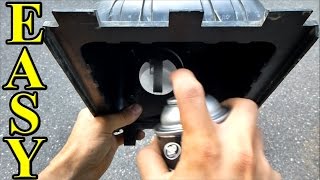
- Carefully remove and inspect the Mass Airflow (MAF) sensor. Clean it with a dedicated MAF sensor cleaner and reinstall. Do not touch the delicate sensor wires.
- If a visual inspection reveals no obvious leaks, perform a smoke test to identify any hard-to-see vacuum leaks in the intake system. This is the most reliable way to find unmetered air leaks.
- If all other causes are ruled out, analyze the live data from the Bank 1 Air/Fuel Ratio sensor to check for slow response or incorrect readings, which would indicate a faulty sensor.
Parts You'll Likely Need
- High-Pressure Fuel Pump
(OEM #23101-38041 (Verify with VIN))— This is a known failure point on the V35A-FTS engine that directly causes lean codes, as documented in a TSB.
Trusted brands: Lexus (OEM)
OEM price range: $600-$1200
Aftermarket price range: $400-$800 - Mass Airflow (MAF) Sensor
(OEM #22204-75040)— A dirty or faulty MAF sensor is a common cause of lean codes on many vehicles, including Lexus models.
Trusted brands: Denso, Lexus (OEM)
OEM price range: $150-$250
Aftermarket price range: $50-$150 - Vacuum Hose — Rubber hoses can crack and degrade over time, creating vacuum leaks that are a primary cause of lean conditions.
Trusted brands: Lexus (OEM)
OEM price range: $20-$100
Aftermarket price range: $10-$50
Related Codes That Often Appear With This One
- P0174 — This is the 'System Too Lean' code for Bank 2. If both P0171 and P0174 are present, it strongly suggests a problem affecting the entire engine, such as the MAF sensor, a major vacuum leak, or the low-pressure in-tank fuel pump.
- P0087 — This code means 'Fuel Rail / System Pressure – Too Low'. On the LS500, it is a major clue pointing directly to a failing high-pressure fuel pump, as documented in TSB L-SB-0005-23.
Technical Service Bulletins (TSBs) & Recalls
- L-SB-0005-23: Addresses a potential hard start and/or MIL ON with DTCs P0171/P0174 (System Too Lean) and P0087 (Fuel Rail/System Pressure – Too Low), indicating a fuel pump-related issue.
Platform-Specific Known Issues
- Lexus Technical Service Bulletin L-SB-0005-23 (NHTSA ID 10232019) specifically addresses an issue on 2018-2020 LS500 models (among others) where a hard start condition and/or Check Engine Light with codes P0171, P0174, and/or P0087 may be present. The bulletin points to a fuel pressure issue and outlines the procedure for diagnosing and replacing the fuel pump.
Mechanic-Grade Diagnostic Values
- Long-Term Fuel Trim (LTFT) + Short-Term Fuel Trim (STFT) — expected: Close to 0%, ideally within +/- 10%.. Failure: Sustained positive values where the sum of LTFT and STFT is greater than +20% to +25% indicates the ECM is adding significant fuel to compensate for a lean condition.
- High-Pressure Fuel System (Direct Injection) — expected: 2.4 to 20 MPa (348 to 2900 PSI), varying with engine load and RPM.. Failure: Actual pressure significantly below the target pressure commanded by the ECM, especially under load. This often triggers P0087 alongside P0171.
- Air/Fuel Ratio Sensor (A/F Sensor, Bank 1 Sensor 1) Voltage — expected: During a Techstream Active Test for lean/rich response, voltage should alternate correctly. Forcing a lean condition should result in voltage > 3.4V, and forcing rich should result in voltage < 3.1V.. Failure: A sensor that is slow to respond or stuck at a specific voltage regardless of the active test command points to a faulty sensor.
Scan Tool Commands That Help
- Techstream: Active Test: Control the Injection Volume — This test is used to verify the response of the Air/Fuel ratio sensors. By commanding the system to inject more or less fuel, a technician can observe the A/F sensor's voltage change to confirm it is reading the mixture correctly and is not 'lazy' or failed.
- Techstream: Active Test: Control the Injection Mode — For the D-4ST system, this allows a technician to switch between direct injection, port injection, or combined modes. This can help isolate if a lean issue is related to a specific set of injectors (e.g., a clogged direct injector).
- Techstream: Data List: Fuel Pressure — Essential for diagnosing P0171 when accompanied by P0087. This allows for monitoring of both the target and actual fuel rail pressure from the high-pressure pump, directly confirming a fuel delivery shortfall as indicated in TSB L-SB-0005-23.
Real Owner Repair Stories
- ClubLexus user 'Zannn' (Lexus IS250 (different model, but demonstrates the HPFP failure pattern with P0087)) — Check Engine Light with traction light on, car in failsafe/limp mode, would not exceed 60km/h.
❌ Tried (didn't work) Replacing the in-tank fuel filter, Replacing the fuel rail pressure sensor (twice)
✅ What actually fixed it Replacement of the high-pressure fuel pump (HPFP) on the engine resolved the P0087 code and drivability issues. - ClubLexus Forum Post (2008 Lexus IS F (2UR-GSE engine, but illustrates a critical HPFP installation error)) — Car started jerking, threw P0087 for Low Fuel Pressure. Idled fine but would jerk and hesitate above ~2,500 RPM.
❌ Tried (didn't work) Replacing the low-pressure in-tank fuel pump.
✅ What actually fixed it The root cause was an improperly installed passenger-side High-Pressure Fuel Pump (HPFP). The gasket was missing, causing the cam lobe to destroy the pump's follower, resulting in no pump action. Correct installation with a new pump and gasket fixed the issue.
OEM Part Supersession History
23101-F0010→23101-25040— Unknown, likely an internal revision for reliability or manufacturing improvement.
Heads up: Part 23101-25040 is listed for many 2.5L Toyota/Lexus engines but is shown as a supersession for a V35A-FTS related part number in some aftermarket catalogs. Always verify the correct HPFP part number with the vehicle's VIN via an official Lexus parts catalog before ordering.
Helpful Videos
Used OEM Parts in Stock
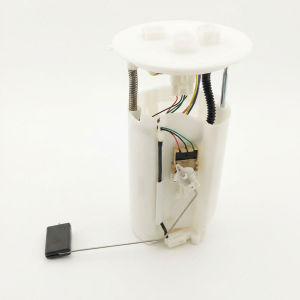
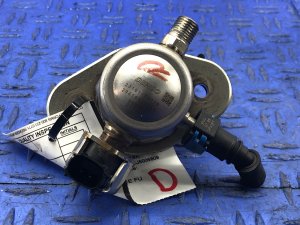
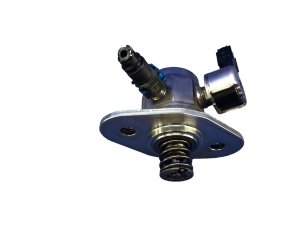
New Aftermarket Parts Available
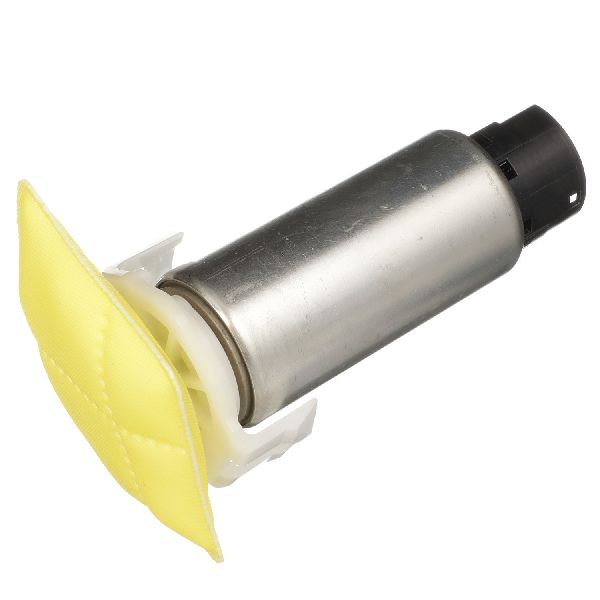


The information in this article is provided for general reference and educational purposes only. Vehicle specifications, procedures, and part compatibility can vary by production date, trim level, and region. Always consult your vehicle's factory service manual and verify part numbers before purchasing or performing repairs. Safety-critical components such as airbags, seat belts, and braking systems should be installed by a qualified professional.
- Lexus LS500:
- 🧭 Diagnostic Flowchart
- 🎬 Helpful Videos
- 🛍️ Shop This Part
- What's Unique About the 2018-2020 Lexus LS500
- Symptoms You May Notice
- Most Likely Causes
- Rare But Worth Checking
- Diagnosis Steps
- Parts You'll Likely Need
- Related Codes That Often Appear With This One
- Technical Service Bulletins (TSBs) & Recalls
- Platform-Specific Known Issues
- Mechanic-Grade Diagnostic Values
- Scan Tool Commands That Help
- Real Owner Repair Stories
- OEM Part Supersession History
- 🎟️ Get 5% Off