

P0171 on 2014-2016 Lexus LX570: System Too Lean Causes and Fixes
On a 2014-2016 Lexus LX570, code P0171 is most often caused by a dirty Mass Airflow (MAF) sensor or a vacuum leak from a failed intake manifold gasket. Cleaning the MAF sensor is a simple first step, while gasket replacement is more involved. If accompanied by P0087, a fuel delivery issue is likely, per a known TSB.
- P0171 means the passenger side of your engine is getting too much air or not enough fuel.
- Start your diagnosis by cleaning the Mass Airflow (MAF) sensor; it's easy, cheap, and a very common fix.
- If cleaning the MAF doesn't work, the next most likely cause is a vacuum leak from a bad intake manifold gasket. A smoke test is the best way to confirm this.
- Pay attention to other codes. If you also have P0174 (lean on both banks), the problem is likely the MAF sensor or fuel delivery. If you have P0087, suspect a fuel pump issue as noted in a Lexus TSB.
What's Unique About the 2014-2016 Lexus LX570
The 3UR-FE engine in the LX570 is generally very reliable, but like many V8s, it is susceptible to vacuum leaks from aging intake manifold gaskets. Additionally, a Technical Service Bulletin (TSB L-SB-0052-12, and a similar Toyota TSB #LSB000523) issued for this model year range specifically links lean codes P0171 and P0174 with a low fuel pressure code (P0087), pointing towards potential fuel pump or delivery issues that might not be as common on other vehicles. This suggests that checking fuel pressure is a more critical diagnostic step for the LX570 than it might be for other cars with a P0171 code, especially if the vehicle exhibits hard starting.
Diagnostic Flowchart
Tap your situation to follow the diagnostic path that matches what you're seeing on this vehicle.
Generation note: The 2014-2016 model years are all part of the J200 generation, but the 2016 model year received a significant facelift with updated styling, technology, and a new 8-speed automatic transmission instead of the previous 6-speed. However, the core powertrain, the 5.7L 3UR-FE V8 engine, remained the same, so the causes and fixes for P0171 are consistent across this year range and also apply to its platform mates like the Toyota Tundra and Land Cruiser with the same engine.
Symptoms You May Notice
- Check Engine Light is on
- Rough or unstable idle, especially when warm or heat-soaked.
- Hesitation or lack of power during acceleration.
- Engine stalling, particularly at stops or during extended idling.
- Reduced fuel economy.
- A hissing or whistling sound from the engine bay, indicating a vacuum leak.
- Rotten egg smell from the exhaust under heavy acceleration, indicating the catalytic converter is struggling.
- Replacing the oxygen sensor (A/F sensor) without first checking for vacuum leaks or cleaning the MAF sensor. Vacuum leaks and dirty MAF sensors are more common and cheaper to fix.
- Assuming a fuel pump is bad without checking for simpler vacuum leaks first. Fuel trims can help differentiate: vacuum leaks typically cause high trims at idle that improve with RPM, while fuel delivery issues cause high trims across the RPM range.
Most Likely Causes
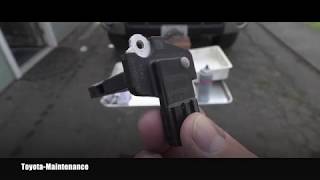
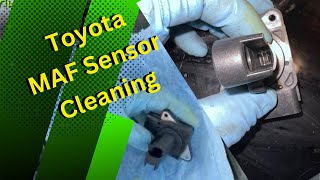
- Dirty or Faulty Mass Airflow (MAF) Sensor 🔴 High Probability → Shop Fuel Injection Air Flow Meter The MAF sensor is located in the intake tract after the air filter and can become contaminated with dirt and oil over time, causing it to under-report the amount of air entering the engine. This is a very common first step for owners on forums like ClubLexus and IH8MUD.
How to confirm: Remove the sensor and visually inspect the small wires for contamination. Often, cleaning it with a dedicated MAF sensor cleaner and clearing the code is enough to see if the problem is resolved. A dirty MAF will cause high positive fuel trims that may decrease as RPMs increase. A healthy MAF sensor on a 5.7L engine should read approximately 5.6 g/s at idle.
Typical fix: Clean the sensor with a specialized MAF sensor cleaner. If cleaning does not work, the sensor must be replaced. Denso is the OEM.
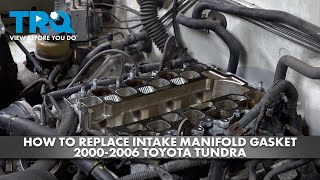
Est. part cost: $10-$15 for cleaner, $70-$150 for a new sensor. - Vacuum Leak (Intake Manifold Gaskets) 🔴 High Probability The intake manifold gaskets are made of rubber and can become hard and brittle over time due to heat cycles, causing unmetered air to leak into the engine after the MAF sensor. This is a well-documented issue on the 3UR-FE engine family.
How to confirm: A smoke test is the most effective way to find a vacuum leak. A technician will fill the intake system with smoke and look for where it escapes. A common DIY method is to carefully spray carb cleaner or brake cleaner around the intake manifold gasket area with the engine running; a change in idle RPM indicates a leak.
Typical fix: Replace the intake manifold gaskets. This is a more involved job that requires removing the intake manifold. 🎬 See this walkthrough for removing the 3UR-FE intake manifold
Est. part cost: $20-$60 for a set of gaskets. - Failing Air/Fuel Ratio Sensor (Bank 1, Sensor 1) 🟡 Medium Probability → Shop Oxygen Sensor This sensor, also known as an upstream oxygen sensor, is the primary sensor the ECM uses to determine the air-fuel mixture. It can degrade over time and send inaccurate (lean) readings to the computer.
How to confirm: Use a scan tool to monitor the voltage of the Bank 1, Sensor 1. A lazy or non-responsive sensor is a sign of failure. It should fluctuate rapidly.
Typical fix: Replace the Bank 1, Sensor 1 Air/Fuel Ratio sensor. Denso is the original equipment manufacturer (OEM).
Est. part cost: $100-$200 - Low Fuel Pressure ⚪ Low Probability As cited in Lexus TSB #LSB000523 and Toyota TSB L-SB-0052-12, lean codes can be associated with low fuel system pressure, particularly manifesting as a hard start condition. This could be due to a weak fuel pump, a clogged in-tank fuel filter/strainer, or a failing fuel pump control module.
How to confirm: Check for code P0087. Perform a fuel pressure test using a fuel pressure gauge connected to the fuel rail to see if it meets factory specifications. Monitor fuel trims; if they are high at idle and under load, it points more towards a fuel delivery issue than a vacuum leak.
Typical fix: Replace the failing component, which could be the fuel pump assembly or fuel filter. In some cases, the issue is resolved by replacing the fuel pump control module.
Est. part cost: $200-$500 for a fuel pump assembly.
Rare But Worth Checking
- Cracked or Disconnected PCV Hose/Faulty PCV Valve: → Shop PCV Valve The Positive Crankcase Ventilation (PCV) system uses vacuum to pull gases from the crankcase. A crack in the hose or a stuck-open PCV valve can create a significant vacuum leak. On the 3UR-FE, the PCV valve is relatively easy to access and replace, making it a worthwhile check.
- Exhaust Leak Before the A/F Sensor: A crack in the exhaust manifold or a bad gasket before the first oxygen sensor can pull outside air into the exhaust stream, making the sensor incorrectly report a lean condition.
- Improperly Installed Aftermarket Air Intake: → Shop Engine Air Intake Resonator An aftermarket cold air intake that has an open breather port for the PCV system can introduce unmetered air, causing persistent P0171/P0174 codes. Reverting to the stock airbox often resolves this.
Diagnosis Steps
- Read all stored fault codes with an OBD-II scanner. Note if P0174 or P0087 are also present.
- Use the scanner to view live data, specifically the Short-Term Fuel Trim (STFT) and Long-Term Fuel Trim (LTFT) for both banks. Consistently high positive values (e.g., LTFT > 15-20%) on Bank 1 confirm the lean condition. Note if trims are high at idle but normalize at higher RPM (suggests vacuum leak) or if they remain high across the RPM range (suggests MAF or fuel delivery issue).
- Visually inspect the engine bay for obvious issues like disconnected vacuum hoses, a cracked air intake tube between the MAF and throttle body, or an unseated oil dipstick.
- Remove and inspect the Mass Airflow (MAF) sensor. Clean it with dedicated MAF sensor cleaner and reinstall. Clear codes and test drive to see if the code returns.
- If the code returns, perform a smoke test to check for vacuum leaks, paying close attention to the intake manifold gaskets and PCV hoses. Alternatively, carefully spray short bursts of flammable brake/carb cleaner around suspected leak points while monitoring STFT; a sharp drop in the trim value indicates the leak's location.
- If no vacuum leaks are found, test the fuel pressure to rule out a weak fuel pump or clogged filter, especially if code P0087 is present or if the vehicle has hard-start issues. Note that the 3UR-FE engine may not have a test port on the fuel rail, requiring a special adapter.
- If fuel pressure and intake are good, test the Bank 1 Air/Fuel Ratio sensor's operation via the scan tool's live data. A slow, lazy, or non-responsive sensor is likely faulty.
- As a final, less common check, inspect the exhaust manifold for cracks or leaks before the A/F sensor.
Parts You'll Likely Need
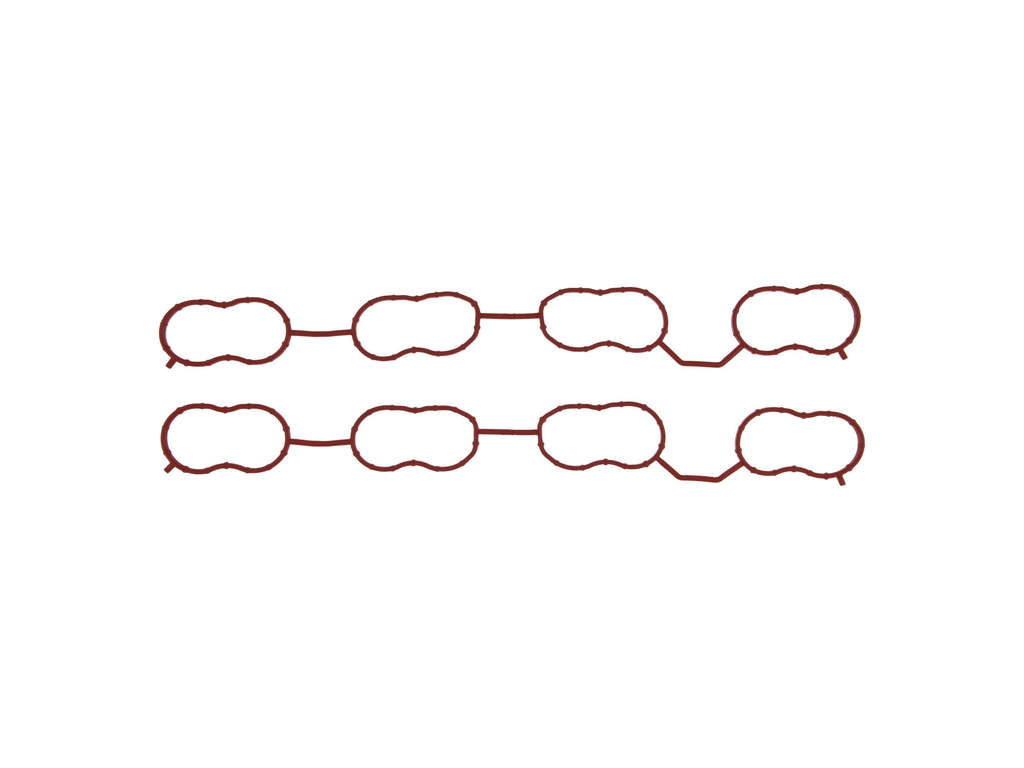
- Intake Manifold Gasket
(OEM #17171-38030)— These gaskets are a common failure point that causes vacuum leaks, a primary trigger for code P0171.
Trusted brands: Lexus (OEM), Fel-Pro, Mahle
OEM price range: $30-$50
Aftermarket price range: $20-$40 - Mass Airflow (MAF) Sensor Cleaner — Often, the MAF sensor is just dirty and cleaning it is a simple, inexpensive first step that can resolve the code.
Trusted brands: CRC, Liqui Moly
Aftermarket price range: $10-$15 - Air/Fuel Ratio Sensor (Bank 1, Sensor 1)
(OEM #89467-60140)— If vacuum leaks and MAF issues are ruled out, a lazy or failing A/F sensor is a likely cause. Denso is the OEM supplier.
Trusted brands: Denso (OEM), NGK, Bosch
OEM price range: $200-$280
Aftermarket price range: $100-$180
Related Codes That Often Appear With This One
- P0174 — This is the 'System Too Lean' code for Bank 2 (driver's side). When both P0171 and P0174 are present, it strongly suggests a problem that affects the entire engine, such as a faulty MAF sensor, a major vacuum leak at the intake plenum, or low fuel pressure.
- P0087 — As per TSB #LSB000523, this code for 'Fuel Rail / System Pressure – Too Low' can appear with P0171, indicating the lean condition is caused by inadequate fuel delivery.
- P0300-P0308 — These are cylinder misfire codes. A severe lean condition can prevent proper combustion, leading to misfires on one or more cylinders.
Technical Service Bulletins (TSBs) & Recalls
- LSB000523: Notes that a hard start and/or MIL ON with DTCs P0171/P0174 and P0087 may be present, suggesting a fuel pressure problem.
Platform-Specific Known Issues
- Lexus issued Technical Service Bulletin L-SB-0052-12 (and Toyota issued a similar one, #LSB000523) for various models including the LX570. It notes that a MIL ON condition with lean codes P0171/P0174, often accompanied by P0087 (Fuel Rail Pressure Too Low) and a hard start, is likely due to a fuel delivery problem. The recommended procedure involves checking fuel pressure to diagnose a potentially failing fuel pump.
- Owners on forums like IH8MUD have reported complex fuel system issues where replacing the fuel pump and even the fuel ECU did not solve the P0171/P0174 codes, which appeared shortly after the repair and led to stalling. This highlights the sensitivity of the fuel system and the importance of correct installation and diagnosis.
- The PCV valve on the 3UR-FE engine is located on the front of the intake and is very easy to replace, taking only about 20 minutes. Some dealers have been known to incorrectly quote this as a major repair requiring intake manifold removal.
Mechanic-Grade Diagnostic Values
- Mass Airflow (MAF) Sensor Reading at Idle — expected: Approximately 5.0 to 6.0 grams/second (g/s). One owner reported 5.6 g/s as a good reading.. Failure: A reading significantly lower than 5.0 g/s at a stable idle can indicate a vacuum leak downstream of the sensor. A reading that does not increase linearly with RPM can indicate a faulty sensor.
- Long Term Fuel Trim (LTFT) at Idle — expected: As close to 0% as possible, ideally within +/- 10%.. Failure: Sustained positive values above +15% to +20% indicate the ECM is adding significant fuel to correct a lean condition, which will trigger P0171.
- Fuel Pressure — expected: 44 to 50 PSI for similar Toyota V8 engines (1UZ/3UZ). Note: The 3UR-FE may not have a service port on the fuel rail for easy testing.. Failure: Pressure below the specified range indicates a potential fuel delivery problem (pump, filter, regulator) as highlighted in TSB #LSB000523.
Scan Tool Commands That Help
- Toyota Techstream: A/F CONTROL (Active Test) — This function allows a technician to manually adjust the injection volume by up to ~25% and observe the response of the A/F and O2 sensors. It is used to verify if the sensors respond correctly to a commanded rich or lean mixture, helping to confirm if a sensor is lazy or non-functional.
- Toyota Techstream: FUEL CUT #1 - #8 (Active Test) — This allows for cutting fuel to individual cylinders. While primarily for identifying misfires, it can help diagnose a leaking or clogged injector that might contribute to a lean condition on one bank.
- Toyota Techstream: Reset Memory (Utility) — After replacing a component like a MAF sensor, A/F sensor, or fixing a vacuum leak, this function should be used to clear the long-term fuel trim values. This forces the ECM to relearn the fuel strategy immediately with the new/repaired parts, rather than slowly adjusting from the old, incorrect values.
Wiring & Ground Locations
- EA1, EA2, EA3 — These are primary engine bay ground points. Wiring diagrams show them located on the left and right sides of the engine compartment, often bolted to the inner fender or chassis frame.. The ECM and its sensors (including A/F and MAF sensors) rely on clean, solid ground connections. A corroded or loose ground at one of these points can introduce electrical noise or voltage offsets, causing sensors to send incorrect data and leading to false lean codes.
- J/C A37 & C52 — Junction Connectors located in the right rear of the engine compartment.. These connectors consolidate multiple wires from various engine sensors. Corrosion or a loose pin within these junctions can interrupt signals from the A/F sensor or other critical components, mimicking a sensor failure.
Real Owner Repair Stories
- IH8MUD forum user 'stevenc6x6' (Lexus GX (similar platform/engine family)) — P0171 and P0174 with high long-term fuel trims.
❌ Tried (didn't work) Diagnosing as a vacuum leak, Replacing MAF sensor, Replacing O2/AF sensors
✅ What actually fixed it The issue was ultimately low fuel pressure. Replacing the fuel pump resolved the lean codes and also improved fuel economy from 11-12 MPG to 14-16 MPG. - IH8MUD forum user 'TeCKis300' (2009 Lexus LX570 with 140k miles) — P0171, P0174, and P0300 (random misfire) after extended idling on a hot day and steep incline. High LTFTs (+15% and +18%) at idle that improved at higher RPMs.
❌ Tried (didn't work) Cleaning MAF sensor, Checking PCV system, Initial visual inspection and propane test for vacuum leaks
✅ What actually fixed it The owner suspected a heat-soaked fuel pump or a hard-to-find vacuum leak. The final resolution posted in the thread was the replacement of the intake manifold gaskets, which solved the high fuel trims and codes.
"I Checked Everything" — The Actual Cause
- In a similar vehicle platform, a user reported chasing intermittent P0171/P0174 codes. The cause was a slightly stretched vacuum hose on the power steering vacuum assist valve. The hose appeared normal and wasn't completely loose, but it was just loose enough to cause a small, intermittent vacuum leak when the steering was under load. This type of leak would be very difficult to find with a smoke test unless the conditions were just right.
OEM Part Supersession History
17171-38030→17171-0S030— Part number consolidation and potential material/design update by Toyota/Lexus.
Heads up: The new part number 17171-0S030 fully replaces the old numbers 17171-38030, 17171-38010, and 17171-0S010 and is compatible.Denso 234-9145 (Upstream A/F Sensor)→No official supersession, but multiple part numbers exist depending on specific production dates and whether it is Bank 1 or Bank 2.— N/A
Heads up: It is critical to verify the correct A/F sensor part number by VIN. For the 2014-2016 range, part numbers like 89467-60140 and Denso 234-9145 are common for the upstream sensors, but slight variations exist.
Model Year Variations Within This Range
- 2016: The 2016 model year received a new 8-speed automatic transmission, replacing the 6-speed in the 2014-2015 models. While the engine remained the 3UR-FE, the ECU programming was updated to work with the new transmission. This could potentially affect diagnostic parameters or software update procedures, but the root causes for P0171 remain consistent.
Helpful Videos

We Have This Part in Stock



The information in this article is provided for general reference and educational purposes only. Vehicle specifications, procedures, and part compatibility can vary by production date, trim level, and region. Always consult your vehicle's factory service manual and verify part numbers before purchasing or performing repairs. Safety-critical components such as airbags, seat belts, and braking systems should be installed by a qualified professional.
- Lexus LX570:
- 🧭 Diagnostic Flowchart
- 🎬 Helpful Videos
- 🛍️ Shop This Part
- What's Unique About the 2014-2016 Lexus LX570
- Symptoms You May Notice
- Most Likely Causes
- Rare But Worth Checking
- Diagnosis Steps
- Parts You'll Likely Need
- Related Codes That Often Appear With This One
- Technical Service Bulletins (TSBs) & Recalls
- Platform-Specific Known Issues
- Mechanic-Grade Diagnostic Values
- Scan Tool Commands That Help
- Wiring & Ground Locations
- Real Owner Repair Stories
- "I Checked Everything" — The Actual Cause
- OEM Part Supersession History
- Model Year Variations Within This Range
- 🎟️ Get 5% Off