

P0171 on 2015-2017 Lexus NX200T: Causes and Fixes for a Lean Condition
P0171 on a 2015-2017 Lexus NX200T most often points to a fuel delivery problem, as noted in a manufacturer TSB. Before suspecting vacuum leaks, investigate for low fuel pressure, which may be caused by a failing high-pressure fuel pump (HPFP). This issue is frequently seen with code P0087 and can cause hard starting or a long crank time.
- For a 2015-2017 Lexus NX200T, P0171 is very likely related to a fuel delivery issue, not just a simple vacuum leak.
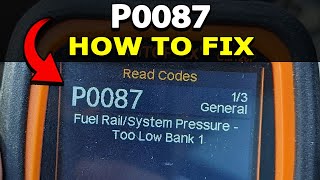
- Check for code P0087 (Fuel Rail Pressure Too Low) alongside P0171; if present, the high-pressure fuel pump is the primary suspect.
- Before replacing any parts, start with the cheapest and easiest steps: inspect for obvious vacuum leaks and clean the MAF sensor.
- Do not immediately replace the air/fuel ratio (oxygen) sensor, as it is likely just reporting the lean condition accurately.
What's Unique About the 2015-2017 Lexus NX200T
The Lexus NX200T uses a turbocharged engine with a direct injection fuel system (8AR-FTS). This system is more complex than a traditional port-injection setup, utilizing both a low-pressure in-tank fuel pump and a high-pressure, engine-driven fuel pump (HPFP). A specific Lexus Technical Service Bulletin (TSB L-SB-0005-23) directly links the P0171 code on this vehicle to fuel pressure issues, making fuel system diagnosis, particularly the high-pressure side, more critical than on many other vehicles where vacuum leaks are the primary suspect. Owner experiences confirm that long crank times and hesitation are early symptoms of HPFP failure on this platform.
Diagnostic Flowchart
Tap your situation to follow the diagnostic path that matches what you're seeing on this vehicle.
Symptoms You May Notice
- Check Engine Light (MIL) is on
- Hard starting or long crank (taking 6-10 seconds to turn over)
- Rough idle
- Hesitation, surging, or a rocking sensation during acceleration
- Reduced engine power or entering 'limp mode'
- Potential for engine misfires
- Buzzing noise from the engine compartment, possibly related to a vacuum regulating valve.
- Replacing the oxygen (A/F) sensor first. The sensor is often doing its job correctly by reporting the lean condition. It's crucial to diagnose for vacuum leaks and, on this specific vehicle, low fuel pressure before replacing the sensor.
Most Likely Causes
- Low Fuel Pressure (Failing High-Pressure Fuel Pump) 🔴 High Probability A specific Lexus TSB (L-SB-0005-23, previously LSB000523) directly connects P0171 with P0087 (Fuel Rail / System Pressure – Too Low) and hard start conditions on the 2015-2017 NX200T, strongly indicating a fuel delivery problem. The direct injection system's high-pressure pump is a known failure point. An owner on ClubLexus reported a long crank issue at just 13,500 miles which was diagnosed by the dealer as a fuel pressure problem.
How to confirm: Use a capable OBD-II scanner (like Toyota's Techstream) to monitor fuel rail pressure. Compare the desired/commanded pressure with the actual pressure. A significant discrepancy, especially under load, points to a fuel delivery issue. A manual fuel pressure gauge can also be used for confirmation.
Typical fix: Replacement of the high-pressure fuel pump (HPFP). It is critical to also replace the associated O-rings and seals to prevent fuel leaks.
Est. part cost: $300-$700 - Dirty or Faulty Mass Airflow (MAF) Sensor 🟡 Medium Probability → Shop Fuel Injection Air Flow Meter The MAF sensor is a sensitive component that can become contaminated over time, leading it to under-report airflow to the ECU.
How to confirm: The MAF sensor can be removed and inspected for dirt or debris on the sensing wires. A dirty sensor under-reports airflow, causing the ECU to inject too little fuel. Live data on a scan tool may show MAF readings that don't increase appropriately with engine RPM.
Typical fix: Clean the MAF sensor with a dedicated MAF sensor cleaner spray. Do not touch the wires. 🎬 See this detailed walkthrough on cleaning your MAF sensor safely. If cleaning does not resolve the issue, the sensor may need to be replaced.
Est. part cost: $10-$20 (cleaner), $70-$200 (sensor) - Vacuum Leak 🟡 Medium Probability Hoses and gaskets can become brittle and crack over time due to heat and age. The PCV (Positive Crankcase Ventilation) hose is a common culprit for vacuum leaks on many vehicles. TSB L-SB-0153-17 also points to issues with the vacuum regulating valve and associated hoses on the 8AR-FTS engine, which can cause hesitation and buzzing noises.
How to confirm: Visually inspect all vacuum hoses, PCV lines, and the intake manifold gasket for cracks or loose connections. A smoke test is the most effective method to find small, hard-to-see leaks. 🎬 Watch: How to use a smoke tester to find vacuum leaks. You can also carefully spray brake cleaner or a propane torch (unlit) around suspected areas while the engine is idling; a change in engine RPM indicates a leak.
Typical fix: Replace the cracked hose or faulty gasket. If the PCV valve is stuck open, it will need to be replaced.
Est. part cost: $10-$100 - Failing Air/Fuel Ratio Sensor (Front Oxygen Sensor) ⚪ Low Probability → Shop Oxygen Sensor
How to confirm: A failing sensor can send incorrect (lean) readings to the ECU. Use an OBD-II scanner to graph the sensor's voltage. A slow, lazy, or unresponsive sensor is a sign of failure. However, it's important to rule out other causes first, as the sensor is often correctly reporting a lean condition caused by another part.
Typical fix: Replace the Bank 1, Sensor 1 Air/Fuel Ratio Sensor. Denso is the OEM brand.
Est. part cost: $100-$250
Rare But Worth Checking
- Clogged Fuel Injectors: → Shop Fuel Injector While less common, one or more dirty or clogged direct injectors can restrict fuel flow, leading to a lean condition.
- Exhaust Leak: A leak in the exhaust system before the first oxygen sensor can allow outside air to enter, causing the sensor to read a false lean condition.
- ECM Logic Issue (2015 models): For 2015 NX200T models specifically, TSB L-SB-0050-15 addresses a P0087 code caused by incorrect ECM logic. While this TSB doesn't explicitly mention P0171, an unresolved P0087 could lead to a lean condition. The fix is an ECM reprogram at the dealership.
Diagnosis Steps
- Check for other Diagnostic Trouble Codes (DTCs). Pay special attention to P0087, as its presence strongly suggests a fuel pressure problem.
- Using an OBD-II scanner, check the long-term and short-term fuel trims. High positive numbers (e.g., +15% or higher) confirm the lean condition. 🎬 Watch: A professional guide to diagnosing P0171 lean codes.
- Inspect the intake air system for obvious cracks, loose clamps, or disconnected hoses between the MAF sensor and the throttle body.
- Remove and clean the Mass Airflow (MAF) sensor using a dedicated cleaner. Reinstall and clear codes to see if the problem returns.
- Monitor fuel rail pressure with a scan tool. Compare the commanded pressure to the actual pressure, especially during a cold start or under acceleration. If the actual pressure is significantly lower, suspect a fuel delivery problem (likely the HPFP).
- If fuel pressure is normal, perform a smoke test to check for vacuum leaks in the intake manifold, PCV system, and all vacuum lines. Pay attention to the vacuum regulating valve area.
- If no vacuum leaks or fuel pressure issues are found, test the Air/Fuel Ratio sensor's response using a scan tool. A lazy or biased sensor may be the cause.
Parts You'll Likely Need
- High-Pressure Fuel Pump
(OEM #23101-36090 (supersedes 23101-36080))— A known issue for the P0171/P0087 codes on this platform, as documented by Lexus TSB L-SB-0005-23.
Trusted brands: Denso, Aisin
OEM price range: $500-$800
Aftermarket price range: $300-$600 - Mass Airflow (MAF) Sensor Cleaner — A dirty MAF sensor is a common cause of lean codes and cleaning it is an inexpensive first diagnostic step.
Trusted brands: CRC, Liqui Moly
Aftermarket price range: $10-$20 - Air/Fuel Ratio Sensor (Bank 1 Sensor 1)
(OEM #89467-76010)— If all other causes are ruled out, the sensor itself may be faulty, providing incorrect lean readings.
Trusted brands: Denso
OEM price range: $200-$300
Aftermarket price range: $100-$200
Related Codes That Often Appear With This One
- P0087 — This code means 'Fuel Rail / System Pressure – Too Low' and is a strong indicator that P0171 is caused by a fuel delivery issue, likely the high-pressure fuel pump, as cited in TSB L-SB-0005-23.
- P0174 — While the NX200T has a single bank engine and won't show this code, on V6/V8 engines P0174 ('System Too Lean Bank 2') often appears with P0171, indicating a problem affecting both engine banks, like a vacuum leak or fuel pressure issue.
Technical Service Bulletins (TSBs) & Recalls
- L-SB-0005-23: Addresses a hard start and/or MIL ON condition with DTCs P0171, P0174, and/or P0087 due to low fuel pressure. This is the primary TSB for this issue.
- L-SB-0050-15: For 2015 models only, addresses P0087 specifically, caused by an ECM logic error. The fix is a software update.
- L-SB-0153-17: Addresses a rocking/surging sensation and buzzing noise related to the vacuum regulating valve on 8AR-FTS engines, a potential source of vacuum leaks.
Platform-Specific Known Issues
- Lexus Technical Service Bulletin L-SB-0005-23 notes that 2015-2017 NX200T models may exhibit a hard start and/or MIL ON with DTC P0171 and P0087, pointing towards a fuel pressure problem that can be confirmed with a pressure gauge.
- A separate TSB, L-SB-0153-17, addresses a rocking sensation and/or buzzing noise on 8AR-FTS engines due to a faulty vacuum regulating valve, which could be a source of a vacuum leak.
Mechanic-Grade Diagnostic Values
- Long Term Fuel Trim (LTFT) — expected: Close to 0%, ideally under +/- 10%.. Failure: Consistently above +15% to +25% or higher, triggering the P0171 code.
- Mass Airflow (MAF) Sensor Reading at Idle — expected: Approximately 2.0-5.0 g/s at normal idle (engine warm, A/C off). Some Toyota-specific documents suggest a tighter range of 1.0-3.0 g/s.. Failure: Readings are significantly lower than expected (indicating unmetered air from a vacuum leak) or do not rise linearly with RPM.
- Air/Fuel Ratio Sensor (B1S1) Voltage — expected: Fluctuates around a central point (typically 3.3V on these models).. Failure: Consistently higher than 3.4 V when a lean condition is present.
- Downstream Heated O2 Sensor (B1S2) Voltage — expected: Relatively steady voltage above 0.5V when the catalytic converter is working.. Failure: Consistently below 0.4 V, confirming the lean mixture is passing through the engine uncorrected.
- Low-Pressure Fuel System Pressure — expected: 304 to 343 kPa (44 to 50 psi) for a similar Toyota direct injection system.. Failure: Pressure below the specified range indicates a problem with the in-tank fuel pump or fuel filter.
Hidden / Shadow Codes Worth Checking
- Freeze Frame Data: Not a code, but a snapshot of critical engine parameters (RPM, coolant temp, vehicle speed, fuel trims, engine load, etc.) recorded at the exact moment the P0171 DTC was set. This data is invaluable for determining the conditions under which the lean fault occurs (e.g., only when cold, only at high RPM). (see via Accessible using a capable OBD-II scanner or dealer software like Toyota Techstream.)
Scan Tool Commands That Help
- Toyota Techstream: Active Test: 'Control the Injection Volume' / 'A/F CONTROL' — This is a powerful bidirectional test to confirm if the A/F and O2 sensors are functioning. The technician can command a richer or leaner mixture (e.g., +25% or -12.5% fuel) and watch the sensor voltage graphs to see if they respond accordingly. If they don't respond, it points to a faulty sensor; if they do, it confirms the lean condition is real and caused by another component.
- Toyota Techstream: Utility: Clear DTCs / Reset Memory — After a repair (like replacing a fuel pump or cleaning a MAF sensor), it is critical to clear not only the DTC but also the learned fuel trim values. This forces the ECU to relearn the fuel strategy with the new/clean part, preventing the old learned values from causing incorrect performance.
Wiring & Ground Locations
- Engine Block to Chassis Ground — Typically a braided metal strap connecting the engine block or cylinder head to the vehicle's firewall or frame rail.. A corroded or loose main engine ground can create a voltage drop, causing sensors that use the block as a ground reference (like the A/F sensor) to send inaccurate signals to the ECU, potentially mimicking a lean condition.
- Battery to Body Ground — The main negative cable from the battery terminal to a point on the vehicle's chassis or inner fender.. This is the primary ground for the entire electrical system. While less likely to cause a specific P0171, a poor connection here can cause a host of unpredictable electronic issues, including faulty ECU operation.
Real Owner Repair Stories
- ClubLexus Forum Post (Lexus GS350 (different model, but with a highly relevant diagnostic process for P0171/P0174)) — Check engine light with P0171 and P0174 codes, high long-term fuel trims (+25%).
❌ Tried (didn't work) Replaced MAF sensor, Replaced multiple gaskets (intake manifold, plenum, valve cover), Cleaned fuel injectors and replaced seals, Replaced PCV valve and EGR valve, Dealer performed a smoke test which found NO LEAKS.
✅ What actually fixed it The user discovered a hidden vacuum leak at the shaft for the ACIS (Acoustic Control Induction System) valve inside the plastic intake manifold. The leak was only found by physically pressing on the valve's external linkage while the engine was running and watching the fuel trims on a scanner drop to normal levels instantly. The smoke test missed this because it was a leak on a moving part's seal.
"I Checked Everything" — The Actual Cause
- In one documented case on a Lexus, a persistent P0171/P0174 that passed a professional smoke test was ultimately caused by a worn seal on the shaft of the ACIS (Acoustic Control Induction System) valve within the intake manifold. This type of leak can be missed by a smoke test because it is internal to the manifold assembly and may only be apparent when the engine is running and creating vacuum against the moving part. The issue was found by physically manipulating the valve linkage and observing an immediate change in live fuel trim data.
OEM Part Supersession History
23101-36080→23101-36090— Likely an internal revision for improved reliability or manufacturing process.
Heads up: None found. 23101-36090 is the correct current replacement part for the original.
Model Year Variations Within This Range
- 2015 only: Early production 2015 NX200T models may set a P0087 (Low Fuel Pressure) code due to overly sensitive ECM software logic, not a mechanical fault. Lexus issued TSB L-SB-0050-15 to address this. The fix is to have a dealer reprogram the ECM with updated software. Since P0087 is a primary trigger for P0171 on this platform, this software update should be the first step for any 2015 model showing these codes.
Helpful Videos
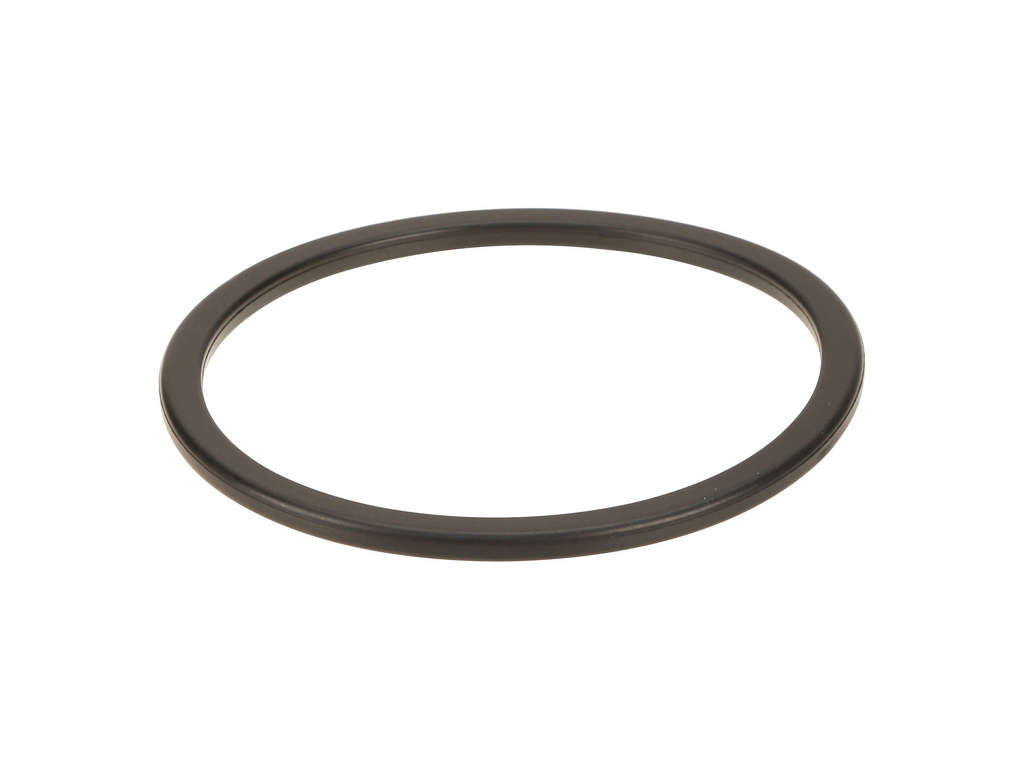
We Have This Part in Stock


The information in this article is provided for general reference and educational purposes only. Vehicle specifications, procedures, and part compatibility can vary by production date, trim level, and region. Always consult your vehicle's factory service manual and verify part numbers before purchasing or performing repairs. Safety-critical components such as airbags, seat belts, and braking systems should be installed by a qualified professional.
- Lexus NX200T:
- 🧭 Diagnostic Flowchart
- 🎬 Helpful Videos
- 🛍️ Shop This Part
- What's Unique About the 2015-2017 Lexus NX200T
- Symptoms You May Notice
- Most Likely Causes
- Rare But Worth Checking
- Diagnosis Steps
- Parts You'll Likely Need
- Related Codes That Often Appear With This One
- Technical Service Bulletins (TSBs) & Recalls
- Platform-Specific Known Issues
- Mechanic-Grade Diagnostic Values
- Hidden / Shadow Codes Worth Checking
- Scan Tool Commands That Help
- Wiring & Ground Locations
- Real Owner Repair Stories
- "I Checked Everything" — The Actual Cause
- OEM Part Supersession History
- Model Year Variations Within This Range
- 🎟️ Get 5% Off