

P0171 on 2018-2020 Lexus NX300: System Too Lean Causes and Fixes
On a 2018-2020 Lexus NX300, code P0171 is most often caused by a failing fuel pump, as noted in Lexus TSB L-SB-0005-23. This issue is so common that Lexus initiated a Customer Support Program (23LE01) extending the warranty for this repair to 15 years/150,000 miles. Other common causes include a dirty MAF sensor or a vacuum leak. A fuel pump replacement can be costly if not covered by the warranty extension, while cleaning the MAF is an inexpensive first step.
- P0171 on a 2018-2020 NX300 means the engine is running lean (too much air, not enough fuel).
- Unlike many cars, the most probable cause on this specific model is a failing fuel pump (either high or low pressure), as documented by Lexus.
- Always check for the companion code P0087 (Low Fuel Pressure), as it strongly points to the fuel system.
- Easy DIY checks include cleaning the MAF sensor and visually inspecting the intake for cracked hoses before moving to more complex diagnostics.
- Check if your vehicle was covered under the low-pressure fuel pump recall (20LA01).
What's Unique About the 2018-2020 Lexus NX300
The 2018-2020 Lexus NX300 uses the 8AR-FTS direct-injected and turbocharged engine. This platform has a known issue with fuel delivery. A Technical Service Bulletin (TSB L-SB-0005-23) directly links the P0171 code to potential fuel pressure problems, sometimes accompanied by a P0087 code for low fuel rail pressure. This makes fuel system diagnosis, particularly of the high-pressure fuel pump, more critical on this vehicle compared to others where a vacuum leak might be the default primary suspect. The issue is widespread enough that Lexus created a Customer Support Program (23LE01) to cover the repair cost for an extended period.
Diagnostic Flowchart
Tap your situation to follow the diagnostic path that matches what you're seeing on this vehicle.
Symptoms You May Notice
- Check Engine Light is on
- Hard starting [⭐ MANUFACTURER TSB — highest authority]
- Rough idle
- Hesitation or lack of power during acceleration
- Reduced fuel economy
- Engine stumbling or surging
- Engine may stall, especially under load
- Replacing the oxygen (A/F) sensor without first checking for vacuum leaks, a dirty MAF sensor, or fuel pressure issues. The sensor is often correctly reporting the lean condition, not causing it.
Most Likely Causes
- Failing High-Pressure or Low-Pressure Fuel Pump 🔴 High Probability → Shop Fuel Pump Lexus issued TSB L-SB-0005-23 for this exact issue, linking P0171 to low fuel pressure. The problem was so prevalent that it led to Customer Support Program 23LE01, extending warranty coverage for this specific failure to 15 years or 150,000 miles. Additionally, a wider recall (Lexus #20LA01) addressed failing Denso low-pressure fuel pumps whose impellers could swell and deform, causing them to stop operating.
How to confirm: A technician can monitor fuel pressure on both the low and high-pressure sides using a capable scan tool like Techstream. Normal low-side pressure should be around 60 PSI, and high-side pressure should be 500+ PSI at idle. A P0087 code appearing with P0171 is a strong indicator of this issue. [⭐ MANUFACTURER TSB — highest authority]
Typical fix: Replace the failing fuel pump. Diagnosis is key to determine if it's the high-pressure pump (HPFP) or the in-tank low-pressure pump (LPFP). The repair should be covered if the vehicle is within the terms of Customer Support Program 23LE01.
Est. part cost: $300-$1600 - Dirty Mass Airflow (MAF) Sensor 🟡 Medium Probability → Shop Fuel Injection Air Flow Meter
How to confirm: The MAF sensor can be easily removed and inspected. If the delicate wire or film element inside is coated with dirt, it can under-report airflow, causing the ECM to command insufficient fuel. A diagnostic tip is to observe fuel trims; if they are high at idle but correct themselves (move closer to zero) at higher RPMs, a vacuum leak is more likely than a dirty MAF.
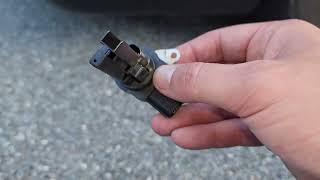
Typical fix: Clean the sensor with a dedicated MAF sensor cleaner spray. 🎬 See this in-depth guide on cleaning your MAF sensor properly. Do not touch the internal wires or use other chemicals like brake cleaner. Allow it to air dry completely before reinstalling. If cleaning doesn't help, the sensor may need replacement.
Est. part cost: $10-$20 (cleaner), $100-$250 (new sensor) - Vacuum Leak 🟡 Medium Probability
How to confirm: A hissing sound may be audible from the engine bay. The most effective method is to use a smoke machine to introduce smoke into the intake system post-MAF sensor and look for leaks from cracked hoses (PCV, vacuum lines), intake manifold gaskets, or the air intake tube itself.
Typical fix: Replace the cracked hose, fitting, or gasket that is causing the leak.
Est. part cost: $10-$150 - Failing Air/Fuel Ratio Sensor (Front Oxygen Sensor) ⚪ Low Probability → Shop Oxygen Sensor
How to confirm: A faulty sensor can incorrectly report a lean condition when one doesn't exist. A technician can view the sensor's live data on a scan tool to see if it is responding slowly, providing erratic readings, or is stuck on a lean voltage. A real-world diagnosis on an NX300 showed a bad sensor pegged at 4.463V. 🎬 Watch: A real-world NX300 diagnosis when standard tests look good.
Typical fix: Replace the Bank 1, Sensor 1 Air/Fuel Ratio Sensor.
Est. part cost: $150-$300
Rare But Worth Checking
- Clogged Fuel Injectors: → Shop Fuel Injector While less common on modern vehicles, dirty or clogged injectors can restrict fuel flow, leading to a lean condition. The 8AR-FTS has both port and direct injectors, adding complexity.
- Exhaust Leak: A leak in the exhaust manifold or pipe before the first A/F ratio sensor can draw in outside air, causing the sensor to read a false lean condition.
Diagnosis Steps
- Check for any Technical Service Bulletins (TSBs) or recalls related to your vehicle's VIN. Specifically check for eligibility under Lexus Customer Support Program 23LE01.
- Use an OBD-II scanner to confirm P0171 and check for other codes, especially P0087.
- Monitor long-term and short-term fuel trims. A total trim (LTFT + STFT) consistently above +15-20% confirms the ECM is adding significant fuel to correct a lean condition.
- Observe fuel trims at idle and then at a steady 2500 RPM. If trims improve (get closer to 0) at higher RPM, suspect a vacuum leak.
- Inspect all vacuum hoses and the air intake tube for obvious cracks or disconnections.
- Remove and clean the Mass Airflow (MAF) sensor with dedicated MAF cleaner spray. Let it air dry completely before reinstalling.
- Perform a smoke test to check for vacuum leaks from the intake manifold gaskets, PCV system, or other hoses.
- If no vacuum leaks are found, test fuel pressure. This is a critical step. Using a scan tool, monitor low-side pressure (target ~60 PSI) and high-side pressure (target 500+ PSI at idle). Low readings strongly suggest a fuel pump failure.
- If fuel pressure and airflow are normal, test the Bank 1 Air/Fuel Ratio sensor for proper operation using a scan tool's active test functions.
Parts You'll Likely Need
- High-Pressure Fuel Pump
(OEM #23101-36080 (superseded by 23101-36090))— Identified in Lexus TSB L-SB-0005-23 as a primary cause for P0171 on this specific vehicle. [⭐ MANUFACTURER TSB — highest authority] This is a mechanically driven pump at the engine.
Trusted brands: Lexus (OEM), Denso
OEM price range: $1100-$1600
Aftermarket price range: $500-$900 - Low-Pressure Fuel Pump (In-Tank)
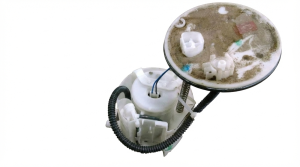
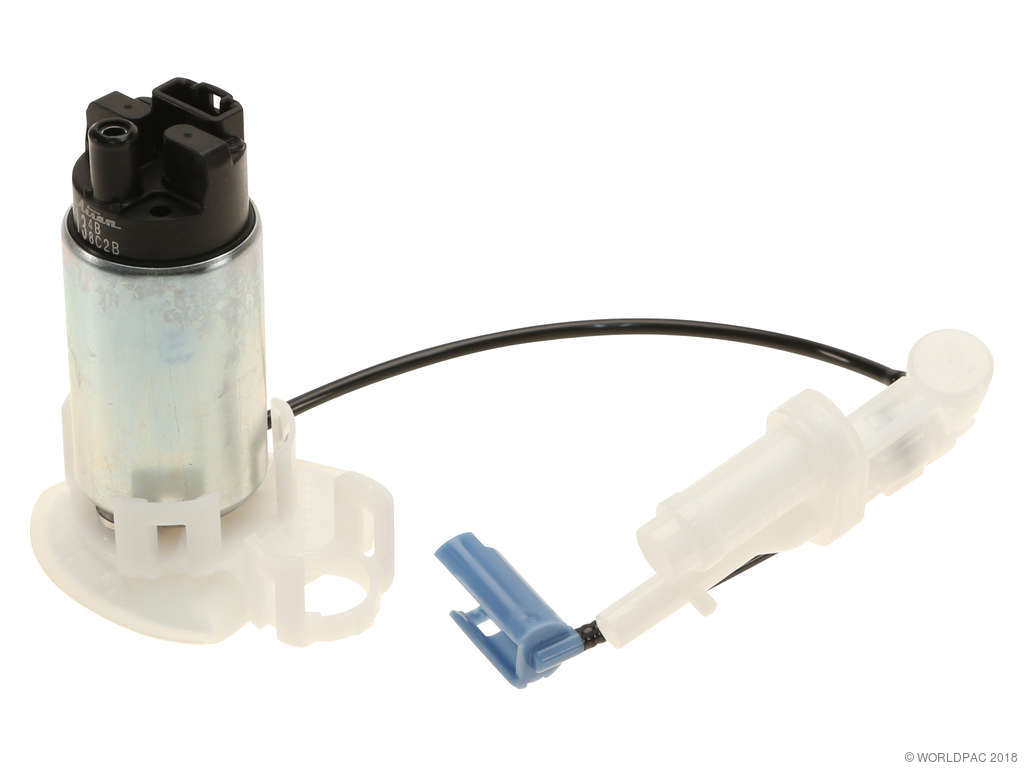
(OEM #23220-36011 (Assembly w/ Filter))— Subject of a major recall (20LA01) affecting the 2018-2019 NX300. Failure of the Denso-made impeller can cause stalling and lean conditions.
Trusted brands: Lexus (OEM), Denso
OEM price range: $350-$510
Aftermarket price range: $150-$300 - Mass Airflow (MAF) Sensor
(OEM #22204-75040)— A dirty sensor is a common cause of lean codes on many vehicles and is an easy part to clean or replace.
Trusted brands: Denso (OEM)
OEM price range: $150-$250
Aftermarket price range: $70-$150
Related Codes That Often Appear With This One
- P0087 — This code means "Fuel Rail / System Pressure – Too Low" and is specifically mentioned in TSB L-SB-0005-23 as appearing with P0171, strongly pointing to a fuel pump or delivery problem. [⭐ MANUFACTURER TSB — highest authority]
- P1170 — This manufacturer-specific code for "Fuel Performance Port Injector" can appear alongside P0171, indicating a potential issue within the dual-injection system of the 8AR-FTS engine.
Technical Service Bulletins (TSBs) & Recalls
- L-SB-0005-23: Notes that some Lexus vehicles may exhibit a hard start and/or MIL ON with DTC P0171 and P0087, pointing to a fuel system pressure issue. This TSB is the basis for the extended warranty coverage under Customer Support Program 23LE01.
Platform-Specific Known Issues
- TSB L-SB-0005-23 & Customer Support Program 23LE01: Some vehicles may exhibit a hard start and/or MIL ON with DTC P0171 and/or P0087. This is often due to a failing high-pressure fuel pump. Lexus acknowledged this with a TSB and later initiated Customer Support Program 23LE01, which extends the warranty for this specific repair to 15 years or 150,000 miles from the in-service date, whichever comes first. [3, ⭐ MANUFACTURER TSB — highest authority]
- Recall 20LA01: Low-Pressure Fuel Pump Failure: → Shop Fuel Pump A safety recall was issued for the low-pressure (in-tank) fuel pump on 2018-2019 NX300 models. The Denso-manufactured pump impeller was found to be made of a lower-density material that could absorb fuel, deform, and cause the pump to fail, leading to engine stalling.
- Diagnostic Nuances from Real-World Repair: A detailed YouTube video of a P0171 diagnosis on an NX300 showed that even after fixing vacuum leaks found via a smoke test, the lean condition persisted. This highlights the high probability of a fuel system fault on this platform.
Mechanic-Grade Diagnostic Values
- Total Fuel Trim (Short Term + Long Term) — expected: Should not exceed ±10% under normal conditions.. Failure: Consistently greater than +25% to +35% will trigger a P0171 code.
- Air/Fuel Ratio Sensor (Bank 1, Sensor 1) Voltage — expected: Should fluctuate around a central voltage (typically 3.3V for Toyota/Lexus) during normal operation.. Failure: During a Techstream active test, voltage consistently higher than 3.4V indicates a lean condition. A failed sensor may get stuck at a high voltage, such as 4.463V, even when the mixture is forced rich.
- Air/Fuel Ratio Sensor Heater Resistance — expected: 0.8 to 1.4 Ohms when the engine is cold.. Failure: A reading outside of this range indicates a faulty sensor heater circuit, which can affect sensor performance.
- Low-Pressure Fuel System Pressure — expected: Approximately 60 PSI at idle.. Failure: Significantly lower pressure indicates a failing in-tank low-pressure fuel pump or clogged filter.
- High-Pressure Fuel System Pressure — expected: Approximately 500+ PSI at idle.. Failure: Significantly lower pressure, especially if accompanied by code P0087, points to a failing high-pressure fuel pump (HPFP). [5, ⭐ MANUFACTURER TSB — highest authority]
Hidden / Shadow Codes Worth Checking
- P1603: Stall History. This is an informational code stored when the engine has stalled. (see via Visible with advanced scan tools like Techstream; may be stored in history or as a pending code alongside the primary P0171 fault.)
- P1604: Startability Malfunction. This indicates the engine had difficulty starting. (see via Visible with advanced scan tools like Techstream; often appears with hard-start symptoms related to fuel delivery issues.)
Scan Tool Commands That Help
- Techstream: Active Test: Control the Injection Volume for A/F Sensor — This is a critical diagnostic step. It allows a technician to manually command the fuel mixture richer (+25%) or leaner (-12.5%) to verify if the A/F sensor and O2 sensor respond accordingly. If the sensor voltage doesn't change, the sensor is likely faulty. If it does change but the lean condition persists in normal operation, it points to a real fuel delivery or unmetered air issue.
- Techstream: Utility: All Readiness — Used after a repair to check the status of all emission system monitors to confirm the fix was successful and the vehicle is ready for an emissions test.
- Techstream (or other professional scan tool): Utility: Reset Memory / Clear Adaptations — After replacing a component like a fuel pump or MAF sensor, this function should be used to clear the long-term fuel trim learned values. This forces the ECU to relearn the fuel strategy with the new part, preventing the old, incorrect adaptations from causing issues.
Real Owner Repair Stories
- YouTube channel 'Pine Hollow Auto Diagnostics' (2018 Lexus NX300) — P0171 System Too Lean, P1170 Fuel Performance Port Injector, P1603 Stall History, P1604 Startability Malfunction. Long term fuel trims were at +39%.
❌ Tried (didn't work) A smoke test was performed, which revealed two vacuum leaks at intake hoses., The vacuum leaks were repaired and the system was re-tested with the smoke machine, showing no more leaks., Despite fixing the vacuum leaks, the fuel trims immediately returned to +39% after clearing adaptations.
✅ What actually fixed it The Bank 1 Air/Fuel Ratio sensor was faulty. Using a scan tool's active test to enrich the mixture, the technician observed the sensor's voltage was stuck at 4.463V (a strong lean signal) and would not decrease as it should have. Replacing the Air/Fuel Ratio sensor resolved the P0171 code. - ClubLexus Forum Post (user story for ES300, but a widely cited diagnostic pattern for P0171/P0174) (Lexus ES300 (V6)) — P0171 and P0174 (Lean on both banks). High long-term fuel trims.
❌ Tried (didn't work) Replaced MAF sensor, O2 sensors, PCV valve, and various gaskets., Cleaned fuel injectors and throttle body., Took the car to a Lexus dealership, who performed a smoke test and found no leaks, then reset the ECU. The codes returned a week later.
✅ What actually fixed it The owner found the leak himself. It was coming from the seals on the Air Control Valve (ACV) shaft on the side of the intake manifold. The leak was not detectable by a smoke test but became audible (as an RPM change) when physical pressure was applied to the valve's linkage, causing the worn seals to shift. Replacing the intake manifold gaskets, which included the ACV seals, finally fixed the lean codes.
"I Checked Everything" — The Actual Cause
- In a documented case on a 2018 NX300, a smoke test did find and lead to the repair of several vacuum leaks, but the P0171 code and extreme +39% fuel trims persisted. The ultimate cause was a failed Air/Fuel Ratio sensor that was stuck reporting a lean condition, which a smoke test cannot identify.
- A common scenario for persistent lean codes after a clean smoke test is a hard-to-detect leak. One owner discovered a leak at the intake manifold's Air Control Valve seals that only became apparent when physically pressing on the component, which was not revealed during a standard smoke test performed by a dealership.
OEM Part Supersession History
23101-36080→23101-36090— Standard part revision by the manufacturer.
Heads up: Part number 23101-36110 is also listed by some vendors for the same application, suggesting multiple revisions or compatible parts exist.23220-36010→23220-36011— Standard part revision for the low-pressure in-tank fuel pump assembly.
Model Year Variations Within This Range
- 2018-2020: There are no significant mechanical changes to the 8AR-FTS engine or its fuel system within the 2018-2020 model years that would alter the diagnosis or common causes of P0171. The vehicle was rebranded from NX200t to NX300 in 2018, but the powertrain is the same. The fuel pump recall and TSB apply across this range.
Helpful Videos

Used OEM Parts in Stock
New Aftermarket Parts Available


The information in this article is provided for general reference and educational purposes only. Vehicle specifications, procedures, and part compatibility can vary by production date, trim level, and region. Always consult your vehicle's factory service manual and verify part numbers before purchasing or performing repairs. Safety-critical components such as airbags, seat belts, and braking systems should be installed by a qualified professional.
- Lexus NX300:
- 🧭 Diagnostic Flowchart
- 🎬 Helpful Videos
- 🛍️ Shop This Part
- What's Unique About the 2018-2020 Lexus NX300
- Symptoms You May Notice
- Most Likely Causes
- Rare But Worth Checking
- Diagnosis Steps
- Parts You'll Likely Need
- Related Codes That Often Appear With This One
- Technical Service Bulletins (TSBs) & Recalls
- Platform-Specific Known Issues
- Mechanic-Grade Diagnostic Values
- Hidden / Shadow Codes Worth Checking
- Scan Tool Commands That Help
- Real Owner Repair Stories
- "I Checked Everything" — The Actual Cause
- OEM Part Supersession History
- Model Year Variations Within This Range
- 🎟️ Get 5% Off