

P0171 on 2017-2020 Lexus RX Hybrid: System Too Lean Causes and Fixes
On a 2017-2020 Lexus RX Hybrid, code P0171 is most often caused by a dirty Mass Airflow (MAF) sensor or a failing fuel pump. Cleaning the MAF sensor is an easy first step, but a fuel pump replacement is a known issue documented by a TSB and can be costly, ranging from $1,493 to $1,705 at a shop.
- P0171 means your engine is running with too much air or not enough fuel on Bank 1.
- The easiest and most common first step is to clean the Mass Airflow (MAF) sensor, located on the engine's air intake.
- Given the TSB for this model, if cleaning the MAF doesn't work, the next step is to check fuel pressure, as a failing fuel pump is a known issue.
- If codes P0171 and P0174 appear together, the cause is something that affects both engine banks, like the MAF sensor or fuel pump.
- Do not replace the oxygen (A/F) sensor unless all other possibilities have been ruled out; it is usually just reporting the problem correctly.
What's Unique About the 2017-2020 Lexus RX HYBRID
For this specific generation of Lexus RX Hybrid, the P0171 code is noteworthy because of a manufacturer-issued Technical Service Bulletin (LSB-0005-23). The TSB directly links a 'System Too Lean' condition with potential low fuel pressure from a failing fuel pump. This suggests that while common issues like a dirty MAF sensor should be checked first, a fuel delivery problem is a documented and more probable cause on this platform compared to many other vehicles. The 2GR-FXS engine also utilizes Toyota's D-4S fuel system, which combines port and direct injection, adding the high-pressure fuel pump as a potential failure point not present on older port-injection-only engines.
Diagnostic Flowchart
Tap your situation to follow the diagnostic path that matches what you're seeing on this vehicle.
Symptoms You May Notice
- Check Engine Light is on
- Engine running rough, especially at idle
- Hesitation or stumbling during acceleration
- Hard starting [⭐ MANUFACTURER TSB — highest authority]
- Reduced engine power
- Decreased fuel economy
- Engine stalling or surging
- Replacing the front Air/Fuel Ratio (Oxygen) sensor without first checking for vacuum leaks, cleaning the MAF sensor, and verifying fuel pressure. The sensor is often correctly reporting a lean condition caused by another component.
Most Likely Causes
- Dirty Mass Airflow (MAF) Sensor 🔴 High Probability → Shop Fuel Injection Air Flow Meter MAF sensors on many Toyota and Lexus vehicles can become contaminated with dirt, oil, and debris over time, causing them to under-report the amount of air entering the engine. This is a very common first-step fix for lean codes.
How to confirm: Inspect the sensor's delicate wires for contamination. Monitor MAF readings with a scan tool; they should increase smoothly with engine RPM. A dirty sensor may provide erratic or lower-than-expected readings. A typical 3.5L V6 should read around 3.5-4 g/s at idle. Readings between 2 to 7 g/s at idle and 15 to 25 g/s at 2500 RPM are considered a normal range for many engines. Cleaning is a simple and cheap diagnostic step.
Typical fix: Carefully clean the sensor wires with a dedicated MAF sensor cleaner spray. 🎬 Watch: Simple steps to clean your Lexus MAF sensor Do not touch the wires or use other chemicals like brake cleaner, which can destroy the sensor. Allow it to air dry completely before reinstalling.
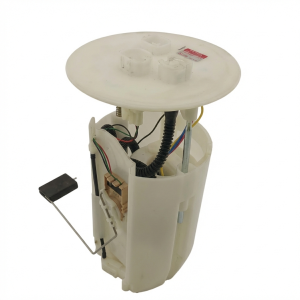
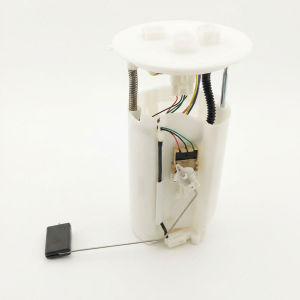
Est. part cost: $10-$15 for cleaner, $170-$230 for a new OEM sensor. - Failing Fuel Pump 🔴 High Probability → Shop Fuel Pump A Lexus Technical Service Bulletin (LSB-0005-23) specifically identifies a potential for low fuel system pressure on these models, which can trigger P0171 and P0087 codes. [⭐ MANUFACTURER TSB — highest authority] This points to a known weakness in the fuel delivery system for this vehicle.
How to confirm: Use a scan tool to monitor fuel rail pressure. If it is below the manufacturer's specification, especially under load (e.g., hard acceleration), the fuel pump is a likely culprit. The presence of code P0087 alongside P0171 strongly points to this issue, as documented in the TSB. The low-pressure side should be between 28 to 121 psi, while the high-pressure side should be between 348 to 2828 psi at 3000 rpm.
Typical fix: Replace the in-tank fuel pump assembly. This is an involved repair that often requires removing the rear seats to access the fuel tank. 🎬 See this walkthrough for seat removal and fuel pump replacement
Est. part cost: $1000-$1100 for an OEM part. - Vacuum Leak 🟡 Medium Probability Vacuum hoses, the air intake boot, PCV system hoses, and intake manifold gaskets can develop cracks or leaks over time, allowing unmetered air to enter the engine after the MAF sensor. A stuck-open PCV valve is also a common cause of vacuum leaks leading to P0171.
How to confirm: Visually inspect all vacuum and intake hoses for cracks or loose connections, particularly the large intake boot between the airbox and throttle body. A professional can use a smoke machine to pressurize the intake system and easily spot leaks. A DIY method involves spraying carb cleaner near suspected leak points and listening for a change in engine idle speed, though this should be done with extreme caution due to fire risk.
Typical fix: Replace the cracked hose, faulty PCV valve, or leaking gasket that is causing the leak.
Est. part cost: $10-$100 depending on the specific hose or gasket. - Clogged or Dirty Fuel Injectors ⚪ Low Probability → Shop Fuel Injector
How to confirm: If fuel pressure is good and there are no vacuum leaks, a fuel injector balance test can be performed to see if one or more injectors on Bank 1 are flowing less fuel than the others. Running a quality fuel system cleaner for a few tankfuls is an easy first diagnostic step.
Typical fix: Professional fuel injector cleaning or replacement of the faulty injector(s).
Est. part cost: $150-$300 per injector.
Rare But Worth Checking
- Failing Air/Fuel Ratio Sensor (Front Oxygen Sensor): → Shop Oxygen Sensor While A/F sensors can fail, they are often replaced unnecessarily. A lean code usually means the sensor is working correctly and reporting a real problem. Only replace it after confirming fuel delivery and the intake system are functioning properly. Check live data to ensure the sensor is actively switching as expected before condemning it.
- Exhaust Leak: A crack or leak in the exhaust manifold or pipe before the first A/F sensor can pull in outside air, making the sensor report a false lean condition. This is less common than intake-side issues but can be diagnosed by a visual inspection or by using a smoke machine on the exhaust system.
Diagnosis Steps
- Check for other stored trouble codes. The presence of P0174 or P0087 provides important clues.
- Analyze freeze frame data to understand the engine's operating conditions (RPM, load, speed) when the code was set. A lean code at idle often points to a vacuum leak, while a lean code under load (higher RPM) often points to a fuel delivery issue.
- Using a scan tool, monitor long-term and short-term fuel trims for Bank 1. Consistently high positive numbers (e.g., LTFT >15-20%) confirm the lean condition.
- Visually inspect the engine bay for any obvious cracked, disconnected, or broken vacuum hoses, especially the large air intake tube between the MAF sensor and the throttle body.
- Remove and inspect the Mass Airflow (MAF) sensor. Clean it with dedicated MAF sensor cleaner and allow it to dry completely before reinstalling.
- Monitor fuel rail pressure with a scan tool. Compare the readings at idle and under load to the manufacturer's specifications. A significant drop under load points to a weak fuel pump, which is a known issue on this vehicle. For the 2GR-FKS, low-pressure side spec is 28-121 psi and high-pressure is 348-2828 psi at 3000 RPM. 🎬 Learn how to check fuel pressure using a scan tool
- If no issues are found, perform a smoke test to check for hard-to-find vacuum leaks in the intake manifold gaskets or PCV system.
- If all else fails, test the function of the Bank 1 Air/Fuel Ratio sensor and check for exhaust leaks before the sensor.
Parts You'll Likely Need
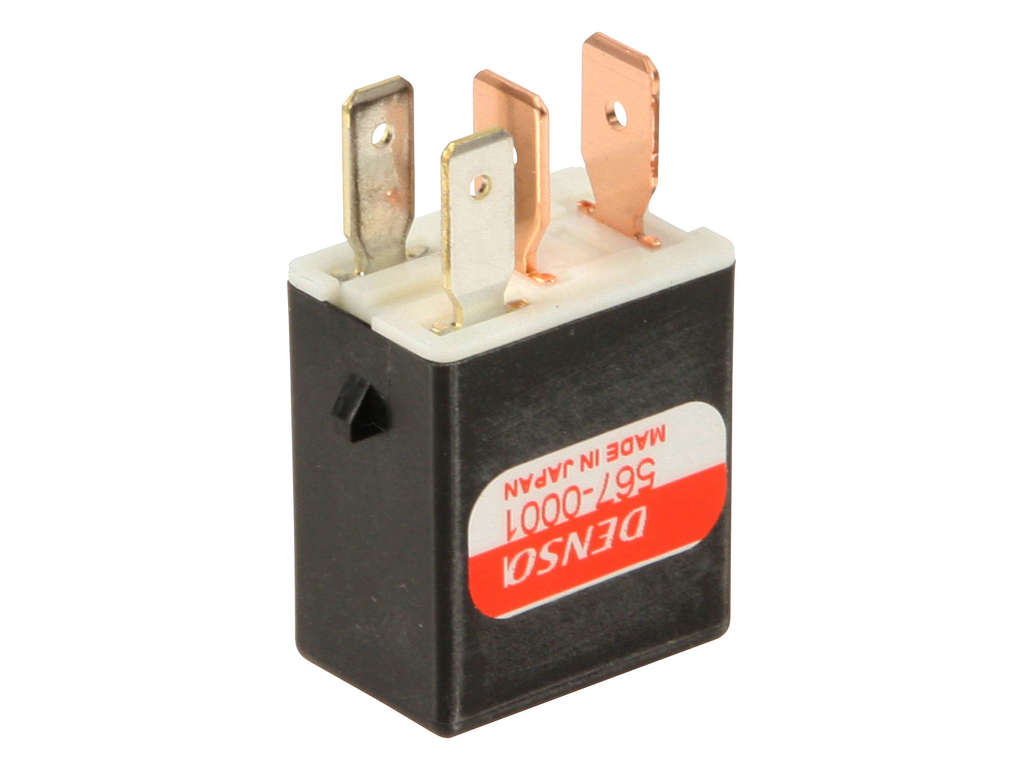
- Mass Air Flow (MAF) Sensor
(OEM #22204-31020)— A dirty MAF sensor is a very common cause for lean codes on Lexus vehicles and is a simple and inexpensive component to clean or replace.
Trusted brands: Denso
OEM price range: $170-$230
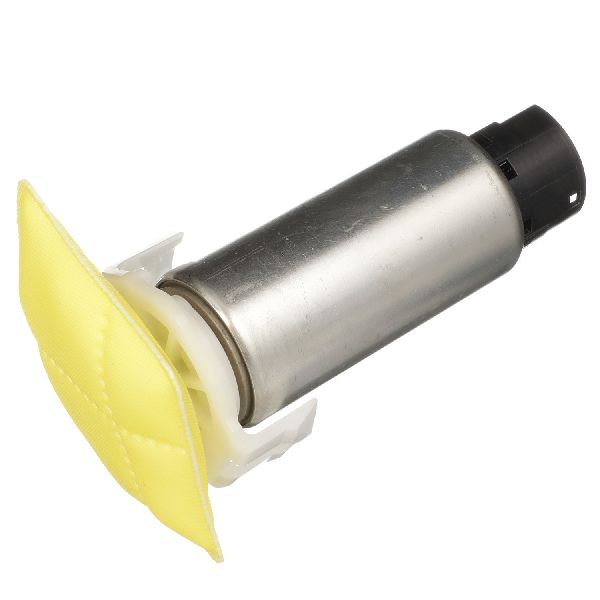
Aftermarket price range: $60-$170 - Fuel Pump
(OEM #23101-0P010)— A failing fuel pump causing low fuel pressure is a documented issue for this vehicle, as cited in a manufacturer TSB. [⭐ MANUFACTURER TSB — highest authority] This is often the root cause if a MAF cleaning or vacuum leak repair doesn't fix the code, especially if P0087 is also present.
Trusted brands: Denso, Aisin
OEM price range: $1010-$1085
Aftermarket price range: $250-$725
Related Codes That Often Appear With This One
- P0174 — System Too Lean (Bank 2). If both P0171 and P0174 are present, it strongly suggests a problem that affects the entire engine, such as the MAF sensor, fuel pump, or a major vacuum leak between the MAF and throttle body.
- P0087 — Fuel Rail / System Pressure – Too Low. This code, when seen with P0171, is a direct indicator of a fuel delivery problem, as noted in TSB LSB-0005-23. [⭐ MANUFACTURER TSB — highest authority] This combination makes the fuel pump the primary suspect.
- P117B — Fuel Performance / Direct Injector. A ClubLexus forum member reported seeing this code along with P0171, indicating a potential issue with the direct injection system.
Technical Service Bulletins (TSBs) & Recalls
- LSB-0005-23: Notes that some vehicles may exhibit a hard start and/or MIL ON with DTCs P0171, P0174, and/or P0087, related to low fuel system pressure. This is the primary document pointing to the fuel pump as a known issue.
Platform-Specific Known Issues
- Lexus issued Technical Service Bulletin #LSB-0005-23 for some 2017 model year vehicles that may exhibit a hard start and/or have a Check Engine Light on with DTC P0171 (System Too Lean) and/or P0087 (Fuel Rail / System Pressure – Too Low), pointing towards a fuel delivery issue. [⭐ MANUFACTURER TSB — highest authority] This makes the fuel pump a higher-probability cause on this specific vehicle compared to others.
- Owner Experience with P0171 and PCV Valve: → Shop PCV Valve A ClubLexus forum member with a different Lexus model reported chasing a P0171 code that wouldn't go away. After multiple attempted fixes, replacing a stiff PCV valve grommet and the PCV valve itself resolved about 80% of the issue, indicating the PCV system is a critical area to inspect for vacuum leaks.
Mechanic-Grade Diagnostic Values
- Long Term Fuel Trim (LTFT) — expected: Close to 0%, generally within +/- 10%.. Failure: Sustained positive values above +15% to +25% will trigger the P0171 code. High LTFT at idle that improves at higher RPM suggests a vacuum leak. High LTFT at higher RPM suggests a fuel delivery issue.
- Mass Airflow (MAF) Sensor Reading — expected: Approximately 3.5-4.0 g/s at a stable, warmed-up idle for a 3.5L engine. Should rise smoothly and linearly with RPM, reaching approximately 15-25 g/s at 2500 RPM.. Failure: Readings significantly lower than expected at idle, or readings that are erratic or do not increase smoothly with RPM.
- Low-Pressure Fuel System Pressure — expected: 196 to 833 kPa (28 to 121 psi).. Failure: Pressure that is below 28 psi at idle or drops significantly under engine load. The TSB for this vehicle points to this as a primary failure. [⭐ MANUFACTURER TSB — highest authority]
- High-Pressure Fuel System Pressure — expected: 2400 to 19500 kPa (348 to 2828 psi) when holding engine speed at 3000 RPM.. Failure: Pressure that fails to reach or maintain the lower end of this range under the specified test conditions, indicating a problem with the high-pressure mechanical fuel pump.
- Port Fuel Injector Resistance — expected: 11.6 to 12.4 Ω at 20°C (68°F).. Failure: Resistance outside of this range indicates a faulty injector coil.
Scan Tool Commands That Help
- Toyota Techstream: Active Test: Control the Injection Volume for A/F Sensor — This function allows a technician to manually command a 12.5% decrease or a 25% increase in fuel injection volume. By observing the reaction of the A/F and O2 sensors on the live data graph, a technician can help determine if the sensors are responding correctly or if the fuel system is failing to deliver the commanded fuel.
- Toyota Techstream: Active Test: Fuel Pump Speed Control — This allows for direct control of the in-tank low-pressure fuel pump. A technician can command the pump to run at different speeds while monitoring the fuel pressure sensor data to verify if the pump can produce and hold the correct pressure, helping to isolate a weak pump from other fuel system issues.
Wiring & Ground Locations
- Engine Harness Grounds — On the 2GR engine family, primary harness grounds are typically found bolted to the valve covers, one on each bank, which then connect to the chassis near the strut towers. Another critical ground point is on the side of the cylinder head, directly under the throttle body.. A loose or corroded ground can cause incorrect readings from sensors like the MAF, A/F sensors, and fuel pressure sensors, leading to erratic engine behavior and incorrect fuel trim calculations that can trigger a P0171.
- Engine Harness Chafe Points — Common chafe points on similar engine architectures include where the harness passes over the top of the camshaft/valve covers, near the generator bracket, and near the lower air cleaner housing.. Vibration can cause the wiring harness to rub through on sharp metal edges, potentially shorting wires for fuel injectors, A/F sensors, or the MAF sensor. This can cause intermittent lean conditions that are difficult to diagnose without a thorough harness inspection.
Real Owner Repair Stories
- ClubLexus Forum (2007 Lexus GS450h (similar 2GR hybrid powertrain)) — Check Engine Light with P0171 & P0174, poor acceleration, slight hesitation at low speed. CEL would always appear when driving on the highway.
❌ Tried (didn't work) Replaced air filter, Cleaned MAF sensor and replaced its O-ring, Replaced leaking PCV valve hose, Cleaned fuel injectors, catalytic converter, and throttle body, Replaced fuel filter, Replaced purge valve (fixed a separate EVAP code), Performed a smoke test which found no leaks
✅ What actually fixed it The user did not post a final confirmed fix, illustrating the difficulty of this code even after addressing all common causes. The next diagnostic steps suggested by the community were to perform a more detailed live data analysis of O2 sensor behavior under specific driving conditions.
"I Checked Everything" — The Actual Cause
- In cases where a smoke test reveals no vacuum leaks, the P0171 code is more likely related to a fuel delivery problem (as indicated by the TSB for this vehicle), a contaminated MAF sensor providing incorrect data, or a less common issue like a pre-catalyst exhaust leak pulling in unmetered air.
OEM Part Supersession History
23101-31080→23101-0P010— Part number has been updated by the manufacturer for the low-pressure fuel pump sub-assembly.
Heads up: The new part number (23101-0P010) is the correct replacement for the original and is specified for the 2016-2022 RX450h.
Model Year Variations Within This Range
- 2020: The 2020 model year received a facelift. While the 2GR-FXS engine and its core specifications remained the same, Lexus made changes to improve refinement. This included adding significantly more structural adhesive and weld points to the chassis and retuning the suspension with stiffer dampers and roll bars to reduce engine vibration transmission into the cabin, an issue noted on some 2017 models. These changes do not directly affect the causes of P0171 but reflect ongoing refinement during the production run.
Helpful Videos
Used OEM Parts in Stock
New Aftermarket Parts Available


The information in this article is provided for general reference and educational purposes only. Vehicle specifications, procedures, and part compatibility can vary by production date, trim level, and region. Always consult your vehicle's factory service manual and verify part numbers before purchasing or performing repairs. Safety-critical components such as airbags, seat belts, and braking systems should be installed by a qualified professional.
- Lexus RX HYBRID:
- 🧭 Diagnostic Flowchart
- 🎬 Helpful Videos
- 🛍️ Shop This Part
- What's Unique About the 2017-2020 Lexus RX HYBRID
- Symptoms You May Notice
- Most Likely Causes
- Rare But Worth Checking
- Diagnosis Steps
- Parts You'll Likely Need
- Related Codes That Often Appear With This One
- Technical Service Bulletins (TSBs) & Recalls
- Platform-Specific Known Issues
- Mechanic-Grade Diagnostic Values
- Scan Tool Commands That Help
- Wiring & Ground Locations
- Real Owner Repair Stories
- "I Checked Everything" — The Actual Cause
- OEM Part Supersession History
- Model Year Variations Within This Range
- 🎟️ Get 5% Off