

P0171 on 2019-2024 Mazda CX-30 2.5L: Causes and Fixes for 'System Too Lean'
For the 2019-2024 Mazda CX-30, a P0171 code is most often caused by a dirty Mass Airflow (MAF) sensor, a vacuum leak (especially from hardened intake manifold gaskets), or a faulty EVAP purge valve. Cleaning the MAF sensor is the easiest first step. If that doesn't work, perform a smoke test to find vacuum leaks or test the EVAP purge valve, which is a common but often overlooked failure point.
- Start your diagnosis by cleaning the Mass Airflow (MAF) sensor; it's easy, cheap, and a very common fix.
- A vacuum leak is the next most likely culprit. Check fuel trims with a scan tool or use a smoke machine to find leaks, paying close attention to the intake manifold gaskets.
- Don't overlook the EVAP purge valve; a stuck-open valve acts as a vacuum leak and is a known issue on this platform.
- Only replace the oxygen sensor or fuel pump after confirming they are faulty through specific diagnostic tests.
- A Mazda TSB exists that points to faulty fuel injectors as a final possibility if all other common causes are ruled out.
What's Unique About the 2019-2024 Mazda CX-30
While P0171 is a generic code, Mazda Skyactiv-G engines have specific vulnerabilities. A Mazda Technical Service Bulletin (MT-021/17) directly addresses P0171 for various Skyactiv models, pointing towards faulty fuel injectors as a potential root cause after other common issues are ruled out. Additionally, owner experiences on forums for the CX-30 and related Mazda3 platform suggest a faulty EVAP system (purge valve or canister) can be a tricky and less obvious cause of this code, sometimes after other parts have been replaced without success. Hardened intake manifold gaskets are also a well-documented failure point leading to vacuum leaks on this engine family.
Symptoms You May Notice
- Check Engine Light is on
- Rough or unstable idle, sometimes getting worse in cold weather.
- Engine hesitation or lack of power during acceleration
- Reduced fuel economy
- Engine stalling, particularly at idle
- A subtle 'sucking' or 'hissing' noise from the engine bay at idle, indicative of a vacuum leak.
- Replacing the oxygen sensor first. While it can be the cause, it's less likely than a vacuum leak or a dirty MAF sensor. Proper diagnosis should be performed before replacing this part.
- Replacing the fuel pump without testing fuel pressure. A fuel delivery issue is possible, but it should be confirmed with a fuel pressure test before replacing an expensive part.
- Overlooking the EVAP purge solenoid. A stuck-open purge valve acts exactly like a vacuum leak but is often forgotten during diagnosis. It should be one of the primary suspects along with the MAF and intake gaskets.
Most Likely Causes
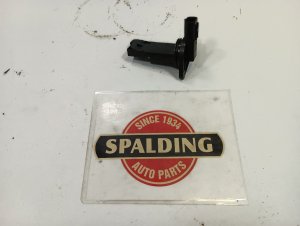
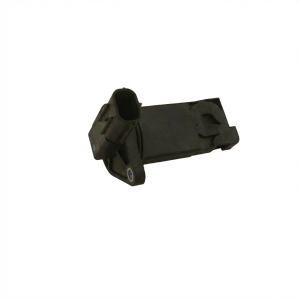
- Dirty or Faulty Mass Airflow (MAF) Sensor 🔴 High Probability → Shop Fuel Injection Air Flow Meter Skyactiv-G engines are sensitive to airflow readings. The MAF sensor can become contaminated with dirt, oil, or debris, causing it to under-report airflow and leading the PCM to inject insufficient fuel.
How to confirm: Inspect the sensor for visible contamination. With a scan tool, monitor MAF readings at a fully warmed-up idle. A healthy 2.5L engine should read approximately 2.2-4.0 g/s. A reading significantly below this range, or one that doesn't increase smoothly with RPM, suggests a problem. Unplugging the MAF sensor and seeing if the idle stabilizes can be a quick test, forcing the engine onto a default map.
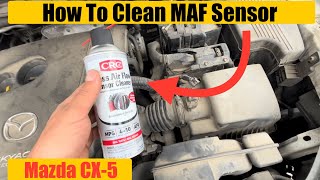
Typical fix: Clean the MAF sensor with a dedicated MAF sensor cleaner. If cleaning doesn't resolve the issue or readings are still incorrect, replace the sensor. The OEM part number for the sensor itself is often PE01-13-215. 🎬 Watch: A quick guide to cleaning your Skyactiv MAF sensor.
Est. part cost: $10-$15 (cleaner), $100-$250 (new sensor) - Vacuum Leak 🔴 High Probability The intake manifold gaskets are a known failure point on Skyactiv engines, becoming hard and brittle over time and allowing unmetered air to enter the engine after the MAF sensor. Hoses for the PCV system or brake booster can also crack or become disconnected.
How to confirm: A visual inspection of all vacuum hoses is the first step. The most definitive method is to perform a smoke test, which involves filling the intake system with smoke under low pressure and watching for where it escapes. Pay close attention to the intake manifold gaskets. A technician can also use a scan tool to watch fuel trims; if Long Term Fuel Trims are high at idle (e.g. >+20%) but decrease and move closer to zero at higher RPMs (~2500 RPM), a vacuum leak is highly probable.
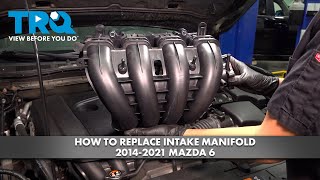
Typical fix: Replace the leaking gasket or hose. The intake manifold gasket set is a common replacement. 🎬 Watch: This walkthrough shows how to access and replace the gaskets. The OEM part number is PE01-13-111.
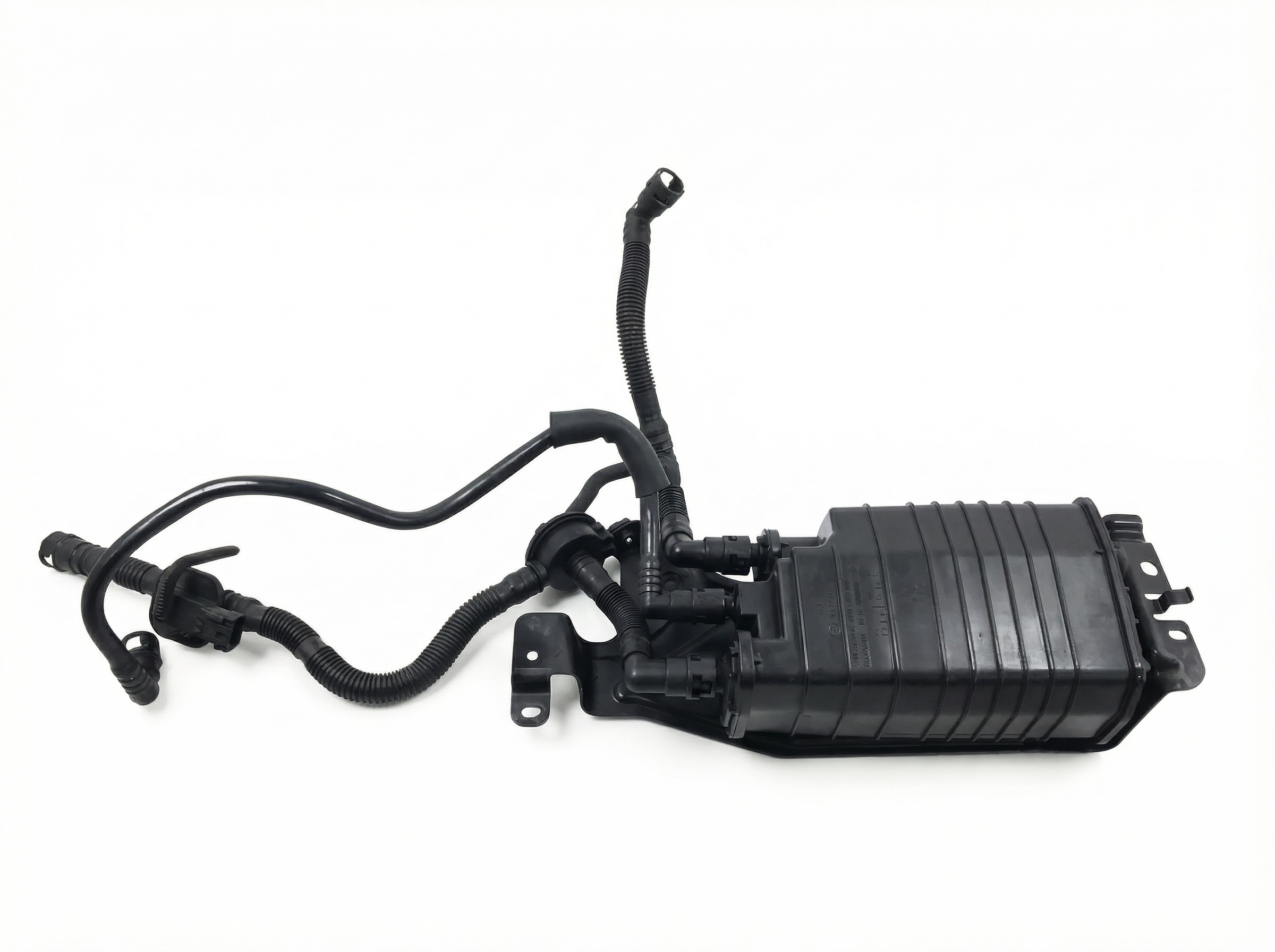
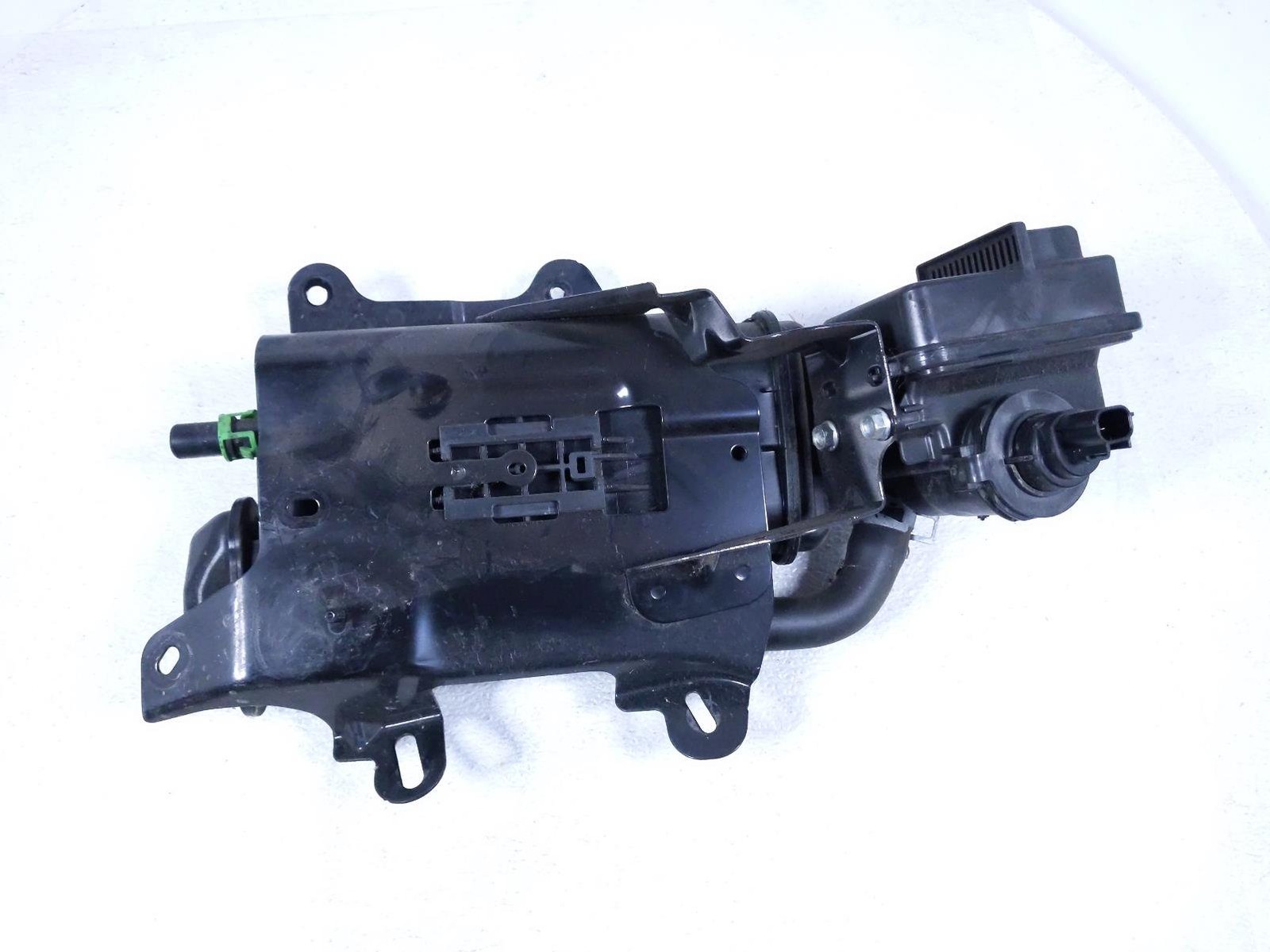
Est. part cost: $10-$100 - Faulty EVAP Purge Solenoid Valve 🟡 Medium Probability → Shop Vapor Canister A purge valve stuck open creates a constant vacuum leak by allowing fuel vapors from the charcoal canister to enter the intake manifold at idle, when it should be closed. Forum discussions for the Mazda3 and CX-30 with the same engine show this is a common, and often misdiagnosed, cause of P0171.
How to confirm: With the engine running at idle, disconnect the vapor line from the purge valve to the intake manifold and feel for suction with your finger. There should be no vacuum. If suction is present, the valve is stuck open. 🎬 See how to test your purge valve without any special tools. You can also test the solenoid's resistance with a multimeter or by applying 12V to see if it clicks open and closed.
Typical fix: Replace the EVAP purge solenoid valve. The common OEM part number is PE01-18-751.
Est. part cost: $30-$90 - Faulty Front Oxygen (Air/Fuel Ratio) Sensor ⚪ Low Probability → Shop Oxygen Sensor While less common than other causes, a failing or slow-responding A/F sensor can send incorrect lean readings to the PCM, even if the mixture is correct. These sensors can become 'lazy' with age and mileage.
How to confirm: This requires a scan tool that can graph the O2 sensor voltage or current. A healthy upstream sensor will show rapidly fluctuating readings as it monitors the air-fuel mixture. A lazy or dead sensor will have slow, delayed, or flat-line readings.
Typical fix: Replace the upstream (pre-catalytic converter) oxygen sensor, also known as the Air/Fuel Ratio sensor.
Est. part cost: $80-$200
Rare But Worth Checking
- Clogged or Failing Fuel Injectors: → Shop Fuel Injector Mazda issued a Technical Service Bulletin (MT-021/17) that includes Skyactiv engines, listing fuel injector replacement as the final repair step if MAF, A/F sensor, and vacuum leak checks do not resolve a P0171 code. This suggests it's a known, albeit less common, issue confirmed by the manufacturer.
- Weak Fuel Pump: → Shop Fuel Pump If the lean condition primarily occurs at higher RPMs or under heavy load, a failing fuel pump may not be able to supply enough fuel volume. While a recall (5321K) for faulty fuel pumps existed on some 2018-2019 models, it's still a possibility to consider if other diagnostics fail.
- Exhaust Leak: A crack or leak in the exhaust manifold or pipe before the first oxygen sensor can pull in outside air, tricking the sensor into reporting a lean condition. This is more likely to be heard as a ticking or puffing noise, especially on a cold start.
Diagnosis Steps
- Check for any other stored trouble codes to get more context.
- Visually inspect the entire air intake system from the air filter box to the throttle body. Ensure the air filter box is properly latched and all hoses are securely connected without cracks.
- Inspect all accessible vacuum lines for cracks, disconnection, or brittleness. Pay close attention to the PCV hose.
- Using a dedicated MAF sensor cleaner, clean the MAF sensor wires. Do not touch the wires.
- If you have a scan tool, observe Long Term Fuel Trim (LTFT) at idle. High positive numbers (e.g., >+20%) confirm the PCM is adding fuel to compensate for a lean condition.
- To test for a vacuum leak, hold the engine RPM steady at ~2500 RPM. If the LTFT and STFT numbers decrease significantly (move closer to 0), a vacuum leak is highly probable.
- Perform a smoke test to definitively locate the source of any vacuum leaks. Pay close attention to the intake manifold gaskets and the EVAP system hoses.
- Test the EVAP purge solenoid for proper function. It should be closed (no vacuum flow) at idle.
- If no vacuum leaks are found, use a scan tool to graph the upstream oxygen sensor's performance to check for lazy or incorrect readings.
- Check fuel pressure to rule out a weak fuel pump, especially if the lean condition worsens under load.
- As a final step, per Mazda TSB MT-021/17, if all other checks pass, the issue may be with the fuel injectors.
Parts You'll Likely Need
- Mass Airflow Sensor Cleaner — Often, the MAF sensor is just dirty and cleaning it is the cheapest and easiest first step that frequently solves the problem.
Trusted brands: CRC, Liqui Moly
Aftermarket price range: $10-$15 - Intake Manifold Gasket Set
(OEM #PE01-13-111)— These gaskets are a known failure point on Skyactiv engines, causing vacuum leaks. Replacing them is a common fix for a persistent P0171 after the MAF has been ruled out.
Trusted brands: Mazda (OEM), Fel-Pro, Mahle
OEM price range: $12
Aftermarket price range: $5-$10 - EVAP Purge Solenoid Valve
(OEM #PE01-18-751)— A stuck-open purge valve is a common cause of a P0171, creating a vacuum leak that is often misdiagnosed. It's a relatively inexpensive part to replace.
Trusted brands: Mazda (OEM), Bosch, Dorman
OEM price range: $50-$90
Aftermarket price range: $30-$60
Related Codes That Often Appear With This One
- P0300, P0301, P0302, P0303, P0304 — A severe lean condition can cause the air-fuel mixture to fail to ignite properly, leading to random (P0300) or specific cylinder (P030X) misfires. Mazda TSB MT-021/17 explicitly notes that P0171 can appear with misfire codes.
- P2187 — This code means 'System Too Lean at Idle'. If you see P0171 and P2187 together, it strongly points to a vacuum leak or a stuck-open EVAP purge valve, as these issues have the most significant effect on the air-fuel mixture at idle RPMs.
Technical Service Bulletins (TSBs) & Recalls
- MT-021/17: 'CHECK ENGINE LIGHT ON WITH DTC P0171' - Covers various Skyactiv models and points to fuel injectors as a final diagnostic step.
- TSB 01-012/20: 'EXCESSIVE OIL CONSUMPTION' - Related to 2021 2.5T engines, but highlights a known issue with valve stem seals on some Skyactiv engines.
- CSP13: 'Mazda Connect Infotainment System Limited Warranty Extension' - Not a TSB but a customer service program addressing 'ghost touch' and other infotainment issues.
Platform-Specific Known Issues
- Mazda Technical Service Bulletin MT-021/17 specifically identifies P0171 on 2022-2023 CX-30 models and points to faulty fuel injectors as a possible cause after other diagnostics are performed.
- Some 2021 CX-30 models were noted in TSBs for excessive oil consumption due to faulty valve stem seals, which is a separate issue but highlights platform-specific engine concerns from the period.
Mechanic-Grade Diagnostic Values
- Mass Airflow (MAF) Sensor Reading at Idle — expected: Approximately 2.2-4.0 g/s at fully warmed-up idle for a 2.5L engine. Should be close to the engine displacement in liters (e.g., a 2.0L should be around 2.0 g/s).. Failure: A reading significantly lower than expected, or a reading of 3.0 g/s or higher at idle, can indicate a faulty sensor or unmetered air leak.
- High-Pressure Fuel Pump Pressure — expected: At least 2,176 psi (15 MPa) at wide-open throttle.. Failure: Pressure significantly below this value under load could indicate a failing high-pressure fuel pump, though this is a rare cause for P0171 alone.
- Long Term Fuel Trim (LTFT) and Short Term Fuel Trim (STFT) — expected: Ideally close to 0%, within +/- 10%.. Failure: A sustained LTFT of +20% or higher, combined with STFT, will trigger the P0171 code. If LTFT is high at idle but drops towards 0 at 2500 RPM, a vacuum leak is the most likely cause.
Scan Tool Commands That Help
- Advanced Scan Tool (e.g., Autel, Snap-on) or Mazda M-MDS: Purge Solenoid Valve On/Off or Duty Cycle Command — To definitively test a suspected stuck EVAP purge valve. At idle, command the valve to 0% (closed). If high positive fuel trims immediately start to decrease, it confirms the valve was stuck open, causing a vacuum leak.
- Mazda M-MDS or compatible advanced scan tool: Reset KAM (Keep Alive Memory) / Clear Fuel Adaptations — After replacing a component that affects the air-fuel ratio (like a MAF sensor, fuel injectors, or fixing a major vacuum leak). This clears the old, learned high fuel trim values and forces the PCM to re-learn from the new, correct baseline, preventing the code from returning immediately.
- N/A - Manual Procedure: ECU/Transmission Adaptive Learn Reset — To reset the learned driving parameters back to the factory baseline. This can be useful after a repair to see if the engine behavior changes. The procedure is: Turn the vehicle to accessory mode (press start button once without foot on brake), depress the accelerator pedal to the floor for 30 seconds, then turn the vehicle off.
Real Owner Repair Stories
- Reddit user in r/MazdaCX30 (2019 Mazda 3 BP Skyactiv-X (similar platform and systems)) — Recurring P0171 code, occasional engine stalling at idle.
❌ Tried (didn't work) Intake system checked for leaks (none found), Lambda (O2) sensors checked (reported OK), MAF sensor replaced, ECU calibration / fuel injection reset performed
✅ What actually fixed it The problem was a faulty EVAP system (canister or related valve). The user suggested this to the dealer after finding a similar story online, and it was confirmed to be the cause. - ScannerDanner Forum user (2014 Mazda 3 (similar Skyactiv engine and logic)) — P0171 with LTFT at +20.5% at idle, rough idle oscillating between 550-700 RPM.
❌ Tried (didn't work) Upstream O2 sensor replaced, MAF sensor replaced, Exhaust leaks after the O2 sensor repaired, Visual inspection for vacuum leaks (no smoke test)
✅ What actually fixed it The final solution was a fuel delivery issue, specifically clogged/dirty fuel injectors. The owner ran several bottles of Amsoil PI performance additive (a strong fuel system cleaner) through the tank, which resolved the high fuel trims and the P0171 code.
"I Checked Everything" — The Actual Cause
- In a documented case on a similar Mazda platform, the vehicle passed inspections for vacuum leaks, had its MAF and O2 sensors replaced, but the P0171 code persisted. The actual cause was found to be a faulty EVAP system, which can act as an intermittent vacuum leak that may not be present during a standard smoke test if the purge valve isn't commanded open.
- Another case pointed to clogged fuel injectors as the root cause after extensive diagnostics for vacuum and exhaust leaks came up empty. The lean condition was caused by insufficient fuel delivery, not unmetered air. Using a high-quality fuel injector cleaner resolved the issue.
OEM Part Supersession History
Multiple older numbers (e.g., 8laa02310, 8pe202310)→PE01-13-111— Standard part evolution and consolidation for the Intake Manifold Gasket.
Model Year Variations Within This Range
- 2024: For the 2024 model year, the base 2.0L engine was discontinued, making the 2.5L Skyactiv-G the standard engine. This engine was updated to produce 191 horsepower. Turbo models also received a larger 10.25-inch infotainment display. These changes do not fundamentally alter the diagnosis for a P0171 code but confirm the 2.5L engine is the only non-turbo variant from this year forward.
Diagnostic Flowchart
Other Known Issues on This Vehicle
Issues unrelated to this code that are worth knowing about as an owner of this generation:
- Excessive Oil Consumption (2.5L Turbo) 🔴 High — Primarily affects 2021 models with the 2.5L Turbo engine, traced to faulty valve stem seals. A class-action lawsuit was settled regarding this issue. (Ref: TSB 01-012/20)
- Infotainment System 'Ghost Touch' and Reboots 🟠 Medium — Common across many Mazda models from 2016-2022, including the CX-30. The screen may register phantom touches or randomly reboot. It is often caused by a faulty Connectivity Master Unit (CMU). (Ref: Customer Service Program (CSP13) extends the warranty for this specific issue.)
- Parasitic Battery Drain 🟠 Medium — Reported on early models (2020-2022), where the battery drains overnight or after a few days of sitting. Often traced to modules not entering sleep mode correctly, sometimes related to the key fob's proximity to the vehicle. (Ref: Software updates were released to address this.)
- Automatic Emergency Braking (AEB) False Activation 🔴 High — Some owners report the vehicle's Smart Brake Support system activating unexpectedly, causing sudden braking with no obstacle present. This is a significant safety concern.
Used vs. New Parts: Buying Guide for This Vehicle
When a used part is the smart pick: For this specific repair, buying used parts is generally not recommended for the most common failure items. Sensors and gaskets are wear items and should be purchased new. A used intake manifold assembly could be considered if the original is physically damaged, but the gaskets should still be replaced.
Donor-vehicle mileage cap: roughly under 50000 miles for the part to have meaningful remaining life.
What to inspect on the donor part:
- For a used intake manifold, check for any cracks, warping, or damage to the gasket surfaces.
- Ensure all threaded inserts are intact and not stripped.
- Verify the donor vehicle was not in a front-end collision that could have stressed the plastic manifold.
OEM-only on this vehicle (don't cheap out):
- Mass Airflow (MAF) Sensor: Aftermarket MAF sensors are notoriously unreliable and can cause persistent performance issues. It is highly recommended to use a genuine Mazda (Denso) part.
- Air/Fuel Ratio (Oxygen) Sensor: Similar to the MAF, OEM (Denso or NTK) sensors are crucial for accurate readings. Cheaper aftermarket sensors often have different response times that the Mazda PCM does not like.
- Fuel Injectors: Per Mazda TSB MT-021/17, if injectors are the cause, replacement with genuine OEM parts is the specified repair.
Aftermarket brands forum-validated for this vehicle:
- Intake Manifold Gaskets: Fel-Pro, Mahle, and Victor Reinz are reputable brands for gaskets and seals.
- EVAP Purge Valve: Bosch and Dorman (OE Solutions line) are generally considered reliable aftermarket alternatives to OEM.
Brands owners have reported issues with on this vehicle:
- Avoid unbranded, 'white-box' electronic sensors (MAF, O2) from online marketplaces. They are a very common source of repeat failures and incorrect diagnostics.
Real Owner Stories
Aggregated from forums and TSBs cited above. Mileages and costs reflect what owners reported in those sources.
2022-2023 Mazda CX-30 2.5L
Symptoms: Check engine light on with DTC P0171.
What fixed it: Replacement of fuel injectors as per the final diagnostic step of the technical service bulletin.
Source hint: MT-021/17: 'CHECK ENGINE LIGHT ON WITH DTC P0171'
2021 Mazda CX-30 2.5L
Symptoms: Engine stalling, particularly at idle; rough or unstable idle.
What fixed it: Replacing the EVAP purge solenoid valve which was stuck open.
Source hint: https://www.reddit.com/r/MazdaCX30/comments/16r7037/check_engine_p0171_code/
2019-2024 Mazda CX-30 2.5L
Symptoms: Subtle 'sucking' or 'hissing' noise from the engine bay at idle; high fuel trims at idle that improved at higher RPM.
What fixed it: Replacement of the intake manifold gaskets (Part PE01-13-111) after a smoke test confirmed a leak.
Source hint: https://www.mazdas247.com/forum/index.php?threads/infamous-p0171-i-need-help-on-this-one.123826005/
Related OBD-II Codes
Frequently Asked Questions
Does Mazda TSB MT-021/17 apply to my 2022-2023 CX-30 if I have a P0171 code?
How can I tell if my CX-30's P0171 code is caused by a vacuum leak or a bad MAF sensor?
Is there a specific part number for the intake manifold gasket on the 2.5L Skyactiv-G engine?
Could a faulty EVAP component cause a lean condition on my Mazda CX-30?
What is the correct MAF sensor reading for a healthy 2.5L Skyactiv-G engine at idle?
Does the CX-30 share this P0171 issue with other Mazda models?
Helpful Videos

We Have This Part in Stock

The information in this article is provided for general reference and educational purposes only. Vehicle specifications, procedures, and part compatibility can vary by production date, trim level, and region. Always consult your vehicle's factory service manual and verify part numbers before purchasing or performing repairs. Safety-critical components such as airbags, seat belts, and braking systems should be installed by a qualified professional.
- Mazda CX-30:
- 🧭 Diagnostic Flowchart
- 🎬 Helpful Videos
- 🛍️ Shop This Part
- What's Unique About the 2019-2024 Mazda CX-30
- Symptoms You May Notice
- Most Likely Causes
- Rare But Worth Checking
- Diagnosis Steps
- Parts You'll Likely Need
- Related Codes That Often Appear With This One
- Technical Service Bulletins (TSBs) & Recalls
- Platform-Specific Known Issues
- Mechanic-Grade Diagnostic Values
- Scan Tool Commands That Help
- Real Owner Repair Stories
- "I Checked Everything" — The Actual Cause
- OEM Part Supersession History
- Model Year Variations Within This Range
- Other Known Issues on This Vehicle
- Used vs. New Parts: Buying Guide for This Vehicle
- Real Owner Stories
- 2022-2023 Mazda CX-30 2.5L
- 2021 Mazda CX-30 2.5L
- 2019-2024 Mazda CX-30 2.5L
- Related OBD-II Codes
- Frequently Asked Questions
- 🎟️ Get 5% Off