

P0171 on 2014-2021 Mazda CX-5: Causes and Fixes for System Too Lean
On a 2014-2021 Mazda CX-5, the P0171 code is most often caused by a vacuum leak from failed intake manifold gaskets or an improperly sealed air filter box. Start by checking the airbox lid, then clean the MAF sensor before suspecting bad gaskets, which is a more involved repair. For 2018-2019 models, a faulty low-pressure fuel pump is also a strong possibility due to a recall.
- Always check the air filter box lid first after getting a P0171 code; it's a common and free fix.
- The most likely mechanical failure is a vacuum leak from the intake manifold gaskets, a known weak point on this engine.
- If you own a 2018-2019 CX-5, check if your vehicle is affected by the fuel pump recall (5321K), as it's a likely cause.
- Cleaning the MAF sensor is an easy and inexpensive diagnostic step that should be done before attempting more complex repairs.
- Do not replace the oxygen (A/F) sensor unless all other possibilities, especially vacuum leaks and fuel delivery issues, have been thoroughly ruled out.
What's Unique About the 2014-2021 Mazda CX-5
While P0171 is a generic code, the Mazda CX-5 with the SkyActiv-G engine has specific weak points. The intake manifold gaskets are a well-documented failure item, leading to vacuum leaks. Additionally, a recall (5321K / NHTSA 21V-875) was issued for the low-pressure fuel pump on 2018-2019 models, making it a prime suspect for those years. Finally, Mazda issued a Technical Service Bulletin (MT-021/17) that applies to a wide range of Skyactiv models and provides a specific diagnostic flow for this code, which can ultimately point to faulty fuel injectors if simpler causes are ruled out.
Generation note: This range covers two CX-5 generations: the first (KE, 2014-2016) and the second (KF, 2017-2021). While the common causes are similar, the 2018-2019 models (KF generation) were subject to a specific fuel pump recall (NHTSA 21V-875) that can cause this code. The 2.5L PY-VPS engine in the KF generation (2017+) also features a dual injection system with both direct and port injectors to help reduce carbon buildup on intake valves.
Symptoms You May Notice
- Check Engine Light is on
- Rough or fluctuating idle, especially when stopped in gear
- Hesitation or lack of power during acceleration
- Reduced fuel economy
- Engine stalling at low speeds or when coming to a stop
- A hissing sound from the engine bay, indicating a vacuum leak
- Symptoms may worsen when the fuel tank is low if the fuel pump is the cause
- Replacing the oxygen (A/F) sensor first. The sensor is usually doing its job by reporting the lean condition. The root cause is typically an unmetered air leak or a fuel delivery issue, not the sensor itself.
Most Likely Causes
- Improperly Sealed Air Filter Housing 🔴 High Probability → Shop Air Cleaner Assembly This is a common user error after changing the engine air filter. The airbox cover has rear tabs that must be inserted into slots before the front clips are latched. If not seated correctly, it creates a significant air leak after the MAF sensor, which the computer cannot account for, triggering P0171.
How to confirm: Visually inspect the air filter housing. Ensure the cover is seated correctly, with the rear tabs properly inserted into their slots, and that all metal clips are securely latched. Many owners report struggling to get the cover on correctly, only to find it was the source of the code.
Typical fix: Correctly reseat and latch the air filter housing cover. Clear the code and drive to see if it returns.
Est. part cost: $0 - Vacuum Leak (Intake Manifold Gaskets) 🔴 High Probability The intake manifold gaskets on SkyActiv engines are a known failure point. Over time, the rubber material can harden, crack, and lose its elasticity, failing to create a proper seal and allowing unmetered air to enter the engine. This is a very frequent cause of P0171 and the related P2187 (System Too Lean at Idle) code.
How to confirm: Perform a smoke test. Introduce smoke into the intake system via a vacuum line and look for smoke leaking from the area where the intake manifold meets the cylinder head. Alternatively, with the engine running, carefully spray brake cleaner or a combustible fluid around the gasket area; a noticeable change in engine RPM indicates a leak as the fluid is sucked in.
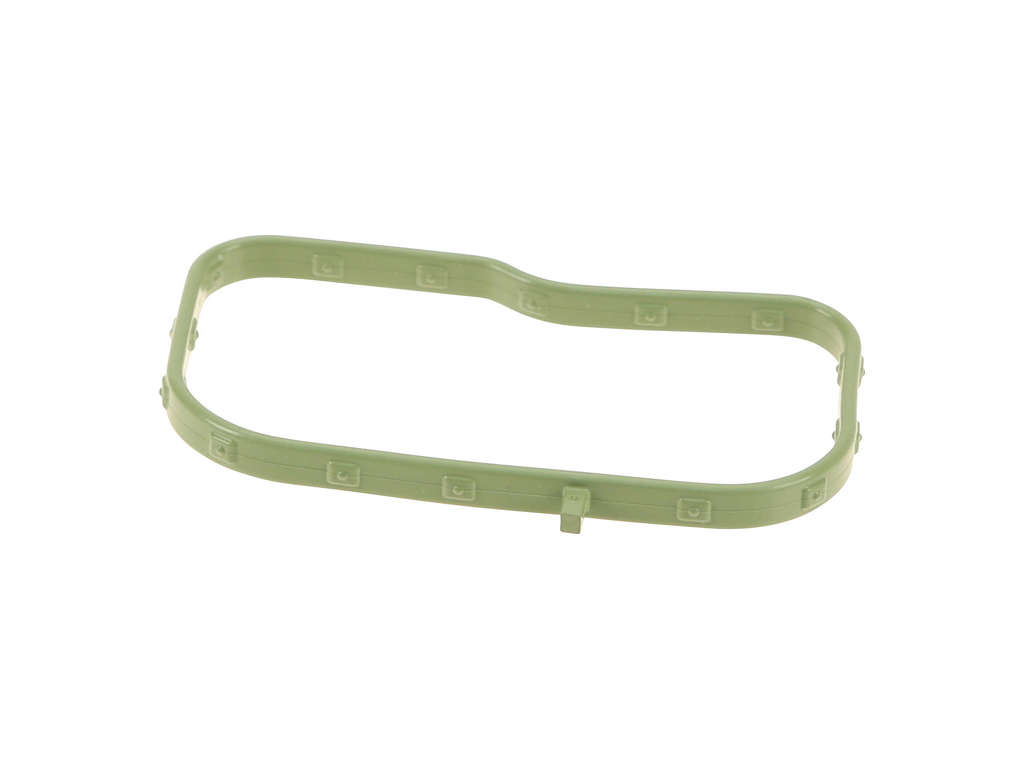
Typical fix: Replace all four intake manifold gaskets. This requires removing the plastic intake manifold. The OEM part number for the gasket is PY01-13-111. 🎬 Watch: How to replace an intake manifold gasket in your car
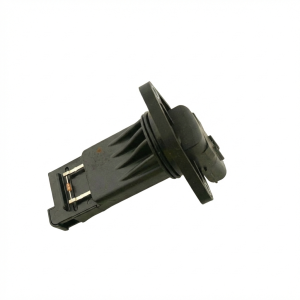
Est. part cost: $20-$60 - Dirty or Faulty Mass Airflow (MAF) Sensor 🟡 Medium Probability → Shop Fuel Injection Air Flow Meter The MAF sensor (OEM Part #PE01-13-215) measures the mass of air entering the engine. If the sensing element gets contaminated with dirt, oil, or debris, it can under-report the airflow, causing the PCM to inject too little fuel for the actual amount of air, leading to a lean condition.
How to confirm: Remove the MAF sensor and inspect the small wires inside for any contamination. Monitor its readings with an OBD-II scanner; abnormal grams/second readings at idle can indicate a problem. Often, cleaning is the first and most successful step.
Typical fix: Clean the sensor using a dedicated MAF sensor cleaner spray. Do not touch the delicate wires or use other chemicals like brake cleaner. Let it dry completely before reinstalling. 🎬 See this walkthrough on cleaning your CX-5 mass air flow sensor If cleaning doesn't resolve the issue, the sensor must be replaced.
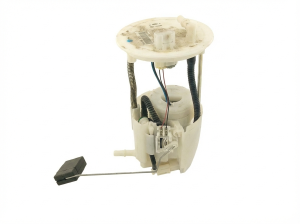
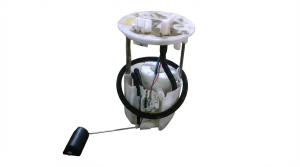
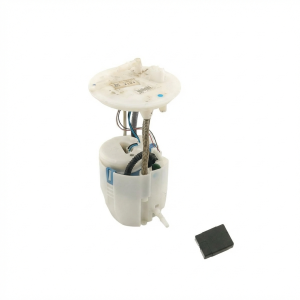
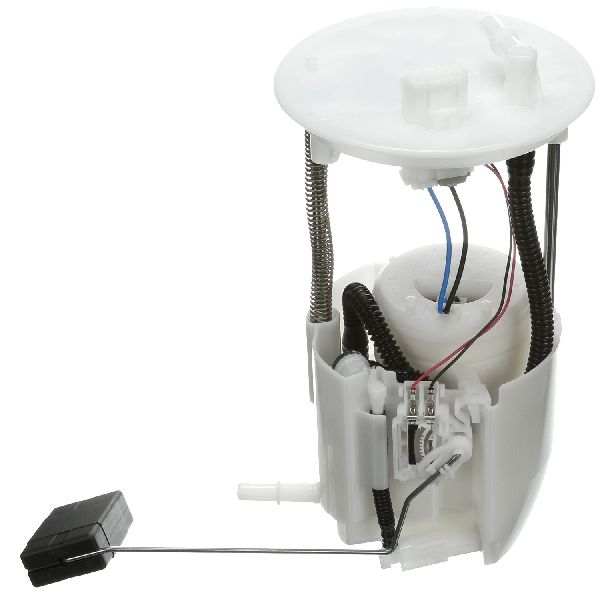
Est. part cost: $10-$15 for cleaner, $80-$150 for a new sensor - Failing Low-Pressure Fuel Pump 🟡 Medium Probability → Shop Fuel Pump Mazda issued recall 5321K (NHTSA ID: 21V-875) for 2018-2019 CX-5s and other models due to a defective fuel pump impeller that could crack or deform, leading to insufficient fuel delivery. This can cause the engine to run lean, especially under load or when the fuel tank level is low. While a recall exists for specific years, fuel pump failure can occur on any model year as a standard wear item.
How to confirm: Check if your vehicle's VIN is part of the recall on the NHTSA or Mazda website. A fuel pressure test is the definitive diagnostic step. Symptoms that worsen as the gas tank empties are a strong indicator of a failing pump.
Typical fix: Replace the low-pressure fuel pump assembly, located in the fuel tank. If covered by the recall, this will be performed by a Mazda dealer at no cost.
Est. part cost: $200-$400
Rare But Worth Checking
- Faulty Fuel Injectors: → Shop Fuel Injector Mazda TSB MT-021/17 identifies replacing the fuel injectors as the final diagnostic step if other causes like vacuum leaks and MAF sensor issues are ruled out. This indicates it's a known, but less common, factory-acknowledged cause of a persistent P0171 code, sometimes accompanied by misfire codes (P030x). Some owners have resolved persistent P0171 codes with a high-quality fuel injector cleaner.
- Faulty Purge Solenoid Valve: → Shop Vapor Canister If the purge valve (part of the EVAP system) sticks open, it can create a constant vacuum leak by pulling fuel vapors from the charcoal canister at idle when it should be closed. This can be intermittent and hard to diagnose without specific EVAP testing.
- Faulty Front Air/Fuel Ratio (O2) Sensor: → Shop Oxygen Sensor While possible, the front O2 sensor (also called an A/F sensor) is more often correctly reporting a lean condition than causing one. A 'lazy' or biased sensor can send incorrect data, but it should only be replaced after all other potential causes (especially vacuum leaks and fuel delivery issues) have been thoroughly ruled out.
- Exhaust Leak: An exhaust leak anywhere before the first oxygen sensor (the A/F sensor) can draw outside air into the exhaust stream. This extra oxygen causes the sensor to read a false lean condition, prompting the PCM to add fuel unnecessarily.
Diagnosis Steps
- Check for Simple Errors: Ensure the engine oil cap is tight and, most importantly, verify the air filter housing is fully seated and latched with the rear tabs in their slots. This is a surprisingly common cause. Clear the code and see if it returns.
- Inspect for Obvious Vacuum Leaks: Visually inspect all accessible vacuum hoses and the air intake duct between the MAF sensor and the throttle body for cracks or loose connections.
- Clean the Mass Airflow (MAF) Sensor: Disconnect and remove the MAF sensor. Spray the sensing element generously with a dedicated MAF sensor cleaner. Let it dry completely before reinstalling.
- Analyze Fuel Trims: Using an OBD-II scanner, observe the Short Term (STFT) and Long Term (LTFT) fuel trims at idle and at 2500 RPM. High positive numbers (e.g., LTFT > 15%) confirm a lean condition. If the fuel trim values decrease significantly at higher RPM, a vacuum leak is the most likely cause. If they remain high or get worse, suspect a fuel delivery issue or faulty MAF sensor.
- Perform a Smoke Test: This is the most effective way to find a vacuum leak. Introduce smoke into the intake system and look for leaks, paying close attention to the intake manifold gaskets.
- Test Fuel Pressure: If no vacuum leaks are found and the MAF is clean, check the fuel pressure to rule out a weak fuel pump. Check if your VIN is part of recall 5321K.
- Follow TSB MT-021/17: If the problem persists, refer to the diagnostic steps in the Mazda TSB, which may lead to testing the A/F sensor and finally considering fuel injector replacement as the last step.
Parts You'll Likely Need
- Intake Manifold Gasket Set (x4)
(OEM #PY01-13-111)— This is a very common failure point on SkyActiv engines that causes vacuum leaks and triggers the P0171 code. Four individual gaskets are required.
Trusted brands: Mazda OE, Fel-Pro, Victor Reinz
OEM price range: $8-$15 per gasket - Mass Airflow (MAF) Sensor Cleaner — Often, the MAF sensor is just dirty and cleaning it is a cheap and effective first step before considering replacement.
Trusted brands: CRC, Liqui Moly
OEM price range: $10-$15 per can - Low-Pressure Fuel Pump Assembly — A known failure item, especially on 2018-2019 models subject to recall 5321K. Can cause lean codes and stalling.
Trusted brands: Mazda OE, Denso
OEM price range: $200-$400
Related Codes That Often Appear With This One
- P2187 — This is a Mazda-specific code for 'System Too Lean at Idle'. It often appears with P0171 and strongly indicates a vacuum leak (like intake gaskets or a stuck purge valve) is the source of the problem, as these leaks have a more significant effect at low engine RPM.
- P0300, P0301, P0302, P0303, P0304 — A lean air-fuel mixture can fail to ignite properly, causing random (P0300) or cylinder-specific (P030x) misfires. TSB MT-021/17 specifically notes these codes can appear with P0171.
- P0192 — This code for 'Fuel Rail Pressure Sensor Circuit Low' strongly points towards a fuel delivery problem, such as the failing low-pressure fuel pump noted in the recall. If you see this code with P0171, the fuel pump should be a primary suspect.
Technical Service Bulletins (TSBs) & Recalls
- MT-021/17: Addresses DTC P0171, possibly with P030x misfire codes. Outlines a diagnostic procedure that ends with potential fuel injector replacement.
- 09-003/22: Pertains to the 'ghost touch' issue on the infotainment screen, a common unrelated problem.
- Recall 5321K / NHTSA 21V-875: Safety recall for failing low-pressure fuel pump impellers on 2018-2019 models.
Platform-Specific Known Issues
- Fuel Pump Recall: Mazda recall 5321K (NHTSA ID: 21V-875) was issued for certain 2018-2019 CX-5 models due to a faulty low-pressure fuel pump impeller that could fail.
- Intake Manifold Gasket Failure: The intake manifold gaskets on the 2.0L and 2.5L SkyActiv engines are a widely documented failure point that causes vacuum leaks.
Mechanic-Grade Diagnostic Values
- Long Term Fuel Trim (LTFT) — expected: Close to 0%, within +/- 10%. Failure: Sustained reading greater than +15%. A value of +25% will typically set the P0171 code.
- Short Term Fuel Trim (STFT) response to RPM increase — expected: If high at idle (e.g., >+15%), it should decrease towards 0% when RPM is raised to ~2500 RPM.. Failure: If STFT drops significantly with increased RPM, it strongly suggests a vacuum leak. If it remains high or increases, it points to a fuel delivery or MAF sensor issue.
- Mass Airflow (MAF) Sensor Reading at Idle — expected: Approximately 1.8 to 4.0 grams/second (g/s) for a 2.0L/2.5L engine at normal idle.. Failure: A reading significantly outside this range can indicate a faulty sensor or a large vacuum leak.
- EVAP Purge Solenoid Valve Control Duty — expected: 0% at idle.. Failure: A value greater than 0% at idle indicates the valve is being commanded open when it should be closed, which can cause a lean condition.
Scan Tool Commands That Help
- Mazda M-MDS (or equivalent high-level scanner): PID/Data Monitor — To monitor live data PIDs like MAF, VLV_TIMING_ACT_IN (actual valve timing), and VLV_TIMING_DSD_IN (desired valve timing) to ensure components are operating as commanded by the PCM.
- Mazda M-MDS (or equivalent high-level scanner): Fuel System Test — To command the fuel pump on and check for pressure and volume, and to perform injector balance tests to identify a weak or clogged injector.
Wiring & Ground Locations
- Ground Point G11 — A wiring diagram for a 2017 CX-5 shows a junction connector labeled G11, which serves as a ground point for multiple systems. Its exact physical location on the chassis would need to be confirmed via the service manual's ground distribution section.. A poor ground connection for critical sensors like the MAF or A/F sensor can cause incorrect readings, leading to fuel trim issues and a P0171 code.
- MAF Sensor Connector — On the air intake duct, between the air filter box and the throttle body.. Technicians need to access this connector to test for proper voltage and ground signals to the MAF sensor. A loose or corroded connector can mimic a failed sensor.
Real Owner Repair Stories
- Reddit user engrrehan (2017 Mazda CX-5) — P0171 code would appear after extended idling. LTFT would only increase during idle, not while driving, suggesting a vacuum leak.
❌ Tried (didn't work) Smoke test, Disconnecting wires to verify other sensors
✅ What actually fixed it Replacing the MAF sensor with a cheap one from a junkyard resolved the issue completely. - ScannerDanner Forum user (2014 Mazda 3 (similar Skyactiv engine and logic)) — Persistent P0171 with LTFT at +20.5% at idle. RPMs would oscillate between 550 and 700.
❌ Tried (didn't work) Replacing upstream O2 sensor, Replacing MAF sensor, Repairing exhaust leaks, Visual inspection for vacuum leaks (no smoke test)
✅ What actually fixed it The issue was resolved by using a fuel injector cleaner (Amsoil PI performance additive). The user concluded the cause was a dirty/clogged fuel injector. - Mazdas247 Forum user hhekimyan (2020 Mazda CX-5 with 28,000 miles) — P0171 with LTFT stuck at +25%, which did not decrease even at wide-open throttle. Fuel loop would not close.
❌ Tried (didn't work) Replacing sensors, Smoke test (no leaks found), Spraying cleaner around intake (no RPM change), Reprogramming a replaced PCM with MDARS
✅ What actually fixed it The user suspected faulty fuel injectors or a bad PCM as the final options, but the thread ended before a final resolution was confirmed. This story highlights a difficult diagnostic case where common fixes fail.
"I Checked Everything" — The Actual Cause
- In one documented case on a 2017 CX-5, the owner performed a smoke test which revealed no leaks, replaced the O2 sensor, PCV valve, and high-pressure fuel pump, but the P0171 code persisted. A fellow owner solved an identical set of symptoms (high LTFT at idle) by replacing the MAF sensor, suggesting the sensor was faulty in a way that didn't set a specific MAF code but skewed readings enough to cause the lean code.
- On a similar Skyactiv engine, after replacing the O2 and MAF sensors and fixing exhaust leaks to no avail, the final fix was a bottle of fuel injector cleaner, pointing to clogged injectors as the root cause that a smoke test would never find.
When the Usual Fixes Don't Work
- While intake manifold gaskets are a very common cause, some owners have replaced them without resolving the P0171 code. In a case involving a 2017 CX-5, the owner went through replacing the O2 sensor, PCV valve, and high-pressure fuel pump after a smoke test showed no leaks. The issue was only resolved after another user suggested replacing the MAF sensor, which had been the true, underlying cause despite not triggering a specific MAF-related trouble code.
OEM Part Supersession History
Multiple older numbers (e.g., 8lgn02310a, 8lt102310b)→PY01-13-111— Part number consolidation and potential material/design updates over the vehicle's production run.
Heads up: PY01-13-111 is the standard service replacement gasket for the 2.5L SkyActiv engine across the 2014-2021 model years and is compatible with earlier versions.
Model Year Variations Within This Range
- 2017-2021: The 2.5L PY-VPS engine used in the second generation (KF) features a dual injection system, combining direct injection with supplemental port injection. This was designed to reduce carbon buildup on intake valves, a common issue with direct-injection-only engines. While not a direct cause of P0171, a fault in the control or function of either set of injectors could contribute to fueling issues.
- 2018-2019: These specific model years were subject to Mazda recall 5321K / NHTSA 21V-875 for a defective low-pressure fuel pump, making it a primary suspect for P0171 on these vehicles.
Diagnostic Flowchart
Other Known Issues on This Vehicle
Issues unrelated to this code that are worth knowing about as an owner of this generation:
- Infotainment 'Ghost Touch' and Delamination 🟠 Medium — Common on 2017-2020 models. The touchscreen registers phantom inputs, or the screen layers can crack/peel. Often happens when the vehicle is stopped, as the touchscreen is disabled while in motion. (Ref: TSB 09-003/22 provides a repair procedure to replace the screen component, not the whole unit.)
- Intake Valve Carbon Buildup 🟡 Low — A potential long-term issue inherent to all gasoline direct injection (GDI) engines, including Skyactiv-G. Oil vapors from the PCV system can bake onto the intake valves over high mileage (typically 80k-100k+ miles), as no fuel washes over them. However, Mazda's design seems less prone to severe buildup than other manufacturers.
- Failing LED Daytime Running Lights (DRL) 🟡 Low — Primarily affects the 2016 model year. The LED DRLs can flicker or fail prematurely. The headlight assembly was a sealed unit, making the repair expensive. (Ref: A recall was issued for the 2016 model year to address this.)
- Premature Brake Wear 🟡 Low — Some owners of earlier models (particularly 2014-2016) reported needing to replace brake pads and rotors sooner than expected, sometimes before 30,000 miles.
- Engine Fails to Shut Off Completely 🟠 Medium — A strange electrical issue reported on 2013-2014 models where pressing the stop button would turn off the engine, but accessory power would remain on, draining the battery. Attributed to a faulty park position sensor. (Ref: No formal recall was issued, but it was a widely discussed problem.)
Used vs. New Parts: Buying Guide for This Vehicle
When a used part is the smart pick: For expensive electronic components like a Mass Airflow (MAF) sensor, a used OEM part from a low-mileage donor vehicle can be a cost-effective diagnostic step or replacement, as demonstrated by a real repair story. Structural parts like the air filter housing or intake manifold (the plastic body itself, not gaskets) are also excellent candidates for used parts.
Donor-vehicle mileage cap: roughly under 60000 miles for the part to have meaningful remaining life.
What to inspect on the donor part:
- For sensors, check that the electrical connector pins are clean and free of corrosion.
- For plastic parts like the airbox, ensure there are no cracks, especially around mounting points.
- Verify the part number on the donor part matches your original part if possible.
OEM-only on this vehicle (don't cheap out):
- Air/Fuel Ratio (O2) Sensor: Aftermarket sensors are notoriously hit-or-miss and can cause persistent issues. Stick with OEM or a direct OE supplier like Denso.
- Mass Airflow (MAF) Sensor: While a used OEM part can work, cheap new aftermarket MAF sensors are a common source of problems. If buying new, choose OEM or a top-tier brand like Delphi or Denso.
- Gaskets and Seals: Always buy new. The cost is low, and the labor to replace them is high. A used gasket is guaranteed to be less effective than a new one.
Aftermarket brands forum-validated for this vehicle:
- Denso (for A/F and O2 sensors, often the OE supplier)
- Delphi (for MAF sensors)
Brands owners have reported issues with on this vehicle:
- Unbranded, low-cost MAF sensors from online marketplaces like Amazon or eBay are frequently reported to be defective out of the box or fail shortly after installation.
Real Owner Stories
Aggregated from forums and TSBs cited above. Mileages and costs reflect what owners reported in those sources.
2013 Mazda CX-5
Symptoms: Check engine light with code P0171.
What fixed it: Correctly latching the air filter box cover. The rear tabs of the cover were not in the slots, creating a leak.
Source hint: https://www.mazdaforum.com/forum/mazda-cx-5-54/p0171-code-mazda-cx-5-2013-solved-41662/
2014 Mazda CX-5
Symptoms: P0300 and P0171 codes with engine misfires.
What fixed it: The dealer diagnosed and repaired an intake manifold leak.
Source hint: https://www.mazdas247.com/forum/index.php?threads/p0300-and-p0171-codes-2014-mazda-cx-5.123862291/
2021 Mazda CX-5 2.5L Non-Turbo
Symptoms: P0171 symptoms appear specifically when the fuel tank is below half full.
What fixed it: The owner noted this behavior points strongly to a fuel pump issue.
Source hint: https://www.reddit.com/r/CX5/comments/18qj2sz/25_2021_non_turbo_p0171/
2020 Mazda CX-5
Symptoms: P0171 error on a low-mileage vehicle.
What fixed it: Owner attempted smoke and spray tests to locate a vacuum leak.
Source hint: https://www.mazdas247.com/forum/index.php?threads/p0171-error-2020-cx-5-cant-find-cause.123876095/
Related OBD-II Codes
Frequently Asked Questions
Is there a recall for the fuel pump on my 2018-2019 Mazda CX-5 that could cause P0171?
I just changed my air filter and now I have a P0171 code. What did I do wrong?
Does Mazda have a Technical Service Bulletin for P0171 on the SkyActiv-G engine?
What is the specific part number for the intake manifold gaskets if I need to replace them?
Can a dirty MAF sensor cause this code on my CX-5, and how do I fix it?
Why does my P0171 symptom get worse when my gas tank is low?
Helpful Videos

Used OEM Parts in Stock
New Aftermarket Parts Available


The information in this article is provided for general reference and educational purposes only. Vehicle specifications, procedures, and part compatibility can vary by production date, trim level, and region. Always consult your vehicle's factory service manual and verify part numbers before purchasing or performing repairs. Safety-critical components such as airbags, seat belts, and braking systems should be installed by a qualified professional.
- Mazda CX-5:
- 🧭 Diagnostic Flowchart
- 🎬 Helpful Videos
- 🛍️ Shop This Part
- What's Unique About the 2014-2021 Mazda CX-5
- Symptoms You May Notice
- Most Likely Causes
- Rare But Worth Checking
- Diagnosis Steps
- Parts You'll Likely Need
- Related Codes That Often Appear With This One
- Technical Service Bulletins (TSBs) & Recalls
- Platform-Specific Known Issues
- Mechanic-Grade Diagnostic Values
- Scan Tool Commands That Help
- Wiring & Ground Locations
- Real Owner Repair Stories
- "I Checked Everything" — The Actual Cause
- When the Usual Fixes Don't Work
- OEM Part Supersession History
- Model Year Variations Within This Range
- Other Known Issues on This Vehicle
- Used vs. New Parts: Buying Guide for This Vehicle
- Real Owner Stories
- 2013 Mazda CX-5
- 2014 Mazda CX-5
- 2021 Mazda CX-5 2.5L Non-Turbo
- 2020 Mazda CX-5
- Related OBD-II Codes
- Frequently Asked Questions
- 🎟️ Get 5% Off