

P0171 on 2016-2024 Mazda MX-5: System Too Lean Causes and Fixes
For a 2016-2024 Mazda MX-5, a P0171 code is most often caused by a dirty Mass Airflow (MAF) sensor or a vacuum leak from a failed intake manifold gasket. Start by cleaning the MAF sensor and ensuring the air filter box is properly sealed, as these are simple and inexpensive first steps. If the code persists, a smoke test to find vacuum leaks is the next logical step.
- Start your diagnosis by cleaning the Mass Airflow (MAF) sensor; it's the easiest and cheapest potential fix.
- A vacuum leak is a very high probability cause. The intake manifold gaskets are a known weak point on this engine. A smoke test is the best way to confirm a leak.
- Do not replace the oxygen (A/F) sensor unless you have ruled out vacuum leaks and MAF sensor issues first.
- Be aware of Mazda TSB MT-021/17, which points to faulty fuel injectors as a final, but officially recognized, solution if all other diagnostics fail.
- Always ensure the air filter box is sealed correctly after service, as this simple oversight can trigger the P0171 code.
What's Unique About the 2016-2024 Mazda MX-5
While P0171 is a generic code, Mazda's SkyActiv-G engines have shown a specific susceptibility to vacuum leaks from hardened intake manifold gaskets. Additionally, Mazda issued a broad Technical Service Bulletin (MT-004-22, which supersedes MT-021/17) that applies to the 2016-2023 MX-5. This TSB points to faulty fuel injectors as a potential cause if initial diagnostics for vacuum leaks and sensor issues don't resolve the problem, indicating a known factory-acknowledged failure path.
Generation note: This range covers the entire fourth-generation (ND) Mazda MX-5, which includes the ND1 (2016-2018, 155 hp) and ND2 (2019-2024, 181 hp) sub-generations. The fundamental causes of P0171 are similar across both, as they share the same core 2.0L SkyActiv-G engine architecture. However, part numbers for sensors or injectors may differ slightly, as noted in the parts list.
Symptoms You May Notice
- Check Engine Light is on
- Rough or unstable idle
- Engine hesitation or stumbling during acceleration
- Reduced fuel economy
- In some cases, stalling when stopped
- A distinct whistling or hissing sound from the engine bay at idle, indicating a vacuum leak
- Replacing the oxygen sensor before confirming it is faulty. A vacuum leak or MAF issue is more probable and should be ruled out first, as the O2 sensor is often just accurately reporting the lean condition caused by another component.
Most Likely Causes
- Vacuum Leak (Intake Manifold Gaskets) 🔴 High Probability The intake manifold gaskets on SkyActiv-G engines are a well-documented weak point across multiple Mazda models. Over time, the rubber material can harden, flatten, and crack, allowing unmetered air to enter the engine after the MAF sensor, which is most noticeable at idle.
How to confirm: Perform a smoke test on the intake system. Smoke will be visibly escaping from the area where the intake manifold meets the cylinder head if the gaskets are leaking. A hissing sound at idle is also a strong indicator.
Typical fix: Replace all four intake manifold gaskets.
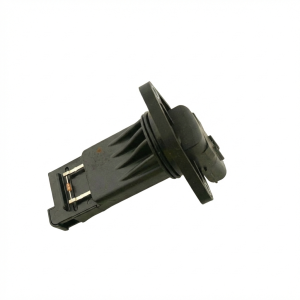
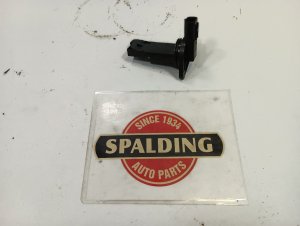
Est. part cost: $40-$60 - Dirty or Faulty Mass Airflow (MAF) Sensor 🔴 High Probability → Shop Fuel Injection Air Flow Meter The MAF sensor is located in the intake tract and can become contaminated with dirt and oil over time, causing it to under-report the amount of air entering the engine. This is a very common cause across most modern vehicles.
How to confirm: Inspect the sensor for contamination. Use an OBD-II scanner to monitor MAF readings; they should be around 1.9-2.3 g/s at warm idle and increase smoothly with RPM. A more specific value for the 2.0L Skyactiv is approximately 4.29 g/s at warm idle. Cleaning the sensor is a simple diagnostic step.
Typical fix: Clean the sensor using a dedicated MAF sensor cleaner spray. If cleaning does not resolve the issue, the sensor must be replaced.
Est. part cost: $10-$15 for cleaner, $100-$250 for a new sensor - Faulty Upstream Oxygen (Air/Fuel Ratio) Sensor 🟡 Medium Probability → Shop Oxygen Sensor The A/F sensor is a critical component for fuel mixture monitoring and is a common wear-and-tear item. A slow or failing sensor can send inaccurate 'lean' signals to the PCM, even if the mixture is correct.
How to confirm: Use a scan tool to graph the voltage of the upstream O2 sensor. A healthy sensor will show rapid fluctuations between approximately 0.1V and 0.9V. A lazy or flat-lining sensor is faulty.
Typical fix: Replace the upstream (pre-catalytic converter) oxygen sensor.
Est. part cost: $150-$280
Rare But Worth Checking
- Failing or Clogged Fuel Injectors: → Shop Fuel Injector While less common than vacuum leaks, Mazda TSB MT-004-22 (superseding MT-021/17) specifically lists replacing the fuel injectors as the final repair step if a P0171 code persists after other diagnostics, indicating a known potential failure on SkyActiv engines.
- Leaking EVAP Purge Solenoid Valve: → Shop Vapor Canister A stuck-open purge solenoid valve can create a vacuum leak by allowing fuel vapors from the charcoal canister into the intake manifold at the wrong time. On other Skyactiv models, this is a known cause for P0171, sometimes accompanied by stalling after refueling.
- Weak Fuel Pump or Low Fuel Pressure: → Shop Fuel Pump A failing fuel pump or a clogged fuel filter can restrict fuel flow, leading to a lean condition. This should be investigated if fuel trims are lean under load, not just at idle.
- Improperly Seated Air Filter Housing: → Shop Air Cleaner Assembly If the air filter has been recently serviced, ensure the airbox cover is fully seated and all clips are secure. A small gap can allow unmetered air to enter and trigger a P0171 code. One owner of a related Mazda CX-5 found this to be the exact cause of their P0171 after a service visit.
Diagnosis Steps
- Read the code with an OBD-II scanner and check the freeze frame data to see the engine conditions (RPM, load, temperature) when the code was set.
- Check long-term fuel trim (LTFT) values. A value significantly higher than +10% (e.g., +25%) confirms 🎬 Watch: 7 DIY methods to troubleshoot and fix a P0171 code. the engine is compensating for a lean condition.
- Visually inspect the entire air intake system from the air filter to the throttle body for cracked hoses, loose connections, or an improperly sealed airbox. Pay close attention to the airbox clips.
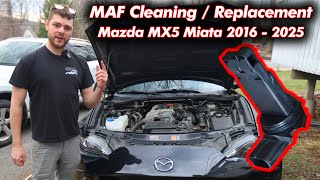
- Inspect and clean the Mass Airflow (MAF) sensor using a dedicated MAF sensor cleaner. Do not touch the delicate sensor wires. After cleaning, clear the codes and test drive to see if the code returns.
- If the code persists, perform a smoke test to definitively check for vacuum leaks. Pay close attention to the intake manifold gaskets, PCV hoses, EVAP purge solenoid valve, and brake booster lines.
- If no vacuum leaks are found, test the upstream oxygen (A/F) sensor's operation using a scan tool to observe its voltage readings. A lazy or non-responsive sensor is faulty.
- Test the EVAP purge solenoid valve to ensure it is not stuck open, which would create a vacuum leak.
- As a final step, if all else fails, investigate fuel delivery. This includes testing fuel pressure to check for a weak pump and considering the possibility of clogged fuel injectors as noted in Mazda's TSB MT-004-22.
Parts You'll Likely Need
- Intake Manifold Gasket
(OEM #PE01-13-111)— These gaskets are a common failure point on SkyActiv-G engines, leading to vacuum leaks that cause a P0171 code.
Trusted brands: Mazda Genuine Parts, Fel-Pro, Victor Reinz
OEM price range: $10-$15 each (4 required)
Aftermarket price range: $5-$10 each - Mass Airflow (MAF) Sensor
(OEM #PE01-13-215)— A dirty or failed MAF sensor is a high-probability cause for incorrect air-fuel mixture readings. Cleaning is the first step, but replacement is necessary if it fails.
Trusted brands: Denso, Bosch, Hitachi
OEM price range: $200-$250
Aftermarket price range: $80-$150 - Upstream Air/Fuel Ratio Sensor
(OEM #P51B-18-8GX (for 2016-2018 ND1))— This sensor provides primary feedback for fuel control. A slow or biased sensor can falsely report a lean condition. It's a common fix after vacuum leaks and MAF issues are ruled out.
Trusted brands: Denso, NGK
OEM price range: $250-$300
Aftermarket price range: $150-$220 - Fuel Injector
(OEM #PE01-13-250D (supercedes PE01-13-250C))— Cited in Mazda TSB MT-004-22 as a final solution for persistent P0171 codes, suggesting a known issue with clogging or failure on SkyActiv engines.
Trusted brands: Mazda Genuine Parts
OEM price range: $210-$270 each
Aftermarket price range: $50-$100 each
Related Codes That Often Appear With This One
- P0300 — A severe lean condition can cause random misfires across multiple cylinders. Mazda's TSB for P0171 explicitly mentions that it may appear with P030X misfire codes.
- P2187 — This is a Mazda-specific code for 'System Too Lean at Idle,' which strongly points towards a vacuum leak as the cause, since leaks have a more significant effect at low RPMs when engine vacuum is high.
Technical Service Bulletins (TSBs) & Recalls
- MT-004-22 (supersedes MT-021/17): Addresses DTC P0171 (Fuel Trim too Lean), possibly with P030X (Misfire). After checking the air intake, MAF, and A/F sensor, this TSB instructs technicians to replace the fuel injectors if the lean condition persists.
Mechanic-Grade Diagnostic Values
- Long Term Fuel Trim (LTFT) at idle — expected: Close to 0%, within +/- 10%. Failure: Sustained value of +15% or more.
- Total Fuel Trim (Short Term + Long Term) — expected: Close to 0%, within +/- 15%. Failure: Combined value exceeds +30%, which is Mazda's threshold for triggering P0171.
- Mass Airflow (MAF) Sensor Flow Rate — expected: Approximately 4.29 g/s at warm idle (no load).. Failure: Significantly lower reading (e.g., under 3.0 g/s) suggests a dirty or faulty sensor, or a vacuum leak downstream.
- High-Pressure Fuel System Pressure — expected: Approximately 3.0 MPa (435 psi) at idle.. Failure: Pressure significantly below the target value indicates a potential issue with the high-pressure fuel pump.
- Low-Pressure Fuel System Pressure — expected: 55-71 psi.. Failure: Pressure below this range points to a weak in-tank fuel pump or clogged fuel filter.
Scan Tool Commands That Help
- Mazda IDS / FORScan: Fuel Trim Reset — After replacing a component that affects the air-fuel ratio (like injectors, MAF sensor, or fixing a vacuum leak), this command should be used to clear the old learned fuel trim values. This forces the PCM to relearn the fuel strategy immediately, preventing the new parts from being compensated for based on old, incorrect data.
- Mazda IDS / Advanced Scan Tools: EVAP System Leak Test — To test the integrity of the EVAP system, including the purge solenoid. This can help identify if a stuck-open purge valve is the source of the unmetered air causing the P0171 code.
Wiring & Ground Locations
- G01 — On the cylinder head cover, left side of the engine bay.. This is a primary ground point for the engine control system. A loose or corroded connection here can cause erratic sensor readings, including from the MAF and A/F sensors, potentially leading to a false P0171 code.
- G04 — On the left side of the engine compartment, near the shock tower.. This ground point serves various components in the engine bay. Verifying its integrity is a crucial step in diagnosing any electrical fault, as a poor ground can introduce voltage drops and signal noise.
- MAF Sensor Connector — On the air intake tube, just after the air filter box.. The 5-pin connector for the MAF sensor is a critical point of failure. Wiggle-testing the connector and harness while monitoring live MAF data can reveal intermittent connections. The pins are: Pin 1 (Signal), Pin 2 (Ground), Pin 3 (Power), Pin 4 (Intake Air Temp), Pin 5 (Not Used).
Real Owner Repair Stories
- Miata.net forum user (2017 Mazda MX-5 ND) — Check Engine Light with P0171, slightly rough idle.
❌ Tried (didn't work) Cleaning the MAF sensor, Smoke testing the intake (no leaks found), Replacing the upstream O2 sensor
✅ What actually fixed it The user discovered the oil filler cap was not fully tightened after a recent oil change. Sealing it properly and clearing the codes resolved the issue permanently. The loose cap was creating a small, unmetered air leak into the crankcase, which is ventilated back into the intake, causing the lean condition. - Reddit r/MechanicAdvice user (2018 Mazda 3 2.0L SkyActiv-G) — P0171 code appeared immediately after an oil change service.
❌ Tried (didn't work) User initially suspected a major sensor failure.
✅ What actually fixed it The technician at the oil change shop had not properly seated and clipped the air filter housing shut after inspecting the air filter. This created a large vacuum leak after the MAF sensor. Securing the airbox clips resolved the code.
"I Checked Everything" — The Actual Cause
- A loose oil filler cap. The PCV system draws air from the crankcase, and a loose cap allows unmetered air to be pulled into the intake manifold, leaning out the mixture. This leak is often too subtle for a standard smoke test focused on the intake tract to reveal.
- A small crack in the flexible PCV hose. These hoses can develop hairline cracks on the underside that are difficult to see and may only open up under specific engine vacuum conditions, sometimes eluding a static smoke test.
OEM Part Supersession History
PE01-13-250B, PE01-13-250C, PEAR-13-250→PE01-13-250D— Internal revisions to improve performance and address potential failure modes leading to clogging or inconsistent spray patterns, which could contribute to a P0171 code as noted in TSB MT-004-22.
Heads up: All previous versions are compatible but have been superseded. For a replacement, always use the latest 'D' revision or newer.
Model Year Variations Within This Range
- 2016-2018 (ND1) vs 2019-2024 (ND2): The ND2 engine received a significant update for more power (155hp to 181hp), including lighter pistons/rods, a new crankshaft, and revised intake ports and fuel injectors. While the root causes of P0171 are the same, part numbers for components like the A/F sensor and fuel injectors may differ. For example, the ND1 A/F sensor is P51B-18-8GX, while the ND2 may use a different part. Always verify with VIN.
Diagnostic Flowchart
Other Known Issues on This Vehicle
Issues unrelated to this code that are worth knowing about as an owner of this generation:
- Manual Transmission Failures (Early Models) 🔴 High — Most common on 2016-2017 models, particularly with hard shifting. TSB 05-001-17-3309C was issued, and later models received revised components. However, sporadic failures are still reported on newer (2022-2023) models. (Ref: TSB 05-001-17-3309C)
- Automatic Transmission Abrupt Downshift 🟠 Medium — A recall (NHTSA 19V072000) was issued for 2016-2019 models with automatic transmissions due to a software flaw that could cause an unexpected and abrupt downshift. (Ref: Mazda Recall 3019A / NHTSA 19V072000)
- Mazda Connect Infotainment System Glitches 🟡 Low — Widespread issue affecting many Mazda models from 2016-2023. Symptoms include freezing, random reboots, ghost touches, and connectivity problems. A class-action settlement extended warranties for the Connectivity Master Unit (CMU). (Ref: Class Action Settlement (Duffy, et al. v. Mazda))
- Intake Valve Carbon Buildup 🟠 Medium — A common characteristic of all gasoline direct injection (GDI) engines, including the SkyActiv-G. Buildup on intake valves can occur over time, especially with frequent short trips. While not a catastrophic failure, it can lead to reduced performance and rough idle. Walnut blasting is the typical cleaning procedure, recommended by some specialists around 30,000-50,000 miles.
Used vs. New Parts: Buying Guide for This Vehicle
When a used part is the smart pick: For this specific repair, used parts are generally not recommended. The primary failure points are wear items (gaskets, sensors) or precision components (injectors, MAF sensor) that have a finite lifespan. The cost savings are minimal compared to the risk of installing a part that is already near the end of its life.
Donor-vehicle mileage cap: roughly under 40000 miles for the part to have meaningful remaining life.
What to inspect on the donor part:
- For a MAF sensor, inspect the sensing wires for any signs of physical damage or contamination.
- For an intake manifold, ensure all mounting points are intact and there are no visible cracks.
- Never buy used gaskets, seals, or O-rings.
OEM-only on this vehicle (don't cheap out):
- Fuel Injectors: Given the TSB pointing to injector failure, using OEM (latest revision PE01-13-250D or newer) is critical to ensure the problem is fixed permanently. Aftermarket injectors may not have the same flow characteristics required by the SkyActiv-G's precise direct injection system.
- Mass Airflow (MAF) Sensor: While some aftermarket brands are reputable, many owners report issues with cheap, unbranded MAF sensors causing persistent codes. Sticking with OEM or a trusted brand like Denso is a safer bet.
Aftermarket brands forum-validated for this vehicle:
- Denso or NGK/NTK for Air/Fuel (Oxygen) Sensors.
- Fel-Pro or Victor Reinz for intake manifold gaskets.
Brands owners have reported issues with on this vehicle:
- Unbranded, 'white-box' electronic sensors (MAF, O2) from online marketplaces. These are frequently cited in forums as being dead-on-arrival or failing shortly after installation.
Real Owner Stories
Aggregated from forums and TSBs cited above. Mileages and costs reflect what owners reported in those sources.
2016 Mazda MX-5 2.0L
Symptoms: Check Engine Light with code P0171 after driving for about 60 miles.
What fixed it: The issue was determined to be over-oiling a K&N air filter the night before, which contaminated the MAF sensor. The final fix was cleaning the MAF sensor.
Source hint: Reddit user enblightened on r/Miata
2017 Mazda MX-5 2.0L — 52000 miles
Symptoms: Owner documented significant carbon buildup on the intake valves.
What fixed it: Walnut blasting is the typical cleaning procedure recommended for this type of GDI engine buildup to restore performance and idle quality.
Source hint: Reddit r/Miata thread 'ND 52k miles intake carbon buildup'
Related OBD-II Codes
Frequently Asked Questions
Does Mazda TSB MT-004-22 apply to my MX-5 if cleaning the MAF sensor didn't fix the P0171 code?
I hear a whistling sound from my engine bay at idle along with the P0171 code; what is the likely cause?
Is there a specific MAF sensor reading I should look for on my 2.0L SkyActiv-G engine to diagnose a lean condition?
Can carbon buildup cause the rough idle and P0171 symptoms on my ND Miata?
How much should I expect to pay for parts to fix the common intake manifold gasket leak?
Could my aftermarket K&N air filter be the reason my Check Engine Light is on?
Helpful Videos

![How to Fix P0171 Engine Code in 5 Minutes [7 DIY Methods]](https://img.youtube.com/vi/g_qItasY91I/mqdefault.jpg)
We Have This Part in Stock

The information in this article is provided for general reference and educational purposes only. Vehicle specifications, procedures, and part compatibility can vary by production date, trim level, and region. Always consult your vehicle's factory service manual and verify part numbers before purchasing or performing repairs. Safety-critical components such as airbags, seat belts, and braking systems should be installed by a qualified professional.
- Mazda MX-5:
- 🧭 Diagnostic Flowchart
- 🎬 Helpful Videos
- 🛍️ Shop This Part
- What's Unique About the 2016-2024 Mazda MX-5
- Symptoms You May Notice
- Most Likely Causes
- Rare But Worth Checking
- Diagnosis Steps
- Parts You'll Likely Need
- Related Codes That Often Appear With This One
- Technical Service Bulletins (TSBs) & Recalls
- Mechanic-Grade Diagnostic Values
- Scan Tool Commands That Help
- Wiring & Ground Locations
- Real Owner Repair Stories
- "I Checked Everything" — The Actual Cause
- OEM Part Supersession History
- Model Year Variations Within This Range
- Other Known Issues on This Vehicle
- Used vs. New Parts: Buying Guide for This Vehicle
- Real Owner Stories
- 2016 Mazda MX-5 2.0L
- 2017 Mazda MX-5 2.0L — 52000 miles
- Related OBD-II Codes
- Frequently Asked Questions
- 🎟️ Get 5% Off