

P0171 on 2018-2024 Mitsubishi Eclipse Cross: System Too Lean Causes and Fixes
On the 2018-2024 Eclipse Cross 1.5T, code P0171 is most often caused by a cracked PCV or breather hose, creating a vacuum leak. Inspect the rubber hoses connected to the valve cover and intake manifold first. A replacement hose is typically inexpensive.
- Code P0171 on your Eclipse Cross means the engine is running too lean (too much air, not enough fuel).
- The most likely cause is a cracked rubber PCV/breather hose on top of the engine. Check this first.
- Other common causes include a dirty MAF sensor, a bad front A/F (oxygen) sensor, or a faulty fuel injector.
- Do not immediately replace the oxygen sensor; always diagnose and rule out vacuum leaks first to avoid unnecessary expense.
- Continuing to drive with this code can lead to poor performance, lower fuel economy, and potential damage to the catalytic converter.
What's Unique About the 2018-2024 Mitsubishi Eclipse Cross
The 1.5L Turbo (4B40) engine in the Eclipse Cross appears to be particularly susceptible to cracks in its crankcase ventilation (PCV) breather hoses. While many vehicles get lean codes from vacuum leaks, a specific breather pipe running from the rocker cover (valve cover) to the intake manifold has been identified as a common failure point on this platform. In at least one documented case, the hose developed two separate splits, one near the valve cover and another near the intake manifold, causing a significant unmetered air leak that the ECU cannot compensate for.
Symptoms You May Notice
- Check Engine Light is on
- Rough or unstable idle
- Hesitation or stumbling during acceleration
- Reduced engine power
- Slight decrease in fuel economy
- A hissing or whistling noise from the engine bay at idle
- Replacing the front A/F (oxygen) sensor without first checking for vacuum leaks. Vacuum leaks are more common and should be ruled out before replacing expensive sensors.
Most Likely Causes
- Cracked PCV/Breather Hose 🔴 High Probability → Shop PCV Valve Hose There are multiple documented cases of the rubber breather hose that connects the valve cover to the intake manifold splitting or cracking due to heat and age. This allows unmetered air to enter the engine behind the mass airflow sensor. A technician video specifically shows this failure on a 2018 Eclipse Cross, where the hose had split in two different places.
How to confirm: Visually inspect the rubber hoses in the PCV system, particularly the one running from the top of the engine to the intake manifold. Listen for a distinct hissing sound with the engine running. A smoke test is the most definitive way to find the leak. You can also temporarily clamp the hose shut and observe if the short-term and long-term fuel trims on a scan tool return towards 0%.
Typical fix: Replace the cracked hose. The OEM part number is 1035B477. 🎬 Watch: A technician finds and fixes this exact split hose.
Est. part cost: $20-$60 - Dirty or Faulty Mass Airflow (MAF) Sensor 🟡 Medium Probability → Shop Fuel Injection Air Flow Meter
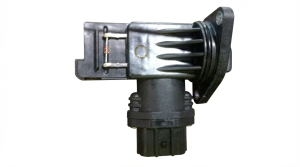
How to confirm: A dirty MAF sensor will under-report the amount of air entering the engine, causing the ECM to command less fuel than necessary. First, try cleaning the sensor using a dedicated MAF sensor cleaner spray. If the code returns, monitor the MAF sensor's g/s reading with a scan tool; it should increase smoothly with RPM. A low or erratic reading indicates a faulty sensor.
Typical fix: Clean the MAF sensor. If cleaning does not resolve the issue, the sensor must be replaced.
Est. part cost: $70-$200 - Faulty Front Air/Fuel Ratio Sensor ⚪ Low Probability → Shop Oxygen Sensor
How to confirm: A failing or lazy A/F sensor (the upstream O2 sensor) can incorrectly report a lean condition to the ECM. This is best diagnosed by graphing the sensor's voltage with a scan tool to see if it is responding quickly to changes in engine conditions. A slow or flat-lined sensor is faulty.
Typical fix: Replace the front Air/Fuel Ratio sensor (Bank 1, Sensor 1).
Est. part cost: $100-$250 - Leaking or Clogged Fuel Injector ⚪ Low Probability → Shop Fuel Injector As a direct injection (GDI) engine, the injectors can be prone to carbon buildup over time, which can affect their spray pattern and flow. A leak can also occur at the injector seals.
How to confirm: This is more difficult to diagnose. A professional may need to perform a fuel injector balance test or flow test to identify a poorly performing injector. Sometimes this is accompanied by a misfire code for a specific cylinder.
Typical fix: Replace the faulty fuel injector and its seals. It is often recommended to replace all injectors as a set.
Est. part cost: $150-$400 per injector
Rare But Worth Checking
- Stuck-Open Purge Solenoid: → Shop Vapor Canister The EVAP purge solenoid can get stuck open, creating a constant vacuum leak as it pulls fumes from the charcoal canister. This can sometimes cause P0171 in addition to EVAP-related codes.
- Exhaust Leak Before A/F Sensor: A crack in the exhaust manifold or a leaking gasket before the first oxygen sensor can pull in fresh air, making the sensor falsely detect a lean condition.
- ECM Software Issues: In some Mitsubishi models, a manufacturer service bulletin notes that dealers may need to reprogram the ECM with new software to address false MIL illumination with DTC P0171 (TSB Bulletin #TSB-16-13-002).
Diagnosis Steps
- Read the code with an OBD-II scanner and check the freeze frame data to see the engine conditions when the code was set. Note the Long Term Fuel Trim (LTFT) and Short Term Fuel Trim (STFT) values; high positive numbers (e.g., LTFT > +15%) confirm the lean condition.
- With the engine running, listen carefully for any hissing sounds around the top of the engine, which would indicate a vacuum leak.
- Visually inspect all vacuum and PCV hoses for cracks, splits, or loose connections, paying close attention to the breather hose running from the valve cover to the intake manifold.
- If a leak isn't obvious, use a scan tool to monitor fuel trims. A quick test for a vacuum leak is to increase engine RPM to ~2500 RPM and hold it. If the fuel trims decrease and move toward 0%, a vacuum leak is highly likely.
- If a vacuum leak is still suspected but not visible, perform a smoke test. 🎬 See how to diagnose lean codes and perform a smoke test. This is the most effective method to find hairline cracks in hoses or leaking intake gaskets.
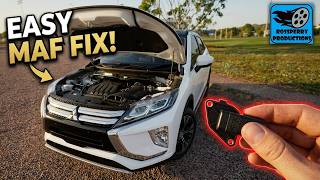
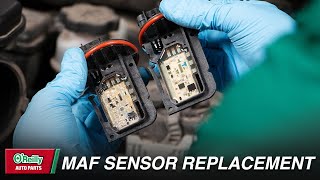
- If no vacuum leaks are found, remove and inspect the Mass Airflow (MAF) sensor. Clean it with a dedicated MAF sensor cleaner and allow it to dry completely before reinstalling. Do not touch the sensor wires. 🎬 Watch: How to safely clean or replace your MAF sensor.
- If the code persists, further diagnosis of the front A/F sensor, fuel pressure, and fuel injectors may be required, which might necessitate professional assistance.
Parts You'll Likely Need
- Breather Hose / PCV Hose
(OEM #1035B477)— This specific hose is a known failure point on the 1.5T engine, leading to a vacuum leak that causes code P0171. It is confirmed to crack from heat and age.
Trusted brands: Mitsubishi Genuine
OEM price range: $25-$50
Aftermarket price range: $15-$30 - Mass Airflow (MAF) Sensor — A dirty or failing MAF sensor is a common cause for lean codes on many vehicles by providing incorrect airflow data to the ECM.
Trusted brands: Denso, Bosch, Hitachi
OEM price range: $200-$300
Aftermarket price range: $70-$150 - Front Air/Fuel Ratio Sensor — This sensor is critical for fuel mixture control. If it becomes slow or fails, it can send false lean signals to the ECM.
Trusted brands: Denso, NGK/NTK
OEM price range: $220-$350
Aftermarket price range: $100-$180
Related Codes That Often Appear With This One
- P0174 — Not applicable to the Eclipse Cross's inline-4 engine, but on V-engines, this code for 'System Too Lean Bank 2' often appears with P0171, indicating a problem common to both banks, like a MAF sensor or fuel pump issue.
- P0300 — A lean condition can lead to incomplete combustion, causing random misfires across multiple cylinders.
Platform-Specific Known Issues
- A service procedure exists for a 'Fuel Smell Concern' which involves replacing the breather hose and a related vacuum pipe assembly, indicating these components are a known issue area. The procedure lists part numbers 1035B477 for the breather hose and 1632A454 for the vacuum pipe and hose assembly.
- A YouTube video by a professional technician titled 'Mitsubishi - P0171 Fuel Trim Too Lean - Fault Found' specifically diagnoses a 2018 Eclipse Cross, identifying a split breather hose (Part No. 1035B477) as the definitive cause, providing strong real-world evidence.
Mechanic-Grade Diagnostic Values
- Long Term Fuel Trim (LTFT) Threshold — expected: < +12.5%. Failure: The P0171 code may set if LTFT exceeds +12.5% for several seconds.
- Short Term Fuel Trim (STFT) Threshold — expected: < +20%. Failure: The P0171 code may set if STFT exceeds +20% to +25% for several seconds.
- Low-Side Fuel Pressure (at idle) — expected: Approx. 270 kPa (38 psi). Failure: Significantly lower pressure indicates a weak low-pressure fuel pump or clogged filter.
- High-Side Fuel Rail Pressure (cranking) — expected: 30 ±5 MPa (4352 ±725 psi). Failure: Pressure outside this range may indicate an issue with the high-pressure fuel pump (HPFP).
- Mass Airflow (MAF) Sensor Reading (general) — expected: Approx. 2-7 g/s at idle, rising to 15-25 g/s at 2500 RPM (varies by engine).. Failure: Readings that are stuck, erratic, or do not rise smoothly with RPM suggest a faulty sensor.
- Front A/F Sensor Heater Resistance — expected: Approx. 2.0 to 3.0 ohms.. Failure: A reading significantly outside this range or an open circuit (no reading) indicates a failed heater element in the sensor.
Scan Tool Commands That Help
- Mitsubishi M.U.T.-III SE: Data List Check — Used to monitor live data from critical sensors like the MAF, A/F sensor, coolant temp, and MAP sensor to find readings that are out of specification.
- Mitsubishi M.U.T.-III SE (or other bidirectional scanner): Fuel Pump Activation — To manually run the low-pressure fuel pump with the engine off. This allows for safe and accurate fuel pressure testing at the rail.
Wiring & Ground Locations
- Engine Block to Chassis Ground — Typically a large gauge wire or braided strap running from the engine block or transmission case to the vehicle's frame rail or firewall.. A poor engine ground can cause erratic sensor readings, including those from the MAF and A/F sensors, leading to incorrect fuel calculations and lean codes.
- Intake Manifold to Firewall Ground — On some Mitsubishi models, a smaller braided ground strap connects from a bolt on the intake manifold (sometimes a throttle cable bracket bolt) to the firewall.. Ensures the intake manifold and its attached sensors are properly grounded. A missing or corroded strap can cause intermittent sensor issues.
- Battery Negative to Chassis Ground — A primary ground cable from the battery's negative terminal directly to the vehicle body/chassis, often near the battery tray or on a shock tower.. This is the master ground for all vehicle electronics. Corrosion or a loose connection here can cause widespread electrical problems, including spurious check engine codes.
Model Year Variations Within This Range
- 2018-2024: A significant facelift occurred for the 2022 model year, which increased the vehicle's overall length and changed the exterior styling. However, the 1.5L 4B40 turbocharged engine and associated emissions/fuel system components remained the same, so the causes and fixes for P0171 are consistent across the entire 2018-2024 range.
Diagnostic Flowchart
Other Known Issues on This Vehicle
Issues unrelated to this code that are worth knowing about as an owner of this generation:
- Forward Collision Mitigation (FCM) System Malfunction 🔴 High — Common across 2018-2019 models, leading to recalls. Owners report 'FCM Radar Blocked' or 'FCM SERVICE REQUIRED' warnings, which can be caused by a dirty sensor, misaligned radar, or software glitches. (Ref: Recall SR-18-007)
- CVT Transmission Shudder or Hesitation 🟠 Medium — Some owners report a shudder, surge, or delayed response from the CVT transmission, particularly between 30,000 and 60,000 km.
- Electrical System Faults 🟠 Medium — The most frequently reported category of NHTSA complaints for early model years (especially 2018), covering a range of non-specific issues.
- Air Conditioning System Failure 🟡 Low — Reports exist of insufficient cooling or unusual noises from the A/C system, sometimes at mileages as low as 25,000 km, often attributed to defective compressors or refrigerant leaks.
- Inaccurate Fuel Gauge Reading 🟡 Low — A few owner complaints mention the fuel gauge giving inaccurate readings, leading to uncertainty about the remaining fuel level.
Used vs. New Parts: Buying Guide for This Vehicle
When a used part is the smart pick: For this specific code, the most common fix is a cheap PCV hose; buying this used is not recommended. A used part might be considered for more expensive, non-wear components if they were the cause, such as an intake manifold or throttle body assembly, but this is rare.
Donor-vehicle mileage cap: roughly under 50000 miles for the part to have meaningful remaining life.
What to inspect on the donor part:
- For sensors, ensure no physical damage or corrosion on electrical pins.
- Source parts from vehicles with documented low mileage and no history of frontal collision damage.
- Avoid parts that show signs of heavy oil contamination or heat stress.
OEM-only on this vehicle (don't cheap out):
- PCV Breather Hose (1035B477): The OEM part is inexpensive and a known fit; the small cost saving on an aftermarket part is not worth the risk of poor fitment or material quality.
- Front Air/Fuel Ratio Sensor: While quality aftermarket options exist, using a genuine Mitsubishi or the original equipment supplier (e.g., Denso) part is the safest bet to prevent compatibility or performance issues.
Aftermarket brands forum-validated for this vehicle:
- Denso for Air/Fuel and MAF sensors.
- NGK/NTK for Air/Fuel sensors.
Brands owners have reported issues with on this vehicle:
- No-name or unbranded sensors sold at a deep discount on online marketplaces are frequently reported to be dead-on-arrival or fail prematurely.
Real Owner Stories
Aggregated from forums and TSBs cited above. Mileages and costs reflect what owners reported in those sources.
2018 Mitsubishi Eclipse Cross 1.5L Turbo
Symptoms: The vehicle had a Check Engine Light with code P0171. A distinct hissing sound was audible from the engine bay at idle.
What fixed it: Replacement of the rubber breather hose (Part No. 1035B477) which had split in two different places.
Source hint: YouTube: 'Mitsubishi - P0171 Fuel Trim Too Lean - Fault Found - How To DIY - Quick Tech Tips' by GerardBurke
Mitsubishi Owner Report
Symptoms: An owner reported multiple problem codes including P0431, P0174, P0176, P0171, P0441, P0335, and P0300.
What fixed it: While the specific fix was not detailed, the presence of multiple lean and misfire codes often points to a systemic issue like a vacuum leak or fuel delivery problem (NHTSA ODI #10679585).
Related OBD-II Codes
Frequently Asked Questions
Is there a specific part number for the breather hose that often fails on the 2018 Mitsubishi Eclipse Cross?
I hear a whistling noise from my 1.5L Turbo engine at idle; could this be related to P0171?
How can I tell if my Eclipse Cross has a vacuum leak or a bad MAF sensor without a smoke test?
Are there any recalls related to engine performance or sensors for the 2018-2019 models?
Does the 4B40 1.5L Turbo engine have any specific fuel system issues that cause lean codes?
Helpful Videos

We Have This Part in Stock

The information in this article is provided for general reference and educational purposes only. Vehicle specifications, procedures, and part compatibility can vary by production date, trim level, and region. Always consult your vehicle's factory service manual and verify part numbers before purchasing or performing repairs. Safety-critical components such as airbags, seat belts, and braking systems should be installed by a qualified professional.
- Mitsubishi Eclipse Cross:
- 🧭 Diagnostic Flowchart
- 🎬 Helpful Videos
- 🛍️ Shop This Part
- What's Unique About the 2018-2024 Mitsubishi Eclipse Cross
- Symptoms You May Notice
- Most Likely Causes
- Rare But Worth Checking
- Diagnosis Steps
- Parts You'll Likely Need
- Related Codes That Often Appear With This One
- Platform-Specific Known Issues
- Mechanic-Grade Diagnostic Values
- Scan Tool Commands That Help
- Wiring & Ground Locations
- Model Year Variations Within This Range
- Other Known Issues on This Vehicle
- Used vs. New Parts: Buying Guide for This Vehicle
- Real Owner Stories
- 2018 Mitsubishi Eclipse Cross 1.5L Turbo
- Mitsubishi Owner Report
- Related OBD-II Codes
- Frequently Asked Questions
- 🎟️ Get 5% Off