

P0171 on 1997-2010 Saab 9-5: System Too Lean Causes and Fixes
For a 1997-2010 Saab 9-5, the P0171 code is most often caused by vacuum leaks from aged, cracked rubber hoses, especially within the PCV system. A thorough inspection and replacement of brittle vacuum lines, particularly the brake booster hose and PCV lines, is the most common fix. A smoke test is the most effective way to find these leaks.
- P0171 on a Saab 9-5 means the engine is running too lean (too much air, not enough fuel).
- The most common cause by far is a vacuum leak from old, cracked rubber hoses, particularly in the PCV system.
- Start your diagnosis by thoroughly inspecting all vacuum lines. A smoke test is the most reliable method to find leaks.
- Cleaning the Mass Airflow (MAF) sensor is a simple and inexpensive next step if no vacuum leaks are found.
- Do not immediately replace the oxygen sensor; it is usually just reporting the lean condition accurately.
What's Unique About the 1997-2010 Saab 9-5
Saab 9-5 models with the B205 and B235 turbocharged engines have a complex network of vacuum hoses and a specific Positive Crankcase Ventilation (PCV) system. Over time, the intense heat in the engine bay causes these rubber and plastic components to become brittle and crack, leading to "unmetered" air entering the engine after the Mass Airflow sensor. These vacuum leaks are the most frequent culprits for a P0171 code on this specific platform. Saab recognized issues with the early PCV system's capacity and durability, which led to an official updated parts kit to prevent oil sludge and leaks, which are often related to the same hose failures that cause P0171.
Generation note: This range covers the first generation (YS3E, 1997-2009) and the second generation (YS3G, 2010). While the fundamental causes are similar, most available information and forum discussions pertain to the more common YS3E generation with the B205/B235 engines. The principles of diagnosing vacuum leaks, MAF sensor issues, and fuel delivery problems apply to both generations. A key difference is the engine management system: pre-1999 models use Trionic 5, while 1999+ models use the more advanced Trionic 7, which may have different diagnostic parameters.
Symptoms You May Notice
- Check Engine Light is on
- Rough, surging, or uneven idle, especially on cold start
- Hesitation or lack of power during acceleration.
- Engine stalling, especially when coming to a stop or starting from a stop.
- Reduced fuel economy
- Hissing noises from the engine bay due to vacuum leaks.
- Engine knock or pinging under load.
- Replacing the oxygen sensor first. While an O2 sensor can fail, it is more often correctly reporting a problem caused by something else, like a vacuum leak. Always diagnose vacuum and fuel delivery issues before replacing sensors.
- Replacing the MAF sensor without cleaning it first. Often, contamination is the issue, and a simple cleaning with the correct product can resolve the code.
Most Likely Causes
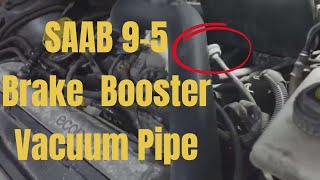
- Vacuum Leaks 🔴 High Probability The rubber and plastic vacuum lines, PCV hoses, and intake ductwork become brittle and crack from age and exposure to engine and turbocharger heat. Specific failure points include the small elbow connectors, the hose to the brake booster, and various lines in the PCV system.
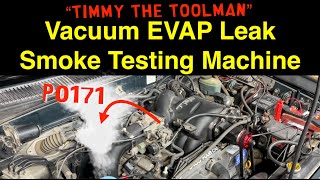
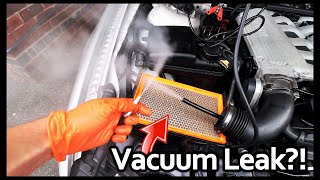
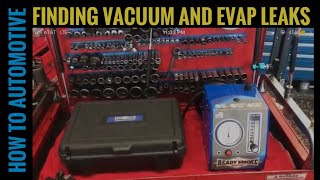
How to confirm: Visually inspect all accessible vacuum hoses for cracks, especially at elbows and connection points. A common failure is the hose for the EVAP purge valve located behind the throttle body. Perform a smoke test to find leaks that are not visible; this is the most reliable method. 🎬 Watch: How to find leaks using a smoke tester You can also carefully spray brake cleaner or carb cleaner around suspected leak areas with the engine idling; a change in idle speed indicates a leak, but this method is less precise and more flammable.
Typical fix: Replace the cracked or broken hoses. It is often recommended to replace all vacuum lines at once using a silicone hose kit for better durability. A complete vacuum line diagram is essential for this job.
Est. part cost: $20-$80 - PCV System Failure 🟡 Medium Probability The PCV system includes check valves and hoses that can clog, stick open, or crack, creating a significant vacuum leak. Early systems were known to be inadequate, leading Saab to issue an updated kit (often called PCV update #6) to improve ventilation and durability.
How to confirm: Inspect the PCV valve (often a check valve in the line from the valve cover) and all associated hoses for damage, blockages, or being soft and 'squidgy'. A stuck-open PCV valve can create a large, unmetered air leak. A quick check for a blocked system is to pull the oil dipstick at idle; if pressure shoots out, the system is clogged.
Typical fix: Replace the faulty PCV valve and any damaged hoses. Installing the latest revision kit (Saab part number 55561200 🎬 Watch: How to install the PCV #6 update kit) is highly advisable for pre-2004 models to prevent both leaks and oil sludge issues.
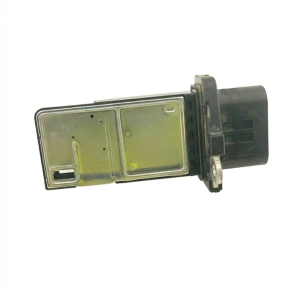
Est. part cost: $50-$120 - Faulty or Dirty Mass Airflow (MAF) Sensor 🟡 Medium Probability → Shop Fuel Injection Air Flow Meter The MAF sensor can become contaminated with dirt and oil vapor over time, causing it to inaccurately measure the amount of air entering the engine.
How to confirm: Remove the MAF sensor and inspect the sensing wire. With a scan tool, check the MAF reading at idle with a warm engine; it should typically be between 2-6 g/s. If the readings are out of range or cleaning doesn't resolve the issue, the sensor may be faulty. Unplugging the sensor and seeing if the car runs better (in a default mode) can also indicate a faulty sensor.
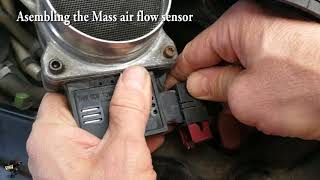
Typical fix: First, try cleaning the sensor element with a dedicated MAF sensor cleaner. 🎬 See this walkthrough on cleaning your MAF sensor Do not touch the delicate wires or use other chemicals like brake cleaner. If cleaning does not work, the sensor must be replaced, preferably with an OEM Bosch unit.
Est. part cost: $15 (cleaner) - $150 (new sensor) - Low Fuel Pressure ⚪ Low Probability
How to confirm: Connect a fuel pressure gauge to the fuel rail's service port. Check that the fuel pressure is within the manufacturer's specifications (typically around 2.6-2.8 bar or 38-41 PSI at idle for these models) at idle and under load. Note that some sources state 4.0 bar (58 PSI) for the in-tank pump feed pressure.
Typical fix: A weak fuel pump or a clogged fuel filter is the likely cause. Replace the fuel filter first as it is less expensive. If pressure is still low, the fuel pump will likely need replacement.
Est. part cost: $20-$60 (filter), $150-$400 (pump)
Rare But Worth Checking
- Leaking Intake Manifold Gasket: → Shop Engine Intake Manifold While less common than hose failures, a leaking intake manifold gasket can create a vacuum leak that is difficult to detect without a smoke test.
- Exhaust Leak Before the Oxygen Sensor: → Shop Oxygen Sensor A crack in the exhaust manifold or a leaking gasket before the primary O2 sensor can allow outside air to be drawn into the exhaust stream, making the sensor report a false lean condition.
- Faulty Front Oxygen Sensor: → Shop Oxygen Sensor A slow or failing front oxygen (O2) sensor can inaccurately report a lean condition to the ECM, but this will often be accompanied by other O2 sensor-specific codes. It is more often correctly reporting a problem than being the cause itself.
- Cracked Intake Air Hose (Cobra Pipe): The large rubber intake hose between the MAF sensor and the turbocharger, often called the 'cobra pipe', can develop cracks in its accordion sections, allowing unmetered air to enter the system.
Diagnosis Steps
- Read the code with an OBD-II scanner and check for any other stored codes, paying attention to freeze frame data to see the engine conditions when the code was set.
- Visually inspect the engine bay for obvious issues like disconnected hoses, cracked intake snorkel ('cobra pipe'), or loose clamps.
- Carefully inspect all vacuum lines, especially the small 4mm hoses, connected to the intake manifold, throttle body, and PCV system for cracks and brittleness. Pay close attention to the brake booster hose and the EVAP purge valve lines.
- Perform a smoke test to pinpoint the exact location of any vacuum leaks. This is the most effective method.
- If no vacuum leaks are found, remove and clean the Mass Airflow (MAF) sensor using a dedicated MAF sensor cleaner.
- Inspect the PCV system hoses and check valves for blockages or damage. Consider replacing with the updated kit if you have a pre-2004 model.
- Check fuel pressure using a fuel pressure gauge to rule out a weak fuel pump or clogged filter.
- Using a scan tool, monitor short-term (STFT) and long-term (LTFT) fuel trims. High positive numbers at idle that decrease with RPM strongly suggest a vacuum leak. High numbers that persist or increase with RPM may point to a fuel delivery or MAF issue.
- If all else fails, inspect for exhaust leaks before the front O2 sensor and test the O2 sensor's operation.
Parts You'll Likely Need
- Vacuum Hose Kit — The original rubber hoses are the most common failure point leading to vacuum leaks and a P0171 code. 4mm ID hose is the most common size.
Trusted brands: Proparts Sweden, Silicone-based kits
OEM price range: $50-$100
Aftermarket price range: $20-$60 - PCV Update Kit
(OEM #55561200)— The PCV system is a frequent source of vacuum leaks. The updated kit provides more durable components and is a preventative measure against oil sludge on 1999-2003 models.
Trusted brands: Saab Original, Proparts Sweden
OEM price range: $60-$120
Aftermarket price range: $40-$80 - Mass Airflow (MAF) Sensor
(OEM #55557008 (Bosch 0280218063))— If cleaning the original sensor does not resolve incorrect readings, it must be replaced. Using a genuine Bosch sensor is highly recommended.
Trusted brands: Bosch
OEM price range: $120-$200
Related Codes That Often Appear With This One
- P0174 (System Too Lean Bank 2) - Not applicable to the 4-cylinder Saab 9-5, but if seen on the V6 model, it indicates a problem affecting the whole engine.
- P1171 - A Saab-specific code that often accompanies P0171, indicating the same lean condition where adaptation limits are exceeded.
- P0300 (Random/Multiple Cylinder Misfire) - A lean mixture can lead to misfires.
Technical Service Bulletins (TSBs) & Recalls
- Saab issued workshop bulletins regarding the oil sludge issue and the need for a revised PCV system for 1999-2003 models, which directly relates to the hose failures that cause P0171.
- Manufacturer TSB Bulletin #PIP3711B notes that a P0171 code may be triggered with no engine performance concerns, often caused by unmetered air entering the engine due to an intake leak or air filter concern.
Platform-Specific Known Issues
- PCV System Update #6: For 1999-2003 models, Saab issued a service bulletin to address issues with the original PCV system, which could lead to oil sludge, high oil consumption, and vacuum leaks. Installing the updated kit (part #55561200) is a common and highly recommended fix/preventative measure when dealing with P0171 on these earlier cars.
- Common Vacuum Leak Locations: Beyond a general hose failure, specific points to check are: the small rubber elbow on the valve cover, the vacuum line running to the fuel pressure regulator, the brake booster hose and its grommet at the firewall, and the lines connected to the EVAP purge control valve near the throttle body.
- Oil Sludge Issue: Particularly in 1999-2003 models, a failing PCV system can contribute to the infamous 'oil sludge' problem by not properly ventilating the crankcase. While P0171 is a fuel mixture code, its root cause (bad PCV hoses) is directly linked to this more severe engine-damaging condition, making it crucial to address promptly.
Mechanic-Grade Diagnostic Values
- Long-Term Fuel Trim (LTFT) at operating temperature — expected: Between -10% and +10%, with near 0% being optimal.. Failure: A value consistently above +20% indicates a significant lean condition. The P0171 code typically sets when multiplicative adaptation exceeds +25%.
- Short-Term Fuel Trim (STFT) at idle vs. 2500 RPM — expected: Should fluctuate near 0%.. Failure: High positive STFT (e.g., >+15%) at idle that drops toward 0% at higher RPM strongly suggests a vacuum leak. If STFT remains high or increases with RPM, it points toward a fuel delivery or MAF sensor issue.
- Mass Airflow (MAF) Sensor at warm idle — expected: 2-6 g/s.. Failure: Readings outside this range suggest a faulty or contaminated MAF sensor.
- Front Oxygen Sensor (O2S1) Voltage — expected: Should fluctuate rapidly between approximately 0.1V and 0.9V in closed loop.. Failure: A sensor that is slow to respond or is stuck low (e.g., < 0.2V) may be faulty, though it's more likely correctly reporting a lean condition.
- Fuel Pressure at Fuel Rail (Idle) — expected: Approximately 2.6-2.8 bar (38-41 PSI) for older models. Some sources also mention a 4 bar (58 PSI) feed pressure from the in-tank pump.. Failure: Pressure significantly below specification indicates a weak fuel pump or clogged filter.
Scan Tool Commands That Help
- Saab Tech 2: Read Values > Fuel System — To monitor live data for 'Multiplicative adaptation' and 'Additive adaptation' (Long and Short Term Fuel Trims), 'Airmass deviation from calculated', and O2 sensor voltage. This is the primary screen for diagnosing P0171.
- Saab Tech 2: Adaptation > Fuel/Air Adaptation Reset — After replacing a component like a MAF sensor or fixing a major vacuum leak, resetting the fuel trim adaptations forces the ECU to relearn the base fuel map, which can speed up diagnosis and confirm the fix.
Wiring & Ground Locations
- G7 — On the side of the intake manifold, near cylinder 4 (for 4-cylinder petrol engines).. This is a primary engine management ground point. A poor connection here can affect sensors connected to the intake manifold, potentially causing erratic readings that could contribute to a lean code.
- G2 / G25 — G2 is on the left-hand structural member behind the headlamp. G25 is directly on the gearbox. These are the main battery ground points.. A compromised main ground can cause a host of electrical issues, including incorrect sensor readings for the entire engine management system. Verifying these are clean and tight is a fundamental step.
Real Owner Repair Stories
- SaabCentral Forums user (2001 Saab 9-5 2.3t) — P0171 code, rough idle, hesitation.
❌ Tried (didn't work) Replaced all vacuum lines, Cleaned MAF sensor, Replaced fuel filter, Performed a smoke test which showed no leaks
✅ What actually fixed it The one-way check valve inside the brake booster vacuum hose had failed and was leaking. The leak was internal to the hose assembly and did not show up on a smoke test. Replacing the entire brake booster hose assembly (which included the new check valve) resolved the P0171 code. - SaabCentral Forums user (1999 Saab 9-5 V6) — P0171 and P0174 (both banks lean), poor idle.
❌ Tried (didn't work) Replaced MAF sensor, Replaced front oxygen sensors, Checked for vacuum leaks with carb cleaner
✅ What actually fixed it The O-ring on the oil dipstick tube was old, hard, and not sealing properly, creating a small vacuum leak. Replacing the inexpensive O-ring fixed the lean codes.
"I Checked Everything" — The Actual Cause
- A failed internal check valve in the brake booster vacuum hose can cause a significant vacuum leak that a smoke test may not reveal. The leak occurs from the booster side into the hose, not from the hose to the atmosphere, so smoke may not be visible externally. The fix is to replace the entire brake booster hose assembly.
- A worn or hardened O-ring on the oil dipstick tube can allow unmetered air to be drawn into the crankcase, which is then pulled into the intake via the PCV system. This creates a lean condition that is difficult to trace, as most people don't think to smoke test the dipstick tube seal.
OEM Part Supersession History
Various older PCV hose combinations→Kit #55561200 (also known as PCV update #6)— The original PCV systems on 1998-2003 B205/B235 engines were found to be inadequate, leading to crankcase sludge and oil leaks. The updated kit reroutes hoses, adds check valves, and improves ventilation to solve these issues.
Model Year Variations Within This Range
- 1998-2003: These years feature the problematic early PCV system. A P0171 code on these models should prompt an immediate inspection to see if the PCV update kit (#6) has been installed. If not, it is the most likely source of the vacuum leak and should be installed as a priority.
- 1997-1998 vs 1999-2010: Early models use the Trionic 5 (T5) engine management system, while later models use Trionic 7 (T7). While the P0171 cause is often the same (vacuum leaks), the diagnostic parameters and software logic in the ECU are different. T7 is generally considered more sensitive to air mass measurement deviations.
Diagnostic Flowchart
Real Owner Stories
Aggregated from forums and TSBs cited above. Mileages and costs reflect what owners reported in those sources.
2008 Saab 9-3
Symptoms: Experienced a fluctuating idle, hesitation, and the engine nearly stalling.
What fixed it: Replaced multiple parts during a long struggle to diagnose the lean code.
Source hint: Reddit r/saab - Need Help Diagnosing P0171 Lean Code
Saab 9-5
Symptoms: Experienced 'tjuvluft' (false air/vacuum leak) causing the lean condition.
What fixed it: Identified and replaced the leaking hose for the EVAP purge valve ('tankurluftningen') located behind the throttle body.
Source hint: Saabforum.nl - felkod P0171
Saab 9-5
Symptoms: Triggered a P0171 code due to numerous failing and brittle hoses.
What fixed it: Replaced the numerous vacuum hoses using a specific vacuum line diagram to ensure correct routing.
Source hint: Saabnet.com - A couple of Saab 9-5 Vacuum Line Diagrams
Related OBD-II Codes
Frequently Asked Questions
Does the PCV System Update #6 apply to my Saab 9-5?
Where are the most common vacuum leaks located on the 1997-2010 Saab 9-5?
Can a P0171 code be related to the infamous Saab oil sludge issue?
What should the MAF sensor read at idle on my 9-5?
What fuel pressure should I see when testing my Saab 9-5 for a lean code?
What is the 'cobra pipe' and does it cause P0171?
Helpful Videos

We Have This Part in Stock

The information in this article is provided for general reference and educational purposes only. Vehicle specifications, procedures, and part compatibility can vary by production date, trim level, and region. Always consult your vehicle's factory service manual and verify part numbers before purchasing or performing repairs. Safety-critical components such as airbags, seat belts, and braking systems should be installed by a qualified professional.
- Saab 9-5:
- 🧭 Diagnostic Flowchart
- 🎬 Helpful Videos
- 🛍️ Shop This Part
- What's Unique About the 1997-2010 Saab 9-5
- Symptoms You May Notice
- Most Likely Causes
- Rare But Worth Checking
- Diagnosis Steps
- Parts You'll Likely Need
- Related Codes That Often Appear With This One
- Technical Service Bulletins (TSBs) & Recalls
- Platform-Specific Known Issues
- Mechanic-Grade Diagnostic Values
- Scan Tool Commands That Help
- Wiring & Ground Locations
- Real Owner Repair Stories
- "I Checked Everything" — The Actual Cause
- OEM Part Supersession History
- Model Year Variations Within This Range
- Real Owner Stories
- 2008 Saab 9-3
- Saab 9-5
- Saab 9-5
- Related OBD-II Codes
- Frequently Asked Questions
- 🎟️ Get 5% Off