

P0171 on 2010-2012 Saab 9-5 2.8T V6: Causes, Symptoms, and Fixes for Lean Fuel Trim
P0171 on a 2010-2012 Saab 9-5 2.8T most often indicates a vacuum leak from a cracked hose, especially the EVAP hose behind the throttle body. Cleaning the Mass Airflow (MAF) sensor is another common and inexpensive first step. Expect to spend $0-$20 on cleaning supplies or hoses, or $200-$500 for a professional smoke test and repair.
- P0171 means Bank 1 is running lean (too much air or not enough fuel).
- The most probable cause on this turbocharged engine is a vacuum leak from a cracked or disconnected hose.
- Before buying parts, spend $10 on a can of MAF sensor cleaner and clean the sensor.
- Bank 1 is the cylinder bank closer to the firewall. All diagnostic and repair work for this bank will be in the tighter space at the rear of the engine bay.
- If you get both P0171 and P0174 codes, the problem is almost certainly a leak or faulty sensor that affects the whole engine, like the MAF sensor or a major intake boot leak.
What's Unique About the 2010-2012 Saab 9-5
The 2010-2012 Saab 9-5 with the 2.8T V6 is a unique vehicle based on the long-wheelbase GM Epsilon II platform, sharing its core architecture with the Buick LaCrosse and Cadillac XTS. The engine is mounted transversely (sideways), and Bank 1 is the cylinder bank closer to the firewall. This is corroborated by service procedures for the platform-mate Cadillac SRX and by heat-related failures of rear-bank components on similar transverse 2.8T V6 installations. Due to the turbocharged nature of this engine and the extreme heat in the tightly packed engine bay, plastic and rubber components of the intake and vacuum system are particularly susceptible to degradation and leaks that cause this code.
Symptoms You May Notice
- Check Engine Light is on
- Rough or unstable idle, especially on cold start
- Engine hesitation or lack of power during acceleration
- Reduced fuel economy
- Engine misfires, which may feel like a stumble or shudder
- Near-stall condition when starting from a stop
- Replacing the oxygen sensor first. The O2 sensor is often just doing its job by reporting the lean condition. The root cause is usually a vacuum leak or MAF issue, which should be ruled out before replacing a potentially good sensor.
- Throwing parts at the problem. One owner on Reddit reported replacing the MAP, MAF, spark plugs, ignition coils, and O2 sensor without resolving a P0171, indicating the importance of systematic diagnosis (like a smoke test) over guesswork.
Most Likely Causes
- Vacuum Leak 🔴 High Probability The complex network of hoses in a turbocharged engine provides many potential failure points. Rubber and plastic components can crack and degrade with age and heat cycles. A particularly common failure point noted by owners is the EVAP/tank ventilation hose located behind the throttle body.
How to confirm: Visually inspect all accessible vacuum lines and intake ducting for cracks or loose connections, paying close attention to the EVAP hose. A professional smoke test is the most effective way to find hidden leaks in the intake manifold, PCV system, or other hoses.
Typical fix: Replace the cracked hose, leaking gasket, or faulty component. Common culprits include PCV hoses, the EVAP purge valve hose, intake manifold gaskets, and injector O-rings.
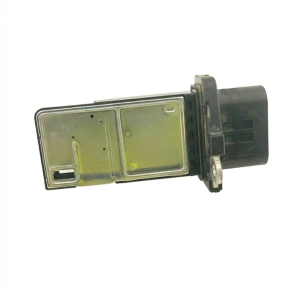
Est. part cost: $10-$150 - Dirty or Faulty Mass Airflow (MAF) Sensor 🟡 Medium Probability → Shop Fuel Injection Air Flow Meter The MAF sensor is located in the intake tract and can become contaminated with dirt, oil, or debris over time, causing it to send inaccurate airflow readings to the ECM. Aftermarket oiled air filters (e.g., K&N) are known to sometimes shed oil that contaminates the sensor, leading to P0171 or P0101 codes.
How to confirm: Unplug the MAF sensor with the engine off. If the car runs noticeably better with it unplugged (running on default maps), the sensor is likely faulty. A more precise method is to monitor MAF readings with a scan tool; they should increase smoothly with engine RPM.
Typical fix: First, try cleaning the sensor with a dedicated MAF sensor cleaner spray. Do not touch the delicate sensor wires. If cleaning doesn't work, the sensor must be replaced.
Est. part cost: $10 for cleaner, $75-$200 for a new sensor - Failing Upstream Oxygen Sensor (Bank 1) ⚪ Low Probability → Shop Oxygen Sensor O2 sensors are wear items and typically have a finite lifespan. However, they often correctly report a lean condition caused by another issue, making them a common point of misdiagnosis.
How to confirm: Use a scan tool to graph the O2 sensor's voltage. A healthy upstream sensor should fluctuate rapidly between approximately 0.1 and 0.9 volts. A slow or stuck sensor is faulty. This should be one of the last checks after confirming no vacuum leaks or MAF issues exist.
Typical fix: Replace the Bank 1, Sensor 1 (upstream) oxygen sensor. Bank 1 is the rear bank, closer to the firewall.
Est. part cost: $50-$150 - Low Fuel Pressure ⚪ Low Probability A weak fuel pump or clogged fuel filter can restrict fuel flow, leading to a lean condition that may be more apparent under high engine load. Fuel pumps are a known, though not frequent, failure item on Saabs.
How to confirm: Connect a fuel pressure gauge to the fuel rail and check that the pressure is within the manufacturer's specified range at idle and under load. The 2.8T uses an electronic returnless system; pressure is commanded by the ECM via a Fuel Pump Flow Control Module.
Typical fix: Replace the fuel pump, fuel filter, or Fuel Pump Flow Control Module if pressure is below specification.
Est. part cost: $50 for a filter, $250-$600 for a fuel pump assembly
Rare But Worth Checking
- Exhaust Leak: An exhaust leak between the cylinder head and the upstream O2 sensor can draw in outside air, making the sensor incorrectly read a lean condition. On the 2.8T, the exhaust crossover pipe before the turbo is a potential failure point.
- Faulty Fuel Injector(s) on Bank 1: → Shop Fuel Injector One or more clogged or failing fuel injectors on Bank 1 can fail to deliver enough fuel to their respective cylinders, causing a lean condition isolated to that bank. This may be accompanied by a misfire code (e.g., P0301, P0303, P0305).
Diagnosis Steps
- Read the freeze frame data with a scan tool to see the engine conditions (RPM, load, temperature) when the code was set.
- Check for any other stored trouble codes, such as P0174, P2187, or P0101, which can help narrow the diagnosis.
- Inspect the entire air intake system from the air filter to the throttle body for loose connections, cracked hoses, or obvious damage.
- Visually inspect all accessible vacuum and PCV hoses for cracks, swelling, or disconnection. Pay special attention to the EVAP hose behind the throttle body.
- Clean the Mass Airflow (MAF) sensor using a dedicated cleaner. Allow it to dry completely before reinstalling.
- With a scan tool, monitor short-term (STFT) and long-term (LTFT) fuel trims for Bank 1. High positive numbers (e.g., >15%) confirm the lean condition. If LTFT drops at higher RPM, a vacuum leak is highly likely.
- Perform a smoke test to definitively locate any vacuum leaks. This is the most reliable method and can save money on unnecessary parts.
- If no vacuum leaks are found, test fuel pressure to ensure the fuel pump and filter are functioning correctly.
- As a final step, test the Bank 1 upstream O2 sensor to ensure it is switching correctly and not stuck lean.
Parts You'll Likely Need
- Vacuum Hose — Rubber hoses are the most common source of vacuum leaks as they become brittle and crack over time. The EVAP hose behind the throttle body is a known weak point.
Trusted brands: ACDelco, Genuine GM
OEM price range: $20-$80
Aftermarket price range: $10-$50 - Mass Airflow Sensor Cleaner — A cheap and effective first step to rule out a dirty MAF sensor before replacing it.
Trusted brands: CRC, Liqui Moly
Aftermarket price range: $10-$20 - Mass Airflow (MAF) Sensor
(OEM #Bosch 13261544)— If cleaning does not resolve the issue, the sensor itself may have failed. The Bosch unit is the OEM supplier.
Trusted brands: Bosch (OEM), ACDelco, Denso
OEM price range: $130-$200
Aftermarket price range: $75-$150 - Bank 1 Upstream Oxygen Sensor — Replaced when the sensor is confirmed to be faulty after all other potential causes have been ruled out.
Trusted brands: Bosch, Denso, NTK
OEM price range: $100-$200
Aftermarket price range: $50-$120
Related Codes That Often Appear With This One
- P0174 — System Too Lean (Bank 2). If both P0171 and P0174 are present, it indicates a problem affecting both cylinder banks, making a vacuum leak after the throttle body (like a cracked intake boot) or a faulty MAF sensor the most likely cause.
- P2187 — System Too Lean at Idle (Bank 1). This is a more specific version of P0171 that points to the lean condition being most prevalent when the engine is at idle, often strongly suggesting a vacuum leak.
- P0101 — Mass Air Flow (MAF) Circuit Range/Performance. This code often appears with P0171 if the MAF sensor is dirty, faulty, or if its readings are compromised by an air leak between the sensor and the throttle body.
Technical Service Bulletins (TSBs) & Recalls
- While no TSB is directly for P0171 on this model, Saab issued a related campaign (#15460) for the 2.8T V6 in the 9-3 Aero to replace the coolant expansion tank, which was prone to cracking from heat. This highlights the systemic issue of heat degradation in the engine bay, a primary driver of the vacuum leaks that cause this code.
- Manufacturer service bulletin Bulletin #PIP3711B, though originally issued for the Saab 9-7X, notes that a P0171 code can be triggered with no engine performance concerns, often caused by unmetered air entering the engine due to an intake leak or air filter concern.
Platform-Specific Known Issues
- Heat Soak and Component Failure: The 2.8T V6 generates significant heat in a tight engine bay. This accelerates the degradation of rubber hoses, plastic fittings, and electronic components. A common tip from owners of the 2.8T engine is to remove the large plastic engine cover, which can trap heat and contribute to the premature failure of the rear bank's ignition coils and other components.
Mechanic-Grade Diagnostic Values
- Fuel Pressure (Port-Injected Variant Check) — expected: The pressure differential between the fuel rail and intake manifold should be 3 bar.. Failure: A differential pressure that is too low or does not follow manifold pressure indicates a faulty regulator, pump, or line.
- Fuel Rail Pressure Sensor Voltage — expected: The sensor operates on a 5V reference circuit from the ECM.. Failure: Incorrect voltage readings on the signal or reference circuits can indicate a faulty sensor or wiring.
- Scan Tool Live Data - Fuel Adaptation (Multiplicative) — expected: A value close to 0% after performing the adaptation drive cycle.. Failure: A high positive value that does not change or reset after the procedure indicates a persistent lean condition the ECM cannot correct.
- Scan Tool Live Data - Fuel Adaptation (Additive) — expected: A value close to 0% at idle after the engine is warm.. Failure: A high positive value at idle points strongly towards a vacuum leak.
- Scan Tool Live Data - Measured Air Mass (mair) — expected: A steady reading at idle (typically 4-6 g/s for a V6) that increases smoothly with RPM.. Failure: Erratic readings or values that don't correspond to engine load suggest a faulty MAF sensor or a large vacuum leak.
Hidden / Shadow Codes Worth Checking
- 42451 / 22451: Weak mixture, idling. This is a Saab-specific code that provides more detail than P0171, pointing specifically to a lean condition at idle, which strongly suggests a vacuum leak. (see via Dealer-level scanner like a Tech 2 or equivalent software that can read manufacturer-specific codes.)
- 42452 / 22452: Weak mixture, driving. This Saab-specific code indicates the lean condition is occurring under load, which could point towards issues like low fuel delivery or a faulty MAF sensor, rather than a simple idle vacuum leak. (see via Dealer-level scanner like a Tech 2 or equivalent software.)
Scan Tool Commands That Help
- Tech 2: Fuel Adaptation / Throttle Adaptation Reset — After replacing a component that affects the air/fuel mixture (like a MAF sensor, O2 sensor, or fixing a large vacuum leak), this function should be used to clear the old learned fuel trim values. The procedure involves a specific drive cycle at 1500-2750 rpm for several minutes, followed by an idle period, to allow the ECM to relearn the base fuel map.
Real Owner Repair Stories
- Auto Autopsy YouTube Channel (2008 Saab 9-3 2.8T V6 (same engine family)) — A vacuum pump that ran continuously with the key in the 'on' position, indicating a significant vacuum leak.
❌ Tried (didn't work) The owner systematically tested individual vacuum lines by plugging them to isolate the leak.
✅ What actually fixed it The final cause was a long, hard plastic vacuum line that ran from a T-connector near the vacuum pump, down under the coolant expansion tank, and toward the firewall. The line had become brittle and cracked. Replacing this specific line resolved the constant running of the vacuum pump and fixed the leak.
OEM Part Supersession History
12593486→Aftermarket Silicone Hose Kits (e.g., from eSaabParts)— The original plastic/rubber PCV/EVAP hose that runs from the purge valve to the intake manifold is a very common failure point due to heat and age.
Heads up: Aftermarket silicone hoses are a common preventative upgrade or repair. They may appear to have a different shape but are flexible and designed to bend to fit. These kits often include a new inline check valve.
Diagnostic Flowchart
Real Owner Stories
Aggregated from forums and TSBs cited above. Mileages and costs reflect what owners reported in those sources.
Saab (Model Unspecified)
Symptoms: Triggered a P0171 code due to a vacuum leak.
What fixed it: Replaced a cracked hose for the tank ventilation located on the back of the throttle body.
Source hint: saabforum.se - https://www.saabforum.se/showthread.php?36875-felkod-P0171
2008 Saab 9-3 2.8T
Symptoms: Experienced a near-stall condition when starting from a stop and battled a persistent P0171 code for months.
What fixed it: Unresolved in thread; the owner replaced the MAF, MAP, O2 sensor, coils, and vacuum lines without success, underscoring the necessity of a professional smoke test to find elusive leaks.
Source hint: reddit.com/r/saab - https://www.reddit.com/r/saab/comments/cgeh2b/need_help_diagnosing_p0171_lean_code/
2006-2011 Cadillac BLS 2.8T
Symptoms: Premature failure of the rear bank's ignition coils and degraded hoses due to excessive heat trapped in the engine bay.
What fixed it: Removed the decorative plastic engine cover to allow heat to escape and prevent component degradation.
Source hint: Cadillac BLS 2.8T forum discussions
Saab 9-3 Aero 2.8T V6
Symptoms: Coolant expansion tank cracking due to extreme under-hood heat cycles.
What fixed it: Replaced the coolant expansion tank under a manufacturer campaign.
Source hint: Saab Campaign #15460
Related OBD-II Codes
Frequently Asked Questions
Why is my 2010-2012 Saab 9-5 2.8T V6 so prone to vacuum leaks causing P0171?
Does Saab Campaign #15460 apply to my P0171 code?
I installed an aftermarket K&N air filter on my 2.8T. Could this cause the P0171 code?
Should I remove the plastic engine cover on my Saab 9-5 2.8T to prevent this code?
Which oxygen sensor is Bank 1 on the LLU 2.8T V6?
How is fuel pressure controlled on the 2010-2012 Saab 9-5 2.8T, and can it cause P0171?
We Have This Part in Stock

The information in this article is provided for general reference and educational purposes only. Vehicle specifications, procedures, and part compatibility can vary by production date, trim level, and region. Always consult your vehicle's factory service manual and verify part numbers before purchasing or performing repairs. Safety-critical components such as airbags, seat belts, and braking systems should be installed by a qualified professional.
- Saab 9-5:
- 🧭 Diagnostic Flowchart
- 🛍️ Shop This Part
- What's Unique About the 2010-2012 Saab 9-5
- Symptoms You May Notice
- Most Likely Causes
- Rare But Worth Checking
- Diagnosis Steps
- Parts You'll Likely Need
- Related Codes That Often Appear With This One
- Technical Service Bulletins (TSBs) & Recalls
- Platform-Specific Known Issues
- Mechanic-Grade Diagnostic Values
- Hidden / Shadow Codes Worth Checking
- Scan Tool Commands That Help
- Real Owner Repair Stories
- OEM Part Supersession History
- Real Owner Stories
- Saab (Model Unspecified)
- 2008 Saab 9-3 2.8T
- 2006-2011 Cadillac BLS 2.8T
- Saab 9-3 Aero 2.8T V6
- Related OBD-II Codes
- Frequently Asked Questions
- 🎟️ Get 5% Off