

P0171 on 2010-2024 Toyota 4Runner: Causes for System Too Lean (Bank 1)
On a 2010-2024 4Runner, P0171 is most often caused by a dirty Mass Airflow (MAF) sensor. Cleaning it with dedicated MAF cleaner is a 15-minute, $15 fix and should be your first step. If the code returns, check for cracked vacuum hoses, especially the PCV hose and intake air boot. If P0171 is paired with P0174, it's almost certainly the MAF sensor or a fuel delivery issue.
- Start by cleaning the MAF sensor with dedicated cleaner; it's the most likely fix and is very inexpensive.
- If cleaning the MAF doesn't work, inspect all vacuum hoses for cracks, paying close attention to the PCV hose and the main intake boot.
- If you must replace the MAF sensor, spend the extra money for a genuine OEM Denso part to avoid repeat issues.
- Don't immediately replace the oxygen (A/F) sensor; it's usually just reporting the problem, not causing it.
- If you also have a P0174 code, the problem is something that affects the entire engine, like the MAF sensor, a fuel pump, or a large vacuum leak at the intake manifold.
What's Unique About the 2010-2024 Toyota 4Runner
The 1GR-FE engine in the 5th Generation 4Runner is known for its reliability, but it's particularly sensitive to the cleanliness of its Mass Airflow (MAF) sensor. Oiled aftermarket air filters are a frequent cause of MAF contamination that leads to P0171. Furthermore, owners and mechanics across multiple forums report that this engine often rejects aftermarket MAF sensors, causing the code to return. It is critical to use an OEM Denso part if a replacement is necessary. While vacuum leaks are a common cause on many vehicles, the PCV hose and main intake air boot are specific weak points to check on this platform as they age and become brittle.
Symptoms You May Notice
- Check Engine Light is on
- Rough or unstable idle
- Hesitation or lack of power during acceleration
- Reduced fuel economy
- Hissing sound from the engine bay, indicating a vacuum leak
- Hard starting, especially when the engine is hot
- Replacing the Air/Fuel (O2) sensor without performing other diagnostics. The sensor is often just doing its job by reporting the lean condition caused by a vacuum leak or dirty MAF sensor.
- Replacing the MAF sensor without trying to clean it first. Cleaning is often sufficient and much cheaper.
- Using a non-OEM (Denso) MAF sensor. Many owners report that the 1GR-FE engine is very sensitive and may not work correctly with aftermarket sensors, causing the code to return even after replacement.
Most Likely Causes
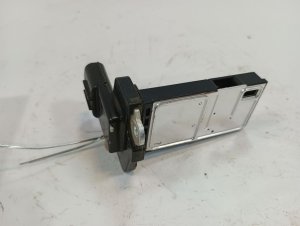
- Dirty Mass Airflow (MAF) Sensor 🔴 High Probability → Shop Fuel Injection Air Flow Meter The sensor is sensitive to dirt and oil. Oiled aftermarket air filters (e.g., K&N) are a common source of contamination that coats the sensor element, causing it to under-report the amount of air entering the engine and leading to a lean mixture.
How to confirm: Remove the sensor from the intake tube (two Phillips head screws) and inspect the small wires inside. If they are dirty, cleaning is warranted. A scan tool showing low grams/second airflow at idle (spec is ~3.3-4.7 g/s) can also indicate a dirty sensor. This is the easiest and cheapest first step.
Typical fix: Clean the sensor with a dedicated Mass Airflow Sensor cleaner spray. Do not use brake or carb cleaner. Do not touch the sensor wires. Allow it to dry completely before reinstalling. 🎬 Watch: A step-by-step guide to cleaning your 4Runner's MAF sensor.
Est. part cost: $10-$15 for cleaner - Vacuum Leak 🟡 Medium Probability With age and heat cycles, rubber hoses become brittle and crack. The PCV hose and the main intake air boot (the large tube between the air filter box and the throttle body) are common failure points.
How to confirm: With the engine running, listen for a hissing sound. You can carefully spray short bursts of brake cleaner or a water mist around vacuum lines and gasket surfaces; a change in engine idle indicates you've found the leak. A smoke test is the most definitive method. A key diagnostic clue is high fuel trims at idle that decrease as RPMs increase.
Typical fix: Replace the cracked hose or boot. The PCV hose is a common and inexpensive part to replace. 🎬 See how to find and fix vacuum leaks for free.
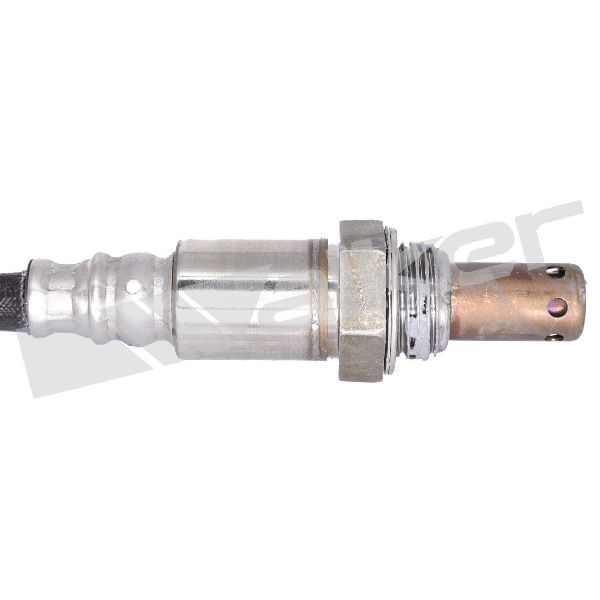
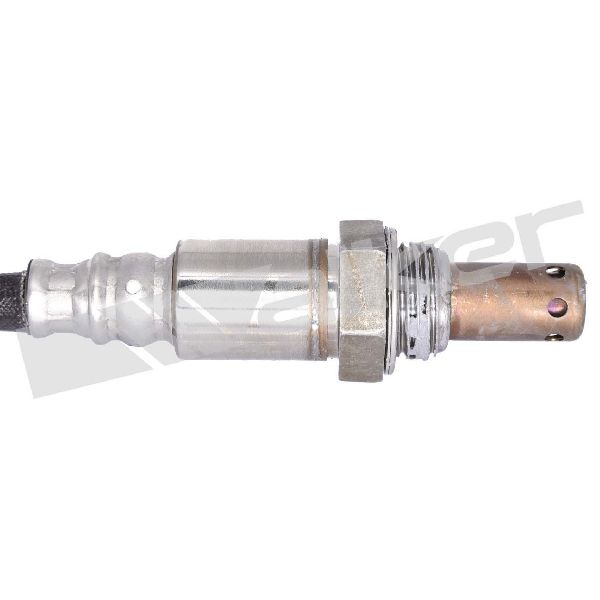
Est. part cost: $15-$50 for hoses - Failed Air/Fuel Ratio (Oxygen) Sensor ⚪ Low Probability → Shop Oxygen Sensor Sensors have a finite lifespan, but on this platform, they are more often correctly reporting a problem than being the cause of it. A sensor failure is possible but less likely than a dirty MAF or vacuum leak.
How to confirm: A scan tool is needed to observe the sensor's live voltage data. A healthy upstream sensor will fluctuate rapidly between approximately 0.1 and 0.9 volts. A sensor that is stuck 'low' (lean) or is slow to respond may be faulty. However, this can also be caused by an exhaust leak, so inspect the exhaust manifold for cracks or leaks before replacing the sensor.
Typical fix: Replace the Bank 1, Sensor 1 (upstream) Air/Fuel Ratio sensor. Use a quality brand like Denso.
Est. part cost: $100-$180
Rare But Worth Checking
- Leaking Intake Manifold Gaskets: → Shop Engine Intake Manifold While not a widespread common failure on the 5th gen 4Runner, these gaskets can fail at higher mileage, causing a significant vacuum leak that affects both banks (P0171 & P0174). A hissing noise and rough idle are common symptoms.
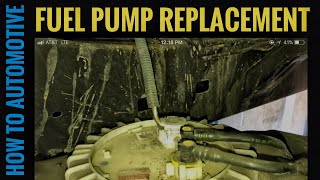
- Weak Fuel Pump: → Shop Fuel Pump A failing fuel pump can cause low fuel pressure, leading to a lean condition. Toyota issued a Technical Service Bulletin (TSB-0092-23, also cited as TSB-0009-23) for 2014-2020 models regarding this issue. This is more likely if P0171 is accompanied by code P0087 (Fuel Rail/System Pressure - Too Low). Some owners on forums have confirmed a bad fuel pump was their ultimate fix after trying other parts. 🎬 Watch this walkthrough on how to replace the fuel pump.
- Clogged Fuel Injectors: → Shop Fuel Injector An injector on Bank 1 may be partially clogged, preventing it from delivering the proper amount of fuel to its cylinder. This is less common than other causes and may be accompanied by a misfire code for a specific cylinder.
Diagnosis Steps
- Read the code(s) with an OBD-II scanner. Note Long Term Fuel Trim (LTFT) values. Values over +20% confirm a significant lean condition. If P0174 is also present, focus on causes that affect both banks.
- Visually inspect the engine bay. Look for obviously disconnected vacuum hoses or cracks in the large intake air boot between the air filter and throttle body.
- Clean the Mass Airflow (MAF) sensor. This is the most common fix. Purchase a can of dedicated MAF sensor cleaner. Remove the sensor (held by two screws), spray the internal wires thoroughly, let it air dry completely, and reinstall. Clear the codes and test drive.
- If the code returns, check for vacuum leaks. With the engine idling, observe LTFT values. Then, carefully spray short bursts of carb cleaner or unlit propane around the PCV hose, intake manifold gaskets, and other vacuum lines. If the engine's idle speed changes or LTFT values drop suddenly, you have found the leak.
- For a more thorough vacuum leak test, use a smoke machine to pressurize the intake system with smoke and watch for where it escapes. This is the most effective professional method.
- If no vacuum leaks are found, check fuel pressure. Connect a fuel pressure gauge to the fuel rail (may require a special adapter) and verify pressure is within spec at idle and under load. Low pressure could indicate a weak fuel pump or clogged filter, especially on 2014-2020 models per TSB-0092-23.
- If all else fails, use a scan tool to analyze the live data from the Bank 1 Air/Fuel Ratio sensor. If it appears stuck or responds slowly compared to the Bank 2 sensor, it may have failed.
Parts You'll Likely Need
- Mass Airflow (MAF) Sensor
(OEM #22204-31020)— This is the most common cause. While cleaning is usually effective, if the sensor has failed, it must be replaced. It is highly recommended to use the OEM Denso part to avoid compatibility issues.
Trusted brands: Denso (OEM)
OEM price range: $100-$150
Aftermarket price range: $40-$90 - PCV Hose
(OEM #12261-62050)— This rubber hose connects the PCV valve to the intake manifold and is a very common source of vacuum leaks as it becomes brittle and cracks over time. Note: Part number is for an older 3.4L but is commonly referenced; verify fitment for the 1GR-FE.
Trusted brands: Toyota (OEM), Gates, Continental
OEM price range: $15-$25
Aftermarket price range: $10-$20 - Air/Fuel Ratio Sensor (Bank 1, Sensor 1)
(OEM #89467-35110)— If diagnostics confirm the sensor itself has failed (a less common scenario), it will need to be replaced to restore proper fuel control feedback.
Trusted brands: Denso (OEM)
OEM price range: $150-$200
Aftermarket price range: $80-$140
Related Codes That Often Appear With This One
- P0174 — System Too Lean (Bank 2). If both P0171 and P0174 are present, it strongly points to a cause common to both engine banks, like the MAF sensor, a large vacuum leak (intake manifold gasket), or a fuel delivery problem (fuel pump).
- P0087 — Fuel Rail/System Pressure - Too Low. When seen with P0171/P0174, this is a very strong indicator of a failing low-pressure fuel pump, as specifically noted in Toyota TSB-0092-23 for 2014-2020 models.
Technical Service Bulletins (TSBs) & Recalls
- TSB-0092-23 (also TSB-0009-23): For 2014-2020 models, addresses a hard start and/or Check Engine Light with codes P0171, P0174, and P0087, pointing to a failing low-pressure fuel pump assembly as the likely cause.
Platform-Specific Known Issues
- Owner experience with non-OEM MAF sensor: → Shop Fuel Injection Air Flow Meter A user on 4runners.com shared their experience chasing a P0171 code. After replacing the MAF sensor with a new Denso part from eBay, the code persisted. The shop's diagnostic tool showed the new sensor had poor readings. Only after installing a genuine 'Toyota' Denso MAF from a dealer did the problem resolve and the vehicle passed smog. This highlights the platform's sensitivity to the exact OEM part.
- Fuel pump failure as the root cause: → Shop Fuel Pump On TacomaWorld, a user with a similar 1GR-FE engine reported fixing P0171 and P0174 codes by replacing the fuel pump after other common fixes failed. This aligns with Toyota's TSB for the 4Runner, suggesting it's a valid, though less common, solution.
Mechanic-Grade Diagnostic Values
- Mass Airflow (MAF) Sensor Reading at Idle — expected: 3.3 - 4.7 g/s. Failure: Readings significantly lower than this range suggest a dirty or failing sensor that is under-reporting airflow.
- Mass Airflow (MAF) Sensor Reading at 2500 RPM (No Load) — expected: 12.9 - 18.3 g/s. Failure: Low readings at higher RPMs can also indicate a faulty MAF sensor unable to keep up with increased airflow.
- Fuel Pressure (Dual VVT-i 1GR-FE) — expected: 324 kPa (approx. 47 psi). Failure: Significantly lower pressure indicates a weak fuel pump, clogged filter, or faulty regulator. The older single VVT-i engine spec was lower at 281-287 kPa (40.8-41.7 psi).
- Fuel Injector Resistance — expected: 11.6 to 12.4 Ω at 20°C (68°F). Failure: Resistance outside this range can indicate a failing injector coil.
- Long Term Fuel Trim (LTFT) Malfunction Threshold — expected: Normal operation is within +/- 25%.. Failure: When LTFT exceeds +33% for a set duration, the P0171 DTC is typically triggered.
Scan Tool Commands That Help
- Toyota Techstream: Active Test: Control the Fuel Pump / Speed — This function allows a technician to directly command the fuel pump to run without the engine operating. It's used to verify the pump's basic electrical operation and to build pressure for static fuel pressure tests.
- Toyota Techstream: Active Test: A/F Control — This test allows the technician to manually increase (+25%) or decrease (-12.5%) the fuel injection volume and observe the A/F and O2 sensors' reactions. It helps determine if the sensors are responding correctly to mixture changes, or if they are stuck/slow, helping to isolate a faulty sensor from a genuine fuel mixture problem.
Wiring & Ground Locations
- IM1 Connector — Right side of the blower unit, connecting the engine wire harness to the instrument panel wire harness.. A poor connection or corrosion at this major junction could potentially affect power or ground for engine sensors, including those related to the MAF and A/F sensors, leading to erratic readings. While not a primary suspect, it's a key location if multiple sensor circuits show issues.
Real Owner Repair Stories
- YouTube user 'Eazi DIY' (2010 Toyota Corolla (demonstrating a common Toyota issue)) — P0171 code present without a check engine light, rough idle after refueling and when braking.
❌ Tried (didn't work) Considered a smoke test but wanted to check common, simple items first.
✅ What actually fixed it Discovered multiple, severely cracked vacuum hoses connected to the EVAP purge solenoid. The cracks were allowing a significant amount of unmetered air into the intake manifold. Replacing the cracked hoses resolved the lean condition.
"I Checked Everything" — The Actual Cause
- An exhaust leak before the primary A/F (O2) sensor can pull in ambient air during certain engine conditions (like deceleration). This extra oxygen makes the sensor report a false lean condition to the ECM, triggering P0171. A smoke test of the intake system will come back clean because the leak is in the exhaust, not the intake. This is often missed because technicians focus solely on intake vacuum leaks.
OEM Part Supersession History
22204-31010, 22204-0P010, 22204-0H010→22204-31020— Standard part evolution for improved performance, reliability, or manufacturing efficiency.
Heads up: While aftermarket versions exist, the 1GR-FE is notoriously sensitive. Using a genuine Denso/Toyota part (22204-31020) is highly recommended to prevent persistent or recurring codes, as documented in numerous owner forums.
Model Year Variations Within This Range
- 2010-2024: The Dual VVT-i 1GR-FE used in this generation has a higher specified fuel pressure (324 kPa / ~47 psi) compared to the earlier single VVT-i version. This is important when performing fuel pressure tests to ensure the correct specification is used for diagnosis.
- 2014-2020: These model years are specifically called out in Toyota TSB-0092-23 for potential low-pressure fuel pump failures that can cause P0171, often accompanied by P0087.
Diagnostic Flowchart
Other Known Issues on This Vehicle
Issues unrelated to this code that are worth knowing about as an owner of this generation:
- Front Differential Needle Bearing Failure 🟠 Medium — Common, especially on lifted vehicles, but can occur on stock suspensions. Onset can be as early as 1,200 miles or develop later. Causes a vibration or rumbling/growling noise between 30-50 mph that often disappears in 4WD.
- Secondary Air Injection (SAI) Pump/Valve Failure 🔴 High — More common on the 4.7L V8 (4th Gen), but the system exists on the 1GR-FE and can fail, though less frequently. Failure is often due to moisture ingestion, leading to seized valves and putting the vehicle in 'limp mode'. Can be very expensive to repair. (Ref: T-SB-0230-12 (for 2UZ-FE))
- Kinetic Dynamic Suspension System (KDSS) Accumulator Failure 🔴 High — Affects TRD Off-Road models with KDSS. The accumulator housing can trap mud and road salt, leading to corrosion and leaks. Repair is very expensive (often quoted over $4,000). Preventative cleaning is recommended.
- Frame Rust 🔴 High — A long-standing issue with Toyota trucks and SUVs, particularly in regions that use road salt. The body-on-frame chassis is prone to severe rust if not properly maintained or undercoated. (Ref: Various frame replacement programs have existed for other Toyota trucks, but owners should be vigilant.)
- Warped Front Brake Rotors 🟡 Low — Common complaint leading to steering wheel shake or vehicle vibration when braking. Due to the vehicle's weight, the stock rotors can warp. Upgrading to higher-quality aftermarket rotors is a common solution.
Used vs. New Parts: Buying Guide for This Vehicle
When a used part is the smart pick: For this specific code, used parts are generally not recommended for the primary electronic components. However, obtaining used structural parts like a complete air intake assembly (if the original is cracked) or an exhaust manifold from a low-mileage, non-corroded donor vehicle can be a cost-effective repair.
Donor-vehicle mileage cap: roughly under 80000 miles for the part to have meaningful remaining life.
What to inspect on the donor part:
- For hoses: Check for pliability; squeeze the hose to ensure it's not hard, brittle, or mushy. Look for visible cracks, especially at connection points.
- For manifolds/intake parts: Inspect for hairline cracks, especially around welds and mounting flanges. Ensure all gasket surfaces are flat and free of deep gouges.
- For any part: Check for signs of extreme heat (discoloration) or oil saturation, which could indicate other issues with the donor vehicle.
OEM-only on this vehicle (don't cheap out):
- Mass Airflow (MAF) Sensor: The 1GR-FE engine is notoriously sensitive to MAF sensor calibration. Aftermarket sensors are a very common cause of repeat P0171 codes. Always use a genuine Denso (OEM) part.
- Air/Fuel Ratio (O2) Sensor: Similar to the MAF, the ECM's fuel trim strategy is tightly calibrated to the specific response curve of the OEM Denso sensor. Aftermarket sensors may not switch at the correct rate, leading to persistent codes.
Aftermarket brands forum-validated for this vehicle:
- Denso (for sensors, this is the Original Equipment Manufacturer)
- Gates, Continental (for replacement vacuum and PCV hoses)
Brands owners have reported issues with on this vehicle:
- No-name or unbranded 'white box' MAF and A/F sensors from online marketplaces are highly likely to be poorly calibrated and cause immediate or recurring issues.
Real Owner Stories
Aggregated from forums and TSBs cited above. Mileages and costs reflect what owners reported in those sources.
2010-2024 Toyota 4Runner 1GR-FE 4.0L V6
Symptoms: The owner chased a P0171 code and replaced the MAF sensor with a Denso part purchased from eBay, but the code remained and the sensor provided poor readings.
What fixed it: Installing a genuine 'Toyota' Denso MAF sensor sourced directly from a dealer.
Source hint: 4Runners.com - 'P0171 issue': https://www.4runners.com/threads/p0171-issue.41708/
2005-2015 Toyota Tacoma (4.0L 1GR-FE)
Symptoms: Persistent P0171 and P0174 codes that remained after other common fixes were attempted.
What fixed it: Replacing the fuel pump.
Source hint: TacomaWorld - 'P0171 Solved, FINALLY!!': https://www.tacomaworld.com/threads/p0171-solved-finally.492929/
Related OBD-II Codes
Frequently Asked Questions
Does TSB-0092-23 apply to my 2018 4Runner with a P0171 code?
Can I use an aftermarket MAF sensor from eBay to fix this code?
What is the specific airflow specification for the 1GR-FE 4.0L V6 at idle?
Is there a specific vacuum hose on the 4Runner known for causing this lean condition?
Should I replace my Air/Fuel Ratio sensor immediately if I see P0171?
Can an oiled K&N air filter cause a P0171 on my 4Runner?
Helpful Videos


Used OEM Parts in Stock
New Aftermarket Parts Available

The information in this article is provided for general reference and educational purposes only. Vehicle specifications, procedures, and part compatibility can vary by production date, trim level, and region. Always consult your vehicle's factory service manual and verify part numbers before purchasing or performing repairs. Safety-critical components such as airbags, seat belts, and braking systems should be installed by a qualified professional.
- Toyota 4Runner:
- 🧭 Diagnostic Flowchart
- 🎬 Helpful Videos
- 🛍️ Shop This Part
- What's Unique About the 2010-2024 Toyota 4Runner
- Symptoms You May Notice
- Most Likely Causes
- Rare But Worth Checking
- Diagnosis Steps
- Parts You'll Likely Need
- Related Codes That Often Appear With This One
- Technical Service Bulletins (TSBs) & Recalls
- Platform-Specific Known Issues
- Mechanic-Grade Diagnostic Values
- Scan Tool Commands That Help
- Wiring & Ground Locations
- Real Owner Repair Stories
- "I Checked Everything" — The Actual Cause
- OEM Part Supersession History
- Model Year Variations Within This Range
- Other Known Issues on This Vehicle
- Used vs. New Parts: Buying Guide for This Vehicle
- Real Owner Stories
- 2010-2024 Toyota 4Runner 1GR-FE 4.0L V6
- 2005-2015 Toyota Tacoma (4.0L 1GR-FE)
- Related OBD-II Codes
- Frequently Asked Questions
- 🎟️ Get 5% Off