

P0171 on 2007-2011 Toyota Camry: Causes and Fixes for System Too Lean
For a 2007-2011 Toyota Camry with the 2.4L 2AZ-FE engine, the P0171 code is most often caused by a leaking intake manifold gasket or a dirty Mass Airflow (MAF) sensor. The original orange intake gasket becomes brittle and flat, causing a vacuum leak. Cleaning the MAF sensor is a good first step, but be prepared to replace the intake gasket with the updated part if the problem persists, especially on higher-mileage cars.
- P0171 means your engine is running lean (too much air, not enough fuel).
- On a 2007-2011 Camry, the most likely cause is a leaking intake manifold gasket, especially on the 4-cylinder engine.
- Start your diagnosis with the cheapest and easiest fixes: inspect all vacuum hoses and clean the MAF sensor with a dedicated cleaner.
- A smoke test is the best way to confirm a vacuum leak if visual inspection finds nothing.
- Do not immediately replace the oxygen (A/F) sensor; it is often correctly reporting a problem caused by something else.
What's Unique About the 2007-2011 Toyota Camry
On the 2007-2011 Camry, particularly the 4-cylinder (2AZ-FE) model, the P0171 code is very frequently traced back to a failed intake manifold gasket. These gaskets, often orange from the factory, are made of a rubber material that is known to become brittle, flatten, and crack over time, causing a significant vacuum leak. While other causes like a dirty MAF sensor are possible, the intake gasket is a well-documented weak point on this specific platform that often gets overlooked in generic diagnostic advice. The issue is so common that many owners and technicians consider it the primary suspect once the car exceeds 100,000 miles.
Symptoms You May Notice
- Check Engine Light is on
- Rough or shaky idle
- Hesitation or lack of power during acceleration
- Engine stalling, especially when coming to a stop
- Reduced fuel economy, sometimes significantly (e.g., dropping to 15 MPG)
- Hissing or whistling noise from the engine bay, especially around the intake manifold
- Hard starting, may require cycling the key to build fuel pressure if a weak pump is also a factor
- Replacing the downstream (post-catalyst) oxygen sensor. This sensor's primary role is to monitor catalyst efficiency and it has little effect on fuel trim.
- Replacing fuel injectors. While a clogged injector can cause a lean condition, it is much less common on this vehicle than vacuum leaks or sensor issues.
- Immediately replacing the A/F sensor without first checking for vacuum leaks, which are far more common and cheaper to fix.
Most Likely Causes
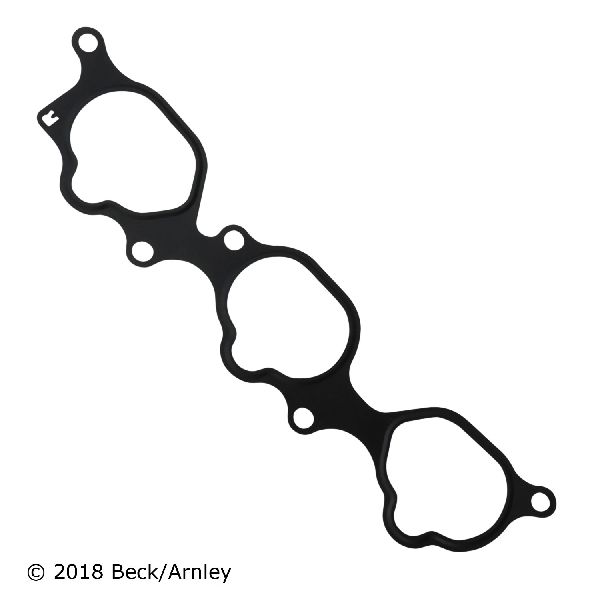
- Leaking Intake Manifold Gasket 🔴 High Probability → Shop Engine Intake Manifold The original rubber gaskets on the 2AZ-FE 4-cylinder engine are known to degrade, crack, and flatten over time, creating a vacuum leak. This is a very common failure point on this specific engine. The original gasket is often orange and the replacement is typically a revised black or green one.
How to confirm: With the engine running, spray short bursts of brake cleaner or unlit propane around the area where the intake manifold meets the cylinder head. If the engine's idle speed changes or smooths out, a leak is present. A professional smoke test is the most definitive way to confirm the leak's location and size. A high long-term fuel trim (LTFT) at idle that decreases as RPMs increase (e.g., from +24% at idle to +14% at 2500 RPM) is a strong indicator of a vacuum leak.
Typical fix: Replace the intake manifold gasket. 🎬 Watch this step-by-step guide to removing the manifold and gasket. It is highly recommended to use an updated OEM or quality aftermarket (e.g., Fel-Pro) part. The surfaces must be thoroughly cleaned before installing the new gasket.
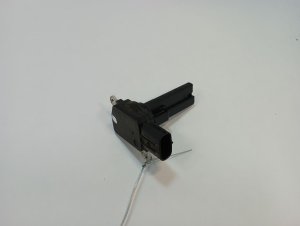
Est. part cost: $15-$40 - Dirty or Faulty Mass Airflow (MAF) Sensor 🟡 Medium Probability → Shop Fuel Injection Air Flow Meter The MAF sensor measures the amount of air entering the engine. If the sensor's delicate wire gets contaminated with dirt, oil (especially from over-oiled aftermarket air filters), or other debris, it will under-report the airflow, causing the ECM to deliver too little fuel.
How to confirm: Remove the sensor (located on the air intake tube after the filter box) and visually inspect the small wires inside for contamination. Cleaning is a common first step. If cleaning doesn't work, monitoring MAF readings on a scan tool can confirm if it's reading incorrectly. A faulty sensor may also set a P0101 code.
Typical fix: Clean the sensor with a dedicated MAF sensor cleaner spray. 🎬 See how to safely clean your MAF sensor wires. Do not touch the wires or use other chemicals like brake cleaner. Let it dry completely before reinstalling. If cleaning does not resolve the issue, the sensor must be replaced, preferably with an OEM Denso unit.
Est. part cost: $10-$15 for cleaner, $60-$150 for a new sensor - Cracked or Disconnected PCV Hose 🟡 Medium Probability → Shop PCV Valve Hose The rubber hoses in the Positive Crankcase Ventilation (PCV) system, especially the one connecting the valve cover to the intake, can become brittle and crack with age and heat, creating an unmetered vacuum leak.
How to confirm: Visually inspect all vacuum hoses connected to the intake manifold and PCV valve for cracks, splits, or loose connections. The hose may look fine but be cracked on the underside. Squeezing the hose may reveal hidden cracks.
Typical fix: Replace the damaged hose. This is an inexpensive and easy repair.
Est. part cost: $10-$30 - Faulty Air/Fuel Ratio Sensor (Upstream O2 Sensor) ⚪ Low Probability → Shop Oxygen Sensor The primary sensor that measures the air-fuel mixture (Bank 1, Sensor 1) can become slow or biased with age, sending incorrect 'lean' signals to the ECM even when the mixture is fine.
How to confirm: This requires a scan tool to watch the live data from the sensor. A healthy sensor will show rapid voltage fluctuations. A lazy or dead sensor will have slow or no response. This should only be suspected after vacuum leaks and MAF issues are completely ruled out.
Typical fix: Replace the Bank 1, Sensor 1 Air/Fuel Ratio Sensor. Using the OEM brand, Denso, is highly recommended for compatibility and performance.
Est. part cost: $80-$180
Rare But Worth Checking
- Weak Fuel Pump or Clogged Fuel Filter: → Shop Fuel Filter While less common than vacuum leaks, a failing fuel pump or clogged filter can reduce fuel pressure, leading to a lean condition. This is more likely if you also experience long crank times or stalling under load. 🎬 Watch a diagnosis and fuel pump replacement for this code. A fuel pressure test is needed to confirm, though Toyota does not provide an easy service port for this on the fuel rail. Manufacturer Bulletin #TSB000923 notes that some vehicles may exhibit a hard start or MIL ON with P0171 and P0087, where data analysis reveals low fuel rail pressure.
- Leaking Brake Booster: The diaphragm inside the brake booster can fail, creating a large vacuum leak. This can be tested by pressing the brake pedal while monitoring short-term fuel trims; a significant change indicates a potential leak. NHTSA ODI #10481255 describes an instance where the check engine light came on with P0171 and P0174, accompanied by a hissing noise when pressing the brake pedal.
Diagnosis Steps
- Check for any obvious vacuum leaks. Inspect the air intake tube for cracks between the air filter box and the throttle body. Check all vacuum hoses for cracks or disconnection, especially the PCV hose.
- Clean the Mass Airflow (MAF) sensor. It is located on the air filter housing. Disconnect it, remove the two screws, and carefully spray the internal wires with dedicated MAF sensor cleaner. Let it dry completely for 15-20 minutes before reinstalling.
- Analyze Fuel Trims with a Scan Tool. Observe the Short-Term (STFT) and Long-Term (LTFT) fuel trims at idle and at a steady 2500 RPM. High positive trims at idle that decrease at higher RPM strongly suggest a vacuum leak.
- If a vacuum leak is suspected, perform a smoke test. This is the most effective way to find hard-to-see vacuum leaks, especially from the intake manifold gasket. Alternatively, carefully spray carb cleaner around the intake gasket mating surface and listen for a change in engine idle.
- If no vacuum leaks are found, check fuel pressure. This is more involved on a Camry as there is no test port. It may require special adapters to tap into the fuel line. Low pressure could indicate a weak pump or clogged filter. NHTSA ODI #11659736 reports a case where P0171 was diagnosed as a low or leaking high-pressure reading for the fuel rail.
- If fuel pressure and vacuum are good, analyze the Air/Fuel Ratio sensor data with a scan tool. A lazy or biased sensor may need replacement.
Parts You'll Likely Need
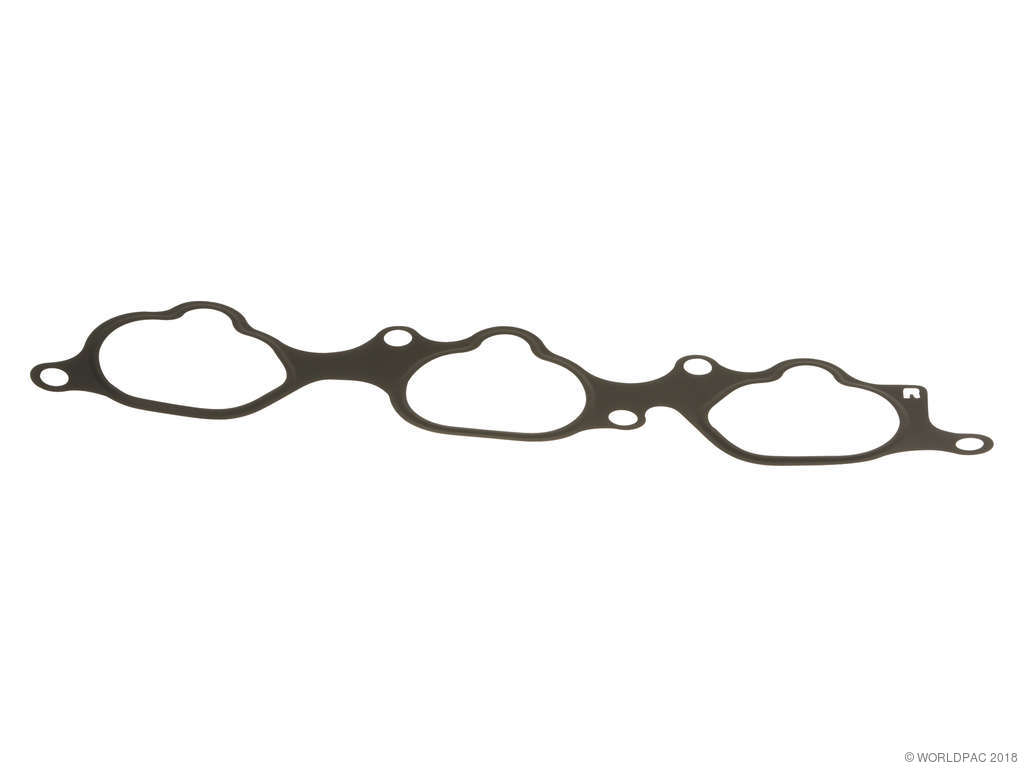
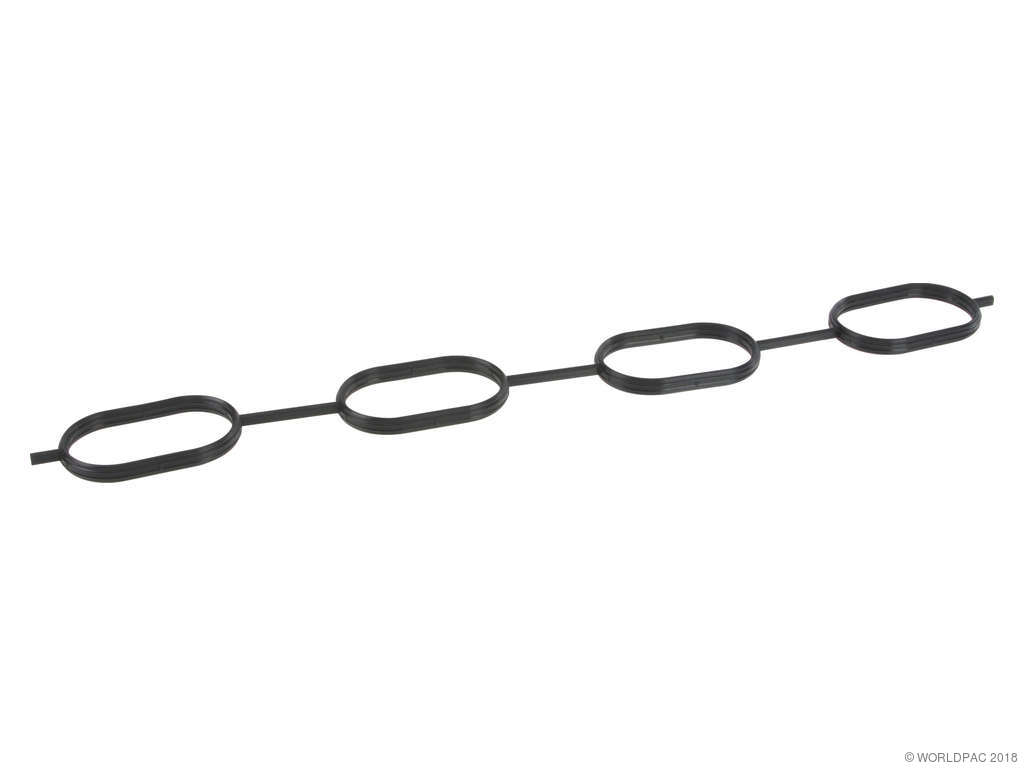
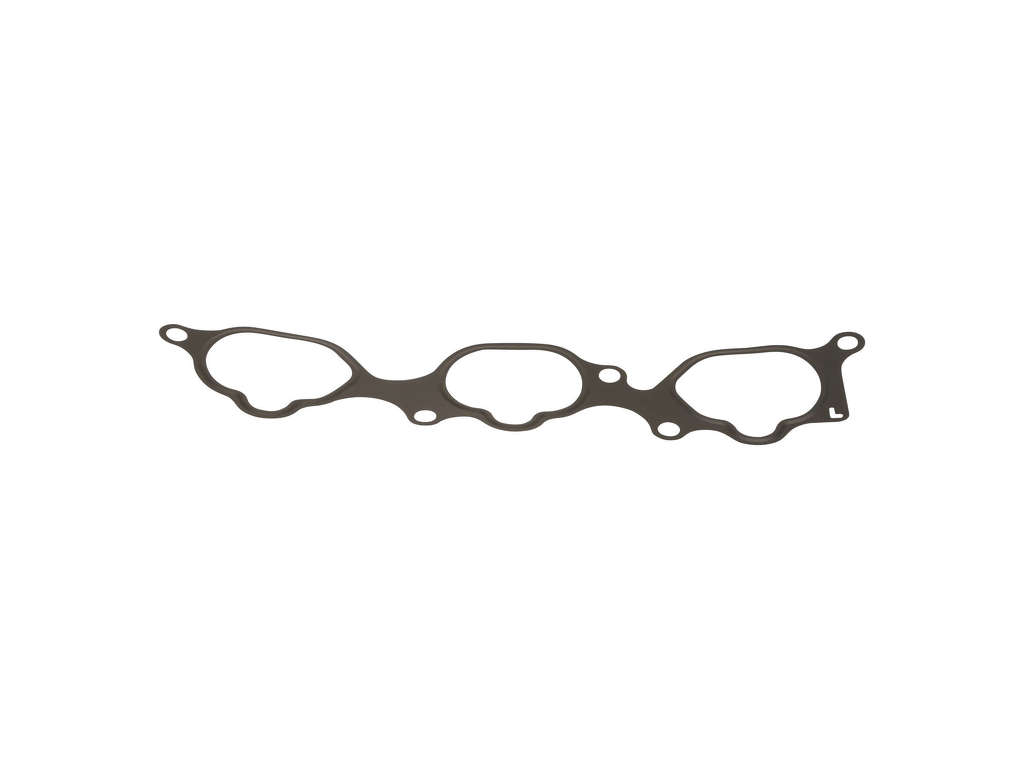
- Intake Manifold Gasket
(OEM #17171-0H050 (Updated part number, supersedes 17171-28020))— This is the most frequent cause of P0171 on the 4-cylinder Camry of this generation due to the original gasket material degrading over time.
Trusted brands: Toyota (OEM), Fel-Pro (P/N: MS 96765), Victor Reinz
OEM price range: $20-$30
Aftermarket price range: $10-$25 - Mass Airflow (MAF) Sensor Cleaner — Cleaning a dirty MAF sensor is a very common, inexpensive, and easy first step that often resolves the P0171 code.
Trusted brands: CRC (P/N: 05110), WD-40 Specialist
Aftermarket price range: $10-$15 - Mass Airflow (MAF) Sensor
(OEM #Denso 197-6110 (Cross-references Toyota P/N 22204-0H010, 22204-31010))— If cleaning fails, the sensor itself may be faulty. Denso is the Original Equipment supplier.
Trusted brands: Denso (OEM), Bosch
OEM price range: $100-$150
Aftermarket price range: $60-$120
Related Codes That Often Appear With This One
- P0174 — If the vehicle has a V6 engine (2GR-FE), P0174 (System Too Lean Bank 2) will often appear with P0171, indicating the vacuum leak or fuel issue is affecting both cylinder banks.
- P0101 — This code relates to 'Mass Air Flow (MAF) Circuit Range/Performance'. It often appears with P0171 when the MAF sensor is dirty, faulty, or if there is a significant air leak between the MAF and the throttle body.
Technical Service Bulletins (TSBs) & Recalls
- While no specific TSB directly addresses P0171 via the intake gasket, TSB EG048-07 for excessive oil consumption on the 2AZ-FE engine involved procedures that required removing the intake manifold, highlighting its service access.
- Bulletin #TSB000923: This manufacturer bulletin notes that certain Toyota vehicles may exhibit a hard start and/or MIL ON with DTC P0171 and/or P0174, often linked to low fuel rail or system pressure (DTC P0087).
Platform-Specific Known Issues
- Original Orange Gasket Degradation: The factory-installed intake manifold gasket, often orange in color, is notorious for becoming hard and flat over its service life, losing its sealing ability. The updated OEM and aftermarket gaskets are made of a different material (often black or green) that is more durable.
Mechanic-Grade Diagnostic Values
- Fuel Pressure — expected: 304 to 343 kPa (44 to 50 psi) at idle.. Failure: Pressure is below 44 psi, or pressure does not hold, dropping below 21 psi within 5 minutes of engine stop.
- Mass Airflow (MAF) Sensor Reading — expected: 1 to 3 g/sec at idle (A/C off); 2 to 6 g/sec at 2,500 RPM (A/C off).. Failure: Readings are significantly lower than expected, causing the ECM to underestimate airflow and command insufficient fuel.
- Air/Fuel Ratio Sensor Heater Resistance — expected: 0.8 to 1.4 Ω at 20°C (68°F) between terminals +B and HT.. Failure: Resistance is outside the specified range, indicating a faulty heater circuit which can affect sensor accuracy.
- Fuel Injector Resistance — expected: 11.6 to 12.4 Ω at 20°C (68°F).. Failure: Resistance outside this range can indicate a faulty injector coil.
- Combined Fuel Trim (Short-Term + Long-Term) — expected: Within +/- 20% of zero under normal operation.. Failure: A sustained combined value of +35% or more will trigger DTC P0171.
Scan Tool Commands That Help
- Toyota Techstream: Active Test: A/F Control — This function allows a technician to manually command a 12.5% decrease or 25% increase in fuel injection volume. By observing the A/F and O2 sensor responses, one can test the sensor's ability to react to mixture changes, helping to isolate a lazy sensor from a true lean condition.
- Toyota Techstream: Active Test: Fuel Pump / SPD — This allows for the fuel pump to be turned on without the engine running, which is necessary to safely and accurately measure static fuel pressure to diagnose a weak pump or leak.
- Toyota Techstream: Utility: Reset Memory — After a repair such as replacing an intake gasket or MAF sensor, this function should be used to clear the long-term fuel trim learning values from the ECM. This forces the ECM to relearn the fuel strategy immediately with the new parts, preventing it from running on old, incorrect learned values.
Wiring & Ground Locations
- ECM Connector A9, Pin 7 (FC) — At the Engine Control Module (ECM), which is typically located behind the glove box.. This is the Fuel Pump Control circuit terminal. Checking for 9-14V at this pin when the ignition is ON verifies that the ECM is commanding the fuel pump to operate.
- ECM Connector B30, Pins 41 & 43 (M-, ME01) — At the Engine Control Module (ECM).. These are the terminals for the throttle actuator. While not a primary cause, erratic throttle behavior could contribute to lean conditions, and checking for a proper pulse signal here can rule out issues with the electronic throttle control.
Real Owner Repair Stories
- YouTube channel 'I Just Fix It Myself' (2007 Toyota Camry XLE) — P0171 code appeared after a valve cover gasket replacement was done at a shop.
❌ Tried (didn't work) Initial visual inspection did not reveal the problem.
✅ What actually fixed it Found a large, split vacuum hose underneath the plastic engine cover. The hose was completely broken open, causing a massive vacuum leak. The fix was to replace the broken section of the hose. - YouTube channel 'SESG' (2007 Toyota Camry) — P0171 code, hard starting when cold (requires cycling the key).
❌ Tried (didn't work) Replaced a non-OEM MAF sensor with an OEM Toyota unit., Performed a smoke test which showed no vacuum leaks., Unplugged PCV valve and blocked the hose, which made no change to fuel trims.
✅ What actually fixed it Replaced the in-tank fuel pump assembly. The diagnosis was based on eliminating all other possibilities and the symptom of fuel pressure bleed-off (hard starting), pointing to a faulty check valve/regulator within the fuel pump module. - Reddit user in r/AskAMechanic (Toyota Camry (year not specified, but context implies 2AZ-FE)) — P0171 code.
❌ Tried (didn't work) Not specified, but the user was told the gasket was the primary cause.
✅ What actually fixed it Replaced the original, flattened orange intake manifold gasket with a new black Fel-Pro gasket. The user noted the new gasket was visibly thicker and protruded more, creating a better seal. - NHTSA ODI #11331260: An owner reported symptoms of a rough idle and weak engine performance. A scan revealed P0171 among other codes, indicating a lean fuel/air mixture, and the owner noted the fuel pump was making noise indicative of failure.
- NHTSA ODI #10609988: A driver reported the check engine light came on while driving; a scan at a local shop confirmed code P0171, leading to a recommendation for a professional diagnostic check.
"I Checked Everything" — The Actual Cause
- In one documented case, a 2007 Camry passed a smoke test, ruling out common vacuum leaks. The owner also replaced a faulty aftermarket MAF sensor. The P0171 code and hard starting persisted. The final root cause was a weak fuel pump and/or a faulty in-tank fuel pressure regulator, which was bleeding off pressure when the car sat. Replacing the fuel pump assembly resolved the issue.
OEM Part Supersession History
17171-28020→17171-0H050— The original orange gasket material was prone to becoming hard and brittle, leading to vacuum leaks. The superseding part uses a revised material for improved longevity.
Model Year Variations Within This Range
- 2007-2009: These models used the 2.4L 2AZ-FE engine, which is known for the intake manifold gasket issue and potential for excessive oil consumption.
- 2010-2011: These models were updated with the newer 2.5L 2AR-FE engine and a 6-speed automatic transmission. This engine is generally considered more reliable and is not known for the same intake gasket or oil consumption issues as the 2AZ-FE. Diagnostics for a P0171 on these later models would de-prioritize the intake gasket as a primary cause.
Diagnostic Flowchart
Real Owner Stories
Aggregated from forums and TSBs cited above. Mileages and costs reflect what owners reported in those sources.
2009 Toyota Camry LE (2.4L 2AZ-FE)
Symptoms: Experienced high fuel trims (+25% LTFT), a low idle, and poor acceleration while battling both P0171 and P0101 codes.
What fixed it: Owner diagnosed the issue by checking for intake leaks, testing fuel pressure, and inspecting the brake booster.
Source hint: ToyotaNation.com - Thread: '2009 Camry LE 2AZFE p0171 and now p0101'
2008 Toyota Camry (4-cylinder)
Symptoms: Observed classic vacuum leak symptoms on a scan tool: LTFT was at +24% at idle, but dropped to +14% when held at 2500 RPM.
What fixed it: Performed a cigar smoke test to locate the source of the vacuum leak.
Source hint: Reddit r/MechanicAdvice - Thread: 'P0171 on 2008 Toyota camry with 4 cylinder'
2007-2011 Toyota Camry
Symptoms: The vehicle was stalling out, eventually triggering a P0171 System Too Lean code.
What fixed it: Replaced a torn PCV hose and a failing fuel pump, which successfully resolved the code after 120 miles of driving.
Source hint: YouTube - Fix It Now: '2007 - 2011 Toyota Camry Code P0171 System too lean - Fixed!!'
2007 Toyota Camry
Symptoms: Check engine light illuminated due to a vacuum leak at the intake manifold mating surface.
What fixed it: Removed the intake manifold and replaced the degraded intake manifold gasket.
Source hint: YouTube - Valley Mobile Automotive: '2007-2011 Toyota Camry Intake Manifold and Gasket Replacement'
Related OBD-II Codes
Frequently Asked Questions
Why is the intake manifold gasket a common cause of P0171 on my 2.4L 2AZ-FE Camry?
How can I use fuel trims to confirm a vacuum leak on my 2007-2011 Camry?
Does TSB EG048-07 fix the P0171 code?
What brand of MAF sensor or A/F sensor should I buy for my Camry?
Why is checking fuel pressure difficult on the 2007-2011 Camry?
Can a bad PCV hose cause a P0171 on this car?
Helpful Videos
Used OEM Parts in Stock
New Aftermarket Parts Available


The information in this article is provided for general reference and educational purposes only. Vehicle specifications, procedures, and part compatibility can vary by production date, trim level, and region. Always consult your vehicle's factory service manual and verify part numbers before purchasing or performing repairs. Safety-critical components such as airbags, seat belts, and braking systems should be installed by a qualified professional.
- Toyota Camry:
- 🧭 Diagnostic Flowchart
- 🎬 Helpful Videos
- 🛍️ Shop This Part
- What's Unique About the 2007-2011 Toyota Camry
- Symptoms You May Notice
- Most Likely Causes
- Rare But Worth Checking
- Diagnosis Steps
- Parts You'll Likely Need
- Related Codes That Often Appear With This One
- Technical Service Bulletins (TSBs) & Recalls
- Platform-Specific Known Issues
- Mechanic-Grade Diagnostic Values
- Scan Tool Commands That Help
- Wiring & Ground Locations
- Real Owner Repair Stories
- "I Checked Everything" — The Actual Cause
- OEM Part Supersession History
- Model Year Variations Within This Range
- Real Owner Stories
- 2009 Toyota Camry LE (2.4L 2AZ-FE)
- 2008 Toyota Camry (4-cylinder)
- 2007-2011 Toyota Camry
- 2007 Toyota Camry
- Related OBD-II Codes
- Frequently Asked Questions
- 🎟️ Get 5% Off