

P0171 on 2014-2019 Toyota Highlander 3.5L V6: System Too Lean Causes and Fixes
On a 2014-2019 Highlander, P0171 is most often caused by a dirty Mass Air Flow (MAF) sensor or a vacuum leak from a failed intake manifold gasket or PCV hose. Start by cleaning the MAF sensor, which is a low-cost, high-success first step. If P0171 is paired with P0174, the issue affects the whole engine.
- Start your diagnosis by cleaning the Mass Air Flow (MAF) sensor. It's the most common cause and the easiest and cheapest first step.
- If cleaning the MAF doesn't work, the next most likely cause is a vacuum leak. Thoroughly inspect intake manifold gaskets, the PCV system, and the air intake tube.
- For 2017-2019 models, pay special attention to the EVAP purge valve, as it's a known failure point that causes a vacuum leak.
- Do not replace the A/F (O2) sensor first. It is almost always just reporting the lean condition correctly.
- If P0171 is paired with P0174 (both banks lean), it strongly points to a component affecting the whole engine: the MAF sensor, a fuel pump, or a large vacuum leak.
What's Unique About the 2014-2019 Toyota Highlander
The 2014-2019 Highlander V6 uses two different engines within this generation: the 2GR-FE (2014-2016) and the direct-injected 2GR-FKS (2017-2019). While both are prone to P0171 from common Toyota issues like dirty MAF sensors and leaking intake gaskets, the newer 2GR-FKS engine has also shown a tendency for the EVAP purge valve to stick open, creating a vacuum leak that triggers this code. When P0171 appears with its counterpart P0174 (Bank 2), it strongly suggests a problem affecting the whole engine, like the MAF sensor, a major vacuum leak, or a fuel delivery issue.
Symptoms You May Notice
- Check Engine Light is on
- Rough idle
- Hesitation or stumbling during acceleration
- Reduced engine power
- Poor fuel economy
- Engine stalling, especially at stops or after refueling
- Loud whining or humming from the fuel tank area
- Replacing the Air/Fuel Ratio (O2) Sensor. The sensor is usually doing its job correctly by reporting the lean condition. Replacing it without diagnosing the root cause (like a vacuum leak or dirty MAF) will not fix the problem and the code will return.
Most Likely Causes
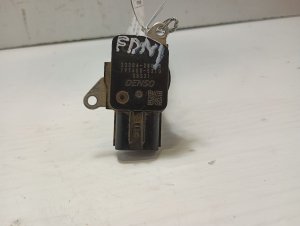
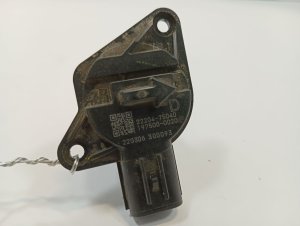
- Dirty Mass Air Flow (MAF) Sensor 🔴 High Probability → Shop Fuel Injection Air Flow Meter The MAF sensor wire can get contaminated with oil vapor and dirt, causing it to under-report the amount of air entering the engine. This is a very common issue on most modern vehicles, including Toyotas.
How to confirm: Visually inspect the two small sensor wires inside the MAF housing. If they look dirty, cleaning is the first step. You can also monitor MAF readings on a scan tool; at idle, it should be around 3-5 g/s for the 3.5L V6. A faulty sensor may show readings below 80% of expected value at full throttle.
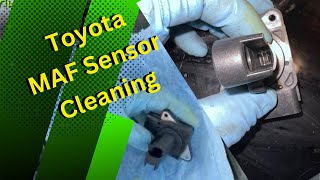
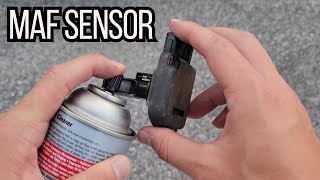
Typical fix: Remove the sensor and clean it carefully using only dedicated MAF sensor cleaner spray. 🎬 See this quick guide on cleaning your MAF sensor safely. Do not touch the wires or use brake cleaner. Allow it to dry completely before reinstalling. If cleaning doesn't work, the sensor must be replaced, with Denso (OEM) being the recommended brand.
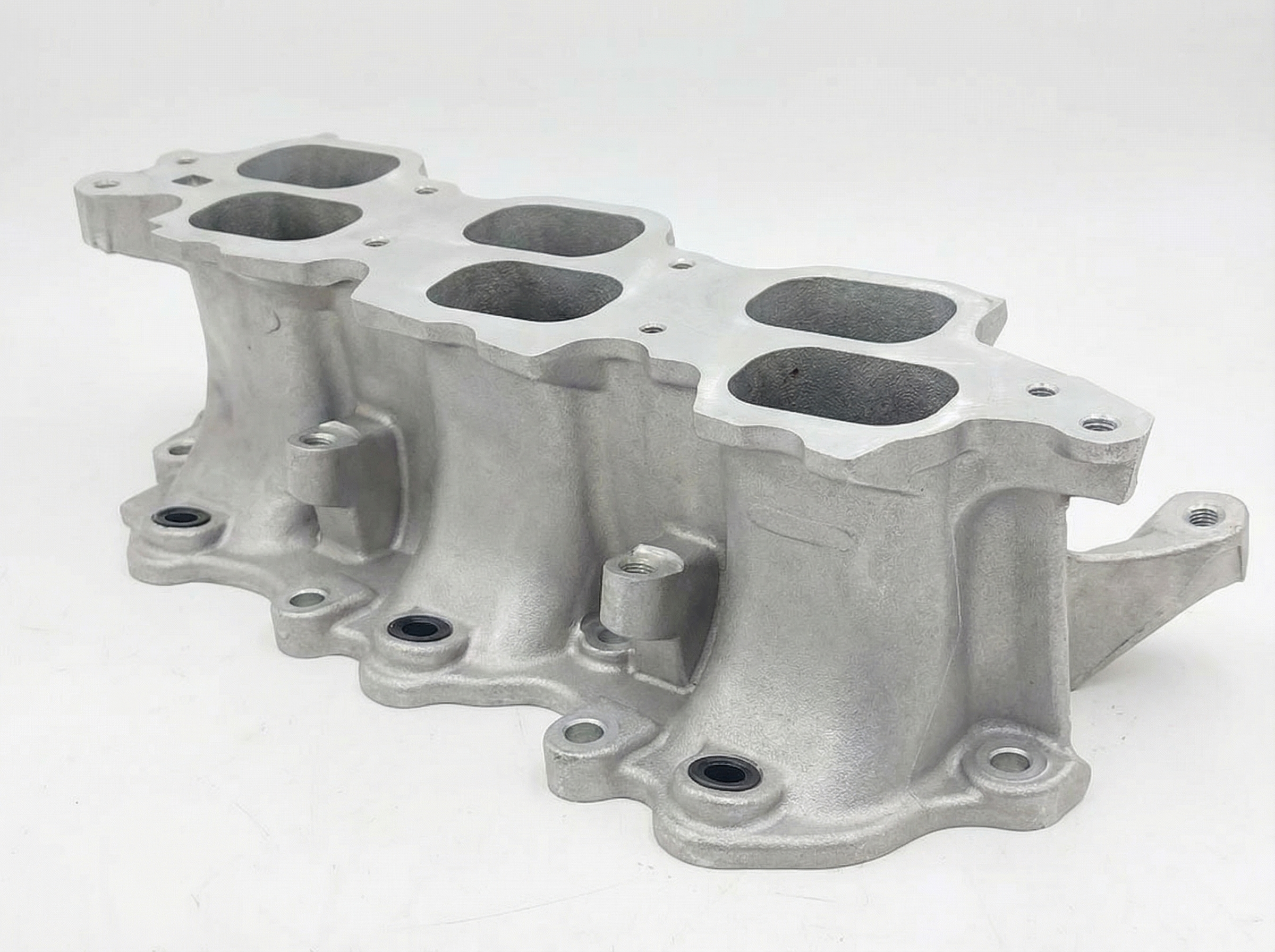
Est. part cost: $10-$20 for cleaner, $150-$250 for a new Denso sensor - Leaking Intake Manifold Gaskets 🔴 High Probability → Shop Engine Intake Manifold The rubber gaskets between the plastic intake manifold and the cylinder heads, as well as the upper plenum gasket, can become hard, brittle, and flattened over time, allowing unmetered air to leak into the engine. This is a well-documented failure point.
How to confirm: With the engine running, spray short bursts of brake cleaner or an unlit propane torch around the intake manifold sealing surfaces. If the engine RPM changes, a leak is present. A professional smoke test is the most definitive way to find the exact location of the leak.
Typical fix: Replace the faulty intake manifold gaskets. This involves removing the upper intake manifold (plenum) to access the lower gaskets. It is a labor-intensive but manageable DIY job. 🎬 Watch: Step-by-step walkthrough for replacing the intake manifold gaskets.
Est. part cost: $30-$80 for a full set of OEM gaskets - Cracked or Disconnected PCV Hose / Faulty PCV Valve 🟡 Medium Probability → Shop PCV Valve The rubber hoses connected to the PCV (Positive Crankcase Ventilation) valve can become brittle and crack, creating a vacuum leak. The valve itself can also get stuck open, acting as a constant unmetered air source.
How to confirm: Visually inspect all PCV hoses for cracks, splits, or soft/mushy spots. Remove the PCV valve and shake it; if it doesn't rattle, it's likely stuck and needs replacement. A stuck valve can often be the source of a P0171 code that appears intermittently.
Typical fix: Replace the cracked hose(s) and/or the PCV valve. This is a low-cost and simple repair.
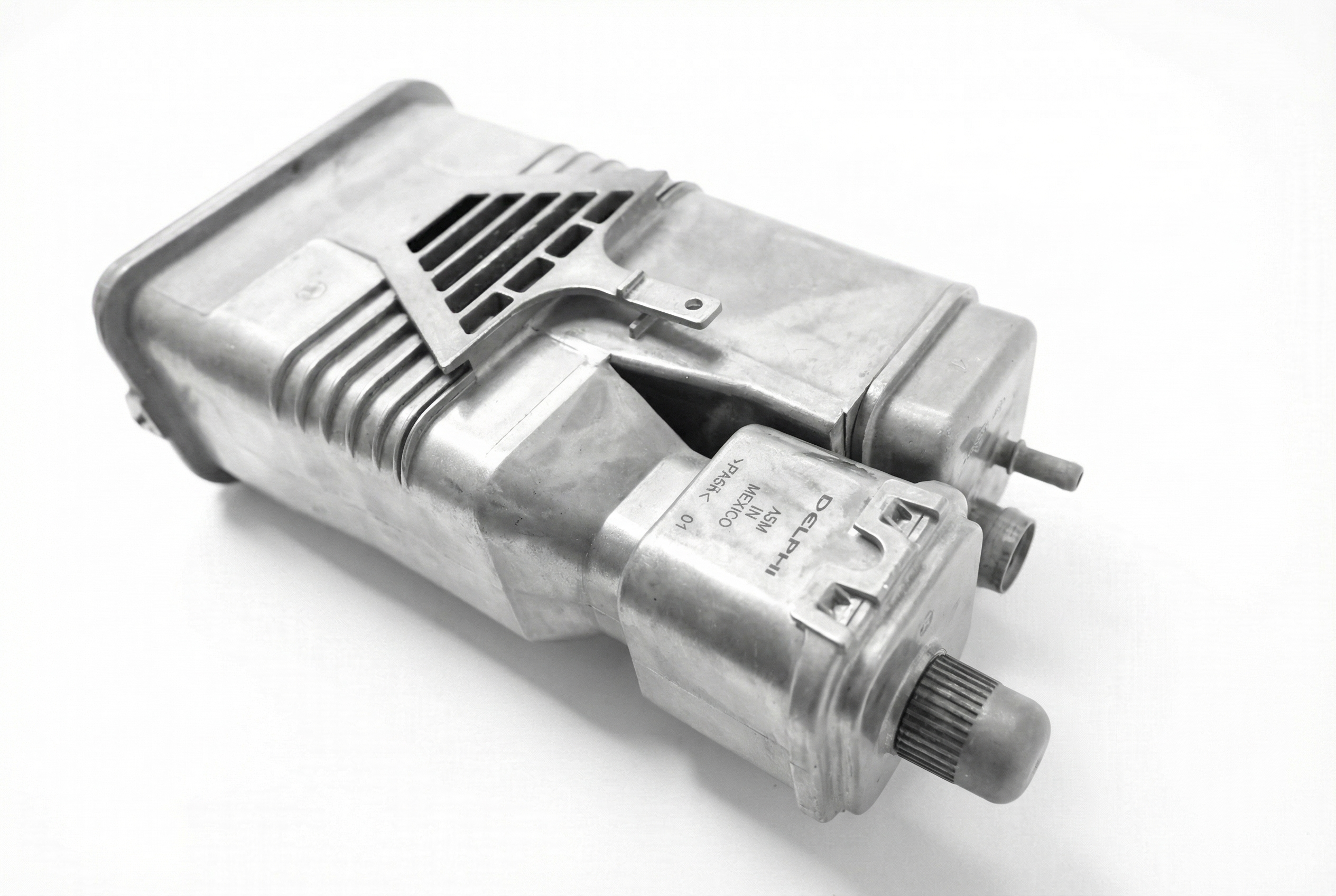
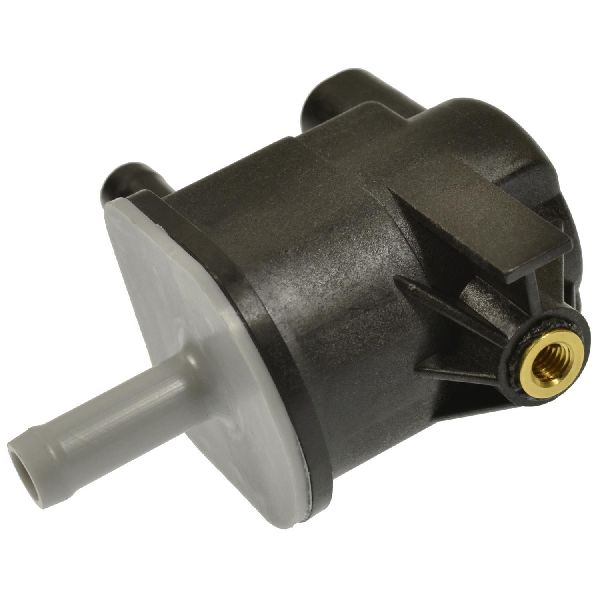
Est. part cost: $15-$50 - Stuck-Open EVAP Purge Valve 🟡 Medium Probability → Shop Vapor Canister Particularly noted on 2017+ models with the 2GR-FKS engine, the purge valve (solenoid) can stick open, creating a constant vacuum leak as it pulls fuel vapors from the charcoal canister into the intake manifold at the wrong time. This is a very common issue on newer Siennas and Highlanders.
How to confirm: With the engine idling, disconnect the vacuum hose leading from the purge valve to the intake manifold and plug the port on the manifold with your finger. If the idle smooths out and fuel trims start to drop towards normal (as seen on a scan tool), the purge valve is stuck open. This is a definitive test shown in multiple repair videos. 🎬 Watch: How to test and replace the purge valve solenoid.
Typical fix: Replace the EVAP purge valve. It is typically mounted on the intake manifold with a single bolt, making it a 15-minute job.
Est. part cost: $40-$90
Rare But Worth Checking
- Weak Fuel Pump or Clogged Fuel Filter: → Shop Fuel Filter While less common than vacuum leaks, a failing fuel pump can cause lean codes by not supplying enough fuel. Toyota issued TSB-0009-23 for a range of 2014-2020 vehicles, including the Highlander, for lean codes (P0171/P0174) and low fuel pressure codes (P0087) related to fuel delivery problems. This issue is also linked to a massive recall on Denso low-pressure fuel pumps in 2017-2019 models that could cause stalling.
- Cracked Air Intake Tube: → Shop Engine Air Intake Resonator The large flexible rubber tube between the MAF sensor and the throttle body can develop cracks, especially in the accordion sections, allowing unmetered air to enter the engine. This is more common on older, higher-mileage vehicles.
- Exhaust Leak Before the A/F Sensor: A crack in the exhaust manifold or a leaking exhaust gasket before the upstream Air/Fuel ratio sensor can allow outside oxygen to be pulled into the exhaust stream. This fools the sensor into thinking the engine is running lean, causing the ECM to add unnecessary fuel and trigger P0171.
- Corroded ECM Connector: Manufacturer Bulletin #T-TT-0462-17 notes that technicians commonly find no or low fuel pressure and DTC P0171 caused by corrosion and water in the A43 ECM connector.
Diagnosis Steps
- Read Fuel Trims: Use an OBD-II scanner to check the Long-Term Fuel Trim (LTFT) and Short-Term Fuel Trim (STFT) values. For P0171, you will see a high positive LTFT on Bank 1, often over +20%. If Bank 2 is also high, you have P0174 as well.
- Clean the MAF Sensor: As the most common and easiest fix, remove and clean the MAF sensor using dedicated MAF sensor cleaner. Clear the codes and drive to see if the code returns. If cleaning doesn't work, consider replacement with a Denso part.
- Inspect for Vacuum Leaks: Visually inspect the air intake tube for cracks. Check all vacuum hoses, especially the PCV hose, for cracks or disconnection.
- Test for Intake Gasket Leaks: With the engine running, carefully spray brake cleaner or use an unlit propane torch around the intake manifold mating surfaces. If the engine's idle changes, you've found a leak. A professional smoke test is the most reliable method.
- Test the EVAP Purge Valve (especially 2017+): Disconnect the hose from the purge valve to the intake and plug the intake port with your finger. If the idle stabilizes and fuel trims improve on a scan tool, the valve is stuck open and needs replacement.
- Check Fuel Pressure: If no vacuum leaks are found, the issue may be fuel-related. Connect a fuel pressure gauge to test the fuel system. Pressure for the 2GR-FE (2014-2016) should be 44-50 psi. For the 2GR-FKS (2017-2019), the low-pressure system should be 28-121 psi. Low pressure points to a failing fuel pump or clogged filter, a known issue covered by recalls and TSBs. Bulletin #T-SB-0072-19 also highlights that various drivability concerns and low fuel pressure leading to P0171 can be caused by corrosion.
Parts You'll Likely Need
- Mass Air Flow (MAF) Sensor
(OEM #22204-0V020 (Denso 197-6190) - Verify by VIN)— This is one of the most common causes. It gets dirty and misreads airflow, leading to a lean condition. Cleaning is often sufficient, but replacement is common.
Trusted brands: Denso (OEM)
OEM price range: $180-$250
Aftermarket price range: $70-$150 - Intake Manifold Gasket Set
(OEM #Upper (Plenum): 17176-0P021 (2GR-FE), 17176-31130 (2GR-FKS). Lower: 17171-0V010 (x2 for V6). Always verify with VIN.)— These gaskets are a known failure point that causes vacuum leaks as they age and become brittle.
Trusted brands: Toyota (OEM), Fel-Pro
OEM price range: $40-$90
Aftermarket price range: $20-$50 - EVAP Canister Purge Valve
(OEM #25860-0P090 (2017-2019 2GR-FKS). Verify by VIN.)— A very common failure on the 2GR-FKS engine where the valve sticks open, creating a vacuum leak.
Trusted brands: Toyota (OEM)
OEM price range: $60-$90
Aftermarket price range: $30-$50
Related Codes That Often Appear With This One
- P0174 — This is the 'System Too Lean' code for Bank 2. When both P0171 and P0174 are present, it confirms the issue affects the entire engine, pointing strongly towards a shared component like the MAF sensor, a fuel delivery problem, or a large vacuum leak at the intake manifold.
- P0087 — This code means 'Fuel Rail / System Pressure - Too Low'. Its presence alongside P0171 strongly suggests the lean condition is caused by a weak fuel pump or a restriction in the fuel system, as noted in Toyota TSB-0009-23.
- P0191 & P0107B — As reported in NHTSA ODI #11722818, these codes can generate in combination with P0171 and P0174 when the vehicle hesitates, sputters, and stalls.
Technical Service Bulletins (TSBs) & Recalls
- TSB-0009-23: Addresses hard starting, MIL ON, and DTCs P0171, P0174, and P0087 for a wide range of 2014-2020 Toyota models, pointing towards potential fuel delivery issues.
- Bulletin #T-SB-0072-19: Notes that various drivability concerns, low fuel pressure, and DTC P0171 may be caused by corrosion.
- Bulletin #T-TT-0462-17: Documents that technicians commonly find low fuel pressure and P0171 caused by corrosion and water in the A43 ECM connector.
Platform-Specific Known Issues
- Owner Experience: EVAP Purge Valve on a 2018 Highlander: → Shop Vapor Canister An owner of a 2018 Highlander with both P0171 and P0174 codes reported high RPMs (1000+) and fuel trims near +30% on both banks. Following a YouTube tutorial, they diagnosed a stuck-open EVAP purge valve by plugging the intake port hose with a finger, which immediately caused RPMs to drop and fuel trims to normalize. The repair involved replacing the valve (a 15-minute job) and resolved the issue completely.
- Repair Story: Intake Manifold Gaskets: → Shop Engine Intake Manifold A forum member with a 2015 Highlander was chasing a P0171/P0174 for weeks. After cleaning the MAF and replacing the PCV valve with no success, they performed a smoke test which revealed a significant leak from the lower intake manifold gaskets. The gaskets were visibly flattened and brittle upon removal. Replacing them was labor-intensive but ultimately fixed the lean codes.
Mechanic-Grade Diagnostic Values
- Long Term Fuel Trim (LTFT) — expected: Close to 0%, within +/- 10%. Failure: Sustained reading above +25% will trigger the P0171 code.
- Mass Air Flow (MAF) Sensor Reading at Idle — expected: 3-5 g/s for a fully warm 3.5L V6 engine.. Failure: Significantly lower reading (e.g., 1-2 g/s) at idle suggests a dirty or failing sensor.
- Port Fuel Injector Resistance (2GR-FE Engine) — expected: 11.6 to 12.4 Ω at 20°C (68°F).. Failure: A reading outside this range, or one injector that deviates from the others by more than 0.5-1.0 Ω, indicates a faulty injector.
- Low-Side Fuel Pressure (2GR-FE Engine) — expected: 44-50 psi.. Failure: Pressure significantly below this range indicates a weak fuel pump or clogged filter.
Hidden / Shadow Codes Worth Checking
- Freeze Frame Data: Not a code, but a snapshot of engine parameters (RPM, vehicle speed, coolant temp, fuel trims) at the exact moment the P0171 code was set. This data is critical for understanding the conditions that caused the fault (e.g., at idle vs. under load). (see via Most OBD-II scan tools, including professional tools like Toyota Techstream.)
- Mode 6 Data: Provides access to the results of the ECM's self-tests for various components. For P0171, a technician can look at test results for A/F sensors and other fuel system components to see if they are approaching their failure thresholds, even before a code is set. (see via Advanced OBD-II scan tools that support Mode 6 functionality.)
Scan Tool Commands That Help
- Toyota Techstream: Active Test: A/F Control — This function allows a technician to manually command the ECM to increase fuel injection volume (e.g., by +25%) or decrease it (e.g., by -12.5%). By observing the A/F sensor's response, you can determine if the sensor is functioning correctly or if it's slow/stuck.
- Bidirectional Scan Tool (e.g., Techstream, Autel): Activation Test: Fuel Pump — Used to manually turn the fuel pump on without the engine running. This is essential for safely and accurately testing fuel pressure and flow, helping to isolate a weak fuel pump as the cause of the lean code.
- Bidirectional Scan Tool (e.g., Techstream, Autel): Activation Test: EVAP Purge VSV — Allows the technician to command the EVAP purge valve to open and close. This can be used to confirm if the valve is physically stuck open or closed, which is a common cause of P0171 on the 2GR-FKS engine.
Wiring & Ground Locations
- Driver-Side Interior Ground Point — Located behind the driver's side kick panel, near the interior fuse panel. You must remove the door sill and kick panel trim to access it.. A poor ground for the ECM or related sensors can cause erratic readings and trigger false lean codes. This is a primary and accessible ground point to check for corrosion or looseness.
- MAF Sensor Connector — A 5-pin connector on the MAF sensor, located on the air filter box outlet tube.. Damaged wires or corrosion in this connector directly impacts the signal sent to the ECM, which can cause P0171. A known pinout for a 2015 model is Pin 1 (Pink) and Pin 2 (Yellow), with other wires being Red and Blue.
- Engine Bay Ground Points — Key grounds are typically found bolted to the cylinder heads, the engine block, and the chassis near the battery. Specifically, look for ground straps from the engine to the firewall or frame rail.. The ECM and its sensors rely on solid engine and chassis grounds. A corroded or loose engine ground strap can cause a host of issues, including incorrect sensor readings that lead to fuel trim problems.
Real Owner Repair Stories
- YouTube channel 'irfanch85' (2018 Toyota Highlander (2GR-FKS)) — High idle (1000+ RPM), Check Engine Light with codes P0171 and P0174. Long term fuel trims were pegged at +30% on both banks.
❌ Tried (didn't work) The video directly diagnoses the issue without showing prior failed attempts.
✅ What actually fixed it The EVAP purge valve was stuck open. The mechanic confirmed this by disconnecting the hose from the valve to the intake manifold and plugging the intake port with his finger. The fuel trims immediately began to drop towards 0%. Replacing the EVAP purge valve fixed the issue. - YouTube channel 'Toyota Maintenance' (2013 Toyota Highlander LTD (2GR-FE)) — Check Engine Light and TRAC OFF light on, with codes P0171 and P0174 stored. No drivability issues were reported by the owner.
❌ Tried (didn't work) The mechanic noted a poorly repaired (taped) crack in the air filter box, but determined it was *before* the MAF sensor and thus not the cause of the lean code.
✅ What actually fixed it The mechanic cleaned the Mass Air Flow (MAF) sensor as a primary diagnostic step. After cleaning the sensor and clearing the codes, the codes did not return during a test drive, indicating the dirty MAF was the root cause. - YouTube channel 'DiagnoseDan' (Toyota Kluger (Australian Highlander) with 231,000 km (approx. 143,000 miles)) — Check Engine Light on for years with P0171 and P0174. Long term fuel trims were very high.
❌ Tried (didn't work) Previous shops had replaced spark plugs and coils., Used injector cleaners and premium fuel., The owner suspected an O2 sensor issue.
✅ What actually fixed it After confirming fuel trims were high and did not indicate a vacuum leak (trims stayed high at increased RPM), the mechanic diagnosed a fuel delivery issue. The final fix was replacing the fuel pump, which had a severely clogged fuel strainer (sock filter). - NHTSA ODI #11722818 — An owner reported that their vehicle would hesitate and sputter upon acceleration, lose power, and stall while driving. Diagnostic trouble codes P0171 and P0174 were generated in combination with P0191 and P0107B.
- NHTSA ODI #11526896 — An owner reported that after filling with gas, the engine would not start and displayed a "Low brake power" message. Scanning revealed codes P0171 and P0174, indicating the air/fuel mixture was too lean for the ECM to correct.
"I Checked Everything" — The Actual Cause
- In high-mileage cases where a smoke test reveals no vacuum leaks and the MAF sensor has been cleaned or replaced, the root cause can be partially clogged fuel injectors. They may not be clogged enough to cause a specific misfire code, but the reduced fuel flow across all cylinders forces the long-term fuel trims to increase, eventually triggering P0171/P0174. This requires more advanced diagnosis like comparing injector flow rates.
- A weak fuel pump that can no longer supply adequate pressure or volume under load can also cause lean codes without any vacuum leaks. This is often diagnosed by monitoring fuel pressure during a test drive or by observing a clogged fuel pump strainer upon removal.
OEM Part Supersession History
25860-31110→25860-0P090— Updated part design for the EVAP Canister Purge Valve, which is a common failure point on the 2GR-FKS engine.
Heads up: The newer part number is the correct replacement for the specified 2017-2019 Highlander models.
Model Year Variations Within This Range
- 2017-2019: These models use the 2GR-FKS engine, which features D-4S (combined port and direct injection), VVT-iW on the intake cams allowing for Atkinson cycle operation, and electric camshaft phaser actuators. The EVAP purge valve is a much more common cause of P0171 on this engine than on the earlier 2GR-FE.
- 2014-2016: These models use the 2GR-FE engine, which uses port injection only and hydraulic VVT-i actuators. While still prone to MAF and intake gasket issues, they are less likely to have a P0171 caused by the EVAP purge valve compared to the 2GR-FKS.
Diagnostic Flowchart
Other Known Issues on This Vehicle
Issues unrelated to this code that are worth knowing about as an owner of this generation:
- Torque Converter Shudder 🟠 Medium — Common on 2014-2016 models with the 6-speed transmission (U760E) and 2017-2018 models with the 8-speed (UA80E). Typically occurs between 25-50 mph under light throttle. (Ref: Warranty Enhancement ZH1; T-SB-0330-17)
- Timing Cover Oil Leak 🔴 High — A very common issue across all 2GR-FE and 2GR-FKS engines. The sealant fails over time, causing a significant oil leak. It is an extremely expensive repair ($2000-$4000+) as the engine must be removed.
- Water Pump Failure 🟠 Medium — The water pump is a known weak point on the 2GR-FE engine, often failing prematurely (70k-100k miles). Failure can lead to coolant loss and overheating. The issue persists on the 2GR-FKS.
- Defective Low-Pressure Fuel Pump 🔴 High → Shop Fuel Pump — Affects 2017-2019 models. Part of a massive Denso fuel pump recall. The pump can fail suddenly, causing the engine to stall while driving. (Ref: NHTSA Campaign 20V-012 (and expansions); Toyota Recall 20TA02)
- Sticky/Melting Dashboard 🟡 Low — Common on 2014-2015 models, especially in hot climates. The dashboard material becomes sticky and reflects glare. Covered under a warranty enhancement program that has since expired. (Ref: Warranty Enhancement Program ZGG)
- Power Liftgate Malfunction 🟡 Low — The power liftgate struts can fail or lose calibration, causing the tailgate to not open or close properly. Resetting the system sometimes helps, but motor replacement is common.
Used vs. New Parts: Buying Guide for This Vehicle
When a used part is the smart pick: Used parts are generally not recommended for fixing a P0171 code due to the nature of the failures. However, a used air intake tube or a complete air filter box assembly from a low-mileage donor could be a cost-effective replacement for a cracked original part.
Donor-vehicle mileage cap: roughly under 75000 miles for the part to have meaningful remaining life.
What to inspect on the donor part:
- For hoses/intake tubes: Squeeze the rubber to ensure it is still pliable and not hard or brittle.
- Visually inspect for any cracks, especially in accordion sections or at connection points.
- Ensure all mounting tabs and connector clips are intact.
OEM-only on this vehicle (don't cheap out):
- Mass Air Flow (MAF) Sensor: Aftermarket MAF sensors are notoriously unreliable and often fail quickly or are inaccurate out of the box. Always use a genuine Denso (OEM) sensor.
- Intake Manifold Gaskets: While some aftermarket brands exist, the cost savings are minimal compared to the significant labor required to replace them. Using OEM gaskets provides the best assurance against a repeat failure.
- Air/Fuel Ratio (O2) Sensor: If the sensor itself is diagnosed as faulty, NTK or Denso are the only recommended brands. Cheaper alternatives often have incorrect heater resistance or slow response times.
Aftermarket brands forum-validated for this vehicle:
- Denso (for MAF, A/F Sensors, Fuel Pump - this is the OEM supplier)
- NTK (for A/F Sensors)
Brands owners have reported issues with on this vehicle:
- Unbranded/"White-box" eBay or Amazon MAF sensors: These are frequently cited in forums as being defective on arrival or failing within a few months.
- Fel-Pro Intake Gaskets: Some professional mechanics and DIYers have reported premature failure or poor fitment with Fel-Pro intake gaskets on Toyota engines, recommending sticking with OEM for this specific job.
Real Owner Stories
Aggregated from forums and TSBs cited above. Mileages and costs reflect what owners reported in those sources.
2018 Toyota Highlander 2GR-FKS
Symptoms: High RPMs (1000+) at idle and fuel trims near +30% on both banks with P0171 and P0174 codes.
What fixed it: Replacing the EVAP purge valve after a diagnostic test (plugging the intake port) caused RPMs to drop and fuel trims to normalize.
Source hint: Owner Experience: EVAP Purge Valve on a 2018 Highlander / YouTube video by 'Irfan Chaudhry'
2015 Toyota Highlander 2GR-FE
Symptoms: Chasing P0171 and P0174 codes for weeks; cleaning the MAF and replacing the PCV valve did not help.
What fixed it: Replacing the lower intake manifold gaskets after a smoke test revealed they were flattened and brittle.
Source hint: Repair Story: Intake Manifold Gaskets
2017 Toyota Highlander 2GR-FKS
Symptoms: P0171 and P0174 codes present.
What fixed it: Replacing the EVAP purge valve.
Source hint: https://www.toyotanation.com/threads/p0171-and-p0174-on-my-2017-highlander.1689833/
2019 Toyota Highlander
Symptoms: Sputtering and Check Engine Light (CEL).
What fixed it: Fuel pump replacement under a customer service program.
Source hint: https://www.reddit.com/r/ToyotaHighlander/comments/17g4g59/2019_fuel_pump_issues/
Related OBD-II Codes
Frequently Asked Questions
Is there a TSB for the P0171 code on my 2014-2020 Toyota Highlander?
My 2018 Highlander has a rough idle and P0171; could it be the EVAP purge valve?
What brand of MAF sensor should I use for my 3.5L V6 Highlander?
What should the MAF sensor readings be on a scan tool for the 2GR-FE engine?
Is there a known fuel pump issue for the 2019 Highlander that causes lean codes?
What is the correct fuel pressure for a 2015 Highlander (2GR-FE)?
Helpful Videos

Used OEM Parts in Stock
New Aftermarket Parts Available


The information in this article is provided for general reference and educational purposes only. Vehicle specifications, procedures, and part compatibility can vary by production date, trim level, and region. Always consult your vehicle's factory service manual and verify part numbers before purchasing or performing repairs. Safety-critical components such as airbags, seat belts, and braking systems should be installed by a qualified professional.
- Toyota Highlander:
- 🧭 Diagnostic Flowchart
- 🎬 Helpful Videos
- 🛍️ Shop This Part
- What's Unique About the 2014-2019 Toyota Highlander
- Symptoms You May Notice
- Most Likely Causes
- Rare But Worth Checking
- Diagnosis Steps
- Parts You'll Likely Need
- Related Codes That Often Appear With This One
- Technical Service Bulletins (TSBs) & Recalls
- Platform-Specific Known Issues
- Mechanic-Grade Diagnostic Values
- Hidden / Shadow Codes Worth Checking
- Scan Tool Commands That Help
- Wiring & Ground Locations
- Real Owner Repair Stories
- "I Checked Everything" — The Actual Cause
- OEM Part Supersession History
- Model Year Variations Within This Range
- Other Known Issues on This Vehicle
- Used vs. New Parts: Buying Guide for This Vehicle
- Real Owner Stories
- 2018 Toyota Highlander 2GR-FKS
- 2015 Toyota Highlander 2GR-FE
- 2017 Toyota Highlander 2GR-FKS
- 2019 Toyota Highlander
- Related OBD-II Codes
- Frequently Asked Questions
- 🎟️ Get 5% Off