

P0171 on 2010-2013 Toyota Prius: Causes for System Too Lean Code and Fixes
For a 2010-2013 Prius, code P0171 is most often caused by a dirty Mass Air Flow (MAF) sensor, which is an easy DIY cleaning job. Other strong possibilities include a vacuum leak from a cracked intake manifold gasket or PCV hose, or a faulty Purge VSV as identified in a Toyota TSB. In some higher-mileage cases, a weak fuel pump has been the definitive fix after other components were replaced.
- Start by cleaning the Mass Air Flow (MAF) sensor with dedicated cleaner; this is the most common and cheapest fix.
- Check for vacuum leaks around the intake manifold and PCV system, as old gaskets and hoses are a frequent cause.
- Be aware of Toyota's TSB (T-SB-0041-15), which points to a faulty Purge VSV as a known issue for this code on your Prius.
- Do not immediately replace the oxygen (A/F) sensor; it is usually just reporting the problem correctly.
- If simpler fixes don't work, the fuel pump is a possible, though less common, culprit.
What's Unique About the 2010-2013 Toyota PRIUS

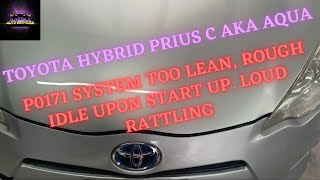
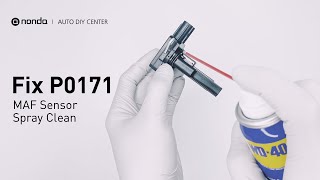
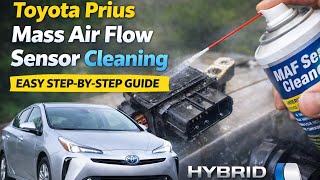
While P0171 is a generic code, the 3rd generation Prius has specific, well-documented failure points. A dirty Mass Air Flow (MAF) sensor is extremely common and the first thing to check. 🎬 Watch: Step-by-step guide to cleaning your Prius MAF sensor. Additionally, Toyota issued a Technical Service Bulletin (T-SB-0041-15) for this model range that directly links P0171 to a faulty Purge VSV (Vacuum Switching Valve), often accompanied by codes P0A0F, P3190 or P3191. The intake manifold and its gasket are also frequent sources of vacuum leaks. Finally, for higher mileage vehicles (over 150k miles), a weakening fuel pump has been identified by numerous owners as the root cause after exhausting other options.
Diagnostic Flowchart
Tap your situation to follow the diagnostic path that matches what you're seeing on this vehicle.
Symptoms You May Notice
- Check Engine Light is on
- Rough or erratic idle
- Hesitation or lack of power during acceleration, especially from a stop
- Reduced fuel economy (MPG)
- Engine misfires
- Engine running rough, sometimes with a rattling or chugging noise
- Exhaust smells rich or like unburnt fuel, as the ECU overcompensates
- Replacing the Air/Fuel (O2) sensor first. The sensor is often just doing its job by reporting the lean condition, which is actually caused by a vacuum leak or MAF sensor issue.
- Replacing parts without diagnosis. Many owners report replacing multiple components like MAF sensors, O2 sensors, and spark plugs before finding the true cause, which could have been found with a smoke test or fuel pressure test.
Most Likely Causes

- Dirty Mass Air Flow (MAF) Sensor 🔴 High Probability → Shop Fuel Injection Air Flow Meter The MAF sensor is sensitive and can become contaminated with a film of dirt and oil over time, causing it to under-report the amount of air entering the engine. The ECU then injects too little fuel, creating a lean condition.
How to confirm: Remove the sensor and visually inspect the two small wire elements inside the housing. If they are coated in black grime instead of being clear or amber, cleaning is needed. This is often the first and easiest step.
Typical fix: Remove the sensor (held by two Phillips screws) and clean it carefully with a dedicated MAF sensor cleaner spray. Do not touch the delicate sensor wires. Allow it to air dry completely before reinstalling. If cleaning doesn't work, the sensor may need to be replaced.
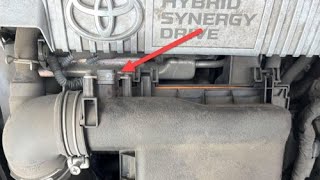
Est. part cost: $5-$15 for cleaner, $75-$190 for a new sensor. - Vacuum Leak (Intake Manifold Gasket, PCV Hose) 🟡 Medium Probability The plastic intake manifold and its associated rubber gaskets and hoses can become brittle and crack over time due to heat cycles, allowing unmetered air to enter the engine downstream of the MAF sensor. A stuck-open PCV valve can also act as a vacuum leak.
How to confirm: A visual inspection may reveal cracked hoses. A common diagnostic technique is to use a smoke machine to introduce smoke into the intake system and watch for leaks. Alternatively, one can carefully spray short bursts of carburetor cleaner around the intake manifold gasket and vacuum hoses with the engine running; a change in idle speed indicates a leak.
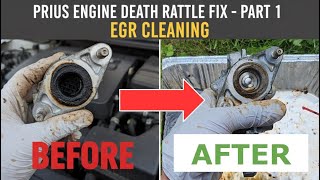
Typical fix: Replace the cracked hose or faulty gasket. The intake manifold gasket is a common failure point and is often replaced when cleaning the EGR circuit, a common maintenance item on this engine. Replacing a stuck PCV valve is also a common and inexpensive fix.
Est. part cost: $10-$50 for hoses/gaskets. - Faulty Purge VSV (Vacuum Switching Valve) 🟡 Medium Probability → Shop Vapor Canister Toyota issued Technical Service Bulletin T-SB-0041-15 specifically for this issue on 2010-2013 models, indicating it's a known problem. This valve controls the flow of fuel vapors from the charcoal canister to the engine. A failure can cause a vacuum leak.
How to confirm: This is often diagnosed when codes P0A0F, P3190 or P3191 are also present. A technician can test the valve's operation with a scan tool or by applying vacuum and voltage. A waveform of the Purge VSV can be observed using an oscilloscope connected to the ECM.
Typical fix: Replace the Purge VSV and, as recommended by the TSB, have the Engine Control Module (ECM) reprogrammed by a dealer or qualified shop with the latest calibration.
Est. part cost: $40-$90 - Weak Fuel Pump or Clogged Fuel Filter ⚪ Low Probability → Shop Fuel Filter If the fuel pump can't deliver adequate pressure (spec is 44-50 PSI), the engine will run lean. This is less common than air-side issues but has been the definitive fix for many owners of higher-mileage Prii after other parts were replaced.
How to confirm: Perform a fuel pressure test to see if the pressure is within the manufacturer's specifications. A technician can also use a scan tool like Techstream to command the fuel pump on and check for pressure. If pressure is low, the pump, filter, or regulator may be at fault.
Typical fix: Replace the fuel pump assembly. The fuel filter is part of the pump assembly on this vehicle. One owner on PriusChat documented replacing the pump after trying MAF, O2 sensors, and intake cleaning, which finally resolved the code.
Est. part cost: $200-$400 for a pump assembly. - Failing Upstream Air/Fuel Ratio Sensor (O2 Sensor) ⚪ Low Probability → Shop Oxygen Sensor The A/F sensor is what detects the lean condition. While it can fail, it's more often correctly reporting a problem caused by something else. A lazy or failing sensor can send incorrect, biased lean readings to the ECU.
How to confirm: A scan tool can be used to graph the sensor's voltage. It should fluctuate rapidly. A slow or stuck reading indicates a problem. One user noted that the part number is different for 2010-2011 vs 2012-2015 models, so using the correct one is critical.
Typical fix: Replace the Bank 1, Sensor 1 Air/Fuel Ratio Sensor. The Denso part number for 2010-2011 models is often cited as 234-9056.
Est. part cost: $100-$200
Rare But Worth Checking
- Clogged Fuel Injectors: → Shop Fuel Injector If one or more injectors are partially clogged, they won't deliver enough fuel. This is less common than other causes but was noted by some owners as a fix, sometimes after using a fuel system cleaner. The injectors on the 2ZR-FXE engine have a standard resistance of 11.6 to 12.4 Ω at 20°C (68°F).
- Exhaust Leak: A leak in the exhaust system before the upstream A/F sensor can allow oxygen to be pulled into the exhaust stream, fooling the sensor into thinking the engine is running lean.
Diagnosis Steps

- Read the code with an OBD-II scanner and check for any other pending or active codes, especially P3190, P3191, or P0A0F.
- Check long-term fuel trim (LTFT) values with a scan tool. A value consistently above +20% confirms the ECU is compensating for a lean condition. A combined short and long-term fuel trim value exceeding +33% can trigger the code.
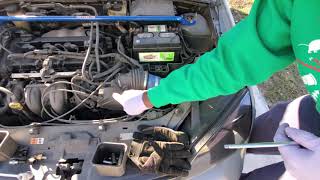
- Inspect the air intake system between the MAF sensor and the engine for any obvious cracks, loose clamps, or disconnected hoses.
- Remove and inspect the Mass Air Flow (MAF) sensor. If it appears dirty, clean it with dedicated MAF sensor cleaner and allow it to dry completely before reinstalling. Reset the code and test drive.
- If the code returns, perform a smoke test on the intake system. This is the most effective way to find vacuum leaks from the intake manifold gasket, PCV system, or other hoses.
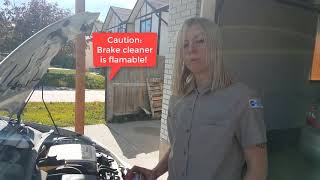
- If a smoke machine isn't available, you can carefully spray short bursts of a non-flammable brake cleaner or similar substance around potential leak points (intake gasket, hose connections) with the engine idling. A change in engine RPM will indicate a leak.
- Inspect and test the PCV valve. A stuck-open valve will cause a significant vacuum leak.
- If no vacuum leak is found, consider the Purge VSV, especially if TSB-related codes are present. Test the valve for proper function.
- If air-side issues are ruled out, test the fuel pressure. For the Gen 3 Prius, it should be between 304 to 343 kPa (44 to 50 psi). Low pressure points to a weak fuel pump.
- As a final step, test the upstream Air/Fuel ratio sensor's response using a scan tool to ensure it is not lazy or failed.
Parts You'll Likely Need
- Mass Air Flow (MAF) Sensor
(OEM #22204-37010)— This is the most common cause of P0171 on the Gen 3 Prius. It often just needs cleaning, but sometimes requires replacement.
Related Codes That Often Appear With This One
- P3190 — Poor Engine Power. Per TSB T-SB-0041-15, this code can appear with P0171 when the Purge VSV is the root cause.
- P3191 — Engine Does NOT Start. Also cited in TSB T-SB-0041-15 as a companion code to P0171 caused by a faulty Purge VSV.
- P0A0F — Engine Failed to Start. This is the primary code listed in TSB T-SB-0041-15, often caused by a vacuum line separation related to the Purge VSV.
- P0174 — System Too Lean (Bank 2). This code is for V6/V8 engines and will not appear on the 4-cylinder Prius.
Technical Service Bulletins (TSBs) & Recalls

- T-SB-0041-15: Addresses P0171, P3190, and P3191 codes by recommending replacement of the Purge VSV and an ECM reprogram.
Platform-Specific Known Issues
- Toyota Technical Service Bulletin T-SB-0041-15 was issued for 2010-2013 Prius models. It states that P0171, sometimes with P3190 or P3191, can be caused by a faulty Purge VSV. The fix involves replacing the valve and reprogramming the ECM.
Mechanic-Grade Diagnostic Values
- Fuel Pressure — expected: 304 to 343 kPa (44 to 50 psi). Failure: Pressure below 44 psi indicates a potential issue with the fuel pump, filter, or regulator.
- Fuel Pressure Hold — expected: 147 kPa (21 psi) or more for 5 minutes after engine stop. Failure: Pressure dropping below 21 psi indicates a leak in the fuel pump or injector assembly.
- Fuel Injector Resistance — expected: 11.6 to 12.4 Ω at 20°C (68°F). Failure: Resistance outside this range indicates a faulty injector coil.
- Long-Term and Short-Term Fuel Trim (Combined) — expected: Within ±20% to ±30%. Failure: A sustained combined value of +33% or more will trigger the P0171 DTC.
Scan Tool Commands That Help
- Toyota Techstream: Active Test: Control the Fuel Pump / Speed — This command allows a technician to turn on the fuel pump without the engine running. It is used to measure fuel pressure directly to diagnose a weak or failing fuel pump.
- Toyota Techstream: Active Test: A/F Control — This test forces the injection volume to increase by 25% or decrease by 12.5%. By observing the reaction of the A/F sensor and O2 sensor on the data list, a technician can determine if the sensors are responding correctly or if there is a persistent rich/lean condition caused by another component.
Wiring & Ground Locations
- E01, E02, E03 — Engine Control Module (ECM) ground points.. A poor ground connection at these points can cause erratic behavior and incorrect readings from sensors connected to the ECM, such as the MAF and A/F sensors, potentially leading to a false P0171 code.
Real Owner Repair Stories
- Reddit user on r/MechanicAdvice (Unknown year Toyota with high long-term fuel trims (+35%) and misfires.) — Engine misfires, hard brake pedal.
❌ Tried (didn't work) Initial inspection of vacuum lines.
✅ What actually fixed it The brake booster was leaking vacuum, causing the lean condition. After testing the booster by pumping the pedal with the engine off and then starting the engine, it was confirmed to be faulty and was replaced.
"I Checked Everything" — The Actual Cause
- In some cases, a smoke test of the intake manifold may come back clean, but the P0171 code is actually caused by a leaking brake booster. The booster uses engine vacuum, and an internal diaphragm failure can create a large vacuum leak that is not part of the intake tract typically checked with a smoke machine.
OEM Part Supersession History
22204-37010→22204-28010— Part consolidation and potential design update by Toyota.
Heads up: The new part number 22204-28010 replaces several older MAF sensor part numbers, including 22204-37010. They are generally cross-compatible for this vehicle range, but it is always critical to verify fitment with a VIN.
Model Year Variations Within This Range
- 2010-2015: The 2ZR-FXE engine is mechanically identical from 2010 to 2015, meaning the common causes for P0171 are consistent across these years.
Helpful Videos

The information in this article is provided for general reference and educational purposes only. Vehicle specifications, procedures, and part compatibility can vary by production date, trim level, and region. Always consult your vehicle's factory service manual and verify part numbers before purchasing or performing repairs. Safety-critical components such as airbags, seat belts, and braking systems should be installed by a qualified professional.
- Toyota PRIUS:
- 🧭 Diagnostic Flowchart
- 🎬 Helpful Videos
- What's Unique About the 2010-2013 Toyota PRIUS
- Symptoms You May Notice
- Most Likely Causes
- Rare But Worth Checking
- Diagnosis Steps
- Parts You'll Likely Need
- Related Codes That Often Appear With This One
- Technical Service Bulletins (TSBs) & Recalls
- Platform-Specific Known Issues
- Mechanic-Grade Diagnostic Values
- Scan Tool Commands That Help
- Wiring & Ground Locations
- Real Owner Repair Stories
- "I Checked Everything" — The Actual Cause
- OEM Part Supersession History
- Model Year Variations Within This Range
- 🎟️ Get 5% Off