

P0171 on 2004-2013 Toyota RAV4: System Too Lean Causes and Fixes
On a 2004-2013 Toyota RAV4, code P0171 is most often caused by a dirty Mass Airflow (MAF) sensor or a vacuum leak from a failed intake manifold gasket, especially on 2.4L engines. Start by cleaning the MAF sensor (~$15 for cleaner). If that fails, suspect the intake gasket (~$25 for the part, 2-3 hours of labor). Using an OEM Denso MAF sensor is highly recommended if replacement is necessary, as aftermarket sensors are known to cause issues.
- For a P0171 code on a 2004-2013 RAV4, start with the cheapest and easiest fix: clean the Mass Airflow (MAF) sensor.
- If you have a 2004-2008 model with the 2.4L engine, the intake manifold gasket is a very likely cause and should be your next suspect.
- A smoke test is the most reliable way to find a vacuum leak, which is the root cause of P0171 in a majority of cases.
- Do not replace the oxygen (A/F) sensor unless you have confirmed there are no vacuum leaks and the MAF sensor is clean and functioning correctly.
- Always use a high-quality OEM brand like Denso for sensors to avoid compatibility issues.
What's Unique About the 2004-2013 Toyota RAV4
The 2004-2013 RAV4 spans three vehicle generations and several engines. While a dirty MAF sensor is a common cause across all of them, models equipped with the 2.4L 2AZ-FE engine (found in 2004-2008 models) are particularly known for developing vacuum leaks from a failed intake manifold gasket. This specific gasket failure, often an orange-colored rubber from the factory, is a very frequent root cause of P0171 on these earlier models, often after other parts have been mistakenly replaced. Later 2.5L and 3.5L engines are less prone to this specific gasket issue but can still suffer from other vacuum leaks, like a cracked PCV hose.
Generation note: The 2004-2013 range covers the end of the 2nd generation (XA20, 2004-2005), the entire 3rd generation (XA30, 2006-2012), and the first year of the 4th generation (XA40, 2013). The 2.4L 2AZ-FE engine (2004-2008) is highly prone to intake manifold gasket leaks causing P0171. The 2.5L 2AR-FE (2009-2013) and 3.5L 2GR-FE V6 (2006-2012) are more likely to have this code due to a dirty MAF sensor or other vacuum leaks, like a cracked air intake hose.
Symptoms You May Notice
- Check Engine Light is on
- VSC and/or Traction Control lights may also illuminate
- Rough or high idle
- Hesitation or lack of power during acceleration
- Reduced fuel economy
- Engine stalling at idle
- A hissing sound from the engine bay, indicating a vacuum leak
- Replacing the Air/Fuel Ratio (O2) sensor first. The sensor is often correctly reporting a lean condition caused by something else, like a vacuum leak or dirty MAF sensor. Always diagnose vacuum and MAF issues before replacing the A/F sensor.
- Using a cheap aftermarket Mass Airflow Sensor. Many owners report that non-OEM (Denso) MAF sensors do not perform correctly and fail to resolve the P0171 code, or cause other performance issues.
Most Likely Causes
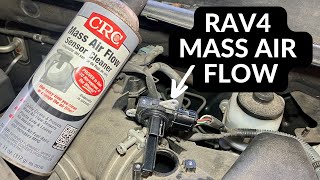
- Dirty Mass Airflow (MAF) Sensor 🔴 High Probability → Shop Fuel Injection Air Flow Meter The MAF sensor wire can become contaminated with dirt and oil over time, causing it to under-report the amount of air entering the engine. This is a very common issue on most modern vehicles, including all RAV4 engines.
How to confirm: Inspect the sensor's wire for grime. With a scan tool, monitor the MAF reading at idle and while driving; compare it to specified values. Often, the easiest test is to carefully clean it with dedicated MAF sensor cleaner (not brake or carb cleaner) and see if the fuel trims return to normal.
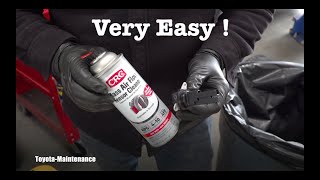
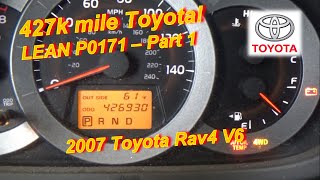
Typical fix: Remove the sensor and clean it with a dedicated MAF sensor cleaner spray. 🎬 Watch: Step-by-step guide to cleaning your RAV4 MAF sensor Do not touch the delicate sensor wires. If cleaning doesn't work, replace the sensor. It is highly recommended to use an OEM Denso part, as aftermarket MAF sensors are a common source of persistent issues.
Est. part cost: $10-$20 for cleaner, $70-$150 for a new Denso sensor - Failed Intake Manifold Gasket 🔴 High Probability → Shop Engine Intake Manifold This is a very common failure on the 2.4L 2AZ-FE engine (2004-2008 models). The original gasket material, often orange, can degrade, flatten, and become brittle over time, creating a significant vacuum leak where the intake manifold meets the cylinder head.
How to confirm: Perform a smoke test on the intake system; smoke will be seen leaking from the gasket area. Another method is to carefully spray a non-flammable substance like brake cleaner or a small amount of propane around the gasket with the engine running and listen for a change in engine idle speed or sound. A rise in RPMs when spraying a specific area indicates the leak.
Typical fix: Replace the intake manifold gasket. This involves removing the intake manifold to access and replace the old gasket. The updated OEM part is a revised design to prevent recurrence.
Est. part cost: $20-$40 - Cracked or Disconnected Vacuum Hose 🟡 Medium Probability → Shop Vacuum Hose Rubber hoses, especially the PCV hose and the large air intake duct, become brittle and crack with age and heat cycles. A crack in the air intake duct between the MAF sensor and throttle body is a common cause of unmetered air leaks.
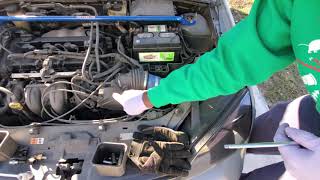
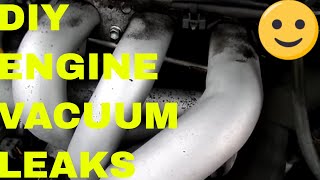
How to confirm: Visually inspect all vacuum lines connected to the intake manifold for cracks, splits, or loose connections. Listen for a hissing sound. A smoke test will definitively identify any leaks. 🎬 Watch: Easy ways to find engine vacuum leaks yourself
Typical fix: Replace the cracked or broken hose.
Est. part cost: $10-$50 - Faulty Air/Fuel Ratio Sensor (Upstream O2 Sensor) ⚪ Low Probability → Shop Oxygen Sensor The A/F sensor is a normal wear item that can degrade over time, causing it to send slow or inaccurate signals to the ECM. It may falsely report a lean condition, though this is less common than a vacuum leak or MAF issue.
How to confirm: Use a scan tool to graph the sensor's voltage. It should respond quickly to changes in throttle. If it's slow, stuck, or provides readings that don't make sense, it has likely failed. This should be checked after confirming there are no vacuum leaks or MAF issues.
Typical fix: Replace the upstream Air/Fuel Ratio sensor (Bank 1, Sensor 1). Use of an OEM Denso sensor is strongly recommended for accurate readings.
Est. part cost: $100-$200
Rare But Worth Checking
- Weak Fuel Pump or Clogged Fuel Filter: → Shop Fuel Filter If the engine hesitates under heavy load, low fuel pressure could be the cause. A fuel pressure test is required to confirm. Toyotas often do not have an easily accessible test port, making this more difficult to diagnose. Manufacturer Bulletin #TSB000923 notes that P0171 can be accompanied by P0087 (Fuel Rail Pressure Too Low) and may exhibit a hard start condition.
- Clogged Fuel Injectors: → Shop Fuel Injector More common on higher-mileage 2.4L engines, dirty injectors can fail to deliver enough fuel, causing a lean condition. This is usually diagnosed after all other causes have been ruled out.
- Exhaust Leak: A crack or leak in the exhaust manifold or pipe before the first A/F sensor can draw in outside air, causing the sensor to incorrectly read a lean condition.
Diagnosis Steps
- Read the code and check the freeze frame data with an OBD-II scanner. Note the long-term fuel trim (LTFT) value; a high positive number (e.g., +25% or more) confirms a persistent lean condition.
- Perform a thorough visual inspection of the engine bay. Look for obvious cracks in the air intake hose between the air filter box and the throttle body, and check for any disconnected or damaged vacuum lines, especially the PCV hose.
- Remove and inspect the Mass Airflow (MAF) sensor. If it appears dirty, clean it with a dedicated MAF sensor cleaner spray. Reinstall, clear the codes, and drive the vehicle to see if the code returns.
- If the code persists, perform a smoke test to check for vacuum leaks. This is the most effective way to find hard-to-see leaks from sources like the intake manifold gasket (especially on 2.4L engines) or small hose cracks.
- If no vacuum leaks are found, test the fuel pressure to rule out a weak fuel pump or clogged filter. Compare the reading to the manufacturer's specification. As noted in Bulletin #TSB000923, Techstream data list analysis may reveal positive fuel trims alongside low fuel rail pressure.
- If all of the above check out, the upstream Air/Fuel Ratio sensor is the next likely culprit. Analyze its performance with a scan tool or consider replacement if it's original and has high mileage. Stick to the OEM Denso brand.
- As a final step, if the issue is isolated to one cylinder (with a corresponding misfire code), the problem could be a clogged fuel injector.
Parts You'll Likely Need
- Intake Manifold Gasket
(OEM #17177-28010)— This is the most common fix for the 2.4L 2AZ-FE engine (2004-2008) due to a high failure rate of the original part. The OEM part was updated to correct the issue.
Trusted brands: Toyota (OEM), Fel-Pro, Mahle
OEM price range: $25-$40
Aftermarket price range: $15-$30 - Mass Airflow (MAF) Sensor
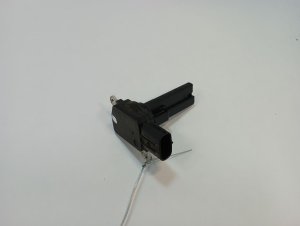
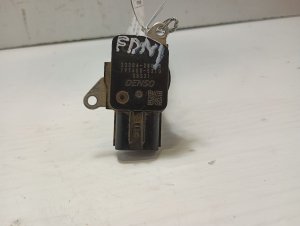
(OEM #Denso 197-6110 (cross-references to Toyota 22204-22010))— Often gets dirty and causes incorrect air readings. Cleaning is the first step, but replacement is common. Using an OEM Denso brand is highly recommended as aftermarket units are known to be unreliable.
Trusted brands: Denso (OEM)
OEM price range: $110-$150
Aftermarket price range: $50-$90 - Air/Fuel Ratio Sensor (Upstream)
(OEM #Denso 234-9049 (For 2.4L 2AZ-FE, check specific application))— This sensor (for 2.4L 2004-2008 models) can fail with age. It is often replaced unnecessarily, but can be the culprit if all else fails. Denso is the OEM supplier and is strongly recommended.
Related Codes That Often Appear With This One
- P0174 — On V6 models (3.5L 2GR-FE), P0174 (System Too Lean Bank 2) often appears with P0171. This indicates a problem affecting both engine banks, such as a faulty MAF sensor or a vacuum leak at the throttle body or main intake duct. NHTSA ODI #10660548 describes a case where both P0171 and P0174 were diagnosed simultaneously.
- P0300, P0301, etc. — A lean condition can cause misfires. P0300 (Random Misfire) or cylinder-specific misfire codes (P0301, P0302, etc.) may accompany P0171.
- P0441, P0455 — Evaporative emission codes may sometimes appear alongside P0171, as seen in NHTSA ODI #11415574, where an owner replaced the gas cap and vapor canister purge solenoid without resolving the lean condition.
Technical Service Bulletins (TSBs) & Recalls
- Bulletin #TSB000923: Addresses a hard start and/or MIL ON condition with DTC P0171 and/or P0174, noting that Techstream data may reveal positive fuel trims.
- T-SB-0094-11 / T-SB-0158-14: Addresses excessive oil consumption on the 2AZ-FE engine, a separate but common issue. The repair involves piston replacement.
- T-SB-0318-08: Addresses a clunking noise from the steering intermediate shaft on 2006-2008 RAV4 models, requiring replacement of the shaft.
- T-SB-0041-13: Pertains to a brief knock/rattle noise at cold startup on 2AR-FE engines (2009-2012 RAV4) due to a faulty VVT-i gear assembly.
- Limited Service Campaign (LSC) 90K: Addresses a potentially faulty VVT-i oil line on 2GR-FE V6 engines (2006-2009 RAV4) that could rupture, leading to catastrophic oil loss. The fix is to replace the rubber/metal hose with an all-metal line.
Platform-Specific Known Issues
- 2.4L Intake Gasket Failure Story: Many owners of 2004-2008 models report chasing the P0171 code by cleaning the MAF sensor and replacing the A/F sensor, only to find the issue was the inexpensive intake manifold gasket. A common sign is very high positive long-term fuel trims (+30% or more) at idle that decrease significantly when the engine RPM is raised to ~2500 RPM, indicating a vacuum leak that is less impactful at higher engine loads.
- V6 Models and P0171/P0174: On the 3.5L V6, it is very common to see both P0171 and P0174 together. This almost always points to a single cause affecting both banks, such as the MAF sensor, the main air intake hose, or the PCV hose system, rather than two separate problems.
Mechanic-Grade Diagnostic Values
- Fuel Pressure (2.4L 2AZ-FE) — expected: 304 to 343 kPa (44 to 50 psi) at idle.. Failure: Pressure below this range indicates a potential fuel pump or filter issue. Pressure remaining below 147 kPa (21 psi) 5 minutes after engine stop indicates a leak in the system (pump, regulator, or injectors).
- Long-Term Fuel Trim (LTFT) + Short-Term Fuel Trim (STFT) — expected: The combined value should be within +/- 20% on a normally functioning system.. Failure: A P0171 is typically set when the combined fuel trim value exceeds +35% for a sustained period, indicating the ECM is adding the maximum amount of fuel to compensate for a lean condition.
- Fuel Injector Resistance (2.4L 2AZ-FE) — expected: 11.6 to 12.4 Ω at 20°C (68°F).. Failure: Resistance outside this range suggests a faulty injector coil.
- Mass Airflow (MAF) Sensor Reading (2.4L 2AZ-FE) — expected: Approximately 2.0-4.0 g/s at a stable, warm idle (typical value, may vary slightly).. Failure: A significantly lower reading (e.g., <1.5 g/s) at idle suggests a dirty or failing MAF sensor, as it's under-reporting the air entering the engine.
Scan Tool Commands That Help
- Toyota Techstream: Active Test: Fuel Pump / Spd — This function allows a technician to command the fuel pump to run while the engine is off. It is used in conjunction with a fuel pressure gauge to test the maximum pressure output of the pump and to check for leaks in the system without the engine running.
- Toyota Techstream: Reset Memory (ECM) — After replacing a component like a MAF sensor or fixing a vacuum leak, this function should be used to clear the long-term fuel trim adaptive learning. This forces the ECM to start fresh, allowing for a quicker confirmation that the repair was successful and preventing the old, skewed fuel trims from causing temporary driveability issues.
Wiring & Ground Locations
- Engine Ground Points — On 2GR-FE (V6) models, there are ground wires from the valve covers to the frame near the strut towers. The 2AZ-FE has similar critical grounds from the engine block/head to the chassis.. A poor engine ground can cause incorrect readings from sensors like the A/F ratio sensor and MAF sensor, leading to false lean codes. While not a primary cause, it should be checked if sensor readings are erratic despite the sensors being new. NHTSA ODI #11719600 notes a case where a P0171 code appeared alongside a red battery light and steering light, suggesting potential electrical system involvement.
Real Owner Repair Stories
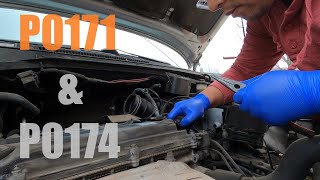
- YouTube user 'the.real.dadaking' (Toyota RAV4 (generation not specified, but likely XA20 or XA30)) — P0171 and P0174 codes, occasional stalling off the line.
❌ Tried (didn't work) The owner had previously cleaned the MAF sensor, which did not resolve the issue.
✅ What actually fixed it A visual inspection revealed a large crack in the main air intake hose (ventilation hose) between the air filter box and the throttle body. The crack was hidden on the underside of a ribbed section. Replacing the hose (PN 12261-28010 was mentioned) resolved the codes. - ALLDATA Repair Case Study (2003 Toyota RAV4, 2.0L) — Persistent P0171 code.
❌ Tried (didn't work) A previous shop had installed a new aftermarket Mass Airflow (MAF) sensor, but the code remained.
✅ What actually fixed it A technician verified the fuel system responded correctly to stimuli (propane test). Suspecting the aftermarket part, they replaced the aftermarket MAF sensor with a genuine OEM (Denso) MAF sensor. After clearing the memory, the code did not return. - NHTSA ODI #11667285 — An owner reported that a diagnostic test provided a stored and permanent P0171 code (System Too Lean Bank 1) along with an Idle Control System code (P0505).
"I Checked Everything" — The Actual Cause
- A leaking brake booster diaphragm can cause a significant vacuum leak that may not be easily found with a smoke test if the leak is internal. The symptom is often a hard brake pedal or a hissing sound when the brake is applied. To test, with the engine off, pump the brake pedal several times until it is firm. Then, start the engine while holding the pedal down; the pedal should drop slightly as vacuum builds. If it doesn't, the booster or its check valve may be faulty, causing the lean code.
OEM Part Supersession History
Unknown (original factory gasket)→17177-28010— The original intake manifold gasket on 2.4L 2AZ-FE engines was prone to hardening and failing. Part number 17177-28010 is the widely recognized replacement part. This part number itself is superseded by 17177-0H020 according to some parts catalogs.22204-0D030, 22204-0C020→22204-22010— Part number 22204-22010 is the common service replacement MAF sensor for many Toyota vehicles in this era, superseding older numbers.
Heads up: While physically interchangeable, using non-Denso aftermarket versions of this sensor is a very common cause of repeat P0171 codes or other performance issues.
Model Year Variations Within This Range
- 2009 only (2.5L 2AR-FE engine): The PCV valve on the 2009 model with the 2.5L engine is notoriously difficult to access, as it is located underneath the intake manifold. For the 2010 model year and later, Toyota relocated the PCV valve to a much more accessible position, making replacement a simple task.
Diagnostic Flowchart
Other Known Issues on This Vehicle
Issues unrelated to this code that are worth knowing about as an owner of this generation:
- Excessive Oil Consumption (2.4L 2AZ-FE) 🔴 High — Very common in 2006-2008 models. Caused by defective piston ring design. Can lead to engine failure if oil level is not monitored closely. (Ref: T-SB-0094-11, T-SB-0158-14, and a subsequent warranty enhancement program (ZE7) were issued.)
- VVT-i Oil Line Rupture (3.5L V6 2GR-FE) 🔴 High — Affects 2006-2009 V6 models. The original rubber section of a VVT-i oil line can burst, causing rapid and catastrophic loss of engine oil, leading to engine seizure. (Ref: Toyota issued a Limited Service Campaign (LSC 90K) to replace the faulty line with an all-metal version.)
- Steering Intermediate Shaft Noise 🟠 Medium — Common on 2006-2008 models, causing a clunking or popping noise in the steering column when turning. (Ref: T-SB-0318-08 details the replacement of the No. 2 steering intermediate shaft to fix the noise.)
- Cold Start Engine Rattle (2.5L 2AR-FE) 🟠 Medium — Affects 2009-2012 models. A brief rattle for about one second on cold startup is caused by a faulty VVT-i cam gear assembly. (Ref: T-SB-0041-13 provides the procedure to replace the camshaft timing gear assembly.)
Used vs. New Parts: Buying Guide for This Vehicle
When a used part is the smart pick: For this repair, used parts are generally not recommended for the common failure items. However, if a larger component like the plastic intake manifold itself were cracked (a rare event), a used manifold from a junkyard would be a reasonable choice, provided it's inspected for damage.
Donor-vehicle mileage cap: roughly under 100000 miles for the part to have meaningful remaining life.
What to inspect on the donor part:
- For an intake manifold, check for any cracks, especially around mounting points.
- Ensure all threaded inserts for bolts are intact and not stripped.
- Avoid parts from engines that show signs of severe overheating (melted plastic, warped surfaces).
OEM-only on this vehicle (don't cheap out):
- Mass Airflow (MAF) Sensor: Aftermarket MAF sensors are notoriously problematic for this vehicle and frequently fail to fix the P0171 code. Always use a genuine Denso sensor.
- Air/Fuel Ratio (O2) Sensor: Similar to the MAF, Denso is the OEM supplier and provides the accuracy the Toyota ECM expects. Using other brands can lead to incorrect fuel trim adjustments.
Aftermarket brands forum-validated for this vehicle:
- Fel-Pro (Intake Manifold Gasket): A reputable aftermarket alternative to the OEM gasket.
- Denso (MAF and A/F Sensors): Denso is the Original Equipment Manufacturer, so their parts are equivalent to Toyota genuine parts.
Brands owners have reported issues with on this vehicle:
- Unbranded/generic 'white box' MAF sensors from online marketplaces. These are the most common source of misdiagnosis and repeat repairs.
Real Owner Stories
Aggregated from forums and TSBs cited above. Mileages and costs reflect what owners reported in those sources.
2004-2008 Toyota RAV4 2.4L 2AZ-FE
Symptoms: Chasing the P0171 code by cleaning the MAF sensor and replacing the A/F sensor without success; observed very high positive long-term fuel trims (+30% or more) at idle that dropped when RPM was raised.
What fixed it: Replacing the inexpensive intake manifold gasket with the updated OEM part.
Source hint: vehicle_specific_issues: 2.4L Intake Gasket Failure Story
2004 Toyota RAV4
Symptoms: Check engine light with code P0171.
What fixed it: Inspecting and repairing cracks in the air intake duct and vacuum lines.
Source hint: Reddit r/Cartalk & r/Toyota
2004-2013 Toyota RAV4
Symptoms: Persistent P0171 code that would not clear even after installing a new sensor.
What fixed it: Replacing a new aftermarket MAF sensor with an OEM Denso sensor.
Source hint: iATN (International Automotive Technicians Network)
2004-2008 Toyota RAV4 2.4L
Symptoms: Lean code P0171; confirmed through community discussion that cleaning the MAF didn't help.
What fixed it: Replacing the intake manifold gasket.
Source hint: RAV4World forum threads
NHTSA Reported Incident
Symptoms: An owner reported the check engine light came on with codes P0171 and P0174 (Lean Air/Fuel Mix), and they were told by a dealership they suspected a bad tank of gas (NHTSA ODI #10660548).
Related OBD-II Codes
Frequently Asked Questions
I have a 2006 RAV4 with a 2.4L engine and a P0171 code. Is there a specific part I should check first?
My V6 RAV4 is showing both P0171 and P0174. Does this mean I have two separate engine problems?
Can I use any brand of Mass Airflow (MAF) sensor to fix this code?
Why are my VSC and Traction Control lights on at the same time as the P0171 Check Engine Light?
Is there a TSB for the oil consumption I'm noticing along with my engine issues?
How can I tell if my P0171 code is caused by a vacuum leak without a professional smoke machine?
Helpful Videos
Used OEM Parts in Stock
New Aftermarket Parts Available


The information in this article is provided for general reference and educational purposes only. Vehicle specifications, procedures, and part compatibility can vary by production date, trim level, and region. Always consult your vehicle's factory service manual and verify part numbers before purchasing or performing repairs. Safety-critical components such as airbags, seat belts, and braking systems should be installed by a qualified professional.
- Toyota RAV4:
- 🧭 Diagnostic Flowchart
- 🎬 Helpful Videos
- 🛍️ Shop This Part
- What's Unique About the 2004-2013 Toyota RAV4
- Symptoms You May Notice
- Most Likely Causes
- Rare But Worth Checking
- Diagnosis Steps
- Parts You'll Likely Need
- Related Codes That Often Appear With This One
- Technical Service Bulletins (TSBs) & Recalls
- Platform-Specific Known Issues
- Mechanic-Grade Diagnostic Values
- Scan Tool Commands That Help
- Wiring & Ground Locations
- Real Owner Repair Stories
- "I Checked Everything" — The Actual Cause
- OEM Part Supersession History
- Model Year Variations Within This Range
- Other Known Issues on This Vehicle
- Used vs. New Parts: Buying Guide for This Vehicle
- Real Owner Stories
- 2004-2008 Toyota RAV4 2.4L 2AZ-FE
- 2004 Toyota RAV4
- 2004-2013 Toyota RAV4
- 2004-2008 Toyota RAV4 2.4L
- NHTSA Reported Incident
- Related OBD-II Codes
- Frequently Asked Questions
- 🎟️ Get 5% Off