

P0171 on 2006-2012 Toyota RAV4 2.4L: System Too Lean Causes and Fixes
For the 2006-2012 RAV4 with the 2.4L 2AZ-FE engine, code P0171 is most often caused by a failed intake manifold gasket or a dirty Mass Airflow (MAF) sensor. The gasket is a very common failure point on this engine. Replacing the gasket costs about $20 for the part, while cleaning the MAF sensor is under $15. A smoke test is the most definitive way to confirm the vacuum leak from the gasket.
- Code P0171 on a 2006-2012 RAV4 2.4L means the engine is running lean (too much air or not enough fuel).
- The most likely cause is a failed intake manifold gasket, a known weak point on this engine.
- The second most likely cause is a dirty Mass Airflow (MAF) sensor.
- Always start diagnosis by cleaning the MAF sensor with dedicated cleaner and checking for vacuum leaks, especially around the intake manifold.
- Do not replace the oxygen (A/F) sensor unless it has been properly tested and confirmed to be faulty.
What's Unique About the 2006-2012 Toyota RAV4
The 2.4L 2AZ-FE engine, used in this generation of RAV4 and other Toyotas like the Camry and Scion xB, is widely known for a specific failure: the intake manifold gasket. The original orange or black rubber gasket becomes hard, brittle, and flattens over time, creating a vacuum leak that is a primary cause of P0171 on these vehicles, especially those with over 100,000 miles. While other causes are possible, this gasket is a well-documented weak point and a top suspect. The issue is so common that many technicians consider it the first place to check after an initial scan.
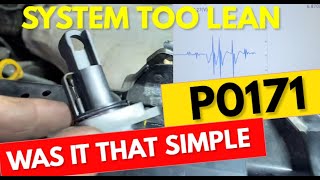
🎬 See how a pro diagnoses the P0171 code on this RAV4.Symptoms You May Notice
- Check Engine Light is on
- Rough or fluctuating idle
- Hesitation or lack of power during acceleration
- Reduced fuel economy
- Vehicle may stall when stopped or at low RPMs
- Hissing sound from the engine bay, indicating a vacuum leak
- Immediately replacing the Air/Fuel Ratio (O2) sensor. While the sensor reports the lean condition, it is often not the cause of it. The sensor is usually doing its job correctly by identifying the problem. Always diagnose vacuum leaks and MAF issues first.
- Replacing fuel injectors without first confirming a vacuum leak or MAF sensor issue.
- Replacing the fuel pump without performing a fuel pressure test to confirm it is weak.
Most Likely Causes
- Leaking Intake Manifold Gasket 🔴 High Probability → Shop Engine Intake Manifold The original gasket material on the 2AZ-FE engine is known to degrade, harden, and crack over time, causing a classic vacuum leak. The original part is often orange or black and becomes flattened, losing its seal. The updated replacement is typically made of a more durable green or blue material.
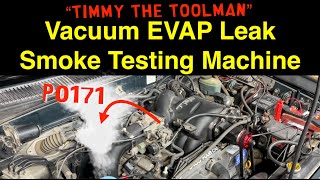
How to confirm: With the engine running, carefully spray short bursts of brake cleaner or unlit propane around the area where the intake manifold meets the cylinder head. If the engine idle speed changes or smooths out, a leak is present. A smoke test is the most definitive method to pinpoint the exact location of the leak.
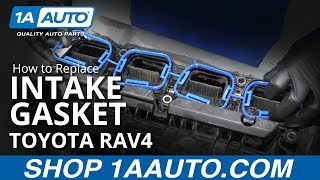
Typical fix: Replace the intake manifold gasket with the updated, more durable part. This is a common DIY repair that is well-documented in owner forums. 🎬 Watch: Step-by-step guide to replacing the intake manifold gasket.
Est. part cost: $15-$30 - Dirty or Faulty Mass Airflow (MAF) Sensor 🔴 High Probability → Shop Fuel Injection Air Flow Meter The MAF sensor, which measures the amount of air entering the engine, can become contaminated with dirt and oil vapor, causing it to send inaccurate (low) readings to the computer. This is exacerbated if the engine suffers from the common 2AZ-FE oil consumption issue, which can coat the sensor wire.
How to confirm: Remove the sensor (located on the air intake tube after the air filter) and inspect the small wires inside. If they appear dirty, cleaning is the first step. A scan tool can also show if MAF readings are erratic or out of spec at idle and under load.
Typical fix: Clean the sensor using a dedicated MAF sensor cleaner spray. Do not touch the wires. Let it dry completely before reinstalling. If cleaning doesn't resolve the issue, replace the sensor with a quality OEM part (Denso is the original manufacturer).
Est. part cost: $10-$15 (cleaner), $70-$150 (replacement sensor) - Vacuum Leak (Other) 🟡 Medium Probability Rubber hoses, especially the PCV hose and the air intake boot between the MAF sensor and throttle body, become brittle and crack with age and heat cycles.
How to confirm: Visually inspect all vacuum hoses connected to the intake manifold, throttle body, and brake booster for cracks, splits, or loose connections. A smoke test is the most effective way to find hidden leaks that aren't obvious visually.
Typical fix: Replace the cracked or broken hose. The PCV hose is a common and inexpensive part to replace as preventative maintenance.
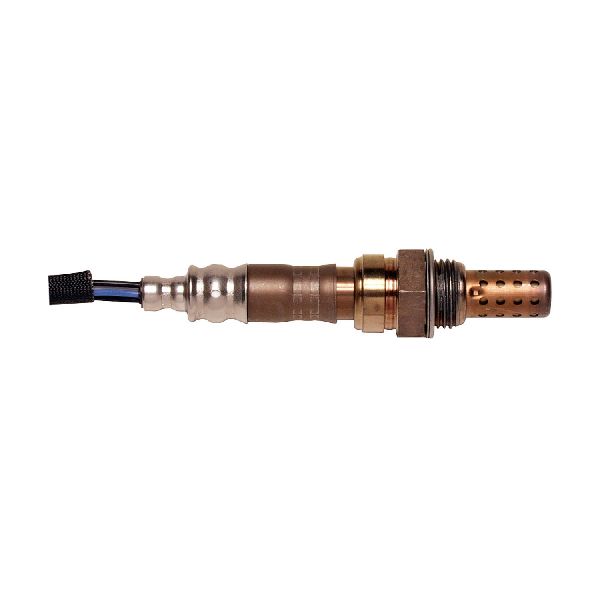
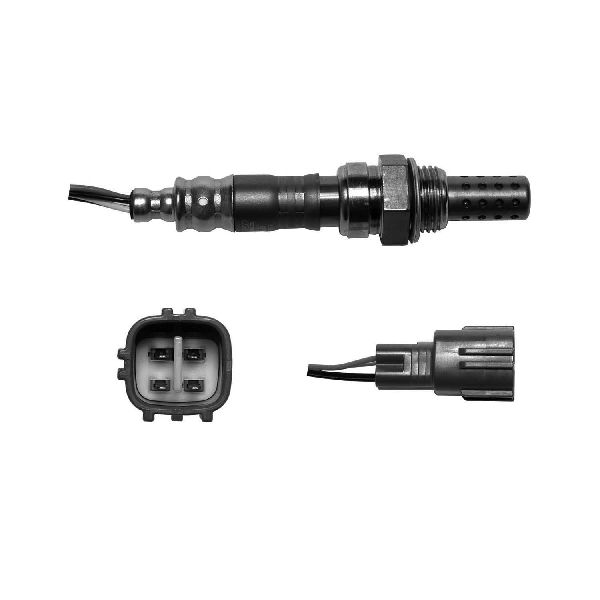
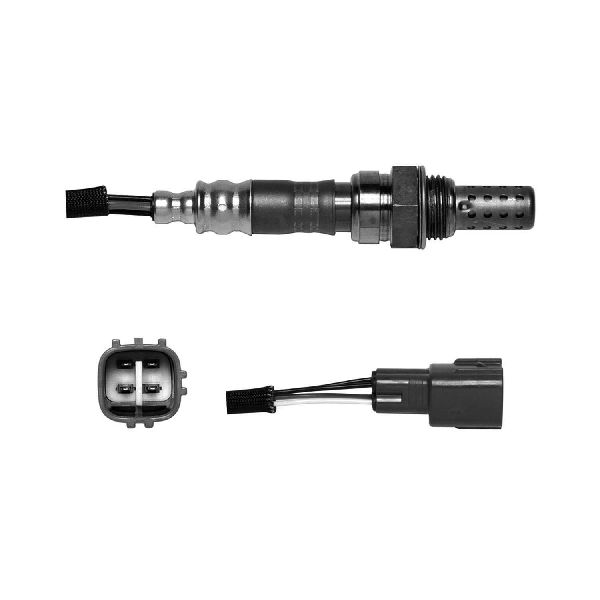
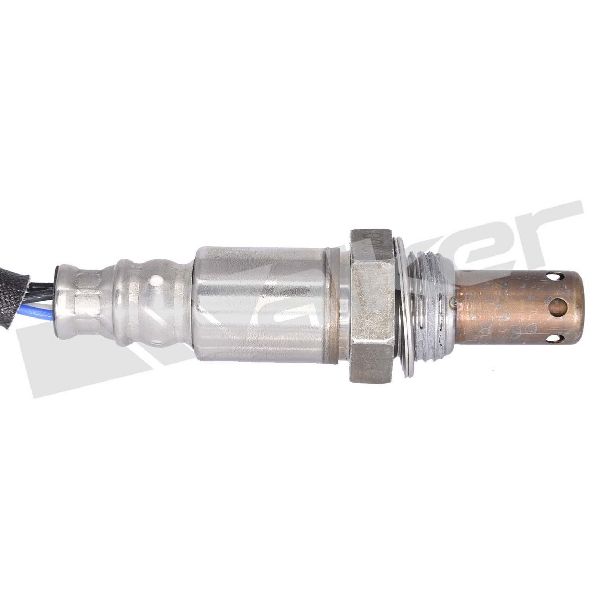
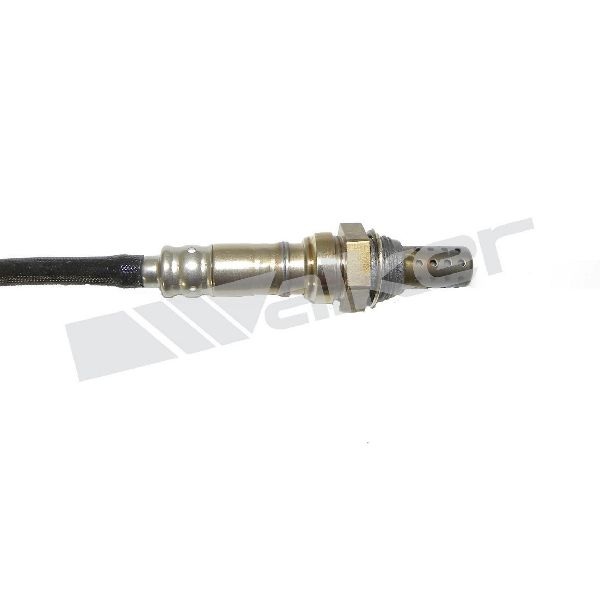
Est. part cost: $10-$50 - Failing Upstream Air/Fuel Ratio Sensor ⚪ Low Probability → Shop Oxygen Sensor
How to confirm: A scan tool is needed to observe the sensor's voltage readings and response rate. A lazy or non-responsive sensor will not adjust correctly to changes in the air/fuel mixture, often getting 'stuck' lean. Contamination from oil burning can also degrade sensor performance.
Typical fix: Replace the upstream Air/Fuel Ratio Sensor (also called Bank 1, Sensor 1). Denso is the OEM supplier and is highly recommended over generic brands to avoid compatibility issues.
Est. part cost: $120-$190
Rare But Worth Checking
- Low Fuel Pressure: Could be caused by a weak fuel pump or a clogged fuel filter. This is less common than vacuum leaks or MAF issues but should be checked if other fixes fail. A fuel pressure test is required for diagnosis. Manufacturer Bulletin #TSB000923 notes that some vehicles may exhibit a MIL ON condition with P0171 and P0087 (Fuel Rail/System Pressure Too Low), where Techstream data analysis may reveal positive fuel trims.
- Clogged or Dirty Fuel Injectors: → Shop Fuel Injector If the lean condition persists and is isolated to one cylinder (accompanied by a misfire code like P030X), a dirty injector could be the cause.
- Leaking Brake Booster: The diaphragm inside the brake booster can leak, creating a large vacuum leak. You can test for this by pressing the brake pedal while monitoring fuel trims or by listening for a hissing sound. A stalling engine when the brakes are applied is another key symptom.
- Exhaust Leak Before A/F Sensor: A crack in the exhaust manifold or a leaking gasket before the primary A/F sensor can allow outside oxygen to enter the exhaust stream. This fools the sensor into thinking the engine is running lean, causing the ECM to incorrectly add fuel and trigger a P0171 code.
Diagnosis Steps
- Read Fuel Trims: Use an OBD-II scanner to check the Short-Term Fuel Trim (STFT) and Long-Term Fuel Trim (LTFT). For P0171, you will see high positive numbers (e.g., LTFT > +20%). Note the trims at idle and at 2500 RPM. If trims improve at higher RPM, a vacuum leak is highly likely.
- Inspect for Vacuum Leaks: Visually inspect all vacuum hoses (especially the PCV hose) and the air intake boot for obvious cracks or damage.
- Test for Intake Manifold Gasket Leak: With the engine idling, carefully spray carb cleaner or brake cleaner around the intake manifold gasket. If the engine RPM changes, you've found the leak. A smoke test is a safer and more effective alternative.
- Clean the MAF Sensor: Disconnect the battery. Carefully remove the MAF sensor and spray it with dedicated MAF sensor cleaner. Let it dry completely before reinstalling. Re-check fuel trims after a short drive.
- Perform a Smoke Test: If leaks are still suspected but not found, a smoke test is the most reliable way to find small cracks in hoses or gaskets, including the intake manifold gasket and brake booster.
- Test Fuel Pressure: If no vacuum leaks are found and the MAF is clean/working, check the fuel pressure to rule out a weak fuel pump or clogged filter.
- Test the Air/Fuel Ratio Sensor: Using a scan tool, graph the A/F sensor's output. It should react quickly to throttle changes. A slow or flat-lining sensor may need replacement.
- Check for Exhaust Leaks: Inspect the exhaust manifold and downpipe for any cracks or gasket leaks that are upstream of the first O2 sensor.
Parts You'll Likely Need
- Engine Intake Manifold Gasket
(OEM #17171-0H050 (Supersedes 17171-28050))— This is the most common failure point on the 2AZ-FE engine leading to a vacuum leak and a P0171 code. The original orange/black gasket fails and should be replaced with the updated design.
Trusted brands: Toyota (OEM), Fel-Pro (MS 96531 - often green), Mahle (MS19363)
OEM price range: $20-$30
Aftermarket price range: $10-$20 - Mass Airflow (MAF) Sensor
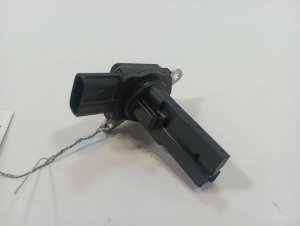
(OEM #22204-22010)— Often just needs cleaning, but if it fails, it causes the engine computer to miscalculate the air entering the engine. Using the OEM Denso part is highly recommended for accuracy and longevity.
Trusted brands: Denso (OEM - Part# 197-6020), Hitachi
OEM price range: $120-$180
Aftermarket price range: $60-$110 - Upstream Air/Fuel Ratio Sensor (Bank 1 Sensor 1)
(OEM #Denso 234-9041 (Toyota P/N: 89467-42120))— If the sensor itself fails, it can send incorrect lean signals. This is less
Related Codes That Often Appear With This One
- P0101 — This code relates to the Mass Airflow (MAF) Sensor Circuit Range/Performance. It often appears with P0171 if the MAF sensor is dirty or failing, as it's the root cause of the incorrect air measurement leading to the lean condition.
- P0300, P0301, P0302, etc. — These are misfire codes. A severe lean condition can prevent proper combustion, leading to misfires in one or more cylinders.
- P0174 — This code is for 'System Too Lean (Bank 2)'. It is not applicable to the 4-cylinder 2AZ-FE engine which only has one bank. However, it is commonly seen with P0171 on the V6 RAV4 models, indicating a leak affecting both banks.
- P0505 — Idle Control System. NHTSA ODI #11667285 describes a vehicle where P0171 was stored alongside P0505 (Idle Control System) and P117B (Fuel Performance).
Technical Service Bulletins (TSBs) & Recalls
- Warranty Enhancement Program ZE7: Addressed excessive oil consumption on 2006-2008 RAV4 models with the 2AZ-FE engine. While not for P0171 directly, the oil consumption can foul sensors and cause the code.
- T-SB-0094-11: Outlines the procedure for the oil consumption test required to qualify for the ZE7 warranty enhancement.
- Bulletin #TSB000923: Notes that certain Toyota vehicles may exhibit a hard start and/or MIL ON condition with DTC P0171 and/or P0174, potentially linked to low fuel rail pressure (P0087).
Platform-Specific Known Issues
- The intake manifold gasket on the 2AZ-FE engine is a very well-documented failure point and the most probable cause for P0171 on a higher mileage RAV4.
- Excessive oil consumption on 2006-2009 models can foul the MAF and A/F sensors, indirectly causing or contributing to a P0171 code.
Mechanic-Grade Diagnostic Values
- Fuel Pressure — expected: 304 to 343 kPa (44.1 to 49.7 psi) with engine running.. Failure: Pressure below 44 psi indicates a potential weak fuel pump or clogged filter.
- Mass Airflow (MAF) Sensor Reading — expected: 1.0 - 3.0 g/sec at idle (A/C off); 2.0 - 6.0 g/sec at 2500 RPM (A/C off).. Failure: Readings significantly outside this range, or readings that do not increase smoothly with RPM, suggest a dirty or faulty sensor.
- Long-Term Fuel Trim (LTFT) at Idle — expected: Ideally between -10% and +10%.. Failure: Sustained values above +20% to +25% at idle that decrease significantly when RPM is raised to 2500 strongly indicate a vacuum leak.
- Air/Fuel Ratio Sensor (B1S1) Voltage — expected: Should fluctuate around a central value of approximately 3.3V under stable conditions.. Failure: A voltage that is stuck high (e.g., > 3.8V) indicates a persistent lean reading. A sensor that responds slowly to throttle changes may be failing.
- Engine Coolant Temperature (ECT) Sensor Resistance — expected: 2.32 - 2.59 kΩ at 20°C (68°F); 0.310 - 0.326 kΩ at 80°C (176°F).. Failure: Resistance values outside of these ranges can cause the ECM to miscalculate fuel needs.
Scan Tool Commands That Help
- Toyota Techstream: Active Test: A/F Control — After checking for vacuum leaks, use this to determine if the A/F sensor is responding correctly. The command forces the fuel injection volume to change by +25% or -12.5%. By observing the A/F sensor voltage (AFS B1S1), a technician can confirm if the sensor is lazy/unresponsive or if the fuel system is failing to deliver the commanded fuel.
- Toyota Techstream: Active Test: Control the Fuel Pump / Speed — To verify the fuel pump is operational without needing to access it physically. This command turns the fuel pump on, allowing a technician to listen for its operation or check fuel pressure build-up.
Wiring & Ground Locations
- ECM Connector (MAF Pins) — At the Engine Control Module (ECM).. For testing the MAF sensor circuit. Key pins on the 2AZ-FE ECM include VG (MAF signal), THA (Intake Air Temp signal), and E2 (Sensor Ground). A bad ground (E2) or a break in the signal wire (VG) can mimic a failed MAF sensor, causing P0171. Probing these pins can verify signal integrity back to the computer.
Real Owner Repair Stories
- YouTube channel 'Robinson's Auto' (2005 Toyota RAV4 (2AZ-FE)) — P0171 code, hesitation on acceleration, Long Term Fuel Trim at +32%.
❌ Tried (didn't work) Fuel pressure test was performed and showed adequate pressure.
✅ What actually fixed it The Mass Airflow (MAF) sensor was removed and cleaned with dedicated MAF sensor cleaner. After cleaning and reinstallation, the Long Term Fuel Trim dropped to a normal range (around +4% to +7%) and the hesitation was resolved. - YouTube channel 'Eazi DIY' (2010 Toyota Corolla (similar 1.8L engine, but identical diagnostic principle)) — P0171 code (pending, no CEL), rough idle after filling gas tank, rough idle when applying brakes.
❌ Tried (didn't work) Owner suspected multiple issues due to varied symptoms.
✅ What actually fixed it A visual inspection revealed a large crack in the vacuum hose that runs from the EVAP purge solenoid to the intake. This single hose also supplied vacuum to the brake booster, explaining all the symptoms. Replacing the cracked hose fixed the problem. - Reddit user in r/mechanic (2010 Toyota RAV4 2.5L (different engine, but common intake boot issue)) — P0171 code, a hose would not stay connected.
❌ Tried (didn't work) Attempting to re-secure the hose with zip ties.
✅ What actually fixed it The problem was a cracked and deteriorated air intake elbow (the large rubber boot connecting the air filter box/MAF to the throttle body). Replacing the entire intake boot resolved the unmetered air leak and the code. - NHTSA ODI #10660548 — An owner reported a check engine light with codes P0171 and P0174. The dealership initially suspected a bad tank of gas as the cause for the lean air/fuel mixture.
- NHTSA ODI #11415574 — An owner attempted to resolve a P0171 code by replacing the gas cap, air filter, and vapor canister purge solenoid, but the issue persisted alongside other EVAP codes.
"I Checked Everything" — The Actual Cause
- A common scenario is a clean smoke test result, yet the P0171 code persists. The cause is often an internal leak in the brake booster. The booster's diaphragm can fail, creating a significant vacuum leak only when the brake pedal is depressed. This is missed by a static smoke test. Symptoms include a hissing sound or a change in idle when the brakes are applied.
- Another cause can be a stuck-open PCV valve. While a bad PCV hose would be found by a smoke test, a faulty valve itself can create an internal vacuum leak that is harder to detect. Shaking the valve to see if it rattles is a quick, though not definitive, test.
- NHTSA ODI #11719600 describes a situation where a P0171 code appeared simultaneously with a red battery light and steering light, suggesting that electrical system faults or voltage drops can sometimes trigger lean codes.
OEM Part Supersession History
17171-28050→17171-0H050— The original intake manifold gasket, often orange or black, was made of a material that would harden and flatten over time, losing its seal. The updated part uses a more durable rubber compound (often blue or green) to provide a longer-lasting seal.
Model Year Variations Within This Range
- 2006-2009: Models in this range were more susceptible to the 2AZ-FE's known excessive oil consumption issue due to piston ring design. This condition increases the likelihood of P0171 by contaminating the MAF sensor and A/F ratio sensor with oil vapor, leading to incorrect readings. Toyota issued a Technical Service Bulletin (TSB EG048-07) and a warranty enhancement for this issue. Later models (2010-2012) had revised piston/ring assemblies.
Diagnostic Flowchart
Other Known Issues on This Vehicle
Issues unrelated to this code that are worth knowing about as an owner of this generation:
- Excessive Oil Consumption 🔴 High — Very common on 2006-2009 models, typically noticeable after 60,000 miles. Caused by defective piston ring design. (Ref: Toyota Warranty Enhancement Program ZE7 (Expired) covered repairs for vehicles burning more than 1 quart per 1,200 miles.)
- Stripped Cylinder Head Bolt Threads 🔴 High — Less common than oil consumption but catastrophic when it occurs. An overheat event can cause the aluminum block threads to strip, leading to head gasket failure. (Ref: Repair involves installing thread inserts like Time-Serts or a specialized NS300L kit.)
- Water Pump Failure 🟠 Medium — A notable number of complaints for leaking water pumps, particularly in 2006-2008 models. Can lead to overheating if not addressed.
- Steering Shaft Clunk 🟡 Low — A clunking or knocking noise from the steering column when turning is often caused by a worn intermediate steering shaft.
Used vs. New Parts: Buying Guide for This Vehicle
When a used part is the smart pick: For this repair, used parts are generally not recommended for the common failure items. However, a used plastic intake manifold (if the original is cracked) or hard vacuum lines from a low-mileage donor vehicle can be a cost-effective choice. The gaskets and sensors should always be new.
Donor-vehicle mileage cap: roughly under 80000 miles for the part to have meaningful remaining life.
What to inspect on the donor part:
- For hoses/boots: Check for flexibility and absence of cracks or dry rot.
- For hard parts (like manifold): Ensure no visible cracks, especially around mounting points.
- Verify the donor vehicle was not in a front-end collision.
OEM-only on this vehicle (don't cheap out):
- Mass Airflow (MAF) Sensor
- Air/Fuel Ratio Sensor (Bank 1 Sensor 1)
Aftermarket brands forum-validated for this vehicle:
- Denso (for MAF and A/F sensors - this is the OEM supplier)
- Fel-Pro (for intake manifold gasket)
- Mahle (for intake manifold gasket)
Brands owners have reported issues with on this vehicle:
- Unbranded, generic, or 'white-box' electronic sensors (MAF, A/F) from online marketplaces. These are notorious for being improperly calibrated, leading to persistent codes and poor performance.
Real Owner Stories
Aggregated from forums and TSBs cited above. Mileages and costs reflect what owners reported in those sources.
2007 Toyota Camry 2AZ-FE
Symptoms: P0101 and P0171 codes present; owner replaced the MAF sensor, O2 sensors, and fuel pump but the codes remained.
What fixed it: The source highlights this as a cautionary tale of replacing parts before confirming a simple vacuum leak, which is the common root cause for these codes on this engine.
Source hint: Reddit r/AskAMechanic - P0101 and p0171 code for Toyota Camry 2007 CE 2az-fe engine
2006-2012 Toyota RAV4 2AZ-FE — ~100000 miles
Symptoms: Check Engine Light with P0171; owner observed the old intake gasket was flattened and had lost its seal.
What fixed it: Replaced the original flattened orange/black intake manifold gasket with the updated green/blue replacement part.
Source hint: Rav4World & ToyotaNation Forums
Related OBD-II Codes
Frequently Asked Questions
Is there a specific TSB for the oil consumption issue that might be causing my P0171 code?
My 2006-2012 RAV4 has a P0171; what is the most likely part to fail on this specific engine?
Should I buy a generic Air/Fuel Ratio sensor to save money on my RAV4?
How can I tell if my intake manifold gasket is the updated version?
Can I clean the MAF sensor on my RAV4 myself to fix the P0171 code?
Helpful Videos

Used OEM Parts in Stock
New Aftermarket Parts Available

The information in this article is provided for general reference and educational purposes only. Vehicle specifications, procedures, and part compatibility can vary by production date, trim level, and region. Always consult your vehicle's factory service manual and verify part numbers before purchasing or performing repairs. Safety-critical components such as airbags, seat belts, and braking systems should be installed by a qualified professional.
- Toyota RAV4:
- 🧭 Diagnostic Flowchart
- 🎬 Helpful Videos
- 🛍️ Shop This Part
- What's Unique About the 2006-2012 Toyota RAV4
- Symptoms You May Notice
- Most Likely Causes
- Rare But Worth Checking
- Diagnosis Steps
- Parts You'll Likely Need
- Related Codes That Often Appear With This One
- Technical Service Bulletins (TSBs) & Recalls
- Platform-Specific Known Issues
- Mechanic-Grade Diagnostic Values
- Scan Tool Commands That Help
- Wiring & Ground Locations
- Real Owner Repair Stories
- "I Checked Everything" — The Actual Cause
- OEM Part Supersession History
- Model Year Variations Within This Range
- Other Known Issues on This Vehicle
- Used vs. New Parts: Buying Guide for This Vehicle
- Real Owner Stories
- 2007 Toyota Camry 2AZ-FE
- 2006-2012 Toyota RAV4 2AZ-FE — ~100000 miles
- Related OBD-II Codes
- Frequently Asked Questions
- 🎟️ Get 5% Off