

P0171 on 2014-2017 Volvo XC60 2.0L Turbo: Lean Code Causes and Fixes
On the Volvo XC60 with the 2.0L 'Drive-E' turbo engine, a P0171 code is most often caused by a failed PCV diaphragm on the oil filter housing, creating a vacuum leak. A loud whistling or chirping noise at idle is a key symptom. A diaphragm repair kit is under $50, while a full housing replacement (the more reliable fix) costs $150-$250.
- For a P0171 code on a 2014-2017 XC60 2.0L Turbo, the first thing to check is the PCV system.
- A loud whistling sound from the engine at idle is a strong indicator of a torn PCV diaphragm.
- Confirm a torn PCV diaphragm by removing the oil cap with the engine running; if the noise stops, you've found the problem.
- If there is no whistle, perform a smoke test to check for other vacuum leaks before replacing expensive parts like O2 or MAF sensors.
- Always use a dedicated MAF sensor cleaner; never use brake cleaner or touch the sensor wires.
What's Unique About the 2009-2017 Volvo XC60
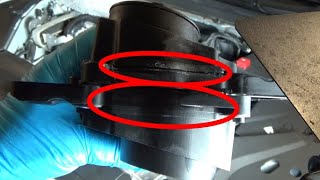
The 2.0L 4-cylinder 'Drive-E' turbocharged engine, introduced around 2014.5, is well-known for a specific failure point that directly causes the P0171 code. The rubber diaphragm inside the Positive Crankcase Ventilation (PCV) system, which is integrated into the oil filter housing assembly (also called the oil trap), is prone to tearing. This creates a significant unmetered vacuum leak, a classic cause for a lean code. Owners often report a distinct whistling, humming, or chirping noise from the engine at idle, which is a tell-tale sign of this specific failure. The noise may be mistaken for a failing belt or pulley.
Generation note: The 2009-2017 year range covers the first generation of the Volvo XC60. However, the specified 2.0L 4-Cylinder Turbo 'Drive-E' engine was only introduced in this chassis starting in model year 2014.5/2015. This guide is specific to those 2014.5-2017 models with the 2.0L engine, not the earlier 5-cylinder or 6-cylinder models.
Symptoms You May Notice
- Check Engine Light is on
- Loud whistling, humming, or chirping noise from the engine bay at idle.
- Noise stops or changes when the oil filler cap is loosened or removed.
- Rough or unstable idle, sometimes stalling at idle.
- Reduced fuel economy.
- Hesitation or lack of power during acceleration.
- Difficulty starting the engine.
- In some cases, the car may feel like it wants to 'jump' forward when holding the brake at a stop.
- Replacing the O2 sensor first without checking for vacuum leaks. A vacuum leak is the most common cause, and a new O2 sensor will simply continue to report the lean condition correctly.
- Replacing the MAF sensor without cleaning it first. Often, the sensor is just dirty from oil vapors (especially if the PCV system is failing) and a simple cleaning can restore its function.
- Mistaking the PCV whistle for a serpentine belt or pulley noise. The sound can be very similar, but the diagnostic test of removing the oil cap will quickly differentiate the two.
Most Likely Causes
- Torn PCV Diaphragm / Faulty Oil Trap 🔴 High Probability The rubber diaphragm in the PCV system (part of the oil filter housing) is a known weak point on this engine. It degrades over time from heat and oil vapors, eventually tearing and creating a large vacuum leak. This is the most common cause of P0171 on the Drive-E engine.
How to confirm: With the engine running at idle, listen for a loud whistle. Carefully try to remove the oil filler cap or pull the oil dipstick. If there is strong suction holding it down and the whistling noise stops or changes significantly when it's removed, the PCV diaphragm is almost certainly torn.
Typical fix: Replace the entire oil filter housing assembly (oil trap). While diaphragm-only repair kits are available, the plastic housing itself can warp over time, and a full assembly replacement is the most reliable long-term solution.
Est. part cost: $25-$250 - Vacuum Leak (Other) 🟡 Medium Probability Turbocharged engines have a complex network of hoses and gaskets. Leaks can develop in the intake manifold gasket, intercooler hoses, or other vacuum lines, allowing unmetered air to enter the engine. A faulty EVAP purge valve stuck open can also cause a significant vacuum leak.
How to confirm: Perform a smoke test. This involves feeding pressurized smoke into the intake system with the engine off and looking for where it escapes. This is the most definitive way to find leaks from sources other than the PCV diaphragm, such as a bad intake manifold gasket or cracked hose.
Typical fix: Replace the leaking gasket, hose, or faulty valve.
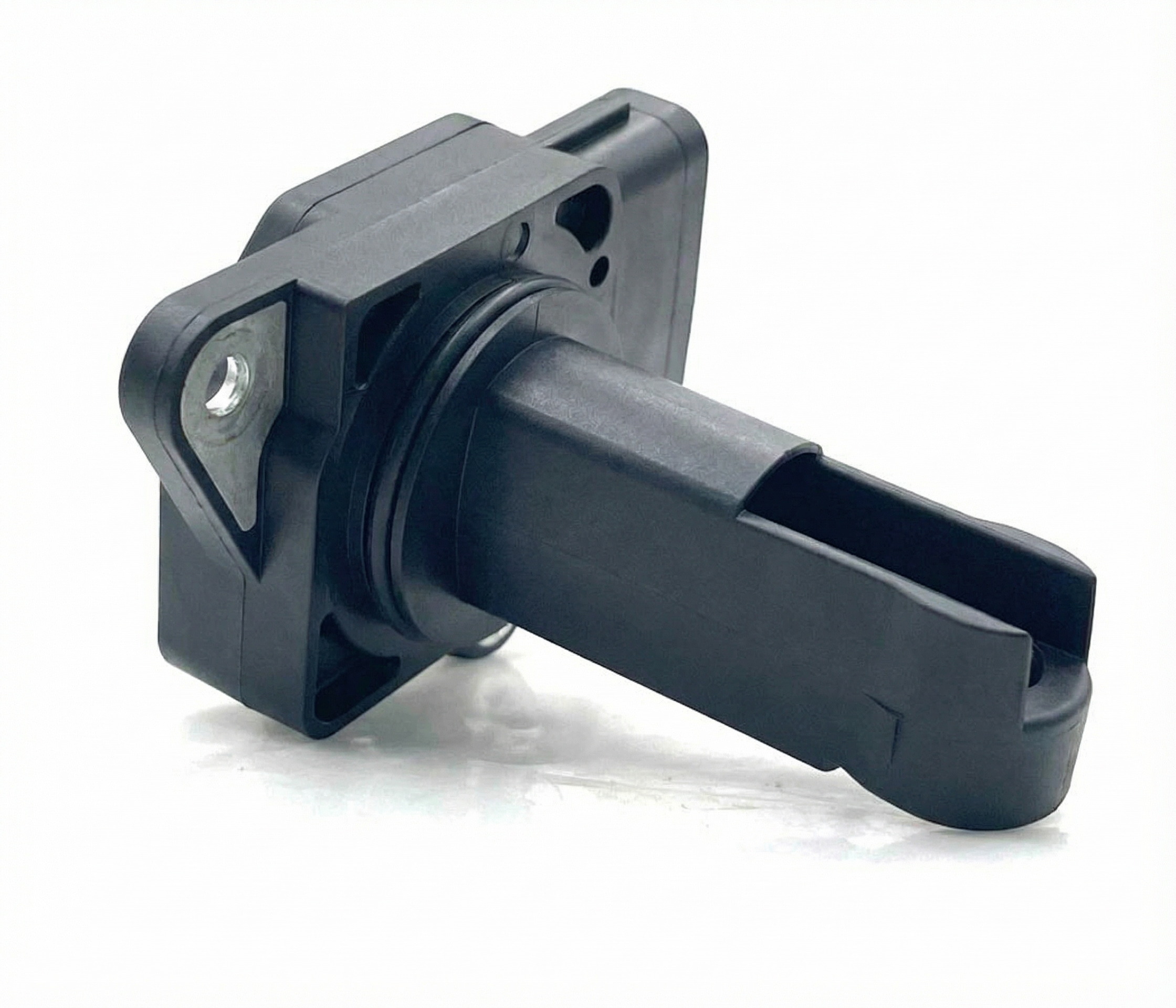
Est. part cost: $20-$200 - Dirty or Faulty Mass Airflow (MAF) Sensor 🟡 Medium Probability → Shop Fuel Injection Air Flow Meter The MAF sensor measures the amount of air entering the engine. If it's dirty or failing, it can under-report the airflow, causing the ECM to inject too little fuel. Oil vapor from a failing PCV system can contaminate the MAF sensor, making this a related issue.
How to confirm: First, try cleaning the sensor with a dedicated MAF sensor cleaner spray. Do not touch the delicate sensor wires or use other chemicals like brake cleaner. If cleaning doesn't help, monitor the sensor's readings with an OBD-II scanner to see if they are erratic or out of specification at various RPMs.
Typical fix: Clean the MAF sensor. If the problem persists, replace the sensor. A genuine Bosch sensor is recommended.
Est. part cost: $100-$250 - Faulty Front Oxygen (O2) Sensor ⚪ Low Probability → Shop Oxygen Sensor The front (upstream) O2 sensor, also called an Air/Fuel Ratio sensor, is the primary sensor that measures the air-fuel ratio. If it becomes slow, biased, or fails, it can incorrectly report a lean condition to the ECM.
How to confirm: Use a scan tool to graph the voltage or lambda value of the front O2 sensor. A healthy sensor should show rapidly fluctuating readings between 0.1 and 0.9 volts. If the reading is stuck lean or responds very slowly to throttle changes, it is likely faulty. However, this should only be suspected after all potential vacuum leaks are ruled out.
Typical fix: Replace the front (pre-catalyst) O2 sensor.
Est. part cost: $150-$300
Rare But Worth Checking
- Low Fuel Pressure: A weak fuel pump, clogged fuel filter, or faulty fuel pressure sensor can prevent enough fuel from reaching the engine, causing a lean condition. This is less common than vacuum leaks but should be checked with a fuel pressure gauge if other causes are ruled out. The direct injection system uses a high-pressure fuel pump that can exceed 2,000 PSI.
- Leaking Fuel Injectors or Seals: → Shop Fuel Injector While clogged injectors can cause a lean condition, leaking injector seals can also introduce unmetered air into the cylinders. This is less common but has been noted.
Diagnosis Steps
- Read the code with an OBD-II scanner and confirm it is P0171. Note any other codes present, like P0507 or P0300.
- With the engine idling, listen for a distinct whistling, chirping, or humming sound from the top of the engine.
- Carefully remove the oil filler cap or pull the dipstick while the engine is running. If there's strong vacuum and the whistle stops, the PCV diaphragm is the confirmed culprit.
- If no whistle is present, perform a visual inspection of all intake and vacuum hoses between the MAF sensor and the engine for cracks, loose connections, or obvious damage.
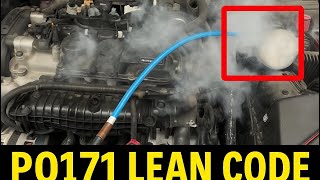
- Perform a smoke test on the intake system to definitively identify any vacuum leaks. Feed smoke into the intake boot after the MAF sensor and look for smoke escaping from the oil filter housing/PCV assembly, oil cap seal, intake manifold gaskets, or any vacuum hoses.
- If no vacuum leaks are found, locate the Mass Airflow (MAF) sensor. Disconnect it, remove it, and clean it using only dedicated MAF sensor cleaner. Reinstall and test.
- Use a scan tool to monitor Long Term Fuel Trim (LTFT) and Short Term Fuel Trim (STFT). High positive values (e.g., a combined total >25%) confirm the lean condition the ECM is trying to correct. After a repair, you may need to use a high-level scanner to reset the fuel trims for the light to stay off.
- Graph the front (upstream) O2 sensor voltage/lambda value. If it is lazy or stuck lean, it may be faulty, but only consider replacing it after exhausting all vacuum leak possibilities.
- As a final step, test the fuel pressure at the fuel rail to ensure the fuel pump and regulator are functioning correctly.
Parts You'll Likely Need
- Oil Filter Housing / PCV Oil Trap Assembly
(OEM #32242753 (latest), 31430923, 31670210, 32140004)— This is the most common failure point. Replacing the entire assembly is the most reliable long-term repair as the plastic can warp, preventing a good seal even with a new diaphragm. Part numbers have been superseded over time; 32242753 is a common replacement number.
Trusted brands: Volvo (OEM), Vaico, MTC
OEM price range: $200-$250
Aftermarket price range: $80-$160 - PCV Oil Trap Diaphragm Repair Kit — A budget-friendly option if only the diaphragm is torn and the housing is not warped or damaged. It includes the rubber diaphragm, spring, and cap. However, prying the old cap off can be difficult without damaging the housing.
Trusted brands: URO Parts, Dorman, Proparts Sweden
OEM price range: $N/A
Aftermarket price range: $25-$50 - Mass Airflow (MAF) Sensor
(OEM #31342521)— If cleaning the original sensor doesn't resolve the issue, a faulty MAF sensor may be under-reporting airflow, causing the lean code. This is a secondary cause to investigate after vacuum leaks.
Trusted brands: Bosch (OEM supplier), Denso
OEM price range: $200-$275
Aftermarket price range: $100-$180
Related Codes That Often Appear With This One
- P0507 - Idle Control System RPM Higher Than Expected
- P0300 - Random/Multiple Cylinder Misfire Detected
Technical Service Bulletins (TSBs) & Recalls
- Volvo Technical Journal TJ 31233 / NHTSA ID 10121175: Addresses excessive oil consumption due to faulty piston ring design in early 2.0L Drive-E engines. The fix involves an oil consumption test followed by piston and ring replacement.
Platform-Specific Known Issues
- A known issue with piston rings on some early Drive-E engines (approx. 2015-2016) can cause excessive oil consumption. Volvo issued Technical Journal TJ 31233 for this. While this doesn't directly cause P0171, the resulting oil blow-by can accelerate the failure of the PCV system and contaminate the MAF sensor, indirectly contributing to the code.
Mechanic-Grade Diagnostic Values
- Long-Term and Short-Term Fuel Trims (LTFT/STFT) — expected: Normally range from -5% to +5% when the engine is warm.. Failure: A combined value consistently above +25% will trigger the P0171 code. High positive values at idle that decrease with RPM suggest a vacuum leak.
- Mass Air Flow (MAF) Sensor Reading — expected: Approximately 4 grams/second at idle, 8 g/s at 1500 RPM, and 13 g/s at 2500 RPM.. Failure: Readings that are significantly lower than expected for a given RPM can indicate a dirty or failing sensor, causing the ECU to under-fuel.
- Upstream Oxygen (O2) Sensor Voltage — expected: Rapidly fluctuating between 0.1 and 0.9 volts on a healthy, warm engine.. Failure: A sensor that is stuck low (e.g., <0.4V) or responds very slowly to changes in throttle may be faulty.
- Low-Pressure Fuel System Pressure — expected: 3.8-4.2 bar (55-61 PSI) for many Volvo models.. Failure: Pressure below this range indicates a weak in-tank fuel pump or clogged filter, which can cause a lean condition under load.
Hidden / Shadow Codes Worth Checking
- ECM-P017100: This is the Volvo-specific Diagnostic Trouble Code (DTC) for 'System Too Lean (Bank 1)' that will be displayed on a Volvo VIDA (Vehicle Information & Diagnostics for Aftersales) dealer-level scan tool. (see via Volvo VIDA/DICE diagnostic tool or a compatible high-end professional scanner.)
Scan Tool Commands That Help
- Volvo VIDA or compatible professional scanner (e.g., YOUCANIC): Resetting adaptation of fuel and air mixture / Air-Fuel Adaptation Reset — This function should be performed after replacing a component that affects the air-fuel mixture, such as the PCV oil trap, MAF sensor, or O2 sensor. It resets the long-term fuel trim values to their factory baseline, forcing the ECU to re-learn the engine's fueling needs with the new part, which can be crucial for keeping the Check Engine Light off.
Real Owner Repair Stories
- Volvo Forums user (2010 Volvo XC60) — P0171 code.
✅ What actually fixed it The user discovered a severely damaged and disconnected vacuum hose. Replacing the hose with a similarly shaped piece and securing it with clamps resolved the P0171 code. - Reddit user r/VolvoXC90 (2016 XC90, ~80k miles) — P0171 code (fuel trim too lean).
❌ Tried (didn't work) Cleaning the MAF sensor, Replacing the downstream O2 sensor
✅ What actually fixed it A smoke test revealed that the supercharger seals were leaking badly. After having a dealership replace the seals, the smoke test was clean and the issue was resolved. - Wrenching Mafia YouTube Channel (Volvo S90 T6 (supercharged and turbocharged 2.0L)) — P0171 code.
✅ What actually fixed it A smoke test showed a leak coming from the oil cap area. The video explains that the plastic PCV box (oil trap) itself warps over time, causing the oil cap to no longer seal properly. The recommended fix was to replace the entire oil separator assembly, not just the cap or seal, to correct the warped surface.
OEM Part Supersession History
31316184, 31430923, 31670210, 32140004→32242753— Standard part evolution and potential design improvements by Volvo.
Heads up: These part numbers are generally interchangeable for the specified engine, with 32242753 being the latest and most commonly supplied replacement for the PCV oil trap assembly.
Model Year Variations Within This Range
- 2014.5-2017: The P0171 issue related to the PCV oil trap diaphragm is specific to the 2.0L 4-Cylinder 'Drive-E' engine introduced in the XC60 chassis starting mid-2014. Earlier first-generation XC60 models (2009-2014) with 5-cylinder or 6-cylinder engines have different engine architecture and PCV systems, and while they can still get a P0171 code, the primary cause is not typically the same diaphragm failure.
Diagnostic Flowchart
Other Known Issues on This Vehicle
Issues unrelated to this code that are worth knowing about as an owner of this generation:
- Excessive Oil Consumption (Piston Rings) 🔴 High — Common on 2015-2016 model year 2.0L Drive-E engines, typically appearing between 70,000-100,000 miles. Less frequent oil changes exacerbate the issue. (Ref: Volvo Technical Journal TJ 31233 / NHTSA ID 10121175)
- Auxiliary Battery Failure 🟠 Medium — The small auxiliary battery that powers the Start/Stop system often fails after 3-5 years, causing a 'Start/Stop Service Required' message on the dash.
- Transmission Shift Flare/Harshness 🟠 Medium — Some owners report harsh shifting or 'shift flares' (a momentary RPM spike between gears) with the 8-speed automatic transmission. Software updates from the dealer can sometimes improve behavior, but in other cases, it may indicate internal wear. (Ref: Software updates may be available from dealers.)
- Sensus Infotainment System Lag or Blank Screen 🟡 Low — Owners occasionally report the center infotainment screen lagging, freezing, or going blank, requiring a system restart to resolve.
Used vs. New Parts: Buying Guide for This Vehicle
When a used part is the smart pick: For this specific P0171 repair, buying a used PCV oil trap assembly from a junkyard is NOT recommended. The internal rubber diaphragm is a known failure item due to heat and age, and a used part is likely to have the same wear or will fail soon after installation.
What to inspect on the donor part:
- Not applicable as used part is not recommended.
Aftermarket brands forum-validated for this vehicle:
- URO Parts (specifically their 'URO Premium' line, which may offer improved materials and a lifetime warranty)
- Proparts Sweden
- MTC
Brands owners have reported issues with on this vehicle:
- Unbranded, no-name parts from online marketplaces should be avoided, as the quality of the rubber diaphragm and plastic housing is critical. A premature failure will simply lead to the same P0171 code returning.
Real Owner Stories
Aggregated from forums and TSBs cited above. Mileages and costs reflect what owners reported in those sources.
2016 Volvo S60 T5 2.0L Drive-E
Symptoms: Lean code P0171 accompanied by a humming/whistling noise.
What fixed it: Checking for a vacuum leak and addressing the PCV diaphragm issue.
Source hint: Reddit r/Volvo thread titled 'P0171 Code (16 s60 T5)'
2016 Volvo XC90 2.0L Drive-E
Symptoms: Loud whistle and P0171 code.
What fixed it: Replacement of the oil trap assembly.
Source hint: YouTube - '2016 Volvo xc90 loud whistle P0171'
2016 Volvo XC90 2.0L Drive-E
Symptoms: Engine code P0171 and owner was 'out of ideas' after initial checks.
What fixed it: Identifying the PCV diaphragm as the primary suspect for the vacuum leak.
Source hint: Reddit r/VolvoXC60 thread '2016 XC90 P0171 Engine Code - Out of Ideas'
2015 Volvo XC60 2.0L Drive-E
Symptoms: Excessive oil consumption leading to secondary issues.
What fixed it: Oil consumption test followed by piston and ring replacement as per TJ 31233.
Source hint: Volvo Technical Journal TJ 31233 / NHTSA ID 10121175
Documented NHTSA Reports
Volvo S60 Owner Report
Symptoms: An owner reported receiving codes P0171 and P0300. Despite changing spark plugs, ignition coils, and the oxygen sensor, the issue persisted (NHTSA ODI #11042866).
Volvo XC90 Owner Report
Symptoms: A lean condition was confirmed by an independent service center using a smoke test, which identified a vacuum leak as the cause of the P0171 code (NHTSA ODI #11607823).
Related OBD-II Codes
Frequently Asked Questions
My 2015 XC60 is making a loud whistling noise at idle that stops when I pull the dipstick. Is this related to P0171?
Does Volvo Technical Journal TJ 31233 apply to my 2016 XC60 with the P0171 code?
Should I just replace the MAF sensor first to fix the lean condition?
Can I just replace the rubber diaphragm in the PCV system instead of the whole assembly?
Why does my XC60 feel like it wants to jump forward when I'm stopped at a light?
Helpful Videos
We Have This Part in Stock

The information in this article is provided for general reference and educational purposes only. Vehicle specifications, procedures, and part compatibility can vary by production date, trim level, and region. Always consult your vehicle's factory service manual and verify part numbers before purchasing or performing repairs. Safety-critical components such as airbags, seat belts, and braking systems should be installed by a qualified professional.
- Volvo XC60:
- 🧭 Diagnostic Flowchart
- 🎬 Helpful Videos
- 🛍️ Shop This Part
- What's Unique About the 2009-2017 Volvo XC60
- Symptoms You May Notice
- Most Likely Causes
- Rare But Worth Checking
- Diagnosis Steps
- Parts You'll Likely Need
- Related Codes That Often Appear With This One
- Technical Service Bulletins (TSBs) & Recalls
- Platform-Specific Known Issues
- Mechanic-Grade Diagnostic Values
- Hidden / Shadow Codes Worth Checking
- Scan Tool Commands That Help
- Real Owner Repair Stories
- OEM Part Supersession History
- Model Year Variations Within This Range
- Other Known Issues on This Vehicle
- Used vs. New Parts: Buying Guide for This Vehicle
- Real Owner Stories
- 2016 Volvo S60 T5 2.0L Drive-E
- 2016 Volvo XC90 2.0L Drive-E
- 2016 Volvo XC90 2.0L Drive-E
- 2015 Volvo XC60 2.0L Drive-E
- Documented NHTSA Reports
- Volvo S60 Owner Report
- Volvo XC90 Owner Report
- Related OBD-II Codes
- Frequently Asked Questions
- 🎟️ Get 5% Off