

P0172 on 2010-2012 Audi A8 4.2L V8: Causes and Fixes for Rich Fuel Mixture
On the 2010-2012 Audi A8 with the 4.2L V8, code P0172 (System Too Rich, Bank 1) is most often caused by a failing High-Pressure Fuel Pump (HPFP) leaking fuel into the engine oil. Check the oil for a strong gasoline smell. If confirmed, replacing both HPFPs and changing the oil is the required fix. Leaking fuel injectors are another common cause.
- P0172 on this Audi A8 is a serious code that should be addressed immediately.
- The most important diagnostic step you can take is to check the engine oil for the smell of gasoline. This is a clear sign of HPFP failure.
- Do not automatically replace the oxygen sensor; it is very likely not the cause of the problem.
- If an HPFP has failed, it is critical to change the engine oil and filter after the repair to prevent severe engine damage.
- If both P0172 (Bank 1) and P0175 (Bank 2) are present, the likelihood of a systemic issue like HPFP failure is extremely high.
What's Unique About the 2010-2012 Audi A8
The Audi A8's 4.2L V8 (CALA) is a direct-injection (FSI) engine that uses two High-Pressure Fuel Pumps (HPFPs), one for each cylinder bank. A very common and serious issue on this platform is the internal failure of these pumps. When an HPFP fails, it often leaks raw gasoline directly into the crankcase, contaminating the engine oil. This leads to a system-wide rich condition that can trigger P0172 (Bank 1) and P0175 (Bank 2), often simultaneously. A user on Schrodinger's Box forum with a 2012 A8L 4.2L experienced this exact scenario with both codes present.
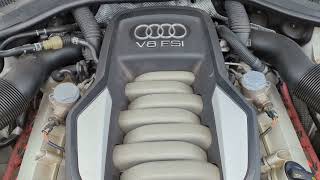
🎬 Watch: A diagnostic walkthrough for fixing P0172 and P0175 codes.Symptoms You May Notice
- Check Engine Light is on
- Strong smell of fuel, especially from the exhaust or under the hood
- Rough or unstable idle
- Hard starting, especially when the engine is warm (hot-soak)
- Black smoke from the exhaust
- Poor fuel economy
- Warning light for 'Oil overfilled' or an oil level that appears to be rising
- Engine misfires, which may feel like a stumble or hesitation
- Loud chattering noise on startup, which could indicate issues with fuel system components or lifters affected by contaminated oil.
- Replacing the oxygen sensor first. The O2 sensor is almost always just accurately reporting the rich condition caused by another component. Replacing it will not fix the root cause of fuel contamination or leaking injectors.
Most Likely Causes
- Failing High-Pressure Fuel Pump (HPFP) 🔴 High Probability → Shop Fuel Pump The camshaft-driven HPFPs on the 4.2L FSI engine are a known weak point. Internal seals degrade over time, allowing fuel to leak directly into the engine crankcase. This is a well-documented failure on FSI V8 engines.
How to confirm: Carefully check the engine oil. The most definitive sign is an oil level that is overfull and smells strongly of gasoline. As the A8 uses an electronic oil level sensor, you may need a physical dipstick to properly check the level and smell the oil. If fuel contamination is confirmed, the HPFP is the cause.
Typical fix: Replace the high-pressure fuel pump for Bank 1 (passenger side). It is strongly recommended to replace both pumps at the same time, as the other is likely near failure. A mandatory engine oil and filter change is required to remove the fuel-contaminated oil. Some mechanics may also recommend an engine flush treatment before adding new oil.
Est. part cost: $250-$500 per pump - Leaking Fuel Injector(s) 🟡 Medium Probability → Shop Fuel Injector As a direct-injection engine, the injectors are under extreme pressure and located inside the combustion chamber. They are known to develop leaks, either dripping fuel into the cylinder after shutdown (causing hard hot starts) or over-fueling during operation.
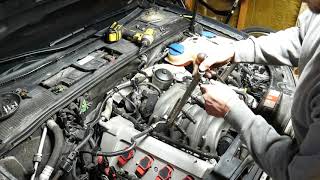
How to confirm: This is harder to confirm without professional tools. A mechanic can perform a fuel injector balance test or remove the injectors for bench testing. A DIY method is to pull the spark plugs on Bank 1 after the engine has sat; a plug that is wet with fuel or excessively black and sooty compared to others points to a leaking injector in that cylinder. Misfire codes (e.g., P0301-P0304) on a specific cylinder alongside P0172 can also pinpoint a bad injector.
Typical fix: Replace the faulty fuel injector(s) on Bank 1. It is often recommended to replace all injectors on that bank at the same time, as they have been subjected to the same conditions. Injector seal replacement is mandatory.
Est. part cost: $50-$150 per injector - Faulty PCV Valve / Oil Separator ⚪ Low Probability → Shop PCV Valve The PCV (Positive Crankcase Ventilation) system diaphragm can tear, creating a vacuum leak. While this more commonly causes a lean code, a failed PCV can also allow excessive oil and fuel vapors (especially if the oil is already contaminated by a failing HPFP) to be drawn into the intake manifold, contributing to a rich mixture.
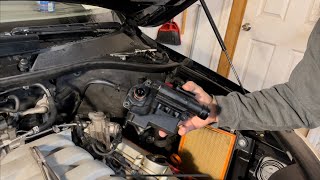
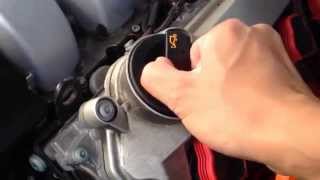
How to confirm: A rough idle and a loud whistling or sucking noise from the engine bay are common signs. A 'suction test' can be performed: with the engine idling, try to remove the oil filler cap. If there is extreme suction making it very difficult to remove, the PCV has likely failed. 🎬 See how to diagnose a whistling failed PCV valve. On these engines, the part is often referred to as the oil separator.
Typical fix: Replace the PCV valve assembly (oil separator).
Est. part cost: $150-$300 - Faulty Mass Airflow (MAF) Sensor ⚪ Low Probability → Shop Fuel Injection Air Flow Meter
How to confirm: A dirty or failing MAF sensor can incorrectly measure the amount of air entering the engine, causing the ECM to inject too much fuel. This usually affects both banks, triggering P0175 as well. The sensor can be cleaned with dedicated MAF sensor cleaner as a first step. If cleaning doesn't resolve the issue, the sensor may need replacement.
Typical fix: Clean the MAF sensor. If the problem persists, replace the MAF sensor.
Est. part cost: $150-$300
Rare But Worth Checking
- Carbon Buildup on Intake Valves: Direct-injection engines like the CALA are notoriously prone to heavy carbon buildup on the intake valves, as fuel is injected past them. This buildup restricts airflow, which can disrupt the air-fuel mixture and, in some cases, contribute to rich or lean codes, misfires, and a general loss of performance. This service is often recommended every 40,000-60,000 miles.
- Faulty Upstream Oxygen (O2) Sensor: → Shop Oxygen Sensor The O2 sensor is what detects the rich condition. It's rare for it to fail in a way that causes a rich code (they usually fail and indicate lean or become slow to respond), but it is possible. This should only be considered after all other more common causes, especially HPFP and injectors, have been ruled out.
- Stuck Open EVAP Purge Valve: → Shop Vapor Canister If the EVAP purge valve sticks open, it can allow a constant flow of fuel vapors from the charcoal canister into the intake manifold, creating an unsolicited rich condition. This can be diagnosed by feeling for vacuum on the tank-side port of the valve at idle; there should be none.
Diagnosis Steps
- Scan for all stored fault codes with an Audi-specific tool like VCDS. Note if P0175 is also present, as this strongly suggests a systemic issue.
- CRITICAL FIRST STEP: Check the engine oil. Use a physical dipstick to check the oil level and smell it. If the oil level is high and smells strongly of gasoline, stop. The High-Pressure Fuel Pump(s) are the confirmed cause.
- If the oil is fine, use a scan tool to monitor live data for Short-Term (STFT) and Long-Term (LTFT) fuel trims on both banks at idle and under load. For P0172, you will see significant negative values (e.g., -10% to -30%) on Bank 1.
- Inspect the air intake system for a dirty or clogged air filter.
- Test the PCV system using the 'oil cap suction test' while the engine is idling. Extreme suction indicates failure.
- If both banks are running rich (P0172 & P0175) and oil is not contaminated, inspect and consider cleaning the Mass Airflow (MAF) sensor.
- If only Bank 1 is rich and oil is fine, suspect a leaking fuel injector on Bank 1. Inspect spark plugs on that bank for evidence of richness (black, sooty deposits). This may require professional diagnosis to confirm.
- After repairs, clear codes and reset fuel trim values through the scan tool.
Parts You'll Likely Need
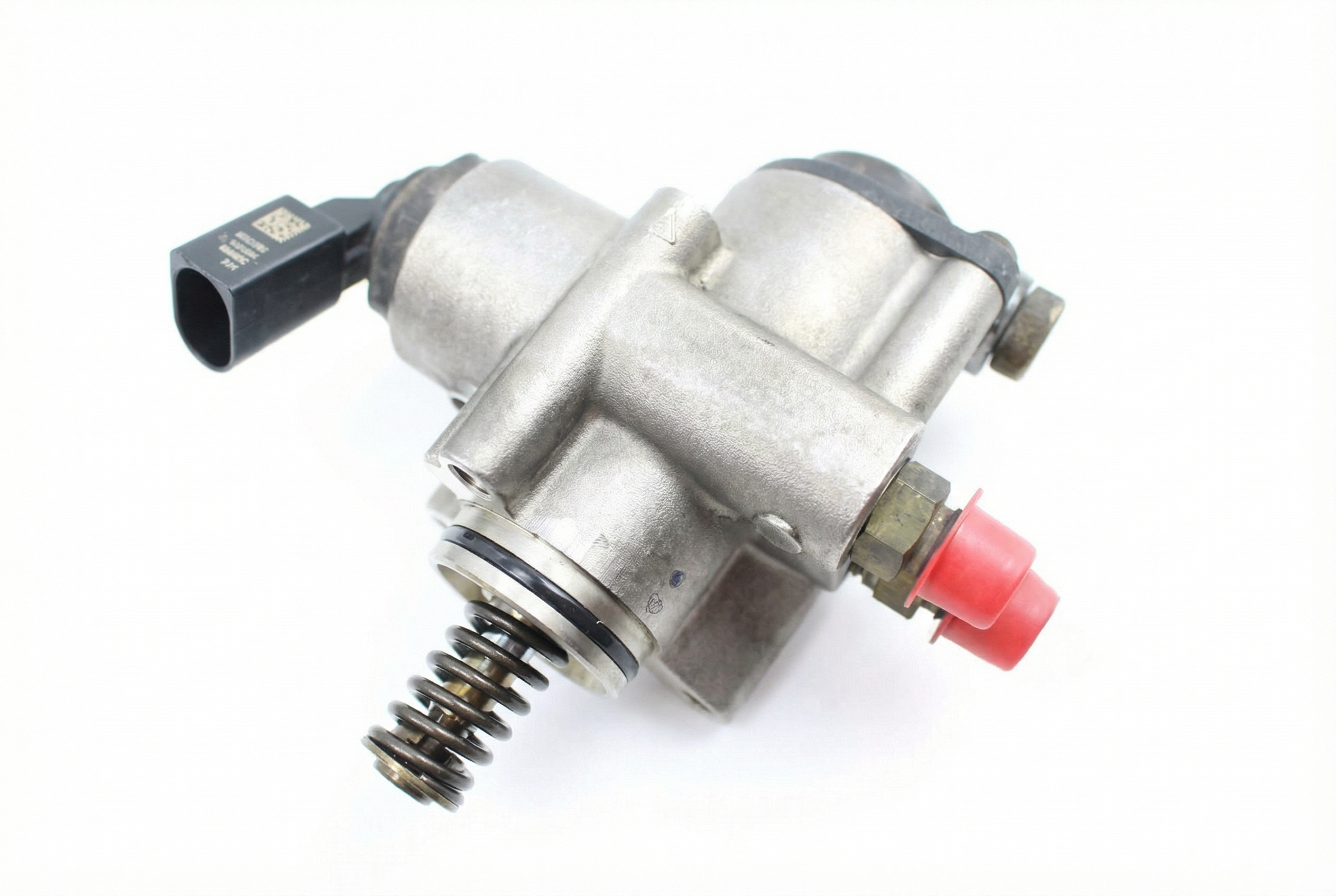
- High-Pressure Fuel Pump (HPFP)
(OEM #079127026J, 079127026AB, 079127026AC)— This is the most common failure point on the 4.2L FSI engine leading to rich codes, due to internal seals failing and leaking fuel into the crankcase.
Trusted brands: Hitachi, Bosch
OEM price range: $400-$600
Aftermarket price range: $250-$450 - Fuel Injector
(OEM #079906036D)— Can leak or get stuck open, dumping excess fuel into a cylinder and causing a rich condition on that bank.
Trusted brands: Bosch, Standard Motor Products
OEM price range: $120-$200
Aftermarket price range: $50-$150 - Engine Oil and Filter — Mandatory replacement if the oil has been contaminated with fuel from a failing HPFP to restore proper lubrication and prevent engine damage.
Related Codes That Often Appear With This One
- P0175 — This is the 'System Too Rich' code for Bank 2 (driver's side). If both P0172 and P0175 are present, it strongly points to a systemic issue affecting both banks, like failing HPFPs contaminating the oil, or a bad MAF sensor.
- P0300-P0304 — These are misfire codes for cylinders on Bank 1. An excessively rich mixture from a leaking injector or fuel-fouled spark plug can cause misfires on the affected cylinders.
- P0087 — 'Fuel Rail/System Pressure - Too Low'. While it seems counterintuitive with a rich code, a failing HPFP can struggle to maintain pressure, or a leaking injector can cause a pressure drop, potentially triggering this code under certain conditions.
Platform-Specific Known Issues
- The dual High-Pressure Fuel Pump design on the 4.2L V8 FSI is a known point of failure, frequently causing fuel to contaminate the engine oil. This is the most critical issue related to P0172/P0175 on this vehicle.
- Forum and video evidence strongly suggests that when P0172 and P0175 appear together, especially with hard starting or a rising oil level, the HPFPs are the immediate and primary suspect.
- A manufacturer reference for the Audi platform notes that an Engine Control Unit (ECU) software recall may be relevant, as software issues can sometimes affect how the system manages fuel trims and reports rich conditions (NHTSA ODI #11402605).
Mechanic-Grade Diagnostic Values
- Low-Pressure Fuel System Pressure (Pre-HPFP) — expected: 5 to 8 bar (72 to 116 PSI). A service manual for a similar FSI V8 specifies a check pressure of 4 bar.. Failure: Pressure significantly outside this range. Pressure dropping below 3 bar within 10 minutes of engine off indicates a leak in the low-pressure system or a faulty check valve.
- High-Pressure Fuel System Pressure (Fuel Rail) — expected: 30 to 150 bar (435 to 2175 PSI), depending on engine load. At idle, pressure is typically around 25-26 bar.. Failure: A significant drop in pressure after the engine is turned off (e.g., from 25 bar to under 9 bar in less than 5 minutes) can indicate a leaking HPFP or fuel injector. A user with a hard start issue saw pressure drop to 700-800 kPa (7-8 bar) overnight.
- Long-Term Fuel Trim (LTFT) — expected: Ideally within +/- 10%.. Failure: For a P0172, the value will be significantly negative, often exceeding -25%. One owner reported LTFT values around -30% on both banks before repair.
- Mass Airflow (MAF) Sensor Reading at Idle — expected: 4.0 - 7.0 g/s for a warm engine at idle.. Failure: Readings significantly outside this range suggest a faulty sensor or a major air leak.
Scan Tool Commands That Help
- VCDS (VAG-COM): Clear All DTCs — On many VW/Audi vehicles, clearing fault codes also resets the long-term fuel trim values in Measuring Block 032 back to 0%. This is critical after a repair to allow the ECU to relearn trims based on the new parts.
- VCDS (VAG-COM): Adaptation - Channel IDE00433 — For some ECUs that do not reset trims when clearing codes, this specific adaptation channel can be used to reset learned values. The value is set to 'Reset' and saved. This forces the ECU to start the learning process from a baseline.
- VCDS (VAG-COM): Basic Settings - Throttle Body Adaptation — After performing significant work like carbon cleaning or replacing the throttle body, running a throttle body adaptation helps the ECU relearn the closed, open, and partial throttle positions.
Wiring & Ground Locations
- Ground Connection 600 — On the right cylinder head.. A poor engine ground can cause erratic sensor readings for components grounded to the engine block, including those that influence fuel calculations. Ensuring this connection is clean and tight is a fundamental step in diagnosing electronic issues.
- Ground Connection 13 — In the engine compartment on the right side.. This is a main chassis ground point in the engine bay. Many sensors and modules use chassis grounds, and corrosion or looseness here can cause a variety of difficult-to-diagnose electrical problems.
- Jump Start Terminal / Terminal 30 Distributor — In the engine compartment on the right-hand side, near the coolant reservoir.. This is a major power distribution point. While not a ground, corrosion or loose connections here can cause voltage drops to critical systems, including the ECU and fuel pump control module, potentially affecting their performance.
Real Owner Repair Stories
- YouTube channel 'The Auto Connect' (Audi A8 4.2L V8 (Year not specified, but D4 generation)) — Check Engine Light with P0172 and P0175 codes, plus a warning light for 'Oil overfilled'.
❌ Tried (didn't work) The diagnosis was direct, no other parts were mentioned as being tried first.
✅ What actually fixed it The technician immediately suspected HPFP failure due to the combination of rich codes and an overfilled oil warning. He confirmed by smelling strong gasoline in the engine oil. The fix was replacing both high-pressure fuel pumps, performing an engine flush, and changing the oil and filter. - Schrodinger's Box Forum User (2012 Audi A8L, 4.2L V8, 100,000 miles) — P0172 and P0175 codes, hard starting when warm, rough running, and an 'oil level too high' warning. Long term fuel trims were reported at -30%.
❌ Tried (didn't work) The user was in the process of diagnosis, questioning whether both HPFPs could fail simultaneously.
✅ What actually fixed it The thread discussion points overwhelmingly to HPFP failure as the cause, given the classic combination of symptoms (both banks rich, fuel in oil, hard hot starts). While the user did not post a final confirmation, the symptoms are a textbook match for HPFP failure on this platform. - NHTSA ODI #11402605 — An owner of a related Audi model reported that after completing maintenance service, the vehicle suddenly displayed code P0172 Bank 1 System Too Rich, and noted the existence of a recall for the Engine Control Unit (ECU) software which can affect engine performance.
OEM Part Supersession History
079127026J→079127026AB, 079127026AC. Other sources also list 079127026F as a compatible number.— Revisions to improve reliability and address internal seal failure.07L127026J→07L127026Q, 07L127026AB, 07L127026AK, 07L127026AL.— This part number applies to other Audi engines (like the 3.0T) but shows a typical supersession path for VAG HPFPs, indicating ongoing design improvements.
Heads up: It is critical to verify the correct part number for the specific engine, as pumps for different engines (e.g., 4.2L V8 vs 3.0T V6) are not interchangeable despite looking similar.
Diagnostic Flowchart
Other Known Issues on This Vehicle
Issues unrelated to this code that are worth knowing about as an owner of this generation:
- Timing Chain Tensioner Failure 🔴 High — More common on higher-mileage (80k+ miles) vehicles. A rattling noise on cold starts is the primary warning sign.
- Intake Valve Carbon Buildup 🟠 Medium — Inevitable on all FSI engines, including the CALA V8. Performance degradation is noticeable every 40k-60k miles. Requires intake manifold removal and walnut blasting to clean.
- Air Suspension Leaks 🟠 Medium — Common as the vehicle ages. Air struts or the compressor can fail, causing the vehicle to sag at one corner, typically after being parked overnight.
- Excessive Oil Consumption 🟠 Medium — Some 4.2L FSI engines are known to consume oil between changes. This can be exacerbated by a failing PCV system.
- Thermostat Failure 🟡 Low — The thermostat can fail, leading to overheating or the engine not reaching operating temperature. It is located in a difficult-to-access position, making replacement labor-intensive.
Used vs. New Parts: Buying Guide for This Vehicle
When a used part is the smart pick: For this specific repair, sourcing used parts is generally not recommended due to the high failure rate of the primary components. A used MAF sensor or PCV valve from a low-mileage donor vehicle could be considered, but the cost savings may not outweigh the risk.
Donor-vehicle mileage cap: roughly under 60000 miles for the part to have meaningful remaining life.
What to inspect on the donor part:
- Verify the donor vehicle's mileage and service history if possible.
- For electronic parts like a MAF, ensure there is no physical damage to the housing or connector.
- Avoid parts from vehicles that show signs of sitting for long periods or have heavy corrosion.
OEM-only on this vehicle (don't cheap out):
- High-Pressure Fuel Pump (HPFP): Given the catastrophic engine damage a failed pump can cause (fuel in oil), using a used part is extremely risky. New OEM (Hitachi, Bosch) or Genuine Audi is the only safe choice.
- Fuel Injectors: Used direct injectors are a gamble. They may be just as clogged or prone to leaking as the ones being replaced. New or professionally refurbished and flow-tested injectors are a much safer bet.
Aftermarket brands forum-validated for this vehicle:
- Hitachi (for HPFP - often the original OEM supplier)
- Bosch (for HPFP, Injectors, O2 Sensors - primary OEM supplier)
Brands owners have reported issues with on this vehicle:
- Unbranded, no-name HPFPs or fuel injectors from online marketplaces. The quality control is non-existent, and failure could be immediate and catastrophic for the engine.
Real Owner Stories
Aggregated from forums and TSBs cited above. Mileages and costs reflect what owners reported in those sources.
2012 Audi A8L 4.2L V8
Symptoms: Starting problems, specifically hard starting when the engine is warm (hot-soak).
What fixed it: Replacement of the High-Pressure Fuel Pumps (HPFP).
Source hint: schrodingersbox.com/2020/05/20/2012-audi-a8l-starting-problems/
2010-2012 Audi A8 4.2L V8
Symptoms: System too rich codes appearing on both banks (P0172 and P0175) simultaneously.
What fixed it: Replacement of the High-Pressure Fuel Pumps (HPFPs) due to internal seal failure leaking fuel into the crankcase.
Source hint: AudiWorld forum thread 'p0175-p0172-system-too-rich-3006389/'
Audi Platform Owner Report
Symptoms: An owner reported that after a maintenance service, the vehicle suddenly displayed code P0172 Bank 1 System Too Rich.
What fixed it: The report noted that a recall for the Engine Control Unit (ECU) software was available, which can affect these conditions (NHTSA ODI #11402605).
Related OBD-II Codes
Frequently Asked Questions
Why is my Audi A8's oil level rising and smelling like gasoline along with the P0172 code?
Can I just replace the one faulty High-Pressure Fuel Pump on my 4.2L V8?
Is a hard start when the engine is warm related to the P0172 code on this Audi?
How can I check my oil for fuel contamination if my A8 doesn't have a traditional dipstick?
Could a whistling noise from the engine be causing my rich fuel trim code?
Does the 4.2L V8 in the A8 require any specific maintenance to prevent these fuel issues?
Helpful Videos
Used OEM Parts in Stock
New Aftermarket Parts Available



The information in this article is provided for general reference and educational purposes only. Vehicle specifications, procedures, and part compatibility can vary by production date, trim level, and region. Always consult your vehicle's factory service manual and verify part numbers before purchasing or performing repairs. Safety-critical components such as airbags, seat belts, and braking systems should be installed by a qualified professional.
- Audi A8:
- 🧭 Diagnostic Flowchart
- 🎬 Helpful Videos
- 🛍️ Shop This Part
- What's Unique About the 2010-2012 Audi A8
- Symptoms You May Notice
- Most Likely Causes
- Rare But Worth Checking
- Diagnosis Steps
- Parts You'll Likely Need
- Related Codes That Often Appear With This One
- Platform-Specific Known Issues
- Mechanic-Grade Diagnostic Values
- Scan Tool Commands That Help
- Wiring & Ground Locations
- Real Owner Repair Stories
- OEM Part Supersession History
- Other Known Issues on This Vehicle
- Used vs. New Parts: Buying Guide for This Vehicle
- Real Owner Stories
- 2012 Audi A8L 4.2L V8
- 2010-2012 Audi A8 4.2L V8
- Audi Platform Owner Report
- Related OBD-II Codes
- Frequently Asked Questions
- 🎟️ Get 5% Off