

P0172 on 2010-2011 Buick LaCrosse: System Too Rich Causes and Fixes
P0172 on a 2010-2011 LaCrosse means the engine is running too rich. The most common and serious cause, especially on the 2.4L engine, is a failing high-pressure fuel pump leaking fuel into the engine oil. This is a known issue covered by GM Special Coverage program #12313. Stop driving and check your oil for a gas smell immediately, as diluted oil can cause catastrophic engine failure.
- P0172 on a 2010-2011 LaCrosse is a serious code that should be addressed immediately.
- The most critical first step is to check the engine oil for a gasoline smell. This is the tell-tale sign of a failed high-pressure fuel pump.
- Do not continue to drive the vehicle if you suspect fuel has contaminated the oil, as this can lead to rapid and severe engine damage.
- For the 2.4L engine, this issue was common enough for GM to issue a special warranty extension (Special Coverage #12313).
- Any repair for a failed high-pressure fuel pump must include an engine oil and filter change.
What's Unique About the 2010-2011 Buick LACROSSE
The 2010-2011 LaCrosse uses direct injection engines (2.4L LAF I4 and 3.6L LLT V6), which require a high-pressure fuel pump (HPFP). A well-documented issue, particularly on the 2.4L engine, involves the seal on this pump failing, allowing raw fuel to leak directly into the engine crankcase. This specific failure mode makes the P0172 code on this vehicle much more serious than on many others, as it can quickly lead to diluted engine oil and catastrophic engine damage. This issue is so prevalent that GM issued a special coverage program for it.
Diagnostic Flowchart
Tap your situation to follow the diagnostic path that matches what you're seeing on this vehicle.
Symptoms You May Notice
- Check Engine Light is on
- Strong smell of gasoline from the engine oil (check dipstick)
- Engine oil level is higher than normal
- Rough idle or engine stalling
- Engine run-on after turning off the key (also called dieseling)
- Poor fuel economy
- Black smoke from the exhaust
- Hesitation or stuttering on acceleration
- Slight ticking noise from the engine
- Replacing the oxygen sensor first without checking for fuel in the oil. A rich code is often caused by an issue upstream of the O2 sensor, which is simply reporting the problem it sees. On this platform, the HPFP is the primary suspect.
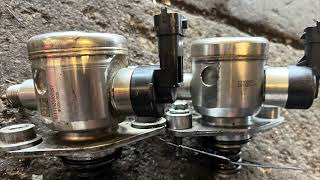
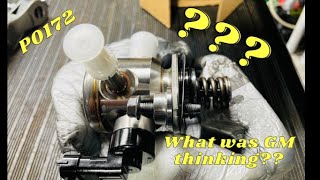
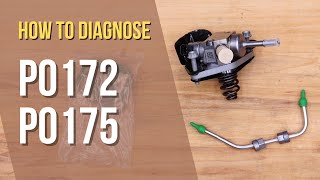
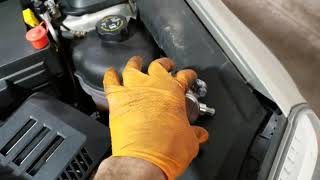
- Assuming the cause is a dirty MAF sensor or clogged air filter without first performing the simple dipstick smell test 🎬 Watch: How to locate and diagnose the high pressure pump for fuel contamination.
Most Likely Causes
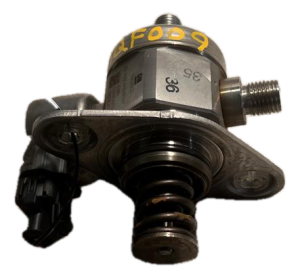
- High-Pressure Fuel Pump Failure 🔴 High Probability → Shop Fuel Pump A known issue where the fuel pump plunger shaft seal wears, allowing fuel to leak into the crankcase. This was addressed by GM Special Coverage Adjustment #12313 for the 2.4L engine. The issue is extremely common on the 2.4L LAF engine shared with the Equinox and Terrain. The 3.6L V6 also has known high-pressure fuel pump issues, though they are less frequent than the timing chain problems on that engine.
How to confirm: The most definitive sign is smelling fuel in the engine oil and seeing a rising oil level on the dipstick. A technician can also pull the PCV hose while monitoring fuel trims; if the trims improve (move toward 0%), it confirms fuel vapor is being sucked from the crankcase.
Typical fix: Replace the high-pressure fuel pump, the one-time-use fuel feed pipe, and perform an engine oil and filter change. The contaminated oil must be drained to prevent engine damage.
Est. part cost: $200-$450 (including the required fuel line) - Leaking Fuel Injector(s) 🟡 Medium Probability → Shop Fuel Injector Direct injectors operate under very high pressure and can be a failure point, though less common than the HPFP for this specific code.
How to confirm: A fuel pressure leak-down test can show if an injector is stuck open. A technician can also use a scan tool to perform a fuel injector balance test or check spark plugs for signs of a rich condition in a specific cylinder. A spark plug from a cylinder with a leaking injector will often be black and sooty.
Typical fix: Identify and replace the faulty fuel injector(s).
Est. part cost: $50-$150 per injector - Faulty Mass Airflow (MAF) Sensor ⚪ Low Probability → Shop Fuel Injection Air Flow Meter
How to confirm: A dirty MAF sensor can be cleaned. A technician can monitor MAF readings with a scan tool; for a 2.4L engine, grams per second at idle should be around 2.4-4.0 g/s. An over-reporting MAF will cause a rich condition.
Typical fix: First, try cleaning the sensor with a dedicated MAF sensor cleaner. If the problem persists, replace the sensor.
Est. part cost: $70-$200 - Faulty Oxygen (O2) Sensor ⚪ Low Probability → Shop Oxygen Sensor
How to confirm: A failing upstream O2 sensor (Bank 1, Sensor 1) can get 'lazy' and send a false lean signal, causing the ECM to add too much fuel. However, this is an uncommon failure mode; O2 sensors more often fail in a way that causes lean codes. A technician can graph the O2 sensor's voltage to see if it is responding correctly.
Typical fix: Replace the Bank 1 upstream oxygen sensor.
Est. part cost: $50-$120
Rare But Worth Checking
- EVAP Purge Solenoid Stuck Open: → Shop Vapor Canister If the evaporative emissions purge solenoid gets stuck open, it can allow un-metered fuel vapor from the charcoal canister to enter the engine, creating a rich condition. This part is located on the engine, not to be confused with the vent solenoid near the tank.
- Faulty Fuel Rail Pressure Sensor: On direct injection engines, a faulty fuel rail pressure sensor can send incorrect data to the ECM, causing improper fuel delivery. A loose wire or bad connector to this sensor can also be the culprit. One owner on a forum with a P0172 eventually got a P0191 (Fuel Rail Pressure Sensor Circuit) code.
Diagnosis Steps
- Check the engine oil dipstick. Pull it out and smell it. If it has a strong odor of raw gasoline, the high-pressure fuel pump is the most likely cause. Also, check if the oil level is above the 'Full' mark.
- If no fuel smell is present, use an OBD-II scanner to check the short-term and long-term fuel trim values for Bank 1. For a P0172 code, you will see highly negative numbers (e.g., -20% or more) as the ECM tries to pull fuel out.
- As a secondary confirmation for fuel in the crankcase, let the engine run for a few minutes, then disconnect the fresh air PCV hose from the intake. If the fuel trims on the scanner start to improve (move toward 0), it's a strong sign that the PCV system is sucking fuel vapors from the oil, confirming the internal leak.
- Inspect the air intake system for any blockages and check the engine air filter to ensure it's clean.
- Inspect all vacuum hoses for cracks, disconnections, or leaks.
- Clean the Mass Airflow (MAF) sensor with a dedicated cleaner. Re-evaluate fuel trims after cleaning.
- If the above steps do not resolve the issue, a more advanced diagnosis is needed, including testing fuel pressure, performing a fuel injector leak-down test, and testing the oxygen sensor's function.
Parts You'll Likely Need
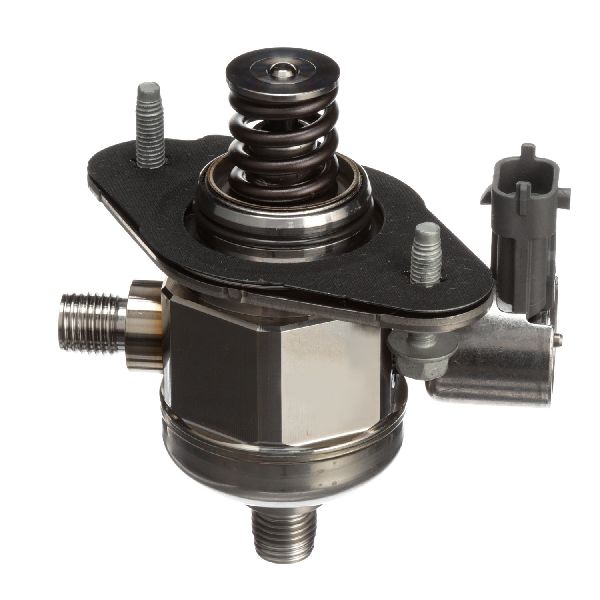
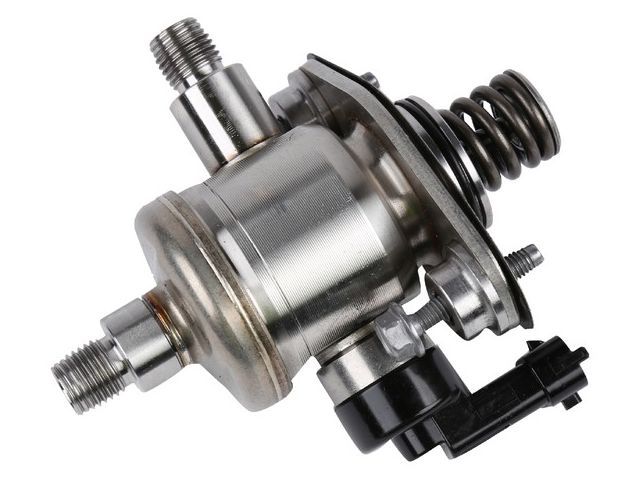
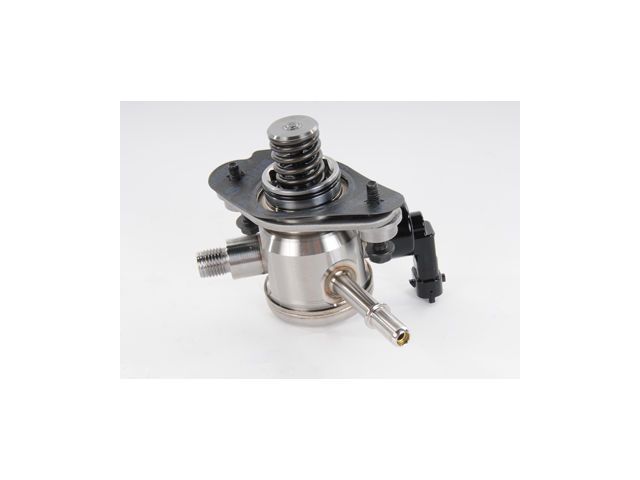
- High-Pressure Fuel Pump
(OEM #12641847 (may be superseded by 12677329 or 12669595))— This is the most common failure point leading to a P0172 code on this vehicle, especially for the 2.4L engine, due to a known seal failure issue. Using an OEM or ACDelco pump is highly recommended, as some aftermarket pumps have been reported to cause other codes like P0191.
Trusted brands: ACDelco, GM Genuine Parts
OEM price range: $250-$400
Aftermarket price range: $150-$300 - High-Pressure Fuel Feed Pipe
(OEM #12608374)— This is a one-time-use fuel line that connects to the high-pressure fuel pump. It must be replaced whenever the pump is replaced to ensure a proper, leak-free seal.
Trusted brands: GM Genuine Parts
OEM price range: $40-$60
Aftermarket price range: $25-$40 - Engine Oil and Filter — If the high-pressure fuel pump has failed and contaminated the oil, an oil and filter change is mandatory to restore proper lubrication and prevent engine damage.
Trusted brands: ACDelco, Mobil 1, Pennzoil
OEM price range: $40-$70
Aftermarket price range: $30-$50
Related Codes That Often Appear With This One
- P0300 — A random/multiple cylinder misfire code can occur because the rich fuel mixture is fouling spark plugs and causing incomplete combustion.
- P0175 — System Too Rich (Bank 2). This would only appear on the 3.6L V6 engine and would indicate the problem is affecting both cylinder banks, pointing towards a common cause like the MAF sensor or fuel pressure issues.
- P0191 — Fuel Rail Pressure Sensor Circuit Range/Performance. This code can appear if the high-pressure fuel pump is failing or if a new, especially aftermarket, pump is defective.
Technical Service Bulletins (TSBs) & Recalls
- G-176360 / G-171837 / Bulletin #12313 (and revisions A, B, C, D): Addresses a wearing fuel pump plunger shaft seal that allows fuel to leak into the crankcase, causing a P0172 code, on 2.4L engines. Also covers a related timing chain issue.
- PIP4783B: A Preliminary Information bulletin specifically for technicians that describes the P0172 code, engine run-on, and fuel contamination in the crankcase as a result of the high pressure fuel pump leaking.
Platform-Specific Known Issues
- GM issued Special Coverage Adjustment #12313 for 2010-2011 LaCrosse models with the 2.4L LAF engine. It addresses a condition where the fuel pump plunger shaft seal may wear and allow fuel to leak into the crankcase, setting a P0172 DTC. This coverage extended the warranty for this specific repair to 10 years or 120,000 miles from the vehicle's in-service date. The same bulletin also covered a known timing chain stretching issue.
Mechanic-Grade Diagnostic Values
- Long-Term Fuel Trim (LTFT) — expected: Between -10% and +10%. Failure: A sustained negative value of -20% or more indicates the ECM is aggressively removing fuel to counteract a severe rich condition.
- Mass Airflow (MAF) Sensor at Idle (2.4L Engine) — expected: Approximately 2.4 to 4.0 g/s at normal operating temperature.. Failure: Readings significantly higher than expected can cause the ECM to inject too much fuel, leading to a rich condition.
- High-Side Fuel Pressure (HPFP) at Idle — expected: Desired and actual pressure should be around 500 PSI.. Failure: If the actual pressure does not drop to match the low-side pressure (around 70 PSI) when commanded to 0 PSI during deceleration, it indicates a faulty HPFP.
- Low-Side Fuel Pressure (In-Tank Pump) — expected: Approximately 55-61 PSI with key-on, engine-off.. Failure: Pressure that is too low could indicate a weak in-tank pump, but this is not a common cause for P0172 on this platform.
Scan Tool Commands That Help
- GDS2 / Tech2 / Professional Scan Tool: Fuel Trim Reset — After replacing a component like the high-pressure fuel pump or cleaning the MAF sensor, resetting the learned fuel trim values forces the ECM to relearn the air/fuel mixture from a baseline, which can confirm if the repair was successful.
- GDS2 / Tech2 / Professional Scan Tool: Fuel Injector Balance Test — This command individually fires each injector and measures the pressure drop to identify if one injector is flowing significantly more fuel than the others, indicating it is leaking or stuck open.
Wiring & Ground Locations
- G101 — Located at the lower front of the engine, on the block.. This ground serves the Engine Control Module (ECM), Transmission Control Module (TCM), and the Mass Air Flow (MAF) Sensor. A poor connection here can cause erratic sensor readings and incorrect fuel calculations.
- G103 — Located on the left frame rail, sometimes under the Starter Generator Control Module (SGCM) bracket, or on the cowl above the brake booster.. This is a critical ground for the Body Control Module (BCM) and the Data Link Connector (DLC). A poor connection can cause communication issues with scan tools or other modules, complicating diagnosis.
- MAF Sensor Connector — On the air intake tube, just after the air filter box.. The connector has a red locking tab that must be pulled back before the black release tab can be pressed. The sensor itself is held by two T20 Torx screws. A loose or corroded connection can cause incorrect airflow readings.
Real Owner Repair Stories
- ScannerDanner.com Forum (2012 Chevy Equinox 2.4L (shared engine/problem)) — P0172, P0191, stalling at stops, engine reduced power mode.
❌ Tried (didn't work) Replacing intake and exhaust solenoids (aftermarket), Replacing fuel rail pressure sensor (aftermarket)
✅ What actually fixed it The owner had already replaced the high-pressure fuel pump with an aftermarket unit, which did not solve the problem. The final fix was replacing the aftermarket HPFP with a new OEM (ACDelco) high-pressure fuel pump. The faulty aftermarket pump would not allow fuel rail pressure to drop below 290 PSI on deceleration, causing the engine to flood, while the new OEM pump correctly dropped to 70 PSI. - YouTube - Foreign Werks (2013 Chevy Equinox 2.4L (shared engine/problem)) — P0172, oil smelled like gasoline, engine sputtering/dieseling on shut-off.
✅ What actually fixed it The problem was diagnosed by observing negative fuel trims, smelling fuel on the dipstick, and engine run-on. The fix was replacing the high-pressure fuel pump with a new ACDelco unit and performing an oil change. The check engine light went out immediately after the repair.
OEM Part Supersession History
12639694 (and others like 12633423, 12608371)→12641847— Standard part evolution and consolidation by the manufacturer.
Heads up: While many aftermarket pumps exist, forum and technician reports strongly indicate that using a non-OEM (i.e., not ACDelco or GM Genuine) high-pressure fuel pump can lead to immediate new codes, particularly P0191 (Fuel Rail Pressure Sensor Performance), and a return of the rich condition. It is critical to use an OEM pump for this repair.
Model Year Variations Within This Range
- 2011: For the 2011 model year, Buick discontinued the mid-level 3.0L V6 engine option, making the 2.4L I4 the standard engine and the 3.6L V6 the optional upgrade. This simplifies diagnosis for 2011 models, as only two engines are possible.
Helpful Videos
Used OEM Parts in Stock
New Aftermarket Parts Available


The information in this article is provided for general reference and educational purposes only. Vehicle specifications, procedures, and part compatibility can vary by production date, trim level, and region. Always consult your vehicle's factory service manual and verify part numbers before purchasing or performing repairs. Safety-critical components such as airbags, seat belts, and braking systems should be installed by a qualified professional.
- Buick LACROSSE:
- 🧭 Diagnostic Flowchart
- 🎬 Helpful Videos
- 🛍️ Shop This Part
- What's Unique About the 2010-2011 Buick LACROSSE
- Symptoms You May Notice
- Most Likely Causes
- Rare But Worth Checking
- Diagnosis Steps
- Parts You'll Likely Need
- Related Codes That Often Appear With This One
- Technical Service Bulletins (TSBs) & Recalls
- Platform-Specific Known Issues
- Mechanic-Grade Diagnostic Values
- Scan Tool Commands That Help
- Wiring & Ground Locations
- Real Owner Repair Stories
- OEM Part Supersession History
- Model Year Variations Within This Range
- 🎟️ Get 5% Off