

P0172 on 2011-2018 Buick Regal: Causes and Fixes for System Too Rich
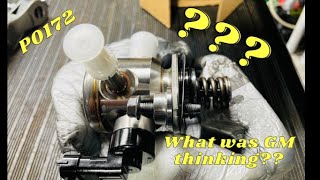
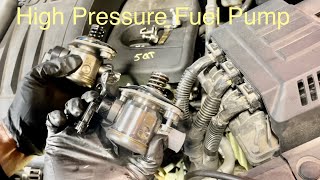
On 2011-2018 Buick Regals, especially those with the 2.0L Turbo and 2.4L Ecotec direct-injected engines, the P0172 code is overwhelmingly caused by a failing high-pressure fuel pump (HPFP). The pump's internal seal leaks fuel directly into the engine oil, causing a rich condition. The definitive sign is a strong smell of gas on the oil dipstick. The fix is replacing the HPFP (OEM part #12641847 is common for the 2.4L) and performing an oil change.
- For a 2011-2018 Buick Regal, P0172 is most often caused by a failing high-pressure fuel pump leaking fuel into the engine oil.
- The first and most important diagnostic step is to check the engine oil dipstick for a strong smell of gasoline.
- Driving with this condition is risky, as fuel-diluted oil cannot properly lubricate the engine, leading to a risk of major damage.
- Do not replace the oxygen sensor or other parts until you have ruled out the high-pressure fuel pump.
- An oil and filter change is mandatory when replacing the high-pressure fuel pump to remove the contaminated oil.
What's Unique About the 2011-2018 Buick REGAL
The 2011-2018 Buick Regal, particularly models with the 2.0L Turbo and 2.4L Ecotec direct-injection engines, has a well-documented issue with the high-pressure fuel pump (HPFP). Manufacturer Technical Service Bulletins (TSBs) confirm that the pump's plunger shaft seal can wear out, allowing raw fuel to leak into the crankcase and mix with the engine oil. [Bulletin #G-176360, Bulletin #G-171837] This specific failure directly leads to a P0172 code as the fuel vapors from the contaminated oil are drawn into the intake via the PCV system, creating an un-commanded rich mixture. This specific failure is far more common on this platform than typical causes like O2 or MAF sensors.
🎬 Watch: Understanding common causes for a P0172 rich code.Diagnostic Flowchart
Tap your situation to follow the diagnostic path that matches what you're seeing on this vehicle.
Generation note: This range covers the fifth generation (2011-2017) and the first year of the sixth generation (2018). Both generations used direct-injected four-cylinder engines (like the 2.4L LAF/LEA and 2.0L LHU/LTG Turbo) that utilize a high-pressure fuel pump, making them susceptible to the common failure that causes this code.
Symptoms You May Notice
- Check Engine Light is on
- Strong smell of fuel from the exhaust or, more definitively, in the engine oil on the dipstick.
- Rough or unstable idle, sometimes getting worse at a stoplight.
- Engine hesitation or stumbling on acceleration.
- Reduced fuel economy.
- Black smoke from the exhaust.
- Engine continuing to run for a moment after being shut off ("dieseling" or run-on). [9, Bulletin #G-176360]
- Engine may be difficult to start.
- Replacing the oxygen sensor first. While an O2 sensor can cause a P0172, on this specific vehicle the high-pressure fuel pump is a much more likely culprit. Always check the oil for a fuel smell before replacing other parts.
- Replacing the HPFP with a cheap aftermarket unit. Many owners and technicians report that non-OEM pumps can cause a P0191 (Fuel Rail Pressure Sensor Circuit Range/Performance) code and drivability issues shortly after installation. It is highly recommended to use a genuine GM or ACDelco part.
Most Likely Causes
- Leaking High-Pressure Fuel Pump (HPFP) 🔴 High Probability → Shop Fuel Pump This is a known, widespread issue documented in GM Technical Service Bulletins G-176360, G-171837, and PIP4783B for the 2.4L and 2.0L Ecotec engines. The pump's internal seal fails, leaking fuel directly into the crankcase. Forum and owner discussions confirm this is the primary cause of P0172 on these vehicles.
How to confirm: The most definitive sign is a strong smell of gasoline on the engine oil dipstick. The oil level may also appear to be overfull as it mixes with fuel. A more advanced check is to pull the PCV hose from the intake manifold; if the fuel trims on a scan tool immediately start to improve (become less negative), it confirms fuel vapors are being ingested from the crankcase.
Typical fix: Replace the high-pressure fuel pump and change the contaminated engine oil and filter. It is strongly recommended to use an OEM/ACDelco pump, as aftermarket units have been reported to fail and cause a P0191 code.
Est. part cost: $200-$500 - Faulty Mass Airflow (MAF) Sensor 🟡 Medium Probability → Shop Fuel Injection Air Flow Meter
How to confirm: A dirty or failing MAF sensor will incorrectly measure the amount of air entering the engine, causing the computer to add the wrong amount of fuel. It can be cleaned with a dedicated MAF sensor cleaner as a first step. If cleaning doesn't work, monitoring its readings on a scan tool can confirm if it's faulty.
Typical fix: Clean the MAF sensor. If the problem persists, replace the sensor.
Est. part cost: $60-$150 - Faulty Upstream Oxygen (O2) Sensor ⚪ Low Probability → Shop Oxygen Sensor
How to confirm: An O2 sensor that is stuck reading lean will falsely tell the computer the engine needs more fuel, causing an actual rich condition. A scan tool can be used to monitor the O2 sensor's voltage; it should fluctuate rapidly between approximately 0.1V and 0.9V. If it's stuck or slow to respond, it's likely bad.
Typical fix: Replace the upstream (Bank 1, Sensor 1) oxygen sensor.
Est. part cost: $50-$120 - Leaking Fuel Injector(s) ⚪ Low Probability → Shop Fuel Injector
How to confirm: A fuel injector can get stuck open or leak, dripping excess fuel into a cylinder. This can sometimes be isolated by examining the spark plugs for signs of running rich (black, sooty deposits) on a specific cylinder. A fuel pressure leak-down test can also point to a leaking injector.
Typical fix: Replace the faulty fuel injector(s).
Est. part cost: $70-$200 per injector
Rare But Worth Checking
- Stuck Open EVAP Purge Valve: → Shop Vapor Canister If the evaporative emissions purge valve sticks open, it can allow un-metered fuel vapors from the charcoal canister to be drawn into the engine at the wrong time, creating a vacuum leak that disrupts the air-fuel mixture and can cause a rich condition. Symptoms can include rough idle and difficulty starting after refueling.
- Fuel in Oil from Short-Trip Driving: TSB 18-NA-246 notes that frequent short trips where the engine doesn't reach full operating temperature can lead to fuel accumulation in the oil. This can also cause a P0172 code as vapors are pulled through the PCV system. The fix in this case is an oil change and potentially an ECM update or revised PCV valve, not necessarily a new HPFP.
Diagnosis Steps
- Read the code with an OBD-II scanner and check for any other accompanying codes, especially P0191, P0300, or oil pressure codes like P06DE/P0521.
- Perform the definitive sensory check: Open the oil cap or pull the dipstick and smell for a strong gasoline odor. If fuel is present in the oil, the high-pressure fuel pump is the primary suspect.
- If the HPFP is suspected, confirm by pulling the PCV hose from the intake manifold while the engine is running and monitoring fuel trims with a scan tool. If short-term fuel trim moves rapidly from highly negative (e.g., -25%) toward 0% or positive, it confirms the engine is ingesting fuel vapor from the crankcase.
- If no fuel smell is in the oil, inspect the air intake system for a dirty air filter or any obstructions.
- Inspect and clean the Mass Airflow (MAF) sensor using a dedicated cleaner.
- Using a scan tool, monitor the upstream O2 sensor voltage. It should switch rapidly between approximately 0.1V and 0.9V. If it's stuck or slow to respond, it may be faulty.
- Check for a stuck-open EVAP purge valve, which can cause a rough idle and starting issues after refueling.
- If other causes are ruled out, perform a fuel pressure leak-down test to check for leaking injectors.
Parts You'll Likely Need
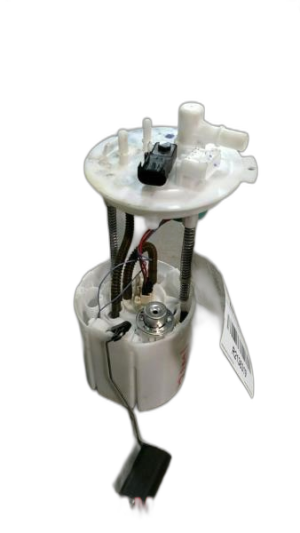
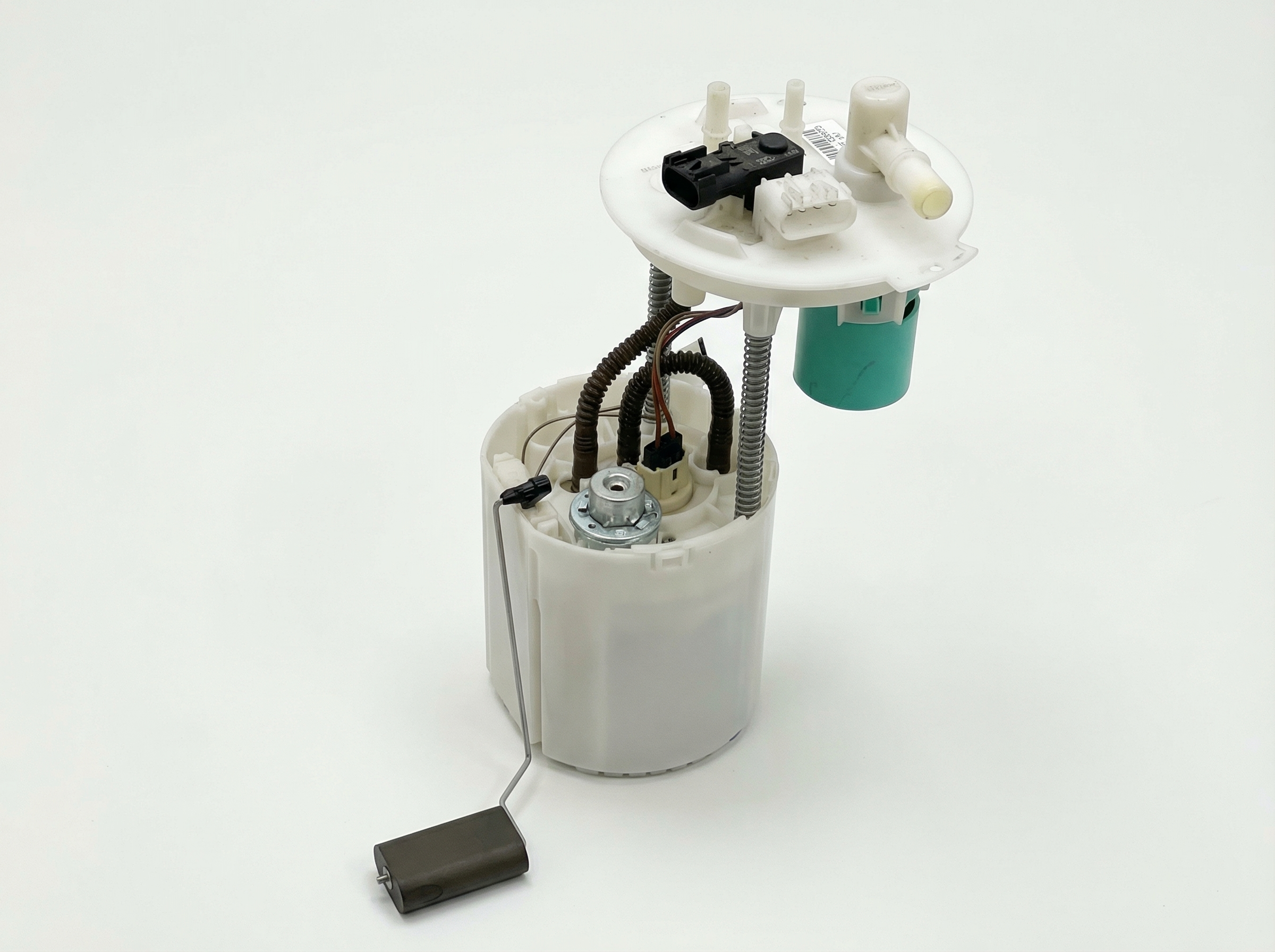
- High-Pressure Fuel Pump
(OEM #12641847, 12633115 (Common for 2.4L); 12658478, 12629135 (Common for 2.0L))— This is the most frequent point of failure leading to a P0172 code on these specific engines, as documented by TSBs and extensive owner reports. Using an OEM part (ACDelco/GM Genuine) is critical to avoid further issues.
Trusted brands: ACDelco (GM Original Equipment), Bosch
OEM price range: $350-$550
Aftermarket price range: $150-$350 - Engine Oil and Filter — If the HPFP has failed and leaked fuel into the crankcase, the oil is contaminated and MUST be changed to prevent severe engine lubrication failure and potential damage.
Trusted brands: ACDelco, Mobil 1, Pennzoil
OEM price range: $50-$90
Aftermarket price range: $40-$70 - Mass Airflow (MAF) Sensor — A dirty or faulty MAF sensor is a common cause for fuel mixture codes on many vehicles. It's a likely secondary cause if the HPFP is not the issue.
Trusted brands: ACDelco, Delphi, Denso
OEM price range: $120-$200
Aftermarket price range: $60-$150
Related Codes That Often Appear With This One
- P0191 — This code relates to 'Fuel Rail Pressure Sensor Circuit Range/Performance'. It often appears with P0172 when the high-pressure fuel pump is failing. It can also appear *after* replacing the HPFP if a low-quality aftermarket part is used.
- P0300 — This code indicates a 'Random/Multiple Cylinder Misfire'. A severe rich condition from either a leaking HPFP or faulty injectors can foul spark plugs and cause misfires across multiple cylinders.
- P06DE / P0521 — These codes relate to engine oil pressure. TSB 18-NA-246 explicitly links them with P0172. This is because fuel leaking into the crankcase dilutes the oil, lowering its viscosity and causing the oil pressure to drop below expected levels.
Technical Service Bulletins (TSBs) & Recalls
- 18-NA-246
- G-176360
- G-171837
- PIP4783B
Platform-Specific Known Issues
- TSBs G-176360 and G-171837 specifically call out the fuel pump plunger shaft seal wearing and allowing fuel to leak into the crankcase on 2011 models, causing P0172.
- TSB 18-NA-246 notes that P0172 can appear alongside oil pressure codes P06DE and P0521 on 2014-2018 models.
Mechanic-Grade Diagnostic Values
- Short-Term Fuel Trim (STFT) & Long-Term Fuel Trim (LTFT) — expected: Fluctuating between -10% and +10% at steady RPM.. Failure: For a P0172 rich condition, values will be consistently negative, often -10% or lower, as the ECM tries to subtract fuel.
- Mass Airflow (MAF) Sensor Reading at Idle — expected: For a 2.4L engine, approximately 3-5 g/s at normal operating temperature. For a 2.0L engine, approximately 3.4-3.8 g/s. Readings should rise smoothly with RPM.. Failure: Readings that are significantly higher than expected can indicate a faulty sensor tricking the ECM into adding too much fuel. Readings that are too low can indicate a vacuum leak downstream of the sensor.
- Low-Pressure Fuel System Pressure (In-tank pump) — expected: 40.5–47 PSI (280–325 kPa) with key-on, engine-off. Pressure should hold steady.. Failure: Pressure below 40 PSI can indicate a weak in-tank pump, which would typically cause a lean code, not a rich one. This test helps rule out the low-pressure side.
- High-Pressure Fuel System Pressure (HPFP) — expected: Varies with engine load. At idle, should be around 300-500 PSI (2-3.4 MPa). Under load, can rise to over 2,000 PSI.. Failure: While a P0172 is not directly a pressure code, erratic high-side pressure readings on a scan tool, especially when accompanied by P0089 or P228D, can point to a failing HPFP or incorrect camshaft timing affecting the pump lobe.
- Fuel Rail Pressure Sensor Voltage — expected: Signal typically ranges from 0.5 volts at atmospheric pressure (engine off) to 4.5 volts at maximum system pressure.. Failure: A voltage reading that is stuck or does not correlate with the actual pressure commanded by the ECM can indicate a faulty sensor, though this is less common than HPFP failure for P0172.
Scan Tool Commands That Help
- GDS2 / Tech2: Fuel Trim Reset — After replacing a component like the HPFP, MAF sensor, or O2 sensor, resetting fuel trims will force the ECM to relearn the fuel strategy immediately, rather than slowly adapting over time. This helps confirm if the fix was successful.
- GDS2 / Professional Scan Tool: Fuel Injector Balance Test — If a leaking injector is suspected, this bidirectional test can command each injector to fire for a set duration while monitoring the corresponding fuel pressure drop. An injector that causes a larger or faster pressure drop than the others is likely leaking.
Real Owner Repair Stories
- Reddit user in r/mechanic (2017 Chevy Equinox with 2.4L Ecotec engine (shared with the Regal)) — Intermittent fuel trim codes, eventually leading to a persistent P2097 (Post Catalyst Fuel Trim System High Limit) after other issues were fixed.
❌ Tried (didn't work) Mechanic replaced engine, catalytic converter, and both O2 sensors., Mechanic suspected E85 fuel use, drained tank, and replaced the fuel sending unit.
✅ What actually fixed it The owner discovered the high-pressure fuel pump (HPFP) had been left very loose by the previous mechanic. Because the pump is driven by the camshaft, the looseness caused it to pump insufficient volume. Properly installing a new HPFP resolved the major fuel delivery issues, though a separate lean code appeared later. This story highlights the HPFP as a critical failure point, even when symptoms aren't the classic P0172.
OEM Part Supersession History
12633115→12641847— Part revision and consolidation for the 2.4L Ecotec High-Pressure Fuel Pump.
Heads up: While 12641847 is the common replacement, always verify the correct part number with the vehicle's VIN, as mid-generation changes can occur.13502510→13502903— Supersession for the fuel tank pressure sensor, which is part of the low-pressure EVAP system and can be a less common cause of fuel mixture issues.
Model Year Variations Within This Range
- 2011 vs. earlier/later GM models: GM bulletin PIP5203 highlights a specific change in the intake camshaft actuator between 2010 and 2011 2.4L LAF engines. The 2010 model used a gray intake actuator, while the 2011 model used a black one. Installing the wrong year's camshaft or actuator can mis-time the high-pressure fuel pump lobe, leading to severe fuel pressure issues and codes like P0172.
Helpful Videos
![How to Fix P0172 Engine Code in 2 Minutes [2 DIY Methods / Only $8.77]](https://img.youtube.com/vi/PpFuGHxnD0g/mqdefault.jpg)

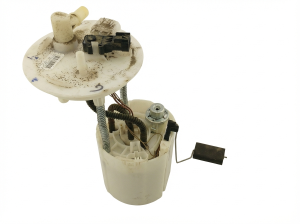
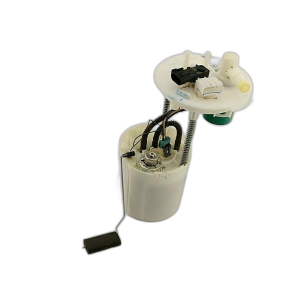
We Have This Part in Stock

The information in this article is provided for general reference and educational purposes only. Vehicle specifications, procedures, and part compatibility can vary by production date, trim level, and region. Always consult your vehicle's factory service manual and verify part numbers before purchasing or performing repairs. Safety-critical components such as airbags, seat belts, and braking systems should be installed by a qualified professional.
- Buick REGAL:
- 🧭 Diagnostic Flowchart
- 🎬 Helpful Videos
- 🛍️ Shop This Part
- What's Unique About the 2011-2018 Buick REGAL
- Symptoms You May Notice
- Most Likely Causes
- Rare But Worth Checking
- Diagnosis Steps
- Parts You'll Likely Need
- Related Codes That Often Appear With This One
- Technical Service Bulletins (TSBs) & Recalls
- Platform-Specific Known Issues
- Mechanic-Grade Diagnostic Values
- Scan Tool Commands That Help
- Real Owner Repair Stories
- OEM Part Supersession History
- Model Year Variations Within This Range
- 🎟️ Get 5% Off