

P0172 on 2010-2017 Cadillac Escalade: Rich Fuel Causes & Fixes
On a 2010-2017 Cadillac Escalade, code P0172 means the engine is running too rich. For 2015-2017 models with the L86 V8, the most likely cause is a failing high-pressure fuel pump (HPFP) leaking fuel into the oil. On 2010-2014 models with the L94 V8, the primary suspect is an incorrect fuel alcohol reading that can be reset with a scan tool, or a dirty MAF sensor.
- For 2015-2017 models, immediately suspect the high-pressure fuel pump (HPFP). Check your oil for a gas smell.
- For 2010-2014 models, the first step after checking the air filter should be to check the 'Fuel Alcohol Content' with a scan tool.
- Do not replace the oxygen sensor first; it is almost always doing its job correctly by reporting the rich condition.
- A rich condition can cause expensive damage to your catalytic converter and internal engine components if ignored.
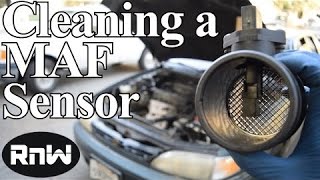
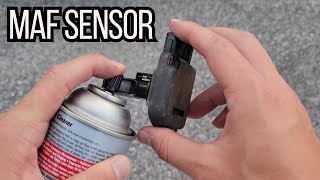
- Cleaning the Mass Air Flow (MAF) sensor is a cheap and easy diagnostic step that can sometimes fix the problem.
What's Unique About the 2010-2017 Cadillac ESCALADE
The 2010-2017 Escalade range spans two key generations with different fuel systems, which changes the diagnostic approach for P0172. The 2010-2014 models (GMT900 platform) use a port-injected 6.2L L94 V8 and are Flex Fuel capable. On these, an incorrect 'learned' fuel alcohol content is a primary cause, often fixed without replacing parts by using a scan tool. Conversely, the 2015-2017 models (K2XX platform) feature a direct-injected 6.2L L86 V8. On these, the high-pressure fuel pump (HPFP) is a very common failure point that leaks fuel internally into the crankcase, causing this code.
Diagnostic Flowchart
Tap your situation to follow the diagnostic path that matches what you're seeing on this vehicle.
Generation note: This range covers two Escalade generations. The 3rd Gen (2010-2014) uses a port-injected 6.2L V8 (L94) where fuel alcohol content and MAF sensor issues are common. The 4th Gen (2015-2017) uses a direct-injected 6.2L EcoTec3 V8 (L86), where the high-pressure fuel pump is a frequent cause.
Symptoms You May Notice
- Check Engine Light illuminated
- Poor fuel economy
- Strong smell of gasoline from the exhaust or in the engine bay
- Black smoke from the exhaust pipe, especially on cold starts
- Rough or rolling idle
- Engine hesitation or sputtering on acceleration
- Misfiring or a flashing Check Engine Light (may set P0300-P0308 codes)
- Harsh shifting (as noted in TSB #PIP5446A)
- Engine 'dieseling' or running on for a few seconds after shutoff
- Engine oil level appears overfull and smells strongly of gasoline
- Immediately replacing the Bank 1 oxygen sensor. The O2 sensor is usually accurately reporting the rich condition, not causing it. The problem almost always lies with the fuel delivery, air metering, or crankcase vapor systems.
Most Likely Causes
- Failing High-Pressure Fuel Pump (HPFP) 🔴 High Probability → Shop Fuel Pump This is a well-documented, number one cause on the 2015-2017 models with the direct-injected 6.2L L86 V8. The pump's internal seals fail, causing it to leak high-pressure fuel directly into the crankcase. The PCV system then pulls these fuel vapors into the intake manifold, creating a rich condition that the ECM cannot compensate for.
How to confirm: Check the engine oil dipstick for a strong gasoline smell and a rising oil level. A scan tool will show long-term fuel trims at a significant negative value (e.g., -20% to -35%). A diagnostic test is to unplug the PCV line from the intake manifold and plug the port; if fuel trims quickly return to normal, it confirms fuel vapor is entering from the crankcase, pointing to the HPFP.
Typical fix: Replace the high-pressure fuel pump and the connecting fuel line. An oil and filter change is mandatory to remove the fuel-contaminated oil.
Est. part cost: $250-$500 - Incorrect Fuel Alcohol Content Reading 🔴 High Probability Specific to 2010-2014 Flex Fuel models (L94 engine). The ECU 'learns' the ethanol percentage without a physical sensor, using oxygen sensor readings after refueling. Bad fuel, a weak battery, or clearing codes can cause the learned value to be erroneously high (e.g., 57%), forcing the ECM to inject more fuel and trigger P0172/P0175. This is detailed in TSB #PIP4792D.
How to confirm: Use a scan tool to view the 'Fuel Alcohol Content' parameter in the ECM data. If it shows a high percentage (e.g., over 15-20%) when you know the tank is filled with regular gasoline (E10 or less), this is the likely cause.
Typical fix: Use a capable scan tool to perform the 'Fuel Composition Reset' or 'Alcohol Fuel Trim Reset' function. No parts are replaced. After the reset, fuel trims should immediately return to near 0%. In some cases, an ECM reprogram with the latest calibration may be required per TSB #PIP4792D.
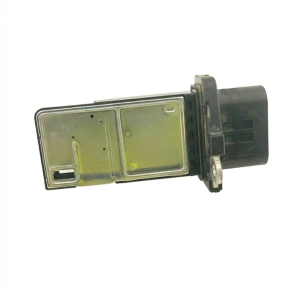
Est. part cost: $0 - Dirty or Faulty Mass Air Flow (MAF) Sensor 🟡 Medium Probability → Shop Fuel Injection Air Flow Meter A MAF sensor contaminated with dirt, oil (from over-oiled aftermarket air filters), or debris will under-report the amount of air entering the engine, causing the ECM to add too much fuel. TSB #PIP5446A also notes that for 2014+ models, 'cast flashing' (excess plastic molding) in the air filter housing near the sensor can disrupt airflow and cause rich/lean codes.
How to confirm: Inspect the sensor's delicate wires for contamination. Monitor the g/s reading on a scan tool; it should be stable at idle (around 5-7 g/s for a 6.2L V8) and increase smoothly with RPM. Check the air filter housing for any plastic flashing near the sensor mount.
Typical fix: Clean the MAF sensor with a dedicated MAF sensor cleaner spray. Do not touch the wires. If cleaning doesn't resolve the issue or the sensor is damaged, replace it. If casting flash is found, replace the air filter housing lid.
Est. part cost: $10-$150 - Leaking Fuel Injector(s) 🟡 Medium Probability → Shop Fuel Injector An injector can become stuck partially open or leak fuel after the engine is shut off, leading to excess fuel in one or more cylinders. This can cause hard starting when hot and will directly contribute to a rich condition on the affected bank.
How to confirm: Perform a fuel pressure leak-down test; pressure should hold steady after the pump is turned off. A professional can perform an injector balance test with a scan tool. Another method is to pull the spark plugs; a plug that is black and sooty or smells of raw gas can indicate a leaking injector in that cylinder.
Typical fix: Replace the faulty fuel injector. For direct injection models (2015+), this is a more involved job. GM TSB 20-NA-098 notes that injectors are flow-matched and should be replaced with the correct part number.
Est. part cost: $50-$200 per injector - Stuck-Open EVAP Purge Valve ⚪ Low Probability → Shop Vapor Canister If the purge valve sticks open, it can allow un-metered fuel vapors from the gas tank to be drawn into the engine at idle when it should be closed, creating a rich mixture.
How to confirm: With the engine running at idle, disconnect the vapor line from the purge valve and feel for suction; there should be none. Alternatively, with a scan tool, monitor fuel trims, then command the purge valve closed (0%) and disconnect the electrical connector. If fuel trims improve, the valve is leaking.
Typical fix: Replace the EVAP purge valve/solenoid.
Est. part cost: $25-$75
Rare But Worth Checking
- Faulty Upstream Oxygen (O2) Sensor: → Shop Oxygen Sensor While a possible cause, O2 sensors more commonly fail in a way that causes a lean code (P0171). It's rare for one to get 'stuck' or biased, reading rich, but it can happen. It should be one of the last parts to check after verifying fuel delivery and air metering. A lazy sensor can also contribute to incorrect fuel alcohol learning on 2010-2014 models.
- Short Driving Cycles (2015+): GM TSB 18-NA-246 notes that on some direct injection engines, frequent short trips without the engine fully warming up can lead to fuel accumulation in the crankcase, causing a P0172 code. The fix involves an oil change, potentially a new PCV valve design, and an ECM software update. This should be considered if the vehicle is used primarily for short-distance driving.
Diagnosis Steps
- Read all fault codes with a scanner. Note if P0175 is also present, which indicates a problem affecting both engine banks.
- Use a scan tool to observe live data. Check Short-Term (STFT) and Long-Term (LTFT) Fuel Trims. For P0172, they will be significantly ne
Parts You'll Likely Need
- High-Pressure Fuel Pump
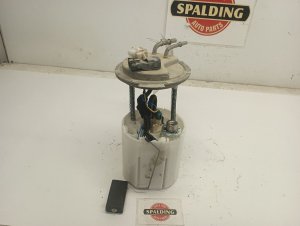
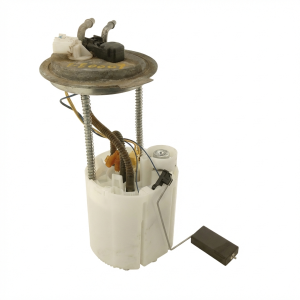
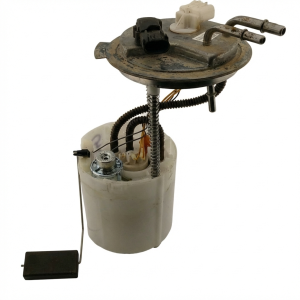
(OEM #12641847)— The most common cause for P0172 on 2015-2017 direct-injected models due to internal leaking. This part number supersedes previous versions like 12639694 and 12633423.
Trusted brands: ACDelco (GM Genuine), Bosch
OEM price range: $280-$500
Aftermarket price range: $150-$350 - Mass Air Flow (MAF) Sensor
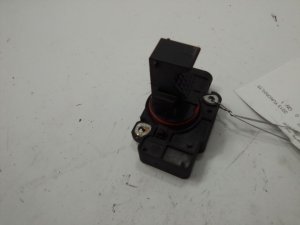
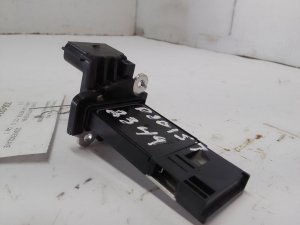
(OEM #23262343 (ACDelco for 2015-2017, verify by VIN))— A frequent cause of incorrect air-fuel mixture calculations across all years, often resolved by cleaning but sometimes requires replacement.
Trusted brands: ACDelco, Denso, Hitachi
OEM price range: $120-$200
Aftermarket price range: $50-$120 - MAF Sensor Cleaner — A low-cost first step for diagnosing a MAF-related rich condition before replacing the sensor.
Trusted brands: CRC, WD-40 Specialist
OEM price range: $10-$15
Aftermarket price range: $8-$12
Related Codes That Often Appear With This One
- P0175 — System Too Rich (Bank 2). This code for the passenger-side bank often appears with P0172 when the cause, like a faulty HPFP, MAF sensor, or incorrect fuel alcohol content, affects the entire engine.
- P0300 — Random/Multiple Cylinder Misfire. An excessively rich mixture can foul spark plugs and prevent proper combustion, leading to misfires.
- P0101 — Mass Air Flow (MAF) Circuit Range/Performance. This code may appear if the MAF sensor is the root cause of the incorrect fuel mixture readings, as noted in TSB #PIP5446A.
Technical Service Bulletins (TSBs) & Recalls
- PIP5446A: Addresses rough idle and fuel trim codes (P0172/P0175) caused by casting flash in the air filter housing near the MAF sensor on 2014+ models.
- PIP4792D: Details the issue of incorrect fuel alcohol content learning on 2010-2011 Flex Fuel models, causing rich codes, and recommends a reset and possible ECM reprogram.
- 18-NA-246: Discusses how frequent short driving trips can cause fuel to accumulate in the oil on some DI engines, leading to P0172. Recommends an oil change, updated PCV valve, and ECM software update.
Platform-Specific Known Issues
- On 2015-2017 models with direct injection, the high-pressure fuel pump is a primary suspect for P0172/P0175, often failing by leaking fuel into the crankcase.
- On 2010-2014 Flex Fuel models, an incorrect learned fuel alcohol value is a common, no-parts-needed fix, as outlined in TSB #PIP4792D.
- TSB #PIP5446A points to a possible manufacturing defect of 'cast flashing near the Mass Air Flow sensor' which can disrupt airflow and cause rich or lean codes.
Mechanic-Grade Diagnostic Values
- Long-Term Fuel Trim (LTFT) — expected: Between -10% and +10% at idle on a healthy engine.. Failure: A sustained negative value greater than -15% to -20% indicates the ECM is consistently removing fuel to correct a rich condition, triggering P0172.
- Mass Air Flow (MAF) Sensor Reading at Idle — expected: Approximately 6.0 to 8.0 grams/second (g/s) for a fully warm 6.2L V8 engine at idle.. Failure: A significantly lower reading (e.g., 3-4 g/s) suggests the sensor is under-reporting airflow, causing the ECM to command too much fuel.
- Low-Side Fuel Pressure (2010-2014 L94 Port Injection) — expected: 81-87 PSI.. Failure: Excessively high pressure could indicate a faulty fuel pressure regulator or a restriction in the return line, forcing too much fuel past the injectors.
- High-Side Fuel Pressure (2015-2017 L86 Direct Injection) — expected: Varies significantly with engine load, from ~300 PSI at idle to over 2,000 PSI under acceleration.. Failure: While a specific value isn't the primary indicator for a leaking HPFP, observing fuel in the oil is the key confirmation. A scan tool can monitor desired vs. actual pressure; large deviations can indicate a problem.
- Fuel Alcohol Content Percentage (2010-2014 L94) — expected: Should reflect the actual ethanol content of the fuel in the tank (e.g., 0-10% for standard gasoline).. Failure: An erroneously high value, such as 40% or more when running on regular gasoline, will cause the ECM to inject excess fuel and trigger P0172/P0175.
Scan Tool Commands That Help
- GM GDS2 / Tech2 or equivalent professional scanner: Fuel Composition Reset / Alcohol Fuel Trim Reset — This is a primary diagnostic step for 2010-2014 Flex Fuel models. If the 'Fuel Alcohol Content' PID shows a high value but the tank contains regular gasoline, executing this reset function will command the ECM to relearn the value. This can instantly correct the rich condition if it was caused by a skewed reading.
- GM GDS2 / Tech2 or equivalent professional scanner: Fuel Injector Balance Test — This test helps identify a leaking or over-fueling injector. The tool commands the fuel pump on and then individually pulses each injector while monitoring fuel rail pressure drop. An injector that causes a greater pressure drop than the others is likely leaking or faulty.
- GM GDS2 / Tech2 or equivalent professional scanner: EVAP Purge/Seal — To test the EVAP purge valve, a technician can use the scan tool to command the valve closed (0% duty cycle) at idle. If fuel trims do not improve, it suggests the valve is not the source of the unmetered fuel vapor.
Wiring & Ground Locations
- G103 — On the front of the passenger-side cylinder head on GMT900 (2010-2014) and K2XX (2015-2017) platforms.. This is a primary engine ground. A loose or corroded G103 can cause erratic voltage signals from critical sensors like the MAF, O2 sensors, and ECT sensor, leading to incorrect fuel calculations by the ECM.
- G102 — Located at the left rear of the engine, grounds the 8 ignition coils.. While less likely to cause a rich code directly, a poor ground here can lead to weak spark and incomplete combustion (misfires), which can be misinterpreted by the O2 sensors and affect fuel trims.
- Firewall to Engine Block Ground Strap — A braided strap running from the firewall on the passenger side to the rear of the engine block.. This is a main body-to-engine ground. Corrosion or breakage of this strap can create a host of electrical issues, including sensor reference voltage problems that can manifest as fuel system codes like P0172.
Real Owner Repair Stories
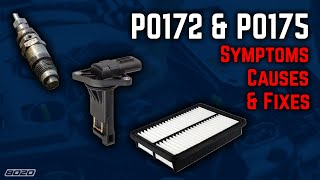
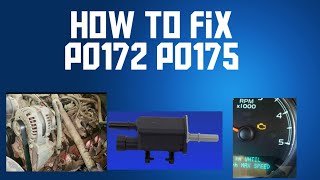
- YouTube video by 'A&Z Garage' (2015 Cadillac Escalade) — P0172 and P0175 (System Too Rich Bank 1 and Bank 2).
❌ Tried (didn't work) The video directly proceeds to the correct diagnostic test.
✅ What actually fixed it The technician confirmed a leaking high-pressure fuel pump (HPFP). The diagnostic method was to unplug the PCV hose from the valve cover to the intake, plug the intake port, and watch the fuel trims. The long-term fuel trims immediately started correcting from -19% back towards normal, proving that excess fuel vapor was entering the intake from the crankcase. The definitive fix was replacing the HPFP. - YouTube video by 'Motor City Mechanic' (2011 Chevy Silverado (mechanically similar to 2011 Escalade with L94 engine)) — P0172 and P0175, running rich, adding 30% fuel.
❌ Tried (didn't work) Blocking off the EVAP purge valve (made no difference)., Considering but ruling out MAF sensor and fuel injectors as less likely for such a large, dual-bank rich condition.
✅ What actually fixed it The scan tool showed the 'Fuel Alcohol Content' was at 30%. The technician used the scan tool's 'Fuel Trim Reset' special function. Immediately after the reset, the fuel alcohol content dropped to its default and the fuel trims returned to 0%, fixing the vehicle without replacing any parts.
"I Checked Everything" — The Actual Cause
- On 2015-2017 models, a smoke test of the intake manifold will often come back clean, showing no vacuum leaks. The root cause is frequently not unmetered air entering, but unmetered fuel vapor entering from the crankcase via the PCV system. This vapor comes from a high-pressure fuel pump (HPFP) that is leaking internally into the engine oil. The fix is to replace the HPFP and change the fuel-contaminated oil.
OEM Part Supersession History
12642287, 12673410, 12679090, 12688607→12694529 (which is now superseded by 12711668)— Revisions to improve the reliability of the high-pressure fuel pump (HPFP) for the L86 engine, likely to address the common internal seal failure that causes fuel to leak into the crankcase.
Heads up: These part numbers are generally interchangeable for the 2015-2017 Escalade. However, it is always best to verify the latest part number with a GM dealer using the vehicle's VIN.
Model Year Variations Within This Range
- 2010-2014: These models use the port-injected 6.2L L94 V8, which is Flex Fuel capable. The most unique cause for P0172 is an incorrect 'learned' fuel alcohol percentage, which must be reset with a scan tool.
- 2015-2017: These models use the direct-injected 6.2L L86 V8. The fuel system includes a high-pressure fuel pump (HPFP) driven by the camshaft. Failure of this pump, leading to fuel leaking into the engine oil, is the most common cause of P0172 on these model years.
Helpful Videos

Used OEM Parts in Stock
New Aftermarket Parts Available


The information in this article is provided for general reference and educational purposes only. Vehicle specifications, procedures, and part compatibility can vary by production date, trim level, and region. Always consult your vehicle's factory service manual and verify part numbers before purchasing or performing repairs. Safety-critical components such as airbags, seat belts, and braking systems should be installed by a qualified professional.
- Cadillac ESCALADE:
- 🧭 Diagnostic Flowchart
- 🎬 Helpful Videos
- 🛍️ Shop This Part
- What's Unique About the 2010-2017 Cadillac ESCALADE
- Symptoms You May Notice
- Most Likely Causes
- Rare But Worth Checking
- Diagnosis Steps
- Parts You'll Likely Need
- Related Codes That Often Appear With This One
- Technical Service Bulletins (TSBs) & Recalls
- Platform-Specific Known Issues
- Mechanic-Grade Diagnostic Values
- Scan Tool Commands That Help
- Wiring & Ground Locations
- Real Owner Repair Stories
- "I Checked Everything" — The Actual Cause
- OEM Part Supersession History
- Model Year Variations Within This Range
- 🎟️ Get 5% Off