

P0172 on 2015-2017 Cadillac Escalade: Causes for Rich Fuel Condition and Fixes
For a 2015-2017 Escalade, P0172 almost always points to a failing high-pressure fuel pump (HPFP) leaking fuel into the engine oil. Check the oil dipstick for a strong gasoline smell. The fix is a new HPFP and a mandatory oil change, costing around $250-$500 for the part.
- For a 2015-2017 Escalade with code P0172, the first and most important check is the engine oil. If it smells like gasoline, the high-pressure fuel pump has almost certainly failed.
- Do not replace the oxygen sensors. They are accurately reporting the rich condition, not causing it.
- If the HPFP is replaced, an oil and filter change is not optional; it is a required part of the repair to remove contaminated oil.
- Before suspecting other issues, inspect the air filter housing for plastic flashing near the MAF sensor, as this is a known, documented issue (TSB #PIP5446A).
What's Unique About the 2015-2017 Cadillac Escalade
The 2015-2017 Escalade uses the direct-injected 6.2L L86 V8 engine. Unlike earlier port-injected models where this code often pointed to software or sensor issues, on the L86, the most common and well-documented cause of P0172 is a mechanical failure of the high-pressure fuel pump (HPFP). The pump is driven by the camshaft, and its internal seals can fail, allowing gasoline to leak directly into the crankcase and contaminate the engine oil. This un-metered fuel vapor is then pulled into the intake through the Positive Crankcase Ventilation (PCV) system, creating a significant rich condition that the ECM cannot correct.
Symptoms You May Notice
- Check Engine Light is on
- Strong fuel smell from the exhaust or engine bay
- Engine oil level appears overfull and smells strongly of gasoline
- Rough or rolling idle
- Engine runs on or sputters for a few seconds after being turned off
- Black smoke from the exhaust
- Poor fuel economy
- Engine hesitation, misfires, or lack of power, especially during acceleration
- Hard shifting, sometimes accompanied by a StabiliTrak warning light
- Replacing the oxygen sensor first. The O2 sensor is almost always doing its job correctly by reporting the rich condition; it is not the cause of it.
Most Likely Causes
- Failing High-Pressure Fuel Pump (HPFP) 🔴 High Probability → Shop Fuel Pump The direct-injected L86 engine relies on a camshaft-driven HPFP. Over time, the internal seals of this pump can wear out and fail, causing fuel to leak into the engine crankcase. This is a widely documented pattern failure for this engine platform and its mates like the Silverado and Yukon.
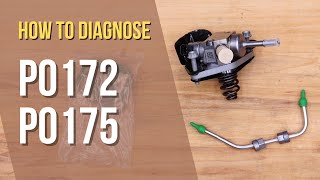
How to confirm: Check the engine oil dipstick. A strong smell of gasoline is the primary indicator. The oil level may also be higher than normal. A scan tool will show very high negative long-term fuel trims (e.g., -20% to -35%). A definitive test, demonstrated in multiple YouTube videos, is to disconnect the 'dirty air' PCV line from the intake manifold, plug the intake port, and watch fuel trims with the engine running. If the negative fuel trims rapidly improve towards 0%, it confirms fuel vapor is entering from the crankcase, condemning the HPFP. 🎬 Watch: Real-world diagnosis of P0172 and P0175 on an Escalade
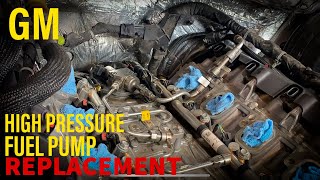
Typical fix: Replace the high-pressure fuel pump and the associated single-use high-pressure fuel line. 🎬 Watch: Complete walkthrough for replacing the high-pressure fuel pump An oil and filter change is mandatory to remove the fuel-contaminated oil.
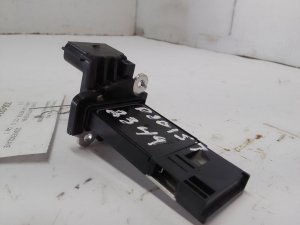
Est. part cost: $250-$500 - Dirty or Faulty Mass Air Flow (MAF) Sensor 🟡 Medium Probability → Shop Fuel Injection Air Flow Meter GM issued TSB #PIP5446A for excess plastic casting flash inside the air filter housing on 2015-2018 models, including the Escalade. This flash can disrupt and create turbulence in the airflow across the MAF sensor, causing incorrect readings and leading to rich or lean codes (P0172, P0175, P0171, P0174) and sometimes a P0101.
How to confirm: Inspect the air filter housing lid for any plastic flash or debris near the MAF sensor. Remove and inspect the MAF sensor itself for dirt or oil contamination. Cleaning the sensor with a dedicated MAF sensor cleaner is a good diagnostic step. Monitor MAF readings on a scan tool for erratic behavior.
Typical fix: Clean the MAF sensor with a dedicated cleaner. If TSB #PIP5446A applies (casting flash is found), the air filter housing lid should be replaced. If cleaning doesn't work, replace the MAF sensor.
Est. part cost: $10 (cleaner) - $150 (sensor) - Leaking Fuel Injector(s) ⚪ Low Probability → Shop Fuel Injector
How to confirm: This is more difficult to diagnose on a direct-injected engine. A scan tool can be used to monitor fuel rail pressure after the engine is shut off. A steady drop in pressure could indicate a leaking injector. However, on a hot engine, it is normal for pressure to rise slightly after shutdown; a rising or stable pressure is a good indication that injectors are NOT leaking. Sometimes a specific cylinder misfire code (P0301-P0308) may accompany P0172, pointing to the problematic cylinder.
Typical fix: Replace the faulty fuel injector(s).
Est. part cost: $50-$150 per injector
Rare But Worth Checking
- Stuck Open EVAP Purge Valve: → Shop Vapor Canister If the evaporative emissions (EVAP) purge valve sticks open, it can allow un-metered fuel vapor from the charcoal canister to be drawn into the intake manifold at idle, causing a rich condition. This can be diagnosed by unplugging the valve's vacuum line and monitoring fuel trims.
- Saturated EVAP Charcoal Canister: → Shop Vapor Canister In some cases, the charcoal canister itself can become saturated with raw fuel, often due to overfilling the gas tank. When the purge valve opens, it pulls in an overwhelming amount of fuel vapor, causing extreme rich conditions.
- Faulty Upstream Oxygen Sensor: → Shop Oxygen Sensor It is rare for an O2 sensor to fail in a way that causes a rich code; they typically fail and cause lean codes or heater circuit codes. However, a sensor that is biased or 'stuck' rich can be a cause, though it's highly unlikely and should be considered only after all other possibilities are exhausted.
Diagnosis Steps
- Use an OBD-II scanner to confirm P0172 is present and check for other codes like P0175 or P0300. Note the long-term fuel trim values for both banks; values more negative than -20% confirm a rich condition.
- Perform a sensory check: Open the hood and smell for raw fuel. Open the oil filler cap and check the dipstick for a strong gasoline smell. If fuel is smelled in the oil, the HPFP is the most likely cause.
- Inspect the entire air intake system, from the air filter to the throttle body, for any leaks, loose connections, or blockages.
- Specifically inspect the air filter housing lid for excess plastic flashing near the MAF sensor, as described in TSB #PIP5446A.
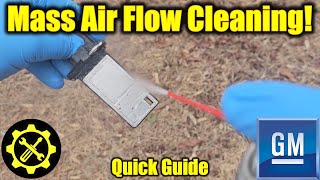
- Remove and clean the MAF sensor with a dedicated MAF sensor cleaner. 🎬 See this quick guide on cleaning your MAF sensor Do not touch the sensor wires. Allow it to dry completely before reinstalling.
- If no fuel is smelled in the oil and the MAF sensor is clean, perform a diagnostic test for the HPFP: With the engine running, use a scan tool to monitor fuel trims. Disconnect the PCV hose from the intake manifold and plug the intake port. If the negative fuel trims rapidly improve towards 0%, it confirms that excess fuel vapor from the crankcase is the source of the rich condition, pointing to a leaking HPFP.
- If the above steps do not identify the cause, further diagnosis may include testing the EVAP purge valve for proper operation and checking for a saturated charcoal canister.
Parts You'll Likely Need
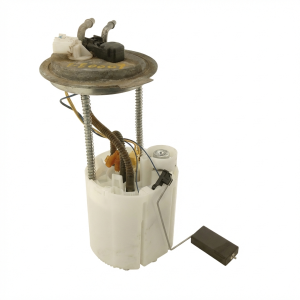
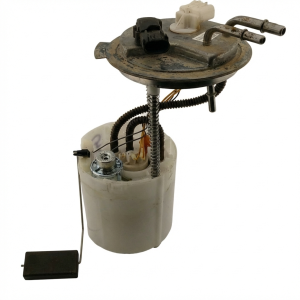
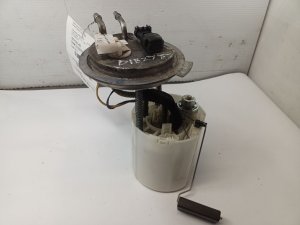
- High-Pressure Fuel Pump (HPFP)
(OEM #12641847)— This is the most common cause of P0172 on the 2015-2017 Escalade. The pump's internal seals fail, leaking fuel into the crankcase.
Trusted brands: ACDelco, Bosch
OEM price range: $350-$500
Aftermarket price range: $250-$400 - Mass Air Flow (MAF) Sensor
(OEM #23262343)— Can become dirty or provide inaccurate readings due to debris or known issues with the air filter housing (TSB #PIP5446A), causing the ECM to calculate the fuel mixture incorrectly.
Trusted brands: ACDelco, Denso, Hitachi
OEM price range: $100-$150
Aftermarket price range: $60-$100 - High-Pressure Fuel Feed Line
(OEM #12673077)— This is a single-use, torque-to-yield part that must be replaced anytime the high-pressure fuel pump is replaced to ensure a proper seal.
Trusted brands: ACDelco (GM Genuine)
OEM price range: $30-$50
Related Codes That Often Appear With This One
- P0175 — This is the code for "System Too Rich (Bank 2)". It often appears with P0172 because causes like a leaking HPFP or a faulty MAF sensor affect the entire engine, not just one bank.
- P0300 — This code for "Random/Multiple Cylinder Misfire" can be triggered because an excessively rich mixture fouls spark plugs and prevents proper combustion.
- P0101 — This code for "Mass Air Flow (MAF) Circuit Range/Performance" may appear if the MAF sensor is the root cause of the incorrect fuel mixture readings, especially if related to the issue in TSB #PIP5446A.
Technical Service Bulletins (TSBs) & Recalls
- TSB #PIP5446A: Notes that rough idle, harsh shifting, and rich/lean codes (P0172/P0175) can be caused by excess plastic casting flash inside the air filter housing near the MAF sensor. It affects 2015-2018 Escalades and other GM trucks/SUVs.
Platform-Specific Known Issues
- A leaking High-Pressure Fuel Pump (HPFP) is the most prominent issue causing P0172 on this platform. The failure leads to fuel contaminating the engine oil, which is then ingested by the PCV system.
- TSB #PIP5446A notes that excess plastic casting flash in the air filter housing can disrupt airflow over the MAF sensor, leading to fuel trim codes.
Mechanic-Grade Diagnostic Values
- High-Pressure Fuel Rail Pressure (Scan Tool) — expected: 300-750 PSI at idle, rising to over 2,000 PSI under load.. Failure: Pressure is significantly lower than the desired/commanded pressure shown on the scan tool, or fails to build with RPM.
- Low-Pressure Fuel System Pressure (Scan Tool) — expected: 50-75 PSI.. Failure: Pressure is significantly below the expected range, indicating a weak in-tank pump or a faulty Fuel Pump Control Module (FPCM).
- Mass Air Flow (MAF) Sensor Reading (Scan Tool) — expected: 6.0 to 8.0 grams/second (g/s) at a stable, warm idle.. Failure: Readings are significantly higher or lower than expected, or are erratic at a steady idle. A high reading can falsely indicate more air is entering the engine, causing the ECM to add too much fuel.
- Long-Term Fuel Trim (LTFT) (Scan Tool) — expected: Between -10% and +10%.. Failure: Sustained negative values greater than -20% to -25%, indicating the ECM is consistently removing a large amount of fuel to compensate for a rich condition.
- High-Pressure Fuel Rail Pressure (Engine Off) — expected: After shutting down a hot engine, pressure should hold steady or even rise slightly as fuel in the rail heats up.. Failure: A continuous, steady drop in fuel rail pressure after shutdown points to a leaking fuel injector.
Scan Tool Commands That Help
- GM GDS2 / Professional Scan Tool: Monitor Fuel Trims while disconnecting PCV — This is the primary diagnostic procedure for confirming a leaking HPFP. Disconnect the PCV line from the intake, plug the intake port, and watch fuel trims. If the highly negative trims rapidly move toward 0%, it proves unmetered fuel vapor from the crankcase was the source of the rich condition.
- GM GDS2 / Professional Scan Tool: Fuel Pump Relay / Fuel Pump Control Module Command — This is a bidirectional control used to test the electrical circuit and function of the low-pressure in-tank fuel pump, ruling out issues with the FPCM or the pump itself.
- GM GDS2 / Professional Scan Tool: Monitor Fuel Rail Pressure — Used to test for leaking injectors. After running the engine, shut it off and monitor the high-pressure fuel rail reading. If it holds steady or rises slightly, the injectors are likely not leaking. If it drops steadily, one or more injectors could be leaking down.
Wiring & Ground Locations
- G104 / G108 — A ground strap located on the rear of the left-side (driver's side) cylinder head.. This is a critical ground for the Engine Control Module (ECM) and driver's side ignition components. A poor connection here can cause erratic sensor readings and misfires that could complicate a P0172 diagnosis.
- G103 — On the front of the right-side (passenger side) cylinder head. Another source places a G103 on the cowl, above the brake booster. Locations can vary slightly by year and model, but engine head and cowl are primary spots.. This is a primary engine-to-chassis ground. A poor connection can affect various sensor readings that the ECM relies on for fuel calculations.
- ECM/PCM Ground — A critical ground wire runs from the ECM through the main harness and connects to the top rear of the engine block.. This is the main ground for the computer itself. If this connection is corroded or broken, it can cause a host of bizarre electrical issues and incorrect sensor readings, leading to false trouble codes.
Real Owner Repair Stories
- YouTube channel 'Blue Dog's Garage' (2014 Chevy Silverado 5.3L (L83 engine, same family as L86)) — Check Engine Light with codes P0172 and P0175. Owner noticed a strong smell of gasoline when checking the oil dipstick.
❌ Tried (didn't work) The owner first suspected other common issues before confirming the primary symptom.
✅ What actually fixed it The problem was a failed high-pressure fuel pump leaking fuel into the crankcase. The owner replaced the HPFP and performed an oil change, which resolved the codes. The video documents the repair process. - YouTube channel 'House Doctor Ray' (GM Truck/SUV with P0172 & P0175) — Extremely negative long-term fuel trims (-25% to -30%) at idle, which improve when RPMs are raised.
❌ Tried (didn't work) The diagnostic process systematically ruled out other causes.
✅ What actually fixed it The video demonstrates the definitive diagnostic process. After confirming the EVAP system wasn't the cause, the technician disconnected the PCV line from the intake and capped the port. The fuel trims immediately corrected towards zero, confirming the source was fuel vapor from the crankcase. He then checked for leaking injectors by monitoring rail pressure after shutdown (it held steady), definitively isolating the high-pressure fuel pump as the failed component.
"I Checked Everything" — The Actual Cause
- A common misdiagnosis pattern for P0172 on the L86 engine is performing a smoke test, finding no vacuum leaks, and incorrectly ruling out a major issue. The smoke test will come back clean because the problem is not unmetered air entering the system, but unmetered fuel. The failing high-pressure fuel pump leaks gasoline internally into the engine oil. These fuel vapors are then drawn from the crankcase into the intake manifold through the PCV system, creating a rich condition that a smoke test is not designed to detect.
OEM Part Supersession History
12639694, 12633423, 12633115, 12608371→12641847— GM has released several updated versions of the high-pressure fuel pump to improve reliability and address the internal seal failure causing fuel to leak into the crankcase.
Model Year Variations Within This Range
- 2015: The 2015 model year was a transition year for the transmission. Early production 2015 Escalades were equipped with the 6-speed (6L80) automatic transmission, while later 2015 models received the new 8-speed (8L90) automatic. This does not directly impact the P0172 diagnosis related to the L86 engine, but is a key mechanical difference within the 2015-2017 range.
Diagnostic Flowchart
Real Owner Stories
Aggregated from forums and TSBs cited above. Mileages and costs reflect what owners reported in those sources.
2015 Cadillac Escalade
Symptoms: Triggered P0172 and P0175 codes for bank one and bank two rich.
What fixed it: Diagnosed as a leaking high-pressure fuel pump after unplugging the PCV valve and plugging it off, which caused the fuel trims to come right back into line.
Source hint: YouTube - '2015 Cadillac Escalade P0172 and P0175' by Lakes Automotive Diagnostics
2015 Chevrolet Tahoe (6.2L L86 V8)
Symptoms: Received P0172 and P0175 codes specifically after idling for a long time. The check engine light went away after an oil change but eventually returned.
What fixed it: Identified as the classic HPFP failure symptom where fuel slowly dilutes the engine oil.
Source hint: Tahoe Yukon Forum - 'Who has experienced a P0172 & P0175 code?'
2015 Chevrolet Silverado 1500 (6.2L L86 V8)
Symptoms: Experienced P0172 and P0175 codes along with hard shifting and the engine continuing to sputter for a moment after shutdown. Symptoms appeared after extended idling.
What fixed it: Attributed to fuel vapor buildup from a leaking High-Pressure Fuel Pump (HPFP).
Source hint: Chevrolet Forum - 'P0172 and P0175'
Related OBD-II Codes
Frequently Asked Questions
Does TSB #PIP5446A apply to my 2015-2017 Escalade for code P0172?
Why does my Escalade's oil smell strongly of gasoline with a P0172 code?
How can I test if the High-Pressure Fuel Pump is causing my P0172 code?
My Escalade is shifting hard and showing a StabiliTrak warning along with P0172. Are these related?
Why does my engine sputter and run on for a few seconds after I turn the key off?
Do I need to change the oil if I replace the High-Pressure Fuel Pump?
Helpful Videos
Used OEM Parts in Stock
New Aftermarket Parts Available


The information in this article is provided for general reference and educational purposes only. Vehicle specifications, procedures, and part compatibility can vary by production date, trim level, and region. Always consult your vehicle's factory service manual and verify part numbers before purchasing or performing repairs. Safety-critical components such as airbags, seat belts, and braking systems should be installed by a qualified professional.
- Cadillac Escalade:
- 🧭 Diagnostic Flowchart
- 🎬 Helpful Videos
- 🛍️ Shop This Part
- What's Unique About the 2015-2017 Cadillac Escalade
- Symptoms You May Notice
- Most Likely Causes
- Rare But Worth Checking
- Diagnosis Steps
- Parts You'll Likely Need
- Related Codes That Often Appear With This One
- Technical Service Bulletins (TSBs) & Recalls
- Platform-Specific Known Issues
- Mechanic-Grade Diagnostic Values
- Scan Tool Commands That Help
- Wiring & Ground Locations
- Real Owner Repair Stories
- "I Checked Everything" — The Actual Cause
- OEM Part Supersession History
- Model Year Variations Within This Range
- Real Owner Stories
- 2015 Cadillac Escalade
- 2015 Chevrolet Tahoe (6.2L L86 V8)
- 2015 Chevrolet Silverado 1500 (6.2L L86 V8)
- Related OBD-II Codes
- Frequently Asked Questions
- 🎟️ Get 5% Off