

P0172 on 2011-2018 Chevrolet Camaro: System Too Rich Causes and Fixes
On a 2011-2018 Camaro, P0172 is frequently caused by known manufacturing issues in the air intake system. Before buying parts, inspect the air intake tube for plastic 'flashing' near the MAF sensor (TSB #PIP5446A) and check the air filter lid for a deteriorating hydrocarbon pad (TSB #PIP4813C). For direct-injected engines (V6 and 2016+ V8), a leaking high-pressure fuel pump is also a significant and documented cause. These inspections are the most likely fixes.
- P0172 means your Camaro's engine is running too rich on Bank 1.
- Before you buy any parts, perform the two free inspections recommended by GM: check for plastic flashing in the air intake tube and for a deteriorating pad in the air filter lid.
- These two specific issues are the most likely cause of P0172 on a 2011-2018 Camaro.
- Cleaning the MAF sensor with a dedicated cleaner is a cheap and effective diagnostic step.
- Do not replace the O2 sensor unless you have specifically tested it and confirmed it has failed.
What's Unique About the 2011-2018 Chevrolet CAMARO
What makes the 2011-2018 Camaro unique regarding code P0172 are two well-documented, vehicle-specific issues outlined in GM Technical Service Bulletins (TSBs). Instead of a typical sensor or fuel system failure, the cause is often a manufacturing defect within the air intake system itself. These issues can improperly restrict or disrupt airflow, tricking the Mass Airflow (MAF) sensor into sending incorrect data and causing the rich fuel condition. Furthermore, on direct-injected engines (3.6L V6 and 2016+ V8s), a leaking high-pressure fuel pump is another known, significant cause that can lead to fuel contaminating the engine oil and being ingested through the PCV system.
Diagnostic Flowchart
Tap your situation to follow the diagnostic path that matches what you're seeing on this vehicle.
Generation note: This year range covers two Camaro generations: the 5th Gen (2011-2015) with LFX V6 and LS3/L99 V8s, and the 6th Gen (2016-2018) with LGX V6 and LT1/LT4 V8s. The TSBs related to the air intake apply to vehicles in both generations, so the primary causes are relevant across the entire 2011-2018 model year span. The issue of a leaking high-pressure fuel pump is specific to the direct-injected engines (LFX, LGX, LT1, LT4). Another TSB, #18-NA-246, addresses fuel-in-oil issues from short-trip driving on some 2016-2019 models with the 2.0L LTG engine, which may require a PCV valve update and ECM reprogram.
Symptoms You May Notice
- Check Engine Light is on
- Rough idle
- Sputtering or hesitation when accelerating.
- Lack of power.
- Harsh shifting.
- Strong smell of fuel from the exhaust.
- Black smoke from the exhaust pipe.
- Poor fuel economy.
- Engine 'dieseling' or running on for a moment after ignition is turned off.
- Replacing the oxygen (O2) sensor first. While a faulty O2 sensor can cause a P0172 code, it is not the most common cause on this specific vehicle. The O2 sensor is usually correctly reporting the rich condition caused by something else. The TSBs point to air measurement and fuel delivery issues as the primary culprits, which should always be investigated first.
Most Likely Causes
- Air Intake Tube Casting Flashing 🔴 High Probability A known manufacturing defect where excess plastic molding (flashing) is present inside the air intake tube, near the MAF sensor. This turbulent airflow causes incorrect MAF readings. This is documented in GM TSB #PIP5446A, which applies to 2016-2018 V8 models.
How to confirm: Remove the air intake tube between the air filter box and the throttle body. Visually and physically inspect the inside of the tube, especially around the MAF sensor mounting area, for any rough or excess plastic ridges.
Typical fix: The official GM fix is to replace the air filter housing lid/outlet duct. However, many owners successfully resolve the issue by carefully removing the excess plastic flashing with a file or deburring tool, then cleaning the tube thoroughly to remove any debris before reinstallation.
Est. part cost: $0 - $150 - Deteriorated Hydrocarbon Absorber Pad 🔴 High Probability The hydrocarbon absorber pad, located inside the air cleaner lid, can degrade over time. Debris from the pad can be sucked into the intake and contaminate or obstruct the MAF sensor. This is documented in GM TSB #PIP4813C.
How to confirm: Open the air filter housing and inspect the underside of the lid. Check if the black, fibrous pad is intact, flaking, or has pieces missing.
Typical fix: If the pad is damaged, the official repair is to replace the entire air cleaner lid assembly. Some owners choose to carefully remove all remnants of the pad material instead, though replacement is recommended.
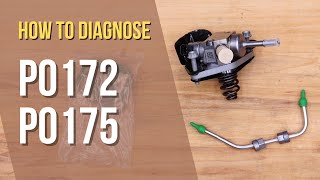
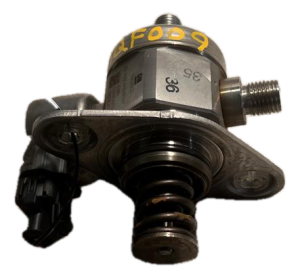
Est. part cost: $50-$150 - Leaking High-Pressure Fuel Pump (HPFP) 🟡 Medium Probability → Shop Fuel Pump On direct-injected engines (3.6L V6, 6.2L LT1/LT4), the HPFP is mechanically driven by the camshaft. A common failure is for the pump's internal seal to fail, causing gasoline to leak directly into the engine crankcase. This fuel contaminates the oil and the vapors are drawn into the intake via the PCV system, creating a rich condition that the MAF sensor cannot account for.
How to confirm: Check the engine oil dipstick. A level that is overfull and/or oil that strongly smells of raw gasoline is a primary indicator. A diagnostic test involves monitoring fuel trims, then disconnecting the 'dirty' PCV line from the intake and plugging the port. If fuel trims quickly return to normal, it confirms that fuel vapor from the crankcase is the source of the rich condition.
Typical fix: Replace the high-pressure fuel pump. This is an involved repair as the pump is located in the engine valley, underneath the intake manifold. An oil change is required after replacement.
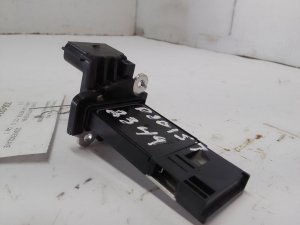
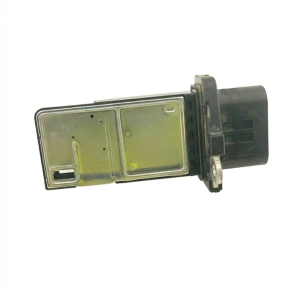
Est. part cost: $200-$500 - Dirty or Faulty Mass Air Flow (MAF) Sensor 🟡 Medium Probability → Shop Fuel Injection Air Flow Meter The MAF sensor is often contaminated by debris from the hydrocarbon pad or by over-oiled aftermarket air filters. An incorrect airflow reading is a direct cause of rich or lean codes.
How to confirm: Remove the sensor and visually inspect its delicate wires for dirt, oil, or fibers. A scan tool can also show if MAF readings are erratic or out of specification. Disconnecting the sensor while the engine is running; if the idle smooths out, the sensor is likely faulty.
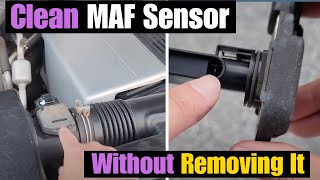
Typical fix: Clean the sensor using only dedicated MAF sensor cleaner. Do not touch the sensor wires. If cleaning doesn't resolve the issue, the sensor must be replaced.
Est. part cost: $15-$200 - Stuck Open EVAP Purge Valve ⚪ Low Probability → Shop Vapor Canister
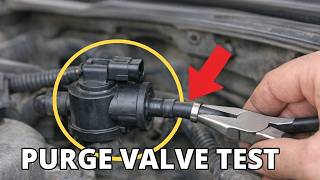
How to confirm: With the engine running at idle, disconnect the vapor line from the purge valve. There should be no vacuum felt at the valve port. A scan tool can also command the valve open and closed to test its function. A user on a Camaro forum suspected this was their issue when fuel trims improved after disconnecting the valve.
Typical fix: Replace the faulty EVAP purge valve.
Est. part cost: $25-$75
Rare But Worth Checking
- Leaking Fuel Injector(s): → Shop Fuel Injector While less common than the TSB-related issues, a fuel injector can leak fuel into a cylinder, causing a rich condition on that bank. This is a more prominent issue on the 3.6L LFX V6, as noted in TSBs for other GM vehicles with this engine. Confirmation requires a fuel pressure leak-down test or a professional injector balance test.
- Fuel-Enriched Oil from Short-Trip Driving: TSB #18-NA-246 addresses P0172 (and oil pressure codes P06DE/P0521) caused by fuel accumulating in the engine oil due to frequent short driving cycles where the engine doesn't reach full operating temperature. The fix involves an ECM software update, an oil change, and sometimes a revised PCV valve.
- Aftermarket Cold Air Intake without Proper Tune: Installing some aftermarket cold air intakes, including some official GM Performance parts, without the required ECM calibration can cause P0172 and P0175 codes to set. The different airflow characteristics trick the MAF sensor.
Diagnosis Steps
- Read all fault codes with an OBD-II scanner to check for other related codes, such as P0175, P0101, or oil pressure codes.
- Check the engine oil level and smell. If the oil level is high and/or smells strongly of gasoline, suspect a leaking high-pressure fuel pump (on DI engines) or leaking injector(s).
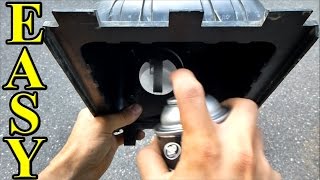
- Open the air filter box. Inspect the hydrocarbon pad on the inside of the lid for any signs of crumbling, flaking, or missing pieces (TSB #PIP4813C).
- Remove the air intake tube that runs from the airbox to the engine.
- Thoroughly inspect the inside of the intake tube for any plastic casting 'flashing', especially near where the MAF sensor is located (TSB #PIP5446A).
- While the intake is apart, remove the MAF sensor. Inspect it for any visible debris, oil, or fibers. If dirty, clean it with a dedicated MAF sensor cleaner and allow it to dry completely.
- If no physical faults are found, use a scan tool to monitor long-term fuel trims (LTFT). Highly negative numbers (-15% or more) confirm the rich condition.
- To test the EVAP system, check for vacuum at the purge valve port at idle. It should be sealed.
- To test for HPFP failure, monitor fuel trims, then disconnect and plug the PCV vacuum line. If fuel trims rapidly improve, it confirms fuel vapor from the crankcase is the source of the rich condition.
Parts You'll Likely Need
- Air Cleaner Outlet Duct / Lid
(OEM #ACDelco 23262331 (for 3.6L V6), ACDelco 23143726 (for 6.2L V8))— Required if the hydrocarbon absorber pad (TSB #PIP4813C) is deteriorating or if the intake tube has casting flash (TSB #PIP5446A) that cannot be easily smoothed out.
Trusted brands: ACDelco (GM Original Equipment)
OEM price range: $70-$150
Aftermarket price range: $50-$100 - Mass Air Flow (MAF) Sensor
(OEM #ACDelco 23262343 (Common for 2016-2018 V8))— Often becomes contaminated by intake debris or fails, leading to incorrect air measurement. Cleaning is the first step, but replacement is necessary if it fails.
Trusted brands: ACDelco, Bosch, Delphi
OEM price range: $120-$200
Aftermarket price range: $60-$120 - High-Pressure Fuel Pump — A common failure on direct-injected engines (V6 and 2016+ V8) that leaks fuel into the crankcase, causing P0172/P0175.
Trusted brands: ACDelco, Bosch
OEM price range: $300-$500
Aftermarket price range: $200-$400 - MAF Sensor Cleaner — A low-cost first step to attempt to fix a contaminated MAF sensor before replacing it.
Trusted brands: CRC, WD-40
OEM price range: $15-$20
Aftermarket price range: $10-$15
Related Codes That Often Appear With This One
- P0175 — This is the 'System Too Rich' code for Bank 2. If the cause is a faulty MAF sensor, leaking high-pressure fuel pump, or a stuck EVAP purge valve, it will affect both engine banks and set both codes together.
- P0101 — This code indicates a problem with the MAF sensor's performance or range. It is commonly seen with P0172 because the TSB-documented issues (casting flashing, hydrocarbon pad debris) directly interfere with the MAF sensor's ability to measure air correctly.
- P0171 / P0174 — These are 'System Too Lean' codes. It seems counterintuitive, but TSBs #PIP5446A and #PIP4813C list them alongside the rich codes. This can happen if the MAF sensor provides erratic readings due to turbulent air, causing the ECM to overcorrect in both directions at different times.
- P0521 / P06DE — These are oil pressure sensor performance codes. TSB #18-NA-246 links them with P0172 when the cause is fuel contamination of the engine oil, which can affect oil pressure readings.
Technical Service Bulletins (TSBs) & Recalls
- PIP5446A: Addresses rough idle, harsh shifts, and rich/lean codes (including P0172) caused by casting flashing in the air intake tube near the MAF sensor on 2016-2018 V8 models.
- PIP4813C: Points to a deteriorating hydrocarbon pad in the air cleaner lid as a cause for MAF contamination and various rich/lean codes.
- 18-NA-246: Provides a procedure for P0172 caused by fuel-enriched engine oil from short-trip driving, involving an ECM update and oil change.
Platform-Specific Known Issues
- TSB #PIP5446A documents that excess plastic flashing from the manufacturing process can be present in the air intake tube near the MAF sensor, causing rough idle, hesitation, and setting P0172.
- TSB #PIP4813C warns that the hydrocarbon absorber pad inside the air cleaner lid can degrade, sending debris into the intake that contaminates the MAF sensor, leading to power loss and P0172.
Mechanic-Grade Diagnostic Values
- Long-Term Fuel Trim (LTFT) — expected: -10% to +10%. Failure: Consistently negative values, often -15% to -32% or more, indicate the ECM is removing fuel to compensate for a rich condition.
- Upstream O2 Sensor Voltage — expected: Rapidly fluctuating between approximately 0.1V and 0.9V.. Failure: A sensor that is stuck high (near 0.9V) or switches very slowly may be faulty or confirming a constant rich condition.
- Mass Air Flow (MAF) Sensor at Idle (V8) — expected: Approximately 1.6 lbs/min (~12 g/s) at idle for a modified 5.3L V8, likely similar for Camaro V8s.. Failure: Readings that are illogical or do not increase smoothly with RPM can indicate a faulty sensor.
- High-Pressure Fuel Rail Pressure at Idle (LT4) — expected: Approximately 370 psi.. Failure: Significant deviation from this value could indicate an issue with the HPFP or sensor.
- Low-Pressure Fuel System (LS3/L99) — expected: 55-60 psi.. Failure: Pressure that is significantly higher (e.g., 68 psi) can overpower the injectors and cause a rich condition.
Scan Tool Commands That Help
- Tech2 / GDS2: Fuel Trim Reset — After a repair (like replacing a fuel pump or injectors), resetting fuel trims forces the ECM to relearn the fuel strategy from a zero baseline, confirming the fix.
- Tech2 / GDS2: Fuel Injector Balance Test — To identify a single leaking or malfunctioning injector that could be causing a rich condition on one bank.
- Tech2 / GDS2: EVAP Purge/Seal — To command the EVAP purge valve open and closed to test for a stuck valve, which can be a source of unmetered fuel vapors entering the intake.
- Tech2 / GDS2: Fuel Alcohol Content Reset — On flex-fuel compatible vehicles (LFX V6), an incorrectly high alcohol percentage reading can cause the ECM to command excessive fuel. Resetting this value can resolve rich codes if no mechanical fault is present.
Wiring & Ground Locations
- G101 (5th Gen) — Located at the front of the engine, lower block.. This ground serves the Engine Control Module (ECM), Mass Air Flow (MAF) Sensor, and Transmission Control Module. A poor connection here can cause erratic sensor readings and incorrect ECM calculations.
- G110 (V8) — Attached to the rear of the left cylinder head.. Serves as a primary engine block ground. A loose or corroded connection can affect various sensor readings that rely on a clean ground reference.
- Engine Block Ground (6th Gen) — A ground strap attaches to the block underneath the passenger side exhaust manifold, near the starter.. This ground is noted to be poorly tightened from the factory on some 6th Gen Camaros and can cause a host of electrical issues, including erratic tachometer behavior, which points to potential data issues for the ECM.
Real Owner Repair Stories
- LS1Tech Forum (LM7 V8 engine swap (similar to Camaro LS3) in a '55 Chevy) — P0172 and P0175 codes setting regularly. Long term fuel trims were -10% to -15%.
❌ Tried (didn't work) Swapping MAF sensor, Disabling MAF in tune, Replacing O2 sensors, Pressure testing fuel rails for leaking injectors
✅ What actually fixed it The owner discovered the fuel pressure was 68 psi while running, when it should have been 55-60 psi. The cause was an incorrect aftermarket (Wix brand) Corvette-style fuel filter/regulator that was installed after the original failed. Replacing it with a proper regulator resolved the high pressure and rich codes. - Camaro5 Forum (2015 Camaro AS with Vararam CAI, headers, and a dyno tune) — Intermittent P0172 and P0175 codes.
❌ Tried (didn't work) Re-securing catch can hoses that had popped off, Tightening a loose fitting on the catch can
✅ What actually fixed it The owner discovered a spark plug wire on the passenger side was burnt, and another was not fully attached to the spark plug. This likely caused incomplete combustion, leading the O2 sensors to detect unburnt fuel and trigger the rich codes. Fixing the plug wires resolved the issue.
"I Checked Everything" — The Actual Cause
- A common scenario for direct-injected Camaros (V6 and 2016+ V8) is passing an intake smoke test perfectly, yet still having a severe rich condition. The actual cause is often the high-pressure fuel pump (HPFP) leaking fuel internally into the crankcase. This fuel contaminates the oil, and the fuel vapors are then drawn into the intake manifold through the PCV system. This introduces unmetered fuel that the ECM cannot account for, driving fuel trims negative and setting P0172/P0175. A key symptom is engine oil that is over-full and smells strongly of gasoline.
OEM Part Supersession History
Varies by year/engine→12677329 (Example for some DI engines)— Internal design updates to improve seal longevity and prevent leaks into the crankcase.
Heads up: When replacing the high-pressure fuel pump on direct-injected engines, the high-pressure fuel line is considered a one-time-use part by GM and should also be replaced to ensure a proper, leak-free seal.
Model Year Variations Within This Range
- 2011-2015 (5th Gen): Engines are primarily port-injected (LS3/L99 V8) or early direct-injection (LFX V6). P0172 causes are less likely to be the HPFP on V8 models and more focused on MAF, intake defects (hydrocarbon pad), and traditional fuel system issues.
- 2016-2018 (6th Gen): Engines are all direct-injection (LGX V6, LT1/LT4 V8). The leaking high-pressure fuel pump (HPFP) becomes a much more common cause for P0172. TSBs for intake flashing (#PIP5446A) and short-trip fuel dilution (#18-NA-246) are highly relevant to these years.
- LT1 vs LTG PCV System: The V8 LT1 PCV system draws crankcase vapors from the valley, under the intake manifold. Some 4-cylinder LTG engines had a PCV valve design change in mid-2019; earlier models with P0172 from short-trip driving may require an updated PCV valve as part of the TSB #18-NA-246 repair.
Helpful Videos

Used OEM Parts in Stock
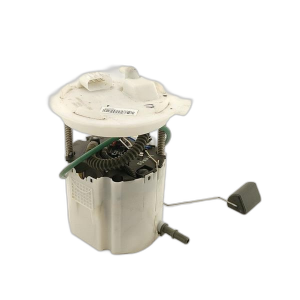
New Aftermarket Parts Available



The information in this article is provided for general reference and educational purposes only. Vehicle specifications, procedures, and part compatibility can vary by production date, trim level, and region. Always consult your vehicle's factory service manual and verify part numbers before purchasing or performing repairs. Safety-critical components such as airbags, seat belts, and braking systems should be installed by a qualified professional.
- Chevrolet CAMARO:
- 🧭 Diagnostic Flowchart
- 🎬 Helpful Videos
- 🛍️ Shop This Part
- What's Unique About the 2011-2018 Chevrolet CAMARO
- Symptoms You May Notice
- Most Likely Causes
- Rare But Worth Checking
- Diagnosis Steps
- Parts You'll Likely Need
- Related Codes That Often Appear With This One
- Technical Service Bulletins (TSBs) & Recalls
- Platform-Specific Known Issues
- Mechanic-Grade Diagnostic Values
- Scan Tool Commands That Help
- Wiring & Ground Locations
- Real Owner Repair Stories
- "I Checked Everything" — The Actual Cause
- OEM Part Supersession History
- Model Year Variations Within This Range
- 🎟️ Get 5% Off