

P0172 on 2004-2012 Chevrolet Colorado 3.5L I5: Rich Fuel Causes and Fixes
On a 2004-2012 Colorado, code P0172 means the engine is running too rich. The most common causes are a dirty Mass Airflow (MAF) sensor, a failing upstream oxygen sensor, or a leaking fuel injector. Cleaning the MAF sensor with a dedicated cleaner is a common and inexpensive first step. For 2004-2006 models, this code can also be a symptom of the known cylinder head/valve seat failure.
- P0172 means your Colorado's engine is getting too much fuel.
- Start your diagnosis with the easiest and cheapest steps: inspect the air filter and clean the MAF sensor.
- A scan tool that can read live data is invaluable for diagnosing a faulty O2 sensor versus an actual fuel delivery problem.
- Don't ignore this code, as it can lead to costly catalytic converter damage over time.
- This guide is for the 3.5L I5 (2004-2006), but the information is highly relevant for the 3.7L I5 (2007-2012) as well.
What's Unique About the 2004-2012 Chevrolet Colorado
This guide covers the first-generation Chevrolet Colorado. It's important to note the specified engine, the L52 3.5L I5, was used in model years 2004-2006. From 2007-2012, these trucks used the larger LLR 3.7L I5 engine. However, the architecture is very similar, and the causes for P0172 are largely identical. A critical issue specific to the 2004-2006 L52 engine is a known factory defect with the cylinder head valve seats, which can wear prematurely, cause compression loss, and lead to misfire and rich condition codes.
Generation note: The 2004-2012 year range covers the entire first generation of the Chevrolet Colorado. However, the specified L52 3.5L engine is found in the 2004-2006 models. The 2007-2012 models feature the 3.7L LLR I5. The diagnostic approach for P0172 is consistent across this generation, but the 2004-2006 models have a much higher probability of underlying cylinder head issues.
Symptoms You May Notice
- Reduced fuel economy
- Black smoke from the exhaust, especially at idle or acceleration
- A noticeable smell of raw gasoline from the exhaust
- Rough or unstable idle, sometimes surging
- Engine hesitation or stumbling during acceleration
- Check Engine Light is on
- Replacing the downstream (post-catalyst) O2 sensor. This sensor primarily monitors catalyst efficiency and has minimal impact on fuel trim.
- Replacing spark plugs. While fouled plugs can be a symptom of a rich condition, they are rarely the root cause of code P0172.
Most Likely Causes
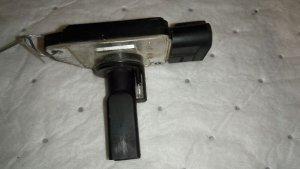
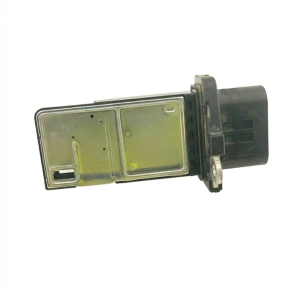
- Dirty or Faulty Mass Airflow (MAF) Sensor 🔴 High Probability → Shop Fuel Injection Air Flow Meter The MAF sensor measures air entering the engine. If its sensitive wire is contaminated with dirt or oil (especially from over-oiled aftermarket air filters), it can under-report the amount of air, causing the ECM to inject too much fuel.
How to confirm: Visually inspect the sensor's internal wires for a film of dirt or oil. Unplug the MAF sensor with the engine off, start the engine, and see if the idle quality improves. If it does, the MAF is likely the issue. A scan tool should show MAF readings of around 3.5-5 g/s at idle for a 3.5L engine, increasing smoothly with RPM.
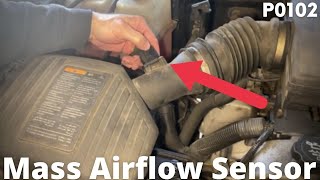
Typical fix: First, try cleaning the sensor element with a dedicated MAF sensor cleaner spray; never use brake or carb cleaner. If cleaning doesn't work or the code returns, the sensor must be replaced. 🎬 Watch: How to replace your Mass Airflow Sensor Disconnecting the battery for 15 minutes after replacement helps reset the ECM's fuel trims.
Est. part cost: $60-$150 - Failed Upstream Oxygen (O2) Sensor 🔴 High Probability → Shop Oxygen Sensor The upstream O2 sensor (Bank 1, Sensor 1) is the primary input for fuel control. As these sensors age, they can become slow, biased, or contaminated, sending a false 'lean' signal to the ECM, which then overcompensates by adding excess fuel.
How to confirm: Use a scan tool to watch the live voltage data from the Bank 1 Sensor 1. A healthy sensor will switch rapidly between approximately 0.1V and 0.9V. A sensor that is stuck high (e.g., above 0.8V) or switches very slowly is likely bad.
Typical fix: Replace the upstream (pre-catalytic converter) oxygen sensor. An O2 sensor socket is highly recommended for this job. 🎬 See this walkthrough for removing the upstream oxygen sensor
Est. part cost: $50-$120 - Leaking Fuel Injector(s) 🟡 Medium Probability → Shop Fuel Injector A fuel injector can leak fuel into a cylinder when it's supposed to be closed or stick open, adding un-metered fuel to the mixture. This causes a rich condition that the ECM tries to correct.
How to confirm: After the truck has been sitting overnight, pull the spark plugs and check for one that is wet with fuel or significantly blacker and more sooty than the others. A fuel pressure leak-down test can also confirm if the system is losing pressure through an injector.
Typical fix: Replace the faulty fuel injector. It is often recommended to replace them as a set if they are original and high-mileage.
Est. part cost: $50-$200 per injector - Faulty Fuel Pressure Regulator 🟡 Medium Probability → Shop Fuel Injection Pressure Regulator The fuel pressure regulator can fail and allow excessive pressure to build in the fuel rail, forcing too much fuel through the injectors.
How to confirm: Connect a fuel pressure gauge to the fuel rail's test port. The specified fuel pressure for the L52 engine is typically 50-60 PSI. If pressure is significantly higher, the regulator is the likely culprit. A leaking regulator may also cause hard starting after a hot soak.
Typical fix: Replace the fuel pressure regulator.
Est. part cost: $40-$100 - Clogged Engine Air Filter ⚪ Low Probability → Shop Air Cleaner Assembly A severely clogged air filter can restrict airflow to the engine, creating a naturally rich air-fuel mixture that the MAF sensor may not be able to account for fully.
How to confirm: Visually inspect the engine air filter. If it is black, full of debris, or light cannot pass through it, it needs replacement.
Typical fix: Replace the engine air filter.
Est. part cost: $15-$40
Rare But Worth Checking
- Cracked Exhaust Manifold: This is a very common failure on the Colorado/Canyon I5 engine platform. 🎬 Watch: Step-by-step guide to replacing a cracked exhaust manifold While a crack before the O2 sensor usually introduces extra air and causes a lean code (P0171), the disruption to exhaust gas pulses can sometimes confuse the O2 sensor, potentially leading to an incorrect rich reading in some circumstances.
- Stuck Open EVAP Purge Valve: → Shop Vapor Canister If the evaporative emissions purge valve gets stuck open, it can allow un-metered fuel vapor from the charcoal canister to enter the intake manifold at idle, contributing to a rich mixture.
- Leaking Intake Valves (Cylinder Head Issue): Specific to the 2004-2006 L52 3.5L engine, worn exhaust valve seats are a known defect. However, leaking intake valves can also occur, leading to poor compression and an unstable air/fuel mixture that can trigger rich codes alongside misfires.
- Intake Manifold Leaks: → Shop Engine Intake Manifold While less common on this platform, manufacturer service bulletin #22-NA-128 notes that intake manifold leaks can cause a Malfunction Indicator Lamp (MIL) to illuminate with DTC P0172.
Diagnosis Steps
- Use an OBD-II scanner to confirm P0172 is the primary code and check for any other stored codes, especially misfire codes (P0300-P0305).
- Inspect the engine air filter for dirt or blockages and replace if necessary.
- Inspect the air intake tube between the MAF sensor and the throttle body for any cracks or loose connections. Manufacturer bulletin #PIP5651G notes that a disconnected charge air cooler pipe at the throttle body can trigger P0172 and cause a reduced power issue.
- Remove and clean the Mass Airflow (MAF) sensor using a dedicated cleaner, paying close attention to the small internal wires. Allow it to dry completely before reinstalling.
- Use a scan tool to monitor live data. Check the Long-Term Fuel Trim (LTFT) for Bank 1. A value of -10% or more negative confirms the ECM is compensating for a rich condition.
- Observe the upstream O2 sensor (Bank 1, Sensor 1) voltage. It should fluctuate rapidly between ~0.1V and ~0.9V. If it's stuck high (above 0.8V), the sensor may be bad, or it's correctly reading a severe rich condition.
- Test the fuel pressure at the fuel rail to check for a faulty fuel pressure regulator. It should be within the 50-60 PSI range.
- For 2004-2006 models, if misfire codes are present and other causes are ruled out, perform a cylinder compression and leak-down test to check for the known cylinder head/valve seat failure.
- If all else fails, investigate for leaking fuel injectors. This may require removing the fuel rail or having a professional perform a leak-down test.
Parts You'll Likely Need
- Mass Airflow (MAF) Sensor
(OEM #ACDelco 12591290)— A dirty or failed MAF sensor is a top cause for incorrect air-fuel ratio calculations leading to a P0172 code.
Trusted brands: ACDelco, Delphi, Denso
OEM price range: $120-$180
Aftermarket price range: $60-$110 - Upstream Oxygen Sensor (Bank 1, Sensor 1)
(OEM #ACDelco 213-4226 (or 213-1557 depending on specific production date/VIN))— This sensor is critical for fuel control and is a common wear item. A failed sensor can send false signals that cause a rich condition.
Trusted brands: ACDelco, Denso, Bosch
OEM price range: $80-$150
Aftermarket price range: $50-$100 - Fuel Injector
(OEM #ACDelco 217-1628)— A leaking or stuck-open injector is a common cause of excess fuel entering a cylinder, directly causing a rich condition.
Trusted brands: ACDelco, Standard Motor Products, GB Remanufacturing
OEM price range: $90-$150
Aftermarket price range: $45-$90
Related Codes That Often Appear With This One
- P0300-P0305 — A random (P0300) or specific cylinder (P0301-P0305) misfire can occur because the excessively rich mixture fails to ignite properly. On 2004-2006 models, these codes together with P0172 strongly suggest a cylinder head/valve issue.
- P0132 — This code means 'O2 Sensor Circuit High Voltage (Bank 1 Sensor 1)'. A rich condition causes high voltage from the O2 sensor, so P0132 can appear alongside P0172 if the sensor is correctly reporting the rich mixture.
- P0101 & P0506 — These codes are frequently associated with P0172 when there are intake airflow issues or throttle body malfunctions, as noted in manufacturer bulletin #22-NA-224.
Technical Service Bulletins (TSBs) & Recalls
- PIP4013D: While not directly for P0172, this GM Technical Service Bulletin addresses diagnosing P0300 (random misfire) on these engines, pointing directly to the cylinder head valve seat issue as the cause. This is relevant as P0172 can be a symptom of the same root problem.
- Bulletin #22-NA-224: This bulletin provides a repair procedure for a Malfunction Indicator Lamp (MIL) illuminated with DTC P0172 and others, often accompanied by a "Reduced Engine Power" concern.
- Bulletin #22-NA-128: Provides a procedure to test the intake manifold for leaks that may cause a customer concern of a P0172 code.
Platform-Specific Known Issues
- 2004-2006 L52 Cylinder Head Defect: The early 3.5L I5 engines are notorious for premature wear of the exhaust valve seats, leading to compression loss. While this often causes a P0300 random misfire code, the resulting poor combustion can also lead to an overly rich exhaust stream, triggering a P0172. A compression test is a critical diagnostic step on these specific model years before replacing expensive fuel system parts.
Mechanic-Grade Diagnostic Values
- Mass Airflow (MAF) Sensor Reading at 2500 RPM — expected: 15 to 25 g/s. Failure: A reading that is significantly lower suggests the sensor is under-reporting airflow, causing a rich mixture. A non-linear or erratic reading as RPMs increase also indicates a fault.
- Fuel Pressure (Key On, Engine Off) — expected: ~50 PSI. Failure: Significantly higher pressure (e.g., >65 PSI) points to a faulty regulator. Pressure that bleeds down quickly indicates a leak, possibly from an injector.
- Fuel Pressure (Engine Idling) — expected: 56-62 PSI. Failure: Pressure that is excessively high and does not drop from the KOEO reading can indicate a regulator that is not responding to engine vacuum.
- Fuel Pressure Regulator Vacuum Test — expected: Pressure should jump up 5-10 PSI when the vacuum line is removed from the regulator at idle.. Failure: No change in pressure indicates the regulator diaphragm is not moving. The presence of raw fuel in the vacuum line indicates a ruptured diaphragm.
- Upstream O2 Sensor Switching Speed — expected: Rapidly and continuously switches between ~0.1V and ~0.9V multiple times per second.. Failure: A sensor that takes more than a full second to switch from high to low, or is stuck high, is faulty or is reading a truly persistent rich condition.
- Long Term Fuel Trim (Stuck EVAP Purge Valve) — expected: At idle, LTFT will be very negative, often below -15%.. Failure: Pinching the vacuum hose from the purge valve to the intake causes the Short Term Fuel Trim (STFT) to immediately climb back toward 0%. If it does, the valve is stuck open.
Scan Tool Commands That Help
- Tech 2 / GDS2: Fuel Injector Balance Test — This test is used to isolate a single leaking or faulty fuel injector. The scan tool commands the fuel pump to prime the system to a specific pressure, then individually pulses each injector for a precise duration. By measuring the pressure drop for each injector, a technician can compare them. An injector that causes a significantly larger pressure drop than the others is leaking or stuck open.
- Any live data scan tool: EVAP Purge Valve Pinch Test — If P0172 is present primarily at idle with very negative fuel trims, this manual test uses the scan tool for observation. While monitoring Short Term Fuel Trim, the technician physically pinches the vacuum line from the EVAP purge valve to the intake. A stuck-open valve will cause the STFT to immediately rise towards 0% when the line is pinched, confirming the source of the un-metered fuel vapors.
Wiring & Ground Locations
- Fuel System Control Module (FSCM) Pins — The FSCM is typically located on the frame rail under the vehicle, near the fuel tank.. A loss of signal or power to the fuel pump can cause erratic fuel pressure. A key diagnostic step is to check for the fuel pump command signal from the ECM. At the FSCM connector, check the Dark Green/White wire (Pin 13 on some models). With the key on, you should see either a constant 12V, power only when cranking, or power for 3-6 seconds. Lack of this signal points to an ECM or wiring issue rather than a fuel system component.
- ECM Grounds — Key engine grounds are typically located on the engine block or cylinder head, often near the alternator or starter. For example, G103 and G104 on the GMT355 platform are common engine-to-chassis grounds.. A poor ground connection for the ECM or its sensors (like the O2 sensor or MAF) can introduce electrical noise or incorrect voltage offsets, leading the ECM to miscalculate the air-fuel ratio. Ensuring the main engine block grounds are clean and tight is a critical step when diagnosing persistent, hard-to-trace electronic codes like P0172.
Real Owner Repair Stories
- YouTube user 'Big Dog' (2009 Chevrolet Colorado 3.7L I5) — Multiple codes, including a 'Reduced Power' message and others that were confusing the diagnostic process.
❌ Tried (didn't work) Cleaning the throttle body, Diagnosing the PCV system
✅ What actually fixed it The root cause was a very large, visible crack in the cast iron exhaust manifold. The owner noted that once the heat shield was removed, the crack was obvious. Replacing the manifold resolved the issues. - Reddit user 'Idiot_Savant_Tinker' on r/chevycolorado (1st Generation Chevrolet Colorado (year/engine not specified)) — Exhaust leak sound, P0172 code.
❌ Tried (didn't work) Initially thought it was a simple exhaust gasket leak.
✅ What actually fixed it Upon disassembly, the exhaust manifold was cracked between cylinders #2 and #3 and fell apart during removal. The user noted that local salvage yards only had other cracked manifolds, confirming the high failure rate of the part. The ultimate fix was to find a non-cracked replacement manifold. - NHTSA ODI #11476716 — An owner reported that their vehicle entered limp mode after 15 minutes of driving with codes P0191 and P0172. The vehicle ran rough, and although the dealership replaced the fuel tank and fuel pump, the issue persisted.
- NHTSA ODI #11706104 — An owner reported that their vehicle idled roughly and nearly stalled; a diagnosis provided DTC P0172.
"I Checked Everything" — The Actual Cause
- A common scenario for a P0172 that occurs only at idle is a stuck-open EVAP purge solenoid valve. A smoke test on the intake manifold will show no leaks, but the valve allows un-metered fuel vapors from the charcoal canister to be sucked into the intake by high engine vacuum at idle, creating a rich mixture. The problem often disappears at higher RPMs when the vapor leak is insignificant compared to the total airflow.
- A ruptured diaphragm in the fuel pressure regulator can cause raw fuel to be sucked through its vacuum reference line directly into the intake manifold. This adds fuel that the ECM cannot account for, triggering a P0172 code. This type of leak will not be detected by a standard intake smoke test. Checking the vacuum line for the presence or smell of gasoline is the definitive test.
OEM Part Supersession History
Varies by year→ACDelco 213-4226 / GM 12643704— Part consolidation and design updates.
Heads up: The part number ACDelco 213-4226 is listed for the Colorado, but is also listed as a DOWNSTREAM sensor for other GM vehicles like the Impala and Malibu. The Pass 2 data lists it as a possible upstream sensor. This creates a high risk of incorrect part selection. Always verify the correct O2 sensor part number for the specific VIN and production date, as upstream and downstream sensors are not interchangeable and part numbers changed during the production run.Varies→GM 12579352— Original part for early models.
Heads up: This MAF sensor part number (12579352) is specified for the 2004-2007 models with the 2.8L/2.9L and 3.5L/3.7L engines. Using a MAF from a later model year or different engine family, even if it physically fits, will likely result in incorrect readings and persistent fuel trim issues.
Model Year Variations Within This Range
- 2004-2006: These models use the L52 3.5L I5 engine, which is known for a factory defect related to premature valve seat wear in the cylinder head. A P0172 code accompanied by misfire codes (P0300-P0305) on these specific years strongly points towards needing a cylinder compression and leak-down test to check for this issue.
- 2007-2012: These models use the updated and larger LLR 3.7L I5 engine. While the general architecture and causes for P0172 are similar, the specific cylinder head valve seat defect from the L52 is not prevalent in these engines. Diagnostics should focus more on common fuel system and sensor failures.
Diagnostic Flowchart
Other Known Issues on This Vehicle
Issues unrelated to this code that are worth knowing about as an owner of this generation:
- Cylinder Head Valve Seat Failure 🔴 High — Very common on 2004-2006 L52 3.5L engines. Can occur as early as 70,000 miles. Less common on the 2007+ 3.7L LLR engine which had a revised head design. (Ref: GM TSB PIP4013D acknowledges the issue, which leads to loss of compression and misfires (P0300-P0305).)
- GM Passlock II Anti-Theft System Failure 🟠 Medium — A very common and frustrating intermittent issue across the entire generation. The system can randomly fail to recognize the key, causing a 'crank-no-start' condition that requires a 10-minute waiting period before a restart can be attempted.
- Cracked Exhaust Manifold 🟠 Medium — Common across all I4 and I5 engines in this generation, often resulting in a loud ticking noise, especially when cold. (Ref: GM issued Special Coverage #13388 for 2009-2010 models with the 2.9L engine, but the problem is widespread on the I5 engines as well.)
- A/C Blower Motor Resistor Failure 🟡 Low — Extremely common failure on 2004-2008 models, causing the fan to only work on the highest setting or not at all.
- Failed Fan Clutch 🟠 Medium — A frequent point of failure, leading to a loud roaring sound from the engine bay and potential overheating at low speeds or in traffic.
Used vs. New Parts: Buying Guide for This Vehicle
When a used part is the smart pick: For this repair, used parts are generally not recommended for sensors or critical fuel system components. A used structural part like an intake manifold or throttle body could be a cost-effective option if inspected carefully. A used exhaust manifold is a significant gamble due to the high failure rate of the original part.
Donor-vehicle mileage cap: roughly under 100000 miles for the part to have meaningful remaining life.
What to inspect on the donor part:
- For an exhaust manifold, meticulously inspect for any hairline cracks, especially near welds and where the runners merge. Do not buy if any cracks are visible.
- For any electronic part (MAF, injectors), verify the part number on the component itself matches the required OEM number exactly.
- Avoid parts from vehicles showing signs of flood damage or excessive corrosion.
OEM-only on this vehicle (don't cheap out):
- Cylinder Head: If the known 2004-2006 valve seat issue is diagnosed, do not replace with a used head from the same era. Opt for a new or professionally remanufactured head with updated, hardened valve seats.
- Mass Airflow (MAF) Sensor: Due to sensitivity and calibration, cheap aftermarket MAF sensors are a common source of new problems. Stick with OEM (ACDelco) or a top-tier OEM supplier.
- Fuel Pressure Regulator: Given the fire risk associated with a leaking regulator, using a new, quality part is strongly advised over a used one.
Aftermarket brands forum-validated for this vehicle:
- Oxygen Sensors: Denso and Bosch are frequently cited as reliable OEM-quality alternatives to ACDelco.
- Exhaust Manifold: If replacing a cracked manifold, consider an aftermarket stainless steel header as a more durable alternative to another cast iron OEM unit, but be aware of potential emissions legality issues in states like California.
Brands owners have reported issues with on this vehicle:
- Unbranded or 'white box' electronic sensors (O2, MAF) from online marketplaces are frequently poorly calibrated and can cause persistent issues that are difficult to diagnose.
Real Owner Stories
Aggregated from forums and TSBs cited above. Mileages and costs reflect what owners reported in those sources.
2005 Chevrolet Colorado 3.5L
Symptoms: P0172 code persisted even after cleaning the MAF sensor and the throttle body.
What fixed it: The owner was advised to check the fuel pressure regulator and O2 sensor as the next logical steps.
Source hint: AgTalk Forum (2015-04-16): A user with a 2005 Colorado 3.5L reported a P0172 code
2006 Hummer H3 3.5L
Symptoms: The vehicle documented a journey starting with misfire codes, followed by a P0172 rich code.
What fixed it: A compression test revealed low and uneven numbers, identifying leaking intake valves due to the known cylinder head issue.
Source hint: Hummer Forums (2022-01-13): An owner of a 2006 Hummer H3 with the 3.5L engine documented a journey starting with misfire codes, then P0172
Related OBD-II Codes
Frequently Asked Questions
Does TSB PIP4013D apply to my 2005 Chevrolet Colorado with a P0172 code?
What is the correct MAF sensor reading for my 3.5L I5 engine at idle?
Can an aftermarket air filter cause a P0172 on my Colorado?
What should the fuel pressure be on my 2004-2012 Colorado to rule out the regulator?
Is the cylinder head issue common on the 2007 and newer Colorado models?
Should I replace my O2 sensor if it is reading 0.8V?
Helpful Videos
Used OEM Parts in Stock
New Aftermarket Parts Available


The information in this article is provided for general reference and educational purposes only. Vehicle specifications, procedures, and part compatibility can vary by production date, trim level, and region. Always consult your vehicle's factory service manual and verify part numbers before purchasing or performing repairs. Safety-critical components such as airbags, seat belts, and braking systems should be installed by a qualified professional.
- Chevrolet Colorado:
- 🧭 Diagnostic Flowchart
- 🎬 Helpful Videos
- 🛍️ Shop This Part
- What's Unique About the 2004-2012 Chevrolet Colorado
- Symptoms You May Notice
- Most Likely Causes
- Rare But Worth Checking
- Diagnosis Steps
- Parts You'll Likely Need
- Related Codes That Often Appear With This One
- Technical Service Bulletins (TSBs) & Recalls
- Platform-Specific Known Issues
- Mechanic-Grade Diagnostic Values
- Scan Tool Commands That Help
- Wiring & Ground Locations
- Real Owner Repair Stories
- "I Checked Everything" — The Actual Cause
- OEM Part Supersession History
- Model Year Variations Within This Range
- Other Known Issues on This Vehicle
- Used vs. New Parts: Buying Guide for This Vehicle
- Real Owner Stories
- 2005 Chevrolet Colorado 3.5L
- 2006 Hummer H3 3.5L
- Related OBD-II Codes
- Frequently Asked Questions
- 🎟️ Get 5% Off