

P0172 on 2010-2017 Chevrolet Equinox: Rich Fuel Causes & Fixes
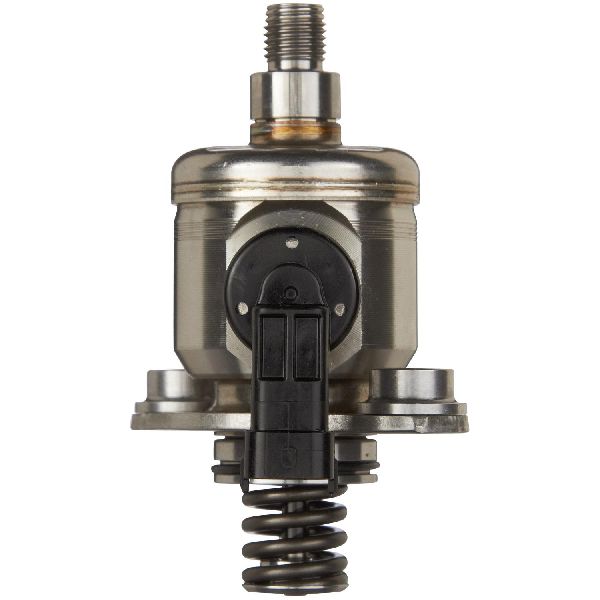
On the 2010-2017 Equinox with the 2.4L engine, a P0172 code is most often caused by a failing high-pressure fuel pump (HPFP) that leaks fuel into the engine oil. The primary fix is replacing the HPFP and changing the oil and filter. Expect to pay $150-$250 for an OEM pump.
- For a P0172 on a 2.4L Equinox, the most likely cause is a failed high-pressure fuel pump (HPFP) leaking fuel into the engine oil.
- The easiest and most definitive diagnostic check is to smell the engine oil on the dipstick for a strong gasoline odor.
- When replacing the HPFP, it is critical to also replace the high-pressure fuel line and perform an engine oil and filter change.
- Always use an OEM or ACDelco replacement HPFP. Aftermarket pumps are widely reported to cause new problems, specifically code P0191 and reduced power mode.
What's Unique About the 2010-2017 Chevrolet EQUINOX

The 2.4L Ecotec engine in the second-generation Equinox uses a gasoline direct injection (GDI) system, which includes a high-pressure fuel pump (HPFP) driven by the camshaft. A well-documented issue, cited in GM Technical Service Bulletins, is the failure of this pump's internal seal. This failure allows raw gasoline to leak directly into the crankcase, contaminating the engine oil. The fuel-laden oil vapors are then drawn into the intake manifold via the PCV system, creating a rich condition that the ECM cannot compensate for, leading directly to the P0172 code.
Diagnostic Flowchart

Tap your situation to follow the diagnostic path that matches what you're seeing on this vehicle.
Symptoms You May Notice
- Check Engine Light is on
- Rough or unstable idle
- Engine runs on or sputters for a few seconds after turning the key off (dieseling)
- Strong smell of gasoline from the engine bay or in the cabin
- Noticeable smell of gasoline on the oil dipstick
- Reduced fuel economy
- Hesitation or stumbling during acceleration
- Black smoke from the exhaust
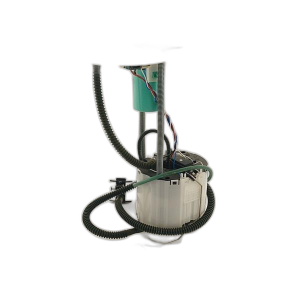
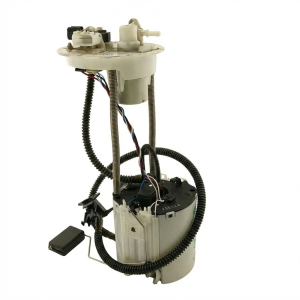
- Replacing the in-tank fuel pump. Owner complaint NHTSA ODI #11476716 shows a dealer replaced the in-tank pump, but the issue returned immediately. The problem is almost always the engine-mounted high-pressure pump, not the one in the fuel tank.
Most Likely Causes

- Leaking High-Pressure Fuel Pump (HPFP) 🔴 High Probability → Shop Fuel Pump The seal on the plunger shaft of the HPFP is a known failure point on the 2.4L Ecotec engine, as documented in GM TSBs #G-176360, #G-171837, and #PIP4783B. This allows fuel to contaminate the engine oil.
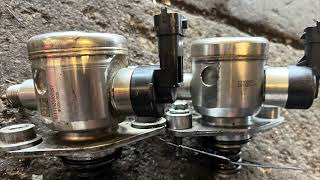
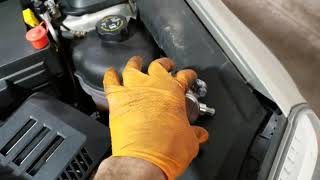
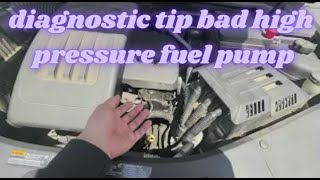
How to confirm: Pull the oil dipstick and smell it for a strong gasoline odor. The oil may also appear thin or watery 🎬 Watch: How to locate and diagnose a leaking fuel pump. and be over the 'full' mark. A mechanic can also perform a fuel system leak-down test to confirm the pump is losing pressure internally.
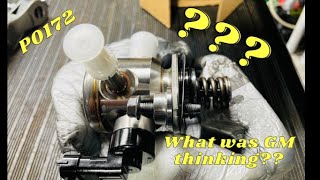
Typical fix: Replace the high-pressure fuel pump and the high-pressure fuel line. 🎬 See this step-by-step walkthrough for replacing the HPFP. An engine oil and filter change is mandatory to remove the contaminated oil.
Est. part cost: $150-$300 - Faulty or Dirty Mass Airflow (MAF) Sensor 🟡 Medium Probability → Shop Fuel Injection Air Flow Meter
How to confirm: A dirty MAF sensor can be cleaned using a dedicated MAF sensor cleaner spray. If cleaning doesn't resolve the issue, the sensor's output can be monitored with a scan tool to see if its readings are incorrect for the given airflow. A rule of thumb is that the g/s reading at idle should be roughly equal to the engine's displacement in liters (e.g., ~2.4 g/s for the 2.4L engine).
Typical fix: First, attempt to clean the sensor. If the problem persists, replace the MAF sensor.
Est. part cost: $60-$120 - Faulty Upstream Oxygen (O2) Sensor ⚪ Low Probability → Shop Oxygen Sensor
How to confirm: A faulty O2 sensor might send a false 'rich' signal to the ECM. A scan tool can be used to observe the O2 sensor's voltage. A sensor that is stuck high (e.g., above 0.8V) and doesn't fluctuate is a strong indicator of failure.
Typical fix: Replace the upstream O2 sensor (Bank 1, Sensor 1).
Est. part cost: $50-$100 - Leaking Fuel Injector(s) ⚪ Low Probability → Shop Fuel Injector
How to confirm: This is less common than the HPFP issue. A fuel injector balance test can be performed by a professional to identify a leaking injector. Often, a leaking injector will also cause a specific cylinder misfire code (e.g., P0301-P0304).
Typical fix: Replace the faulty fuel injector(s).
Est. part cost: $70-$150 per injector
Rare But Worth Checking
- Faulty EVAP Purge Solenoid: → Shop Vapor Canister If the purge solenoid sticks open, it can allow un-metered fuel vapors from the charcoal canister to enter the intake manifold at the wrong time, causing a rich condition.
Diagnosis Steps

- Read Fault Codes: Use an OBD-II scanner to confirm P0172 and check for any other codes like P0191 or P0300.
- Check the Oil: This is the most critical step for this vehicle. Pull the oil dipstick. If it has a strong smell of gasoline, the high-pressure fuel pump is almost certainly the culprit. Stop here and plan to replace the HPFP.
- Inspect Air Intake System: Check the engine air filter to ensure it's not clogged and restricting airflow. Inspect the intake tube for any cracks or loose connections between the MAF sensor and the throttle body.
- Clean the MAF Sensor: If the oil is not contaminated with fuel, the next step is to clean the Mass Airflow sensor located on the air intake tube using a dedicated MAF sensor cleaner.
- Analyze Live Data: Using a scan tool, observe the short-term (STFT) and long-term (LTFT) fuel trims. For a P0172, you will see highly negative numbers (e.g., -20% or more) as the ECM tries to pull fuel. A normal total fuel trim should not exceed +/- 10%.
- Check O2 Sensor Operation: While viewing live data, check that the upstream O2 sensor voltage is fluctuating rapidly. If it's stuck high (above 0.8V), it may be faulty.
- Professional Diagnosis: If the above steps do not isolate the cause, a fuel pressure leak-down test is needed to definitively confirm a leaking HPFP or fuel injector, as described in GM service information.
Parts You'll Likely Need
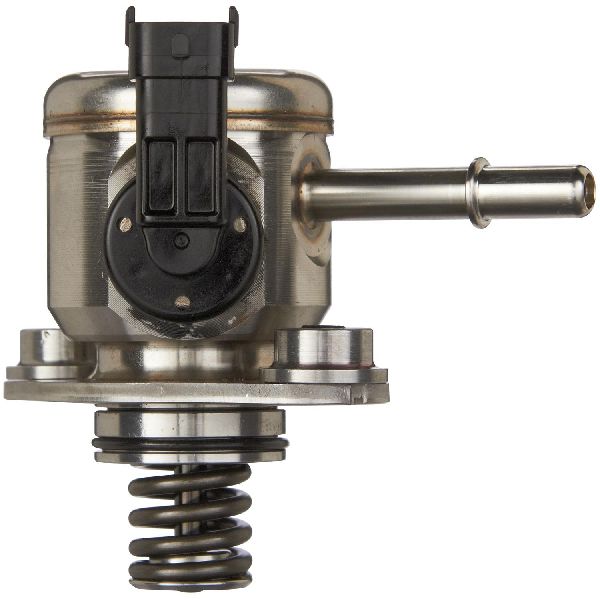
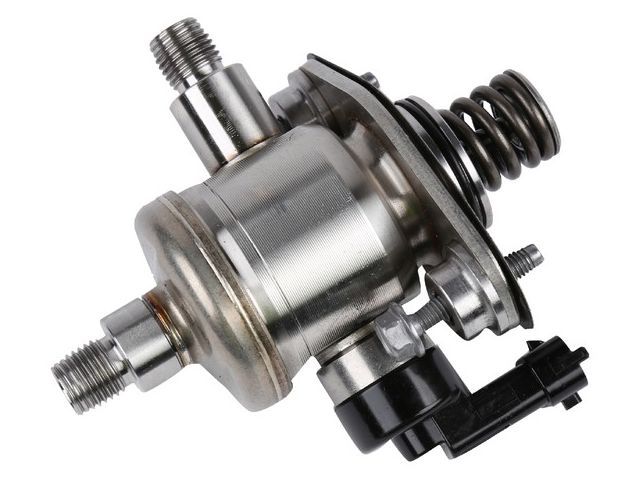
- High-Pressure Fuel Pump
(OEM #12641847)— This is the most common failure point causing a P0172 code on the 2.4L Equinox, due to an internal seal leak that contaminates the engine oil with fuel.
Trusted brands: ACDelco, GM Genuine Parts
OEM price range: $180-$280
Aftermarket price range: $80-$150 - High-Pressure Fuel Line
(OEM #12677329)— This is considered a one-time-use part by GM. Once loosened, it should be replaced to ensure a proper seal and prevent high-pressure fuel leaks.
Trusted brands: ACDelco, GM Genuine Parts
OEM price range: $30-$50
Aftermarket price range: $20-$40 - Mass Airflow (MAF) Sensor — A dirty or faulty MAF sensor can send incorrect airflow readings to the ECM, causing it to calculate an incorrect fuel mixture.
Trusted brands: ACDelco, Delphi, Bosch
OEM price range: $90-$150
Aftermarket price range: $50-$100
Related Codes That Often Appear With This One
- P0191 — This code for 'Fuel Rail Pressure Sensor Circuit Range/Performance' often appears with P0172 when the high-pressure fuel pump is failing. Aftermarket HPFPs are known to cause this code combination due to an inability to properly regulate pressure during deceleration tests performed by the ECM.
- P0300 — A 'Random/Multiple Cylinder Misfire' code can be triggered because the excessively rich air-fuel mixture fails to ignite properly.
Technical Service Bulletins (TSBs) & Recalls

- Bulletin #G-176360 / #G-171837: Notes that the fuel pump plunger shaft seal may wear and allow fuel to leak into the crankcase, setting a P0172 DTC.
- Bulletin #PIP4783B: Describes the diagnostic path for a P0172 with fuel in the crankcase, recommending replacement of the high-pressure fuel pump and an oil change.
Platform-Specific Known Issues
- GM Technical Service Bulletin #PIP4783B explicitly details the scenario where a P0172 code is caused by the high-pressure fuel pump leaking fuel into the crankcase on 2010-2017 Equinox models with the 2.4L engine.
- Owner complaints filed with the NHTSA confirm this issue, with ODI #11424272 stating, 'Engine runs rich with a P0172 code and requires a new fuel pump to resolve the issue.'
- Using aftermarket high-pressure fuel pumps is strongly discouraged. Multiple sources report that aftermarket pumps can cause a P0191 code and put the vehicle into reduced power mode shortly after installation 🎬 Watch: Why aftermarket pumps cause P0191 and diagnostic warnings., requiring replacement with an OEM part to fix the new problem.
Mechanic-Grade Diagnostic Values
- Low-Side Fuel Pressure (in-tank pump) — expected: Approx. 60-70 PSI.. Failure: Significantly lower pressure indicates a weak in-tank pump, but this is not the common cause for P0172 on this platform.
- High-Side Fuel Rail Pressure (HPFP) — expected: Varies with demand. Can be around 400-500 PSI at idle and rise to over 2000 PSI under load.. Failure: When the engine is shut off, a faulty aftermarket HPFP may only drop to ~290 PSI instead of dropping near the low-side pressure (~70 PSI), indicating it's holding excess pressure and causing a rich condition.
- Long-Term Fuel Trim (LTFT) — expected: Between -10% and +10%.. Failure: A P0172 is typically associated with LTFT values of -20% or more negative, as the ECM tries to remove excess fuel.
- Mass Airflow (MAF) Sensor at Idle — expected: Approximately 2.4 to 5.6 g/s for a 2.4L engine at normal operating temperature.. Failure: Readings that are significantly higher than expected can cause the ECM to inject too much fuel, leading to a rich condition.
Scan Tool Commands That Help
- GDS2 / Professional Scan Tool: Fuel Trim Reset — After replacing a component that affects the air/fuel mixture (like the HPFP, MAF, or O2 sensor), resetting the fuel trims forces the ECM to relearn the fuel delivery strategy immediately, rather than slowly adapting over time. This can confirm if the fix was successful.
- GDS2 / Professional Scan Tool: Fuel Pump Output Test / Fuel Pressure Control — This bidirectional command allows a technician to command the fuel pump to different pressures to test its response. It can help verify if the high-pressure pump is responding correctly to commands from the ECM.
Real Owner Repair Stories
- ScannerDanner Forum user 'iancharles23' (2012 Chevy Equinox 2.4L, 66,000 miles) — Hard to start after stalling, reduced power mode, stalls at stops, codes P0172 and P0191.
❌ Tried (didn't work) Customer had already replaced the HPFP and Fuel Rail Pressure sensor with aftermarket (brand 'Standard') parts., Technician replaced battery, replaced exhaust manifold at customer request.
✅ What actually fixed it Replacing the aftermarket high-pressure fuel pump with an OEM GM Genuine pump resolved the issue. The aftermarket pump would not allow rail pressure to drop below 290 PSI on deceleration, while the OEM pump correctly dropped to ~70 PSI, matching the low-side pressure. - 2CarPros Forum user (2014 GMC Terrain 2.4L, 91,000 miles) — After replacing a leaking HPFP, the vehicle set codes P0172 and P0191, with a 'reduced power' light and 'service stabilitrak' message.
❌ Tried (didn't work) Replaced high-pressure fuel pump (likely aftermarket, though not explicitly stated)., Cleaned the PCV system.
✅ What actually fixed it The issue was identified as a performance problem with the HPFP, causing the PCM to see a pressure it didn't like, triggering P0191 and the subsequent rich code. The fix, as implied by the mechanic's advice and similar stories, is to use an OEM pump.
OEM Part Supersession History
12608371, 12633115, 12633423, 12639694→12641847— Standard part evolution and design updates by the manufacturer.
Heads up: While multiple part numbers have been used, 12641847 is the current primary replacement. Using aftermarket equivalents is known to cause P0191 codes.
Model Year Variations Within This Range
- 2010-2017: The 2.4L Ecotec engine came in several versions identified by RPO codes, including LAF, LEA, and LUK. While the core issue with the HPFP is common across them, the LEA and LUK versions are Flex-Fuel (E85) compatible, which adds a fuel composition sensor that could, in rare cases, contribute to fueling issues if it fails.
Helpful Videos
Used OEM Parts in Stock
New Aftermarket Parts Available


The information in this article is provided for general reference and educational purposes only. Vehicle specifications, procedures, and part compatibility can vary by production date, trim level, and region. Always consult your vehicle's factory service manual and verify part numbers before purchasing or performing repairs. Safety-critical components such as airbags, seat belts, and braking systems should be installed by a qualified professional.
- Chevrolet EQUINOX:
- 🧭 Diagnostic Flowchart
- 🎬 Helpful Videos
- 🛍️ Shop This Part
- What's Unique About the 2010-2017 Chevrolet EQUINOX
- Symptoms You May Notice
- Most Likely Causes
- Rare But Worth Checking
- Diagnosis Steps
- Parts You'll Likely Need
- Related Codes That Often Appear With This One
- Technical Service Bulletins (TSBs) & Recalls
- Platform-Specific Known Issues
- Mechanic-Grade Diagnostic Values
- Scan Tool Commands That Help
- Real Owner Repair Stories
- OEM Part Supersession History
- Model Year Variations Within This Range
- 🎟️ Get 5% Off