

P0172 on 2010-2017 Chevrolet Equinox 2.4L: System Too Rich Causes and Fixes
On a 2010-2017 Equinox with the 2.4L engine, a P0172 code is almost always caused by a failed high-pressure fuel pump (HPFP) leaking fuel into the engine oil. The definitive check is smelling the oil dipstick for gasoline. The fix is to replace the HPFP (use OEM), the single-use fuel line, and change the contaminated oil and filter.
- For a 2010-2017 Equinox 2.4L, P0172 almost always points to a failed high-pressure fuel pump (HPFP) leaking fuel into the engine oil.
- The most critical diagnostic step is to check the engine oil dipstick for a strong smell of gasoline. This simple check can save hundreds of dollars in misdiagnosis.
- When replacing the HPFP, you must also replace the high-pressure fuel line and perform an engine oil and filter change to prevent immediate repeat failure or engine damage.
- Using an OEM or ACDelco-branded HPFP is strongly recommended, as aftermarket pumps are widely reported to cause new issues, such as code P0191.
- Do not drive the vehicle. Fuel-contaminated oil loses its lubricating properties and can quickly lead to catastrophic engine failure.
What's Unique About the 2010-2017 Chevrolet Equinox
The 2.4L Ecotec is a direct-injection engine, and its high-pressure fuel pump (HPFP) is a well-documented failure point. Unlike many other vehicles where P0172 might point to an oxygen sensor or MAF sensor, on this specific Equinox, the cause is overwhelmingly a faulty HPFP. The pump's internal seals fail, allowing raw gasoline to leak past the plunger and directly into the crankcase, contaminating the engine oil. This fuel-laced oil then releases vapors that are pulled into the intake through the PCV system, creating a rich condition that the ECM cannot correct. This failure was so common on early models that GM issued a Special Coverage Adjustment (12313) for 2010-2011 vehicles.
Symptoms You May Notice
- Check Engine Light is on
- Strong smell of gasoline from the engine bay or in the oil
- Engine oil level is over the 'full' mark on the dipstick
- Black smoke from the exhaust
- Rough idle or engine shuddering at a stop
- Engine hesitation or stalling
- Poor fuel economy
- Engine run-on or 'dieseling' after the ignition is turned off
- Replacing the oxygen sensor first. The O2 sensor is usually just reporting the rich condition, not causing it. On this engine, the HPFP is a much more likely cause.
- Replacing the MAF sensor or fuel injectors without first checking the oil for fuel contamination.
- Assuming the in-tank (low-pressure) fuel pump is the cause. The P0172 code on this platform is almost exclusively related to the engine-mounted high-pressure pump.
Most Likely Causes
- Leaking High-Pressure Fuel Pump (HPFP) 🔴 High Probability → Shop Fuel Pump The HPFP on the 2.4L Ecotec is known to develop internal leaks, allowing fuel to pass into the crankcase. This is a very common failure on this platform, acknowledged by GM through multiple TSBs and a special coverage for 2010-2011 models.
How to confirm: Remove the engine oil dipstick and smell it. A strong odor of gasoline is a definitive sign of HPFP failure. The oil level may also be noticeably high. A secondary check is to pull the PCV hose from the intake manifold; if fuel trims improve, it confirms fuel vapors from the crankcase are the source.
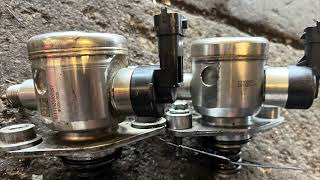
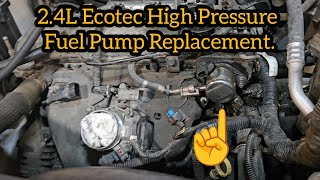
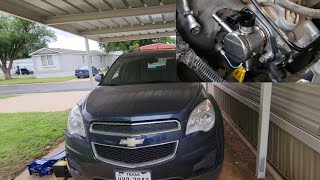
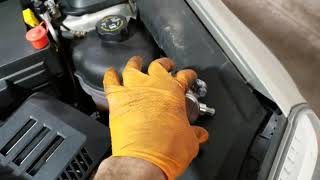
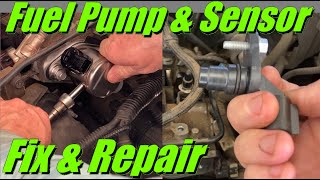
Typical fix: Replace the high-pressure fuel pump (OEM/ACDelco recommended), the high-pressure fuel line (one-time use), and the fuel pump camshaft follower (tappet). An immediate engine oil and filter change is mandatory. 🎬 See this walkthrough on replacing the pump and changing the oil.
Est. part cost: $150-$300 - Contaminated Engine Oil from Short Trips 🟡 Medium Probability GM issued TSB 18-NA-246 which notes that frequent short-trip driving can cause fuel to accumulate in the crankcase, as the engine doesn't get hot enough to burn it off. This fuel vapor is then ingested by the PCV system, causing a rich condition.
How to confirm: Review driving habits. If the vehicle is used primarily for short trips, this is a possibility. Smell the oil for fuel. The TSB suggests this as a cause if a mechanical failure of the HPFP or injectors cannot be verified.
Typical fix: Perform an engine oil and filter change. For some model years, the TSB also calls for installing a revised PCV valve. Advise the driver to ensure the vehicle is driven for longer periods to allow the engine to reach full operating temperature.
Est. part cost: $40-$80 - Stuck Open EVAP Purge Solenoid ⚪ Low Probability → Shop Vapor Canister
How to confirm: With the engine running, disconnect the electrical connector and the vacuum line from the purge solenoid to the intake manifold. If you can feel vacuum from the solenoid's port, it is stuck open and needs to be replaced.
Typical fix: Replace the EVAP purge solenoid.
Est. part cost: $25-$50
Rare But Worth Checking
- Leaking Fuel Injector: → Shop Fuel Injector While possible, this is less common than the HPFP failure. It would typically be accompanied by a misfire code for a specific cylinder, which is not the case with the generalized rich condition from the HPFP.
- Dirty or Faulty Mass Airflow (MAF) Sensor: → Shop Fuel Injection Air Flow Meter A MAF sensor can become dirty and send incorrect airflow readings to the ECM. While it's a common cause for fuel trim codes on many cars, it's less likely to be the primary culprit here compared to the HPFP and is often cleaned as a first, but incorrect, step.
- Faulty Front Oxygen (O2) Sensor: → Shop Oxygen Sensor An O2 sensor that is failing might incorrectly read a lean condition, causing the ECM to command more fuel and create an actual rich condition. However, replacing the O2 sensor without first checking for fuel in the oil is a common misdiagnosis on this vehicle.
Diagnosis Steps
- Scan the ECM for any other stored trouble codes.
- Crucial First Step: Check the engine oil level and smell the oil on the dipstick for a strong gasoline odor. If fuel is present, the high-pressure fuel pump is almost certainly the cause.
- If fuel smell is confirmed, perform a secondary check by disconnecting the PCV hose from the intake manifold while monitoring fuel trims with a scan tool. A rapid improvement towards 0% confirms fuel vapors from the crankcase are the source.
- If no fuel is detected in the oil, inspect the air filter and air intake tube for blockages or restrictions.
- Check long-term and short-term fuel trims with a scan tool. A very negative number (e.g., -25% or more, with some owners reporting -49%) confirms the rich condition.
- Test the EVAP purge solenoid for proper operation.
- If the above steps do not identify the cause, a professional should perform a fuel pressure test to check both the low-pressure and high-pressure systems for leaks or incorrect pressure.
Parts You'll Likely Need
- High-Pressure Fuel Pump
(OEM #12641847 (Supersedes: 12639694, 12633423, 12633115, 12608371))— This is the most common failure point causing P0172. The pump's internal seal fails, contaminating the engine oil with fuel. Use of OEM/ACDelco is highly recommended to avoid secondary codes like P0191.
Trusted brands: ACDelco, GM Genuine Parts
OEM price range: $150-$250
Aftermarket price range: $70-$150 - High-Pressure Fuel Line
(OEM #12677329 (or 12608374 depending on specific fitment))— This line connects the HPFP to the fuel rail. GM considers this a one-time-use part that must be replaced anytime it is loosened to prevent dangerous high-pressure fuel leaks.
Trusted brands: ACDelco, GM Genuine Parts
OEM price range: $20-$40
Aftermarket price range: $15-$30 - Fuel Pump Camshaft Follower (Tappet)
(OEM #12645725 / 12590679)— This small mechanical bucket sits between the camshaft lobe and the HPFP plunger. It is inexpensive and considered best practice to replace it with the pump, as a worn follower can damage the new pump.
Trusted brands: ACDelco, INA
OEM price range: $15-$30
Aftermarket price range: $10-$20 - Engine Oil and Filter — Must be changed after replacing the HPFP to remove the gasoline-contaminated oil that can cause severe engine damage.
Trusted brands: ACDelco, Mobil 1, Pennzoil
Aftermarket price range: $40-$80
Related Codes That Often Appear With This One
- P0191 — This code for 'Fuel Rail Pressure Sensor Circuit Range/Performance' can appear after replacing the HPFP, especially if a cheaper aftermarket pump is used. Forum and video evidence strongly suggests that many aftermarket pumps cannot meet the performance criteria GM's ECM expects, causing this code and a reduced power mode. 🎬 Watch: Why aftermarket pumps cause P0191 and how to diagnose it.
- P0300 — A 'Random/Multiple Cylinder Misfire' code can occur because the extremely rich condition or diluted oil is causing poor combustion and fouling spark plugs.
Technical Service Bulletins (TSBs) & Recalls
- 12313: Special Coverage Adjustment for 2010-2011 models covering engine balance chain and fuel pump plunger seal failure causing P0172.
- PIP4783B / GM Bulletin 21-NA-273: Addresses P0172 and engine run-on due to fuel in crankcase from a leaking HPFP.
- 18-NA-246: Addresses fuel accumulation in oil from short-trip driving habits causing P0172.
- PIP5203C: Warns that installing an incorrect camshaft can cause excessively high fuel pressure and codes P0089/P228D, a rare but possible cause for fuel system faults.
- Bulletin #G-176360: Notes that the fuel pump plunger shaft seal may wear and allow fuel to leak into the crankcase, setting a P0172 DTC and causing engine run-on or rough running.
- Bulletin #G-171837: Confirms that a worn fuel pump plunger shaft seal can allow fuel to leak into the crankcase, illuminating the Malfunction Indicator Light with code P0172.
Platform-Specific Known Issues
- GM Special Coverage Adjustment 12313: For 2010-2011 models, GM extended the warranty to 10 years/120,000 miles to cover the replacement of the HPFP due to the plunger shaft seal wearing out and causing P0172.
- GM Technical Service Bulletin (TSB) 21-NA-273 (supersedes PIP4783B): Directly addresses the P0172 code, along with rough running and engine run-on, pointing to fuel contamination of the crankcase from a leaking high-pressure fuel pump.
- TSB 18-NA-246: Discusses how frequent short driving trips can also cause fuel to accumulate in the oil, leading to a P0172 code even without a mechanical failure. The fix involves an oil change and sometimes a revised PCV valve.
Mechanic-Grade Diagnostic Values
- Low-Side Fuel Pressure (In-tank pump) — expected: 55-70 PSI (KOEO prime and idle). Failure: Pressure below this range indicates a weak in-tank pump, though this is not the common cause for P0172 on this platform.
- High-Side Fuel Rail Pressure (HPFP) — expected: Varies with demand; ~400-500 PSI at idle, rising to over 2000 PSI under load.. Failure: With a faulty aftermarket pump, pressure may fail to drop below ~290 PSI on deceleration/engine off, when it should drop to match low-side pressure (~70 PSI). This holds the system rich.
- Long-Term Fuel Trim (LTFT) — expected: Between -10% and +10%. Failure: A P0172 is set when trims are excessively negative, often -25% or worse, as the ECM tries to remove fuel.
- Mass Airflow (MAF) Sensor at Idle — expected: Approximately 2.4 to 5.6 g/s for a 2.4L engine at normal operating temperature.. Failure: Significantly higher readings can trick the ECM into adding too much fuel.
- Upstream O2 Sensor Voltage — expected: Fluctuating rapidly between 0.1V and 0.9V.. Failure: A reading stuck high (e.g., >0.8V) indicates a persistent rich condition is being detected.
Scan Tool Commands That Help
- GDS2 / Professional Scan Tool: Fuel Pump Output Test / Fuel Pressure Control — Allows a technician to command the HPFP to different pressures to test its response and verify if it's responding correctly to ECM commands. This is useful for confirming a faulty pump or diagnosing an aftermarket pump that isn't performing to spec.
- GDS2 / Professional Scan Tool: Fuel Trim Reset — After replacing the HPFP or other fuel system components, this function should be used to clear the learned long-term fuel trim values. This forces the ECM to relearn from a baseline of zero, which is critical for verifying the repair was successful and preventing the old rich correction from causing driveability issues.
- GDS2 / Professional Scan Tool: Fuel Composition Reset — On Flex Fuel-capable LEA/LUK engines, the ECM can sometimes incorrectly 'learn' a high ethanol content, causing it to command more fuel and trigger a P0172. If no mechanical faults are found, resetting the fuel composition can resolve the issue.
Real Owner Repair Stories
- ScannerDanner Forum user 'iancharles23' (2012 Chevrolet Equinox 2.4L, 66,000 miles) — Hard to start after stalling, reduced power mode, stalls at stops, P0172, P0191.
❌ Tried (didn't work) The user initially installed an aftermarket high-pressure fuel pump.
✅ What actually fixed it Replacing the aftermarket HPFP with an OEM GM pump. The aftermarket pump would not allow fuel rail pressure to drop below 290 PSI on deceleration, causing a rich condition. The OEM pump correctly dropped pressure to ~70 PSI (matching the low-side pump), resolving the codes and stalling. - Chevy Equinox Forum user (2014 Chevrolet Equinox 2.4L, 115,103 miles) — Enters limp mode ('Service StabiliTrak') after stopping. Codes P0191, P2635, P0172.
❌ Tried (didn't work) Replaced spark plugs, Replaced both oxygen sensors, Replaced VVT sensor, Replaced MAF sensor, Replaced fuel pressure rail sensor, Replaced throttle body, Replaced high-pressure fuel pump
✅ What actually fixed it The user replaced nearly every related component. The combination of P2635 (Low-pressure pump performance) and P0191/P0172 (High-pressure performance/rich) strongly suggests the final unresolved issue was the low-pressure in-tank fuel pump failing to adequately supply the high-pressure pump, causing both codes. The story highlights a case where the HPFP was replaced but the root cause was likely the supporting low-pressure pump. - NHTSA ODI #11706104 — An owner reported that the vehicle idled roughly and nearly stalled; a diagnosis provided code P0172.
- NHTSA ODI #11476716 — A driver experienced the vehicle entering limp mode after 15 minutes of driving with the engine light on and codes P0191 and P0172. Despite a dealer replacing the fuel tank fuel pump, the issue persisted.
- NHTSA ODI #11424272 — A report noted the engine runs rich with a P0172 code, causing a fluctuating tachometer reading at idle and requiring a new fuel pump to resolve the issue.
OEM Part Supersession History
12608371, 12633115, 12633423, 12639694→12641847— Standard part evolution and design updates by the manufacturer to improve reliability.
Heads up: Using aftermarket equivalents is widely reported to cause P0191 codes and limp mode because they cannot maintain correct pressure on deceleration.
Model Year Variations Within This Range
- 2010-2011: These models used the LAF engine. They were subject to Special Coverage Adjustment 12313 for both HPFP failure and balance chain stretch.
- 2012-2017: These models primarily used the LEA and LUK engines, which are Flex-Fuel (E85) compatible. This introduces a fuel composition sensor and the possibility of the ECM incorrectly learning a high ethanol content, which can cause a rich condition. The core HPFP failure remains common.
Diagnostic Flowchart
Real Owner Stories
Aggregated from forums and TSBs cited above. Mileages and costs reflect what owners reported in those sources.
2016 Chevrolet Equinox 2.4L Ecotec
Symptoms: Experienced a P0172 code along with engine dieseling (run-on after turning off the ignition).
What fixed it: Initially tried cleaning the MAF sensor with no success. Confirmed fuel in the oil, then replaced the high-pressure fuel pump (HPFP) and performed an oil change, which completely resolved the issue.
Source hint: ChevroletForum.com thread titled '2016 Chevy Equinox 2.4 Ecotec - P0172 - Dieseling'
2010 Chevrolet Equinox 2.4L
Symptoms: Received frequent P0172 'System too rich' error codes alongside a 'Service Stabilitrak' warning message.
What fixed it: Identified the high-pressure fuel pump (HPFP) failure as the root cause, which creates a domino effect triggering both the rich condition and the Stabilitrak warning.
Source hint: ChevroletForum.com thread titled '2010 Equinox frequent error codes P0172 System too rich and also Service Stabilitrack'
2016 GMC Terrain 2.4L
Symptoms: Check Engine Light illuminated with a P0172 code.
What fixed it: Community members correctly pointed to the high-pressure fuel pump as the likely culprit, demonstrating how widespread this specific failure is on the shared 2.4L platform.
Source hint: Reddit r/gmc thread titled '2016 GMC Terrain CEL P0172'
Chevrolet Equinox 2.4L
Symptoms: P0172 code triggered. Diagnosed by smelling fuel in the oil and watching fuel trims rapidly improve toward 0% when the PCV hose was pulled from the intake manifold.
What fixed it: Replaced the high-pressure fuel pump. The mechanic strongly advised using OEM parts, warning that aftermarket HPFPs often lead to a new P0191 code and reduced engine power.
Source hint: YouTube video titled 'Chevy Equinox 2.4L P0172 Diag, P0191 Warning and Info'
Related OBD-II Codes
Frequently Asked Questions
Does GM have a special warranty or recall for the P0172 code on my Equinox?
My 2016 Equinox has a P0172 code and the engine keeps running after I turn the key off. Is this related?
Can frequent short trips cause a P0172 code on the 2.4L Ecotec?
Should I use an aftermarket high-pressure fuel pump to fix my P0172 code?
Why is my 'Service Stabilitrak' message on at the same time as the P0172 code?
How can I quickly check if my HPFP is leaking fuel into the engine?
Helpful Videos
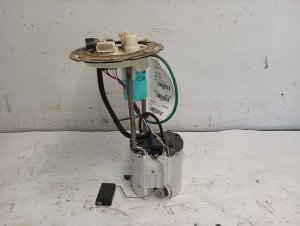
Used OEM Parts in Stock
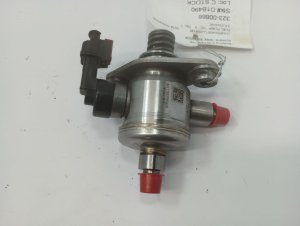
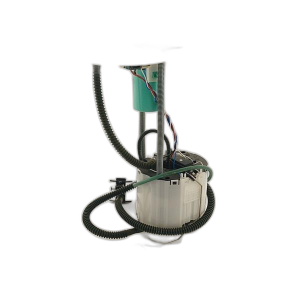
New Aftermarket Parts Available


The information in this article is provided for general reference and educational purposes only. Vehicle specifications, procedures, and part compatibility can vary by production date, trim level, and region. Always consult your vehicle's factory service manual and verify part numbers before purchasing or performing repairs. Safety-critical components such as airbags, seat belts, and braking systems should be installed by a qualified professional.
- Chevrolet Equinox:
- 🧭 Diagnostic Flowchart
- 🎬 Helpful Videos
- 🛍️ Shop This Part
- What's Unique About the 2010-2017 Chevrolet Equinox
- Symptoms You May Notice
- Most Likely Causes
- Rare But Worth Checking
- Diagnosis Steps
- Parts You'll Likely Need
- Related Codes That Often Appear With This One
- Technical Service Bulletins (TSBs) & Recalls
- Platform-Specific Known Issues
- Mechanic-Grade Diagnostic Values
- Scan Tool Commands That Help
- Real Owner Repair Stories
- OEM Part Supersession History
- Model Year Variations Within This Range
- Real Owner Stories
- 2016 Chevrolet Equinox 2.4L Ecotec
- 2010 Chevrolet Equinox 2.4L
- 2016 GMC Terrain 2.4L
- Chevrolet Equinox 2.4L
- Related OBD-II Codes
- Frequently Asked Questions
- 🎟️ Get 5% Off