

P0172 on 2018-2022 GMC Terrain: Causes and Fixes for System Too Rich
On a 2018-2022 GMC Terrain, code P0172 is most often caused by the charge air cooler (CAC) tube disconnecting from the throttle body. This is a simple fix requiring re-securing the pipe and clamp. Other causes include fuel in the oil from short-trip driving or a faulty high-pressure fuel pump.
- Before buying any parts, first check if the large air tube (charge air cooler pipe) has popped off the engine's throttle body. This is the most common cause of P0172 on this vehicle and is a free/cheap fix.
- If the intake piping is secure, check your engine oil for a strong gasoline smell. If present, an oil change may resolve the code, especially if the vehicle is used for many short trips.
- Code P0172 is often accompanied by other codes like P0299 (Underboost) or P0101 (MAF Performance), which are strong indicators of the charge air cooler pipe issue.
- Do not immediately replace expensive parts like O2 sensors or fuel pumps without confirming the simple, common mechanical failures first.
What's Unique About the 2018-2022 Gmc TERRAIN
The 2018-2022 GMC Terrain, equipped with small displacement turbocharged engines (1.5L LYX and 2.0L LTG), has a well-documented issue where the charge air cooler (CAC) pipe can disconnect from the throttle body. This allows pressurized air from the turbo to escape *after* it has been measured by the mass airflow sensor. The ECM injects fuel for air that never reaches the cylinders, creating a rich condition. This specific mechanical failure is so common that GM has issued multiple Technical Service Bulletins (TSBs), culminating in TSB #22-NA-224, for it and its sibling vehicle, the Chevrolet Equinox.
Diagnostic Flowchart
Tap your situation to follow the diagnostic path that matches what you're seeing on this vehicle.
Symptoms You May Notice
- Check Engine Light illuminated
- "Reduced Engine Power" message on the dash
- Rough or unstable idle
- Poor fuel economy
- Strong smell of gasoline from the exhaust or in the engine oil
- Black smoke from the exhaust pipe
- Engine continues to run for a few seconds after being shut off ('dieseling')
- Replacing oxygen sensors without proper diagnosis. The O2 sensor is often just correctly reporting the rich condition caused by another component, like the CAC pipe leak or fuel in the oil.
- Replacing the Mass Airflow (MAF) sensor or throttle body. TSB #22-NA-224 explicitly advises against replacing these parts for the common charge-pipe-disconnection issue unless they are physically damaged.
Most Likely Causes
- Charge Air Cooler (CAC) Pipe Disconnected from Throttle Body 🔴 High Probability → Shop Intercooler This is a widely documented failure on this platform, as noted in manufacturer TSB #22-NA-224 (which supersedes #PIP5710A and #PIP5651G). The connection clamp may not provide sufficient force to hold the pipe under turbo boost pressure, causing it to separate from the throttle body.
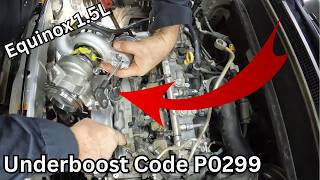
How to confirm: Visually inspect the large air pipe connecting to the engine's throttle body. It will often be completely detached or noticeably loose. This issue is almost always accompanied by underboost code P0299. 🎬 Watch: See how a loose pipe causes the P0299 underboost code.
Typical fix: Re-seat the charge air cooler pipe onto the throttle body and securely fasten the clamp. Inspect the tube end, O-ring seal, and throttle body for any damage from the event. GM released an improved retainer clip (Part No. 13434668) for some models to prevent recurrence.
Est. part cost: $15-$35 for an updated clamp or retainer clip. - Fuel Contamination of Engine Oil 🟡 Medium Probability GM TSB #18-NA-246 states that frequent short-trip driving can prevent the engine from reaching full operating temperature, allowing unburned fuel to accumulate in the crankcase. This fuel vapor is then drawn into the intake via the PCV system, creating a rich condition that the ECM cannot compensate for.
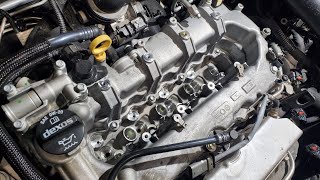
How to confirm: Remove the oil filler cap or dipstick and smell for a strong odor of raw gasoline. The oil level may also appear to be over the full mark. A scan tool will show a large negative long-term fuel trim value. 🎬 Watch: A mechanic diagnoses a rich condition and fuel trim issues.
Typical fix: Perform an engine oil and filter change to remove the contaminated oil. Advise the driver to ensure the vehicle is driven for longer periods to allow the engine to fully warm up. TSB #18-NA-246 also recommends updating the ECM software and, for some 2016-2019 models, installing a revised PCV valve to mitigate the issue.
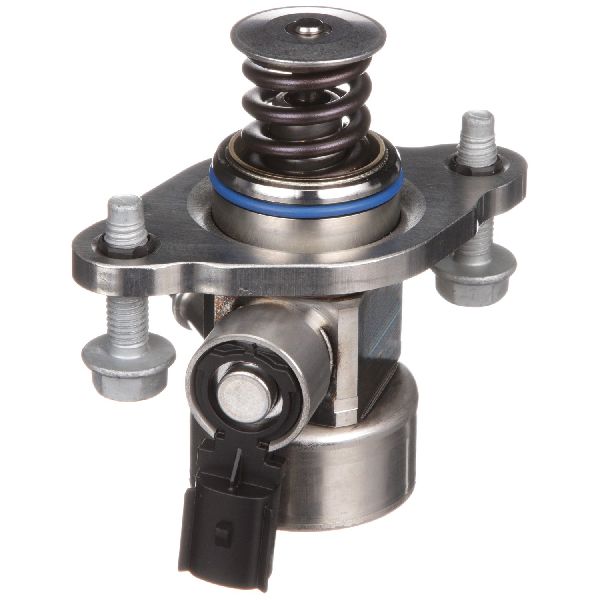
Est. part cost: $40-$80 for oil and filter - Faulty High-Pressure Fuel Pump (HPFP) ⚪ Low Probability → Shop Fuel Pump While a very common issue on the previous generation 2.4L engine, the HPFP on the 1.5L and 2.0L turbo engines can still fail. A failed internal seal can leak fuel directly into the engine crankcase, contaminating the oil and causing a severe rich condition, similar to the short-trip issue but more severe.
How to confirm: This is often diagnosed after confirming significant fuel in the oil and ruling out driving habits as the sole cause. The diagnosis is confirmed by replacing the pump and seeing if the P0172 code is resolved.
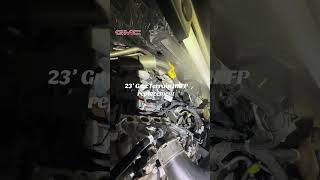
Typical fix: Replace the high-pressure fuel pump and perform an engine oil and filter change to remove the contaminated fuel/oil mixture. The fuel feed pipe is often a one-time-use part and should be replaced as well. 🎬 See this walkthrough for replacing the high-pressure fuel pump.
Est. part cost: $200-$400 - Dirty or Faulty Mass Airflow (MAF) Sensor ⚪ Low Probability → Shop Fuel Injection Air Flow Meter
How to confirm: A dirty MAF sensor can under-report airflow, causing the ECM to command too much fuel. Inspect the sensor element for dirt or debris. It can be tested by monitoring its g/s readings on a scan tool at idle (should be around 2-6 g/s). TSB #22-NA-224 specifically warns against replacing the MAF for this code unless it's confirmed to be damaged or faulty.
Typical fix: Clean the sensor with a dedicated MAF sensor cleaner. If cleaning does not resolve the issue, the sensor must be replaced.
Est. part cost: $10 for cleaner, $80-$150 for a new sensor
Rare But Worth Checking
- Leaking Fuel Injector: → Shop Fuel Injector A fuel injector can get stuck partially open, dripping excess fuel into a cylinder. This may also be accompanied by a cylinder-specific misfire code (e.g., P0301-P0304) and can be diagnosed with an injector balance test.
- Faulty Upstream Oxygen (O2) Sensor: → Shop Oxygen Sensor A failing O2 sensor can send an inaccurate signal to the ECM, falsely reporting a lean condition and causing the computer to enrich the fuel mixture unnecessarily. This is less common than the sensor failing in a way that causes a lean code.
- Leaking Intake Manifold: → Shop Engine Intake Manifold Though rare, TSB #22-NA-128 notes that a leak in the intake manifold can, on some GM vehicles, cause a rich condition and set P0172. This would require a smoke test to diagnose.
Diagnosis Steps
- Scan for any other trouble codes. Codes P0299, P0101, or P1101 strongly point to the charge air cooler pipe.
- Perform a thorough visual inspection of the engine bay. Focus on the large diameter air duct (charge air cooler pipe) that connects to the throttle body. Check if it has popped off or if the clamp is loose.
- If the intake system is secure, remove the engine oil cap and dipstick. Check for a strong smell of gasoline, which indicates fuel is contaminating the engine oil.
- If fuel is present in the oil, consider the vehicle's driving habits. If it's used for frequent short trips, an oil change and potentially an ECM update may be the only fix needed, as per TSB #18-NA-246.
- Connect a scan tool and observe long-term fuel trim (LTFT) data. A value of -20% or lower confirms the ECM is trying to correct a significant rich condition.
- If the cause is still not apparent and fuel is in the oil, suspect a leaking high-pressure fuel pump.
- Test the MAF sensor and upstream O2 sensor to ensure they are functioning correctly.
Parts You'll Likely Need
- Charge Air Cooler Outlet Tube
(OEM #84940481)— This pipe is prone to disconnecting from the throttle body. While the pipe itself is usually reusable, the retaining features or O-ring seal can be damaged when it blows off.
Trusted brands: ACDelco, GM Genuine
OEM price range: $70-$120
Aftermarket price range: $40-$80 - High-Pressure Fuel Pump
(OEM #ACDelco HPM1010 (for 1.5L LYX) or equivalent)— Can fail and leak fuel into the engine oil, causing a rich condition. This is a less common but known issue. Part numbers vary by engine.
Trusted brands: ACDelco, Bosch, Delphi
OEM price range: $250-$400
Aftermarket price range: $150-$250 - Charge Air Cooler Pipe Retainer Clip
(OEM #13434668)— GM issued this improved retainer clip to provide a more secure connection for the CAC pipe to the throttle body, preventing it from disconnecting under boost.
Trusted brands: GM Genuine
OEM price range: $15-$30
Related Codes That Often Appear With This One
- P0299 — Turbocharger/Supercharger Underboost. This code is the most common companion to P0172. It is set when the charge air cooler pipe disconnects, as the boost pressure created by the turbo is lost to the atmosphere instead of entering the engine. (TSB #22-NA-224)
- P0101 — Mass Air Flow (MAF) Circuit Range/Performance. This can be set when the air measured by the MAF sensor doesn't match what the engine expects to see, which happens when the charge air cooler pipe disconnects. (TSB #22-NA-224)
- P1101 — Intake Air Flow System Performance. This is another code that indicates a discrepancy between expected and actual airflow, often triggered by the charge air cooler pipe issue. (TSB #22-NA-224)
- P06DE / P0521 — Engine Oil Pressure codes. TSBs #18-NA-246 and #22-NA-056 link these codes with P0172. Their presence strongly suggests the engine oil is severely diluted with fuel, affecting the oil pressure control system.
Technical Service Bulletins (TSBs) & Recalls
- 22-NA-224: Supersedes previous bulletins. Details the repair for a disconnected Charge Air Cooler (CAC) outlet tube, which is the most common cause.
- PIP5710A / PIP5651G: Earlier versions of 22-NA-224, also identifying the CAC pipe disconnection.
- 18-NA-246: Addresses P0172 caused by fuel accumulation in the crankcase from frequent short trips. Recommends an oil change, and for some models, a PCV valve update and ECM reprogram.
- 22-NA-056: Similar to 18-NA-246, linking P0172 with oil pressure codes (P06DE/P0521) due to fuel-contaminated oil.
- N192271200 / N192266090: Recalls/service campaigns related to the CAC pipe issue, which can cause stalling and set P0172.
- 22-NA-128: A less common cause, this TSB addresses a leaking intake manifold that can cause a rich condition.
Platform-Specific Known Issues
- Charge Air Cooler Pipe Disconnection: → Shop Intercooler The most significant and common issue for this platform. TSB #22-NA-224 directly addresses the charge air cooler pipe disconnecting from the throttle body, causing reduced power and setting P0172 along with other airflow-related codes like P0299 and P0101.
- Fuel in Oil from Short Trips: TSB #18-NA-246 specifically calls out that P0172 can be set on 2018+ models with turbo engines due to fuel dilution of the oil from frequent short-distance driving. The fix involves an oil change and, in some cases, a PCV valve and ECM software update.
Mechanic-Grade Diagnostic Values
- Long-Term Fuel Trim (LTFT) — expected: -10% to +10%. Failure: Consistently negative values below -10%, with a code often triggering when values exceed -20% to -25%.
- Mass Air Flow (MAF) Sensor Reading at Idle — expected: 2-6 g/s at warm idle.. Failure: A reading significantly lower than the engine's displacement in liters (e.g., below 1.5 g/s for the 1.5L engine) can indicate a dirty or faulty sensor.
- High-Pressure Fuel System Pressure — expected: 2,000 to 2,900 PSI (138 to 200 bar) under operation.. Failure: Pressure that does not match the desired pressure reading on a scan tool, or pressure that bleeds off too quickly after shutdown, can indicate a faulty pump or sensor.
- Low-Pressure Fuel System Pressure — expected: Approximately 35-75 PSI feeding the high-pressure pump.. Failure: Low pressure from the in-tank pump can starve the high-pressure pump, though this typically causes lean codes rather than rich codes.
- Upstream Oxygen (O2) Sensor Voltage — expected: Fluctuates rapidly between approximately 0.1V and 0.9V.. Failure: A voltage that is consistently high (e.g., above 0.8V) indicates the sensor is correctly reading a rich condition. A sensor that is stuck or slow to respond may be faulty.
Scan Tool Commands That Help
- GDS2 / Professional Scan Tool: Injector Balance Test — Use this command if a leaking fuel injector is suspected. The test will command each injector to fire and measure the corresponding pressure drop in the fuel rail. A leaking injector will show a different pressure drop compared to the others, helping to isolate the faulty component without removal.
- GDS2 / Professional Scan Tool: Fuel Trim Reset — After performing a repair, such as cleaning the MAF sensor or changing fuel-contaminated oil, this function should be used to clear the learned long-term fuel trim values. This forces the ECM to relearn the fuel strategy immediately, allowing for a quicker confirmation that the repair was successful.
Wiring & Ground Locations
- Mass Air Flow (MAF) Sensor Connector — Located on the air intake tube, immediately following the air filter housing.. The MAF sensor has a 5-volt reference, ground, and signal wire. A poor connection or damaged wire at this connector can cause incorrect airflow readings, leading the ECM to calculate the wrong fuel mixture and potentially set a P0172. The connector is typically a 5-pin or 8-pin design.
Real Owner Repair Stories
- Reddit user in r/CarHelp (2022 Chevrolet Equinox (sibling vehicle with identical 1.5L engine)) — Reduced Engine Power message, car would not exceed 45 mph.
❌ Tried (didn't work) Initially thought it was a coolant issue.
✅ What actually fixed it The user found that the charge air cooler outlet duct had become disconnected from the throttle body. They snapped the tube back into place, which resolved the issue. This confirms the TSBs apply to later models in the range and is a very common, simple fix. - Chevrolet Forum user (Chevrolet Equinox (year not specified, but GDI engine)) — Persistent P0172 code, smell of gas on the oil dipstick.
❌ Tried (didn't work) Replacing O2 sensors.
✅ What actually fixed it The user replaced the high-pressure fuel pump and changed the engine oil. The P0172 code did not return after the repair, although a P0420 (catalyst efficiency) code appeared later, likely due to damage from the prolonged rich condition.
OEM Part Supersession History
13434668→84828210— This is the retainer clip for the charge air cooler pipe. The part was likely updated by GM to provide better clamping force and prevent the pipe from disconnecting from the throttle body, which is the primary cause of P0172 on this platform.
Model Year Variations Within This Range
- 2018-2020: These model years offered both the 1.5L LYX Turbo and the optional 2.0L LTG Turbo engine.
- 2021-2022: For the 2021 model year, the 2.0L LTG Turbo engine was discontinued, leaving the 1.5L LYX as the sole engine option.
- 2022: The 2022 model year received a mid-cycle refresh with updated front and rear styling, new wheel designs, and the introduction of the AT4 trim. The powertrain remained the 1.5L engine.
Helpful Videos

Used OEM Parts in Stock
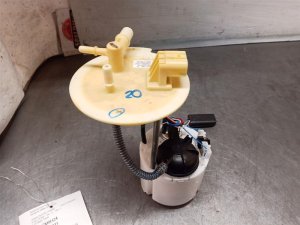
New Aftermarket Parts Available


The information in this article is provided for general reference and educational purposes only. Vehicle specifications, procedures, and part compatibility can vary by production date, trim level, and region. Always consult your vehicle's factory service manual and verify part numbers before purchasing or performing repairs. Safety-critical components such as airbags, seat belts, and braking systems should be installed by a qualified professional.
- Gmc TERRAIN:
- 🧭 Diagnostic Flowchart
- 🎬 Helpful Videos
- 🛍️ Shop This Part
- What's Unique About the 2018-2022 Gmc TERRAIN
- Symptoms You May Notice
- Most Likely Causes
- Rare But Worth Checking
- Diagnosis Steps
- Parts You'll Likely Need
- Related Codes That Often Appear With This One
- Technical Service Bulletins (TSBs) & Recalls
- Platform-Specific Known Issues
- Mechanic-Grade Diagnostic Values
- Scan Tool Commands That Help
- Wiring & Ground Locations
- Real Owner Repair Stories
- OEM Part Supersession History
- Model Year Variations Within This Range
- 🎟️ Get 5% Off