

P0172 on 2009-2011 GMC Yukon Denali XL: Rich Fuel Causes & Fixes
On a 2009-2011 GMC Yukon Denali XL, code P0172 is most often caused by an incorrect fuel alcohol content reading in the engine's computer, a known issue with GM's flex-fuel vehicles. A diagnostic scan tool is needed to check the alcohol percentage and perform a reset, which often resolves the issue without replacing parts. This issue is so common that GM released TSB #PIP4792D to address it.
- For a 2009-2011 Yukon Denali XL, P0172 is very frequently caused by a software issue with the flex-fuel system, not a failed part.
- Before buying any parts, use a scan tool to check the 'Fuel Alcohol Content' parameter. If it's high but you use regular gas, a 'Fuel Composition Reset' is the first step.
- If the alcohol content is normal, the next most likely causes are a dirty MAF sensor or a leaking fuel injector.
- This code is often paired with P0175 (Bank 2 Rich), which reinforces that the cause is likely something affecting the whole engine, like the fuel alcohol reading or MAF sensor.
- Driving for too long with this code can cause expensive damage to your catalytic converters.
What's Unique About the 2009-2011 Gmc YUKON DENALI XL
The 2009-2011 Yukon Denali XL with the 6.2L V8 (L9H and L94 engine codes) is a Flex-Fuel (E85 compatible) vehicle. A unique and highly common cause for P0172 on this platform is the ECM incorrectly 'learning' a high percentage of alcohol in the fuel, even if you only use regular gasoline. This causes the computer to inject more fuel than necessary, creating a rich condition. This issue is so prevalent that GM issued Technical Service Bulletin #PIP4792D specifically addressing the symptoms of rough cold starts, black exhaust, and rich codes P0172/P0175 due to this incorrect parameter.
Diagnostic Flowchart
Tap your situation to follow the diagnostic path that matches what you're seeing on this vehicle.
Symptoms You May Notice
- Check Engine Light is on
- Rough running or extended cranking, especially on a cold start
- Black smoke from the exhaust
- Decreased fuel economy
- Strong smell of fuel from the exhaust
- Engine may die at idle when cold
- Replacing the oxygen sensor without first checking the fuel alcohol content parameter. Given the prevalence of the flex-fuel issue on these trucks, the alcohol percentage should be the first thing checked with a scan tool. The O2 sensor is usually just accurately reporting the rich condition caused by the incorrect alcohol value.
Most Likely Causes
- Incorrect Fuel Alcohol Content Reading 🔴 High Probability These vehicles use an algorithm to estimate fuel alcohol content rather than a physical sensor. The algorithm monitors fuel level changes and oxygen sensor readings after refueling. Short trips, small fuel fill-ups, or even just time can corrupt this learned value, causing the ECM to think E85 is in the tank when it's not. This is documented in TSB #PIP4792D. 🎬 Watch: Diagnostic steps for rich codes and GM service bulletins
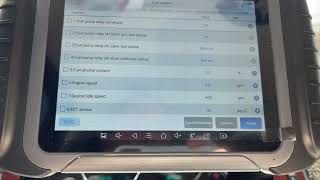
How to confirm: Use a capable OBD-II scanner to view the 'Fuel Alcohol Content' or 'Fuel Composition' parameter in the live data. If the vehicle has only been run on gasoline, this value should be low (under 15%). If it shows a high percentage (e.g., 40-60% or more), this is the likely cause.
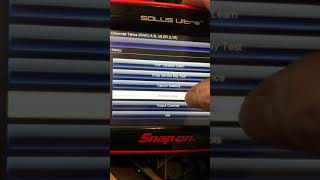
Typical fix: Perform a 'Fuel Composition Reset' using a bi-directional scan tool. 🎬 Watch: How to reset fuel alcohol content using a scan tool This procedure should only be done with regular gasoline (10% or less ethanol) in the tank. After the reset, a 'Fuel Trim Reset' should also be performed. If the problem persists, an ECM software update (reprogram) from a dealership may be required as per TSB #PIP4792D.
Est. part cost: $0 - Dirty or Faulty Mass Airflow (MAF) Sensor 🟡 Medium Probability → Shop Fuel Injection Air Flow Meter Oiled air filters are a common cause of MAF contamination. Additionally, TSB #PIP5446 notes that some GM air filter housings have excess plastic 'flash' from the molding process that can disrupt airflow and cause rich codes.
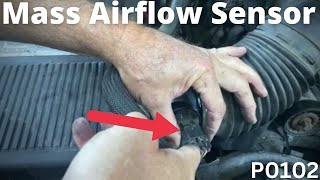
How to confirm: Inspect the MAF sensor element for dirt, oil, or debris. A contaminated sensor can under-report airflow, causing the ECM to command too much fuel. You can also monitor MAF readings on a scan tool to see if they are stable and correspond with engine RPM. Unplugging the MAF sensor while the engine is running and observing if the fuel trims start to normalize can also be a diagnostic clue.
Typical fix: Clean the sensor using a dedicated MAF sensor cleaner spray. 🎬 See this walkthrough on cleaning or replacing your MAF sensor Do not touch the delicate sensor wires. If cleaning doesn't resolve the issue or if the air filter housing has casting flash, the sensor or housing may need replacement.
Est. part cost: $10-$15 for cleaner, $70-$110 for a new sensor - Leaking Fuel Injector(s) 🟡 Medium Probability → Shop Fuel Injector
How to confirm: Perform a fuel pressure leak-down test. After turning the engine off, monitor the fuel rail pressure with a gauge. A rapid drop in pressure can indicate one or more leaking injectors. You can also remove the spark plugs on Bank 1 to check for signs of excessive fuel (wetness, strong fuel smell, heavy black carbon fouling). A bi-directional scanner may also have an 'injector balance' test.
Typical fix: Replace the faulty fuel injector(s). It is often recommended to replace them as a set on the affected bank or all eight at once.
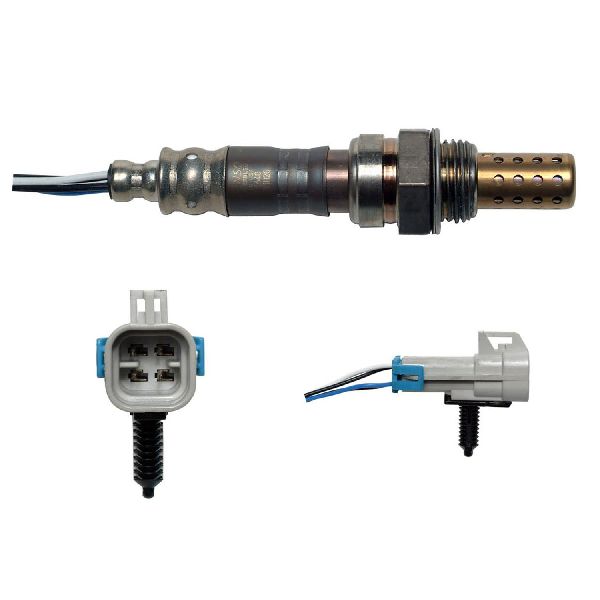
Est. part cost: $40-$80 per injector - Faulty Upstream Oxygen Sensor (Bank 1) ⚪ Low Probability → Shop Oxygen Sensor
How to confirm: Use a scan tool to graph the voltage of the Bank 1, Sensor 1 O2 sensor. A healthy sensor will switch rapidly between approximately 0.1V and 0.9V. A sensor that is stuck high (above 0.8V) or is slow to respond can cause a rich code.
Typical fix: Replace the Bank 1, Sensor 1 (upstream) oxygen sensor. It is often the sensor located on the driver's side exhaust manifold, before the catalytic converter.
Est. part cost: $50-$100
Rare But Worth Checking
- High Fuel Pressure: A faulty fuel pressure regulator (which is part of the fuel pump module in the tank on these models) can cause excessive pressure, forcing too much fuel through the injectors. This should be checked with a fuel pressure gauge at the fuel rail.
- Stuck Open EVAP Purge Solenoid: → Shop Vapor Canister If the evaporative emissions purge solenoid sticks open, it can allow un-metered fuel vapor from the charcoal canister to enter the intake manifold at idle, creating a rich mixture. This can be tested by blocking off the vacuum line to the solenoid and observing if fuel trims improve.
Diagnosis Steps
- Connect an OBD-II scanner and confirm P0172 is present. Check if P0175 is also present, as this points to a whole-engine issue.
- Access live data and check the 'Fuel Alcohol Content' or 'Fuel Composition' percentage. If it's high (e.g., >20%) and you're using regular gas, this is your primary suspect.
- If alcohol content is high, perform a 'Fuel Composition Reset' with a bi-directional scan tool. Also perform a 'Fuel Trim Reset'. Ensure the tank has regular gasoline before doing so.
- If alcohol content is normal, check short-term (STFT) and long-term (LTFT) fuel trims for Bank 1. A highly negative number (e.g., -20% or more) confirms the ECM is trying to remove fuel.
- Inspect the air intake system for any blockages and check the air filter. Ensure the intake tube is secure with no cracks.
- Remove and inspect the MAF sensor for contamination (oil, dirt). Clean with dedicated MAF cleaner if dirty.
- Test fuel pressure at the fuel rail to ensure it's within OEM specifications (typically 55-62 PSI for these models).
- Test the Bank 1, Sensor 1 oxygen sensor using the graphing function on a scan tool to ensure it is switching correctly and not biased high.
- Perform a fuel injector leak-down test or an injector balance test to check for leaking injectors.
Parts You'll Likely Need
- Mass Air Flow (MAF) Sensor
(OEM #19207203)— A dirty MAF sensor is a common cause of incorrect air-fuel ratio calculations. Cleaning often works, but replacement may be necessary. The OEM part is often an ACDelco sensor.
Trusted brands: ACDelco, Delphi, Bosch
OEM price range: $75-$110
Aftermarket price range: $50-$80 - Fuel Injector
(OEM #12613411)— A leaking fuel injector will dump excess fuel into a cylinder, directly causing a rich condition on that bank. The L9H/L94 engines use specific flex-fuel injectors.
Trusted brands: ACDelco, Standard Motor Products, GB Remanufacturing
OEM price range: $70-$90
Aftermarket price range: $30-$50 - Upstream Oxygen Sensor (Bank 1, Sensor 1)
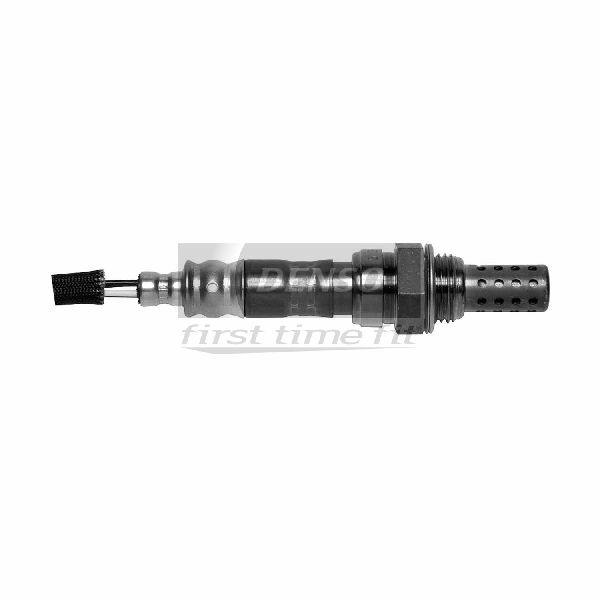
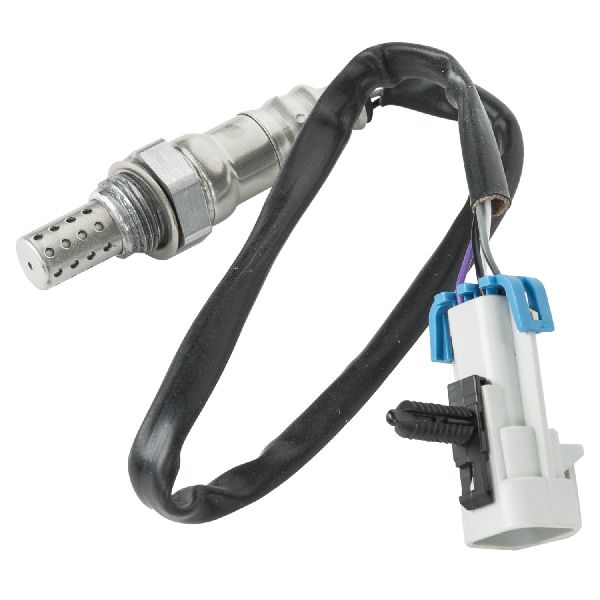
(OEM #213-3866)— A failed or lazy O2 sensor can send incorrect data to the ECM, causing it to enrich the fuel mixture unnecessarily. This is the sensor on the driver's side, before the catalytic converter.
Trusted brands: ACDelco, Denso, Bosch
OEM price range: $50-$80
Aftermarket price range: $40-$60
Related Codes That Often Appear With This One
- P0175 — This is the 'System Too Rich' code for Bank 2 (passenger side). Causes like incorrect fuel alcohol content, a faulty MAF sensor, or high fuel pressure affect the entire engine, so it's very common to see both P0172 and P0175 together.
- P0101 — This code for 'Mass Air Flow (MAF) Circuit Range/Performance' can appear alongside P0172/P0175 if the MAF sensor is the root cause of the problem.
Technical Service Bulletins (TSBs) & Recalls
- PIP4792D: Addresses rough running, black exhaust, and DTCs P0172/P0175 due to an incorrect Fuel Alcohol Content parameter. It advises checking the parameter, and if the discrepancy is 17% or greater compared to a physical fuel sample, to reprogram the ECM and reset the value.
- PIP5446: Notes that on some GM trucks, exce
Platform-Specific Known Issues
- The primary vehicle-specific issue is the 'virtual' flex-fuel sensor system. Unlike systems with a physical sensor, these vehicles calculate ethanol content based on driving habits and fuel level changes after a fill-up. This algorithm is sensitive and can become skewed, leading to a false high alcohol reading (e.g., 67% when using regular gas) and a persistent rich condition, as outlined in TSB #PIP4792D. A reset via scan tool is the standard fix.
Mechanic-Grade Diagnostic Values
- Mass Airflow (MAF) Sensor Reading at Idle — expected: Approximately 5.5-7.0 grams/second (g/s) for a 6.2L engine at normal operating temperature with no load. A common rule of thumb is for the g/s value to approximate the engine's displacement in liters.. Failure: A significantly lower reading (e.g., below 4.0 g/s) at idle indicates the sensor is under-reporting airflow, causing the ECM to command excess fuel.
- Fuel Alcohol Content Percentage — expected: Below 15% (typically 0-10%) when using standard E10 gasoline.. Failure: A reading significantly higher than the actual ethanol content of the fuel in the tank (e.g., reading 53% when using regular gas) is a direct cause for this code.
- Injector Pulse Width at Idle (in a fault condition) — expected: Normally around 2.5-4.0 milliseconds (ms) at warm idle.. Failure: When P0172 is active, the ECM is commanding negative fuel trims to compensate. A very low pulse width (e.g., below 2.0 ms) combined with a large negative long-term fuel trim (e.g., -25%) indicates the ECM is trying to shorten injector on-time as much as possible to correct a rich condition caused by another component (like high fuel pressure or a leaking injector).
Scan Tool Commands That Help
- GDS2 / Tech2 / Capable Bidirectional Scanner: Fuel Composition Reset — This is the primary service function to use when the 'Fuel Alcohol Content' live data parameter is incorrectly showing a high percentage while standard gasoline is in the tank. This is the most common fix for P0172/P0175 on these vehicles.
- GDS2 / Tech2 / Capable Bidirectional Scanner: Fuel Trim Reset — Should be performed immediately after a 'Fuel Composition Reset' or after replacing any part that affects the air/fuel mixture (e.g., MAF sensor, fuel injectors, O2 sensor). This clears the old long-term learned values and allows the ECM to learn fresh values based on the repair.
- GDS2 / Tech2 / Capable Bidirectional Scanner: Injector Balance Test — To diagnose a potentially leaking fuel injector. The tool will pressurize the fuel rail and then individually pulse each injector for a set duration. The technician monitors the fuel pressure drop for each injector; a significantly larger pressure drop for one cylinder indicates a leaking or high-flowing injector.
- GDS2 / Tech2 / Capable Bidirectional Scanner: EVAP Purge/Seal — To test the function of the EVAP purge solenoid. A technician can command the valve open and closed to see if it is functioning correctly or is stuck. When commanded closed, no vacuum or smoke should pass through it.
Wiring & Ground Locations
- G103 — On the front of the right (passenger side) cylinder head.. This is a main engine ground. A poor connection here can cause erratic signals from various engine sensors, leading to incorrect calculations by the ECM.
- G104 — On the front of the left (driver side) cylinder head.. This is the corresponding main engine ground for Bank 1. A loose or corroded G104 can directly impact the reference for sensors on the driver's side of the engine, including the Bank 1 O2 sensor.
- G101 — Located on the lower front of the engine block.. This ground point is specified as a ground for the Engine Control Module (ECM) and the Mass Air Flow (MAF) sensor. A fault at this specific location could cause the MAF to send an incorrect signal, a common cause of rich codes.
- ECM Connector C1, Pin 5 (Yellow wire) — At the Engine Control Module (ECM).. This is the specific pin for the MAF sensor signal. When performing advanced diagnostics, a technician can back-probe this pin to check the voltage signal directly from the sensor to the computer, ruling out wiring harness issues between the sensor and the ECM.
Real Owner Repair Stories
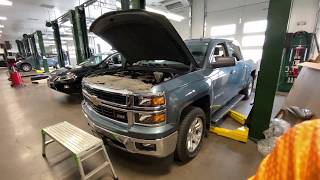
- YouTube channel 'South Main Auto Repair LLC' (2007 Chevrolet Silverado 1500 5.3L Flex Fuel (demonstrates the identical issue on a similar GM truck)) — Check Engine Light with codes P0172 and P0175 (System Too Rich Bank 1 & 2), hard starting, rough running.
❌ Tried (didn't work) The video focuses on direct diagnosis rather than failed parts replacement.
✅ What actually fixed it The scan tool showed a fuel alcohol content of 53%, despite the truck running on regular gasoline. A physical test of the fuel confirmed less than 10% ethanol. The technician performed a 'Fuel Composition Reset' using a scan tool, which immediately brought the long-term fuel trims from highly negative back to near 0%. This resolved the rich condition without replacing any parts.
"I Checked Everything" — The Actual Cause
- A common scenario where a smoke test for vacuum leaks comes back clean, yet the engine runs rich, is a faulty EVAP Purge Solenoid that is stuck open. This does not create a vacuum leak (of air) but instead allows un-metered fuel vapor from the charcoal canister to be drawn into the intake manifold when it shouldn't be (e.g., at idle). This adds extra fuel that the ECM does not account for, causing a rich condition that a smoke test of the intake manifold alone will not identify.
OEM Part Supersession History
ACDelco GM Original Equipment→GM Genuine Parts— Branding Change
Heads up: Some parts, like the O2 sensor 213-3866, are now sold under the 'GM Genuine Parts' label but may have previously been known as 'ACDelco GM Original Equipment'. They are the same OE part. Be aware that programming may be required after installation for some sensors to function correctly.
Model Year Variations Within This Range
- 2009: The 2009 models primarily used the 6.2L V8 L9H engine, which is a Flex-Fuel capable engine without Active Fuel Management (AFM).
- 2010-2011: The 2010 and 2011 models transitioned to the 6.2L V8 L94 engine. The L94 is fundamentally the same as the L9H but adds Active Fuel Management (AFM), GM's cylinder deactivation system. While the root causes for P0172 are identical (alcohol content, MAF, etc.), the L94 has additional components (AFM lifters, valve plate) that can introduce other engine problems.
Helpful Videos
We Have This Part in Stock



The information in this article is provided for general reference and educational purposes only. Vehicle specifications, procedures, and part compatibility can vary by production date, trim level, and region. Always consult your vehicle's factory service manual and verify part numbers before purchasing or performing repairs. Safety-critical components such as airbags, seat belts, and braking systems should be installed by a qualified professional.
- Gmc YUKON DENALI XL:
- 🧭 Diagnostic Flowchart
- 🎬 Helpful Videos
- 🛍️ Shop This Part
- What's Unique About the 2009-2011 Gmc YUKON DENALI XL
- Symptoms You May Notice
- Most Likely Causes
- Rare But Worth Checking
- Diagnosis Steps
- Parts You'll Likely Need
- Related Codes That Often Appear With This One
- Technical Service Bulletins (TSBs) & Recalls
- Platform-Specific Known Issues
- Mechanic-Grade Diagnostic Values
- Scan Tool Commands That Help
- Wiring & Ground Locations
- Real Owner Repair Stories
- "I Checked Everything" — The Actual Cause
- OEM Part Supersession History
- Model Year Variations Within This Range
- 🎟️ Get 5% Off