

P0172 on 2014-2018 Mazda CX-5: Causes for System Too Rich and How to Fix It
On a 2014-2018 Mazda CX-5, P0172 often points to a dirty MAF sensor, a failing upstream O2 sensor, or a leaking fuel injector. A specific TSB also notes the code can appear after long trips that follow many short trips, potentially requiring a PCM update or more frequent oil changes. Cleaning the MAF sensor is a common first step, but a leaking injector is a known issue on these direct-injection engines and often appears with a cylinder-specific misfire code (e.g., P0304).
- P0172 means your Mazda's engine is running too rich (too much fuel, not enough air).
- Before buying parts, check for the specific Mazda TSB (SA-026-18) related to driving habits. An oil change might be the first step.
- The most common hardware culprits are a dirty MAF sensor, a leaking fuel injector, or a failing upstream O2 sensor.
- Use a scan tool to check fuel trims and look for other codes. A misfire code (P030x) strongly points to a leaking injector in that cylinder.
- Cleaning the MAF sensor with a dedicated cleaner is an inexpensive first step in diagnosis.
What's Unique About the 2014-2018 Mazda CX-5
For the Mazda CX-5 with Skyactiv direct injection engines, this code has a unique cause documented by Mazda. TSB SA-026-18 states that if the vehicle is primarily used for short trips and then taken on a longer drive, the Check Engine Light with P0172 may appear. This is due to fuel diluting the engine oil over many short cycles, which then gets circulated through the PCV system and affects the air-fuel mixture on a longer run. Beyond this specific software and usage-related issue, these engines are also known for issues with leaking direct fuel injectors, which can be a primary cause, often accompanied by a misfire code like P0304. 🎬 Watch: Diagnosing a P0304 misfire and P0172 rich code together. As a gasoline direct injection (GDI) engine, it is also susceptible to carbon buildup on intake valves, which does not get cleaned by fuel and can affect airflow, potentially contributing to this code.
Diagnostic Flowchart
Tap your situation to follow the diagnostic path that matches what you're seeing on this vehicle.
Generation note: The 2014-2018 range covers two generations of the Mazda CX-5: the first generation (KE, 2014-2016) and the start of the second generation (KF, 2017-2018). Both generations use Skyactiv-G engines (2.0L and 2.5L) and share similar fuel system components, including the same MAF sensor (PE01-13-215) and upstream O2 sensor (PE01-18-8G1A). Therefore, the causes and diagnostics for P0172 are largely the same across this year range. A notable change occurred in 2018 with the introduction of cylinder deactivation on the 2.5L engine, which introduced new valvetrain hardware that was subject to recalls for issues causing misfires and stalling.
Symptoms You May Notice
- Check Engine Light is on
- Reduced fuel economy
- Rough idle, sometimes stalling at stops
- Hesitation on acceleration
- Strong smell of fuel from the exhaust
- Black or bluish smoke from the exhaust (in severe cases)
- Replacing the downstream (post-catalyst) oxygen sensor. The downstream sensor's primary role is to monitor catalyst efficiency and it has little effect on fuel trim. The upstream sensor is the one to check for this code.
- Replacing spark plugs or ignition coils without diagnosis. While a misfire can cause rich conditions, the P0172 code is often the cause of the misfire (due to a fouled plug from a leaking injector), not the other way around.
Most Likely Causes
- Dirty or Faulty Mass Airflow (MAF) Sensor 🔴 High Probability → Shop Fuel Injection Air Flow Meter The MAF sensor is a sensitive component that can become contaminated with dirt and oil over time, causing it to under-report airflow and lead the PCM to inject too much fuel.
How to confirm: Inspect the MAF sensor element for dirt. Use a scan tool to monitor MAF readings at idle (should be around 2.6 g/s for a 2.5L engine) and see if they rise smoothly with RPM. A faulty MAF often triggers a P0101 code alongside P0172. In one forum, an owner of a 2014 CX-5 with 130k miles resolved their P0172 code by replacing the MAF sensor.
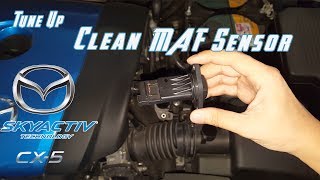
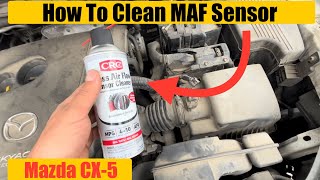
Typical fix: Clean the sensor with a dedicated MAF sensor cleaner spray; do not touch the delicate wires with anything but the spray. Let it dry completely before reinstalling. If cleaning doesn't work, the sensor must be replaced.
Est. part cost: $10-$15 (cleaner), $80-$150 (new aftermarket sensor), $250-$285 (new OEM sensor) - Leaking Fuel Injector(s) 🟡 Medium Probability → Shop Fuel Injector The direct injection (GDI) fuel injectors on Skyactiv engines operate under high pressure and can develop leaks, where they drip excess fuel into a cylinder even when closed. This is a well-documented failure mode.
How to confirm: Check spark plugs; a plug from the leaking cylinder will be black, sooty, and wet with fuel. A misfire code for a specific cylinder (e.g., P0304) often accompanies P0172 when an injector is leaking. A mechanic can perform a fuel injector balance test or use a scan tool with bidirectional controls to disable injectors one by one to see which one doesn't affect the engine idle.
Typical fix: Replace the faulty fuel injector. This is a labor-intensive job as the intake manifold must be removed. It is often recommended to replace all four injectors and their seals at the same time.
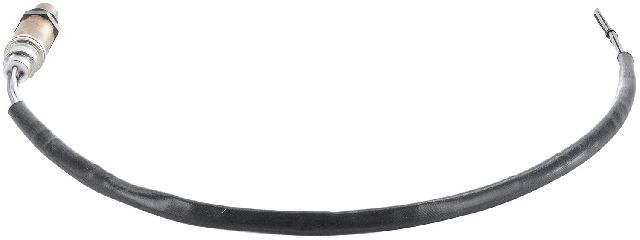
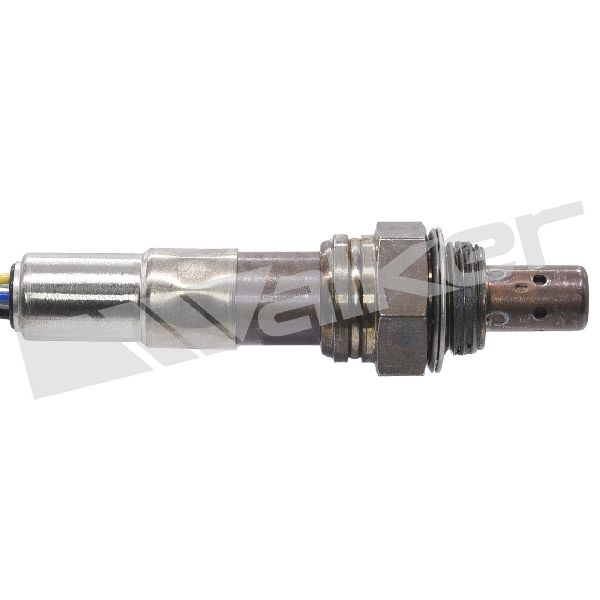
Est. part cost: $100-$250 per injector - Faulty Upstream Oxygen Sensor (Air/Fuel Ratio Sensor) 🟡 Medium Probability → Shop Oxygen Sensor The A/F sensor is a wear item. It can fail by sending a false 'lean' signal, causing the computer to add too much fuel, which results in a true rich condition. It can also become slow to respond, hindering proper fuel control.
How to confirm: Use a scan tool to watch the live data for the Bank 1 Sensor 1. A healthy sensor will fluctuate its voltage rapidly. A faulty sensor might be slow to respond or stuck at a low voltage (indicating lean), tricking the computer into adding fuel.
Typical fix: Replace the upstream oxygen sensor (Bank 1, Sensor 1). Using a quality OEM-equivalent brand like Denso is often recommended for Japanese vehicles. 🎬 Watch: How to replace the upstream oxygen sensor yourself.
Est. part cost: $100-$200 - Stuck Open EVAP Purge Valve ⚪ Low Probability → Shop Vapor Canister The purge valve can get stuck open, allowing un-metered fuel vapors from the charcoal canister to enter the intake manifold at the wrong time (like at idle), creating a rich mixture.
How to confirm: With the engine running at idle, disconnect the vapor line from the purge valve and feel for suction. There should be no vacuum when the valve is commanded closed by the scan tool. A smoke test can also confirm the leak.
Typical fix: Replace the EVAP purge control solenoid valve.
Est. part cost: $40-$90 - Fuel Dilution of Engine Oil (TSB SA-026-18) ⚪ Low Probability As per TSB SA-026-18, frequent short trips where the engine doesn't fully warm up can lead to fuel contaminating the engine oil. This is considered a normal characteristic of direct injection engines. When a long trip is taken afterward, the fuel vapors from the oil are pulled into the intake via the PCV system, which can trigger a P0172 code.
How to confirm: Check the engine oil dipstick for a level that is overfull and has a strong smell of gasoline. Consider the vehicle's recent driving patterns (many short trips followed by a long one).
Typical fix: Perform an engine oil and filter change. The TSB may also involve a PCM software update performed by a Mazda dealer to adjust fuel trim logic. Adopting a driving style that allows the engine to fully warm up regularly can help prevent recurrence.
Est. part cost: $50-$100 (oil change)
Rare But Worth Checking
- High Fuel Pressure: A failing high-pressure fuel pump (HPFP) or a restriction in the fuel system could cause excessive pressure. A healthy Skyactiv engine should have around 300 PSI of fuel rail pressure at idle. A faulty fuel pressure regulator can also be a cause.
- Severely Clogged Engine Air Filter: → Shop Air Cleaner Assembly While a dirty air filter can contribute, it must be extremely clogged to restrict enough air to trigger a P0172 code on its own. It's an easy and important check nonetheless.
Diagnosis Steps
- Check for Technical Service Bulletins (TSBs). Specifically, check if TSB SA-026-18 applies to your vehicle and driving habits.
- Scan for all stored codes. Note any accompanying codes like P0101 or P030x, as they provide crucial clues to the root cause.
- Analyze live data with a scan tool. Check Short Term Fuel Trim (STFT) and Long Term Fuel Trim (LTFT). For P0172, you will see highly negative numbers (e.g., -20% or more) as the PCM tries to remove fuel.
- Inspect the engine air filter to ensure it is not severely clogged.
- Inspect and Clean the MAF sensor. Remove it and look for any dirt or debris on the sensing wires. Clean it with dedicated MAF cleaner and allow it to fully dry before reinstalling.
- Inspect the spark plugs. Pull the plugs and check their condition. A plug that is black, sooty, and wet with fuel points to a leaking injector in that cylinder.
- Test the upstream O2 (A/F) sensor. Graph its voltage with a scan tool to ensure it is switching correctly and not stuck or slow to respond.
- Test the EVAP purge valve to ensure it is not stuck open, allowing fuel vapors into the intake at idle.
- Check oil for fuel contamination. Smell the oil on the dipstick for a strong gasoline odor, which points to the issue described in TSB SA-026-18 or a severe injector leak.
Parts You'll Likely Need
- Mass Air Flow (MAF) Sensor
(OEM #PE01-13-215)— A dirty MAF sensor is a very common cause for incorrect fuel trims on many modern vehicles, including the CX-5. It incorrectly measures the amount of air entering the engine, leading the computer to add too much fuel. - Upstream Oxygen Sensor (A/F Sensor)
(OEM #PE01-18-8G1A)— This sensor provides the primary feedback to the PCM for air-fuel ratio control. If it fails and sends a false lean signal, the PCM will command a rich mixture, triggering P0172. - Fuel Injector
(OEM #PY01-13-250)— Leaking injectors are a known issue on Skyactiv direct injection engines. A single leaking injector can dump enough excess fuel to cause a bank-wide rich code.
Related Codes That Often Appear With This One
- P0300-P0304 — A specific cylinder misfire code (e.g., P0304 for cylinder 4) often points to a leaking fuel injector in that cylinder causing the rich condition and fouling the spark plug.
- P0101 — This code indicates a problem with the MAF sensor's performance or range, and frequently appears with P0172 if a dirty or faulty MAF sensor is the root cause.
Technical Service Bulletins (TSBs) & Recalls
- SA-026-18: 'ENGINE OIL DILUTED WITH FUEL CAUSES P0172:00' - Issued 05/08/2018. Details how frequent short trips can cause fuel to dilute the engine oil in direct-injection engines. When a longer trip is then taken, the Check Engine Light may illuminate with P0172. Affects 2013-2018 CX-5, as well as Mazda3, Mazda6, CX-3, CX-9, and MX-5.
Platform-Specific Known Issues
- Fuel Injector Failure with Misfire: → Shop Fuel Injector A common real-world scenario for P0172 on the Skyactiv-G engine is a leaking fuel injector. This will almost always be paired with a misfire code for the specific cylinder (e.g., P0301, P0302, P0303, P0304). Diagnosis involves checking the spark plug for that cylinder, which will typically be black and wet with fuel.
- Short Trip Driving Pattern: As documented in TSB SA-026-18, the driving habits of the owner can directly cause this code. If the vehicle is used almost exclusively for short trips where it never fully warms up, followed by a long highway drive, the P0172 code can be triggered due to fuel vapors from diluted oil being ingested by the engine. The fix is an oil change and potentially a PCM reflash at the dealer.
Mechanic-Grade Diagnostic Values
- Mass Airflow (MAF) Sensor Reading at Idle (2.5L Engine) — expected: ~2.64 g/s. Failure: Readings significantly higher or lower, or readings that do not rise smoothly with engine RPM.
- Mass Airflow (MAF) Sensor Voltage (KOEO - Key On, Engine Off) — expected: ~0.72 V. Failure: A reading significantly different, such as 1.0V, indicates a potential sensor fault even before the engine is started.
- Mass Airflow (MAF) Sensor Voltage at Idle — expected: ~0.86 V - 0.9 V. Failure: Voltage that is stuck or does not correspond to airflow changes.
- High-Pressure Fuel Rail Pressure at Idle — expected: ~300 PSI. Failure: Pressure significantly higher than spec could indicate a faulty high-pressure fuel pump or regulator, forcing a rich condition.
- Low-Pressure Fuel System Pressure — expected: Approx. 430 kPa (62.4 psi). Failure: Excessive pressure from the in-tank pump could overwhelm the high-pressure system, though this is less common.
Hidden / Shadow Codes Worth Checking
- Mode 6 Data: While not a specific 'shadow code,' advanced scan tools like FORScan can access Mode 6 data. This provides raw test results from the PCM's onboard diagnostic monitors, including data for oxygen sensors and misfire counts per cylinder, which can offer clues before a code fully sets. (see via Advanced OBD-II scanner with Mode 6 capability, such as FORScan.)
Scan Tool Commands That Help
- FORScan or similar advanced scanner: Injector Active Test / Cylinder Power Balance — This bidirectional command allows a technician to manually disable one fuel injector at a time while the engine is idling. If disabling an injector causes a significant drop in RPM, it's working. If disabling an injector causes little or no change, it is likely clogged or leaking, failing to contribute properly and potentially causing the rich condition. This is used to pinpoint a single faulty injector without removing the intake manifold.
- PicoScope or advanced diagnostic tool: Relative Compression / Cylinder Balance Test — This test measures the electrical current draw from the starter motor as it cranks the engine, or analyzes crank speed, to determine the relative contribution of each cylinder. A cylinder with a mechanical issue (e.g., poor sealing from carboned-up valves) will show a different waveform. This is an advanced step to check for mechanical causes of poor combustion.
Wiring & Ground Locations
- MAF Sensor Connector — On the MAF sensor, located in the air intake tube between the air filter box and the throttle body.. Testing for correct voltage and ground at the sensor connector is a key step in diagnosing a faulty MAF sensor vs. a wiring issue. The 5 pins are: Green (IAT Signal), Violet (Computer Ground), Black (MAF Signal), Gray (5V Reference), Blue (Battery Voltage Supply).
- [WD63395] — Engine Bay. This is the identifier for the engine room ground point diagram for the SKYACTIV-G 2.5L engine. A poor ground for the PCM or related sensors (like the O2 or MAF sensor) can cause erratic signals and incorrect fuel calculations, leading to a P0172 code. Verifying grounds are clean and tight is a crucial electrical diagnostic step.
Real Owner Repair Stories
- Reddit user on r/mazda (2014 Mazda 6, 120k miles) — Stalling at stops, misfires, P0172 and a cylinder 4 misfire code.
❌ Tried (didn't work) Replaced MAF sensor, Replaced downstream O2 sensor, Replaced all 4 spark plugs, Swapped ignition coils between cylinders
✅ What actually fixed it The final fix was cleaning 'gunk build up' from the air intake valves. This points to carbon buildup, a known issue on GDI engines. - Mazdas247 Forum user 'ColoradoDriver' (2014 CX-5 Touring AWD, 130k+ miles) — P0172 Check Engine Light, no other drivability symptoms.
❌ Tried (didn't work) Checked air filter installation., Using a standard fuel system cleaner (Techron) only provided a temporary fix.
✅ What actually fixed it Using a stronger fuel injector cleaner (Berryman B12 Chemtool) in a new tank of gas. The Check Engine Light remained off for over a week, suggesting dirty or slightly leaking fuel injectors were the cause.
"I Checked Everything" — The Actual Cause
- A smoke test is used to find vacuum leaks (unmetered air entering the engine), which typically cause a lean code (P0171). For a rich code like P0172, a smoke test is less likely to find the cause. The problem is typically too much fuel being added, not unmetered air. The root cause is more likely a faulty sensor providing bad data (MAF, O2) or a component delivering excess fuel (leaking injector, high fuel pressure), none of which would be found with a smoke test.
Model Year Variations Within This Range
- 2018: For the 2018 model year, Mazda introduced cylinder deactivation to the 2.5L Skyactiv-G engine. This system was subject to a recall (and TSB) for a software problem that could cause a hydraulic valve clearance adjuster to malfunction, potentially leading to rocker arm issues, misfires, and stalling. While not directly linked to P0172 in the TSB, a valvetrain malfunction could certainly impact combustion efficiency and lead to fuel trim issues.
Helpful Videos
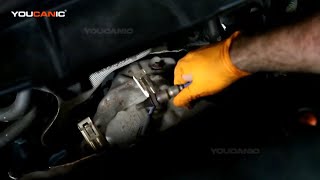
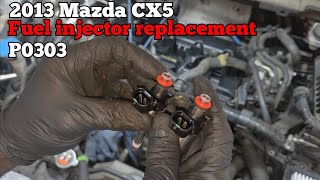
We Have This Part in Stock

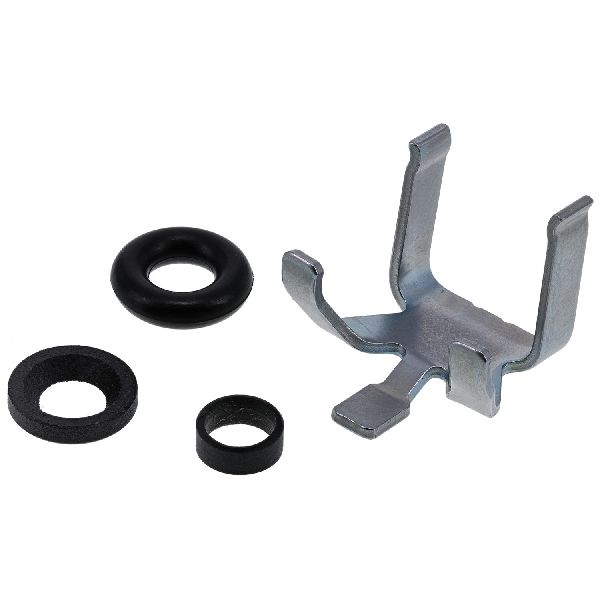
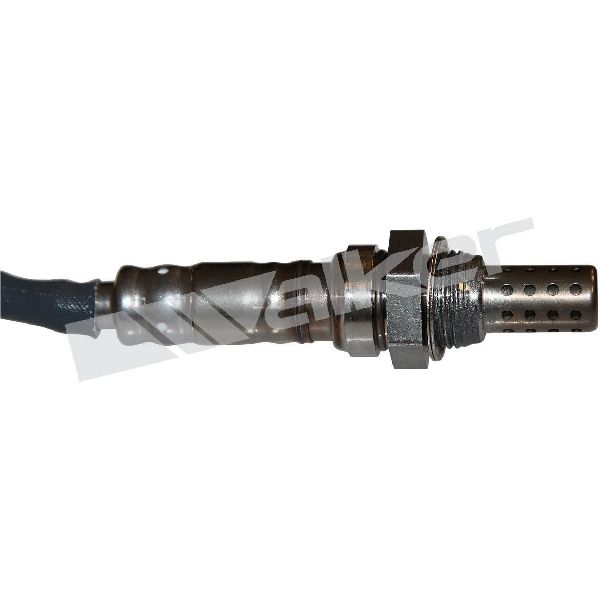

The information in this article is provided for general reference and educational purposes only. Vehicle specifications, procedures, and part compatibility can vary by production date, trim level, and region. Always consult your vehicle's factory service manual and verify part numbers before purchasing or performing repairs. Safety-critical components such as airbags, seat belts, and braking systems should be installed by a qualified professional.
- Mazda CX-5:
- 🧭 Diagnostic Flowchart
- 🎬 Helpful Videos
- 🛍️ Shop This Part
- What's Unique About the 2014-2018 Mazda CX-5
- Symptoms You May Notice
- Most Likely Causes
- Rare But Worth Checking
- Diagnosis Steps
- Parts You'll Likely Need
- Related Codes That Often Appear With This One
- Technical Service Bulletins (TSBs) & Recalls
- Platform-Specific Known Issues
- Mechanic-Grade Diagnostic Values
- Hidden / Shadow Codes Worth Checking
- Scan Tool Commands That Help
- Wiring & Ground Locations
- Real Owner Repair Stories
- "I Checked Everything" — The Actual Cause
- Model Year Variations Within This Range
- 🎟️ Get 5% Off