

P0172 on 2008-2017 Mitsubishi Lancer 2.0L: System Too Rich Causes and Fixes
On a 2008-2017 Lancer with the 2.0L engine, code P0172 is most often caused by a dirty or faulty Mass Airflow (MAF) sensor. Cleaning the sensor with a dedicated MAF cleaner is a common first step and may resolve the issue. If not, other common causes include a failing front A/F (O2) sensor or leaking fuel injectors. A replacement MAF sensor costs around $40-$90 for an aftermarket part or $140+ for OEM.
- Start by cleaning the Mass Airflow (MAF) sensor; it's a cheap, easy first step that often fixes P0172 on this Lancer.
- Use a scan tool to check Long-Term and Short-Term Fuel Trims. You are looking for significant negative values, which confirm the ECM is trying to correct a rich condition.
- If cleaning the MAF doesn't work, the next most likely causes are a faulty front oxygen (A/F) sensor or a leaking fuel injector.
- Avoid using aftermarket oiled air filters, as they are a known cause of MAF sensor contamination on these vehicles.
What's Unique About the 2008-2017 Mitsubishi Lancer
For the 2008-2017 Lancer, the P0172 code is frequently linked to the Mass Airflow (MAF) sensor, which can become contaminated, especially if an aftermarket oiled air filter is used. While the code is generic, this particular engine seems sensitive to MAF sensor readings. Additionally, a known TSB for a related fuel trim code (P2097) on some model years required an ECM reflash and replacement of the front air-fuel ratio sensor, indicating a factory-acknowledged sensitivity in the fuel control system and sensor performance.
Generation note: The 2008-2017 year range covers the tenth generation of the Mitsubishi Lancer (often called the Lancer X, chassis code CY/CZ). No major generation changes within this period significantly affect the diagnosis of P0172 for the 4B11 engine. A mid-cycle refresh introduced a 1.6L engine option, but the 2.0L 4B11 remained available and mechanically consistent.
Symptoms You May Notice
- Check Engine Light is on
- Poor fuel economy
- Rough or unstable idle
- Engine hesitation or stumbling on acceleration
- Strong smell of fuel from the exhaust
- Black smoke from the exhaust pipe
- Engine stalling at low speeds or when stopping
- Replacing the rear (downstream) oxygen sensor. The rear O2 sensor primarily monitors catalytic converter efficiency and has only a minor role in fuel trim adjustments. The front (upstream) A/F sensor is the key player for this code.
- Assuming a tune is bad on a modified car. While a bad tune can cause P0172, mechanical faults like a boost leak (on turbo models) or a failing sensor should be ruled out first, as they are more common.
Most Likely Causes
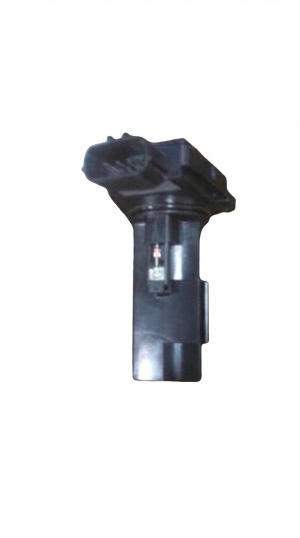
- Dirty or Faulty Mass Airflow (MAF) Sensor 🔴 High Probability → Shop Fuel Injection Air Flow Meter The MAF sensor is highly sensitive to contamination, particularly from aftermarket oiled air filters which can deposit a film on the sensor element. Forum discussions for the Lancer consistently point to this as the first part to check.
How to confirm: Unplug the MAF sensor with the engine off, start the car, and see if the idle quality improves. If it does, the sensor is likely faulty. For a more precise test, use a scan tool to monitor MAF sensor voltage at idle (should be 1,350-1,670 mV) and at a steady 2,500 RPM (should be 1,620-2,020 mV), comparing them to service manual specifications. A dirty sensor will often read higher than actual airflow, causing the ECM to add too much fuel.
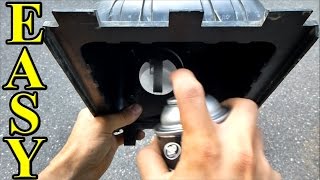
Typical fix: First, attempt to clean the sensor using a dedicated MAF sensor cleaner spray. Do not touch the sensor wires. 🎬 See this detailed guide on how to clean your MAF sensor Allow it to dry completely before reinstalling. If cleaning doesn't work, the sensor must be replaced.
Est. part cost: $40-$90 - Faulty Front Oxygen (Air/Fuel Ratio) Sensor 🟡 Medium Probability → Shop Oxygen Sensor The upstream A/F sensor is the primary sensor used to measure the air-fuel mixture. A lazy or failing sensor can send incorrect (false lean) signals to the ECM, causing it to command too much fuel. This is a common failure point on many vehicles as they age.
How to confirm: Use a scan tool with live data graphing capabilities. A healthy upstream sensor should show rapid voltage fluctuations between approximately 0.1 and 0.9 volts. A slow, biased, or stuck reading indicates a problem. A sensor stuck reading lean will directly cause the ECM to create a rich condition. The sensor's internal heater can also be tested for resistance; it should be between 4.5 - 8.0 Ω at 20°C.
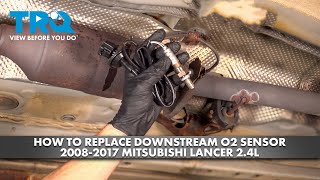
Typical fix: Replace the front oxygen (A/F) sensor, which is located on the exhaust manifold before the catalytic converter.
Est. part cost: $70-$150 - Leaking Fuel Injector(s) 🟡 Medium Probability → Shop Fuel Injector Injectors can leak internally or become stuck partially open over time, allowing uncommanded fuel to enter the cylinder(s). This is more common on modified vehicles with aftermarket injectors or on higher mileage cars.
How to confirm: Perform a fuel pressure leak-down test. After the engine is turned off, the fuel rail pressure should hold steady. A rapid drop in pressure can indicate a leaking injector. Another method is to pull the spark plugs after the car has sat; a plug that is wet with fuel or excessively black and sooty can point to a leaking injector in that cylinder. The injector coil resistance can also be checked and should be between 2-3 Ω.
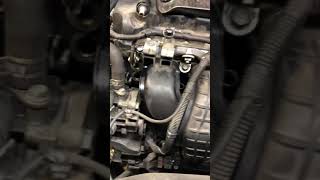
Typical fix: Replace the faulty fuel injector(s). It is often recommended to replace them as a set for balanced performance 🎬 Watch: Step-by-step fuel injector replacement for the Lancer, especially on a high-mileage engine.
Est. part cost: $40-$220 per injector - High Fuel Pressure ⚪ Low Probability A faulty fuel pressure regulator can cause system-wide high pressure, leading to a rich condition. On the Lancer, the regulator is typically part of the in-tank fuel pump module.
How to confirm: Connect a mechanical fuel pressure gauge to the fuel system. The standard fuel pressure for the 4B11 is approximately 47 PSI. Some sources suggest a base pressure of 43.5 PSI with the regulator vacuum line disconnected and plugged. Pressure significantly above this indicates a faulty regulator.
Typical fix: Replace the fuel pump assembly if the regulator is confirmed to be faulty and is integrated into the module.
Est. part cost: $150-$350
Rare But Worth Checking
- Stuck Open EVAP Purge Solenoid: → Shop Vapor Canister The EVAP purge solenoid allows fuel vapors from the charcoal canister to enter the engine to be burned. If it sticks open, it can introduce un-metered fuel vapors, creating a rich condition. The service manual lists this as a possible cause to check.
- Faulty Engine Coolant Temperature (ECT) Sensor: If the ECT sensor incorrectly tells the ECM that the engine is constantly cold, the ECM will command a richer fuel mixture, similar to a cold start enrichment cycle. The sensor should have a resistance of 2.1–2.7 kΩ at 20°C (68°F).
- Fuel in Engine Oil: Excessive short-trip driving can sometimes lead to fuel diluting the engine oil. This fuel can then be recirculated as vapor through the PCV system, creating a rich condition. If the oil on the dipstick smells strongly of gasoline, an oil change may be part of the solution.
Diagnosis Steps
- Use an OBD-II scanner to check for any other stored trouble codes. Address other codes first, especially those related to specific sensors (MAF, O2, ECT).
- Check live data on the scanner, focusing on Short-Term Fuel Trim (STFT) and Long-Term Fuel Trim (LTFT). For P0172, you will see highly negative numbers (e.g., LTFT below -12.5%) as the ECM tries to remove fuel.
- Inspect the air intake system between the MAF sensor and the throttle body for any blockages or obstructions. Check the engine air filter to ensure it is not severely clogged.
- Check the oil dipstick for a strong smell of fuel, which could indicate fuel dilution.
- Clean the MAF sensor using a dedicated MAF sensor cleaner. Allow it to dry completely before reinstalling. Reset the ECU by disconnecting the battery for 10 minutes, then perform an OBD-II Drive Cycle (Pattern 2 or 21 as specified by the service manual) to see if the code returns.
- If cleaning the MAF doesn't help, test its output voltage against specifications: 1,350-1,670 mV at idle and 1,620-2,020 mV at 2,500 RPM.
- Test the front oxygen (A/F) sensor's response using the scanner's live data graph. It should fluctuate rapidly between ~0.1-0.9V. Test the heater resistance (should be 4.5-8.0 Ω).
- Test fuel pressure to ensure it is within the specified range of ~47 PSI.
- If fuel pressure is normal, consider testing the EVAP purge solenoid for proper operation (it should be closed at idle).
- If all else fails, perform a fuel injector leak-down test to check for leaking injectors.
Parts You'll Likely Need
- Mass Airflow (MAF) Sensor
(OEM #MR985187)— This is the most frequently cited cause for P0172 on this platform. It can become contaminated and send incorrect airflow readings to the ECM.
Trusted brands: Mitsubishi Electric (OEM), Denso, Delphi
OEM price range: $140-$250
Aftermarket price range: $40-$90 - Front Oxygen (Air/Fuel Ratio) Sensor
(OEM #1588A183 (cross-references to Denso 234-4116))— This sensor provides the primary data for air-fuel mixture control. A failing sensor can cause the ECM to incorrectly enrich the mixture.
Trusted brands: Denso (OEM supplier), Bosch, NGK/NTK
OEM price range: $200-$300
Aftermarket price range: $70-$150 - Fuel Injector — A leaking injector allows un-commanded fuel to enter the engine, directly causing a rich condition.
Trusted brands: Standard Motor Products, GB Remanufacturing, Beck/Arnley
OEM price range: $150-$250 per injector
Aftermarket price range: $40-$220 per injector
Technical Service Bulletins (TSBs) & Recalls
- TSB-15-13-003 - False MIL Illumination with DTC P2097
Platform-Specific Known Issues
- TSB-15-13-003 - Fuel Trim Optimization: While this Technical Service Bulletin is officially for code P2097 (Post Catalyst Fuel Trim System Too Rich) on 2011-2014 models, it involves an ECM software update to optimize air/fuel ratio adjustments. For 2011-2013 models, it also requires replacing the front linear air-fuel sensor. This indicates a known issue with the factory fuel control logic and sensor performance that could manifest as or be related to a P0172 code.
- Modified Vehicle Tuning: On modified Lancers (especially Evolution and Ralliart models), P0172 can appear after installing parts like larger injectors, a new turbo, or an aftermarket intake without a proper corresponding ECU tune. It can also indicate a mechanical issue that has arisen post-tune, such as a boost leak from a popped vacuum line or intercooler coupler.
Mechanic-Grade Diagnostic Values
- Mass Airflow (MAF) Sensor Voltage — expected: At idle: 1,350 - 1,670 millivolts. At 2,500 RPM: 1,620 - 2,020 millivolts.. Failure: Readings outside of these ranges suggest a faulty sensor.
- Long-Term Fuel Trim (LTFT) Threshold — expected: Ideally close to 0%, but within +/- 10%.. Failure: The P0172 code can be set when LTFT is continuously below -12.5%.
- Short-Term Fuel Trim (STFT) Threshold — expected: Fluctuates rapidly around 0%.. Failure: The P0172 code can be set when STFT is continuously below -25% for 2 seconds.
- Front A/F (Oxygen) Sensor Heater Resistance — expected: 4.5 - 8.0 Ω (at 20°C / 68°F). Failure: Resistance outside this range indicates a faulty heater circuit, requiring sensor replacement.
- Front A/F (Oxygen) Sensor Voltage — expected: Fluctuating between 0.1 and 0.9 Volts in closed loop.. Failure: A slow, stuck, or non-fluctuating voltage indicates a lazy or dead sensor.
- Fuel Pressure (Regulator vacuum line disconnected) — expected: Approximately 43.5 - 47 PSI (3.0 - 3.2 bar).. Failure: Significantly higher pressure indicates a faulty fuel pressure regulator.
- Fuel Injector Coil Resistance — expected: 2 - 3 Ω. Failure: Resistance outside this range indicates a faulty injector coil.
Hidden / Shadow Codes Worth Checking
- P0172-00: This is the format often displayed on the Mitsubishi M.U.T.-III dealer scan tool. The '-00' suffix is a manufacturer-specific designator but does not typically indicate a separate fault from the primary P0172 code. (see via Mitsubishi M.U.T.-III SE Scan Tool)
Scan Tool Commands That Help
- Mitsubishi M.U.T.-III SE: OBD-II Drive Cycle - Pattern 2 / 21 — After performing repairs and erasing the DTC, this specific drive cycle pattern must be completed to allow the ECM to re-run its monitors and confirm the fault has been rectified. Not performing the correct cycle may result in the code not reappearing immediately even if the fix was unsuccessful.
- Mitsubishi M.U.T.-III SE: Data List Reading — The service manual diagnosis procedure relies heavily on reading specific data list items (e.g., Item 10 for MAF Sensor, Item 5 for IAT, Item 6 for ECT) to compare live values against specifications.
Wiring & Ground Locations
- Engine Control Module (ECM) Ground — A key ground point for the ECM is designated as G11, located in the left side of the passenger compartment, often near the kick panel area.. A poor ground connection for the ECM can cause erratic behavior and incorrect readings from all engine sensors, potentially leading to false fuel trim codes like P0172.
- Main Engine Bay Grounds — There are primary chassis ground points on both the left and right front inner fenders where many engine bay components are grounded. There is also a small factory ground wire on the intake manifold.. Corrosion or looseness at these points can affect the reference ground for sensors like the MAF and O2 sensor, corrupting their signals to the ECM.
- Front O2 Sensor Connector — Designated as A-63 in wiring diagrams, this connector is part of the engine wiring harness.. This is the primary connection point for testing the O2 sensor's resistance and voltage signals. Corrosion or damage here can mimic a failed sensor.
Real Owner Repair Stories
- EvolutionM.net user 'Iowa999' (Mitsubishi Lancer/Evo (platform context)) — Check engine light and associated codes.
❌ Tried (didn't work) Ignoring the problem.
✅ What actually fixed it The user had over-oiled a K&N air filter, which contaminated the MAF sensor. Cleaning the sensor with CRC MAF cleaner and clearing the codes resolved the issue in 10 minutes. - EvolutionM.net user 'sobo' (Mitsubishi Lancer Evolution) — P0172 code appeared after a vacuum line popped off under boost. AFRs seemed normal during cruise and WOT.
❌ Tried (didn't work) Clearing the code without a full ECU reset.
✅ What actually fixed it The immediate cause was a vacuum line that had popped off near the fuel rail. The final advice was to re-secure the line, perform a full ECU reset by disconnecting the battery, and if the code returned, suspect a failing front O2 sensor that was triggered by the initial event. - EvolutionM.net user 'YourNameHere' (Mitsubishi Lancer Evolution) — Car dies at WOT, won't restart, no codes initially. Unplugging MAF allows it to limp home. Throws MAF code eventually.
✅ What actually fixed it The user had two MAF sensors fail in 62 days. The first was the 14-year-old OEM sensor. The second was an aftermarket Walker brand sensor that lasted only two months. The fix was replacing the failed sensor, with the user concluding that the Walker brand aftermarket part was unreliable.
When the Usual Fixes Don't Work
- In one documented case, a user experienced classic P0172 symptoms. Cleaning the MAF sensor provided a temporary fix for only two days. Replacing the MAF with a known-good unit did not solve the problem at all. The diagnosis then shifted to a potential charging system problem, as system voltage was observed to be fluctuating wildly while driving. This indicates that while the MAF is the most common cause, it is not always the root cause, and electrical system health should be verified if MAF cleaning/replacement fails.
OEM Part Supersession History
MR985187→MR985187— No supersession found. This part number appears stable for the entire vehicle range.
Heads up: This MAF sensor is used across many Mitsubishi models of the era (Eclipse, Outlander, Galant), making it a widely available part.
Diagnostic Flowchart
Other Known Issues on This Vehicle
Issues unrelated to this code that are worth knowing about as an owner of this generation:
- Jatco JF011E CVT Transmission Failure 🔴 High — Commonly reported between 60,000 and 100,000 miles. Symptoms include whining, hesitation, overheating warnings ('SLOW DOWN' message), and shuddering. (Ref: A class-action lawsuit was filed alleging a defect in the CVT. No specific recall, but multiple TSBs exist for related transmission diagnosis and repair, like TSB-13-22-001 and TSB-13-22-003.)
- Clear Coat / Paint Peeling 🟡 Low — Widespread issue, particularly on darker colored vehicles. Peeling often starts on the roof and trunk after several years of sun exposure.
- ETACS (Electronic Time and Alarm Control System) Failure 🟠 Medium — Can occur at various mileages. Symptoms are varied and can include malfunctioning wipers, lights, power locks, and key fob recognition. It can sometimes be caused by water intrusion.
- Accessory Drive Belt Tensioner Noise/Failure 🟠 Medium — The drive belt tensioner can wear out, causing rattling or chirping noises from the engine bay. Failure can lead to loss of power steering and alternator function. (Ref: TSB-20-11-001 revises the service manual procedures for the drive belt and tensioner.)
Used vs. New Parts: Buying Guide for This Vehicle
When a used part is the smart pick: For the Mass Airflow (MAF) sensor, a used OEM part from a reputable salvage yard can be a smarter choice than a new, non-OEM aftermarket part. Forum users have reported very short lifespans from some aftermarket brands.
Donor-vehicle mileage cap: roughly under 100000 miles for the part to have meaningful remaining life.
What to inspect on the donor part:
- Check the donor vehicle's mileage; lower is better.
- Inspect the sensor for physical damage or signs of heavy contamination.
- Ensure the connector pins are clean and not corroded.
- If possible, get a part from a vehicle that was not in a front-end collision.
OEM-only on this vehicle (don't cheap out):
- Mass Airflow (MAF) Sensor: Strongly recommended to use OEM (new or used) over budget aftermarket brands due to high reports of premature failure.
Aftermarket brands forum-validated for this vehicle:
- Denso (for Oxygen Sensors - often the OEM supplier)
- NTK (for Oxygen Sensors - also a high-quality OEM supplier)
Brands owners have reported issues with on this vehicle:
- Walker (for Mass Airflow Sensors - one user reported failure in only two months)
Real Owner Stories
Aggregated from forums and TSBs cited above. Mileages and costs reflect what owners reported in those sources.
2007 Mitsubishi Lancer Evolution
Symptoms: Owner experienced rich codes after over-oiling a K&N air filter.
What fixed it: Cleaned the MAF sensor with CRC MAF cleaner and cleared the codes; the fix took approximately 10 minutes.
Source hint: EvolutionM.net - 'P0172 Code Causes' (2007)
2010 Mitsubishi Lancer Evolution
Symptoms: The vacuum line for the fuel pressure regulator popped off; after reconnecting it, the vehicle threw a P0172 code.
What fixed it: Reconnecting the vacuum line and addressing potential front O2 sensor bias.
Source hint: EvolutionM.net - 'Throwing a new code.. p0172' (2010)
2008 Mitsubishi Lancer Evolution X
Symptoms: A newly purchased modified vehicle was running rich.
What fixed it: Identified issues with a bad tune, contaminated MAF from an oiled filter, or leaking aftermarket injectors.
Source hint: Reddit r/MitsubishiEvolution - 'Code P0172 on 2008 Evo X' (2023)
2014 Mitsubishi Lancer Evolution X
Symptoms: The code appeared five days after a professional tune.
What fixed it: Adjusting the tune's fuel trims specifically for idle and cruise conditions.
Source hint: Reddit r/MitsubishiEvolution - '2014 Evo X throwing P0172 code' (2022)
Related OBD-II Codes
Frequently Asked Questions
Does TSB-15-13-003 apply to my Lancer if I have a P0172 code?
Can an aftermarket air filter cause P0172 on my 4B11 engine?
What are the specific MAF sensor voltage specs I should look for on my Lancer?
How can I tell if my front oxygen sensor is causing the rich code?
What is the standard fuel pressure for a Lancer with the 4B11 engine?
I just reconnected a vacuum line and now have P0172. What happened?
Helpful Videos

Used OEM Parts in Stock
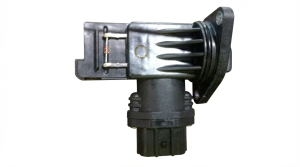
New Aftermarket Parts Available


The information in this article is provided for general reference and educational purposes only. Vehicle specifications, procedures, and part compatibility can vary by production date, trim level, and region. Always consult your vehicle's factory service manual and verify part numbers before purchasing or performing repairs. Safety-critical components such as airbags, seat belts, and braking systems should be installed by a qualified professional.
- Mitsubishi Lancer:
- 🧭 Diagnostic Flowchart
- 🎬 Helpful Videos
- 🛍️ Shop This Part
- What's Unique About the 2008-2017 Mitsubishi Lancer
- Symptoms You May Notice
- Most Likely Causes
- Rare But Worth Checking
- Diagnosis Steps
- Parts You'll Likely Need
- Technical Service Bulletins (TSBs) & Recalls
- Platform-Specific Known Issues
- Mechanic-Grade Diagnostic Values
- Hidden / Shadow Codes Worth Checking
- Scan Tool Commands That Help
- Wiring & Ground Locations
- Real Owner Repair Stories
- When the Usual Fixes Don't Work
- OEM Part Supersession History
- Other Known Issues on This Vehicle
- Used vs. New Parts: Buying Guide for This Vehicle
- Real Owner Stories
- 2007 Mitsubishi Lancer Evolution
- 2010 Mitsubishi Lancer Evolution
- 2008 Mitsubishi Lancer Evolution X
- 2014 Mitsubishi Lancer Evolution X
- Related OBD-II Codes
- Frequently Asked Questions
- 🎟️ Get 5% Off