

P0172 on 2005-2019 Nissan Frontier 2.5L: Causes and Fixes for a Rich Fuel System
P0172 means your engine is running rich (too much fuel, not enough air). On the 2.5L Frontier, the most common causes are a dirty Mass Airflow (MAF) sensor or a failing front Air/Fuel Ratio (A/F) sensor. Cleaning the MAF sensor with a dedicated cleaner is a cheap first step that often works. If that fails, the next likely culprit is the upstream A/F sensor (Part No. 22693-EA000), which costs ~$70-$150 to replace.
- P0172 means your truck's engine is running too rich.
- Start your diagnosis by cleaning the Mass Airflow (MAF) sensor with dedicated cleaner; it's a cheap and very common fix for this engine.
- If cleaning the MAF doesn't work, the next most likely part to fail is the upstream Air/Fuel Ratio sensor (Bank 1, Sensor 1).
- Do not ignore this code. Driving for an extended period can ruin your catalytic converter, turning a relatively minor repair into a very expensive one.
What's Unique About the 2005-2019 Nissan Frontier
On many Nissan vehicles with the QR25DE engine, the Mass Airflow (MAF) sensor is notoriously sensitive to dirt and oil contamination, making it a primary suspect for P0172. Owners often find that simply cleaning the MAF sensor resolves the issue. If cleaning doesn't work, the next most likely culprit is the upstream Air/Fuel Ratio sensor, which can fail and send incorrect 'lean' signals that cause the ECU to add too much fuel in response. An exhaust leak before the A/F sensor can also cause this by allowing oxygen into the exhaust, fooling the sensor into thinking the engine is lean.
Symptoms You May Notice
- Check Engine Light is on
- Poor fuel economy
- Rough or unstable idle
- Hesitation or stumbling during acceleration
- Strong smell of gasoline from the exhaust
- Black smoke coming from the tailpipe
- Engine stalling at low speeds
- Replacing the downstream (post-catalyst) oxygen sensor. This sensor's primary job is to monitor catalyst efficiency and it has minimal impact on fuel trim adjustments.
- Replacing spark plugs or ignition coils immediately. While these can cause misfires, they are less likely to be the root cause of a P0172 rich code unless a misfire is so severe that unburnt fuel is flooding the exhaust.
Most Likely Causes
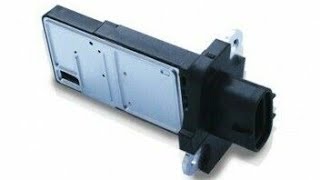
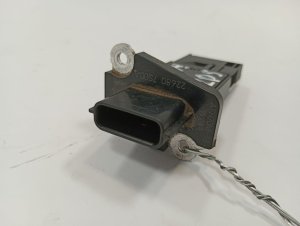
- Dirty or Faulty Mass Airflow (MAF) Sensor 🔴 High Probability → Shop Fuel Injection Air Flow Meter Nissan MAF sensors of this era are sensitive to contamination from dust, oil from air filters, and debris, causing them to under-report airflow to the ECU. The ECU then commands less fuel than necessary, but the oxygen sensor sees unburnt oxygen from a potential misfire and overcompensates by adding fuel, leading to a rich condition.
How to confirm: Inspect the sensor's wire elements for dirt. With a scan tool, monitor MAF readings at idle; they should be stable (approx. 2.0-4.0 g/s for the 2.5L). Unplugging the sensor and seeing if the idle stabilizes can be a rough indicator, as the ECU will revert to default values. A dirty sensor often causes hesitation and stalling.
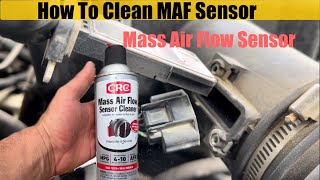
Typical fix: Clean the sensor using a dedicated MAF sensor cleaner spray. 🎬 Watch this quick guide on cleaning your Frontier's MAF sensor. Do not touch the wires. Let it dry completely for at least 10 minutes before reinstalling. If cleaning does not resolve the issue, the sensor must be replaced, preferably with an OEM or Hitachi unit.
Est. part cost: $5-$10 for cleaner, $80-$200 for a new sensor - Failing Upstream Air/Fuel Ratio Sensor (Bank 1, Sensor 1) 🔴 High Probability → Shop Oxygen Sensor This sensor directly measures the air-fuel ratio. Over time, it can become slow to respond or fail, sending incorrect 'lean' signals (stuck low voltage) that cause the ECU to add too much fuel in response.
How to confirm: Use a scan tool to graph the sensor's voltage. A healthy A/F sensor should fluctuate rapidly. If it's stuck at a low voltage or responds sluggishly, it's likely faulty. A rich condition will show a consistently high voltage (above 0.8V).
Typical fix: Replace the Bank 1, Sensor 1 Air/Fuel Ratio sensor. An O2 sensor socket (22mm or 7/8") is highly recommended for this job.
Est. part cost: $70-$180 - Exhaust Leak (before A/F Sensor) 🟡 Medium Probability Cracks in the exhaust manifold or a failed gasket between the manifold and cylinder head can allow outside air to be drawn into the exhaust stream. This extra oxygen causes the A/F sensor to read a false lean condition, prompting the ECU to dump more fuel and create an actual rich condition.
How to confirm: Visually inspect the exhaust manifold for cracks. Listen for a ticking or tapping sound from the engine bay, especially when the engine is cold. A shop can perform a smoke test on the exhaust to pinpoint leaks. One owner on a Reddit forum found an exhaust leak at the manifold was the root cause after replacing many other parts.
Typical fix: Replace the cracked exhaust manifold and/or the gasket. This can be a labor-intensive job. 🎬 See how to identify and repair a cracked exhaust manifold.
Est. part cost: $150-$400 for a manifold, $20-$40 for a gasket - Leaking Fuel Injector(s) 🟡 Medium Probability → Shop Fuel Injector
How to confirm: Perform a fuel pressure leak-down test. After shutting the engine off, the fuel rail pressure should hold steady. A rapid drop indicates a leak, possibly from an injector. Pulling the spark plugs may also reveal one plug that is wet with fuel or covered in black soot compared to the others.
Typical fix: Replace the leaking fuel injector(s) and their seals. It's often recommended to replace them as a set.
Est. part cost: $50-$150 per injector - High Fuel Pressure ⚪ Low Probability The fuel pressure regulator can fail, causing excessive pressure in the fuel rail and forcing too much fuel through the injectors.
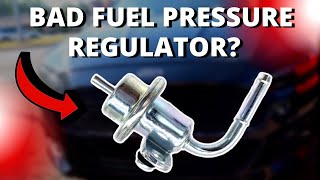
How to confirm: Connect a fuel pressure gauge to the fuel rail. Compare the reading at idle to the manufacturer's specification (approximately 51-52 PSI). Pressure that is significantly higher than specified points to a faulty fuel pressure regulator. On these models, the regulator is part of the in-tank fuel pump assembly. 🎬 Watch: Common symptoms of a failing fuel pressure regulator.
Typical fix: Replace the fuel pressure regulator. This usually requires replacing the entire fuel pump module inside the fuel tank.
Est. part cost: $150-$300 for a fuel pump assembly
Rare But Worth Checking
- Stuck Open EVAP Purge Solenoid: → Shop Vapor Canister If the evaporative emissions purge valve sticks open, it can allow un-metered fuel vapors from the charcoal canister to enter the intake manifold at idle, creating a rich condition. This can be tested by pinching off the vacuum line to the solenoid to see if fuel trims improve.
- Faulty Engine Coolant Temperature (ECT) Sensor: If the ECT sensor incorrectly tells the ECU that the engine is always cold (reading a very low temperature), the computer will continuously command a richer fuel mixture, similar to when the choke is on in an older car.
Diagnosis Steps
- Scan for Codes: Use an OBD-II scanner to confirm P0172 and check for any other related codes.
- Analyze Freeze Frame Data: Look at the short-term (STFT) and long-term fuel trim (LTFT) values. For P0172, you will see highly negative numbers (e.g., -20% or more) as the ECU tries to subtract fuel.
- Visual Inspection: Check the engine air filter for dirt and ensure the intake tube is free of blockages or restrictions. Look for obvious cracks in vacuum lines or the intake boot.
- Clean the MAF Sensor: Remove the MAF sensor located on the airbox outlet. Carefully spray the sensing elements with dedicated MAF cleaner. Do not touch the wires. Let it dry completely before reinstalling. Clear codes and test drive.
- Inspect for Exhaust Leaks: With the engine cold, start it and listen for any ticking or hissing sounds near the exhaust manifold. A common failure point is the manifold itself cracking.
- Test the Air/Fuel Ratio Sensor (Upstream O2): Use a scan tool to graph the Bank 1 Sensor 1 voltage. It should fluctuate rapidly. If it is stuck high (e.g., >0.8V) or is slow to respond, it has likely failed.
- Check Fuel Pressure: Connect a fuel pressure gauge and verify the pressure is within the factory specification (approximately 51-52 PSI). Excessively high pressure points to a fuel pressure regulator issue, which is likely part of the in-tank fuel pump assembly.
- Check for Leaking Injectors: Perform a fuel pressure leak-down test. If pressure drops quickly after the engine is off, suspect a leaking injector. You can also pull spark plugs to look for evidence of one cylinder running richer than others (wet with fuel, heavy black soot).
- Test EVAP Purge Valve: With the engine at idle, disconnect the vacuum hose from the purge valve and check for suction with your finger. There should be no vacuum at idle. If there is, the valve is stuck open and needs replacement.
Parts You'll Likely Need
- Mass Airflow (MAF) Sensor Cleaner — This is the cheapest and easiest first step, and often solves the problem on these trucks due to the sensor's sensitivity to dirt.
Trusted brands: CRC, WD-40 Specialist
OEM price range: N/A
Related Codes That Often Appear With This One
- P0300 — A random/multiple cylinder misfire can occur because the excessively rich fuel mixture fouls the spark plugs and fails to ignite properly.
- P0301, P0302, P0303, P0304 — A misfire specific to one cylinder can be caused by a leaking fuel injector on that cylinder, which directly leads to a P0172 code.
- P0101 — This code for MAF Sensor Performance/Range can accompany P0172, strongly indicating the MAF sensor is dirty or faulty. Nissan has issued TSBs (like NTB12-051j) for other models regarding a P0101 that requires an ECU reprogram, though this TSB does not apply to the 2.5L Frontier.
Technical Service Bulletins (TSBs) & Recalls
- NTB12-051j: This TSB addresses a P0101 (MAF Sensor) code on various Nissan models via an ECM reprogram. However, for the D40 Frontier, it only applies to the VQ40DE (V6) engine, not the QR25DE (4-cylinder). Therefore, it is not directly applicable to this specific vehicle and engine combination for resolving P0172.
- TSB Bulletin #NTB15115: While originally issued for other Nissan models like the Altima, this bulletin notes that the MIL may be ON with Air Fuel (A/F) Sensor DTCs stored, specifically including P0172 (Fuel System Rich Bank 1) and P0171.
Platform-Specific Known Issues
- Exhaust Manifold Cracking: The QR25DE engine, particularly in applications like the Altima and Sentra, was known for issues with the catalytic converter integrated into the exhaust manifold. While less documented on the Frontier, a cracked manifold remains a possible cause for an exhaust leak before the O2 sensor, leading to a P0172 code. A TSB for the Altima (NTB12-120a) addressed related heat shield replacements.
Mechanic-Grade Diagnostic Values
- Long Term Fuel Trim (LTFT) — expected: -10% to +10%. Failure: Consistently more negative than -20% to -25%, which triggers the P0172 code.
- Upstream A/F Sensor (Bank 1 Sensor 1) Voltage — expected: Rapidly fluctuating between approximately 0.1V and 0.9V.. Failure: Stuck high, consistently above 0.8V, indicates a rich condition.
- Fuel Pressure (at idle) — expected: Approximately 51-52 PSI.. Failure: Pressure significantly higher than spec points to a faulty fuel pressure regulator.
- Mass Air Flow (MAF) Sensor Reading (at idle) — expected: Approximately 2.0 - 4.0 g/s for a fully warm 2.5L engine.. Failure: Readings that are erratically low or high, or that don't increase smoothly with RPM.
Scan Tool Commands That Help
- Nissan CONSULT or compatible advanced scanner: Fuel Injection Adjustment — To temporarily adjust the overall fuel mixture to test the A/F sensor's response. If you manually lean the mixture, you should see the A/F sensor voltage drop and fuel trims react. This helps confirm if the sensor and ECU are communicating correctly.
- Nissan CONSULT or compatible advanced scanner: Idle Air Volume Learn — This procedure MUST be performed after cleaning the throttle body or replacing the electronic throttle control actuator. An incorrect idle airflow value can cause the ECU to calculate fuel mixture incorrectly, potentially contributing to a rich or lean condition.
Wiring & Ground Locations
- F10 & F16 — On the front of the 2.5L engine block.. These are primary engine ground points. A poor ground connection here can cause erratic sensor readings for crucial components like the Crankshaft Position Sensor and others, leading to incorrect fuel calculations by the ECM.
- M61 & M57 — M61 is behind the right side of the dash; M57 is behind the left side of the dash.. These are body harness grounds that provide the ground path for the ECM on 2.5L models. A corroded or loose ground here can directly affect ECM operation and cause a variety of phantom codes and drivability issues, including P0172.
- ECM Pin 65 (A/F Sensor 1 Signal) — At the main ECM harness connector.. This is the specific pin that carries the signal from the upstream A/F sensor to the ECM. When diagnosing a suspected bad sensor, a technician can back-probe this pin to check for the correct voltage signal directly at the computer, ruling out wiring issues between the sensor and the ECM.
- ECM Pin 52 (Sensor Ground) — At the main ECM harness connector.. This pin provides the ground reference for multiple sensors, including the MAF sensor. If this ground path is compromised, the MAF and other sensors will send incorrect data to the ECM, which is a common cause of fuel trim problems.
Real Owner Repair Stories
- Reddit user Slaya45_DXM in r/MechanicAdvice (2009 Nissan Frontier) — Persistent P0172 code that would return about 100 miles after being cleared.
❌ Tried (didn't work) Replaced fuel pump, Replaced coilpacks, Replaced upstream O2 sensors, Replaced spark plugs, Cleaned fuel injectors, Replaced Electronic Throttle Control (ETC), Used fuel system cleaner
✅ What actually fixed it Found and repaired an exhaust leak at the passenger side exhaust manifold.
OEM Part Supersession History
22693-EA000→This part number is listed by Nissan as discontinued for some applications but is still sold for the 2005-2012 Frontier 2.5L. For 2013-2019 models, a different sensor is used, often cross-referenced to Denso 234-9127.— Model year update/change in sensor or connector design.
Heads up: The 22693-EA000 sensor is for 2005-2012 models. Using it on a 2013+ truck (or vice-versa) will likely result in improper fitment or incorrect readings. Always verify the part number for your specific model year.22680-7S000→No supersession noted within the 2005-2019 generation. This part number is consistent for both the 2.5L I4 and 4.0L V6 engines in this generation. The Hitachi direct equivalent is MAF0031.— N/A
Model Year Variations Within This Range
- 2005-2012 vs 2013-2019: The upstream Air/Fuel Ratio (O2) sensor part number changes. Early models (2005-2012) use part number 22693-EA000. Later models (2013-2019) use a different sensor, such as Denso part 234-9127. While the core cause of failure is the same, the replacement part is different.
Diagnostic Flowchart
Other Known Issues on This Vehicle
Issues unrelated to this code that are worth knowing about as an owner of this generation:
- SMOD (Strawberry Milkshake of Death) 🔴 High — Common on 2005-2010 automatic transmission models. A failure in the radiator's internal transmission cooler allows coolant and transmission fluid to mix, destroying the transmission. (Ref: Nissan extended the warranty for this issue, but it has since expired for all affected vehicles.)
- Timing Chain Guide Wear 🟠 Medium — Primarily affects earlier second-gen models (approx. 2005-2010) but can occur on later years. The plastic timing chain tensioner guides wear out, causing a distinct whining or supercharger-like sound. If ignored, it can lead to chain failure and severe engine damage.
- IPDM-ER Failure 🟠 Medium — Common on 2005-2007 models. The Intelligent Power Distribution Module (IPDM) contains a non-serviceable ECM relay that can fail, causing a sudden stall or a crank-no-start condition. Symptoms can also include various random electrical issues. (Ref: Nissan issued a service bulletin for some models with white IPDMs, providing a replacement relay (Part No. 284B7-CW29E).)
Used vs. New Parts: Buying Guide for This Vehicle
When a used part is the smart pick: For this specific code, buying used parts is generally not recommended. The primary culprits are sensors (MAF, A/F) and fuel system components that wear out or get contaminated over time. A used part from a junkyard is likely to have similar age and wear, offering little to no long-term reliability.
Donor-vehicle mileage cap: roughly under 50000 miles for the part to have meaningful remaining life.
What to inspect on the donor part:
- For a MAF sensor, ensure the donor vehicle's airbox was intact and the filter was clean, suggesting less chance of contamination.
- Check for obvious signs of physical damage, corrosion on connectors, or cut wires.
- If possible, get history on the donor vehicle to see if it was running well before being salvaged.
OEM-only on this vehicle (don't cheap out):
- Air/Fuel Ratio Sensor
- Mass Airflow (MAF) Sensor
Aftermarket brands forum-validated for this vehicle:
- A/F (O2) Sensors: Denso or NTK are frequently cited as OEM suppliers or high-quality alternatives that work well with Nissan electronics.
- MAF Sensor: Hitachi is the original equipment manufacturer (OEM). Buying a Hitachi-branded sensor (like part MAF0031) is equivalent to getting a dealer part without the dealer markup.
Brands owners have reported issues with on this vehicle:
- Generic/unbranded 'eBay special' sensors should be avoided. Forum users across many Nissan platforms report issues with cheap, no-name electronic sensors causing persistent or new trouble codes.
- Bosch sensors have mixed reviews for Nissan applications; some owners report they do not work correctly with the ECU, so it's safer to stick with Denso, NTK, or Hitachi.
Real Owner Stories
Aggregated from forums and TSBs cited above. Mileages and costs reflect what owners reported in those sources.
2009 Nissan Frontier 2.5L
Symptoms: The owner experienced a persistent P0172 code and replaced the fuel pump, coils, and ECT sensor without success.
What fixed it: The issue was finally resolved by discovering and repairing an exhaust leak at the exhaust manifold.
Source hint: Reddit - r/MechanicAdvice: 'I can't get rid of the trouble code P0172. Please Help'
Related OBD-II Codes
Frequently Asked Questions
Does TSB NTB12-051j apply to my 2.5L QR25DE Frontier to fix the P0172 code?
What are the specific idle MAF readings I should look for on my 2.5L Frontier?
Can I just clean the MAF sensor on my Frontier, or do I need to replace it?
Is there a common mechanical failure on the QR25DE that causes a false rich condition?
Where is the fuel pressure regulator located on the 2005-2019 Frontier 2.5L?
What voltage should I see on my upstream Air/Fuel Ratio sensor if the engine is running rich?
Helpful Videos



Used OEM Parts in Stock
New Aftermarket Parts Available


The information in this article is provided for general reference and educational purposes only. Vehicle specifications, procedures, and part compatibility can vary by production date, trim level, and region. Always consult your vehicle's factory service manual and verify part numbers before purchasing or performing repairs. Safety-critical components such as airbags, seat belts, and braking systems should be installed by a qualified professional.
- Nissan Frontier:
- 🧭 Diagnostic Flowchart
- 🎬 Helpful Videos
- 🛍️ Shop This Part
- What's Unique About the 2005-2019 Nissan Frontier
- Symptoms You May Notice
- Most Likely Causes
- Rare But Worth Checking
- Diagnosis Steps
- Parts You'll Likely Need
- Related Codes That Often Appear With This One
- Technical Service Bulletins (TSBs) & Recalls
- Platform-Specific Known Issues
- Mechanic-Grade Diagnostic Values
- Scan Tool Commands That Help
- Wiring & Ground Locations
- Real Owner Repair Stories
- OEM Part Supersession History
- Model Year Variations Within This Range
- Other Known Issues on This Vehicle
- Used vs. New Parts: Buying Guide for This Vehicle
- Real Owner Stories
- 2009 Nissan Frontier 2.5L
- Related OBD-II Codes
- Frequently Asked Questions
- 🎟️ Get 5% Off