

P0172 on 2008-2011 Subaru Impreza EJ25: System Too Rich Causes and Fixes
For a 2008-2011 Subaru Impreza with the EJ25 engine, code P0172 is most often caused by a dirty Mass Airflow (MAF) sensor or a failing front Air/Fuel (O2) sensor. Cleaning the MAF sensor is a cheap first step, but replacing the front A/F sensor is the most common final fix. For WRX models, a cracked turbo inlet hose is also a primary suspect.
- Start by spending $10 on a can of MAF sensor cleaner; this is the easiest and most common fix.
- Do not immediately buy an oxygen sensor. First, clean the MAF and, if your car is turbocharged, check for intake leaks.
- If cleaning the MAF doesn't work, the front Air/Fuel (O2) sensor is the next most likely part to have failed.
- The flashing cruise control light is normal for a Subaru with a Check Engine Light and will resolve itself when the P0172 code is fixed.
- If the car has an aftermarket air intake, mismatched ECU tuning is a very likely cause of the problem.
What's Unique About the 2008-2011 Subaru Impreza
On the EJ25 engine, this code is frequently a sensor issue rather than a major mechanical fault. The Mass Airflow (MAF) sensor is notoriously sensitive to dirt, and the front Air/Fuel (A/F) sensor is a common failure point as the car ages. For turbocharged models (like the WRX), the complex intake plumbing introduces another major variable; a cracked plastic turbo inlet hose is a very common and hard-to-find leak source that allows metered air to escape, causing a rich condition. Owners often mistakenly chase vacuum leaks, which typically cause a lean code (P0171), instead of focusing on these more probable causes.
Symptoms You May Notice
- Check Engine Light is on
- Flashing cruise control light (this is standard Subaru behavior with a CEL)
- Reduced fuel economy
- Black smoke from the exhaust, especially under acceleration
- Smell of raw gasoline from the exhaust
- Rough, hunting, or low idle
- Hesitation or bogging during acceleration, sometimes felt around 2000 RPM
- Failed emissions test
- Replacing the rear (downstream) O2 sensor. The rear sensor only monitors catalytic converter efficiency and does not affect fuel trim.
- Assuming a vacuum leak is the cause. While possible, a vacuum leak typically introduces extra air and causes a lean code (P0171), not a rich code on these cars. On WRX models, an intake leak *after* the MAF causes a rich code.
Most Likely Causes
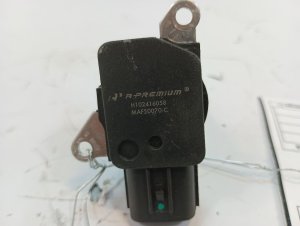
- Dirty or Faulty Mass Airflow (MAF) Sensor 🔴 High Probability → Shop Fuel Injection Air Flow Meter The MAF sensor on Subarus is sensitive and can become contaminated with dirt, oil, or debris over time, causing it to under-report airflow to the ECU. This leads the ECU to calculate an incorrect (richer) fuel mixture.
How to confirm: Remove the MAF sensor and inspect the two small wires inside for contamination. The easiest first step is to clean it with a dedicated MAF sensor cleaner spray. Do not touch the wires. A good diagnostic test is to unplug the MAF sensor with the engine running; if the idle smooths out, the sensor was likely providing bad data.
Typical fix: Clean the sensor with MAF cleaner. If cleaning does not resolve the issue, replace the MAF sensor with a genuine Denso or Subaru OEM part to avoid compatibility issues.
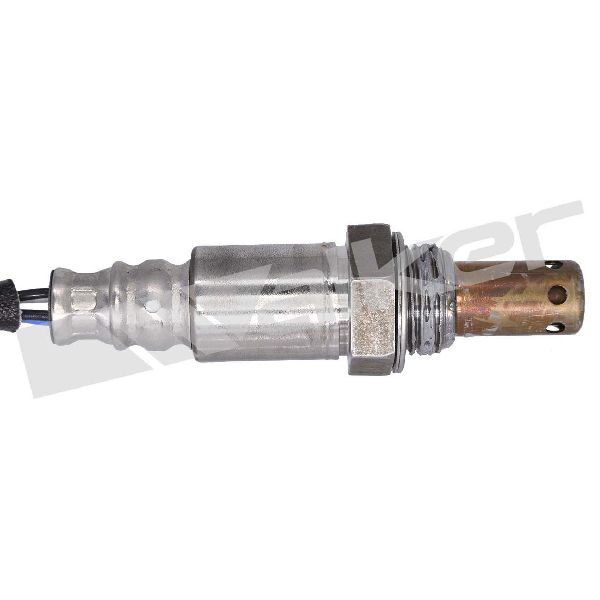
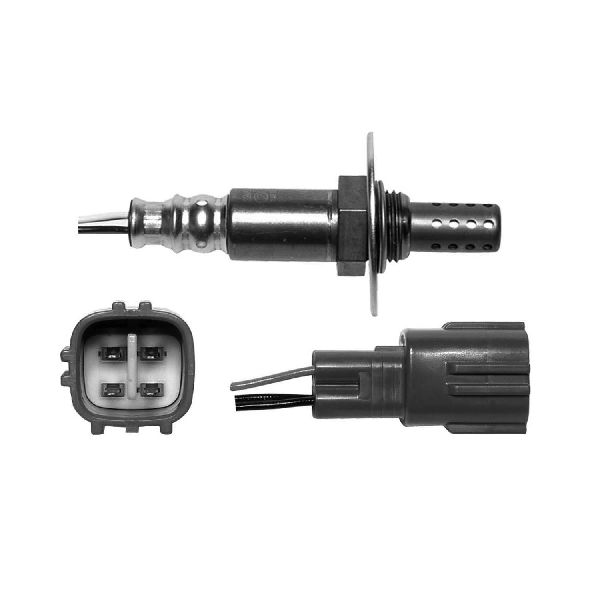
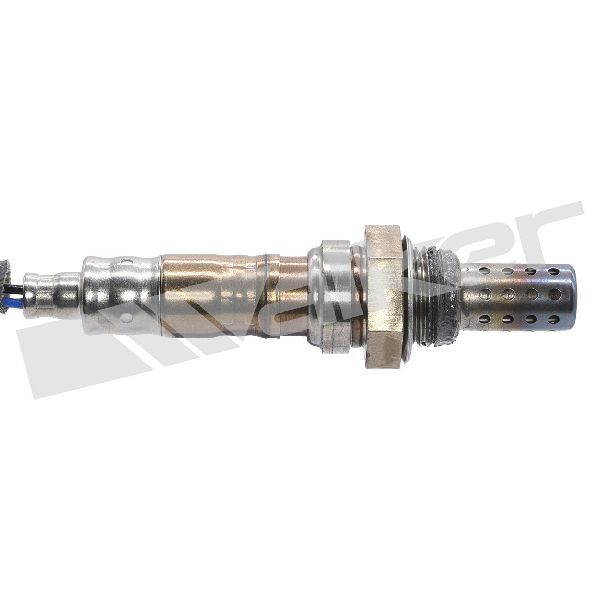
Est. part cost: $10-$15 for cleaner, $100-$200 for a new sensor. - Failing Front Air/Fuel (O2) Sensor 🔴 High Probability This sensor (also called Bank 1, Sensor 1) works constantly to measure exhaust gases and degrades over time, often after 80k-100k miles. A slow or 'lazy' sensor provides delayed or incorrect data, leading the ECU to enrich the mixture improperly.
How to confirm: Use an OBD-II scanner with live data to monitor the Bank 1 Sensor 1 voltage. A healthy sensor fluctuates rapidly between approximately 0.1V and 0.9V. A failing one may be stuck at a high voltage (above 0.8V) or show a very slow response to throttle changes.
Typical fix: Replace the front Air/Fuel ratio sensor. Using an OEM or quality aftermarket brand like Denso is highly recommended, as many owners report issues with other brands on Subarus.
Est. part cost: $120-$250 - Intake Leak (Post-MAF, Pre-Turbo) 🟡 Medium Probability This is especially common on turbocharged WRX models. The stock plastic turbo inlet hose becomes brittle with age and heat cycles, developing cracks on the underside that are difficult to see. This allows air that has already been measured by the MAF to leak out, so the fuel injected is for more air than actually enters the cylinders, creating a rich mixture.
How to confirm: Perform a smoke test or a low-pressure (15-20 PSI) boost leak test on the intake system. Listen for hissing and spray soapy water on connections to check for bubbles. Pay close attention to the turbo inlet, intercooler couplers, and bypass valve gasket.
Typical fix: Replace the cracked or leaking hose. Many owners upgrade to a more durable silicone turbo inlet hose. Tighten any loose clamps.
Est. part cost: $80-$250 for a silicone inlet, less for clamps. - Leaking Fuel Injector(s) ⚪ Low Probability → Shop Fuel Injector
How to confirm: After ruling out sensors, pull the spark plugs and check for one that is wet with fuel or significantly blacker than the others. A fuel pressure leak-down test can also point to a leaking injector.
Typical fix: Replace the faulty fuel injector and its seals.
Est. part cost: $70-$150 per injector - Incorrect ECU Tune for Aftermarket Parts ⚪ Low Probability Common issue if the car was modified by a previous owner. Aftermarket air intakes, especially 'cold air intakes', change the MAF housing diameter and require a matching ECU tune. Similarly, a vent-to-atmosphere (VTA) blow-off valve (BOV) will cause a rich condition between shifts if the car is not tuned for it.
How to confirm: Check for any non-OEM intake parts or a VTA BOV. If an aftermarket intake is present and you don't have a tuning device (like a Cobb Accessport) showing a matched tune, this is a likely cause. One owner on a Reddit forum fixed his P0172 code by reinstalling a BOV that a previous owner had removed without reverting the tune.
Typical fix: Either reinstall the factory airbox/BPV or get the correct ECU tune for the installed hardware from a professional tuner.
Est. part cost: $0 to reinstall stock parts, $200-$600 for a professional tune.
Rare But Worth Checking
- Faulty Fuel Pressure Regulator: → Shop Fuel Injection Pressure Regulator If the regulator fails and provides excessive fuel pressure, it can overpower the injectors and cause a rich condition across all cylinders. A key diagnostic step is to pull the vacuum line off the regulator; if you see or smell raw fuel, the diaphragm is ruptured and it must be replaced.
- Severely Overdue Oil Change: In at least one documented case on a 2008 Subaru Legacy 2.5L, a P0172 code that persisted after checking sensors was resolved simply by performing an oil and filter change. Extremely old, fuel-contaminated oil can affect crankcase vapors and skew sensor readings.
Diagnosis Steps
- Read the codes with an OBD-II scanner and note any other codes present.
- Inspect the engine air filter. A severely clogged filter can restrict airflow and cause a rich condition.
- Carefully remove and inspect the Mass Airflow (MAF) sensor. Clean it using only dedicated MAF sensor cleaner spray. Let it dry completely before reinstalling.
- For turbocharged models (WRX), perform a boost leak test or smoke test to check for leaks between the MAF sensor and the throttle body, paying close attention to the turbo inlet hose, intercooler connections, and BPV gasket.
- Use a scanner with live data to monitor Short-Term Fuel Trim (STFT) and Long-Term Fuel Trim (LTFT). For P0172, you will see significant negative numbers (e.g., -15% or more) as the ECU removes fuel.
- Monitor the Bank 1, Sensor 1 (A/F Sensor) voltage and response rate. If it's stuck high (over 0.8V) or responds very slowly to throttle changes, it likely needs replacement.
- Check for modifications. If an aftermarket intake or blow-off valve is installed, verify the ECU has the correct tune.
- Inspect the fuel pressure regulator by pulling its vacuum line. If fuel is present, the regulator has failed and must be replaced.
- Reset the ECU (by disconnecting the battery for 15 minutes) and drive the vehicle to see if the code returns after performing a fix.
- If all else fails, consider testing for leaking fuel injectors.
Parts You'll Likely Need
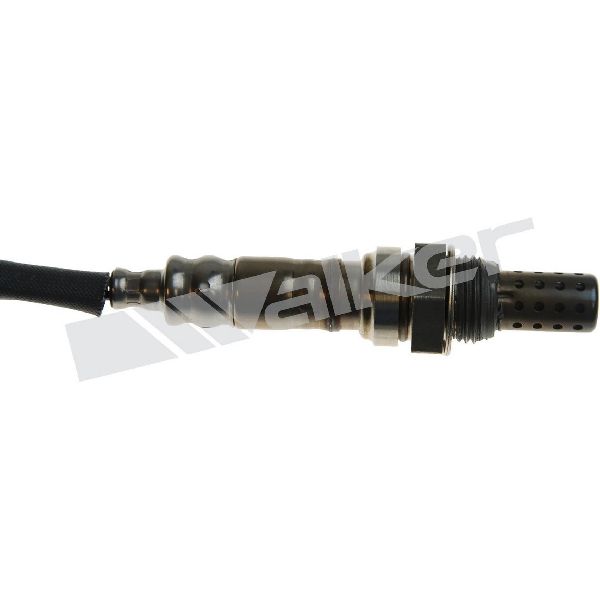
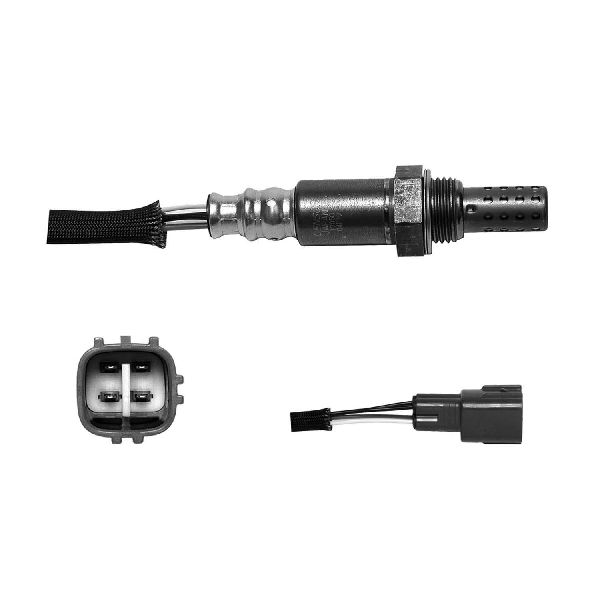
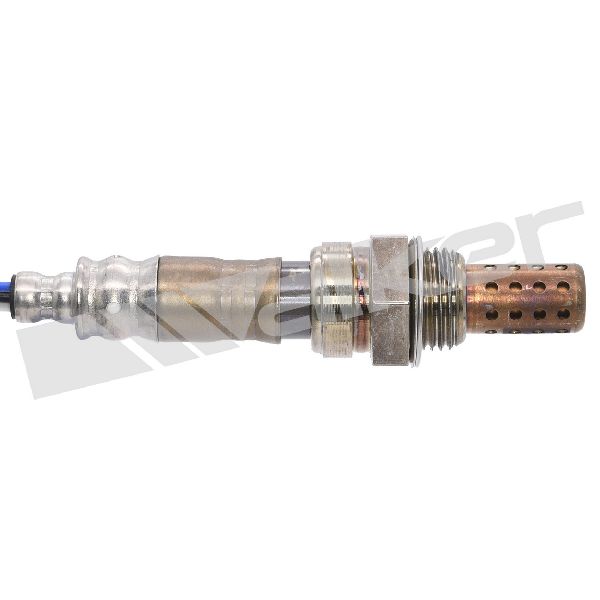
- Front Air/Fuel Ratio Sensor
(OEM #22641AA480)— This is the most common part to fail and directly cause P0172. It is the primary sensor the ECU uses for fuel control and it degrades over time.
Trusted brands: Denso (OEM Supplier), NTK, Subaru (OEM)
OEM price range: $200-$275
Aftermarket price range: $120-$180 - Mass Airflow (MAF) Sensor
(OEM #22680AA380)— The second most common cause. It gets dirty and misreads airflow, tricking the ECU into adding too much fuel. Cleaning often works, but replacement is sometimes necessary.
Trusted brands: Denso (OEM Supplier), Subaru (OEM)
OEM price range: $180-$220
Aftermarket price range: $100-$150
Related Codes That Often Appear With This One
- P0171 — System Too Lean. It seems counterintuitive, but a faulty MAF sensor can give erratic readings, causing the ECU to swing between rich and lean conditions, sometimes setting both codes.
- P0101, P0102, P0103 — These are MAF sensor circuit codes. Seeing one of these alongside P0172 strongly points to the MAF sensor or its wiring as the root cause.
- P0133 — O2 Sensor Circuit Slow Response. This code directly indicates that the front A/F sensor is failing and not responding quickly enough, which is a direct cause of P0172.
- P0420 — Catalyst System Efficiency Below Threshold. This code often appears after P0172 has been ignored for a long time. The persistent rich condition can overheat and destroy the catalytic converter.
Technical Service Bulletins (TSBs) & Recalls
- Subaru TSB 08-20-13 (August 2013): Mentions 'Illustration and diagnostic step changes for DTCs P0172' for 2013 Impreza models, indicating that Subaru has updated official diagnostic procedures for this code.
Platform-Specific Known Issues
- On turbocharged WRX models, the plastic turbo inlet hose is a known failure point that becomes brittle and cracks, causing intake leaks that can lead to a P0172 code.
- The flashing cruise control light is a built-in feature for Subarus whenever a Check Engine Light is active; it is not a separate problem.
Mechanic-Grade Diagnostic Values
- Long-Term Fuel Trim (LTFT) — expected: Close to 0%, typically within +/- 10%.. Failure: Sustained negative values beyond -20% to -25% will trigger the P0172 code.
- Mass Airflow (MAF) Sensor Reading at Idle — expected: Approximately 2.5-4.0 g/s for a 2.5L engine at normal operating temperature.. Failure: Readings that are significantly lower than expected suggest a dirty or failing sensor.
- Front A/F (O2) Sensor Voltage — expected: Rapidly fluctuating between approximately 0.1V and 0.9V on a healthy narrowband sensor.. Failure: Stuck at a high voltage (above 0.8V) or very slow, lazy switching.
- Fuel Pressure (at fuel rail) — expected: Approximately 52 PSI for this platform.. Failure: Significantly higher pressure indicates a faulty fuel pressure regulator.
Scan Tool Commands That Help
- Subaru Select Monitor (SSM) or compatible professional scan tool: Reset ECU / Clear Memory / Reset A/F Learning — After replacing a major component like the MAF sensor, A/F sensor, or fixing a large intake leak. This command forces the ECU to erase its stored long-term fuel trim adjustments and relearn the fuel strategy from a clean slate, which can speed up the validation of a repair.
Wiring & Ground Locations
- Engine Grounds (General) — The main engine ground points are typically located on the intake manifold and on the chassis near the battery. For a 2009 Impreza, specific ground blocks are designated GB-1 through GB-8, located near headlights, at either end of the dash, and under the passenger seat.. A poor engine ground can cause erratic voltage readings from critical sensors like the MAF and A/F sensor, leading to incorrect data being sent to the ECU and causing fuel trim issues. Ensuring these grounds are clean and tight is a crucial, often overlooked, step.
- MAF Sensor Connector (B3) — The 5-wire connector plugs directly into the MAF sensor, located in the intake tract just after the air filter box.. The connector provides power, ground, and signal lines for both the mass airflow and intake air temperature sensors. Corrosion or damage to this connector or its pigtail harness is a known failure point that can cause MAF-related codes, including P0172.
Real Owner Repair Stories
- YouTube channel 'Boosted Barney' (Subaru WRX (GH Chassis, similar to 2008-2011 Impreza)) — Persistent P0172 code, running very rich, high negative A/F learning values.
❌ Tried (didn't work) Replacing the front O2 (A/F) sensor, Cleaning the MAF sensor extension harness
✅ What actually fixed it A boost leak test revealed a major leak from a loose clamp on the cold side of the top-mount intercooler. Tightening the clamp resolved the leak and the P0172 code. - Reddit user on r/WRX (2009 Subaru Impreza WRX) — P0172 code, flashing cruise control light.
❌ Tried (didn't work) The user was about to replace sensors.
✅ What actually fixed it The user discovered the previous owner had flashed the ECU for a 50/50 vent-to-atmosphere blow-off valve but had reinstalled the stock bypass valve before selling. Installing a new BOV that matched the ECU's tune fixed the rich condition and cleared the code. - Reddit user on r/mechanics (Turbo Subaru (model year not specified but relevant)) — P0172 code, flashing cruise control, disabled traction control.
❌ Tried (didn't work) Initial diagnosis was uncertain.
✅ What actually fixed it The problem was solved after discovering the previous owner had flashed the ECU for a vent-to-atmosphere (VTA) blow-off valve but had removed it before selling. Installing a new BOV compatible with the tune resolved the code.
"I Checked Everything" — The Actual Cause
- On turbocharged models, a standard smoke test may not reveal leaks that only open under boost pressure. In one case, a P0172 was caused by a loose intercooler clamp that only leaked significantly when pressurized during a boost leak test, not during a low-pressure smoke test.
- A smoke test will not identify a failed fuel pressure regulator diaphragm. This failure allows raw fuel to be sucked into the intake manifold through the regulator's vacuum reference hose, causing a rich condition that is completely invisible to a smoke test.
When the Usual Fixes Don't Work
- While the most common fixes are the front A/F sensor and MAF sensor, a significant number of owner-reported fixes on turbocharged models point to intake leaks that are only discoverable with a boost leak test, not a simple smoke test. One owner replaced both the MAF and O2 sensor to no effect, only to find a loose intercooler clamp was the true cause. Another owner with a modified intake struggled with the code until they realized the ECU tune from a previous owner was for a different blow-off valve, highlighting the critical link between hardware and software on these cars.
OEM Part Supersession History
22680AA38A→22680AA380— Standard part revision by the manufacturer.
Heads up: The two part numbers are interchangeable for the specified vehicle range.
Diagnostic Flowchart
Other Known Issues on This Vehicle
Issues unrelated to this code that are worth knowing about as an owner of this generation:
- Head Gasket Failure 🔴 High — Common on naturally aspirated EJ25 engines from 1999-2011, typically occurring between 100,000 and 150,000 miles. The issue is less frequent but still possible on turbo models.
- Excessive Oil Consumption 🟠 Medium — Some owners of 2008-2011 models report higher than normal oil consumption, which can be caused by issues with piston rings.
- Takata Airbag Inflator Recall 🔴 High — Widespread recall affecting millions of vehicles, including the 2008-2011 Impreza. The inflators can explode in a crash, causing serious injury or death. (Ref: NHTSA Recalls: 20V002000, 19V045000)
- Brake Light Switch Malfunction 🟡 Low — A recall was issued for a faulty brake light switch that could prevent brake lights from illuminating and cause issues with push-button start and shifting out of park. (Ref: NHTSA Recall: 19V149000)
- Front Oxygen Sensor Failure 🟠 Medium → Shop Oxygen Sensor — The front A/F sensor is a common failure item, often leading to fuel trim codes like P0172 or P0171. Subaru issued a service program (WXW-80) for some model years due to the sensor element cracking. (Ref: Subaru Service Program WXW-80)
Used vs. New Parts: Buying Guide for This Vehicle
When a used part is the smart pick: Used parts make sense for structural components like intake hoses, intercoolers, or a factory airbox if you are reverting from a problematic aftermarket setup. These parts have no electronic or wear-and-tear components that degrade significantly with time alone.
Donor-vehicle mileage cap: roughly under 80000 miles for the part to have meaningful remaining life.
What to inspect on the donor part:
- For hoses (like the turbo inlet), inspect carefully for any signs of dry rot, cracking (especially on the underside), or oil contamination.
- For hard parts like an airbox, ensure all mounting tabs and clips are intact and there are no cracks in the housing.
OEM-only on this vehicle (don't cheap out):
- Front Air/Fuel (O2) Sensor
- Mass Airflow (MAF) Sensor
Aftermarket brands forum-validated for this vehicle:
- Denso (for A/F and MAF sensors, as they are the OEM supplier)
- NTK (for A/F sensors)
Brands owners have reported issues with on this vehicle:
- Generic, unbranded, or 'no-name' electronic sensors (MAF, O2) from online marketplaces are frequently reported on forums to be dead-on-arrival or fail quickly, causing the code to return.
Real Owner Stories
Aggregated from forums and TSBs cited above. Mileages and costs reflect what owners reported in those sources.
Subaru Impreza WRX (EJ25 Turbo)
Symptoms: Rich condition and extreme fuel trims caused by aftermarket parts installed by a previous owner.
What fixed it: Reinstalling a blow-off valve (BOV) that a previous owner had removed without reverting the ECU tune.
Source hint: Reddit forum r/mechanics thread titled 'Solving P0172'
2008-2011 Subaru Impreza (EJ25) — ~100000 miles
Symptoms: Check engine light with a 'lazy' sensor response and reduced fuel economy.
What fixed it: Replacement of the front Air/Fuel ratio sensor (Bank 1, Sensor 1) with a Denso or OEM unit.
Source hint: Article context regarding common EJ25 sensor degradation after 80k-100k miles
Related OBD-II Codes
Frequently Asked Questions
Why is my cruise control light flashing along with the Check Engine Light on my Impreza?
Does Subaru TSB 08-20-13 apply to my 2008-2011 Impreza?
Should I use an aftermarket MAF sensor to fix the P0172 code?
Can a blow-off valve (BOV) cause a P0172 rich condition on my WRX?
Is there a common physical part that fails on the turbocharged EJ25 causing this code?
How can I tell if my front O2 sensor is the cause of the rich mixture?
Helpful Videos

Used OEM Parts in Stock
New Aftermarket Parts Available

The information in this article is provided for general reference and educational purposes only. Vehicle specifications, procedures, and part compatibility can vary by production date, trim level, and region. Always consult your vehicle's factory service manual and verify part numbers before purchasing or performing repairs. Safety-critical components such as airbags, seat belts, and braking systems should be installed by a qualified professional.
- Subaru Impreza:
- 🧭 Diagnostic Flowchart
- 🎬 Helpful Videos
- 🛍️ Shop This Part
- What's Unique About the 2008-2011 Subaru Impreza
- Symptoms You May Notice
- Most Likely Causes
- Rare But Worth Checking
- Diagnosis Steps
- Parts You'll Likely Need
- Related Codes That Often Appear With This One
- Technical Service Bulletins (TSBs) & Recalls
- Platform-Specific Known Issues
- Mechanic-Grade Diagnostic Values
- Scan Tool Commands That Help
- Wiring & Ground Locations
- Real Owner Repair Stories
- "I Checked Everything" — The Actual Cause
- When the Usual Fixes Don't Work
- OEM Part Supersession History
- Other Known Issues on This Vehicle
- Used vs. New Parts: Buying Guide for This Vehicle
- Real Owner Stories
- Subaru Impreza WRX (EJ25 Turbo)
- 2008-2011 Subaru Impreza (EJ25) — ~100000 miles
- Related OBD-II Codes
- Frequently Asked Questions
- 🎟️ Get 5% Off