

P0172 on 2007-2021 Toyota Tundra 5.7L Flex Fuel: System Rich Causes and Fixes
On a 5.7L Flex Fuel Tundra, P0172 (System Too Rich Bank 1) is most often caused by a dirty Mass Airflow (MAF) sensor or an ECU software issue. Start by cleaning the MAF sensor for about $15. If the code persists, the ECU may be incorrectly calculating the fuel's alcohol content. This requires a dealer software update per TSB T-SB-0166-19 or a 'Fuel Density Learning Value Reset' with a capable bidirectional scan tool.
- For a P0172 code on a 5.7L Flex Fuel Tundra, your first step should always be to clean the Mass Airflow (MAF) sensor with dedicated cleaner.
- If cleaning the MAF doesn't solve the problem, the issue is very likely the ECU's incorrect calculation of the fuel's alcohol content.
- A Toyota dealer can fix the alcohol calculation issue by applying a software update outlined in TSB T-SB-0166-19.
- If both P0172 (Bank 1) and P0175 (Bank 2) are present, it makes individual components like an A/F sensor or injector less likely and points strongly to a system-wide issue like the MAF or ECU calibration.
What's Unique About the 2007-2021 Toyota Tundra
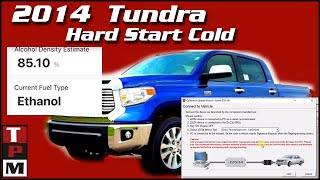
The 3UR-FBE Flex Fuel engine in the Tundra has a unique and well-documented sensitivity to the alcohol content in gasoline. The Engine Control Unit (ECU) can incorrectly estimate a high percentage of ethanol in the fuel, even when running on standard E10 gasoline. This miscalculation causes the ECU to command a richer fuel mixture to compensate for the perceived high ethanol content (which requires a richer mixture like 9.8:1 for E85 vs 14.7:1 for gasoline), leading to P0172 (and often P0175 for Bank 2). This is sometimes accompanied by hard starting or a long crank time. 🎬 Watch: How the TSB software update fixes hard starting issues Toyota addressed this specific logic issue with a software update detailed in Technical Service Bulletin T-SB-0166-19.
Generation note: The 2007-2021 model years cover the entire second generation of the Toyota Tundra (chassis code XK50). This generation received a significant facelift for the 2014 model year, but the 3UR-FBE engine and its fuel system remained largely the same. The common causes and fixes apply across this entire year range, especially the TSB regarding the flex fuel calculation, which covers models from 2009-2019. For 2020 and 2021, the 4.6L V8 was discontinued, leaving the 5.7L as the only option, and significant tech upgrades like a larger infotainment screen and standard Apple CarPlay/Android Auto were added.
Symptoms You May Notice
- Check Engine Light is on
- Poor fuel economy
- Rough or rolling idle
- Hesitation on acceleration
- Strong smell of fuel from the exhaust
- Black smoke from the tailpipe, especially during a cold start
- Hard starting or extended cranking time
- Replacing the downstream (post-catalytic converter) O2 sensor. The downstream sensor primarily monitors catalyst efficiency and has minimal impact on fuel trim.
- Replacing fuel injectors before confirming a leak by inspecting spark plugs or performing a balance test. This is an expensive and often unnecessary repair.
- Replacing A/F sensors or injectors on a Flex Fuel model when the root cause is the ECU's incorrect alcohol density reading, which requires a software reset or reflash.
Most Likely Causes
- Dirty Mass Airflow (MAF) Sensor 🔴 High Probability → Shop Fuel Injection Air Flow Meter The MAF sensor is highly sensitive to contamination, especially from aftermarket oiled air filters or driving in dusty conditions. Forum users on Tundras.com and other platforms frequently report that cleaning the MAF sensor is the first and most effective fix for P0172 and P0175.
How to confirm: Inspect the sensor wires inside the MAF housing. If they appear coated in grime, they need cleaning. With the key on and engine off, a scan tool should show the MAF reading near zero g/s; a higher reading indicates a fault. A forum user reported a reading of 0.01 lb/s (approximately 4.5 g/s) at idle, which can be used as a baseline for a running engine.
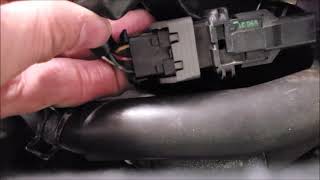
Typical fix: Carefully remove the sensor and clean it using only dedicated MAF sensor cleaner spray. Spray the delicate wires and elements generously from a distance, but do not touch them with fingers or tools. Allow it to air dry completely before reinstalling. 🎬 Watch: Step-by-step guide to cleaning your Tundra's MAF sensor If cleaning doesn't work, replace the sensor with a Denso OEM part.
Est. part cost: $10-$15 for cleaner, $70-$200 for a new Denso sensor. - ECU Software Calibration Error (Flex Fuel Alcohol Content) 🔴 High Probability This is a widely documented issue specific to the 3UR-FBE engine where the ECU incorrectly estimates high alcohol content in the fuel, causing it to inject too much gasoline. This is a known software logic flaw that can occur after battery disconnects or a pattern of short trips.
How to confirm: This issue is documented in Toyota TSB T-SB-0166-19 (which supersedes T-SB-0058-13). A dealer can check if this update applies to your VIN. A capable scan tool can read the 'Alcohol Density' or 'Fuel Composition' PID. If this value is high (e.g., >15% or even as high as 85%) while using standard E10 gasoline, this is the confirmed cause. According to TSB Bulletin #T-SB-0166-19_Rev, Techstream data list analysis in these cases may reveal significantly negative fuel trims.
Typical fix: A Toyota dealer needs to reprogram (reflash) the ECU with an updated software calibration. Alternatively, many bidirectional scan tools (like Autel, Launch, or Toyota's Techstream) have a 'Fuel Density Learning Value Reset' function under 'Powertrain / Engine and ECT / Utility' that can reset the value to zero, fixing the problem. This is a common DIY fix discussed on forums. 🎬 See how to reset alcohol density using a scan tool
Est. part cost: $0 if covered under emissions warranty (typically 8 years/80,000 miles), otherwise dealer labor charges apply for the reflash ($100-$250). A capable scan tool costs $400+. - Faulty Air/Fuel Ratio Sensor (Bank 1, Sensor 1) 🟡 Medium Probability → Shop Oxygen Sensor This is the primary sensor the ECU uses for fuel control on Bank 1. If it becomes lazy or fails, it can send incorrect signals, often defaulting to a rich reading. It is a common wear-and-tear item.
How to confirm: Use a scan tool to graph the sensor's voltage or current. It should fluctuate rapidly in response to throttle changes. A sensor that is stuck at a high voltage or responds slowly is likely faulty. With the ignition ON and engine OFF, the voltage at the ECM between terminal A1A+ (Pin 103) and E1 (Pin 81) should be 3.3V, and between A1A- (Pin 125) and E1 (Pin 81) should be 2.9V.
Typical fix: Replace the Bank 1, Sensor 1 Air/Fuel Ratio sensor. It is located on the passenger-side exhaust manifold, before the catalytic converter. Using an OEM Denso sensor is highly recommended to avoid compatibility issues.
Est. part cost: $120-$200 - Leaking Fuel Injector(s) ⚪ Low Probability → Shop Fuel Injector
How to confirm: After checking other causes, inspect the spark plugs on Bank 1 (passenger side). A plug that is black and sooty compared to the others indicates a rich condition in that specific cylinder, pointing to a leaking or stuck-open injector.
Typical fix: Replace the faulty fuel injector and its seals. It is often recommended to replace all injectors on that bank at the same time for consistent performance.
Est. part cost: $50-$150 per injector
Rare But Worth Checking
- High Fuel Pressure: A failing fuel pressure regulator or a restriction in the fuel return line can cause system-wide high pressure, forcing too much fuel through the injectors. This would typically set a P0175 (Bank 2 Rich) code as well. Specified pressure is often 38-44 psi.
- Stuck-Open Thermostat: If the thermostat is stuck open, the engine may not reach its proper operating temperature (75°C / 167°F). The ECU will remain in 'open loop' mode longer, commanding a richer fuel mixture intended for a cold engine, which can trigger P0172. This is more common in cold climates and would likely be accompanied by a low reading on the temperature gauge and poor heater performance.
- Cracked Exhaust Manifold: A crack in the exhaust manifold *before* the Bank 1 A/F sensor can pull in fresh air during the exhaust pulse reversion phase. This extra oxygen causes the A/F sensor to read a false lean condition, prompting the ECU to add fuel and create an actual rich condition, triggering P0172. This is often accompanied by a ticking noise when the engine is cold that may disappear as the metal expands.
Diagnosis Steps
- Read all stored trouble codes with an OBD-II scanner. Note if P0175, P1604, or P1605 are also present.
- Check for Technical Service Bulletins (TSBs) for your vehicle's VIN, specifically T-SB-0166-19 if you have the 5.7L Flex Fuel engine.
- Using a scan tool, monitor live data. Check Short-Term (STFT) and Long-Term (LTFT) fuel trims for Bank 1. For P0172, the combined value will be significantly negative (e.g., -20% or lower, with some systems flagging at -35%).
- On Flex Fuel models, check the 'Alcohol Density' or 'Fuel Composition' PID on the scan tool. If it reads a high percentage (e.g., over 15%) while using standard gasoline, the ECU calibration is the cause. Perform a 'Fuel Density Learning Value Reset' if your tool supports it, or go to a dealer.
- Inspect the engine air filter. A severely clogged or over-oiled aftermarket filter can restrict airflow and cause a rich condition.
- Inspect and clean the MAF sensor located in the intake tube after the air filter box. Use only dedicated MAF sensor cleaner and let it dry completely.
- If fuel trims are still rich and the MAF/Flex Fuel readings are correct, monitor the Bank 1, Sensor 1 Air/Fuel sensor voltage. A slow or stuck sensor needs replacement.
- Check fuel pressure with a mechanical gauge to ensure it is within OEM specifications (e.g., 38-44 psi).
- As a final step, pull the spark plugs on Bank 1 to check for signs of a leaking injector in a specific cylinder (e.g., one plug is much blacker than the others).
Parts You'll Likely Need
- Mass Airflow (MAF) Sensor Cleaner — This is the cheapest and most common first step. A dirty MAF is a very frequent cause of P0172 on the Tundra.
Trusted brands: CRC, WD-40 Specialist
Aftermarket price range: $10-$15 - Mass Airflow (MAF) Sensor
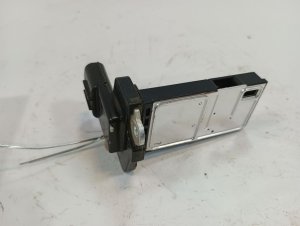
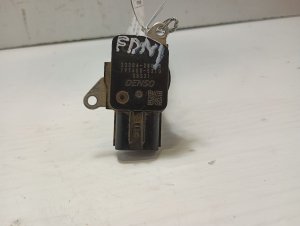
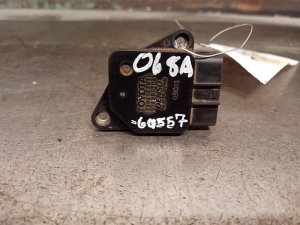
(OEM #22204-0F030)— If cleaning the sensor doesn't work, the sensor itself may have failed. It is a primary cause of incorrect fuel trim calculations. Using the OEM Denso part is highly recommended.
Trusted brands: Denso (OEM)
OEM price range: $150-$200
Aftermarket price range: $70-$120
Related Codes That Often Appear With This One
- P0175 — System Too Rich (Bank 2). If both P0172 and P0175 are present, it strongly points to a cause common to both engine banks, such as the MAF sensor, the ECU flex fuel calculation error, or a fuel pressure issue.
- P1604 — Startability Malfunction. This code often appears with the rich codes on Flex Fuel models due to the incorrect alcohol density calculation causing hard starting, as documented in TSB T-SB-0166-19.
- P1605 — Rough Idling. Mentioned in the older TSB T-SB-0058-13, this code can also be triggered alongside the rich codes due to the unstable combustion caused by the incorrect air-fuel mixture.
Technical Service Bulletins (TSBs) & Recalls
- T-SB-0166-19 (Rev1): Supersedes T-SB-0058-13. Addresses hard start, MIL ON with rich/lean codes (P0171/P0172/P0174/P0175) and P1604. The fix involves an updated ECU calibration and potentially a fuel pump replacement to correct an elevated alcohol density estimate.
- T-SB-0166-19: A manufacturer service bulletin notes that vehicles may exhibit a MIL ON condition with DTCs P0171, P0174, P0172, P0175, and/or P1604, where Techstream Data List analysis may reveal negative fuel trims.
- T-SB-0058-13 Rev: This bulletin describes how vehicles with the 3UR-FBE engine may exhibit a MIL ON condition with DTCs P0171/P0174, P0172/P0175, P1604, and/or P1605 (Rough Idling) after attempting to start the engine.
- T-SB-0058-13: The original TSB, now obsolete, that first addressed the extended crank and rich/lean conditions due to incorrect alcohol density calculations on 2012-2015 models. It also mentions codes P1604 and P1605 (Rough Idling).
Platform-Specific Known Issues
- The 3UR-FBE engine's ECU has a known software logic flaw where it miscalculates the ethanol content of the fuel, often reading a high percentage even with standard gasoline. This causes the ECU to command a richer fuel mixture, triggering P0172/P0175 and often P1604 (Startability Malfunction). The fix is a software reflash (TSB T-SB-0166-19) or a 'Fuel Density Learning Value Reset' with a capable scan tool.
Mechanic-Grade Diagnostic Values
- A/F Sensor (Bank 1, Sensor 1) Voltage at ECM, KOEO — expected: Terminal A1A+ (Pin 103) to E1 (Pin 81) should be 3.3V. Terminal A1A- (Pin 125) to E1 (Pin 81) should be 2.9V.. Failure: Significant deviation from these voltages suggests a sensor or wiring fault.
- Fuel Pressure — expected: 38 - 44 psi. Failure: Pressure significantly above 44 psi points to a faulty fuel pressure regulator or a restriction in the return line.
- Long-Term Fuel Trim Malfunction Threshold — expected: Within +/- 35%. Failure: A learned value of -35% or less will trigger the P0172 DTC.
- Engine Coolant Temperature for Closed Loop — expected: Above 75°C (167°F). Failure: If the engine doesn't reach this temperature (e.g., due to a stuck-open thermostat), it may stay in open-loop enrichment mode for too long, causing a rich condition.
Scan Tool Commands That Help
- Toyota Techstream: Fuel Density Learning Value Reset — This is the primary fix for the common Flex Fuel issue where the ECU incorrectly calculates high ethanol content, causing a rich condition. It's found under 'Powertrain / Engine and ECT / Utility'.
- Toyota Techstream: Active Test: Control the Injection Volume for A/F — This allows a technician to manually increase or decrease the fuel injection volume by percentages (e.g., +12.5%, -12.5%) while monitoring A/F sensor response to test the system's reaction and help isolate a faulty component.
- Toyota Techstream: Active Test: Fuel Pump / Speed — Used to verify the fuel pump and its control module are functioning correctly on command from the scan tool, helping to rule out fuel delivery hardware issues.
Wiring & Ground Locations
- D2 — Rear side of the right cylinder head (Bank 2 side, but relevant for engine grounds).. A poor engine ground can affect sensor readings across the engine, including the A/F and MAF sensors, potentially causing incorrect data to be sent to the ECM.
- A1 / A2 — Front left and front right fenders, respectively.. These are primary chassis ground points for the engine compartment. Corrosion or looseness here can cause a variety of electrical issues, including problems with the ECM or fuel pump control module.
- Fuel Pump Control ECU — Bolted to the inside of the frame rail.. This module controls the fuel pump. Forum users have reported corrosion and failure of this module, leading to fuel delivery issues. Its location on the frame makes it susceptible to moisture and debris.
Real Owner Repair Stories
- TundraTalk.net forum user (2005 Tundra 4.7L (similar 2UZ-FE engine, but diagnostic path is relevant)) — P0172 and P0175 (rich on both banks), hesitation on acceleration, random misfiring.
❌ Tried (didn't work) Wiring repair to A/F sensor, New alternator, Injector cleaning, New Denso injectors, New Denso MAF sensor, New Denso A/F sensor, Cleaned throttle body, New thermostat, New coolant temp sensor
✅ What actually fixed it Replacing the Engine Control Unit (ECU) with a remanufactured unit finally resolved the persistent rich codes after all other components tested good. - Tundras.com forum user (2015 Tundra 4.6L V8 (182,000 miles)) — Crank no start, followed by various CELs after initial repair.
❌ Tried (didn't work) Initial diagnosis of bad fuel pump, Multiple solenoid replacements for evap codes, Replacement of a cracked (new) fuel pump
✅ What actually fixed it The ultimate root cause was traced to the Fuel Pump Control Module (FPCM) repeatedly failing. A user in the same thread found that wiggling the wiring harness to the FPCM allowed the truck to start, indicating a wiring or connector pin issue was the true underlying problem causing the module failures.
OEM Part Supersession History
22204-75030→22204-0F030— Standard part update/revision by Toyota.
Heads up: The parts are interchangeable; 22204-0F030 is the current correct replacement part.
Model Year Variations Within This Range
- 2020-2021: The 4.6L V8 engine option was discontinued, making the 5.7L standard. These models received significant technology updates, including standard Apple CarPlay/Android Auto and larger 7-inch or 8-inch infotainment screens. Smart Key with push-button start became standard on SR5 trims and above. While the core engine and fuel system are the same, the TSB for the flex-fuel issue (T-SB-0166-19) only lists applicability up to 2019 models, suggesting the software logic may have been corrected in the 2020-2021 production run.
Diagnostic Flowchart
Real Owner Stories
Aggregated from forums and TSBs cited above. Mileages and costs reflect what owners reported in those sources.
Toyota Tundra 5.7L Flex Fuel
Symptoms: Experienced a long crank and no start issue.
What fixed it: Mechanic and dealer diagnosed the issue under TSB 0166-19, which required an ECU update and a potential fuel pump replacement.
Source hint: Tundras.com: 'Toyota Service Bulletin 0166-19 (Extended Crank)'
Toyota Tundra
Symptoms: Triggered both P0172 and P0175 codes simultaneously without major drivability problems yet.
What fixed it: Cleaned the MAF sensor, as advised by forum members, since it is a common part affecting both banks.
Source hint: Tundras.com: 'P0172, P0175 Not a big problem yet but, where should I start?'
Toyota Tundra 5.7L Flex Fuel
Symptoms: Suffered from poor MPG and eventual long crank issues because the alcohol density value kept creeping up over time, even after a previous dealer reflash.
What fixed it: Used Techstream (or similar bidirectional tools) to perform a Fuel Density Learning Value Reset.
Source hint: Tundras.com: 'Alcohol density/fuel trim issues'
Toyota Tundra 5.7L Flex Fuel
Symptoms: Vehicle had hard starts and threw codes P0172 and P0175. A scan tool confirmed the 'Alcohol Fuel Density' was incorrectly reading at 85%.
What fixed it: Used a Launch CRP919E bidirectional scan tool to perform a 'Fuel Composition Reset', which fixed the issue and avoided a dealer visit.
Source hint: Go-Parts.com Blog: 'Real Owner Repair Stories'
Related OBD-II Codes
Frequently Asked Questions
Does TSB T-SB-0166-19 apply to my 5.7L Flex Fuel Tundra for code P0172?
Why is my Tundra's scan tool showing 85% alcohol density when I only use standard E10 gasoline?
I have codes P0172 and P0175 together on my Tundra. What is the most common first step?
Will my emissions warranty cover the ECU reflash for the alcohol density issue?
What other codes usually accompany P0172 on the 5.7L Flex Fuel engine if the ECU is miscalculating ethanol?
Which Air/Fuel ratio sensor should I buy if mine is stuck at a high voltage?
Helpful Videos
We Have This Part in Stock

The information in this article is provided for general reference and educational purposes only. Vehicle specifications, procedures, and part compatibility can vary by production date, trim level, and region. Always consult your vehicle's factory service manual and verify part numbers before purchasing or performing repairs. Safety-critical components such as airbags, seat belts, and braking systems should be installed by a qualified professional.
- Toyota Tundra:
- 🧭 Diagnostic Flowchart
- 🎬 Helpful Videos
- 🛍️ Shop This Part
- What's Unique About the 2007-2021 Toyota Tundra
- Symptoms You May Notice
- Most Likely Causes
- Rare But Worth Checking
- Diagnosis Steps
- Parts You'll Likely Need
- Related Codes That Often Appear With This One
- Technical Service Bulletins (TSBs) & Recalls
- Platform-Specific Known Issues
- Mechanic-Grade Diagnostic Values
- Scan Tool Commands That Help
- Wiring & Ground Locations
- Real Owner Repair Stories
- OEM Part Supersession History
- Model Year Variations Within This Range
- Real Owner Stories
- Toyota Tundra 5.7L Flex Fuel
- Toyota Tundra
- Toyota Tundra 5.7L Flex Fuel
- Toyota Tundra 5.7L Flex Fuel
- Related OBD-II Codes
- Frequently Asked Questions
- 🎟️ Get 5% Off