

P0174 on 2014-2020 Acura MDX 3.5L: System Too Lean (Bank 2) Causes and Fixes
On a 2014-2020 Acura MDX, code P0174 is most commonly caused by faulty or clogged fuel injectors. Acura has a Technical Service Bulletin (TSB 22-013) and a warranty extension (TSB 23-011) for this known issue on 2016-2020 models. The fix involves replacing all six fuel injectors, which can be a costly repair if not covered by the warranty extension.
- For the 2014-2020 Acura MDX, P0174 strongly points towards faulty fuel injectors, a known issue covered by Acura TSB 22-013.
- Do not immediately replace the oxygen (A/F) sensor; it is most likely reporting the lean condition correctly.
- If P0174 is accompanied by P0171 (the other bank) and misfire codes (P030x), the likelihood of the fuel injector issue is very high.
- While less likely to be the root cause on this specific vehicle, always perform basic checks for vacuum leaks, such as a cracked air intake boot, before moving to more expensive repairs.
What's Unique About the 2014-2020 Acura MDX
While lean codes on many vehicles point to vacuum leaks, the 2014-2020 MDX with the direct-injected J35Y5 engine has a well-documented history of fuel injector failures causing this specific code. Acura issued Technical Service Bulletin 22-013 which identifies that debris from the high-pressure fuel pump or the original injector manufacturing process can cause injectors to clog or fail. This was later followed by TSB 23-011, which extends the warranty for the fuel injectors to 10 years or 150,000 miles for 2016-2020 models. This makes the fuel injectors a primary suspect, often appearing with codes P0171 (the other bank), misfire codes (P030x), and air-fuel imbalance codes (P219A/B).
Symptoms You May Notice
- Check Engine Light is on
- Rough or shaky idle
- Hesitation or lack of power during acceleration
- Reduced fuel economy
- Engine misfires (may feel like a shudder or stumble)
- Engine stalling, especially when coming to a stop
- Replacing the Air/Fuel Ratio (O2) sensor. The sensor is often just doing its job by correctly reporting the lean condition caused by another component, like a faulty injector or vacuum leak.
- Replacing only one or two fuel injectors. Because the issue is often systemic due to debris or a manufacturing flaw mentioned in the TSB, replacing only the injector on the cylinder that is misfiring will likely lead to a repeat failure on another cylinder.
Most Likely Causes
- Clogged or Faulty Fuel Injectors 🔴 High Probability → Shop Fuel Injector Acura TSB 22-013 specifically calls out this issue for 2016-2020 models, stating debris from the high-pressure fuel pump or injector manufacturing can cause failures. Acura later issued TSB 23-011, extending the fuel injector warranty to 10 years/150,000 miles for 2016-2020 MDX models due to this widespread problem. This is the most likely cause.
How to confirm: A professional can perform a fuel injector balance test using a bidirectional scan tool. Diagnostically, if vacuum leaks and sensor issues are ruled out, and codes like P0171, P030x, and P219B are also present, injectors are the prime suspect. Check with an Acura dealer to see if your vehicle's VIN is covered under the warranty extension (TSB 23-011).
Typical fix: Replace all six fuel injectors with the updated part set. It is highly recommended to replace them as a complete set rather than individually, as the issue can affect all original injectors. The repair is covered if the vehicle is under the warranty extension.
Est. part cost: $600-$1800 for a set of OEM injectors. - Vacuum Leak 🟡 Medium Probability Vacuum leaks are a common cause for lean codes on any vehicle. The large, ribbed air intake duct on the J35 engine is a known failure point, often developing cracks that allow unmetered air to enter the system. Hoses can also become brittle and crack over time, and gaskets can fail.
How to confirm: Visually inspect all vacuum hoses and the air intake duct for cracks or disconnections, paying close attention to the flexible, ribbed sections. A smoke test is the most effective way to find hard-to-see leaks around the intake manifold gaskets or other components.
Typical fix: Replace the cracked hose or failed gasket. The PCV valve and hose are common culprits. The intake air duct is also frequently replaced.
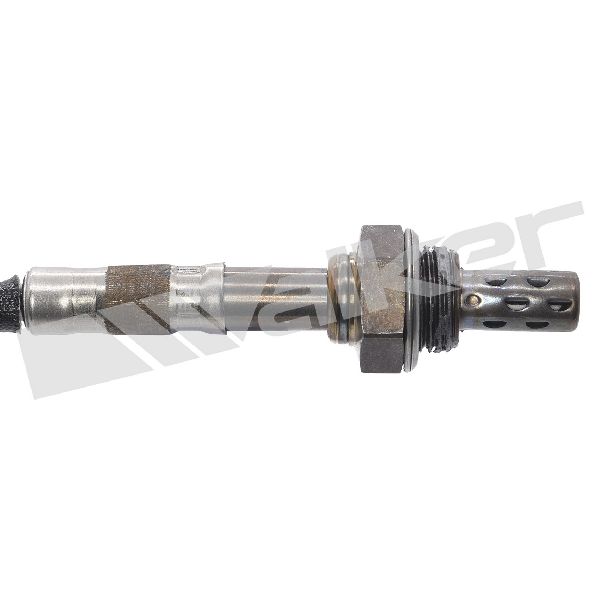
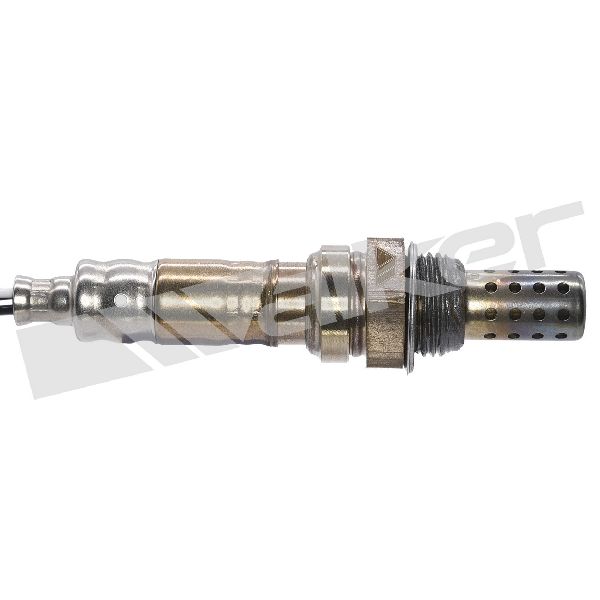
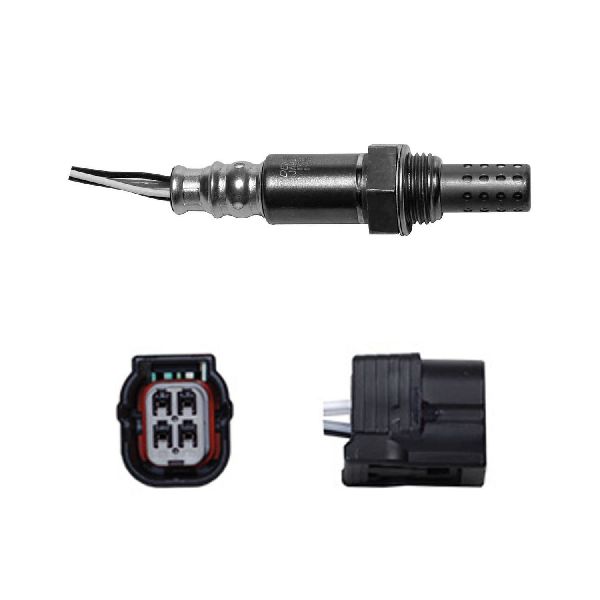
Est. part cost: $20-$150 - Faulty Air/Fuel Ratio Sensor (Bank 2, Sensor 1) ⚪ Low Probability → Shop Oxygen Sensor
How to confirm: Use a scan tool to monitor the sensor's voltage. A healthy sensor will fluctuate rapidly. A slow or stuck sensor reading indicates failure. Note that a sensor reading a steady lean voltage is often correctly reporting a problem, not the cause of it.
Typical fix: Replace the Bank 2, Sensor 1 Air/Fuel Ratio sensor. This sensor is located on the front exhaust manifold, before the catalytic converter.
Est. part cost: $100-$250
Rare But Worth Checking
- Weak High-Pressure Fuel Pump: → Shop Fuel Pump The TSB mentions that debris causing injector failure can originate from the high-pressure fuel pump. Additionally, a separate recall was issued for a faulty in-tank fuel pump on some models which could cause stalling. If both banks are running lean (P0171 and P0174), a weak pump is a more likely possibility.
- Exhaust Leak: A crack or leak in the exhaust manifold before the A/F sensor can draw in fresh air, tricking the sensor into a false lean reading.
Diagnosis Steps
- Scan for Codes: Use an OBD-II scanner to confirm P0174 and check for any other related codes like P0171, P030x, or P219A/B.
- Check Fuel Trims: Observe the Short-Term (STFT) and Long-Term Fuel Trim (LTFT) values. High positive numbers for Bank 2 (e.g., >15%) confirm the ECM is adding fuel to correct a lean condition.
- Visual Inspection: Thoroughly inspect the air intake hose between the air filter box and the throttle body for any cracks or tears, especially in the ribbed sections. Check all visible vacuum lines and the PCV hose for damage.
- Perform a Smoke Test: This is the most reliable way to find vacuum leaks. Introduce smoke into the intake system and look for any that escapes from gaskets, hoses, or the intake manifold.
- Check for TSBs and Warranty Extensions: Contact an Acura dealer with your VIN to check for eligibility under the fuel injector warranty extension (TSB 23-011) for 2016-2020 models. This is a critical step.
- Inspect Fuel Injectors: Given the high probability on this engine, this is a critical step. If other tests don't reveal a cause, suspect the injectors. This may require professional diagnosis, but it is the focus of Acura's TSBs.
- Test the A/F Sensor: If no vacuum leaks are found and injectors are not suspected, test the Bank 2 Air/Fuel Ratio sensor's operation with a scan tool. A lazy or non-responsive sensor may be the cause, but this is less common than injectors.
Parts You'll Likely Need
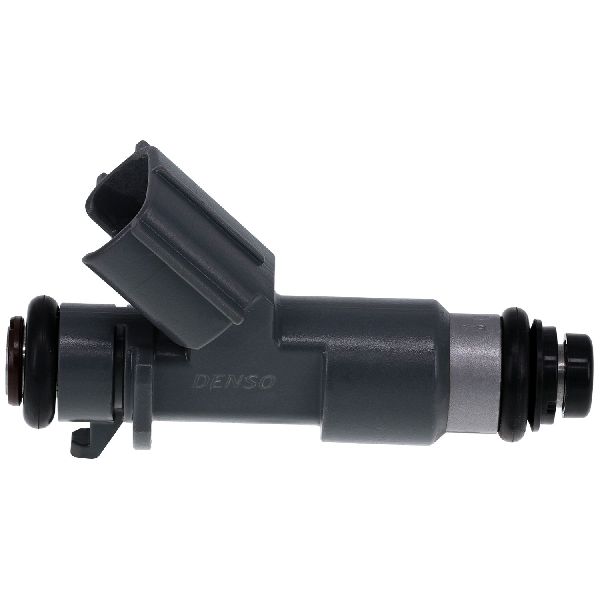
- Fuel Injector Kit
(OEM #06160-5J6-A00)— This is the most common cause of P0174 on this specific vehicle, as identified by Acura TSB 22-013 and covered by warranty extension TSB 23-011. The fix requires replacing all six injectors as a set.
Trusted brands: Acura (OEM)
OEM price range: $1200-$1800 (for a set of 6)
Aftermarket price range: $600-$1000 (for a set of 6) - Air/Fuel Ratio Sensor (Bank 2, Sensor 1)
(OEM #36531-5J6-A01)— This sensor detects the lean condition. While often replaced unnecessarily, it can fail and cause the code. Bank 2 is the front bank, closer to the radiator.
Trusted brands: Denso, Bosch
OEM price range: $200-$280
Aftermarket price range: $100-$180 - Intake Air Duct
(OEM #17228-5J6-A00)— The flexible rubber intake duct can crack with age, creating a large vacuum leak that causes lean codes on both banks. This is a very common failure point.
Trusted brands: Acura (OEM), Dorman
OEM price range: $50-$80
Aftermarket price range: $30-$60
Related Codes That Often Appear With This One
- P0171 — This is the lean code for Bank 1 (rear bank). When both P0171 and P0174 are present, it points to a problem affecting the entire engine, such as a large vacuum leak, MAF issue, or a fuel delivery problem like faulty injectors, which is common on this vehicle.
- P0300-P0306 — These are misfire codes. A severe lean condition starves the cylinders of fuel, leading to incomplete combustion and misfires. The TSB for faulty injectors explicitly lists these codes as related symptoms.
- P219B — This code indicates an air-fuel ratio imbalance on Bank 2. It's often seen with the P0174 and injector issue described in TSB 22-013, further pointing towards a fuel delivery problem in that specific bank.
Technical Service Bulletins (TSBs) & Recalls
- TSB 22-013: Addresses MIL on with codes P0171/P0174, P030x, and/or P219A/B due to faulty fuel injectors on 2016-2020 MDX and other models.
- TSB 23-011: Extends the warranty coverage for fuel injectors to 10 years or 150,000 miles on certain 2016-20 MDX, 2015-20 TLX, and 2016-20 RLX vehicles.
Platform-Specific Known Issues
- Acura Technical Service Bulletin (TSB) 22-013 was issued for 2016-2020 MDX models (among others) for the check engine light with codes P0171/P0174, P030x, and/or P219A/B. The bulletin identifies the cause as faulty fuel injectors due to debris from the manufacturing process of the high-pressure fuel pump or the injectors themselves. The official repair is to replace all six fuel injectors.
- Acura TSB 23-011 extends the warranty on fuel injectors to 10 years or 150,000 miles for 2016-2020 MDX models, acknowledging the widespread nature of the injector failures causing these lean codes.
Mechanic-Grade Diagnostic Values
- Long-Term Fuel Trim (LTFT) at Idle — expected: Between -10% and +10%. Ideally close to 0%.. Failure: Sustained positive values greater than +15% to +20% indicate the ECM is adding significant fuel to compensate for a lean condition.
- Fuel Trim Response to Increased RPM (2500 RPM) — expected: If a vacuum leak is the cause, high positive fuel trims at idle will decrease and move toward 0% as RPMs increase.. Failure: If fuel trims remain high and positive regardless of RPM, it points away from a vacuum leak and more toward a fuel delivery issue like clogged injectors or a weak fuel pump.
- High-Pressure Fuel System Pressure (Direct Injection) — expected: While specific target values vary by operating condition (idle, load), it should be several hundred to over 1000 PSI. A dealer-level scan tool is required to read this.. Failure: A DTC of P0087 (Low Fuel Pressure) would indicate a problem with the high-pressure pump, but this code is often an exclusion criterion for the injector TSB. A weak pump could still contribute to lean conditions without setting a specific code.
Hidden / Shadow Codes Worth Checking
- Mode $06, Monitor ID $A2-$A7: These Monitor IDs (MIDs) correspond to misfire counts for each individual cylinder (e.g., $A2 for Cylinder 1, $A3 for Cylinder 2, etc.). Even if a misfire is not severe enough to set a P030x code, Mode $06 can show elevated misfire counts on specific cylinders, helping to pinpoint a failing injector before it triggers the light. (see via An advanced OBD-II scan tool that supports Mode $06 data is required.)
Scan Tool Commands That Help
- Honda HDS (i-HDS) or advanced bidirectional scanner (Launch, Autel, etc.): Fuel Injector Balance Test / Actuation Test — This function allows a technician to individually fire each injector and measure the corresponding pressure drop in the fuel rail. It is the most definitive way to identify a clogged or weak injector that is not flowing the correct amount of fuel.
- Honda HDS (i-HDS) or advanced bidirectional scanner: Clear/Reset All Learned Values / Fuel Trim Reset — This should be performed after replacing fuel injectors or an A/F ratio sensor. It erases the old long-term fuel trim adjustments from the PCM's memory, forcing it to relearn the fuel strategy with the new components, preventing it from running lean or rich based on old data.
Real Owner Repair Stories
- YouTube channel 'Diaz Garage' (2014 Acura MDX) — Check Engine Light with codes P0171 and P0174 (System Too Lean Bank 1 and Bank 2).
❌ Tried (didn't work) The video focuses directly on the diagnosis, not on previously failed parts.
✅ What actually fixed it A smoke test revealed a large crack in the main rubber air intake duct/hose between the air filter box and the throttle body. Replacing the cracked intake duct resolved the lean codes. - YouTube channel 'Acura n Honda How To' (2016 Acura MDX) — Check Engine Light (specific codes not mentioned, but implied to be injector-related per TSB).
❌ Tried (didn't work) Not mentioned; video is a tutorial for the correct fix.
✅ What actually fixed it The video demonstrates the complete process of replacing all six fuel injectors as per the Acura TSB. After replacement and reassembly, the vehicle was started and ran properly, implying the fix was successful.
"I Checked Everything" — The Actual Cause
- On the 2016-2020 models, it is very common for a smoke test to come back clean (no vacuum leaks) yet the P0174 code (often with P0171 and misfires) persists. In these cases, the root cause is almost always the faulty fuel injectors as described in Acura TSB 22-013. The injectors fail internally due to debris, which a smoke test cannot detect.
OEM Part Supersession History
Unknown original fuel injector part number→06160-5J6-A00 (Kit of 6 injectors)— The original injectors were prone to failure from internal debris as noted in TSB 22-013. The new part kit is the official remedy.
Model Year Variations Within This Range
- 2014-2015: These models were equipped with a 6-speed automatic transmission. While they share the same J35Y5 engine, they are not explicitly covered by the fuel injector TSBs (22-013, 23-011) which start with the 2016 model year. For these earlier years, a vacuum leak is a more probable cause relative to injectors.
- 2016-2020: Starting in 2016, the MDX was equipped with a new 9-speed automatic transmission. More importantly for this code, the 2016-2020 model years are specifically named in Acura's TSBs for widespread fuel injector failures, making injectors the primary suspect for P0174.
- 2017-2020: The 2017 model year received a significant cosmetic refresh, including a new grille design. A Sport Hybrid model was also introduced. These changes do not directly affect the cause of P0174 on the standard 3.5L J35Y5 engine but help in vehicle identification.
Diagnostic Flowchart
Other Known Issues on This Vehicle
Issues unrelated to this code that are worth knowing about as an owner of this generation:
- Transmission Judder / Harsh Shifting 🟠 Medium — Common on 2014-2015 models, but can affect later years. Felt as a shudder between 20-60 mph. (Ref: TSB 16-062 and 16-063 address this for 2014-15 models, often requiring a software update and transmission fluid flush.)
- Auto Idle-Stop Failure to Restart 🔴 High — Affects 2016-2020 models. The engine may not restart after the idle-stop feature engages, creating a safety hazard. Subject of a class-action lawsuit. (Ref: TSB 23-001 and 23-002 involve a software update to address the issue.)
- Variable Cylinder Management (VCM) Issues 🟠 Medium — A long-standing issue on Honda/Acura J35 engines. VCM can cause oil consumption, fouled spark plugs, and engine vibrations. Many owners install a 'VCM Muzzler' to disable the system.
- Connecting Rod Bearing Failure 🔴 High — Less common, but catastrophic. Affects certain 2016-2020 models due to a crankshaft manufacturing defect. Can lead to engine seizure. (Ref: NHTSA Recall 23V-757 / Honda Recall #XG1 & FE2.)
- In-Tank Fuel Pump Failure 🔴 High → Shop Fuel Pump — Affects some 2019-2020 models. The fuel pump can fail and cause the engine to stall while driving. (Ref: Recall for Denso fuel pumps affects many Honda/Acura models.)
- Infotainment System Glitches 🟡 Low — Common complaint across many model years. Issues include popping/crackling speakers, blank screens, or no audio. (Ref: Multiple TSBs exist, such as one for loose MOST bus connections causing audio issues.)
Used vs. New Parts: Buying Guide for This Vehicle
When a used part is the smart pick: A used part is a reasonable choice for structural components like the intake manifold or the plastic engine cover if the original is cracked or damaged. A used air intake duct from a low-mileage donor vehicle can also be a cost-effective fix for a vacuum leak, provided it is thoroughly inspected for cracks.
Donor-vehicle mileage cap: roughly under 60000 miles for the part to have meaningful remaining life.
What to inspect on the donor part:
- For an air intake duct, squeeze and flex the rubber along its entire length, especially in the ribbed sections, to check for hidden cracks or brittleness.
- Ensure all mounting points and hose connections on any used part are intact and not stripped or broken.
- Check the vehicle history of the donor car to avoid parts from a vehicle that had a front-end collision.
OEM-only on this vehicle (don't cheap out):
- Fuel Injectors: Due to the specific TSB and warranty extension related to injector failure, it is critical to use the new, updated OEM injector kit (06160-5J6-A00). Using used injectors from a junkyard is highly likely to reintroduce the original problem.
- Air/Fuel Ratio Sensor: While some aftermarket brands are reputable, the sensitivity of these sensors means an OEM part (often made by Denso) is the safest bet to ensure correct communication with the ECM.
Aftermarket brands forum-validated for this vehicle:
- Denso or Bosch for Air/Fuel Ratio (O2) Sensors.
- Dorman for the Air Intake Duct (a common aftermarket replacement).
Brands owners have reported issues with on this vehicle:
- Unknown, unbranded fuel injector sets sold on marketplaces. These often have poor quality control and are not calibrated correctly for the direct injection system, leading to persistent performance issues.
Real Owner Stories
Aggregated from forums and TSBs cited above. Mileages and costs reflect what owners reported in those sources.
2016-2020 Acura MDX 3.5L V6
Symptoms: Check engine light on with codes P0171/P0174, P030x, and/or P219A/B.
What fixed it: Replacement of all six fuel injectors with the updated part set as specified in TSB 22-013.
Source hint: TSB 22-013
2016 Acura MDX 3.5L V6 — ~120000 miles
Symptoms: Lean codes P0171/P0174 and misfires; owners discussing the issue on forums.
What fixed it: Fuel injector replacement covered under the 10-year/150,000-mile warranty extension.
Source hint: Acurazine.com thread and TSB 23-011
2014-2020 Acura MDX 3.5L V6
Symptoms: Lean codes caused by unmetered air entering the system through the intake tract.
What fixed it: Replacement of the cracked ribbed air intake duct or failed PCV hose.
Source hint: Acurazine.com forum citations
Related OBD-II Codes
Frequently Asked Questions
Is there a warranty extension for the fuel injectors on my 2017 Acura MDX?
My 2016 MDX has P0174 and P0300 codes; does TSB 22-013 apply to this?
Can a cracked air intake duct cause a P0174 on the J35 engine?
Should I replace just the one faulty injector on my 2018 MDX to save money?
Is the P0174 code related to the Acura MDX 'Auto Idle-Stop' restart failure?
Where is the Bank 2 Air/Fuel Ratio sensor located on the MDX V6?
Helpful Videos
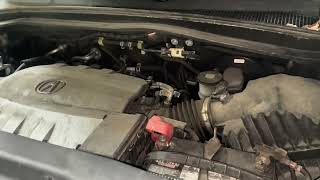
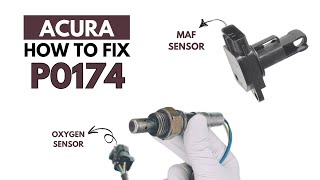
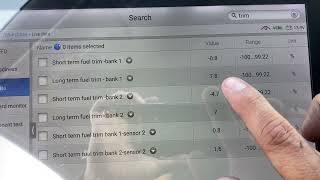
We Have This Part in Stock


The information in this article is provided for general reference and educational purposes only. Vehicle specifications, procedures, and part compatibility can vary by production date, trim level, and region. Always consult your vehicle's factory service manual and verify part numbers before purchasing or performing repairs. Safety-critical components such as airbags, seat belts, and braking systems should be installed by a qualified professional.
- Acura MDX:
- 🧭 Diagnostic Flowchart
- 🎬 Helpful Videos
- 🛍️ Shop This Part
- What's Unique About the 2014-2020 Acura MDX
- Symptoms You May Notice
- Most Likely Causes
- Rare But Worth Checking
- Diagnosis Steps
- Parts You'll Likely Need
- Related Codes That Often Appear With This One
- Technical Service Bulletins (TSBs) & Recalls
- Platform-Specific Known Issues
- Mechanic-Grade Diagnostic Values
- Hidden / Shadow Codes Worth Checking
- Scan Tool Commands That Help
- Real Owner Repair Stories
- "I Checked Everything" — The Actual Cause
- OEM Part Supersession History
- Model Year Variations Within This Range
- Other Known Issues on This Vehicle
- Used vs. New Parts: Buying Guide for This Vehicle
- Real Owner Stories
- 2016-2020 Acura MDX 3.5L V6
- 2016 Acura MDX 3.5L V6 — ~120000 miles
- 2014-2020 Acura MDX 3.5L V6
- Related OBD-II Codes
- Frequently Asked Questions
- 🎟️ Get 5% Off