

P0174 on 2016-2018 Acura RDX: Causes and Fixes for Lean Fuel System (Bank 2)
P0174 on a 2016-2018 Acura RDX indicates the front cylinder bank (Bank 2) is running too lean. The most likely causes are faulty fuel injectors, as noted in a manufacturer TSB, or a vacuum leak from a cracked air intake hose. An injector replacement can cost over $1,000 at a shop, while a new intake hose is under $100.
- P0174 on a 2016-2018 RDX means the front cylinder bank is getting too much air or not enough fuel.
- An official Acura TSB strongly suggests that faulty fuel injectors are a likely cause, especially if you also have misfire codes.
- Before suspecting expensive parts, always perform a thorough inspection for vacuum leaks, particularly the main air intake hose, as this is a common and inexpensive fix.
- Cleaning the Mass Airflow (MAF) sensor is a simple, low-cost diagnostic step that can sometimes resolve the issue.
- If both P0174 and P0171 codes are present, the problem is likely something that affects the whole engine, such as the MAF sensor or a major vacuum leak.
What's Unique About the 2016-2018 Acura RDX
For this specific generation of RDX with the J35Y V6 engine, Acura issued a Technical Service Bulletin (TSB) for a range of models including the 2016-2018 RDX. This TSB investigates a link between lean codes (P0171/P0174), misfire codes (P030x), and air-fuel ratio variation codes (P219A/B). The bulletin specifically requests dealership technicians to collect parts, with a strong focus on fuel injectors, suggesting they are a known point of failure leading to these codes. Some related TSBs for the J35 engine family even led to warranty extensions for fuel injectors on certain models due to clogging or internal wear from debris.
🎬 Watch: Diagnosing lean codes and fuel trims on Acura V6s.Diagnostic Flowchart
Tap your situation to follow the diagnostic path that matches what you're seeing on this vehicle.
Symptoms You May Notice
- Check Engine Light is on
- Rough or unstable idle
- Hesitation or stumbling during acceleration
- Reduced fuel economy
- Engine misfires
- Loss of power
- Replacing the Air/Fuel Ratio (O2) sensor when the actual problem is a vacuum leak or a faulty fuel injector. Always diagnose for leaks and check fuel trims before replacing sensors. Many forum users report that replacing the sensor does not fix the issue when the root cause is something else.
Most Likely Causes
- Faulty or Clogged Fuel Injectors 🔴 High Probability → Shop Fuel Injector An Acura TSB (#BTI&04132022901) directly links P0174 with misfire codes and requests investigation into the fuel injectors as a potential root cause on this platform. A related TSB for the J35 engine family notes that debris from the high-pressure pump or manufacturing process can cause clogging or internal wear, leading to lean and misfire codes.
How to confirm: A professional can perform a fuel injector balance test. A DIY method involves checking for related misfire codes (e.g., P0304, P0305, P0306) on Bank 2 cylinders. If other causes are ruled out, injectors are the prime suspect. Monitoring fuel trims with a scan tool may show the PCM is adding significant fuel to compensate. An electrical test with a multimeter should show resistance between 12 and 16 ohms.
Typical fix: Replace the faulty fuel injectors on Bank 2. It is highly recommended to replace them as a set (all 3 on the bank) to ensure balanced fuel delivery.
Est. part cost: $55-$130 per injector - Vacuum Leak (Cracked Air Intake Hose) 🟡 Medium Probability The rubber air intake boot between the mass airflow sensor and the throttle body is a very common failure point on many Honda/Acura vehicles. The ribbed sections are prone to dry-rotting and cracking, allowing unmetered air to enter the engine.
How to confirm: Visually inspect the main air intake tube for cracks, especially in the flexible, ribbed sections. A smoke test is the most effective way to find small, hard-to-see leaks. Spraying brake cleaner near suspected leak points while the engine is idling can cause a change in RPM, indicating a leak.
Typical fix: Replace the cracked air intake hose. This is a straightforward DIY repair.
Est. part cost: $25-$80 - Dirty or Faulty Mass Airflow (MAF) Sensor 🟡 Medium Probability → Shop Fuel Injection Air Flow Meter
How to confirm: The MAF sensor can be carefully removed and cleaned with a dedicated MAF sensor cleaner spray. Never touch the sensitive wires. If cleaning doesn't resolve the issue and fuel trims are incorrect across all RPMs (especially if P0171 is also present), the sensor may be faulty. With a scan tool, expect to see 3-4 g/s at idle for the 3.5L V6 engine.
Typical fix: Clean the sensor first. If the problem persists, replace the MAF sensor.
Est. part cost: $70-$150 - Failing Air/Fuel Ratio Sensor ⚪ Low Probability → Shop Oxygen Sensor
How to confirm: This requires a scan tool to monitor the sensor's voltage readings in live data. A lazy or non-responsive sensor will not fluctuate correctly as the engine runs. This should be one of the last parts to check after ruling out vacuum leaks and fuel delivery issues.
Typical fix: Replace the Bank 2, Sensor 1 Air/Fuel Ratio sensor. Denso is the OEM supplier.
Rare But Worth Checking
- Low Fuel Pressure: A weak fuel pump or clogged fuel filter can cause lean conditions. However, this usually affects both banks and would likely trigger P0171 as well. Note that many 2013-2018 Acuras were recalled for faulty fuel pumps; check if your VIN is affected before diagnosing other parts.
- Exhaust Leak: A leak in the exhaust manifold or pipe before the Bank 2 Air/Fuel ratio sensor can draw in outside air, causing a false lean reading.
- PCV System Fault: A stuck-open PCV valve or a cracked PCV hose can create a significant vacuum leak, leading to lean codes.
Diagnosis Steps
- Read all fault codes with an OBD-II scanner. Note if other codes like P0171 or P219B are present.
- Using the scanner's live data, monitor short-term (STFT) and long-term (LTFT) fuel trims for both Bank 1 and Bank 2 at idle and at 2500 RPM. High positive numbers on Bank 2 (e.g., >15%) confirm the lean condition. If trims are high on both banks, suspect a central issue like the MAF sensor or a large vacuum leak after the MAF.
- Thoroughly inspect the air intake hose between the air filter box and the throttle body for any cracks, tears, or loose connections. Pay close attention to the flexible, accordion-like sections.
- Inspect all accessible vacuum lines for damage or disconnection, including the PCV hose and the hose to the brake booster.
- If no obvious leaks are found, perform a smoke test to identify any hidden vacuum leaks from gaskets (intake manifold) or hoses. This is the most reliable method for finding leaks.
- If no vacuum leaks are present, remove and clean the Mass Airflow (MAF) sensor using a dedicated MAF sensor cleaner. Let it dry completely before reinstalling.
- If the issue persists, consider the fuel injectors on Bank 2 as a primary suspect, per the Acura TSB. Test injector resistance (expect 12-16 ohms) or have a professional balance test performed.
- As a final step, test the Bank 2, Sensor 1 (Air/Fuel Ratio) sensor's operation via live data. Replace it only if it's confirmed to be lazy or non-responsive.
Parts You'll Likely Need
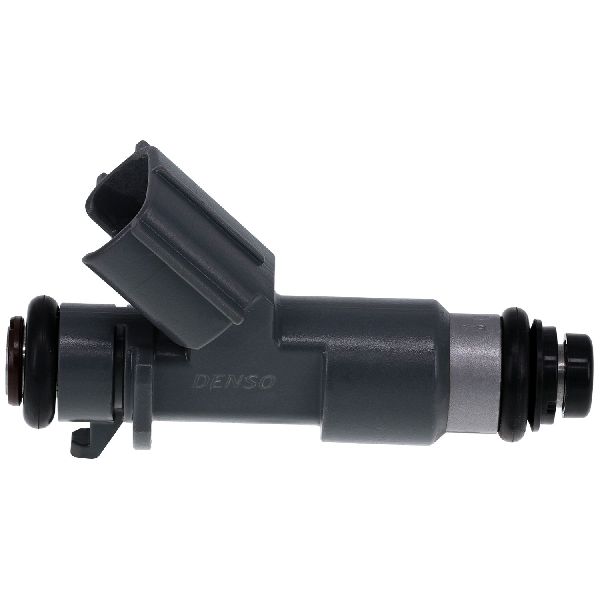
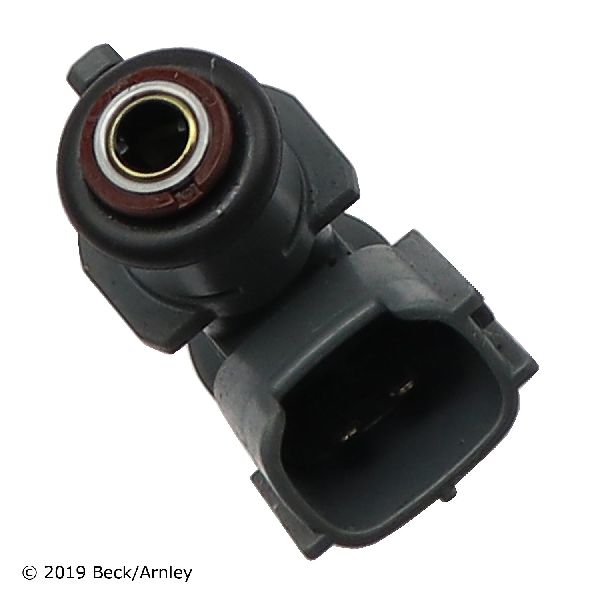
- Fuel Injector
(OEM #16450-R70-A01)— A known issue highlighted by a manufacturer TSB for causing lean and misfire codes on this engine.
Trusted brands: Acura OE, Denso
OEM price range: $90-$130
Aftermarket price range: $40-$80 - Air Intake Hose
(OEM #17228-5J6-A00)— A very common source of vacuum leaks on Honda/Acura vehicles, causing unmetered air to enter the engine and trigger lean codes. This part number is for the related MDX but is a common failure style.
Trusted brands: Acura OE, Dorman
OEM price range: $50-$80
Aftermarket price range: $25-$50 - Air/Fuel Ratio Sensor (Bank 2, Sensor 1)
(OEM #36531-R70-A02 (Verify by VIN))— This is the primary sensor that detects the lean condition. It can fail and send incorrect readings, though it's less common than leaks or injector issues.
Trusted brands: Denso (e.g., 234-9152), NGK/NTK
OEM price range: $140-$230
Aftermarket price range: $75-$175
Related Codes That Often Appear With This One
- P0171 — System Too Lean (Bank 1). If both codes are present, it strongly suggests a problem common to the entire engine, like a faulty MAF sensor, a large vacuum leak near the throttle body, or low fuel pressure.
- P0300, P0304, P0305, P0306 — Cylinder Misfire Detected. A lean air/fuel mixture can fail to ignite properly, causing misfires on the affected bank (Bank 2 cylinders are 4, 5, 6). The TSB for this vehicle explicitly links these codes.
- P219B — Air-Fuel Ratio Variation of Cylinder (Bank 2). This code is also mentioned in the TSB and points to an imbalance between the cylinders on Bank 2, often caused by a faulty injector.
Technical Service Bulletins (TSBs) & Recalls
- Bulletin #BTI&04132022901: Investigates a complaint of the Malfunction Indicator Light (MIL) on with DTCs P0174 (Fuel System Too Lean), P030X (Cylinder Misfire), or P219B (Air-Fuel Ratio Variation) on 2016-2020 RDX models, pointing towards a potential fuel injector issue.
- Honda TSB 20-034 (related platform): Addresses MIL on with misfire codes (P030x) or air-fuel ratio codes (P219A/B) on 2017-2020 models with the J35 engine. The fix is to replace all six fuel injectors due to potential clogging from internal debris.
Platform-Specific Known Issues
- Acura Technical Service Bulletin #BTI&04132022901 identifies an issue on 2016-2020 RDX models where P0174, P0171, P030x, and P219A/B codes may appear together, with a strong suggestion that fuel injectors are the cause.
- Real Owner Experience: Cracked Intake Boot: Multiple owners of J35-powered Acuras and Hondas on forums like Acurazine and in YouTube repair videos have documented finding large cracks in the ribbed portion of the air intake hose after getting P0171/P0174 codes. Replacing this sub-$100 part often resolves the issue completely.
Mechanic-Grade Diagnostic Values
- Mass Airflow (MAF) Sensor Reading at Idle — expected: 3.0-4.0 g/s (A common rule of thumb is 1 g/s per liter of engine displacement). Failure: Significantly lower readings can indicate a vacuum leak downstream of the sensor. Significantly higher readings can indicate a faulty sensor.
- Mass Airflow (MAF) Sensor Reading at 2500 RPM — expected: 15-25 g/s. Failure: A reading that does not rise smoothly and proportionally with RPM suggests a faulty sensor.
- Fuel Injector Coil Resistance — expected: 12-16 Ohms. Failure: A reading of 0 Ohms (dead short) or infinite/OL (open circuit) indicates a failed injector coil. A reading far outside the typical range also suggests a problem.
Hidden / Shadow Codes Worth Checking
- P219B: Air-Fuel Ratio Variation of Cylinder (Bank 2). While not a 'hidden' code, it is a more specific code that points to an imbalance between cylinders on Bank 2. The official Acura TSB groups this code with P0174 and suggests it points toward a faulty fuel injector as the root cause. (see via A quality OBD-II scanner or dealer-level tool like the Acura HDS.)
Wiring & Ground Locations
- Bank 2, Sensor 1 (A/F Ratio Sensor) Connector — Bank 2 is the cylinder bank closer to the radiator. The upstream sensor (Sensor 1) is located on the exhaust manifold before the catalytic converter and is generally accessible from the top of the engine bay.. This is the primary sensor that provides the data for the P0174 code. Checking its connection is a key diagnostic step. Knowing its location helps differentiate it from the more difficult-to-access sensors on Bank 1 (rear bank).
Real Owner Repair Stories
- Synthesized from multiple Honda/Acura forum threads and YouTube repair videos (2012-2018 Honda/Acura with J35 V6 Engine) — Check Engine Light with codes P0171 and P0174. Rough idle, hesitation on acceleration, and poor fuel economy.
❌ Tried (didn't work) Cleaning the MAF sensor, Replacing the gas cap, Replacing the Bank 2 A/F ratio sensor
✅ What actually fixed it The ribbed, flexible portion of the main air intake hose/boot had a large, hidden crack. Air was being sucked in after the MAF sensor, causing the lean condition on both banks. Replacing the hose (a ~$50 part) and clearing the codes resolved the issue completely.
"I Checked Everything" — The Actual Cause
- A known scenario that can cause P0174 (and often P0171) even when a smoke test on the intake system comes back clean is a leaking brake booster diaphragm. The booster uses engine vacuum to operate, and an internal leak will suck unmetered air into the intake manifold. This leak is often not detected by a standard smoke test. Symptoms include a hissing sound from the driver's footwell when the brake pedal is pressed or released, a hard brake pedal, or a change in engine idle when the brakes are applied.
OEM Part Supersession History
36531-R70-A01→36531-R70-A02— Standard part revision by the manufacturer.
Heads up: The new part number (36531-R70-A02) is the correct replacement for the original. They are interchangeable.
Helpful Videos
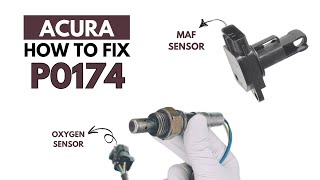
![How to Fix ACURA P0174 Engine Code in 3 Minutes [2 DIY Methods / Only $8.99]](https://img.youtube.com/vi/kMW6VGotWQ8/mqdefault.jpg)
We Have This Part in Stock


The information in this article is provided for general reference and educational purposes only. Vehicle specifications, procedures, and part compatibility can vary by production date, trim level, and region. Always consult your vehicle's factory service manual and verify part numbers before purchasing or performing repairs. Safety-critical components such as airbags, seat belts, and braking systems should be installed by a qualified professional.
- Acura RDX:
- 🧭 Diagnostic Flowchart
- 🎬 Helpful Videos
- 🛍️ Shop This Part
- What's Unique About the 2016-2018 Acura RDX
- Symptoms You May Notice
- Most Likely Causes
- Rare But Worth Checking
- Diagnosis Steps
- Parts You'll Likely Need
- Related Codes That Often Appear With This One
- Technical Service Bulletins (TSBs) & Recalls
- Platform-Specific Known Issues
- Mechanic-Grade Diagnostic Values
- Hidden / Shadow Codes Worth Checking
- Wiring & Ground Locations
- Real Owner Repair Stories
- "I Checked Everything" — The Actual Cause
- OEM Part Supersession History
- 🎟️ Get 5% Off