

P0174 on 2016-2020 Acura RLX: System Too Lean (Bank 2) Causes and Fixes
On a 2016-2020 Acura RLX, code P0174 is most often caused by faulty fuel injectors, a known issue documented by Acura in TSB #22-013 (which supersedes BTI&05102022901). This is especially likely if misfire codes (P030x) and/or P0171 are also present. The official fix is to replace all six fuel injectors with the updated OEM kit (part number 06160-5J6-A00).
- For the 2016-2020 Acura RLX, P0174 is very likely caused by faulty fuel injectors, especially if misfire codes (P030x) are also stored.
- Acura has issued a Technical Service Bulletin (BTI&05102022901) acknowledging this specific problem.
- The recommended repair is to replace all six fuel injectors as a set with the updated part kit (OEM #06160-5J6-A00).
- While less likely to be the root cause on this specific vehicle, do not rule out simpler issues like a cracked air intake hose or other vacuum leaks.
- Do not immediately replace the A/F (O2) sensor; it is usually just reporting the lean condition correctly.
What's Unique About the 2016-2020 Acura RLX
For this specific generation of Acura V6 engines, including the one in the RLX, the P0174 code is strongly linked to a known fuel injector problem. Acura issued Technical Service Bulletin #22-013 for 2016-2020 RLX, MDX, and 2015-2020 TLX models acknowledging that lean codes (P0171/P0174) and misfire codes (P030x) are often caused by failing injectors. The TSB explains that debris from the high-pressure fuel pump or the original injector manufacturing process can cause them to fail or clog. This makes injector diagnosis a much higher priority than on other vehicles where a vacuum leak is typically the primary suspect.
Diagnostic Flowchart
Tap your situation to follow the diagnostic path that matches what you're seeing on this vehicle.
Symptoms You May Notice
- Check Engine Light is on
- "Check Emission System" message on the dashboard display
- Rough or unstable idle
- Engine hesitation or stumbling on acceleration
- Reduced fuel economy
- Engine misfires, which may cause a flashing Check Engine Light
- Engine running rougher, especially when cold
- Replacing the Air/Fuel Ratio (O2) sensor without confirming it's faulty. The sensor is often just doing its job by reporting the lean condition caused by failing injectors or a vacuum leak.
- Replacing only one or two fuel injectors instead of the full set of six. The TSB-identified issue affects all original injectors, and a partial replacement will likely lead to repeat failures.
Most Likely Causes
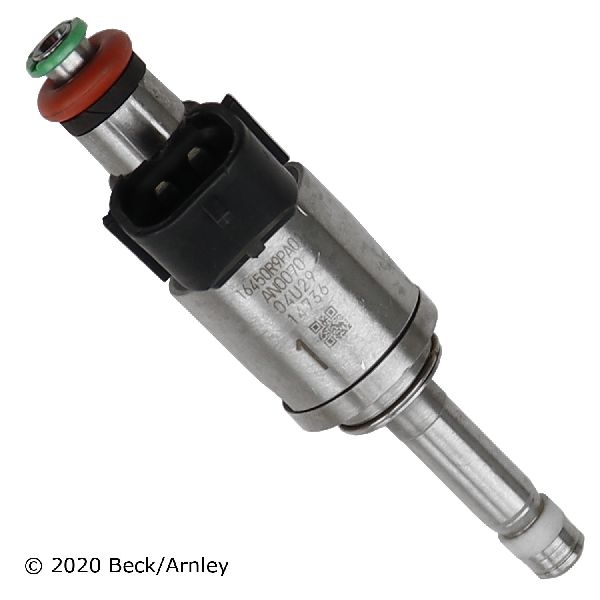
- Faulty or Clogged Fuel Injectors 🔴 High Probability → Shop Fuel Injector Acura issued TSB #22-013 for this exact issue on 2016-2020 RLX models. It states that debris from the high-pressure fuel pump or original injector machining can cause them to fail, leading to a lean condition.
How to confirm: Check for accompanying codes like P0171 (Bank 1 Lean), P0300-P0306 (misfires), and P219B (Bank 2 A/F imbalance). The presence of these codes together makes the injectors the prime suspect. A professional can perform a fuel injector balance test to definitively confirm the failure.
Typical fix: Replace all six fuel injectors with the updated part kit (OEM #06160-5J6-A00). It is critical to replace them as a set, as they have all been subjected to the same conditions and the TSB requires it for a complete repair.
Est. part cost: $600-$900 - Vacuum Leak 🟡 Medium Probability Vacuum leaks are a common cause for lean codes on any vehicle. On many Honda/Acura V6 engines, a very common failure point is the large rubber air intake tube between the air filter box and the throttle body, which can crack with age.
How to confirm: Visually inspect the air intake boot and all visible vacuum hoses for cracks or loose connections. Listen for a hissing sound at idle. A professional smoke test is the most effective way to find a leak that isn't obvious.
Typical fix: Replace the cracked hose or failed gasket. The air intake tube is a common and relatively inexpensive part to replace. 🎬 See how to find and fix common Acura intake leaks.
Est. part cost: $20-$150 - Faulty Air/Fuel Ratio Sensor (Bank 2, Sensor 1) ⚪ Low Probability → Shop Oxygen Sensor
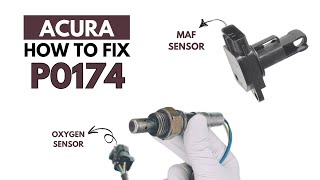
How to confirm: The sensor's live data can be monitored with an advanced scan tool to see if it is responding slowly or providing inaccurate readings. It's important to rule out other causes first, as the sensor is often correctly reporting a lean condition caused by another part. A lazy or biased sensor is a possible but less likely cause than injectors for this specific vehicle.
Typical fix: Replace the Bank 2, Sensor 1 Air/Fuel Ratio sensor. This is the upstream sensor on the front cylinder bank (radiator side). The OEM supplier is typically Denso.
Est. part cost: $100-$250 - Dirty or Faulty Mass Airflow (MAF) Sensor ⚪ Low Probability → Shop Fuel Injection Air Flow Meter
How to confirm: A dirty MAF sensor can under-report the amount of air entering the engine, causing the computer to command less fuel than necessary. The sensor can be removed and cleaned with a dedicated MAF sensor cleaner. Do not touch the delicate wires.
Typical fix: Clean the MAF sensor with a dedicated cleaner spray. If the problem persists, replace the sensor.
Est. part cost: $15-$150
Rare But Worth Checking
- Low Fuel Pressure: A weak high-pressure fuel pump or a clogged in-tank fuel filter can starve the engine for fuel. This would typically set both P0171 and P0174 codes, so it's less likely if only P0174 is present.
- Exhaust Leak: A leak in the exhaust manifold or pipe before the Bank 2 A/F sensor can draw in outside air, causing the sensor to read a false lean condition.
- PCV System Fault: A stuck-open PCV valve or a cracked hose in the PCV system can create a significant, unmetered vacuum leak, leading to lean codes.
Diagnosis Steps
- Scan for Codes: Use an OBD-II scanner to confirm P0174 and check for other related codes like P0171, P030x, or P219B. The presence of these codes strongly suggests the fuel injector issue per TSB #22-013.
- Check Fuel Trims: Observe the short-term (STFT) and long-term (LTFT) fuel trim values. High positive numbers (e.g., >20%) on Bank 2 confirm the ECM is adding significant amounts of fuel to correct a lean condition.
- Inspect for Vacuum Leaks: Thoroughly inspect the air intake hose between the air filter box and the throttle body for cracks, a common failure point on Honda/Acura vehicles. Check all other vacuum lines for damage. A smoke test is the most reliable method to find hidden leaks.
- Clean the MAF Sensor: If no vacuum leaks are found, carefully remove and clean the Mass Airflow sensor using a dedicated MAF cleaner spray. Allow it to dry completely before reinstalling.
- Test Fuel Pressure: This is less likely to be the cause if only one bank is lean, but if both P0171 and P0174 are present, verifying that the fuel pressure is within the manufacturer's specifications can rule out a pump issue.
- Analyze A/F Sensor Data: With an advanced scan tool, graph the Bank 2 Air/Fuel Ratio sensor's output. A healthy sensor will fluctuate rapidly. A lazy or flat-lining sensor may be faulty, but confirm it's not just accurately reporting a true lean condition first.
- Prioritize Fuel Injector Diagnosis: Given the high probability based on TSB #22-013, if steps 3-6 do not reveal a clear cause (especially if misfire codes are present), the fuel injectors are the most likely culprit. Professional diagnosis via an injector balance test is recommended.
Parts You'll Likely Need
- Fuel Injector Kit
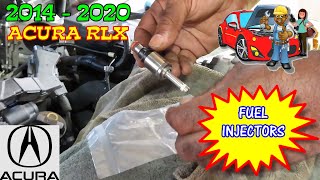
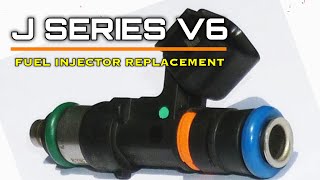
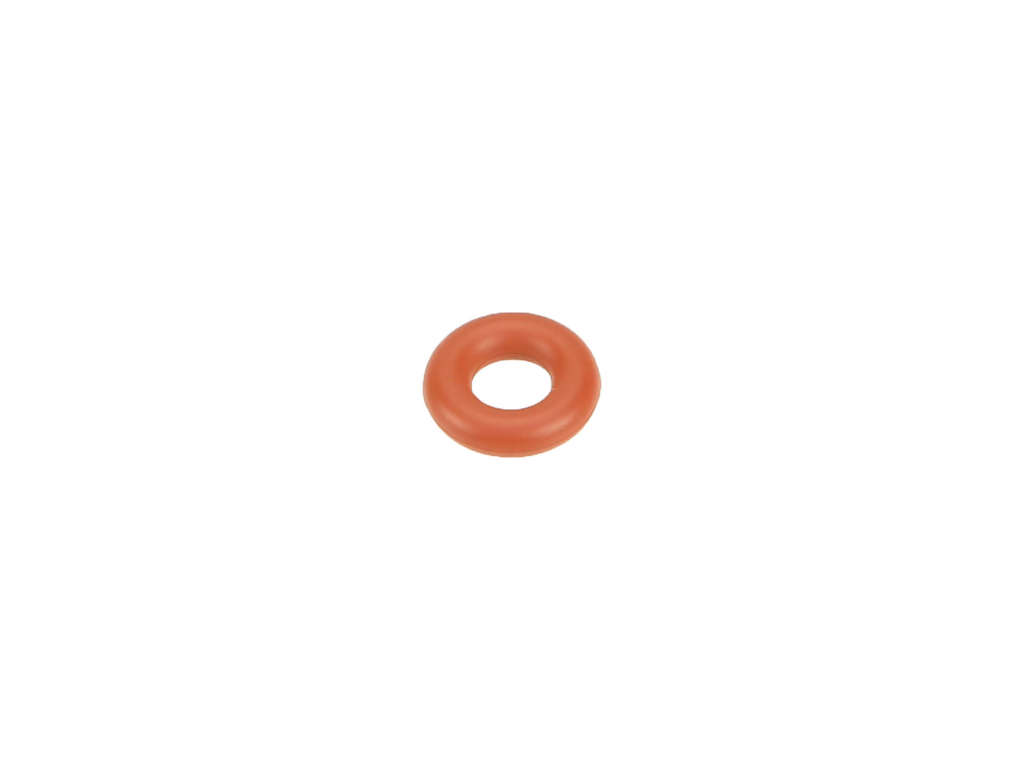
(OEM #06160-5J6-A00)— This is the most common cause according to Acura's own Technical Service Bulletin #22-013. The official repair involves replacing all six injectors with this updated kit, which includes the injectors, O-rings, and seals. 🎬 Watch this DIY guide for replacing Acura V6 fuel injectors.
Trusted brands: Acura (OEM)
OEM price range: $600-$900
Aftermarket price range: $400-$700 - Air/Fuel Ratio Sensor (Bank 2, Sensor 1)
(OEM #36531-5J6-A01)— If the sensor itself fails, it can send a false lean signal. It is the primary sensor that detects the air-fuel mixture for Bank 2. It is located on the front exhaust manifold.
Trusted brands: Denso (OEM Supplier), Bosch, NTK
OEM price range: $200-$300
Aftermarket price range: $100-$180 - Intake Air Boot
(OEM #17228-5J6-A00 (example, verify for exact model))— The flexible rubber boot can crack with age, creating a significant vacuum leak after the MAF sensor, which is a very common cause of lean codes on many Honda and Acura vehicles.
Related Codes That Often Appear With This One
- P0171 — System Too Lean (Bank 1). When both P0171 and P0174 are present, it points to a problem affecting the entire engine. On this platform, it strongly reinforces the diagnosis of faulty fuel injectors as described in TSB #22-013.
- P0300-P0306 — Cylinder Misfire codes. The TSB from Acura explicitly links lean codes with misfire codes (e.g., P0302, P0304, P0306 for Bank 2), strongly pointing to the known fuel injector issue.
- P219B — Air-Fuel Ratio Variation of Cylinder (Bank 2). This code is also mentioned in Acura TSB #22-013 and indicates an inconsistent fuel delivery problem, further strengthening the diagnosis of a faulty injector.
Technical Service Bulletins (TSBs) & Recalls
- BTI&05102022901: For 2016-2020 MDXs, RLXs & TLXs, investigates client complaints of MIL on with DTC P030X (Cylinder Misfire Detected), P0171 & P0174 (Fuel System Too Lean), or P219A&B (Air-Fuel Ratio Variation of Cylinder). This was an initial investigation bulletin.
- Acura TSB 22-013: The official service bulletin that supersedes the initial investigation. It confirms the cause is faulty fuel injectors and provides the definitive repair procedure: replace all six injectors.
Platform-Specific Known Issues
- Acura TSB #22-013: Fuel Injector Failure: → Shop Fuel Injector Acura identified an issue on 2016-2020 RLX, 2016-2020 MDX, and 2015-2020 TLX models where lean codes (P0171/P0174) and misfire codes (P030x) are caused by faulty fuel injectors. The TSB states debris from the high-pressure pump or original manufacturing can cause the injectors to fail. The recommended fix is to replace all six injectors with kit #06160-5J6-A00.
Mechanic-Grade Diagnostic Values
- Low-Pressure Fuel System — expected: 46-84 PSI (320-580 kPa) with the fuel pump running. A similar Honda V6 platform specifies 57-64 PSI.. Failure: Pressure below the specified range indicates a weak in-tank fuel pump or clogged filter.
- High-Pressure Fuel System (at idle) — expected: 1.9-5.0 MPa (276-725 PSI) at idle.. Failure: Pressure significantly below this range at idle could indicate a failing high-pressure fuel pump (HPFP).
- Injector Balance Test (Pressure Drop) — expected: The pressure drop caused by pulsing each injector should be roughly equal.. Failure: A pressure drop difference between any two injectors greater than 2.9 PSI (20 kPa) indicates a fault. Alternatively, if one injector's pressure drop varies by more than 20% from the average of the others, it is considered faulty.
- A/F Sensor Heater Circuit Resistance — expected: Approximately 2-4 Ohms at room temperature.. Failure: An open circuit (infinite resistance) or a reading far outside the expected range indicates a failed heater element within the sensor.
Scan Tool Commands That Help
- Acura HDS, Autel, Snap-on, or similar professional scan tool: Injector Balance Test / Fuel Injector Balance — This is a critical diagnostic step when the TSB-related fuel injector issue is suspected. The test either measures the fuel pressure drop when each injector is pulsed or measures the RPM drop when each injector is disabled. An inconsistent drop across cylinders points directly to a faulty injector, confirming the most likely cause of P0174 on this vehicle.
- Acura HDS or similar: Crank Pattern (CKP) Relearn — This procedure should be performed after major engine work, such as injector replacement, or if the battery has been disconnected or died. In some cases, a lost CKP pattern can cause the ECM to incorrectly interpret engine data, leading to misfires and potentially related fuel trim codes.
Wiring & Ground Locations
- G101 — Typically located on the engine block or transmission housing. On a similar Acura (TSX), it is a primary termination point for multiple sensors.. This is a critical ground point for the Engine Control Module (ECM) and multiple sensors that influence fuel calculations, including the Crankshaft Position (CKP) and Camshaft Position (CMP) sensors. A poor connection at G101 can cause erratic sensor readings, leading to incorrect fuel adjustments and codes like P0174.
- Engine Harness Chafe Points — Inspect the engine wiring harness where it runs near the ECM/TCM bracket, the driver's side upper control arm, and the shock tower.. While documented on other platforms, harness chafing is a possible edge case. A short in the wiring for the A/F sensor, injectors, or other related components can cause erratic signals and trigger fuel system codes. This is often missed during standard diagnostic routines.
Real Owner Repair Stories
- Acurazine Forum User (2016 Acura TLX 3.5L V6 with ~80,000 miles (Same engine family)) — Check engine light with codes P0171 and P0174, plus misfire codes.
❌ Tried (didn't work) No other steps were tried; user went directly to the dealer.
✅ What actually fixed it The dealership diagnosed faulty fuel injectors, which was a known issue covered under an extended warranty (TSB 21-010). All six fuel injectors were replaced, resolving all codes. - Go-Parts.com research on owner forums (2016 Acura MDX 3.5L V6 (Same engine)) — Codes P0171 and P0174, engine hesitation and stalling.
❌ Tried (didn't work) Initial diagnosis focused on more complex components.
✅ What actually fixed it A large tear was found in the flexible, ribbed section of the main air intake boot. Replacing the inexpensive hose resolved the lean codes and drivability issues completely.
"I Checked Everything" — The Actual Cause
- In a documented case for a similar Acura model, the vehicle passed multiple smoke tests for the intake, exhaust, and EVAP systems, yet continued to show lean codes. The final root cause was found to be incorrectly-sized aftermarket fuel injectors that had been installed by a previous owner. This highlights a fuel delivery issue that a smoke test for vacuum leaks will not identify.
OEM Part Supersession History
Unknown→06160-5J6-A00— The original injectors were prone to failure from debris, as identified in Acura TSB #22-013. The new part number is a complete kit with 6 updated injectors and seals designed to resolve this issue.
Heads up: It is critical to replace all six injectors as a matched set from the kit. Mixing original injectors with the updated ones can cause fuel trim imbalances between cylinders and may not resolve the issue.
Model Year Variations Within This Range
- 2016-2020: Acura performed a mid-cycle refresh for the 2018 model year, which included a new 10-speed automatic transmission for the non-hybrid model and updated styling. However, the 3.5L J35Y4 V6 engine and its direct injection fuel system remained fundamentally the same. Therefore, the causes, TSBs, and diagnostic procedures for code P0174 are consistent across the entire 2016-2020 model year range.
Helpful Videos
We Have This Part in Stock


The information in this article is provided for general reference and educational purposes only. Vehicle specifications, procedures, and part compatibility can vary by production date, trim level, and region. Always consult your vehicle's factory service manual and verify part numbers before purchasing or performing repairs. Safety-critical components such as airbags, seat belts, and braking systems should be installed by a qualified professional.
- Acura RLX:
- 🧭 Diagnostic Flowchart
- 🎬 Helpful Videos
- 🛍️ Shop This Part
- What's Unique About the 2016-2020 Acura RLX
- Symptoms You May Notice
- Most Likely Causes
- Rare But Worth Checking
- Diagnosis Steps
- Parts You'll Likely Need
- Related Codes That Often Appear With This One
- Technical Service Bulletins (TSBs) & Recalls
- Platform-Specific Known Issues
- Mechanic-Grade Diagnostic Values
- Scan Tool Commands That Help
- Wiring & Ground Locations
- Real Owner Repair Stories
- "I Checked Everything" — The Actual Cause
- OEM Part Supersession History
- Model Year Variations Within This Range
- 🎟️ Get 5% Off