

P0174 on 2005-2008 Audi A4 3.2L V6: Lean Condition Causes and Fixes
On the Audi A4 3.2L V6 (BKH), code P0174 is most often caused by a failed Positive Crankcase Ventilation (PCV) valve or a vacuum leak from cracked breather hoses. A loose intake snorkel clamp near the MAF sensor is also a simple but common culprit. Expect to pay $70-$150 for a new PCV valve assembly and plan for a 2/5 DIY difficulty.
- P0174 on the Audi A4 3.2L almost always points to unmetered air entering the engine after the MAF sensor.
- The most likely culprit is a failed PCV valve assembly or a cracked vacuum hose connected to it.
- A smoke test is the most reliable diagnostic method to find the source of the vacuum leak.
- Do not replace the O2 sensor first; it is usually just doing its job by reporting the lean condition.
- If both P0171 (Bank 1) and P0174 (Bank 2) are present, the leak is likely in a location common to both banks, such as the main intake boot or the PCV system.
What's Unique About the 2005-2008 Audi A4
The Audi A4 B7 generation with the 3.2L V6 (BKH) FSI engine is particularly susceptible to vacuum leaks from its complex Positive Crankcase Ventilation (PCV) system. Unlike simpler designs, the PCV valve (also called an oil separator) and its associated plastic breather hoses are known to become brittle and crack due to engine heat and age. This creates unmetered air leaks that are a primary cause of the P0174 code on this specific platform. Owners on forums like AudiWorld frequently trace this code back to a failed PCV diaphragm or a cracked hose connected to it. The direct injection (FSI) design also means the engine is prone to carbon buildup on intake valves, which can disrupt airflow and contribute to performance issues, though it's less likely to be the sole cause of a P0174 code.
Symptoms You May Notice
- Check Engine Light is on
- Rough or unstable idle, sometimes 'hunting' for idle RPM
- Hesitation or stumbling during acceleration
- Reduced engine power
- Decreased fuel economy
- A hissing or whistling noise from the engine bay, indicating a vacuum leak.
- Misfires, which may trigger other codes like P0300, P0304, P0305, P0306.
- Excessive oil consumption or oil leaks, often associated with a failed PCV system.
- Replacing the oxygen (O2) sensor. While a faulty O2 sensor can cause a lean code, it's more often correctly reporting a problem caused by something else, like a vacuum leak. The O2 sensor should be one of the last parts replaced after all other potential causes are ruled out.
Most Likely Causes
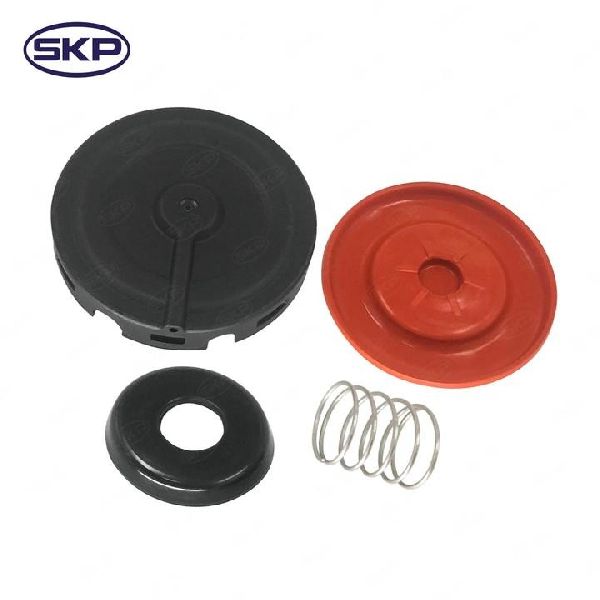
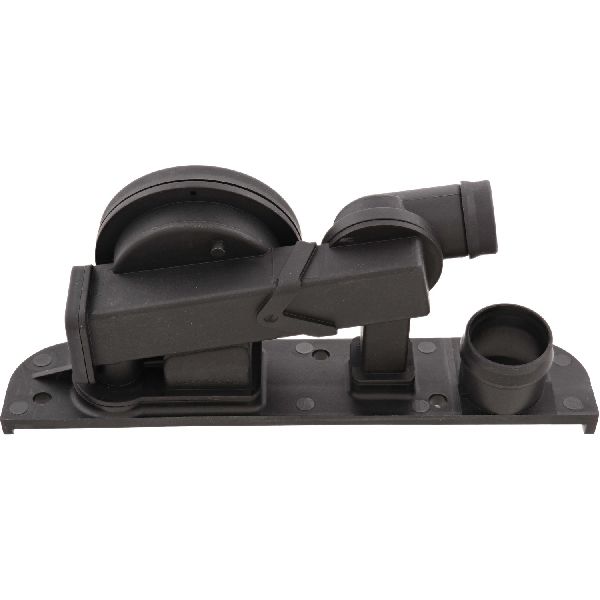
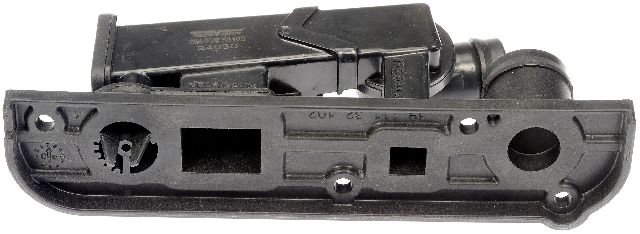
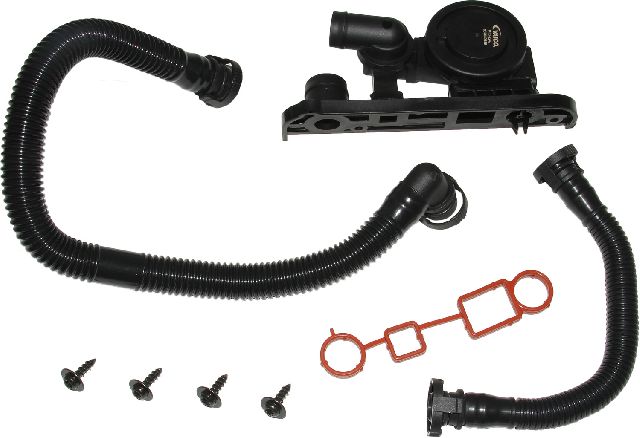
- Failed PCV Valve / Crankcase Breather 🔴 High Probability → Shop PCV Valve The diaphragm inside the PCV valve is made of rubber that can tear with age, and the plastic housing and connected hoses can crack due to constant heat exposure from the engine. This is a very common failure item on the BKH engine, creating a significant vacuum leak.
How to confirm: With the engine running, a strong vacuum at the oil filler cap (making it difficult to remove) or a loud hissing sound from the PCV assembly are strong indicators of failure. A definitive diagnosis can be made with a smoke test, which will show smoke escaping from the failed diaphragm or cracked housing.
Typical fix: Replace the entire PCV valve assembly (also called an oil separator). It is located in the valley between the cylinder heads, under the intake manifold, making replacement moderately difficult.
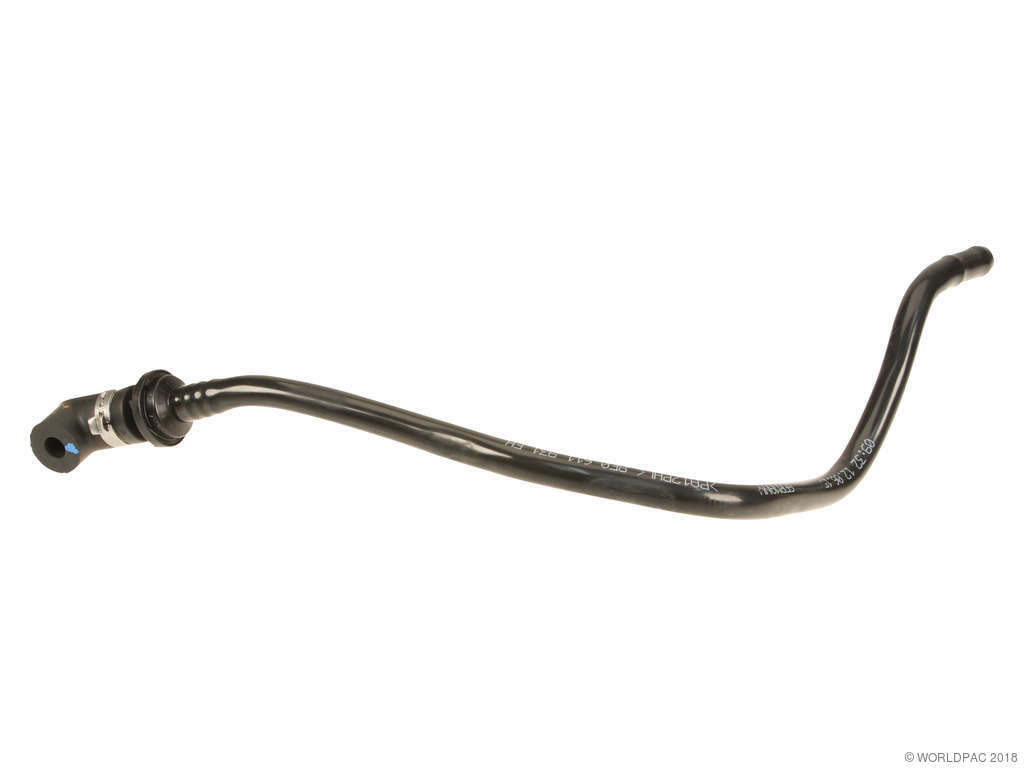
Est. part cost: $70-$150 - Vacuum Hose Leak 🔴 High Probability → Shop Vacuum Hose The numerous plastic and rubber vacuum hoses, especially those connected to the intake manifold, brake booster, and PCV system, become brittle and crack over time. A simple but often overlooked cause is a loose or improperly seated clamp on the large intake snorkel between the MAF sensor and the throttle body, often occurring after an air filter change.
How to confirm: Perform a smoke test. This involves feeding low-pressure smoke into the intake system to see where it escapes. Visually inspect all accessible hoses for cracks or disconnections. Spraying brake cleaner or starting fluid near suspected areas and listening for a change in engine idle can also pinpoint leaks, but this method is less precise and carries a fire risk.
Typical fix: Replace the specific cracked hose or elbow. It's often recommended to replace any brittle-looking hoses at the same time. Ensure all intake snorkel clamps are tight.
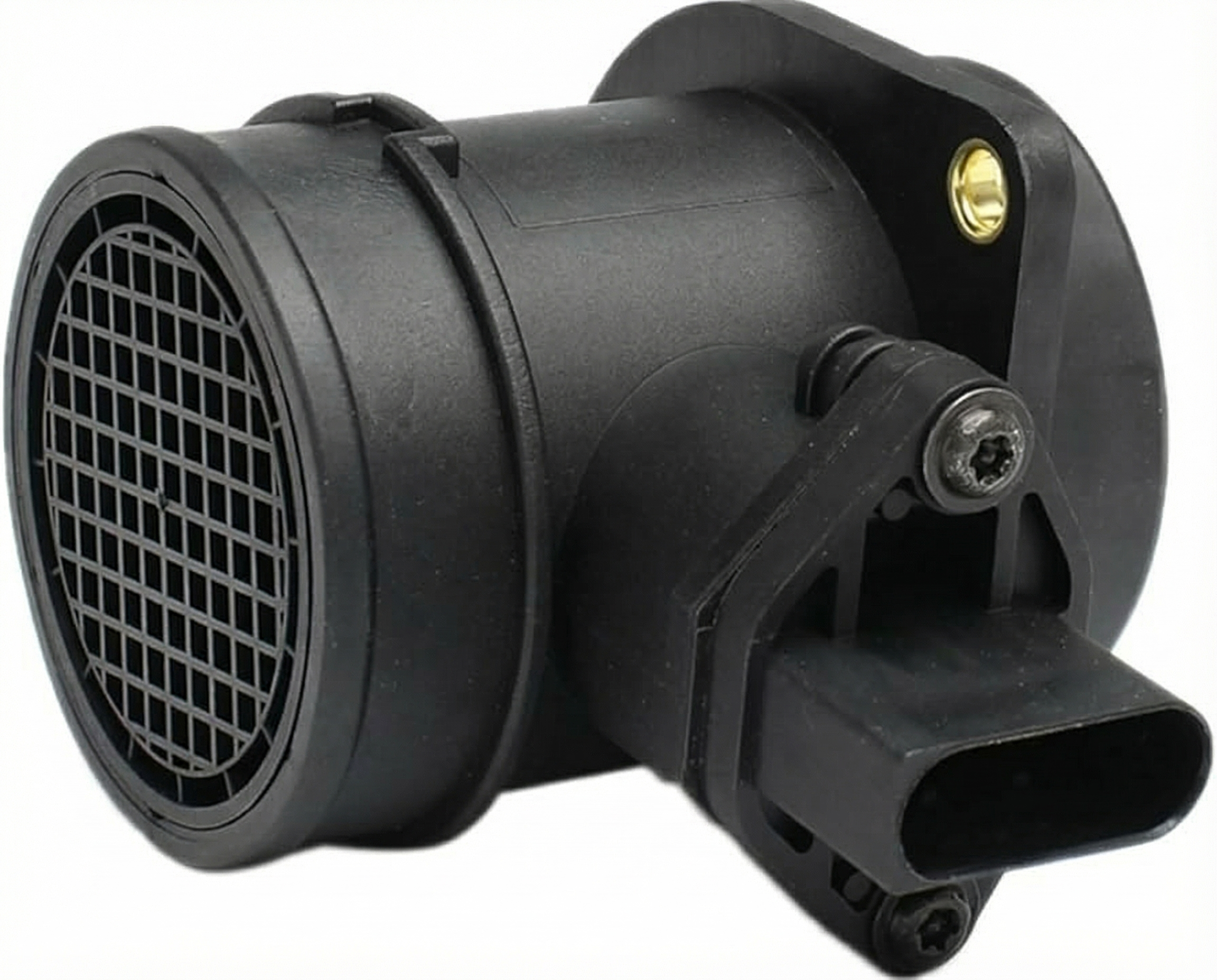
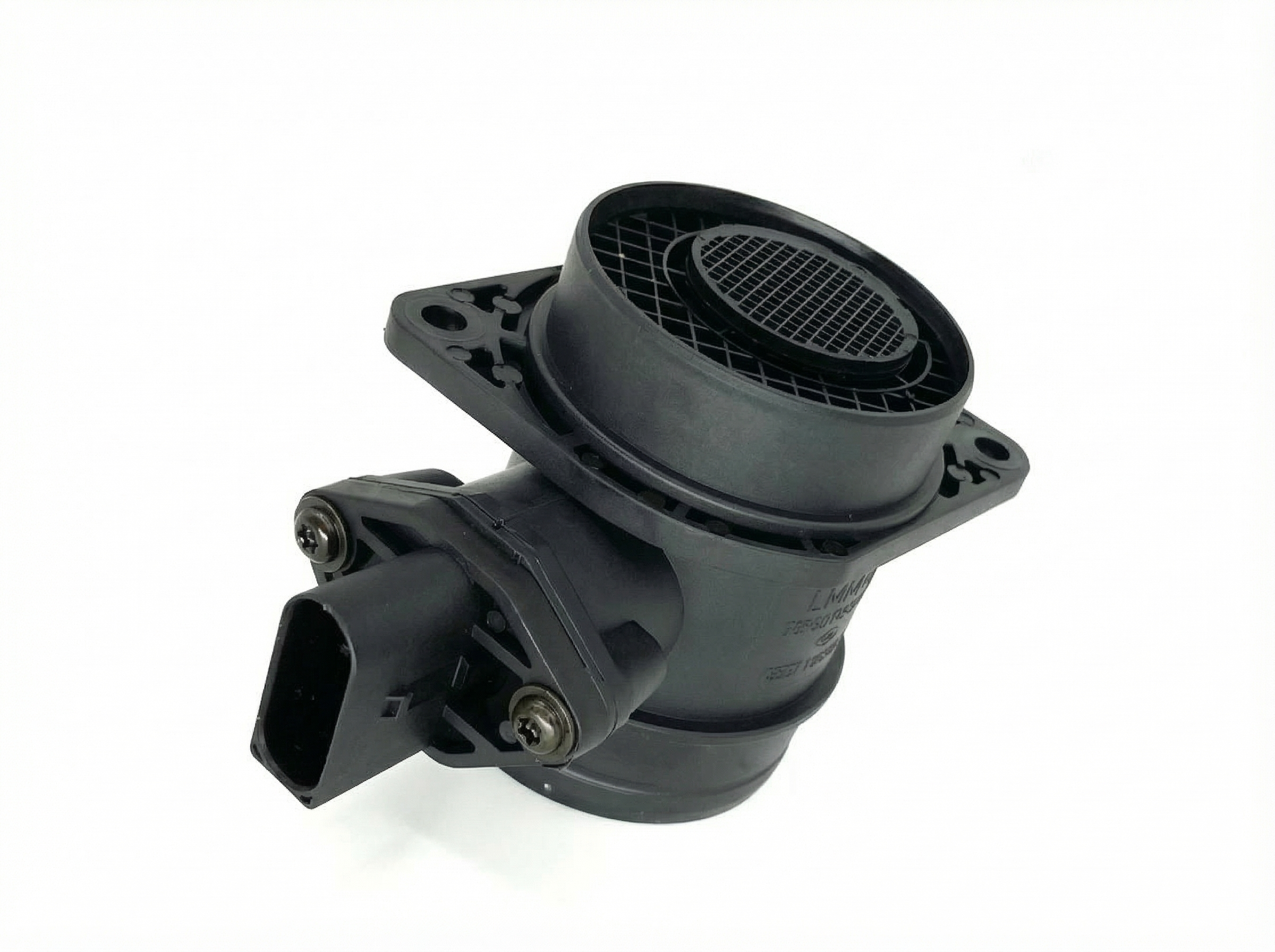
Est. part cost: $10-$80 - Dirty or Faulty Mass Airflow (MAF) Sensor 🟡 Medium Probability → Shop Fuel Injection Air Flow Meter The MAF sensor can become contaminated with oil or dirt, causing it to under-report the amount of air entering the engine. The ECM then injects too little fuel, leading to a lean condition.
How to confirm: Remove the MAF sensor and inspect the sensing elements for contamination. You can try cleaning it with a dedicated MAF sensor cleaner; never touch the delicate sensor wires. If cleaning doesn't resolve the issue, monitor its readings with a scan tool to see if they are within the expected range for the given RPM.
Typical fix: Clean the sensor with MAF sensor cleaner. If cleaning fails, replace the MAF sensor. A Bosch unit is the typical OEM replacement.
Est. part cost: $10 for cleaner, $100-$200 for a new sensor - Weak Fuel Pump or Clogged Fuel Filter ⚪ Low Probability → Shop Fuel Pump While less common than vacuum leaks, a failing in-tank fuel pump or a clogged fuel filter can restrict fuel flow, preventing the engine from getting the amount of fuel it needs. Fuel filter replacement is a standard maintenance item often overlooked.
How to confirm: Connect a fuel pressure gauge to the fuel rail and check if the pressure is within the manufacturer's specifications (typically requires a special adapter on this engine). Check fuel pressure at idle and under load.
Typical fix: Replace the fuel filter first, as it's a routine maintenance item. If pressure is still low, the high-pressure fuel pump (HPFP) or the in-tank low-pressure fuel pump may need to be replaced.
Est. part cost: $40-$80 for a filter, $200-$500+ for a fuel pump
Rare But Worth Checking
- Leaking Intake Manifold Gaskets: → Shop Engine Intake Manifold The gaskets sealing the intake manifold to the cylinder heads can fail, creating a vacuum leak. This can sometimes become more apparent in cold weather as materials contract. A smoke test is the best way to identify this.
- Exhaust Leak Before O2 Sensor: → Shop Oxygen Sensor A crack in the exhaust manifold or a leaking gasket before the Bank 2 upstream O2 sensor can allow outside air to be drawn into the exhaust stream, making the sensor report a false lean condition.
- Failing Upstream Oxygen (O2) Sensor: → Shop Oxygen Sensor A lazy or failing O2 sensor can send incorrect (false lean) signals to the ECM. However, it is far more likely the sensor is accurately reporting a lean condition caused by another issue.
Diagnosis Steps
- Check for other stored trouble codes. If P0171 is also present, focus on causes that affect the entire engine (PCV, MAF, fuel delivery).
- Use a scan tool to observe Long Term Fuel Trim (LTFT) for Bank 2. A high positive value (e.g., +15% or higher, with some sources noting it triggers the code above 20%) confirms the ECM is adding fuel to correct a lean condition.
- Perform a thorough visual inspection of the engine bay. Look for obviously disconnected or cracked vacuum hoses, especially around the PCV valve and intake manifold. Check that the intake snorkel is properly seated and clamped at both ends.
- With the engine running, listen for hissing sounds that indicate a vacuum leak. Pay close attention to the PCV valve area.
- Perform a smoke test. This is the most effective way to locate hard-to-find vacuum leaks in the PCV system, intake gaskets, and vacuum lines.
- If no vacuum leaks are found, inspect and clean the Mass Airflow (MAF) sensor using a dedicated cleaner. Do not touch the sensor elements.
- If the code persists, test the fuel pressure to rule out a weak fuel pump or clogged filter.
- As a final step, test the Bank 2 upstream O2 sensor to ensure it is functioning correctly, but do not replace it until all other possibilities have been exhausted.
Parts You'll Likely Need
- PCV Valve / Crankcase Breather Assembly
(OEM #06E103245E)— This is the most common failure point on the 3.2L V6 engine leading to vacuum leaks and lean codes. There are VIN splits for this part, so verifying with a dealer or parts supplier is critical.
Trusted brands: Audi Genuine, Vaico, URO Parts, Febi Bilstein
OEM price range: $120-$180
Aftermarket price range: $25-$110 - Vacuum Hose — Plastic and rubber hoses become brittle and crack, causing unmetered air to enter the intake. The brake booster hose is another common failure point.
Trusted brands: Audi Genuine
OEM price range: $20-$100
Aftermarket price range: $10-$50 - Mass Airflow (MAF) Sensor
(OEM #06C133471A (Bosch))— A contaminated sensor can provide incorrect airflow readings, leading to an improper fuel mixture.
Trusted brands: Bosch, Hitachi
OEM price range: $200-$300
Aftermarket price range: $100-$180
Related Codes That Often Appear With This One
- P0171 — System Too Lean (Bank 1). When both P0171 and P0174 are present, it strongly suggests a problem affecting both cylinder banks, such as a major vacuum leak (like the PCV valve or intake snorkel), a faulty MAF sensor, or a fuel delivery issue.
- P0300, P0304, P0305, P0306 — Random or specific cylinder misfires on Bank 2. A severe lean condition prevents proper combustion, leading to misfires on the affected cylinders.
- P0455 — Evaporative Emission System Leak Detected (gross leak). A large leak in the EVAP system can sometimes manifest as a lean code, though it's less common. A faulty gas cap or purge valve could be a shared culprit.
Technical Service Bulletins (TSBs) & Recalls
- While no TSB was found specifically for P0174 on this model, Audi has issued TSBs like 24-20-01 (2023492/10) for other models regarding fuel quality issues that can lead to lean codes (P0171, P0174). This highlights the importance of checking fuel delivery and quality. Another TSB, 01-22-25 (2067757/1), addresses low fuel pressure codes (P0087) on other engines, reinforcing the need to verify the fuel system.
Platform-Specific Known Issues
- Carbon Buildup on Intake Valves: As a Fuel Stratified Injection (FSI) engine, the 3.2L V6 does not spray fuel over the intake valves. This leads to the accumulation of carbon deposits from oil vapor and combustion byproducts. Symptoms include rough idle, hesitation, and loss of power. While not a direct cause of P0174, it can exacerbate drivability issues. The fix is a manual cleaning, often via walnut shell blasting, which is labor-intensive.
Mechanic-Grade Diagnostic Values
- Long Term Fuel Trim (Idle and Partial) — expected: Ideally within +/- 10%.. Failure: Values consistently greater than +10% (and especially approaching +25%) indicate the ECM is compensating for a significant lean condition.
- High-Pressure Fuel System (HPFP output) — expected: 30 to 120 bar (approx. 435 to 1740 PSI), depending on engine load.. Failure: Pressure reading on the high-pressure side is equal to the low-pressure side (approx. 6-7 bar), or does not increase with RPM.
- Low-Pressure Fuel System (In-tank pump) — expected: Approximately 6.5 to 7.0 bar (approx. 94 to 101 PSI) feeding the HPFP.. Failure: Significantly lower pressure indicates a failing in-tank pump or clogged filter, which can starve the HPFP.
- Mass Airflow (MAF) Sensor Reading at Idle — expected: Approximately 3.0 - 5.0 g/s at a stable warm idle. This value should increase smoothly with RPM.. Failure: Readings that are erratically low or do not correspond to engine RPM changes suggest a faulty sensor.
Scan Tool Commands That Help
- VCDS (VAG-COM): Reset Learned Values (Fuel Trim) — After a repair that affects the air/fuel mixture (e.g., fixing a vacuum leak, replacing PCV or MAF), resetting fuel trims forces the ECU to relearn adaptation values immediately. This can be done in [01-Engine] -> [Adaptation] -> Channel 'IDE00433 - Reset learned values'.
- VCDS (VAG-COM): Throttle Body Adaptation — After cleaning the throttle body or replacing it, an adaptation should be performed to reset its learned idle and off-idle positions. This is done in [01-Engine] -> [Basic Settings] -> Select 'Throttle Body Adaptation' and click 'Go!'.
- VCDS (VAG-COM): View Fuel Pressure (MVB Group 140) — To diagnose fuel delivery issues, Measuring Value Block (MVB) 140 can be used to view the actual vs. specified fuel rail pressure from the High-Pressure Fuel Pump (HPFP). A large discrepancy points to a fueling problem.
Wiring & Ground Locations
- G12 — Located at the center of the firewall in the engine bay.. This ground point serves the Engine Control Module (ECM). A poor connection here can cause erratic sensor readings and incorrect calculations, potentially leading to false lean codes.
- Engine Ground Strap — Main ground strap typically connects the engine block to the chassis frame rail, often near the passenger side engine mount.. A corroded or loose main engine ground can cause a host of electrical issues, including noisy signals from critical sensors like the O2 sensors and MAF sensor, which are essential for correct fuel mixture control.
- G78 — Located at the bottom of the passenger side B-pillar, behind the carpet and trim.. This ground point serves the fuel pump motor. While a less common cause, a poor ground here could lead to intermittent fuel pump performance and low fuel pressure, causing a lean condition.
- Sensor Wiring Harness — The harness section running over the valve covers and near the exhaust manifolds.. High heat in these areas can cause the insulation on wiring for O2 sensors and fuel injectors to become brittle and crack, leading to short circuits or open circuits that can cause misfires and incorrect fuel trim data.
Real Owner Repair Stories
- AudiWorld Forums user 'Dizzyhawk' (2006 Audi A4 Avant 3.2L) — Problems starting, problems accelerating, engine goes into limp mode. The issue was intermittent, occurring on roughly 1 out of 10 drives.
❌ Tried (didn't work) Considered replacing the fuel filter first, but forum advice suggested the issue was elsewhere.
✅ What actually fixed it The High-Pressure Fuel Pump (HPFP) was malfunctioning. Scan tool data showed the actual high-side fuel pressure was the same as the low-side pressure (around 6.7 bar), instead of the specified 30-120 bar. The intermittent nature was confusing, but the pump was ultimately the failure point.
"I Checked Everything" — The Actual Cause
- In some cases for the BKH engine, a smoke test may not reveal a leak in the brake booster vacuum hose, especially if the crack is small or only opens under specific temperature or vibration conditions. If lean codes persist with no other obvious leaks, this hose should be carefully inspected manually by flexing it while the engine is running and listening for idle changes.
OEM Part Supersession History
06E103245B, 06E103245C, 06E103245D→06E103245E— Revisions to improve the durability of the internal diaphragm and plastic housing to better resist heat and age-related cracking.
Heads up: While all versions may physically fit, the latest revision 'E' is recommended for longevity.06E127025G→06E127025AB— Internal improvements to the high-pressure fuel pump (HPFP) to address reliability issues and intermittent failures.
Heads up: The newer part number is a direct replacement for the older one on the BKH engine.
Model Year Variations Within This Range
- 2006: For the PCV valve (06E103245E), there is a chassis/VIN split for the 2006 model year. For A4 models, it applies up to chassis number 8E-6-285000. It is critical to verify the part with the vehicle's VIN before ordering.
Diagnostic Flowchart
Other Known Issues on This Vehicle
Issues unrelated to this code that are worth knowing about as an owner of this generation:
- Timing Chain Tensioner & Guide Failure 🔴 High — Common on high-mileage vehicles (over 100k miles) or those with poor oil change history. A rattling noise on cold starts is the primary warning sign.
- Intake Valve Carbon Buildup 🟠 Medium — An inherent issue with all FSI (direct injection) engines. Performance degradation is gradual, often becoming noticeable after 60k-80k miles.
- Upper Cam Girdle / Valve Cover Oil Leaks 🟠 Medium → Shop Engine Valve Cover — Oil leaks from the valve cover gaskets and, more seriously, the cam girdle seals are common. A leak from the cam girdle can drip oil into the spark plug tubes and requires significant labor to reseal.
- Thermostat Failure 🟠 Medium — The thermostat, located under the intake manifold, is prone to failure, causing overheating or failure to reach operating temperature. Replacement is labor-intensive due to its location.
- High-Pressure Fuel Pump (HPFP) Failure 🟠 Medium → Shop Fuel Pump — The HPFP can fail, leading to hard starting, stalling, and low fuel pressure codes. Some owners replace it preventatively during other major services.
- Crankshaft Position Sensor (G28) Failure 🔴 High — Failure of this sensor is common and will result in a no-start condition or sudden stalling while driving. It is located on the transmission bell housing and can be difficult to access.
Used vs. New Parts: Buying Guide for This Vehicle
When a used part is the smart pick: For this specific repair, buying used parts is generally not recommended. The most common failure items (PCV valve, vacuum hoses, MAF sensor, fuel pumps) are all wear-and-tear components. A used part from a donor vehicle is likely to have similar age and wear, offering a very short service life and a high risk of premature failure.
Donor-vehicle mileage cap: roughly under 50000 miles for the part to have meaningful remaining life.
What to inspect on the donor part:
- For a MAF sensor, ensure the donor car had no lean/rich codes.
- Visually inspect any used plastic or rubber parts for brittleness, cracking, or oil saturation.
- Ask for the donor vehicle's VIN to verify part number compatibility, especially for the PCV valve.
OEM-only on this vehicle (don't cheap out):
- PCV Valve / Oil Separator: Aftermarket versions have a very high failure rate, with diaphragms often tearing within months. The cost savings are not worth the repeated labor to replace it. Stick with an Audi Genuine part.
- High-Pressure Fuel Pump (HPFP): This is a critical engine component. Given the complexity and precision required, OEM (Hitachi) or a reputable OEM supplier (Bosch) is strongly advised to avoid drivability issues and premature failure.
Aftermarket brands forum-validated for this vehicle:
- Bosch: OEM supplier for the MAF sensor and a reliable alternative for the HPFP.
- Hitachi: The original equipment manufacturer for the High-Pressure Fuel Pump.
- Vaico, Febi Bilstein: These brands are sometimes considered higher-quality aftermarket options for the PCV valve, but OEM is still the safest bet.
Brands owners have reported issues with on this vehicle:
- Unbranded / 'White Box' PCV Valves: Forum discussions are filled with stories of cheap, unbranded PCV valves failing almost immediately after installation, causing the P0174 code to return.
- URO Parts: While available, some owners have reported mixed results with the longevity of their plastic and rubber components compared to OEM.
Real Owner Stories
Aggregated from forums and TSBs cited above. Mileages and costs reflect what owners reported in those sources.
2006 Audi A4 Quattro 3.2L V6
Symptoms: The vehicle felt sluggish during hard acceleration.
What fixed it: Replacement of the PCV valve, which is a primary suspect for lean codes and oil leaks on this engine.
Source hint: audiworld.com forum thread
2005-2008 Audi A4 3.2L V6
Symptoms: P0174 error code triggered.
What fixed it: Tightening a simple loose clamp on the intake snorkel that connects to the MAF sensor, likely disturbed during a previous service.
Source hint: audiforums.com thread titled 'P0174 error'
2005-2008 Audi A4 3.2L V6 — ~120000 miles
Symptoms: Owner performing a timing chain replacement noted the complexity and interconnected nature of maintenance on high-mileage 3.2L engines.
What fixed it: Preventative maintenance and timing chain service; the owner recommended using Audi's official erWin manual for DIY repairs.
Source hint: reddit.com/r/Audi thread
Related OBD-II Codes
Frequently Asked Questions
I have a 2006 Audi A4 3.2L with P0174; is there a specific TSB for this code?
My A4 3.2L is 'hunting' for idle and has a hissing sound. Could this be the PCV valve?
Where is the PCV valve located on the 3.2L V6 BKH engine?
Can a loose intake snorkel cause a P0174 code on my Audi A4?
Does the 3.2L V6 suffer from carbon buildup like the 2.0T?
What part number should I use if I need to replace the PCV valve on my A4 3.2L?
Helpful Videos
Used OEM Parts in Stock
New Aftermarket Parts Available

The information in this article is provided for general reference and educational purposes only. Vehicle specifications, procedures, and part compatibility can vary by production date, trim level, and region. Always consult your vehicle's factory service manual and verify part numbers before purchasing or performing repairs. Safety-critical components such as airbags, seat belts, and braking systems should be installed by a qualified professional.
- Audi A4:
- 🧭 Diagnostic Flowchart
- 🎬 Helpful Videos
- 🛍️ Shop This Part
- What's Unique About the 2005-2008 Audi A4
- Symptoms You May Notice
- Most Likely Causes
- Rare But Worth Checking
- Diagnosis Steps
- Parts You'll Likely Need
- Related Codes That Often Appear With This One
- Technical Service Bulletins (TSBs) & Recalls
- Platform-Specific Known Issues
- Mechanic-Grade Diagnostic Values
- Scan Tool Commands That Help
- Wiring & Ground Locations
- Real Owner Repair Stories
- "I Checked Everything" — The Actual Cause
- OEM Part Supersession History
- Model Year Variations Within This Range
- Other Known Issues on This Vehicle
- Used vs. New Parts: Buying Guide for This Vehicle
- Real Owner Stories
- 2006 Audi A4 Quattro 3.2L V6
- 2005-2008 Audi A4 3.2L V6
- 2005-2008 Audi A4 3.2L V6 — ~120000 miles
- Related OBD-II Codes
- Frequently Asked Questions
- 🎟️ Get 5% Off