

P0174 on 2012-2018 Audi A6 3.0T: Lean Bank 2 Causes and Fixes
On the 2012-2018 Audi A6 3.0T, code P0174 (System Too Lean, Bank 2) is overwhelmingly caused by a failed PCV valve, also known as the oil separator. This creates a large vacuum leak, leading to a lean condition often accompanied by P0171. The part is located under the supercharger, making replacement labor-intensive. Expect to pay $250-$450 for an OEM replacement part, with total shop costs ranging from $1200-$2500.
- P0174 on your Audi A6 3.0T almost certainly points to a failed PCV valve.
- The easiest way to confirm a bad PCV is to listen for a loud whistle at idle or check for strong vacuum at the oil cap with the engine running.
- Do not replace the oxygen sensors first; they are usually just doing their job of reporting the lean condition.
- Replacing the PCV valve is a significant job because the supercharger must be removed for access, making it a difficult DIY for beginners.
- Driving for an extended period with this code can lead to more expensive repairs, such as a damaged catalytic converter.
What's Unique About the 2012-2018 Audi A6
The Audi 3.0T Supercharged V6 (EA837 engine) is highly susceptible to PCV (Positive Crankcase Ventilation) valve failure. The PCV valve, also called an oil separator, uses a rubber diaphragm that is known to tear over time. When this diaphragm fails, it creates a massive, unmetered air leak directly into the intake system, which the engine's computer cannot account for. This is the single most common reason for a P0174 (and its companion P0171 for Bank 1) on this specific engine. The failure is so common that it's considered a regular maintenance item by many owners.
Symptoms You May Notice
- Check Engine Light illuminated
- Rough or unstable idle, sometimes hunting for idle speed
- Loud, high-pitched whistling or sucking sound from the engine bay at idle, often described as a 'screech'
- Reduced engine power and poor acceleration, especially when the supercharger should engage
- Increased oil consumption, sometimes significant
- Difficulty removing the oil filler cap while the engine is running due to extremely strong vacuum
- Misfire codes (P0300-P0306) may accompany the lean codes
- Replacing the oxygen (O2) sensor. The O2 sensor is almost always correctly reporting that a lean condition exists. The P0174 code means the sensor is doing its job; the problem lies upstream with too much unmetered air or not enough fuel.
Most Likely Causes
- Failed PCV Valve (Oil Separator) 🔴 High Probability → Shop PCV Valve The diaphragm inside the PCV valve is made of a rubber material that degrades from heat and oil exposure, eventually tearing. This is a well-documented, widespread issue on the 3.0T engine.
How to confirm: Listen for a distinct high-pitched whistle from the engine bay. With the engine idling, try to remove the oil cap; if a very strong vacuum holds it on, the PCV diaphragm has failed. A smoke test will show a massive leak from the PCV system area.
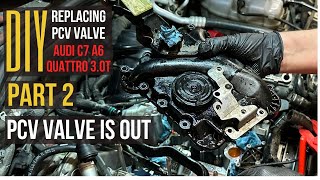
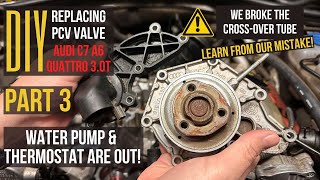
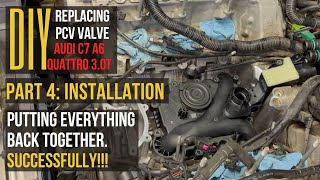
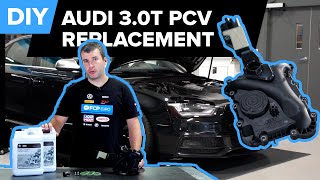
Typical fix: Replace the entire PCV valve assembly. This part is located underneath the supercharger, making the replacement labor-intensive. It is highly 🎬 Watch: Step-by-step guide to replacing the PCV and oil separator. recommended to also replace the thermostat, water pump, and 🎬 See how to remove the water pump and thermostat while inside. supercharger gaskets at the same time.
Est. part cost: $250-$450 for OEM, $150-$300 for aftermarket. - Vacuum Leak (Other) 🟡 Medium Probability With age and heat cycles, plastic and rubber hoses become brittle and crack. Common leak points include the air intake boot, brake booster lines, and gaskets for the intake manifold.
How to confirm: A smoke test is the most effective way to find vacuum leaks. Visually inspect all accessible vacuum hoses for cracks or disconnections. Listen for hissing sounds around the engine bay.
Typical fix: Replace the cracked hose, faulty gasket, or seal. The breather hoses connected to the PCV are notoriously brittle and often break during PCV service.
Est. part cost: $20-$200 - Dirty or Faulty Mass Airflow (MAF) Sensor ⚪ Low Probability → Shop Fuel Injection Air Flow Meter While not a platform-specific weakness, oiled aftermarket air filters can contaminate the MAF sensor, causing it to under-report airflow and lead to a lean condition. It is a much less frequent cause than a vacuum leak on this engine.
How to confirm: Inspect the MAF sensor element for dirt or oil. Try cleaning it with a dedicated MAF sensor cleaner. If cleaning doesn't work, monitoring sensor data with a scan tool can show if readings are out of spec compared to engine load.
Typical fix: Clean the MAF sensor with a specialized cleaner. If cleaning fails, replace the sensor.
Est. part cost: $10 (cleaner) - $250 (replacement sensor)
Rare But Worth Checking
- Leaking Supercharger Intercooler: The 3.0T engine has two intercooler cores (heat exchangers) located within the supercharger housing. These can develop internal coolant leaks. While more likely to cause a misfire code or white smoke, a small leak can disrupt combustion enough to affect air-fuel ratios.
- Failing Fuel Injector or Weak Fuel Pump: → Shop Fuel Injector A clogged or failing injector on Bank 2 or a weak fuel pump can lead to insufficient fuel delivery, causing a lean condition. This is less common than vacuum leaks and would typically be accompanied by other symptoms like misfires under load or fuel pressure codes.
- Exhaust Leak Before O2 Sensor: → Shop Oxygen Sensor A crack or leak in the exhaust manifold or downpipe before the primary (upstream) O2 sensor can allow outside air to be drawn into the exhaust stream. The O2 sensor will read this extra oxygen and incorrectly report a lean condition to the ECM.
Diagnosis Steps
- Use a scan tool to confirm P0174 is present and check for other codes, especially P0171, P052E, and any misfire codes. Check freeze-frame data to see engine conditions when the code was set.
- Check Long Term Fuel Trim (LTFT) values for both banks. With a major vacuum leak, you will see high positive numbers (e.g., +15% to +25%) on both banks.
- Start the engine and listen for a loud whistling or sucking noise from the supercharger area, which strongly indicates a failed PCV valve.
- With the engine idling, carefully attempt to remove the oil filler cap. If it is held on by a strong vacuum and is difficult to remove, the PCV valve diaphragm has almost certainly failed.
- If no obvious noise is present, perform a smoke test. This is the most reliable method for finding the source of an air leak. Introduce smoke into the intake system post-MAF sensor and look for where it escapes. Pay close attention to the PCV valve area, intake manifold gaskets, and all connected vacuum hoses.
- Visually inspect the plastic breather hoses connected to the valve covers and PCV for cracks. They are known to become extremely brittle and break.
- If no vacuum leaks are found, inspect and clean the Mass Airflow (MAF) sensor using a dedicated MAF sensor cleaner.
- If the issue persists, investigate the fuel system by checking fuel pressure at the rail and monitoring fuel trim data under load to see if the computer is compensating for a lack of fuel.
Parts You'll Likely Need
- PCV Valve / Oil Separator
(OEM #06E103547AC (or latest revision like 06E103547AH). Part numbers are frequently superseded; always verify with VIN.)— This is the most common failure point on the 3.0T engine that causes code P0174. The internal diaphragm tears, creating a large vacuum leak.
Trusted brands: Audi Genuine, Vaico, Hengst
OEM price range: $250-$450
Aftermarket price range: $150-$300 - Supercharger Gaskets & Seals — The supercharger must be removed to access the PCV valve. All associated gaskets, including the main supercharger-to-intake gaskets and injector seals, must be replaced to prevent future leaks.
Trusted brands: Audi Genuine, Elring
OEM price range: $100-$150
Aftermarket price range: $50-$80
Related Codes That Often Appear With This One
- P0171 — P0171 is 'System Too Lean, Bank 1'. A major vacuum leak, like a failed PCV valve, affects the entire engine and will almost always cause both P0171 and P0174 to appear together.
- P0507 — P0507 is 'Idle Air Control System RPM Higher than Expected'. A large vacuum leak introduces extra air, causing the engine's idle speed to be higher than the computer commands as it struggles to maintain stability.
- P0300-P0306 — These are misfire codes (random or specific cylinders). A severe lean air-fuel mixture can fail to ignite properly, leading to misfires, especially at idle or under load.
- P052E — P052E is 'Positive Crankcase Ventilation Regulator Valve Performance'. This is a more specific code that directly points to a malfunction in the PCV system, often appearing alongside the lean codes.
Technical Service Bulletins (TSBs) & Recalls
- TSB 2027731/7 (or later revisions): While primarily addressing an oil consumption test procedure, this TSB is relevant because excessive oil consumption is a symptom of PCV failure. A warranty extension for PCV replacement was
Platform-Specific Known Issues
- The PCV valve is located in the engine 'valley' underneath the supercharger, which must be removed to access it. This makes the repair significantly more labor-intensive and costly than on many other vehicles.
- Due to the high labor cost of removing the supercharger, it is highly advisable to perform 'while you're in there' services, such as replacing the thermostat, water pump, and performing a carbon cleaning of the intake ports.
- Some owners opt for a 'PCV Relocation Kit' which moves the PCV valve to a more accessible location, making future replacements a 10-minute job instead of a 5-hour one.
Mechanic-Grade Diagnostic Values
- Long Term Fuel Trim (Additive) — expected: Normally between -5% and +5% at idle.. Failure: An adaptive value greater than +25% will trigger the P0174 fault code.
- Fuel Pressure (Low-Side) — expected: Typically between 45 and 65 PSI.. Failure: Consistently low pressure indicates a weak fuel pump or clogged filter, which could cause a lean condition.
Hidden / Shadow Codes Worth Checking
- P052E: Positive Crankcase Ventilation Regulator Valve Performance. This is not a shadow code but a more specific, directly related fault that often accompanies P0171/P0174 and confirms the issue is with the PCV system. (see via Standard OBD-II scanner.)
Scan Tool Commands That Help
- VCDS (VAG-COM): Measuring Blocks - Groups 015 & 016 — To monitor the live misfire counter for each individual cylinder. If a lean condition is causing misfires, these groups will show which cylinders are most affected, helping to confirm if the issue is isolated to Bank 2.
Wiring & Ground Locations
- Engine Ground Strap — On the 3.0T, a primary engine-to-chassis ground strap is located on the passenger side (right side for LHD) of the engine compartment, near the alternator, connecting the engine block to the frame rail.. A corroded or loose ground strap can cause erratic voltage and incorrect readings from various engine sensors, including O2 sensors and MAF sensors, potentially leading to incorrect fuel trim adjustments and lean codes.
- Ignition Coil Ground Wires — Each ignition coil has a small ground wire attached to its mounting point. These can become brittle and break.. While a broken coil ground typically causes a misfire code for a specific cylinder, intermittent connection issues could potentially affect sensor readings that share a grounding point, though this is a less direct cause for P0174.
Real Owner Repair Stories
- AudiWorld Forum User (Audi Q7 3.0T (year not specified, but uses same engine)) — Persistent P0306 misfire on cylinder 6, especially under load.
❌ Tried (didn't work) Replaced all spark plugs, Replaced all ignition coils, Cleaned fuel injectors
✅ What actually fixed it The thermostat was failing, causing the engine to run slightly out of its optimal temperature range. This subtly affected the air/fuel mixture enough to cause a consistent misfire on one cylinder under load. Replacing the thermostat resolved the issue.
OEM Part Supersession History
06E103547 (with early revisions like F, Q, C)→06E103547AC, 06E103547AH, and other later revisions.— The original PCV valve diaphragms were prone to tearing. Later revisions were made with more durable materials to improve longevity and address the widespread vacuum leak issue.
Heads up: Some revisions changed the internal crankcase pressure regulation. Using an incorrect version for your specific engine code and software can lead to oil consumption or other issues. It is critical to verify the correct part number with your vehicle's VIN.
Model Year Variations Within This Range
- 2016-2018 (C7.5): The facelifted C7.5 models introduced the 'CREC' version of the 3.0T engine. While largely similar, it featured updates like a new supercharger with an electromagnetic clutch and dual injection (both direct and port injection). While the PCV failure remains a common issue, some owners report the CREC engine is more prone to oil consumption if the wrong oil is used or if the revised oil control rings become clogged.
Diagnostic Flowchart
Other Known Issues on This Vehicle
Issues unrelated to this code that are worth knowing about as an owner of this generation:
- Water Pump & Thermostat Failure 🔴 High — Common failure item, often between 60,000-100,000 miles. The plastic housings become brittle and crack, causing coolant leaks or overheating. (Ref: Early models had service actions for thermostat issues.)
- Carbon Buildup on Intake Valves 🟠 Medium — A characteristic of all direct-injection engines. Becomes noticeable after 60,000-80,000 miles, causing misfires and reduced performance. Requires professional cleaning (walnut blasting).
- Engine Mount Failure 🟠 Medium — The fluid-filled engine mounts are known to leak and collapse, sometimes as early as 50,000-60,000 miles, causing excessive vibration at idle and clunking noises.
- Timing Chain Tensioner Rattle 🔴 High — Less common than other issues but very expensive to fix. A brief rattle on cold starts can be an early sign of tensioner wear, typically on higher-mileage (100k+) engines.
- Catalytic Converter Failure 🔴 High — The catalytic converters are placed close to the engine, and the high heat can cause the internal structure to break down over time, leading to blockages and loss of power.
Used vs. New Parts: Buying Guide for This Vehicle
When a used part is the smart pick: For this repair, buying used parts is generally not recommended. The primary failure component, the PCV valve, is a wear item with a finite lifespan. A used PCV valve carries a high risk of premature failure. Structural components like the supercharger housing itself or intake manifolds could be sourced used if damaged, but the active components should be new.
Donor-vehicle mileage cap: roughly under 60000 miles for the part to have meaningful remaining life.
What to inspect on the donor part:
- If considering any used part, verify the donor vehicle's mileage and history.
- For plastic or rubber components like hoses, visually inspect for any signs of cracking, brittleness, or oil saturation.
- Avoid parts from vehicles that show signs of coolant and oil mixing ('milkshake' residue).
OEM-only on this vehicle (don't cheap out):
- PCV Valve / Oil Separator: While quality aftermarket options exist, OEM is the safest choice due to the high labor cost of replacement. A failed aftermarket part means repeating a very expensive job.
Aftermarket brands forum-validated for this vehicle:
- Hengst (Often the OEM supplier)
- Elring (For gaskets and seals)
- Vaico
Brands owners have reported issues with on this vehicle:
- Unnamed, no-brand parts from online marketplaces. The risk of premature failure is too high given the labor-intensive nature of the repair.
Real Owner Stories
Aggregated from forums and TSBs cited above. Mileages and costs reflect what owners reported in those sources.
2013 Audi A6 3.0T
Symptoms: Owner required replacement of the PCV, various hoses, and the thermostat.
What fixed it: Replacement of the PCV valve assembly, thermostat, and associated hoses.
Cost: $3,850
Source hint: AudiWorld forum discussion titled 'Im at a loss $3850 replacing PCV some hoses thermostat 2013 3.0T'
2016 Audi A6 3.0T — 85000 miles
Symptoms: Need for water pump and PCV replacement.
What fixed it: PCV valve and water pump replacement.
Cost: $2,500
Source hint: Reddit r/AudiA6 thread '2016 3.0T water pump and PCV replacement at 85k'
Audi A6 3.0T Supercharged V6
Symptoms: P052E code present, requiring PCV replacement.
What fixed it: PCV valve replacement at a dealer.
Cost: $2,800
Source hint: Reddit r/Audi thread 'Supercharged 3.0T V6 PCV replacement $2800'
Related OBD-II Codes
Frequently Asked Questions
Why is it so difficult to remove my oil filler cap while the engine is idling?
Is there a TSB for the PCV and oil consumption issues on my Audi A6 3.0T?
Why is the labor cost so high to fix a P0174 lean code on this specific V6?
What other parts should I replace while the supercharger is off for the PCV repair?
Is there a way to avoid removing the supercharger for future PCV failures?
Could my oiled aftermarket air filter be causing the P0174 code?
Helpful Videos

The information in this article is provided for general reference and educational purposes only. Vehicle specifications, procedures, and part compatibility can vary by production date, trim level, and region. Always consult your vehicle's factory service manual and verify part numbers before purchasing or performing repairs. Safety-critical components such as airbags, seat belts, and braking systems should be installed by a qualified professional.
- Audi A6:
- 🧭 Diagnostic Flowchart
- 🎬 Helpful Videos
- What's Unique About the 2012-2018 Audi A6
- Symptoms You May Notice
- Most Likely Causes
- Rare But Worth Checking
- Diagnosis Steps
- Parts You'll Likely Need
- Related Codes That Often Appear With This One
- Technical Service Bulletins (TSBs) & Recalls
- Platform-Specific Known Issues
- Mechanic-Grade Diagnostic Values
- Hidden / Shadow Codes Worth Checking
- Scan Tool Commands That Help
- Wiring & Ground Locations
- Real Owner Repair Stories
- OEM Part Supersession History
- Model Year Variations Within This Range
- Other Known Issues on This Vehicle
- Used vs. New Parts: Buying Guide for This Vehicle
- Real Owner Stories
- 2013 Audi A6 3.0T
- 2016 Audi A6 3.0T — 85000 miles
- Audi A6 3.0T Supercharged V6
- Related OBD-II Codes
- Frequently Asked Questions
- 🎟️ Get 5% Off