

P0174 on 2002-2009 Audi A8 4.2L V8: Causes and Fixes for System Too Lean
For a 2002-2009 Audi A8 4.2L V8, code P0174 is most often caused by unmetered air entering the engine from vacuum leaks due to aged rubber and plastic hoses. A dirty or failing Mass Airflow (MAF) sensor is the next most likely culprit, followed by a faulty PCV valve.
- P0174 on your Audi A8 means the driver's side of the engine is running lean (too much air, not enough fuel).
- The most likely cause is a vacuum leak from an old, cracked rubber or plastic hose. A professional smoke test is the best way to find it.
- Before replacing any expensive parts, inspect all intake and vacuum hoses and consider cleaning the Mass Airflow (MAF) sensor.
- Do not replace the O2 sensor first; it is most likely doing its job correctly by reporting the lean condition.
What's Unique About the 2002-2009 Audi A8
On the D3 generation Audi A8 with the 4.2L V8 (engine codes BFM, BGK, and later BVJ), the engine bay is tightly packed with complex plastic and rubber vacuum lines. Over time, the heat from the V8 engine causes these components to become brittle and crack, making vacuum leaks the most common cause of a P0174 code. While many cars get lean codes, this specific engine's design makes it particularly susceptible to age-related vacuum leaks that can be difficult to locate without a smoke test. Common failure points are often hidden under the intake manifold or at the rear of the engine.
Symptoms You May Notice
- Check Engine Light is on
- Rough or unstable idle
- Hesitation or stumbling during acceleration
- Reduced fuel economy
- A hissing sound from the engine bay, indicating a vacuum leak
- Misfires, which may trigger other codes like P0300 or P0302
- Engine RPMs surging up and down on their own, particularly around 2500 RPM
- Replacing the oxygen sensor first. The O2 sensor is usually just the messenger reporting the lean condition, not the cause of it. Always diagnose vacuum leaks and MAF sensor issues first.
- Replacing parts without a proper diagnosis. One owner on AudiWorld forums spent over $1,400 at a dealer replacing an oil separator and other parts before the issue was properly identified.
Most Likely Causes
- Vacuum Leaks 🔴 High Probability The plastic and rubber hoses in the PCV and vacuum systems become brittle with age and heat cycles from the V8 engine. The intake manifold gaskets, brake booster lines, and the air intake snorkel itself are also common failure points.
How to confirm: Perform a visual inspection of all hoses between the MAF sensor and the engine. The most effective method is to use a smoke tester to introduce smoke into the intake system and watch for where it escapes. Spraying brake cleaner or a similar substance near suspected leaks can cause a momentary change in engine RPM, but this is less precise and more flammable. A loose clamp on the intake boot after the MAF sensor is a simple but common cause.
Typical fix: Replace the cracked or leaking hoses, gaskets, or seals. Common culprits include the crankcase breather (PCV) hoses, the brake booster line, and intake snorkel clamps. In one documented case, a loose clamp on the intake boot was the sole cause.
Est. part cost: $20-$200 - Dirty or Faulty Mass Airflow (MAF) Sensor 🟡 Medium Probability → Shop Fuel Injection Air Flow Meter The MAF sensor can become contaminated with oil or dirt, especially if an over-oiled aftermarket air filter is used, causing it to under-report the amount of air entering the engine. This leads the ECU to command too little fuel.
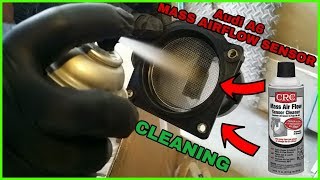
How to confirm: First, try cleaning the sensor with a dedicated MAF sensor cleaner spray. 🎬 See how to safely clean your MAF sensor Do not touch the delicate sensor wires. If cleaning doesn't work, you can monitor MAF readings with an OBD-II scanner or unplug the sensor while the engine is running; if the idle improves, the MAF is likely faulty.
Typical fix: Clean the MAF sensor. If the problem persists, replace the sensor with a quality OEM unit from a brand like Bosch. The OEM part number is often cited as 077133471K.
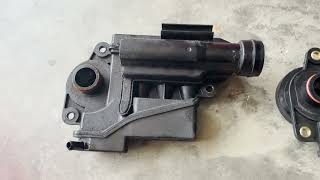
Est. part cost: $150-$250 - Faulty PCV / Oil Separator Valve 🟡 Medium Probability The Positive Crankcase Ventilation (PCV) valve, also called an oil separator, is a known failure point. It is made of plastic and sits in the hot engine valley, causing it to become brittle and crack or its internal diaphragm to fail. This creates a large, unmetered vacuum leak.
How to confirm: A failed PCV valve often causes a loud hissing or sucking noise from the engine bay and can lead to an unusually high and rough idle. A smoke test will typically show smoke billowing from the oil cap or dipstick tube if the PCV system has failed internally. An Audi dealer identified this as the cause in one owner's lengthy diagnostic battle.
Typical fix: Replace the PCV valve. The part number is 🎬 Watch: Step-by-step guide to replacing the PCV valve often 079103464D or 079103464F depending on the specific engine. It is located in the valley between the cylinder heads, under the intake manifold.
Est. part cost: $100-$250 - Clogged Fuel Filter or Weak Fuel Pump ⚪ Low Probability → Shop Fuel Pump Fuel filters can become clogged over time, restricting fuel flow. While fuel pumps are generally reliable, they can weaken with age and high mileage, failing to supply adequate pressure.
How to confirm: Test the fuel pressure at the fuel rail using a fuel pressure gauge. Compare the reading to the manufacturer's specification, which for the port-injected BFM/BGK engine is around 4.0 bar (58 psi). A pressure reading below the specified range indicates a fuel delivery issue. FSI engines (BVJ) have both a low-pressure and high-pressure fuel system, requiring more advanced diagnostics.
Typical fix: Replace the clogged fuel filter first, as it is a common maintenance item. If pressure is still low, the in-tank fuel pump (or for FSI engines, potentially the high-pressure fuel pump) may need to be replaced.
Est. part cost: $50-$150 for a filter, $300-$600 for a fuel pump - Faulty Front Oxygen (O2) Sensor ⚪ Low Probability → Shop Oxygen Sensor The O2 sensor is what detects the lean condition. While it can fail and send incorrect signals, it is more often correctly reporting a problem caused by something else. It can become 'lazy' with age or contaminated.
How to confirm: Use a capable OBD-II scanner to graph the O2 sensor voltage for Bank 2, Sensor 1. A healthy sensor will show rapidly fluctuating voltage. A sensor that is stuck or slow to respond may be faulty. Bank 2 Sensor 1 is the upstream sensor on the driver's side (LHD).
Typical fix: Replace the Bank 2, Sensor 1 (pre-catalyst) oxygen sensor. The Bosch part number is often cited as 17351.
Est. part cost: $100-$200
Rare But Worth Checking
- Clogged Fuel Injectors on Bank 2: → Shop Fuel Injector If the lean condition is strictly isolated to Bank 2 and all other causes have been ruled out, a few clogged injectors on that bank could be the cause. This is less common than a vacuum leak or MAF issue. One owner reported a dealer suggesting this after other fixes failed.
- Exhaust Leak Before the O2 Sensor: → Shop Oxygen Sensor A crack in the exhaust manifold or a leaking gasket before the primary O2 sensor can allow outside air to be sucked into the exhaust stream. The O2 sensor will interpret this extra air as a lean condition and incorrectly tell the ECU to add more fuel.
Diagnosis Steps
- Read Codes: Use an OBD-II scanner (VCDS by Ross-Tech is highly recommended for Audis) to confirm P0174 and check for any other codes, especially P0171.
- Check Fuel Trims: Observe the Short-Term (STFT) and Long-Term (LTFT) fuel trim values in Measuring Blocks 032 and 033. High positive numbers (e.g., LTFT > +15%) on Bank 2 confirm the ECU is adding fuel to combat a lean condition.
- Visual Inspection: Carefully inspect the engine bay for obvious signs of cracked, disconnected, or broken vacuum hoses, particularly around the intake boot, PCV system, and brake booster. Check that the oil cap and dipstick are properly sealed.
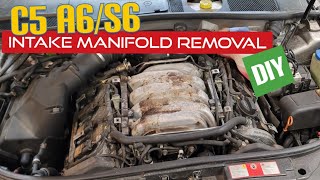
- Perform a Smoke Test: This is the most reliable way to find vacuum leaks. Connect a smoke machine to the intake system (typically at the airbox inlet) and look for smoke escaping from gaskets, seals, or hoses. Pay close attention to the PCV hoses under the intake manifold and the intake manifold gaskets themselves. 🎬 Watch: How to disassemble and reseal the intake manifold
- Clean and Test MAF Sensor: Remove the Mass Airflow sensor and spray it with dedicated MAF cleaner. Reinstall and see if fuel trims improve. After cleaning or replacement, a Throttle Body Adaptation (TBA) using a tool like VCDS is recommended.
- Test Fuel Pressure: If no vacuum leaks are found and the MAF is clean/working, connect a fuel pressure gauge to test for adequate fuel delivery. The spec for port-injected engines is ~4.0 bar (58 psi).
- Inspect O2 Sensor: If all else fails, inspect the Bank 2 pre-catalyst O2 sensor's wiring and graph its performance to check if it is responding correctly.
Parts You'll Likely Need
- PCV Valve / Oil Separator
(OEM #079103464D / 079103464F)— This plastic valve is a very common failure point on the 4.2L V8 due to heat and age, creating a large vacuum leak. - Vacuum Hoses — Various rubber and plastic hoses become brittle and crack, causing hard-to-find vacuum leaks.
- Mass Air Flow (MAF) Sensor
(OEM #077133471K)— Can become contaminated or fail, leading to incorrect air measurement and lean codes. - Intake Manifold Gaskets — Gaskets can fail with age, creating a vacuum leak affecting one or both banks.
Related Codes That Often Appear With This One
- P0171 — System Too Lean (Bank 1). If both P0171 and P0174 are present, it points to a problem affecting the entire engine, such as the MAF sensor, a faulty PCV valve, or a major vacuum leak at the intake manifold, rather than an issue specific to one bank.
- P1130 — This is an Audi-specific code for 'Fuel Trim, Bank 2 (Mult) System too Lean'. It often appears alongside P0174 and confirms the same long-term lean condition detected by the ECU.
- P0300, P0305, P0306, P0307, P0308 — A severe lean condition can cause misfires. P0300 is a random misfire code, while P0305-P0308 would indicate misfires in the specific cylinders of Bank 2.
Platform-Specific Known Issues
- Forum discussions for the D3 A8 4.2L frequently point to a Y-shaped vacuum fitting near the brake booster as a common, hard-to-see failure point.
- The main crankcase breather hose, which runs under the intake manifold, is a very common source of vacuum leaks. It becomes brittle and cracks, and replacement requires removing the intake manifold.
- A loose clamp on the large intake boot between the MAF sensor and the throttle body is a simple but frequently reported cause of P0171/P0174 after service work like an air filter change.
Mechanic-Grade Diagnostic Values
- Upstream O2 Sensor (Bank 2, Sensor 1) Voltage — expected: Rapidly fluctuating between approximately 0.1V and 0.9V at operating temperature.. Failure: Voltage is stuck at a constant value (e.g., below 0.4V), or responds very slowly to changes in engine RPM.
- Long Term Fuel Trim (LTFT) - Bank 2 — expected: As close to 0% as possible, typically within +/- 5%.. Failure: Sustained positive value greater than +10%, indicating the ECU is adding significant fuel to compensate for a lean condition. Values approaching +25% will trigger the P0174 code.
- Mass Air Flow (MAF) Sensor Reading at Idle — expected: For the 4.2L V8, a healthy reading at stable idle (approx. 650-750 RPM) should be around 4.0 to 6.0 g/s. This can vary slightly based on engine variant and conditions.. Failure: A significantly lower reading (e.g., 2.0-3.0 g/s) suggests the sensor is under-reporting airflow, causing the ECU to command too little fuel.
Scan Tool Commands That Help
- VCDS (VAG-COM) by Ross-Tech: Throttle Body Adaptation (TBA) — Crucial to perform after cleaning or replacing the throttle body, replacing the MAF sensor, or after the battery has been disconnected. The ECU needs to relearn the throttle's full range of motion. Failure to do this can itself cause lean conditions or erratic idle even after parts are replaced. The procedure is found under [01-Engine] -> [Basic Settings - 04] -> Group 060. Let it run for 30 seconds after it displays 'ADP OK'.
Wiring & Ground Locations
- 12 — Main ground connection point in the left side of the engine compartment.. A poor ground at this location can affect various sensors on the left side of the engine (Bank 2), including the O2 sensor, potentially causing incorrect readings that lead to a P0174 code.
- 13 — Main ground connection point in the right side of the engine compartment.. While less likely to cause a Bank 2 specific code, a poor ground here can affect engine-wide sensors like the MAF, leading to lean codes on both banks. It's a critical point to check for corrosion or looseness.
- Battery Ground Cable — Connects the battery (in the trunk) to the vehicle chassis. The main harness part number is 4E0971235B.. The main system ground is essential for stable voltage for all electronic components, including the ECU and all sensors. Corrosion or damage to this cable can cause a host of bizarre, hard-to-diagnose electrical issues, including phantom sensor faults.
Real Owner Repair Stories
- AudiForums.com user 'ludikraut' (2004 Audi A8) — Check Engine Light with P0174 code.
❌ Tried (didn't work) Initial suspicion was brittle or damaged vacuum hoses.
✅ What actually fixed it The clamp holding the Mass Airflow (MAF) sensor to the intake snorkel had become loose. Tightening the clamp resolved the unmetered air leak and the code cleared after driving. - AudiWorld.com user 'maxandtara' (2003 Audi A8 4.2L) — Check Engine Light with lean codes on both banks (P0171 & P0174).
❌ Tried (didn't work) Replaced both pre-cat O2 sensors with Bosch originals., Replaced rocker cover gaskets., Replaced intake manifold gaskets., Replaced fuel filter., Replaced MAF sensor with a new unit from Audi., Replaced PCV valve.
✅ What actually fixed it The issue was finally resolved by replacing the ignition coils. This was an unusual cause as there were no misfire codes present, which typically accompany failing coils.
"I Checked Everything" — The Actual Cause
- In one documented case on MHH Auto, a user with a 2005 A8 and P0171/P0174 codes performed a smoke test three separate times and found no intake leaks. They had also replaced the MAF sensor without success. The suggested solution was that a Throttle Body Adaptation (TBA) had not been performed after the MAF sensor was replaced, which is a required step for the ECU to relearn airflow characteristics.
- A user on AudiWorld chased lean codes by replacing numerous parts related to vacuum and fuel delivery. The final cause was determined to be failing ignition coils, a component that would not be identified by a smoke test and which did not trigger the expected misfire codes.
When the Usual Fixes Don't Work
- While vacuum leaks and MAF sensor issues are the most common causes of P0174, there are confirmed cases where the root cause was entirely different. In one instance, after a user replaced nearly every common component (MAF, O2 sensors, PCV, gaskets), the problem was finally traced to failing ignition coils, which were not producing any corresponding misfire codes. This highlights that if standard diagnostic paths are exhausted, technicians should consider less obvious components that can influence combustion efficiency.
OEM Part Supersession History
079103464D→079103464F— Part update and application change for different engine versions.
Heads up: Part number 079103464D is typically for the earlier port-injected 4.2L V8 (BFM, BGK). Part number 079103464F is specified for the later direct-injection FSI 4.2L V8 (BVJ) from 2007-2010. While they may look similar, using the wrong version can lead to improper crankcase ventilation.
Model Year Variations Within This Range
- 2002-2006 (approx.): These models use the port-injected 4.2L V8 (Engine codes: BFM, BGK). Diagnostics for fuel issues focus on the single low-pressure fuel pump and injectors. The PCV valve is typically part number 079103464D.
- 2007-2009 (approx.): These models use the direct-injected (FSI) 4.2L V8 (Engine code: BVJ). Fuel system diagnostics are more complex, involving both a low-pressure in-tank pump and a high-pressure mechanical pump (HPFP) driven by the engine. The PCV valve for these models is typically part number 079103464F.
Diagnostic Flowchart
Other Known Issues on This Vehicle
Issues unrelated to this code that are worth knowing about as an owner of this generation:
- Adaptive Air Suspension Failure 🔴 High — Very common, especially on higher mileage vehicles. Leaks in the air springs (struts) or a failing compressor are typical. (Ref: Multiple fault codes can be generated, such as 01583 (Leak in System Detected) and 01577 (Turn Off Due to Over-Temp).)
- Timing Chain Guide/Tensioner Wear (Rear-Mounted) 🔴 High — More prevalent on the earlier 40v belt-driven engines (BFM/BGK) and the later FSI chain-driven engines (BVJ). The plastic guides for the camshaft chains at the back of the engine wear out, causing rattling noises and potential timing issues. Repair is an engine-out service.
- Intake Manifold Flap Failure 🟠 Medium → Shop Engine Intake Manifold — Common on both port-injected and FSI engines. The plastic arms for the variable intake runners can break, or the flaps themselves can get stuck due to carbon buildup, affecting performance and triggering fault codes.
- MMI Screen Mechanism Failure 🟡 Low — Extremely common. The plastic gears in the mechanism that opens and closes the MMI screen strip out, causing the screen to get stuck. Aftermarket metal gears are a popular fix.
- ZF 6HP Transmission Issues 🟠 Medium — Occurs on higher mileage cars. Can manifest as rough shifting, slipping, or vibrations. Often related to old fluid, a failing mechatronics sleeve seal, or worn solenoids.
- Water Leaks into Interior/Trunk 🟠 Medium — Commonly caused by clogged sunroof drains or plenum drains under the hood, leading to water damaging control modules located under the carpets. Tail light seals can also fail, allowing water into the trunk.
Used vs. New Parts: Buying Guide for This Vehicle
When a used part is the smart pick: Used parts are generally not recommended for fixing a P0174 code due to the nature of the failures (age-related wear on rubber and plastic). However, a used structural component like an intake manifold could be considered if it is thoroughly inspected for cracks and the runner flaps are confirmed to move smoothly.
Donor-vehicle mileage cap: roughly under 60000 miles for the part to have meaningful remaining life.
What to inspect on the donor part:
- For hoses: Squeeze the hose to ensure it is not brittle, cracked, or mushy.
- For plastic parts (e.g., PCV, intake): Inspect closely for hairline cracks, especially around seams and mounting points.
- For sensors: Avoid used sensors. There is no reliable way to know their remaining lifespan.
OEM-only on this vehicle (don't cheap out):
- Mass Airflow (MAF) Sensor
- Oxygen (O2) Sensors
- PCV / Oil Separator Valve
Aftermarket brands forum-validated for this vehicle:
- Bosch (for MAF and O2 sensors, as they are the OEM supplier)
- Vaico (often cited as a quality alternative for PCV valves and other plastic engine components)
- Delphi (known for quality electronic sensors)
Brands owners have reported issues with on this vehicle:
- Generic, unbranded sensors from online marketplaces. These are frequently reported on forums to be dead-on-arrival or fail quickly, causing repeat diagnostics and repairs.
Real Owner Stories
Aggregated from forums and TSBs cited above. Mileages and costs reflect what owners reported in those sources.
2005 Audi A8 4.2L V8
Symptoms: The owner experienced a P0174 code and went through a lengthy diagnostic battle with a dealer who replaced the oil separator and tightened manifold bolts.
What fixed it: The dealer eventually identified a failed PCV valve (oil separator) as the root cause after suggesting more expensive repairs like fuel injectors.
Source hint: AudiWorld Forums thread titled 'Update on Engine code issue PO 174'
2002-2009 Audi A8 4.2L V8
Symptoms: P0174 error code appeared shortly after performing routine maintenance.
What fixed it: The issue was caused solely by a loose clamp on the intake snorkel after the MAF sensor.
Source hint: AudiForums.com thread titled 'P0174 error'
2005 Audi A8 4.2L V8
Symptoms: Vehicle threw both P0174 and P0171 codes. Replacing the MAF sensor did not resolve the lean condition.
What fixed it: Technicians suggested the fault lay in the vacuum pump or brake booster system, which are common secondary leak points on this platform.
Source hint: MHH AUTO thread titled '2005 Audi A8 errors P0174 and P0171'
Related OBD-II Codes
Frequently Asked Questions
Where is the Bank 2 Sensor 1 oxygen sensor located on my 4.2L V8 Audi A8?
My A8 is surging around 2500 RPM and has a rough idle; could this be the PCV valve?
Is there a specific part number for the MAF sensor on the 2002-2009 Audi A8 4.2L?
I just changed my air filter and now I have a P0174 code. What should I check first?
What is the correct fuel pressure for the port-injected BFM/BGK 4.2L engine?
Why does the crankcase breather hose require removing the intake manifold to fix?
Helpful Videos
We Have This Part in Stock

The information in this article is provided for general reference and educational purposes only. Vehicle specifications, procedures, and part compatibility can vary by production date, trim level, and region. Always consult your vehicle's factory service manual and verify part numbers before purchasing or performing repairs. Safety-critical components such as airbags, seat belts, and braking systems should be installed by a qualified professional.
- Audi A8:
- 🧭 Diagnostic Flowchart
- 🎬 Helpful Videos
- 🛍️ Shop This Part
- What's Unique About the 2002-2009 Audi A8
- Symptoms You May Notice
- Most Likely Causes
- Rare But Worth Checking
- Diagnosis Steps
- Parts You'll Likely Need
- Related Codes That Often Appear With This One
- Platform-Specific Known Issues
- Mechanic-Grade Diagnostic Values
- Scan Tool Commands That Help
- Wiring & Ground Locations
- Real Owner Repair Stories
- "I Checked Everything" — The Actual Cause
- When the Usual Fixes Don't Work
- OEM Part Supersession History
- Model Year Variations Within This Range
- Other Known Issues on This Vehicle
- Used vs. New Parts: Buying Guide for This Vehicle
- Real Owner Stories
- 2005 Audi A8 4.2L V8
- 2002-2009 Audi A8 4.2L V8
- 2005 Audi A8 4.2L V8
- Related OBD-II Codes
- Frequently Asked Questions
- 🎟️ Get 5% Off