

P0174 on 2010-2017 Buick LaCrosse V6: Causes and Fixes for Lean Condition (Bank 2)
On a 2010-2017 LaCrosse V6, code P0174 is most often caused by a vacuum leak from failed intake manifold gaskets or a dirty Mass Airflow (MAF) sensor. The dirty MAF is frequently a symptom of a clogged PCV orifice in the valve cover. Start by checking fuel trims with a scan tool and cleaning the MAF sensor; if that doesn't work, a smoke test will likely reveal leaking intake gaskets, a very common issue on these engines.
- Start by cleaning the Mass Airflow (MAF) sensor with dedicated cleaner; this is a cheap and easy first step that often fixes the problem.
- If cleaning the MAF doesn't work, the most likely cause is a vacuum leak from failed intake manifold gaskets, a very common issue on these V6 engines.
- Do not replace the oxygen sensor unless it has been specifically tested and proven to be faulty. It is usually just reporting the lean condition.
- If P0171 and P0174 are both present, the cause is almost certainly a component that affects the whole engine, like the MAF sensor or a major vacuum leak.
- A smoke test is the most effective way to find the exact location of a vacuum leak.
What's Unique About the 2010-2017 Buick LACROSSE
On the GM 3.0L and 3.6L V6 engines (LLT, LFX) used in the LaCrosse, this code is frequently linked to two specific, well-documented issues. First, the intake manifold gaskets are known to degrade and fail over time, creating a vacuum leak that is a primary cause of lean codes. Second, a small, non-serviceable PCV (Positive Crankcase Ventilation) orifice inside the Bank 2 (front) valve cover can clog with sludge. This forces oily crankcase vapor into the clean air intake tube, contaminating the Mass Airflow (MAF) sensor and causing it to under-report airflow, leading to a lean condition.
Diagnostic Flowchart
Tap your situation to follow the diagnostic path that matches what you're seeing on this vehicle.
Generation note: This guide covers the second generation (2010-2016) and the first year of the third generation (2017) LaCrosse. Both generations used V6 engines (3.0L LLT and 3.6L LFX) where this code is applicable. The underlying causes, particularly intake gasket and PCV system failures, are common to this GM High Feature V6 engine family.
Symptoms You May Notice
- Check Engine Light is on
- Rough or unstable idle
- Hesitation or lack of power during acceleration
- Reduced fuel economy
- A hissing sound from the engine bay (if a significant vacuum leak is present)
- Engine stalling, especially at idle or when stopping
- Increased oil consumption (if related to a clogged PCV orifice)
- Replacing the oxygen (O2) sensor first. The O2 sensor is usually doing its job correctly by reporting the lean condition. The P0174 code means the sensor is working; replacing it is often a waste of money unless it has been proven to be faulty through specific diagnostic tests on a scan tool.
Most Likely Causes
- Leaking Intake Manifold Gaskets 🔴 High Probability → Shop Engine Intake Manifold The original gaskets on the GM 3.0L/3.6L V6 engines are a known failure point. They become brittle from heat and age, lose their seal, and cause unmetered air to enter the engine, particularly when the engine is cold.
How to confirm: Perform a smoke test. Introduce smoke into the intake system via a vacuum hose and look for smoke leaking from the area where the intake manifold meets the cylinder heads. This is the most definitive way to confirm the leak. A hissing sound may also be audible.
Typical fix: Replace the upper and lower intake manifold gaskets. This is a labor-intensive but very common repair. The Fel-Pro MS 97204 is a popular, well-regarded aftermarket replacement set. A video guide for this repair is available from 1A Auto.
Est. part cost: $40-$100 - Dirty or Faulty Mass Airflow (MAF) Sensor 🔴 High Probability → Shop Fuel Injection Air Flow Meter A clogged PCV orifice, another known issue on this platform, can cause oil vapor to coat the MAF sensor, skewing its readings. A dirty air filter or a cracked/loose intake tube can also allow contaminants to foul the sensor.
How to confirm: Remove the MAF sensor (located on the intake tube after the air filter box) and visually inspect the small wires inside. If they are dirty, oily, or have debris on them, the sensor needs cleaning. An oily film is a strong indicator of the PCV orifice problem.
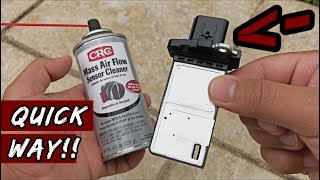
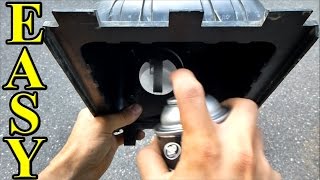
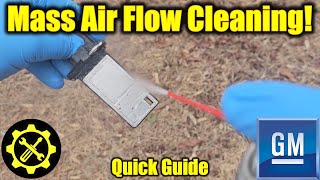
Typical fix: Clean the sensor using only dedicated MAF sensor cleaner spray. 🎬 See this in-depth guide on how to clean your MAF sensor Do not touch the sensor wires. If cleaning does not resolve the issue, or if fuel trims remain high, the sensor may need to be replaced. Common replacement part numbers include ACDelco 213-4222.
Est. part cost: $10-$20 for cleaner, $70-$150 for a new sensor - Clogged PCV Orifice / Failed Valve Cover 🟡 Medium Probability → Shop PCV Valve The 3.6L LFX engine has a fixed PCV orifice in the Bank 2 (front) valve cover that is prone to clogging with sludge. This is a well-documented design flaw. This forces crankcase pressure and oil vapor into the intake, fouling the MAF sensor and causing lean codes.
How to confirm: The primary symptom is finding a film of oil inside the air intake tube and on the MAF sensor. High oil consumption may also be noticed. A smoke test may not reveal this issue directly.
Typical fix: The clogged orifice is not separately serviceable. The entire valve cover must be replaced with an updated part. The ACDelco part number for the revised Bank 2 cover is 12673343. After replacement, the intake tube and MAF sensor must be thoroughly cleaned.
Est. part cost: $70-$150 - Low Fuel Pressure ⚪ Low Probability
How to confirm: Connect a fuel pressure gauge to the fuel rail's service port. Check that the pressure is within the manufacturer's specified range at idle and under load. A weak fuel pump or clogged fuel filter can cause low pressure.
Typical fix: Replace the failing component, which could be the in-tank fuel pump or the fuel filter. This is less common than vacuum leaks or sensor issues.
Est. part cost: $20-$50 (filter), $200-$400 (pump)
Rare But Worth Checking
- Incorrect Fuel Rail / Injectors After Cylinder Head Replacement: According to GM Technical Service Bulletin #PIP5187, if this code appears after a cylinder head has been replaced with a unit that included pre-installed fuel injectors, the fix may be to reinstall the vehicle's original fuel rail. This indicates a potential mismatch in fuel delivery components.
- Exhaust Leak (before O2 sensor): A crack or leak in the exhaust manifold or exhaust pipe before the upstream Bank 2 oxygen sensor can allow outside air to be drawn into the exhaust stream. This will cause the O2 sensor to incorrectly report a lean condition to the ECM.
Diagnosis Steps
- Read Freeze Frame and Live Data: Connect a scan tool. Note the conditions (RPM, load, temp) when the code was set. Check the Long Term Fuel Trim (LTFT) for Bank 1 and Bank 2. A high positive value on Bank 2 (e.g., > +15%) confirms the lean condition.
- Check for other stored trouble codes. If P0171 is also present, focus on components that affect both banks, like the MAF sensor or the main intake air duct.
- Visually inspect the engine bay for any obvious vacuum leaks, such as disconnected hoses or cracks in the air intake tube between the MAF sensor and the throttle body.
- Remove and inspect the Mass Airflow (MAF) sensor. If it appears dirty or oily, clean it with dedicated MAF sensor cleaner and let it dry completely. Clear codes and test drive.
- If the MAF was oily, the root cause is likely a clogged PCV orifice inside the Bank 2 valve cover. This requires replacing the valve cover itself.
- If the code returns and the MAF was clean, perform a smoke test to check for vacuum leaks. Pay close attention to the intake manifold gaskets, as they are a very common failure point.
- If no vacuum leaks are found, check fuel pressure using a fuel pressure gauge to rule out a weak fuel pump or clogged filter.
- Inspect the exhaust manifold and downpipe for any cracks or leaks before the upstream O2 sensor.
- As a final step, use a scan tool to graph the Bank 2 upstream oxygen sensor's voltage to ensure it is switching correctly and not stuck in a lean reading.
Parts You'll Likely Need
- Intake Manifold Gasket Set
(OEM #12631016 (ACDelco))— This is a highly probable cause of a vacuum leak on the 3.0L and 3.6L V6 engines, leading directly to the P0174 code.
Trusted brands: Fel-Pro (MS 97204), ACDelco, Dorman
OEM price range: $60-$120
Aftermarket price range: $40-$80 - Mass Airflow (MAF) Sensor Cleaner — Cleaning the MAF sensor is a critical and inexpensive first diagnostic step. 🎬 Watch: A quick walkthrough for cleaning the MAF sensor Often, a contaminated sensor is the sole cause of the problem.
Trusted brands: CRC, Liqui Moly
Aftermarket price range: $10-$20 - Mass Airflow (MAF) Sensor
(OEM #213-4222 (ACDelco/GM Genuine))— If cleaning does not fix the issue, or if the sensor is damaged, it will need to be replaced. A faulty MAF sensor provides incorrect data to the ECM, causing lean conditions.
Trusted brands: ACDelco, Hitachi (MAF0120), Bosch
OEM price range: $120-$200
Aftermarket price range: $70-$150
Related Codes That Often Appear With This One
- P0171 — This is the same 'System Too Lean' code but for Bank 1. When both P0171 and P0174 appear togeth 🎬 Watch: Diagnosing P0171 and P0174 codes on a 3.6L engineer, it strongly points to a problem affecting the entire engine, like the MAF sensor, a major vacuum leak before the intake splits, or a fuel delivery issue.
- P0300 — This code means 'Random/Multiple Cylinder Misfire'. A severe lean condition can cause the air-fuel mixture to fail to ignite properly, leading to misfires.
- P0101 — This code indicates a 'Mass Air Flow (MAF) Circuit Range/Performance' problem. It frequently appears with P0171/P0174 when the MAF sensor is heavily contaminated with oil from the PCV system or is failing, directly pointing to the sensor as a primary suspect.
- P0496 — This code for 'EVAP Flow During a Non-Purge Condition' often accompanies P0174 if the EVAP purge solenoid is stuck open. A stuck-open purge valve creates a constant vacuum leak, introducing unmetered air into the intake manifold and causing a lean condition.
Technical Service Bulletins (TSBs) & Recalls
- PIE0413A: A bulletin where GM requested field information on vehicles experiencing P0171 and/or P0174, indicating it was a known issue being tracked by the manufacturer.
- PIP5187: A bulletin noting that P0174 can appear after cylinder head replacement if the new head came with injectors. It advises reinstalling the original fuel rail to resolve a potential component mismatch.
Platform-Specific Known Issues
- A known issue on the GM 3.6L V6 is a clogged PCV orifice in the Bank 2 (front) valve cover. This can increase crankcase pressure and push oil vapor into the intake, contaminating the MAF sensor and causing lean codes like P0174. The orifice is not serviceable, requiring replacement of the entire valve cover.
- The plastic and rubber intake manifold gaskets are a common failure item that deteriorates with age and heat, causing vacuum leaks that often appear when the weather turns cold.
Mechanic-Grade Diagnostic Values
- Long Term Fuel Trim (LTFT) — expected: Between -10% and +10% at idle and steady cruise.. Failure: Sustained positive values over +15% to +25% trigger the P0174 code.
- Mass Airflow (MAF) Sensor Reading at Idle — expected: Approximately 3.0 to 3.6 grams/second (g/s) for the 3.0L/3.6L V6 engine when fully warm. A general healthy range is 2-7 g/s.. Failure: A reading significantly lower than the engine displacement (e.g., <3.0 g/s) while fuel trims are high suggests unmetered air is entering the engine after the MAF sensor.
- Low-Side Fuel Pressure (Key On, Engine Off) — expected: 55-62 PSI.. Failure: Pressure significantly below this range indicates a potential issue with the in-tank fuel pump or fuel filter.
- High-Side Fuel Pressure (Direct Injection) — expected: Can exceed 2,000 PSI under load, controlled by the high-pressure fuel pump (HPFP).. Failure: Low high-side pressure, often accompanied by code P0087, points to a failing HPFP, which was subject to a GM Special Coverage Adjustment (#14329).
Scan Tool Commands That Help
- GDS2 / Tech2 / Professional Scan Tool: Idle Learn Reset — After cleaning or replacing the throttle body, this function must be performed to reset learned airflow values. Failure to do so can cause an unstable idle and may contribute to incorrect fuel trim calculations.
- GDS2 / Tech2 / Professional Scan Tool: EVAP Purge/Seal — This bidirectional command allows a technician to manually close the EVAP purge solenoid. This is used with a smoke machine to isolate the EVAP system and test for leaks, or to confirm if the valve is stuck open and causing a vacuum leak leading to P0174.
- GDS2 / Tech2 / Professional Scan Tool: Fuel Trim Reset — After a repair is made (like fixing a vacuum leak), resetting the fuel trims forces the ECM to relearn the fuel strategy immediately. This helps confirm the fix, as the new Long Term Fuel Trim values should quickly settle within the normal +/-10% range.
Wiring & Ground Locations
- Bank 2 — The bank of cylinders closer to the radiator on the transverse-mounted 3.0L/3.6L V6 engine.. P0174 is specific to Bank 2, meaning diagnosis should focus on components related to this bank, such as its specific oxygen sensor, fuel injectors, and intake manifold runners.
- MAF Sensor Connector — On the air intake tube, immediately following the air filter housing.. GM issued TSB 24-NA-158 regarding water intrusion into the MAF sensor connector, which can cause erratic readings and trigger various codes, including lean conditions. Inspecting this connector for corrosion or moisture is a key diagnostic step.
Real Owner Repair Stories
- YouTube channel 'South Main Auto Repair LLC' (2016 Chevy Colorado 3.6L V6 (Same engine family)) — Check Engine Light with codes P0171 and P0174. High positive fuel trims (up to +39%).
❌ Tried (didn't work) Initial inspection showed fuel trims were very high. Revving the engine did not correct them significantly.
✅ What actually fixed it The technician found a large PCV hose on the back of the intake manifold was completely disconnected. Reconnecting the hose immediately brought fuel trims down, and after a reset, they returned to normal, resolving the lean codes. - Jaguar Forums (applicable principle) (Vehicle with MAF sensor and plastic intake duct) — P0171 and P0174 codes present.
❌ Tried (didn't work) Initial diagnosis pointed towards a vacuum leak.
✅ What actually fixed it The owner discovered cracks in the bellows section of the plastic air intake duct, located between the MAF sensor and the throttle body. This allowed unmetered air to enter the system. Replacing the cracked duct resolved the lean codes.
"I Checked Everything" — The Actual Cause
- A common scenario where a smoke test may not reveal the root cause is when the issue is a contaminated MAF sensor due to a clogged PCV orifice. The system has no vacuum leak, but the MAF sensor is under-reporting airflow, causing the ECM to command an insufficient amount of fuel. The primary clue is an oily film inside the intake tube and on the MAF sensor itself.
Model Year Variations Within This Range
- 2012-2017: Starting in 2012, the LaCrosse V6 was updated from the 3.6L LLT engine to the LFX engine. The LFX featured improvements like integrated exhaust manifolds in the cylinder heads and was lighter. While both are part of the High Feature V6 family and share many common issues like the PCV orifice and intake gaskets, some specific parts may differ.
Helpful Videos
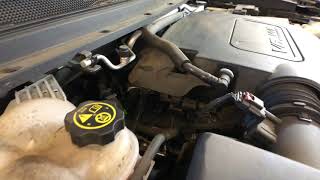
![[HOW TO] Clean Mass Air Flow Sensor (MAF) on 2015+ Colorado/Canyon](https://img.youtube.com/vi/uRQ3NkssDOc/mqdefault.jpg)

The information in this article is provided for general reference and educational purposes only. Vehicle specifications, procedures, and part compatibility can vary by production date, trim level, and region. Always consult your vehicle's factory service manual and verify part numbers before purchasing or performing repairs. Safety-critical components such as airbags, seat belts, and braking systems should be installed by a qualified professional.
- Buick LACROSSE:
- 🧭 Diagnostic Flowchart
- 🎬 Helpful Videos
- What's Unique About the 2010-2017 Buick LACROSSE
- Symptoms You May Notice
- Most Likely Causes
- Rare But Worth Checking
- Diagnosis Steps
- Parts You'll Likely Need
- Related Codes That Often Appear With This One
- Technical Service Bulletins (TSBs) & Recalls
- Platform-Specific Known Issues
- Mechanic-Grade Diagnostic Values
- Scan Tool Commands That Help
- Wiring & Ground Locations
- Real Owner Repair Stories
- "I Checked Everything" — The Actual Cause
- Model Year Variations Within This Range
- 🎟️ Get 5% Off