

P0174 on 2007-2014 Cadillac Escalade ESV: Lean Code Causes and Fixes
The P0174 code on a 2007-2014 Escalade ESV is most often caused by a vacuum leak. Check the PCV tube on the left side of the engine for a crack or hole, as noted in a GM TSB. If not the PCV tube, suspect the intake manifold gaskets, which are a very common failure point on this platform. A dirty MAF sensor is another frequent culprit.
- P0174 on this Escalade almost always points to a vacuum leak.
- Your first check should be the PCV tube on the rear driver's side of the intake manifold, as it's a known failure point mentioned in a TSB.
- The second most likely cause is a failed intake manifold gasket; a smoke test is the best way to confirm this.
- Do not replace the oxygen sensor unless you have definitively ruled out all vacuum leaks and fuel delivery issues.
- If you also have code P0171, it makes a vacuum leak or MAF sensor issue even more likely.
What's Unique About the 2007-2014 Cadillac ESCALADE ESV
On the 6.2L V8 engine (L92, L9H, L94 variants) in this generation of Escalade, vacuum leaks are the leading cause of P0174. A specific GM Technical Service Bulletin points to the PCV tube rubbing against the engine cover and creating a hole. Additionally, the original plastic-frame intake manifold gaskets on these engines are a well-documented failure point, becoming hard and brittle over time and leading to significant vacuum leaks that cause lean codes like P0171 and P0174.
Diagnostic Flowchart
Tap your situation to follow the diagnostic path that matches what you're seeing on this vehicle.
Symptoms You May Notice
- Check Engine Light is on
- Rough or shaky idle, which may improve as the engine warms up.
- Hesitation or stumbling during acceleration
- Hissing or whistling noise from the engine bay, especially around the intake manifold.
- Reduced engine power
- Poor fuel economy
- Engine RPM is slow to return to idle after throttling.
- Replacing the Bank 2 Oxygen Sensor first. A lean code is reported by the O2 sensor, but the sensor itself is usually just doing its job correctly by detecting the lean condition. The root cause is almost always unmetered air (vacuum leak) or a fuel delivery issue.
Most Likely Causes
- Vacuum Leak (Intake Manifold Gasket) 🔴 High Probability The original intake manifold gaskets use a plastic carrier that becomes brittle from heat cycles and age, leading to cracks and unmetered air entering the intake ports. This is a very common failure on the GM 6.2L engine family.
How to confirm: With the engine running, carefully spray brake cleaner or carb cleaner around the edge of the intake manifold where it meets the cylinder heads. A change in engine idle (stumble or RPM increase) indicates a leak. A definitive method is a smoke test, which will show smoke seeping from the failed gasket area. When both P0171 and P0174 are present, a vacuum leak that affects both banks, like the intake gaskets, is highly probable.
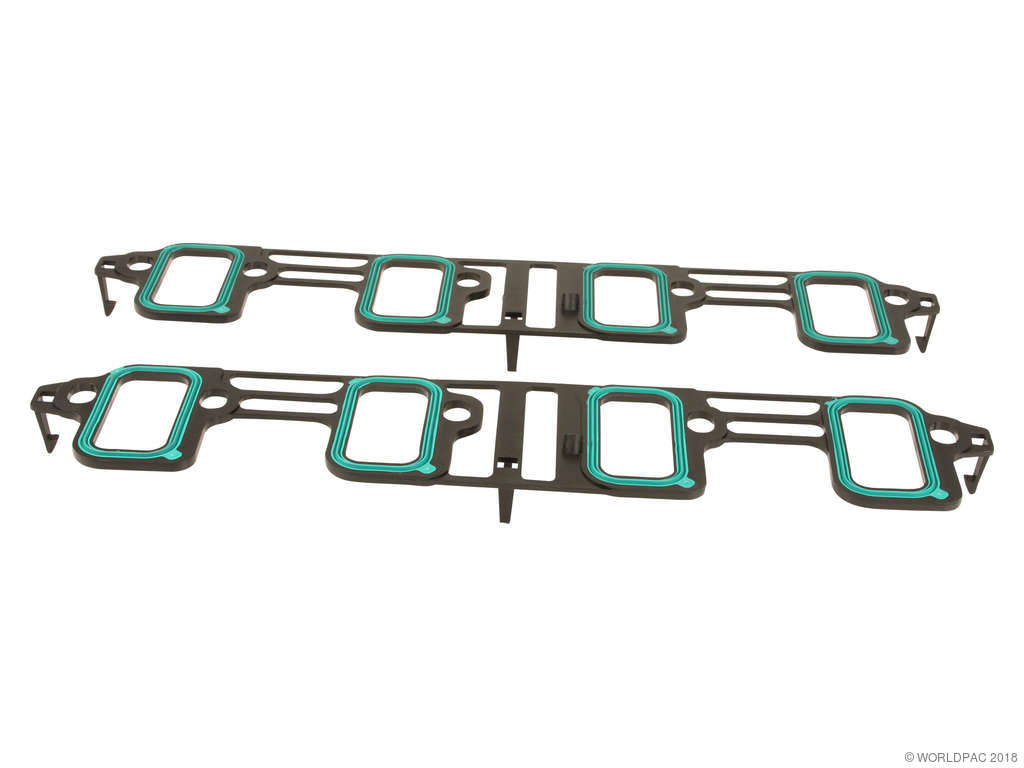
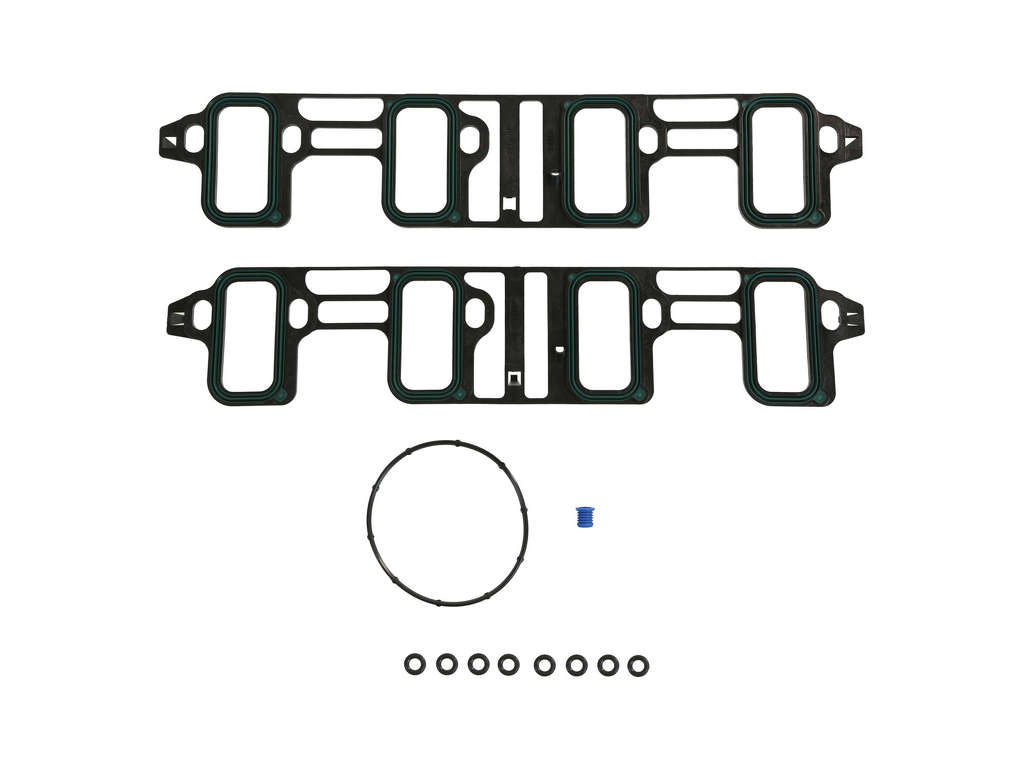
Typical fix: Replace the intake manifold gaskets. It is highly recommended to use an updated gasket set with a metal carrier, such as Fel-Pro MS96587, which is more durable than the OEM plastic design. While the intake manifold is removed, it is also common practice to replace the knock sensors and harness located in the engine valley.
Est. part cost: $30 - $90 - Vacuum Leak (PCV Tube) 🔴 High Probability GM TSB #PIP5341 specifically identifies the PCV tube rubbing against the engine cover or intake manifold, causing a hole or crack. This introduces unmetered air and triggers lean codes.
How to confirm: Visually inspect the PCV tube, particularly the section on the driver's side (Bank 1) that routes to the rear of the intake manifold. Look for abrasion, cracks, or a complete break. The part is often a molded plastic assembly, ACDelco #12597774.
Typical fix: Replace the damaged PCV tube. To prevent recurrence, some owners add a protective sleeve or reroute the tube slightly to avoid contact with the engine cover.
Est. part cost: $20 - $50 - Dirty or Faulty Mass Airflow (MAF) Sensor 🟡 Medium Probability → Shop Fuel Injection Air Flow Meter Oiled air filters or general debris can contaminate the MAF sensor's delicate elements, causing it to under-report the amount of air entering the engine. The ECM then commands too little fuel, creating a lean condition.
How to confirm: First, try cleaning the sensor. Remove it from the intake tube, and spray the internal wires and elements generously with a dedicated MAF sensor cleaner spray. Do not touch the wires. If cleaning does not resolve the issue (after clearing codes and driving), the sensor may have failed. A distorted air intake boot can also disrupt airflow over the sensor, causing similar issues.
Typical fix: Clean the MAF sensor. If the problem persists, replace the sensor.
Est. part cost: $10 (cleaner) - $150 (sensor) - Low Fuel Pressure ⚪ Low Probability
How to confirm: Connect a fuel pressure gauge to the Schrader valve on the fuel rail. With the key on and engine off, pressure should be 55-62 PSI. A user on a forum reported normal pressure should be 58-60 PSI at key-on, dropping to 43-45 PSI at idle. Low pressure can be caused by a clogged fuel filter, a failing fuel pump, or a faulty Fuel Pump Driver Module (FPDM) which regulates voltage to the pump.
Typical fix: Replace the fuel filter first. If pressure remains low, test the fuel pump and FPDM. The fuel pump is a more involved repair located inside the fuel tank.
Est. part cost: $20 (filter) - $400+ (pump/module)
Rare But Worth Checking
- Exhaust Leak: An exhaust leak between the cylinder head and the upstream O2 sensor can draw in outside air, tricking the sensor into thinking the engine is running lean. This is less common but can happen at the exhaust manifold gasket.
- Faulty Oxygen (O2) Sensor: → Shop Oxygen Sensor While an O2 sensor can fail, it's more likely to be correctly reporting a lean condition caused by something else. It should be considered a potential cause only after all vacuum leaks and fuel delivery issues have been thoroughly ruled out. Swapping the Bank 1 and Bank 2 upstream sensors can help diagnose if the code follows the sensor to the other bank (P0171).
- Leaking Brake Booster: The brake booster operates on engine vacuum. A leak in its diaphragm or the check valve can create a significant vacuum leak, leading to lean codes. If you notice a hard brake pedal or hear a hissing sound when applying the brakes, this could be the cause.
Diagnosis Steps
- Read the codes with an OBD-II scanner. Note the freeze frame data, paying close attention to the Long Term Fuel Trim (LTFT) values for both banks. High positive numbers (e.g., +15% to +25%) confirm the ECM is adding fuel to correct a lean condition. 🎬 See EricTheCarGuy explain how these lean codes work.
- Perform a thorough visual inspection of the engine bay. Look for obvious cracks in vacuum lines and check the PCV tube at the rear of the intake manifold as described in TSB #PIP5341.
- Inspect the air intake tube between the MAF sensor and the throttle body for cracks or loose clamps.
- With the engine idling, listen for hissing sounds. Carefully spray brake cleaner or unlit propane around the intake manifold gaskets. If the engine RPM changes or the Short Term Fuel Trim (STFT) values on your scanner drop significantly, you have found a leak.
- For a definitive diagnosis, perform a smoke test. This will force smoke into the intake system and make any leaks, even small ones, easy to see. 🎬 Watch: How to find and repair common air leaks.
- If no vacuum leaks are found, remove and clean the Mass Airflow (MAF) sensor using dedicated MAF sensor cleaner.
- Check fuel pressure at the fuel rail to ensure it is within the 55-62 PSI specification.
- If only P0174 is present, consider a single-bank issue like a clogged fuel injector on Bank 2 or an exhaust leak before the Bank 2 O2 sensor.
Parts You'll Likely Need
- Intake Manifold Gasket Set
(OEM #ACDelco 19301685)— This is a very common failure point on the 6.2L V8 engine, leading to vacuum leaks that cause P0171 and P0174 codes.
Trusted brands: ACDelco, Fel-Pro (MS96587), Victor Reinz
OEM price range: $60-$100
Aftermarket price range: $30-$60 - PCV Tube / Hose
(OEM #12597774)— A specific TSB identifies this part as prone to rubbing through and causing a vacuum leak. It is a molded assembly.
Trusted brands: ACDelco (GM Genuine)
OEM price range: $25-$50
Aftermarket price range: $15-$35 - Mass Airflow (MAF) Sensor
(OEM #ACDelco 23256991)— If dirty or faulty, it can cause an incorrect air-fuel mixture and trigger lean codes. Cleaning is often sufficient, but replacement is sometimes necessary.
Trusted brands: ACDelco, Delphi, Denso
OEM price range: $120-$200
Aftermarket price range: $50-$100
Related Codes That Often Appear With This One
- P0171 — P0171 is the 'System Too Lean' code for Bank 1 (driver's side). When both P0171 and P0174 are present, it strongly indicates a problem affecting the entire engine, such as a large vacuum leak at the intake manifold, a faulty MAF sensor, or low fuel pressure.
- P0300 — P0300 indicates a random/multiple cylinder misfire. A severe lean condition starves the cylinders of fuel, which can cause misfires. It's common to see P0300 appear alongside P0171 and P0174, especially when the intake manifold gasket has failed.
Technical Service Bulletins (TSBs) & Recalls
- PIP5341: Engine runs and idles rough. Technician will find P0171 and or P0174. Technician will need to inspect the positive crankcase ventilation tube for a vacuum leak on the left side of the engine. Replace positive crankcase ventilation tube if a leak is found.
Platform-Specific Known Issues
- PCV Tube Abrasion (TSB PIP5341): → Shop PCV Valve Hose A known issue, documented in GM Technical Service Bulletin #PIP5341, involves a vacuum leak from the positive crankcase ventilation (PCV) tube. The engine cover can rub a hole in the tube, causing a rough idle and setting P0171 and/or P0174. The fix is to replace the hose (Part No. 12597774) and ensure the new one has adequate clearance.
- Intake Manifold Gasket Failure: → Shop Engine Intake Manifold Owners on forums like Tahoe Yukon Forum and Reddit frequently report that replacing the intake manifold gaskets finally resolves persistent P0171 and P0174 codes after other attempted fixes failed. The original gaskets are known to degrade, causing a significant vacuum leak that affects both engine banks.
Mechanic-Grade Diagnostic Values
- Mass Airflow (MAF) Sensor Reading at Idle — expected: 6-8 g/s. Failure: Readings significantly lower than 6 g/s at a stable, warm idle may indicate a dirty or failing sensor. Readings that don't increase smoothly with RPM are also a sign of a problem.
- Long Term Fuel Trim (LTFT) — expected: Ideally between -10% and +10%.. Failure: Sustained LTFT values above +15% on Bank 2 confirm the ECM is compensating for a significant lean condition and will trigger P0174. When diagnosing, values that climb with RPM often point to a MAF issue, while values that are high at idle but improve with RPM often point to a vacuum leak.
- Fuel Pressure (at fuel rail) — expected: 58-60 PSI (key on, engine off), dropping to 43-45 PSI at idle.. Failure: Pressure significantly below these ranges, or dropping randomly at idle, indicates a problem with the fuel pump, filter, or Fuel Pump Driver Module (FPDM).
Scan Tool Commands That Help
- GM Tech2 / GDS2: Fuel Trim Reset — After replacing a component that affects the air/fuel mixture (like intake gaskets, MAF sensor, or fuel injectors), resetting the fuel trims forces the ECM to relearn the baseline values immediately, rather than slowly adapting over time. This can resolve rough running conditions post-repair.
- GM Tech2 / GDS2: Injector Balance Test — If a lean condition is isolated to one bank (P0174 only) and vacuum leaks are ruled out, this test can help identify a clogged or failing fuel injector on Bank 2. The tool individually disables injectors while monitoring RPM drop to see if one is underperforming.
- GM GDS2: Network Communication Status — While not a direct fix for P0174, if other electrical issues are present, this function can verify that all modules, including the ECM and Fuel Pump Driver Module (FPDM), are communicating correctly on the CAN bus. Communication dropouts can cause a wide range of faults.
Wiring & Ground Locations
- G103 — On the front of the right (passenger side) cylinder head.. This is a primary engine ground for the Engine Control Module (ECM). A loose or corroded connection here can cause erratic sensor readings and incorrect calculations by the ECM, potentially leading to false lean codes or improper fuel adjustments.
- G104 — On the front of the left (driver side) cylinder head.. This is another critical engine ground. Ensuring both G103 and G104 are clean and tight is a crucial step in diagnosing any electronic or sensor-related engine code, as a poor ground can create unpredictable behavior.
Real Owner Repair Stories
- Tahoe Yukon Forum user @goldata81 (2007 Yukon Denali (same platform/engine) with 113k miles) — P0171 and P0174 codes, especially under moderate-to-heavy acceleration. Long term fuel trims were maxing out at +24%.
❌ Tried (didn't work) Initial data logging did not point to a definitive cause; fuel pressure was normal at idle (60 psi).
✅ What actually fixed it Cleaning the Mass Airflow (MAF) sensor resolved the codes. After cleaning, the long term fuel trims dropped to a more reasonable +12-13% under acceleration and the codes did not return. - Tahoe Yukon Forum user @rdezs (2014 Cadillac Escalade with 175,000 miles) — Very erratic idle.
❌ Tried (didn't work) This was a preventative maintenance turned reactive repair.
✅ What actually fixed it A failing fuel pump was causing pressure to dip to 30 PSI randomly at idle. Replacing the fuel pump with a GM OEM unit, along with the carbon canister and vent solenoid, resolved the issue.
"I Checked Everything" — The Actual Cause
- A faulty EVAP (Vapor Canister) Purge Solenoid. This valve is normally closed when the engine is off (and during a smoke test). However, it can fail intermittently or stick open only when energized or under vacuum. When stuck open, it creates a vacuum leak by allowing unmetered fuel vapor and air into the intake manifold, causing lean codes (P0171/P0174). Because it's not leaking during a standard key-off smoke test, this cause is often missed. Symptoms can include a rough idle and difficulty starting after refueling.
Model Year Variations Within This Range
- 2007-2008: These model years used the 6.2L L92 engine, which did NOT have Active Fuel Management (AFM).
- 2009: The engine was updated to the L9H, which was largely identical to the L92 but added FlexFuel (E85) capability. This involved different fuel injectors and a larger fuel pump.
- 2010-2014: The engine was updated to the L94, which added Active Fuel Management (AFM) for cylinder deactivation, in addition to the FlexFuel capability. While not a direct cause of P0174, AFM system failures (like collapsed lifters) can cause misfires and rough running that may accompany other codes.
Helpful Videos

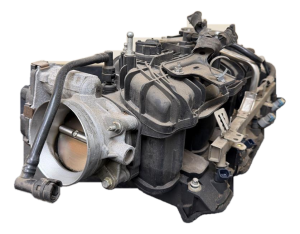
Used OEM Parts in Stock
New Aftermarket Parts Available




The information in this article is provided for general reference and educational purposes only. Vehicle specifications, procedures, and part compatibility can vary by production date, trim level, and region. Always consult your vehicle's factory service manual and verify part numbers before purchasing or performing repairs. Safety-critical components such as airbags, seat belts, and braking systems should be installed by a qualified professional.
- Cadillac ESCALADE ESV:
- 🧭 Diagnostic Flowchart
- 🎬 Helpful Videos
- 🛍️ Shop This Part
- What's Unique About the 2007-2014 Cadillac ESCALADE ESV
- Symptoms You May Notice
- Most Likely Causes
- Rare But Worth Checking
- Diagnosis Steps
- Parts You'll Likely Need
- Related Codes That Often Appear With This One
- Technical Service Bulletins (TSBs) & Recalls
- Platform-Specific Known Issues
- Mechanic-Grade Diagnostic Values
- Scan Tool Commands That Help
- Wiring & Ground Locations
- Real Owner Repair Stories
- "I Checked Everything" — The Actual Cause
- Model Year Variations Within This Range
- 🎟️ Get 5% Off