

P0174 on 2015-2017 Cadillac Escalade ESV: Lean Code Causes & Fixes
On a 2015-2017 Escalade ESV, code P0174 is most often caused by a vacuum leak from a cracked PCV tube or a dirty Mass Airflow (MAF) sensor. Start by inspecting the PCV hoses and cleaning the MAF sensor before considering more expensive parts.
- P0174 on your Escalade means the passenger side of the engine is running lean (too much air/not enough fuel).
- Do not immediately replace the O2 sensor. The most likely culprits are much cheaper and easier to fix: a vacuum leak or a dirty MAF sensor.
- Start your diagnosis by cleaning the MAF sensor with dedicated cleaner and thoroughly inspecting the PCV hoses for cracks.
- Two official GM service bulletins (PIP5446 and PIP5341) confirm that MAF sensor and PCV hose issues are known problems for this vehicle.
- If both P0171 (Bank 1) and P0174 (Bank 2) are present, focus your search on components that affect the entire engine, like the MAF sensor.
What's Unique About the 2015-2017 Cadillac ESCALADE ESV
While P0174 is a generic code, the GM 6.2L V8 platform in this Escalade generation has well-documented weak points that cause it. Manufacturer Technical Service Bulletins (TSBs) point directly to issues like cracked PCV tubes causing vacuum leaks (Bulletin #PIP5341) and manufacturing defects (casting flash) in the Mass Airflow sensor housing that disrupt air readings (Bulletin #PIP5446). These known issues make diagnosis more straightforward than on other vehicles.
Diagnostic Flowchart
Tap your situation to follow the diagnostic path that matches what you're seeing on this vehicle.
Symptoms You May Notice
- Check Engine Light is on
- Rough or unstable idle
- Hesitation or sputtering during acceleration, especially between 0-30% throttle (as noted in TSB #PIP5446)
- Reduced engine power
- Worse than normal fuel economy
- A hissing sound from the engine bay at idle, indicating a vacuum leak
- Replacing the Bank 2, Sensor 1 oxygen sensor immediately, without first checking for much more common issues like vacuum leaks or a dirty MAF sensor.
Most Likely Causes
- Vacuum Leak (especially PCV system) 🔴 High Probability TSB #PIP5341 specifically identifies a vacuum leak in the positive crankcase ventilation (PCV) tube as a common cause for this code on this platform. These plastic and rubber hoses can become brittle and crack over time. The engine cover can also rub against the driver's side hose, causing a hole.
How to confirm: Visually inspect all PCV hoses, especially the one on the left (driver's) side of the engine, for cracks, soft spots, or collapse. With the engine running, listen for a hissing sound. A professional smoke test is the most definitive way to find a leak.
Typical fix: Replace the cracked or leaking PCV tube assembly. Some owners recommend covering the new tube with a protective conduit where it might contact the engine cover to prevent repeat failure.
Est. part cost: $25-$75 - Dirty or Faulty Mass Airflow (MAF) Sensor 🔴 High Probability → Shop Fuel Injection Air Flow Meter TSB #PIP5446 notes that excess plastic flashing from the manufacturing process can exist near the MAF sensor, disrupting airflow. More commonly, the sensor's delicate wires get contaminated with dirt, oil, and sludge, causing it to under-report the amount of air entering the engine.
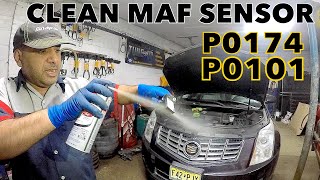
How to confirm: Remove the sensor (held by two T15 or T20 Torx screws) and inspect it and its housing. Carefully spray the sensor wires with a dedicated MAF sensor cleaner. Do not touch the wires. Let it air dry completely before reinstalling. 🎬 Watch: How to clean or replace your Cadillac MAF sensor Also inspect the flexible intake boot for cracks or being crumpled, which can disturb airflow.
Typical fix: Cleaning the MAF sensor often resolves the issue. However, if the sensor's protective coating has been worn away by debris or harsh cleaning, it may get dirty again quickly and require replacement. If cleaning doesn't work, replace the sensor.
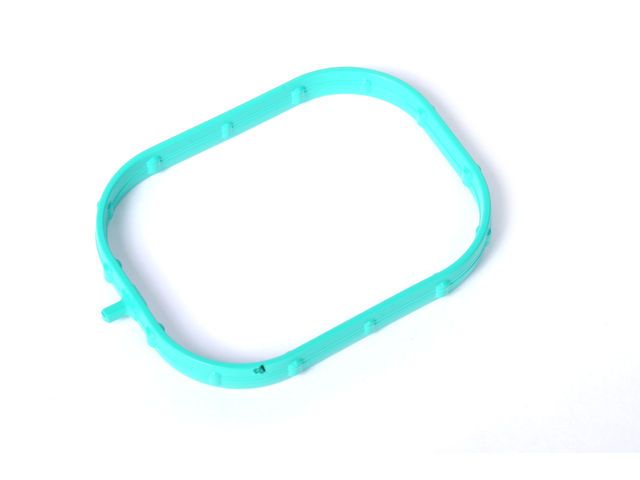
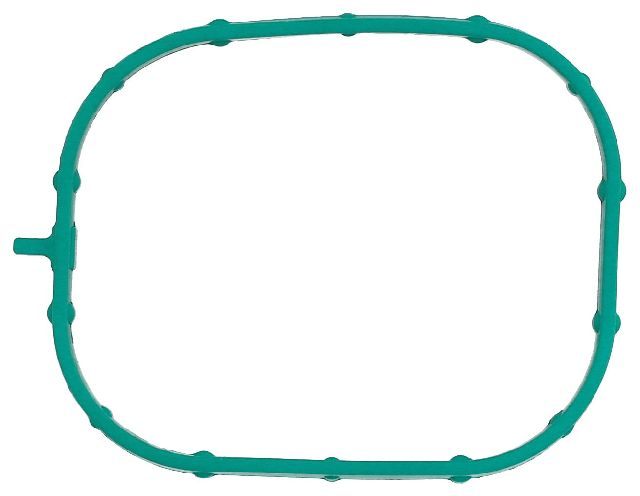
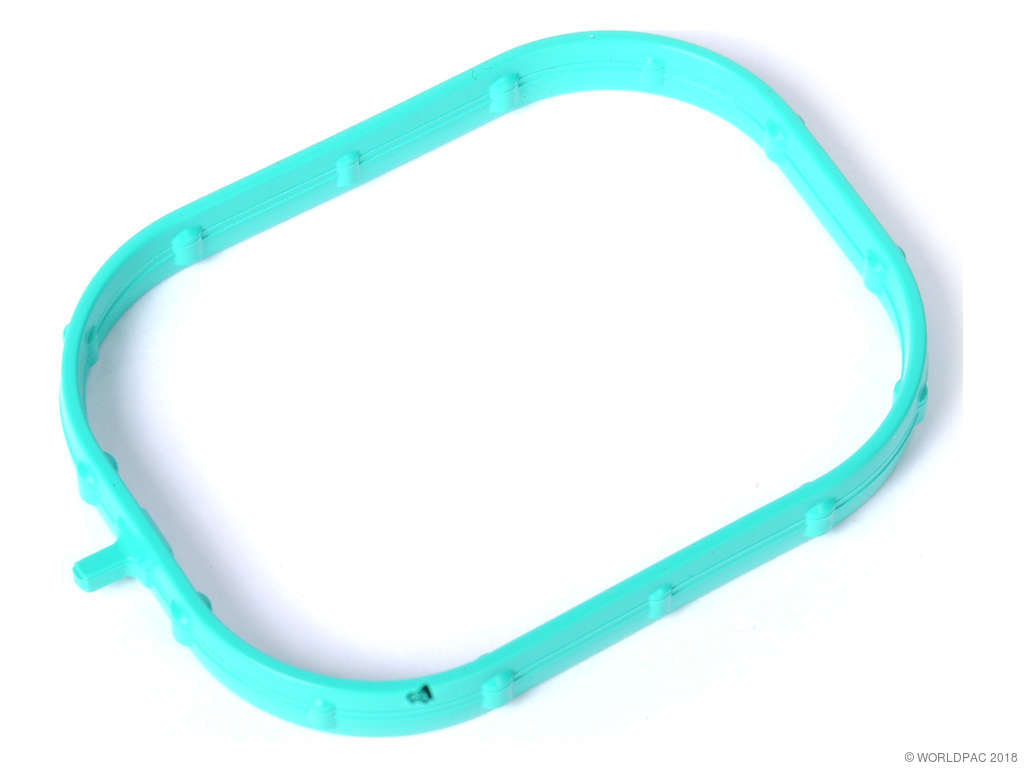
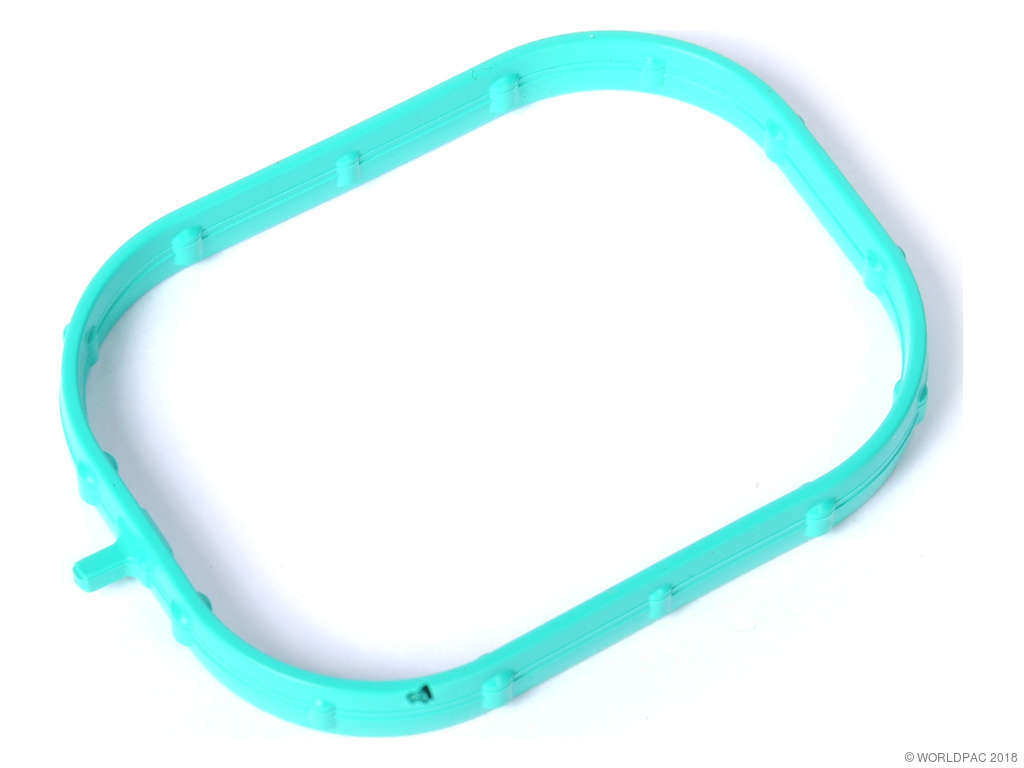
Est. part cost: $10 for cleaner, $80-$150 for a new sensor - Leaking Intake Manifold Gaskets 🟡 Medium Probability → Shop Engine Intake Manifold The gaskets that seal the intake manifold to the cylinder heads are made of plastic and rubber and can degrade with age and heat cycles, allowing unmetered air to enter the engine. This issue is sometimes more prominent in cold weather as the materials contract.
How to confirm: With the engine idling, carefully spray short bursts of brake cleaner or propane around the edges of the intake manifold. If the engine RPM changes, a leak is present. A smoke test is a safer and more accurate method.
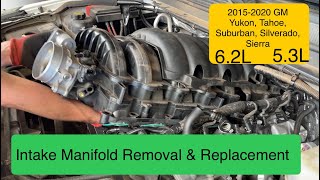
Typical fix: Replace the intake manifold gaskets. This is a more labor-intensive job but is a common fix for persistent P0171/P0174 codes. 🎬 See this step-by-step intake manifold replacement for GM 6.2L engines
Est. part cost: $60-$120 - Low Fuel Pressure ⚪ Low Probability
How to confirm: Connect a fuel pressure gauge to the fuel rail's service port. For the direct-injected L86 engine, check both low-side and high-side pressures. The low-side should be 50-75 PSI, and the high-side should be 300-750 PSI at idle. A weak in-tank fuel pump is a possible cause. If the pressure bleeds off quickly after turning the engine off, it could indicate a bad check valve in the fuel pump, which also causes long crank times.
Typical fix: Replace the failing component, which could be the in-tank low-pressure fuel pump, the high-pressure fuel pump (HPFP), or a clogged fuel filter (the filter is often part of the in-tank pump assembly).
Est. part cost: $200-$500+
Rare But Worth Checking
- Exhaust Leak (before O2 Sensor): A crack in the Bank 2 exhaust manifold or a leaking gasket can allow oxygen to be drawn into the exhaust stream, fooling the O2 sensor into reporting a false lean condition.
- Failing Oxygen Sensor (Bank 2, Sensor 1): → Shop Oxygen Sensor The O2 sensor itself can fail, but it's more often correctly reporting a problem caused by something else. This should be one of the last parts to replace after all other possibilities have been ruled out.
- Stuck Open EVAP Purge Valve: → Shop Vapor Canister The EVAP purge solenoid can sometimes stick open, creating a constant vacuum leak as it pulls fuel vapors from the charcoal canister into the intake manifold at the wrong time. This can cause a lean code.
Diagnosis Steps
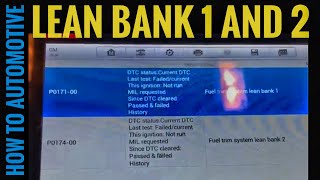
- Check for any other stored trouble codes. The presence of P0171 or P0101 significantly narrows the diagnosis.
- If a scan tool is available, observe the Long Term Fuel Trim (LTFT) values for Bank 1 and Bank 2 at idle. High positive values (e.g., >15%) confirm a lean condition. If the LTFT values decrease significantly when you raise the engine RPM to ~2500, a vacuum leak is the most likely cause. If the values stay high or get worse, suspect a MAF or fuel delivery issue. 🎬 Watch: A pro mechanic's guide to diagnosing lean codes
- Visually inspect the PCV tube system for obvious cracks, breaks, or soft spots as per TSB #PIP5341. Pay close attention to where the engine cover may rub the hose.
- Inspect the entire air intake duct between the air filter box and the throttle body for loose clamps or tears.
- Remove the MAF sensor. Inspect the housing for plastic flashing (TSB #PIP5446) and clean the sensor wires with dedicated MAF sensor cleaner. Allow it to dry completely.
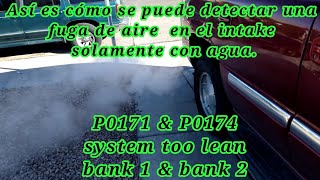
- Perform a vacuum leak test. A smoke machine is the most effective tool for finding leaks from intake gaskets or hidden hoses. Alternatively, carefully spray carb cleaner around the intake manifold gaskets and listen for a change in engine idle speed.
- Test fuel pressure to ensure the fuel pump is delivering adequate volume and pressure. Low-side should be 50-75 PSI and high-side should be 300-750 PSI at idle.
- Inspect the Bank 2 exhaust manifold for cracks or soot trails indicating a pre-O2 sensor exhaust leak.
Parts You'll Likely Need
- Mass Airflow (MAF) Sensor
(OEM #12671624)— A dirty or failing MAF sensor is a primary cause of lean codes on this engine, as noted in TSBs and common experience.
Trusted brands: ACDelco, Delphi
OEM price range: $120-$215
Aftermarket price range: $80-$150 - PCV Valve Hose (Left/Driver Side)
(OEM #12670791 (supersedes 12619985))— This specific hose is called out in TSB #PIP5341 as a frequent failure point that causes vacuum leaks and triggers P0174. It becomes brittle from heat and can be rubbed through by the engine cover.
Trusted brands: ACDelco, Gates, SKP
OEM price range: $20-$40
Aftermarket price range: $15-$30 - Intake Manifold Gasket Set
(OEM #12673325)— These gaskets can fail over time, creating a significant vacuum leak that affects one or both banks. This is a very common fix if the PCV hose and MAF sensor check out.
Trusted brands: ACDelco, Fel-Pro
OEM price range: $70-$120
Aftermarket price range: $50-$90
Related Codes That Often Appear With This One
- P0171 — System Too Lean (Bank 1). If both P0171 and P0174 are present, the problem affects the entire engine, not just one bank. This points strongly toward a faulty MAF sensor, a large vacuum leak near the throttle body (like the PCV hose), or low fuel pressure.
- P0101 — Mass Air Flow (MAF) Sensor Circuit Range/Performance. This code directly implicates the MAF sensor, reinforcing the guidance in TSB #PIP5446 and making it a primary suspect.
Technical Service Bulletins (TSBs) & Recalls
- PIP5446: Notes that harsh shifts and a sputtering engine, along with code P0174, can be caused by casting flash near the Mass Air Flow sensor.
- PIP5341: Identifies a vacuum leak from the positive crankcase ventilation (PCV) tube on the engine's left side as a direct cause for code P0174.
Platform-Specific Known Issues
- A known issue documented in TSB #PIP5446 involves excess plastic 'casting flash' in the MAF sensor housing, which can cause incorrect airflow readings and trigger P0174.
- TSB #PIP5341 specifically points to a cracked or collapsed PCV tube on the left side of the engine as a direct cause of P0171 and P0174 codes.
Mechanic-Grade Diagnostic Values
- Low-Side Fuel Pressure — expected: 50-75 PSI (345-517 kPa). Failure: Pressure below 50 PSI indicates a weak in-tank fuel pump or clogged filter.
- High-Side Fuel Pressure (at idle) — expected: 300-750 PSI (2-5 MPa). Failure: Pressure below 300 PSI at idle can indicate a failing high-pressure fuel pump (HPFP).
- Mass Air Flow (MAF) Sensor Reading at Idle — expected: 6.0 to 8.0 grams/second (g/s) for a fully warm 6.2L engine.. Failure: Significantly lower readings suggest unmetered air (vacuum leak) or a dirty sensor; significantly higher readings are less common but may indicate a faulty sensor.
- Mass Air Flow (MAF) Sensor Reading at 2500 RPM — expected: 15 to 25 g/s. Failure: A non-linear or slow response when graphed from idle to 2500 RPM indicates a failing sensor.
- Upstream O2 Sensor (Bank 2, Sensor 1) Voltage — expected: Constantly fluctuating between 0.1V and 0.9V on a warm engine.. Failure: A slow, lazy, or fixed voltage indicates a faulty sensor.
Scan Tool Commands That Help
- GDS2/Tech2: Fuel Trim Reset — After a repair (like replacing a MAF sensor or fixing a vacuum leak), this command should be used to clear the old learned long-term fuel trim values, allowing the ECM to adapt to the fix more quickly.
- GDS2/Tech2: Fuel Injector Balance Test — If a fuel delivery issue is suspected on a specific bank, this test can help identify a clogged or failing injector by measuring the pressure drop for each injector individually.
- GDS2/Tech2: Cylinder Power Balance — To determine if the lean condition is causing a misfire on a specific cylinder within Bank 2. It helps differentiate a bank-wide issue from a single cylinder problem.
Wiring & Ground Locations
- G104 — On the rear of the left (driver's side) cylinder head.. This is a primary engine-to-chassis ground strap. A loose or corroded connection here can cause erratic sensor readings and intermittent issues for the entire engine management system, potentially leading to incorrect fuel trim adjustments.
- Bank 1 & 2 Grounds — There are grounds that go to the back of each cylinder head (Bank 1 and Bank 2).. The engine harness has three major grounds that must be properly connected. A poor ground on the Bank 2 side could specifically affect sensor readings for that bank, contributing to a P0174 code.
- Injector Harness Connectors — The main harness connectors for the injector banks are located near the back of the intake manifold.. On the L86 engine, the connectors for the Bank 1 and Bank 2 injector harnesses are identical and can be plugged in backwards. This would prevent the engine from starting but is a critical point of inspection during reassembly.
Real Owner Repair Stories
- Tahoe Yukon Forum User (2016 GMC Yukon Denali 6.2L) — P0171 and P0174 codes, high positive fuel trims (+25%)
❌ Tried (didn't work) Smoke test (showed no leaks), Cleaning the MAF sensor, Replacing the MAF sensor, Replacing the intake manifold gaskets
✅ What actually fixed it The high-pressure fuel pump flange on top of the gas tank was cracked, creating a vacuum leak that was not detectable via a traditional smoke test of the intake system. Replacing the fuel pump assembly, which included a new flange, resolved the lean codes.
"I Checked Everything" — The Actual Cause
- In one documented case on a nearly identical platform (2016 Yukon Denali 6.2L), the vehicle passed a smoke test, and the MAF sensor and intake gaskets were replaced without fixing the P0171/P0174 codes. The actual cause was a cracked high-pressure fuel pump flange on the gas tank, which created a vacuum leak in the fuel system that was not part of the intake smoke test circuit. The fix was a complete fuel pump assembly replacement.
OEM Part Supersession History
12619985→12670791— GM regularly updates service parts to integrate new materials or minor design improvements for better durability.
Model Year Variations Within This Range
- 2015: Early production 2015 models were equipped with a 6-speed (6L90E) automatic transmission, while mid-year 2015.5 and later models (2016, 2017) received the 8-speed (8L90E) automatic transmission. This does not directly affect the cause of P0174 but is a significant vehicle variation within the model year range.
Helpful Videos

We Have This Part in Stock


The information in this article is provided for general reference and educational purposes only. Vehicle specifications, procedures, and part compatibility can vary by production date, trim level, and region. Always consult your vehicle's factory service manual and verify part numbers before purchasing or performing repairs. Safety-critical components such as airbags, seat belts, and braking systems should be installed by a qualified professional.
- Cadillac ESCALADE ESV:
- 🧭 Diagnostic Flowchart
- 🎬 Helpful Videos
- 🛍️ Shop This Part
- What's Unique About the 2015-2017 Cadillac ESCALADE ESV
- Symptoms You May Notice
- Most Likely Causes
- Rare But Worth Checking
- Diagnosis Steps
- Parts You'll Likely Need
- Related Codes That Often Appear With This One
- Technical Service Bulletins (TSBs) & Recalls
- Platform-Specific Known Issues
- Mechanic-Grade Diagnostic Values
- Scan Tool Commands That Help
- Wiring & Ground Locations
- Real Owner Repair Stories
- "I Checked Everything" — The Actual Cause
- OEM Part Supersession History
- Model Year Variations Within This Range
- 🎟️ Get 5% Off