

P0174 on 2007-2013 Cadillac Escalade EXT: Causes for System Too Lean (Bank 2)
Code P0174 on a 2007-2013 Escalade EXT most often points to a cracked PCV tube causing a vacuum leak, a known issue highlighted in GM Technical Service Bulletin PIP5341. The plastic engine cover is known to rub a hole in this tube. This is an inexpensive and relatively easy DIY fix, often requiring part ACDelco 12673868.
- For a P0174 code on a 2007-2013 Escalade EXT, your first inspection should always be the PCV tube system on top of the engine.
- A vacuum leak is the most probable cause. Do not replace any sensors until you have ruled out leaks.
- Cleaning the MAF sensor is a cheap and easy diagnostic step that often resolves lean conditions.
- If both P0174 (Bank 2) and P0171 (Bank 1) are present, it strongly suggests a large vacuum leak affecting the entire engine.
What's Unique About the 2007-2013 Cadillac ESCALADE EXT
For this generation of Cadillac Escalade and other GM trucks with the 6.2L V8 (L92, L9H, L94 engines), the P0174 code (often accompanied by P0171) is strongly linked to specific failure points. A manufacturer Technical Service Bulletin (TSB PIP5341) points directly to a brittle or cracked Positive Crankcase Ventilation (PCV) tube as a primary culprit. A key detail from the TSB is that the plastic engine cover can rub against the PCV tube at the left rear of the intake manifold, causing a hole and creating the vacuum leak. While other causes are possible, this PCV issue is a well-documented starting point for diagnosis.
Diagnostic Flowchart
Tap your situation to follow the diagnostic path that matches what you're seeing on this vehicle.
Symptoms You May Notice
- Check Engine Light is on
- Rough or erratic idle, especially when cold
- Hesitation or surging during acceleration
- Reduced engine power
- Decreased fuel economy
- A whistling or sucking sound from the engine bay
- Engine misfires, which may trigger a P0300 code
- Replacing the Bank 2 oxygen sensor without first checking for vacuum leaks. The O2 sensor is often just the messenger, accurately reporting a lean condition caused by something else.
- Replacing the MAF sensor when the actual problem is a vacuum leak. A vacuum leak will cause high fuel trims at idle that decrease as RPMs rise, while a faulty MAF sensor may cause issues across the RPM range.
Most Likely Causes
- Cracked or Disconnected PCV Tube/Hose 🔴 High Probability → Shop PCV Valve Hose As cited in TSB #PIP5341, the PCV tube that runs over the intake manifold is a primary failure point. The plastic engine cover can rub a hole in the tube, or the tube and its elbow connectors become brittle from heat and age, leading to cracks and vacuum leaks. This is a very common failure on this GM engine platform.
How to confirm: Visually inspect the PCV hoses, especially at the left rear of the intake manifold where the engine cover can make contact. Wiggle the hose to see if it's cracked. A smoke test is the most definitive way to confirm a leak if it's not visually obvious.
Typical fix: Replace the faulty PCV tube. 🎬 Watch: How to find and repair this common air leak. The updated GM/ACDelco part is a common fix. Ensure the engine cover is properly seated to prevent future rubbing.
Est. part cost: $30-$70 - Dirty or Faulty Mass Airflow (MAF) Sensor 🟡 Medium Probability → Shop Fuel Injection Air Flow Meter The MAF sensor measures the air entering the engine. If it's dirty from oil (from the PCV system) or debris, it can under-report the amount of air, causing the ECM to command less fuel than necessary.
How to confirm: Remove the sensor and inspect it for debris, such as a brownish/gray sludge. Cleaning it with dedicated MAF sensor cleaner is a common and easy diagnostic step. A scan tool can monitor MAF readings to see if they are rational; a typical reading at idle is 6-8 g/s.
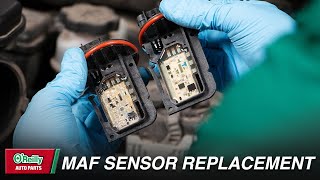
Typical fix: Clean the MAF sensor with a specialized cleaner. If the problem persists, replace the sensor. Always check for vacuum leaks first before replacing the MAF.
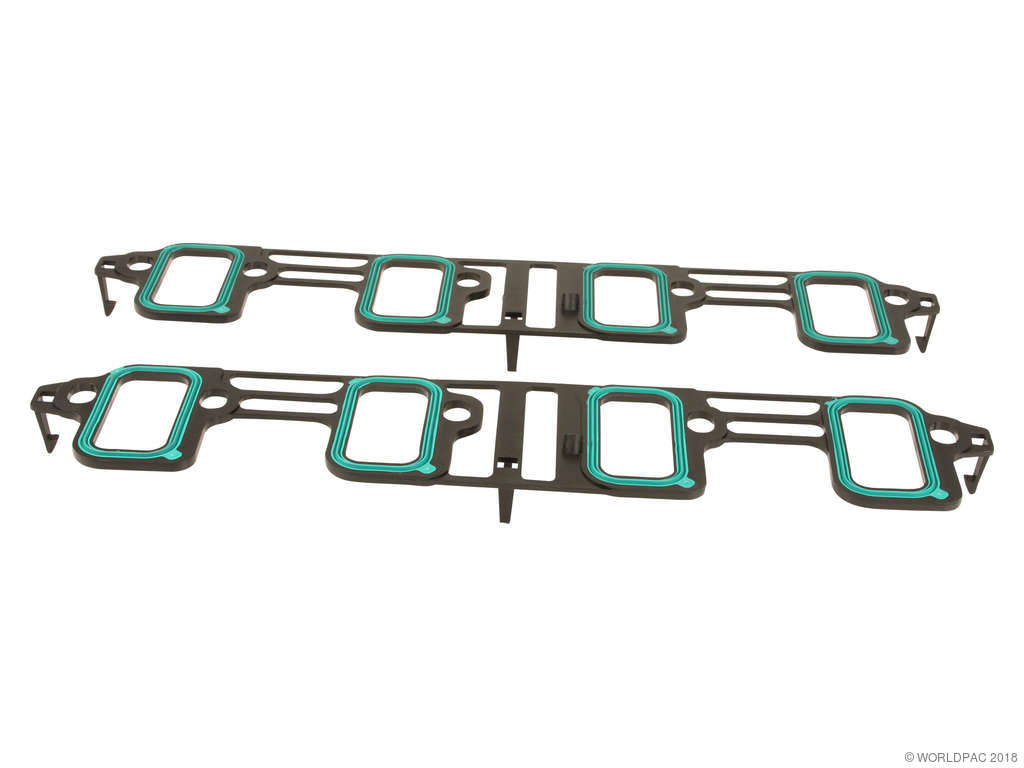
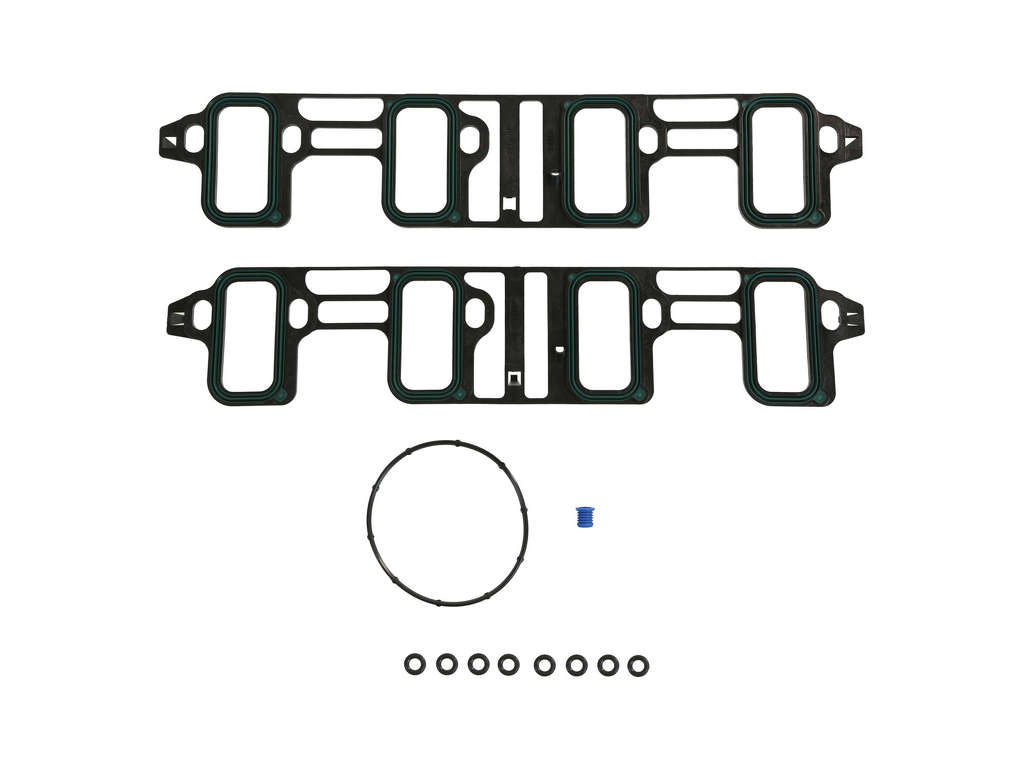
Est. part cost: $10 (cleaner) - $150 (new sensor) - Vacuum Leak (Intake Manifold Gasket) 🟡 Medium Probability The intake manifold gaskets on these V8 engines are known to shrink and harden over time, especially with temperature fluctuations. This often causes a vacuum leak that is more pronounced when the engine is cold, and may seem to disappear as the engine warms up and the gaskets expand.
How to confirm: With the engine running, spray brake cleaner or a propane torch (unlit) around the intake manifold sealing area where it meets the cylinder heads. If the engine's idle changes, a leak is present. A smoke test is a safer and more effective method. High fuel trims at idle that improve with higher RPM is a classic symptom.
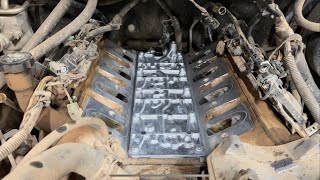
Typical fix: Replace the intake manifold gaskets. 🎬 Watch: A step-by-step walkthrough of the intake manifold removal process. This is a more involved repair but is a common fix for high-mileage vehicles. Updated gaskets are often a different color (e.g., teal green vs. original orange).
Est. part cost: $50-$100 - Low Fuel Pressure ⚪ Low Probability
How to confirm: Connect a fuel pressure gauge to the fuel rail's schrader valve. Check if the pressure is within the manufacturer's specified range (typically 55-62 PSI for these trucks). Watch for pressure that drops under load.
Typical fix: If pressure is low, the issue could be a weak fuel pump, a clogged in-tank fuel filter (sock), or a faulty fuel pressure regulator.
Est. part cost: $50 (filter) - $400+ (fuel pump)
Rare But Worth Checking
- Exhaust Leak Before the O2 Sensor: → Shop Oxygen Sensor A crack in the exhaust manifold or a leaking gasket before the upstream O2 sensor can allow outside air to be pulled into the exhaust stream. This tricks the sensor into thinking the engine is running lean, causing it to add unnecessary fuel and potentially creating a rich condition while reporting a lean code.
- Faulty Upstream Oxygen (O2) Sensor: → Shop Oxygen Sensor It is more common for the O2 sensor to correctly report a lean condition than to fail itself. However, a lazy or failed sensor can be the root cause. This should only be considered after all other possibilities (especially vacuum leaks) have been ruled out.
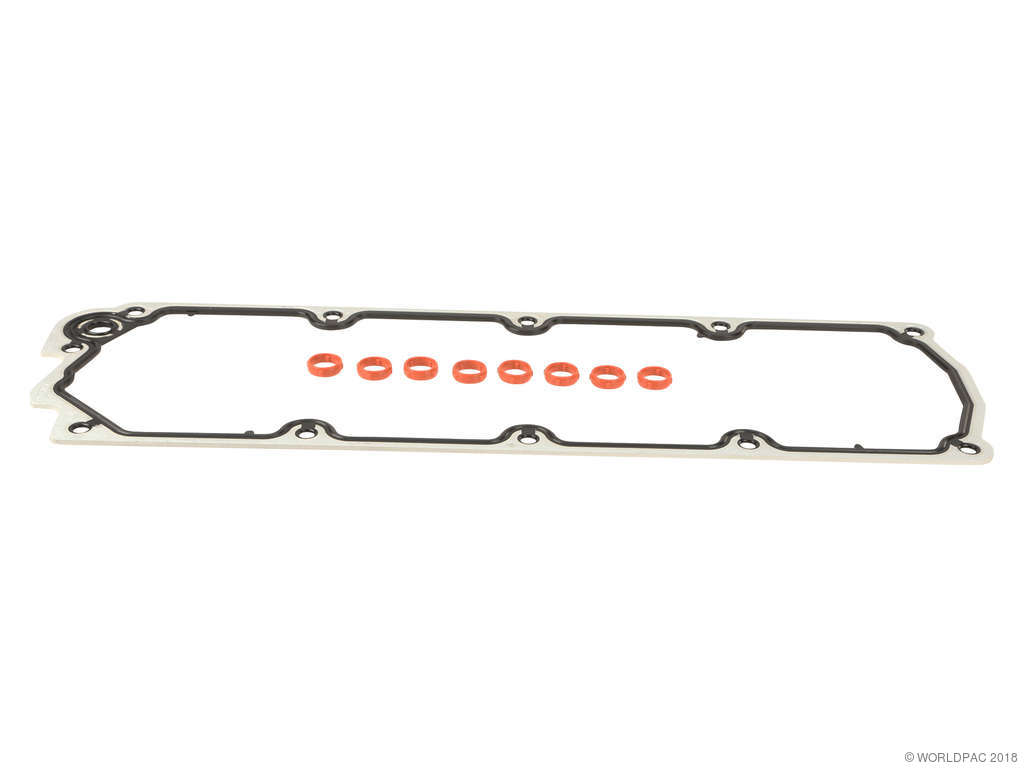
- Faulty Driver-Side Valve Cover (Integrated PCV): → Shop Engine Valve Cover The driver-side valve cover has an integrated, non-serviceable PCV orifice. If this orifice fails or clogs, it can create a permanent vacuum leak, leading to high oil consumption and lean codes P0171/P0174.
- Leaking Brake Booster or Check Valve: A leak in the brake booster diaphragm or a faulty check valve on the vacuum hose connected to it can create a significant unmetered air leak, leading to lean codes. Symptoms can include a hard brake pedal.
- Stuck Open EVAP Purge Solenoid: → Shop Vapor Canister If the canister purge solenoid sticks open, it can create a constant vacuum leak as it pulls fuel vapors from the charcoal canister at the wrong time, causing lean codes. This can sometimes be diagnosed by removing the valve and testing if it holds a vacuum when not energized.
Diagnosis Steps
- Scan for any other stored trouble codes. The presence of P0171 is a strong clue to a shared problem like a vacuum leak.
- Use a scan tool to observe short-term and long-term fuel trims for both banks at idle and at 2500 RPM. High positive numbers at idle (e.g., >15%) that decrease at higher RPM strongly suggest a vacuum leak.
- Carefully inspect the PCV tube system that crosses over the intake manifold, as detailed in TSB #PIP5341. Remove the engine cover and check for rub marks or cracks, especially at the rear of the manifold.
- Visually inspect all other vacuum lines, the air intake tube post-MAF sensor, and the brake booster hose for cracks or loose connections.
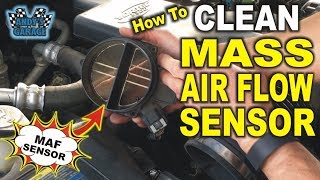
- If no obvious leaks are found, clean the Mass Airflow (MAF) sensor using a dedicated MAF sensor cleaner. 🎬 See this quick guide on how to clean your sensor.
- If the code persists, perform a smoke test to definitively identify any hard-to-find vacuum leaks from sources like the intake manifold gaskets or PCV system.
- Check fuel pressure to ensure the fuel pump and filter are providing adequate fuel (spec is 55-62 PSI).
- As a final step, use a scan tool to monitor the Bank 2 O2 sensor's voltage to see if it is responding correctly or if it is stuck in a lean reading.
Parts You'll Likely Need
- PCV Tube / Hose
(OEM #ACDelco 12673868)— This is the most likely cause of the P0174 code on this vehicle, as identified by TSB PIP5341. The plastic and rubber components become brittle and crack, or the engine cover rubs a hole in it.
Trusted brands: ACDelco (GM Genuine), Dorman
OEM price range: $40-$70
Aftermarket price range: $20-$50 - Mass Airflow (MAF) Sensor Cleaner — Cleaning a dirty MAF sensor is a common, inexpensive, and effective step in diagnosing and fixing a lean code. It should be done before considering sensor replacement.
Trusted brands: CRC, WD-40
OEM price range: $10-$15
Aftermarket price range: $10-$15 - Intake Manifold Gasket Set
(OEM #Fel-Pro MS 96440)— If a vacuum leak is traced to the intake manifold, these gaskets must be replaced to seal the leak. This is a common failure on high-mileage engines, especially noted after a cold snap.
Trusted brands: Fel-Pro, ACDelco
OEM price range: $60-$100
Aftermarket price range: $40-$80
Related Codes That Often Appear With This One
- P0171 — System Too Lean (Bank 1). A significant vacuum leak, such as from the PCV system or intake gaskets, will affect both sides of the engine, causing both lean codes to appear together. It's very common to see both codes.
- P0300 — Random/Multiple Cylinder Misfire Detected. A severe lean condition can prevent proper combustion, leading to misfires across multiple cylinders.
Technical Service Bulletins (TSBs) & Recalls
- PIP5341: Addresses a rough running engine with codes P0171 and/or P0174. Directs technicians to inspect the PCV tube for a rub-through from the engine cover at the left rear of the intake manifold and replace it.
Platform-Specific Known Issues
- TSB #PIP5341 specifically calls out a leaking positive crankcase ventilation (PCV) tube, often damaged by rubbing from the engine cover, as a cause for P0171 and/or P0174 on these engines.
- The integrated PCV baffle in the driver-side valve cover (GM Part No. 12570427) was updated to reduce oil consumption. A failure of the original design can also introduce a vacuum leak, contributing to lean codes.
Mechanic-Grade Diagnostic Values
- Fuel Pressure (Key On, Engine Off) — expected: 55-62 PSI. Failure: Pressure below 55 PSI indicates a potential weak fuel pump or clogged filter.
- Mass Airflow (MAF) Sensor Reading at Idle — expected: 6-8 g/s (grams per second). Failure: Significantly lower readings can indicate a vacuum leak downstream of the sensor; significantly higher readings could indicate a sensor fault.
- Long Term Fuel Trim (LTFT) at Idle — expected: Close to 0% (+/- 5%). Failure: Sustained positive values above +15% to +25% indicate the ECM is adding fuel to compensate for a lean condition, triggering the code.
Scan Tool Commands That Help
- Tech2 / GDS2 or equivalent professional scan tool: Fuel Trim Reset — After performing a repair for a lean condition (like replacing a PCV hose or intake gaskets), resetting the fuel trims will clear the learned long-term values. This allows the ECM to start fresh and provides immediate feedback on whether the repair was successful, as the short-term trims should quickly stabilize near zero.
- Tech2 / GDS2 or equivalent professional scan tool: EVAP Purge/Seal — To test the EVAP purge solenoid. A technician can command the valve to open and close to check its functionality, which helps determine if it's stuck open and causing a vacuum leak.
Wiring & Ground Locations
- G103 — On the front of the right (passenger side) cylinder head.. Provides a ground path for multiple components, including the Body Control Module (BCM) and Engine Control Module (ECM). A poor ground here can cause erratic sensor readings and module behavior.
- G104 — On the front of the left (driver side) cylinder head.. Serves as another critical engine-related ground point. Ensuring this connection is clean and tight is essential for stable sensor operation.
- G102 — Lower left front of the engine block.. Grounds the eight ignition coils. While not a direct cause of a lean code, a bad ground here could lead to misfires (P0300) which can sometimes accompany lean conditions.
- MAF Sensor Connector — On the Mass Airflow sensor, located on the intake tube just after the air filter box.. The Pink wire should have 12V+ with the ignition on, and the Black/White wire is the ground. Incorrect voltage or a bad ground can cause the MAF to send faulty data to the ECM, leading to incorrect fuel calculations and lean codes.
Real Owner Repair Stories
- Tahoe Yukon Forum user 'goldata81' (2007 Yukon Denali 6.2L with 113k miles) — P0171 and P0174 codes, especially under moderate to heavy acceleration. Long term fuel trims were maxing out over 24%.
❌ Tried (didn't work) Initial data logging showed high fuel trims but the cause was unclear.
✅ What actually fixed it Cleaning the Mass Airflow (MAF) sensor. After cleaning, long-term fuel trims were cut in half and the codes did not return. The user noted the MAF reading at idle was 6-8 g/s both before and after cleaning, but readings at WOT improved. - YouTube video by 'Engranes Y Partes' (2007 Cadillac Escalade 6.2L) — P0171 and P0174 codes.
❌ Tried (didn't work) The video points out a previous attempt by someone else to fix a vacuum leak on a hose with electrical tape and a zip tie, which failed.
✅ What actually fixed it The video identifies a cracked and poorly repaired PCV/vacuum hose as the source of the air leak causing the lean codes. The implied fix is the proper replacement of this hose.
"I Checked Everything" — The Actual Cause
- In some cases, a smoke test may not reveal a leak if it only occurs under specific conditions (e.g., a hairline crack in a plastic hose that only opens when the engine torques under load). Another possibility is a failing fuel pump that delivers borderline pressure, which a smoke test would not identify. A user on a forum noted their issue was ultimately a weak fuel pump that caused lean codes, a problem that would not be found with a smoke test.
OEM Part Supersession History
12561820, 12559894→12570427— This is the driver-side valve cover with the integrated PCV orifice. The design was likely updated to address issues with the PCV system, such as oil consumption or clogging, which could lead to vacuum leaks.
Model Year Variations Within This Range
- 2007-2008: These model years primarily used the L92 engine, which has Variable Valve Timing (VVT) but does not have Flex Fuel capability or Active Fuel Management (AFM).
- 2009: The engine was updated to the L9H, which is nearly identical to the L92 but adds Flex Fuel (E85) capability. This involves slightly different fuel system components, like injectors.
- 2010-2013: The engine was updated to the L94, which kept VVT and Flex Fuel capability but added Active Fuel Management (AFM), also known as cylinder deactivation. The AFM system adds complexity and potential failure points (lifters, oil pressure issues) not present in the earlier L92/L9H engines.
Helpful Videos

Used OEM Parts in Stock
New Aftermarket Parts Available



The information in this article is provided for general reference and educational purposes only. Vehicle specifications, procedures, and part compatibility can vary by production date, trim level, and region. Always consult your vehicle's factory service manual and verify part numbers before purchasing or performing repairs. Safety-critical components such as airbags, seat belts, and braking systems should be installed by a qualified professional.
- Cadillac ESCALADE EXT:
- 🧭 Diagnostic Flowchart
- 🎬 Helpful Videos
- 🛍️ Shop This Part
- What's Unique About the 2007-2013 Cadillac ESCALADE EXT
- Symptoms You May Notice
- Most Likely Causes
- Rare But Worth Checking
- Diagnosis Steps
- Parts You'll Likely Need
- Related Codes That Often Appear With This One
- Technical Service Bulletins (TSBs) & Recalls
- Platform-Specific Known Issues
- Mechanic-Grade Diagnostic Values
- Scan Tool Commands That Help
- Wiring & Ground Locations
- Real Owner Repair Stories
- "I Checked Everything" — The Actual Cause
- OEM Part Supersession History
- Model Year Variations Within This Range
- 🎟️ Get 5% Off