

P0174 on 2015-2019 Cadillac XTS 3.6L: Causes and Fixes for Lean Bank 2
On a 2015-2019 Cadillac XTS with the 3.6L V6, code P0174 is most often caused by a vacuum leak. The most common sources are a cracked PCV hose/tube or deteriorated intake manifold gaskets. A stuck-open EVAP purge valve is another high-probability cause. Cleaning the Mass Airflow (MAF) sensor is also a key early diagnostic step.
- P0174 on the XTS 3.6L almost always points to unmetered air entering the engine after the MAF sensor.
- Start your diagnosis by checking for the most common causes: vacuum leaks from the intake manifold gaskets and PCV system.
- Cleaning the MAF sensor is a cheap, easy, and effective diagnostic step that should be done early in the process.
- Do not replace the oxygen sensor unless you have definitively ruled out all other potential causes, as it is rarely the root of the problem.
- A smoke test is the most efficient and reliable method for locating hard-to-find vacuum leaks.
What's Unique About the 2015-2019 Cadillac XTS
The 3.6L LFX V6 engine used in the Cadillac XTS and its platform mates is known for specific vulnerabilities that lead to lean codes like P0174. Intake manifold gaskets on this engine are a common failure point, becoming brittle from heat cycles and causing vacuum leaks. Additionally, the PCV (Positive Crankcase Ventilation) system, particularly on the LFX engine, can have issues with clogged orifices or cracked hoses, which introduces unmetered air. A stuck-open EVAP purge valve is also a very frequent failure on this engine family, creating a vacuum leak that directly causes lean codes.
Symptoms You May Notice
- Check Engine Light is on
- Rough or unstable idle
- Hesitation or lack of power during acceleration
- Reduced fuel economy
- Engine misfires (may be accompanied by a P0300 code)
- A 'whooshing' or whistling sound at idle, indicating a vacuum leak
- Replacing the Bank 2 upstream oxygen (O2) sensor is a common mistake. The O2 sensor is usually functioning correctly by reporting the lean condition; it is not the cause of it. The problem is almost always unmetered air or a fuel delivery issue.
Most Likely Causes
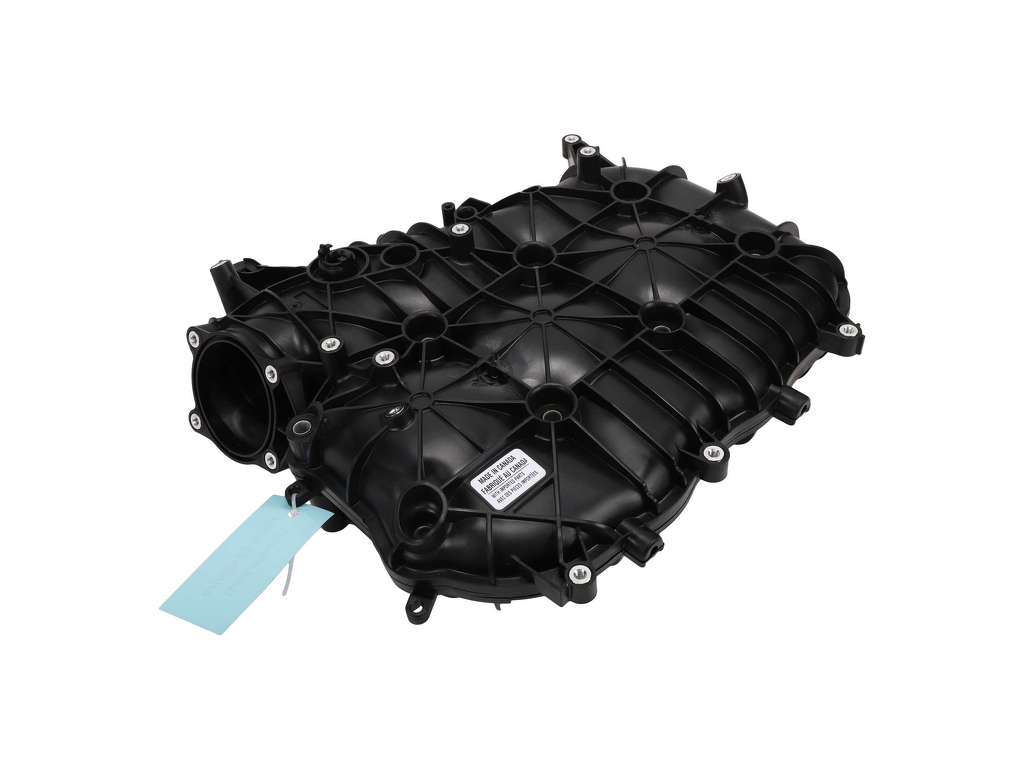
- Vacuum Leak (Intake Manifold Gaskets) 🔴 High Probability The intake manifold gaskets on the 3.6L V6 engine are known to degrade from heat and age, becoming brittle and failing to seal properly. This is a widely recognized issue on this engine platform, as noted in GM service information.
How to confirm: Perform a smoke test on the intake system. Smoke will visibly escape from the leaking gasket area. Alternatively, carefully spray brake cleaner or a flammable fluid around the intake manifold sealing surface with the engine running and listen for a change in engine RPM or watch fuel trims on a scan tool.
Typical fix: Replace the upper and lower intake manifold gaskets. This is a moderately difficult job as the intake manifold must be removed.
Est. part cost: $30-$150 - Faulty EVAP Purge Valve 🔴 High Probability → Shop Vapor Canister The vapor canister purge valve (solenoid) on GM 3.6L engines has a very high failure rate. It gets stuck open, creating a constant vacuum leak as it pulls unmetered air and fuel vapors into the intake manifold.
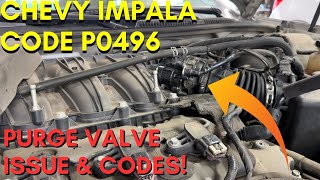
How to confirm: With the engine idling, disconnect the electrical connector and the vapor line from the purge valve. Place your finger over the port on the valve itself. If you feel suction, the valve is stuck open and must be replaced. This is often accompanied by code P0496.
Typical fix: Replace the EVAP purge valve. It is typically located on top of the engine and is an easy repair, often taking less than 30 minutes. 🎬 Watch: This quick video shows how to replace the purge valve.
Est. part cost: $25-$70 - Dirty or Faulty Mass Airflow (MAF) Sensor 🔴 High Probability → Shop Fuel Injection Air Flow Meter Oil vapor from the PCV system can contaminate the MAF sensor's delicate sensing wire, causing it to under-report the amount of air entering the engine. This leads the ECM to inject too little fuel, creating a lean condition.
How to confirm: Remove the MAF sensor from the air intake tube and inspect it for dirt or oil residue. A scan tool can also show abnormal MAF readings. If fuel trims are high at idle but normalize at higher RPMs (2500-3000 RPM), it's more likely a vacuum leak. If fuel trims remain high across the RPM range, the MAF is a stronger suspect.
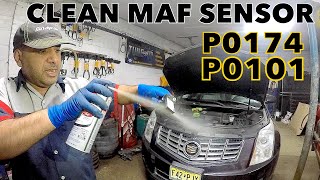
Typical fix: Clean the sensor using a dedicated MAF sensor cleaner spray. Do not touch the sensor wires and never use brake or carburetor cleaner. 🎬 See how to safely remove and clean your MAF sensor. If cleaning does not resolve the issue, the sensor must be replaced.
Est. part cost: $10-$15 (cleaner), $80-$250 (sensor) - Cracked or Disconnected PCV Hose/Tube 🟡 Medium Probability → Shop PCV Valve Hose The plastic and rubber hoses in the PCV system become brittle from constant exposure to engine heat and can crack or break, creating a significant vacuum leak. The plastic air intake resonator/duct between the MAF sensor and throttle body is also a common failure point.
How to confirm: Visually inspect all PCV hoses, especially the connections at the valve covers and the intake manifold, for cracks, splits, or loose fittings. A smoke test will also quickly reveal a leak in the PCV system.
Typical fix: Replace the cracked or broken PCV hose or tube. A common failure point is the tube that connects to the back of the intake manifold.
Est. part cost: $40-$150 - Low Fuel Pressure / Weak Fuel Pump ⚪ Low Probability → Shop Fuel Pump The high-pressure fuel pump (HPFP) on the LFX engine is a known failure item, though it more commonly sets other codes first.
How to confirm: Connect a fuel pressure gauge to the fuel rail's service port (if available). For the direct-injected LFX engine, a scan tool is required to monitor the high-pressure fuel system data. Compare actual pressure to the manufacturer's specification (around 500-700 PSI at idle for the high-pressure system).
Typical fix: If fuel pressure is low, the cause could be a clogged fuel filter, a failing in-tank fuel pump, or a faulty high-pressure fuel pump (HPFP).
Est. part cost: $200-$800
Rare But Worth Checking
- Clogged Fuel Injectors: → Shop Fuel Injector If the lean condition is isolated to one or two cylinders on Bank 2 (accompanied by misfire codes for those cylinders), it could point to clogged injectors rather than a system-wide issue.
- Exhaust Leak Before O2 Sensor: → Shop Oxygen Sensor A crack in the exhaust manifold or a leaking exhaust flange gasket before the upstream O2 sensor can allow outside oxygen to be drawn into the exhaust stream, making the sensor report a false lean condition. The catalytic converters on the LFX are known to crack near the flange.
Diagnosis Steps
- Check for any other stored trouble codes. Codes like P0171, P0300, or especially P0496 provide critical clues.
- Using a scan tool, observe the Long-Term Fuel Trim (LTFT) and Short-Term Fuel Trim (STFT) values for both banks at idle. High positive values (e.g., total trim >20%) on Bank 2 confirm the P0174 condition. If Bank 1 is also high, the problem is common to both banks.
- Test the EVAP Purge Valve: With the engine running, disconnect the electrical plug and vapor line from the valve. If you feel any suction from the valve's port, it is stuck open and must be replaced. This is a very common failure.
- Visually inspect the entire air intake system from the air filter to the throttle body for cracks, loose clamps, or disconnected hoses. Pay close attention to the plastic air resonator box and all PCV hoses.
- Remove and clean the Mass Airflow (MAF) sensor with dedicated MAF sensor cleaner. Reinstall and re-check fuel trims.
- If a vacuum leak is still suspected, perform a smoke test. This involves feeding pressurized smoke into the intake system to pinpoint the exact location of any hard-to-see leaks, especially around the intake manifold gaskets. 🎬 Watch a mechanic find the exact cause of these lean codes.
- While observing fuel trims on a scan tool, raise the engine RPM to 2,500 and hold it. If the high fuel trims decrease significantly and move toward normal, a vacuum leak is the most likely cause. If the fuel trims remain high, a MAF sensor or fuel delivery issue is more likely.
- If no vacuum leaks are found, test the fuel pressure to rule out a weak fuel pump or clogged filter.
- As a final step, if all other possibilities have been exhausted, consider a faulty Bank 2 upstream O2 sensor or clogged fuel injectors.
Parts You'll Likely Need
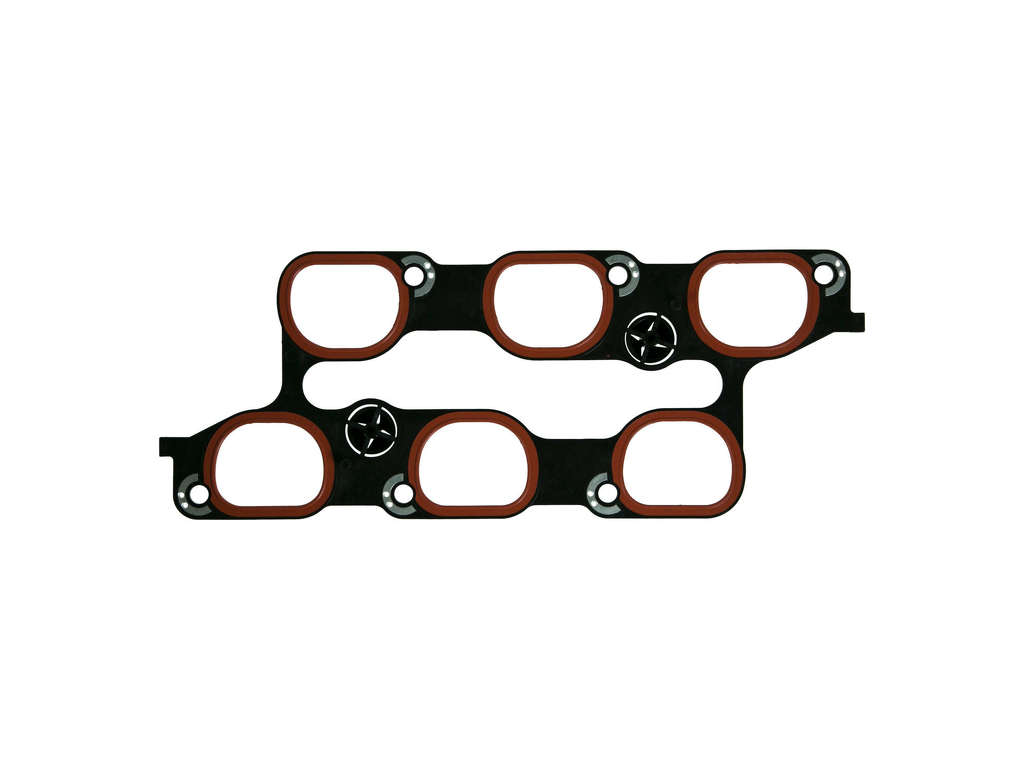
- Intake Manifold Gasket Set (Upper)
(OEM #12647263)— This is a very common failure point on the 3.6L LFX engine, causing vacuum leaks that directly trigger P0174 and P0171 codes.
Trusted brands: ACDelco, Fel-Pro, Mahle
OEM price range: $30-$50
Aftermarket price range: $20-$40
Related Codes That Often Appear With This One
- P0171 — This is the 'System Too Lean' code for Bank 1. When P0171 and P0174 appear together, it strongly indicates a vacuum leak or MAF sensor issue that affects the entire engine, not just one bank.
- P0300 — This code for 'Random/Multiple Cylinder Misfire' can be triggered when a severe lean condition prevents proper combustion in the cylinders.
- P0496 — This EVAP system code for 'Flow During a Non-Purge Condition' is very often caused by a stuck-open purge valve. A stuck purge valve creates a vacuum leak, which is a direct cause of P0171/P0174 codes. Seeing these codes together makes the purge valve the primary suspect.
Technical Service Bulletins (TSBs) & Recalls
- PIP4577K: While for an older 4.6L, it outlines a diagnostic procedure for P0171/P0174 caused by small air leaks in the PCV system, oil seals, and induction system, which is relevant.
- TSB 15317: Cited for the related Cadillac CTS, identifies a cracking PCV hose as a direct cause for P0171/P0174.
- PIP5446A: Cited for the related Cadillac CTS, notes that casting flash near the MAF sensor could disrupt airflow and cause P0174. A manufacturer service bulletin notes that technicians should inspect for cast flashing near the Mass Air Flow sensor which may cause a sputter when applying throttle between 0 and 30% or a rough idle.
- Bulletin #PIE0413A: This bulletin addresses vehicles that have the condition of the Malfunction Indicator Lamp illuminated with DTC P0171 and/or P0174.
- Bulletin #PIP5341: A manufacturer service bulletin notes that for vehicles where the engine runs and idles rough with P0171 or P0174, technicians should inspect the positive crankcase ventilation tube for a vacuum leak on the left side of the engine.
- Bulletin #PIE0413: This manufacturer communication requested information from the field regarding vehicles exhibiting a Malfunction Indicator Lamp with DTC P0171 and/or P0174.
Platform-Specific Known Issues
- GM has issued Technical Service Bulletins (TSBs) for similar models with the 3.6L engine regarding lean codes caused by cracked PCV hoses and casting flash (excess plastic) in the air filter housing near the MAF sensor, which can disrupt airflow.
- TSB 19-NA-256 provides information regarding engine replacement criteria for various issues on the 3.6L engine family, highlighting conditions like sludge and oil starvation that can arise from lack of maintenance.
- Special Coverage program N232395300 was issued for the EVAP purge valve on some 2019-2020 GM models, acknowledging the high failure rate that can cause P0171/P0174 codes.
Mechanic-Grade Diagnostic Values
- Mass Airflow (MAF) Sensor Reading at Idle — expected: 4.0 to 7.0 grams/second (g/s) on a fully warmed-up engine.. Failure: Readings significantly lower than 4.0 g/s can indicate a vacuum leak downstream of the sensor. Readings that do not rise linearly with RPM (e.g., to 15-25 g/s at 2500 RPM) suggest a faulty sensor.
- High-Pressure Fuel Pump (HPFP) Pressure at Idle — expected: Approximately 500-700 PSI.. Failure: Pressure that is consistently below the desired value set by the ECM, or pressure that drops out under load, indicates a failing HPFP.
- High-Pressure Fuel Pump (HPFP) Pressure Under Load — expected: Should climb to 1,600 PSI or more during acceleration.. Failure: If the actual pressure fails to meet the desired pressure during acceleration, the pump is likely weak.
- EVAP Purge Valve Solenoid Resistance — expected: 20 - 30 Ohms.. Failure: An infinite reading (open circuit) or a reading far outside the expected range indicates a failed solenoid coil.
Scan Tool Commands That Help
- GDS2 (GM Dealer Tool): Fuel Trim Reset — After replacing a component that affects the air-fuel ratio (like intake gaskets, MAF sensor, or fuel pump), a fuel trim reset should be performed. This clears the learned long-term fuel trim values, allowing the ECM to adapt to the new parts more quickly and confirm the repair was successful.
- GDS2 (GM Dealer Tool): EVAP Purge/Seal — This bidirectional command allows the technician to command the EVAP purge valve ON and OFF to test its function while monitoring fuel trims or listening for a click. It can also be used to seal the EVAP system for a smoke test, which is more effective than just clamping a hose.
Real Owner Repair Stories
- YouTube channel 'cjuanchy' (2013 Cadillac XTS) — Check Engine Light with codes P0171 and P0174.
❌ Tried (didn't work) The video implies standard checks for vacuum leaks and MAF sensor function were performed first.
✅ What actually fixed it The cause was a large crack in the flexible air intake duct/hose located between the MAF sensor and the throttle body. The crack would open up as the engine moved, creating a large vacuum leak. Replacing the duct resolved both codes. - Cadillac XLR Forums user 'CNC' (Cadillac XLR (similar GM platform)) — Persistent P0174 code, Check Engine Light.
❌ Tried (didn't work) Extensive vacuum leak testing (smoke test clean), MAF sensor test (passed), O2 sensor tests (all passed), Gas cap test (passed)
✅ What actually fixed it After all mechanical causes were ruled out, a Cadillac dealer found a service bulletin recommending an ECM re-flash. They updated the ECM software using a Tech II scanner, which permanently resolved the P0174 code.
"I Checked Everything" — The Actual Cause
- In some cases on the LFX engine, a small vacuum leak from a hardened PCV hose elbow where it connects to the intake manifold can cause an idle-only misfire and lean codes. This type of leak may not show up during a smoke test (engine off) but can open under engine vacuum and vibration, allowing unmetered air in. The fix requires physically manipulating the PCV hoses with the engine running while monitoring misfire data.
- A forum user on a similar Cadillac platform reported chasing P0174 for an extended period. After passing a smoke test and replacing multiple parts, the final cause was discovered to be an ECM software issue. A dealer re-flash based on a service bulletin was the ultimate fix.
Model Year Variations Within This Range
- 2013-2014: A safety recall (GM #14062) was issued for 2013-2014 XTS models related to the brake booster pump harness. Corrosion in the relay connector could occur, potentially leading to other electrical issues. While not a direct cause of P0174, any issue with the brake booster system could theoretically create a vacuum-related problem.
Diagnostic Flowchart
Other Known Issues on This Vehicle
Issues unrelated to this code that are worth knowing about as an owner of this generation:
- CUE Infotainment Screen Delamination 🟠 Medium — Extremely common. The screen develops bubbles, cracks ('spider-webbing'), and becomes unresponsive to touch, typically after 3-5 years. (Ref: Multiple TSBs (e.g., PIC6055C) were issued and a class-action lawsuit was filed regarding this issue.)
- Timing Chain Stretch/Wear 🔴 High — While improved in the LFX engine (2013+) compared to the earlier LLT, timing chain issues can still occur, often accelerated by extended oil change intervals or low oil levels. Onset can be from 70,000 to 120,000 miles. (Ref: TSB 12-06-01-009D was released for timing chain service kits. Earlier engines had special coverage programs.)
- Excessive Oil Consumption 🟠 Medium — The LFX engine is known to consume oil, with GM considering up to 1 quart per 2,000 miles as 'normal'. This can lead to low oil levels, which accelerates timing chain wear.
- Carbon Buildup on Intake Valves 🟠 Medium — As a direct-injection engine, the LFX is prone to carbon buildup on the back of the intake valves over time (typically 80,000+ miles), as fuel is no longer sprayed over them to keep them clean. This can lead to misfires and reduced performance.
- Water Pump Failure 🟠 Medium — The water pump on the 3.6L engine is driven by the timing chain. It can fail and leak coolant internally into the oil pan or externally. It is often replaced preventatively during a timing chain service.
Used vs. New Parts: Buying Guide for This Vehicle
When a used part is the smart pick: For this repair, obtaining a used air intake duct/resonator from a reputable salvage yard is a smart choice. It is a simple plastic component that does not typically wear out, and failure is usually due to cracking from age or improper handling. A used OEM part is often higher quality than a cheap new aftermarket part.
Donor-vehicle mileage cap: roughly under 120000 miles for the part to have meaningful remaining life.
What to inspect on the donor part:
- Thoroughly inspect the entire plastic body of the intake duct for any hairline cracks, especially around the seams and connection points.
- Ensure all mounting tabs and connection ports are intact and not broken.
- Check the flexible rubber/silicone couplers for dry rot, brittleness, or tearing.
OEM-only on this vehicle (don't cheap out):
- Mass Airflow (MAF) Sensor: While cleaning is the first step, if replacement is needed, using an OEM ACDelco or a top-tier OE supplier like Delphi or Hitachi is critical. Cheap aftermarket MAF sensors are notoriously unreliable and can cause persistent performance issues.
- High-Pressure Fuel Pump (HPFP): Given its critical role and high failure rate, only an OEM or reputable OE-brand replacement should be considered to ensure proper pressure and longevity.
Aftermarket brands forum-validated for this vehicle:
- Fel-Pro for intake manifold gaskets. They are a widely used and generally trusted brand for sealing solutions on domestic vehicles.
Brands owners have reported issues with on this vehicle:
- Some users have reported early failures and poor quality with lower-end, unbranded PCV hoses and EVAP purge valves found on marketplaces like Amazon or eBay.
- Users on some forums have noted that certain aftermarket timing chain kits for the 3.6L engine, particularly those made in China, have a high failure rate compared to OEM or brands like Melling. While not a direct cause of P0174, it speaks to the general quality differences in engine parts for this platform.
Real Owner Stories
Aggregated from forums and TSBs cited above. Mileages and costs reflect what owners reported in those sources.
2013 Cadillac XTS 3.6L
Symptoms: Check engine light with codes P0171 and P0174.
What fixed it: Replacing a cracked air intake hose located between the MAF sensor and the throttle body.
Source hint: YouTube video (youtube.com/watch?v=53h5i8x92aA)
2012 Chevy Impala 3.6L
Symptoms: Codes P0174, P0300, and P0496 appearing together.
What fixed it: Replacing the faulty EVAP purge valve.
Source hint: YouTube video (youtube.com/watch?v=3N5u3_sLhYk)
2001 Cadillac Deville
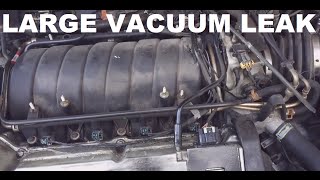
Symptoms: Significant vacuum leak causing P0171 and P0174 codes; confirmed by engine sound changing when spraying brake cleaner.
What fixed it: Replacing the intake manifold gaskets.
Source hint: YouTube video (youtube.com/watch?v=zP8A-BB_478)
Chevy Impala 3.6L
Symptoms: P0174 code returned after a previous repair, this time accompanied by P0496; vacuum pull felt at the disconnected purge valve.
What fixed it: Replacing the EVAP purge valve.
Source hint: YouTube video (youtube.com/watch?v=1Yf3pNeXJ-Y)
Related OBD-II Codes
Frequently Asked Questions
Is there a special coverage program for the EVAP purge valve on my 2019 Cadillac XTS?
I have a P0174 and a P0496 on my 3.6L LFX engine; are they related?
Can I just clean the MAF sensor on my XTS to fix a lean code?
Does TSB 19-NA-256 apply to the 3.6L engine in the Cadillac XTS?
Why is my XTS making a 'whooshing' sound at idle along with the P0174 code?
Are the intake manifold gaskets a common failure point on the Cadillac 3.6L V6?
Helpful Videos
We Have This Part in Stock


The information in this article is provided for general reference and educational purposes only. Vehicle specifications, procedures, and part compatibility can vary by production date, trim level, and region. Always consult your vehicle's factory service manual and verify part numbers before purchasing or performing repairs. Safety-critical components such as airbags, seat belts, and braking systems should be installed by a qualified professional.
- Cadillac XTS:
- 🧭 Diagnostic Flowchart
- 🎬 Helpful Videos
- 🛍️ Shop This Part
- What's Unique About the 2015-2019 Cadillac XTS
- Symptoms You May Notice
- Most Likely Causes
- Rare But Worth Checking
- Diagnosis Steps
- Parts You'll Likely Need
- Related Codes That Often Appear With This One
- Technical Service Bulletins (TSBs) & Recalls
- Platform-Specific Known Issues
- Mechanic-Grade Diagnostic Values
- Scan Tool Commands That Help
- Real Owner Repair Stories
- "I Checked Everything" — The Actual Cause
- Model Year Variations Within This Range
- Other Known Issues on This Vehicle
- Used vs. New Parts: Buying Guide for This Vehicle
- Real Owner Stories
- 2013 Cadillac XTS 3.6L
- 2012 Chevy Impala 3.6L
- 2001 Cadillac Deville
- Chevy Impala 3.6L
- Related OBD-II Codes
- Frequently Asked Questions
- 🎟️ Get 5% Off