

P0174 on 2017-2022 Chevrolet Colorado 3.6L V6: Lean System Causes and Fixes
On the 2017-2022 Colorado 3.6L, P0174 is most often caused by a cracked air intake duct, a disconnected PCV hose, or an ECM software issue. Before replacing parts, check for GM Technical Service Bulletin (TSB) #21-NA-105, as a simple dealer software update may be the only fix needed.
- Always check with a GM dealer about TSB #21-NA-105 before buying any parts; a software update may be the only fix required.
- The most common physical fault is a cracked or disconnected air intake duct. Inspect it carefully before looking for other vacuum leaks.
- Check that all PCV hoses under the engine cover are secure, as they are often left disconnected after service.
- Do not replace the oxygen sensor. It is very likely doing its job correctly by reporting the lean condition.
What's Unique About the 2017-2022 Chevrolet Colorado
For the 2017-2022 Colorado with the 3.6L LGZ V6, this code is frequently not a simple part failure. GM has issued TSBs acknowledging the original ECM software can be overly sensitive and trigger a false lean code, especially on low-mileage trucks. Additionally, the large air intake duct, which is integrated with the engine cover, is a well-documented failure point known to crack and cause major unmetered air leaks, an issue also addressed by TSB 22-NA-171.
Symptoms You May Notice
- Check Engine Light is on
- Rough or unstable idle
- Hesitation or surging during acceleration
- Reduced engine power
- A hissing or whistling sound from the engine bay, indicating a vacuum leak
- A 'popcorn' or backfire sound from the engine bay at idle, as reported by some owners with large intake leaks.
- Poor fuel economy, as noted by owners after fixing a leak.
- Replacing the Bank 2 oxygen (O2) sensor. The O2 sensor is almost always functioning correctly by reporting the lean condition; it is the messenger, not the cause of the problem.
Most Likely Causes
- ECM Software Calibration Issue 🔴 High Probability GM issued TSB #21-NA-105 specifically for this issue on 2020-2021 models, noting that software anomalies can cause P0171 and P0174 codes, particularly on vehicles with under 1,800 miles. Bulletin #21NA105 provides specific repair information to correct customer concerns regarding these calibrations.
How to confirm: Contact a Chevrolet dealership and provide your vehicle's VIN. Ask if TSB 21-NA-105 is applicable and has been performed. This is the first step before any part replacement, especially for low-mileage trucks.
Typical fix: The Engine Control Module (ECM) must be reprogrammed with the latest software by a GM dealer or a qualified shop with access to GM's Service Programming System (SPS).
Est. part cost: $0 (if under warranty) - $150 (dealer fee) - Cracked or Disconnected Air Intake Duct 🔴 High Probability → Shop Engine Air Intake Resonator The large air intake duct between the air filter box and the throttle body is a known weak point. It can become disconnected from the airbox or develop cracks, allowing a large amount of unmetered air to enter the engine. This is a very common fix seen in owner forums and videos and is the subject of TSB 22-NA-171, which provides service information to correct the MIL illumination when these codes are set.
How to confirm: Visually inspect the entire intake duct assembly. Check where it connects to the air filter housing, as it often comes completely loose. Carefully examine the flexible bellows sections for cracks, which may be on the underside. A smoke test is the definitive diagnostic method.
Typical fix: Reconnect the duct if it is loose. If cracked, the entire air cleaner outlet duct assembly must be replaced. 🎬 Watch: How to remove the engine cover and intake tube The updated part is GM #84535596.
Est. part cost: $100-$180 - Disconnected PCV Hose or Loose Oil Cap 🟡 Medium Probability → Shop PCV Valve Hose PCV hoses are located under the main engine cover. During routine service like an oil or air filter change, these hoses can be disturbed and not reconnected properly, creating a vacuum leak. This is a very common owner-reported issue on forums immediately following a dealer oil change. Manufacturer Bulletin #PIE0413 previously requested information from the field regarding vehicles exhibiting these lean conditions.
How to confirm: Remove the plastic engine cover and visually inspect all PCV hoses and their connections, especially the one going across the back of the engine. Listen for a hissing sound with the engine running. Also, confirm the oil filler cap is tightened down correctly, as a loose cap was the confirmed fix in at least one owner's story.
Typical fix: Securely reconnect any loose hoses. Tighten the oil cap. If a hose is cracked or brittle, it should be replaced.
Est. part cost: $0-$60 - Leaking Intake Manifold Gaskets ⚪ Low Probability → Shop Engine Intake Manifold While not as common as intake boot or PCV issues, the intake manifold gaskets on the 3.6L V6 can degrade over time, causing a vacuum leak. This is more likely on higher mileage vehicles. Bulletin #PIE0413A was issued to conclude the collection of field data regarding these specific lean conditions.
How to confirm: A smoke test is the most reliable method. With the engine running, you can carefully spray a combustible fluid (like brake cleaner) around the gasket area; a change in engine RPM indicates a leak.
Typical fix: Replace the upper and lower intake manifold gaskets. This is a more involved repair that requires removing the intake manifold.
Est. part cost: $60-$120
Rare But Worth Checking
- Dirty or Faulty Mass Airflow (MAF) Sensor: → Shop Fuel Injection Air Flow Meter A dirty MAF sensor can under-report the amount of air entering the engine, causing the ECM to command too little fuel. Cleaning the sensor with dedicated MAF cleaner is an easy and inexpensive diagnostic step, though less common as the root cause on this platform compared to vacuum leaks.
- Weak Fuel Pump or Clogged Injector: → Shop Fuel Pump A fuel delivery problem can cause a lean condition. However, this would typically affect both engine banks and set a P0171 code as well. A fuel pressure test is required for diagnosis.
- Leaking Brake Booster Master Cylinder Seal: One owner on YouTube documented a confirmed fix where a missing O-ring between the brake master cylinder and the brake booster created a significant vacuum leak, causing both P0171 and P0174 codes. The leak was found by spraying brake cleaner in that area and noticing an RPM change.
Diagnosis Steps
- First, contact a GM dealer with your VIN to check for open recalls or applicable TSBs, specifically 21-NA-105 (ECM reprogram) and 22-NA-171 (intake boot).
- With the engine off, thoroughly inspect the large air intake duct (GM Part #84535596) from the air filter box to the engine. Confirm it is securely attached at both ends and check for cracks in the flexible sections.
- Remove the plastic engine cover. Inspect all PCV hoses and vacuum lines for cracks or disconnections, paying close attention to hoses disturbed during oil changes. Ensure the oil filler cap is tight. Listen for hissing sounds with the engine running.
- If a scan tool is available, monitor Short-Term Fuel Trim (STFT) and Long-Term Fuel Trim (LTFT) at idle. High positive values (e.g., LTFT for Bank 2 exceeding +25%) confirm the lean condition. If fuel trims return to near normal (0% +/- 10%) when RPMs are raised to ~2500 RPM, a vacuum leak is the most likely cause.
- As a low-cost measure, clean the Mass Airflow (MAF) sensor using dedicated MAF sensor cleaner. Do not touch the sensor elements.
- If no obvious leaks are found, perform a smoke test on the intake system. This is the most effective way to reveal hard-to-find leaks from sources like intake manifold gaskets or small hose cracks.
- If no vacuum leaks are found and the ECM software is up to date, investigate the fuel system by performing a fuel pressure test to rule out a weak fuel pump.
Parts You'll Likely Need
- Air Cleaner Outlet Duct
(OEM #84535596)— This is the most common physical part failure causing P0174 on this vehicle. It cracks or becomes disconnected, creating a large vacuum leak. This part supersedes older versions 84165133 and 84548065.
Trusted brands: ACDelco, GM Genuine
OEM price range: $150-$200
Aftermarket price range: $100-$150 - PCV Hose/Tube — Often becomes disconnected after service or cracks with age, causing a vacuum leak. It's an inexpensive part and easy to inspect.
Trusted brands: ACDelco, Dorman
OEM price range: $25-$60
Aftermarket price range: $15-$40 - Intake Manifold Gasket Set
(OEM #12735542)— Needed if a smoke test confirms a leak at the intake manifold, which is a known but less common issue on the 3.6L V6. This part number includes both upper and lower gaskets.
Trusted brands: ACDelco, Fel-Pro
OEM price range: $60-$120
Aftermarket price range: $40-$80
Related Codes That Often Appear With This One
- P0171 — System Too Lean (Bank 1). This code is very commonly seen with P0174 because vacuum leaks (like a cracked intake duct or loose PCV hose) introduce unmetered air that affects both cylinder banks simultaneously.
- P0300 — Random/Multiple Cylinder Misfire. A severe lean condition can prevent proper combustion, leading to misfires across one or more cylinders.
Technical Service Bulletins (TSBs) & Recalls
- TSB 21-NA-105: 'Engine Control Module Calibration for DTC P0171 and P0174 Set' - For 2020-2021 models, addresses software anomalies causing lean codes, especially on low-mileage vehicles.
- TSB 22-NA-171: 'Malfunction Indicator Lamp (MIL) Illuminated - DTC P0171 and/or P0174 Set' - Addresses a cracked or failed air intake duct.
- Bulletin #21NA105: Provides repair information to correct customer concerns regarding ECM calibration for lean codes.
- Bulletin #PIE0413: Requested field information regarding vehicles with MIL illuminated and DTC P0171/P0174.
- Bulletin #PIE0413A: Formally ended the need for field information regarding the P0171 and P0174 condition.
Platform-Specific Known Issues
- TSB 21-NA-105: Acknowledges that false P0171/P0174 codes can be set by sensitive ECM software on 2020-2021 models, especially under 1800 miles.
- TSB 22-NA-171: Specifically calls out the cracked/failed rubber intake boot (air duct) as a cause for P0171/P0174 and provides the replacement procedure.
- PCV Hose Disconnection Post-Service: A very common complaint on owner forums is the appearance of P0171/P0174 immediately after an oil change, traced back to a technician failing to properly reconnect a PCV hose under the engine cover.
Mechanic-Grade Diagnostic Values
- Long Term Fuel Trim (LTFT) at Idle — expected: Within +/- 10%. Failure: Sustained positive values greater than +20-25% on Bank 2 will trigger the P0174 code.
- Mass Airflow (MAF) Sensor Reading at Idle — expected: Approximately 3.6-4.5 g/s for a warm 3.6L LGZ engine.. Failure: Significantly lower readings (e.g., <3.0 g/s) while LTFT is high suggest the sensor is under-reporting airflow, causing the ECM to command insufficient fuel.
- Low-Side Fuel Pressure (Key On, Engine Off) — expected: 50-62 psi (345-427 kPa).. Failure: Pressure significantly below 50 psi indicates a potential issue with the in-tank fuel pump or fuel filter.
- Upstream O2 Sensor Voltage (Bank 2, Sensor 1) — expected: Rapidly fluctuating between 0.1V (lean) and 0.9V (rich) once the engine is in closed loop.. Failure: A sensor that is stuck low (e.g., <0.2V) and does not fluctuate may indicate a true lean condition or a biased sensor, but it is usually reporting the lean condition correctly.
Scan Tool Commands That Help
- GM GDS2 (or equivalent professional scanner): Fuel Trim Reset — After replacing a component that affects the air-fuel ratio (e.g., intake duct, MAF sensor, fuel injector), this command should be used to clear the old learned fuel trim values and force the ECM to relearn immediately.
- GM GDS2 (or equivalent professional scanner): EVAP Purge/Seal — To test the EVAP purge solenoid. A technician can command the valve open and closed to see if it is functioning correctly. If it's stuck open, it will cause a vacuum leak.
- GM GDS2 (or equivalent professional scanner): Cylinder Power Balance — If a misfire is also present (P0300), this test can help identify if specific cylinders on Bank 2 are contributing less power, which can be a symptom of a severe lean condition on that bank.
Wiring & Ground Locations
- G103 / G104 — These are primary engine grounds located on the cylinder heads.. The ECM and its sensors, including the O2 sensors and MAF sensor, rely on clean, solid ground connections to provide accurate readings. A corroded or loose ground at these points can introduce electrical noise and resistance, potentially causing incorrect sensor data that could contribute to a false lean code.
- ECM Connector (X2) — The Engine Control Module is located under the coolant reservoir.. This is the main connector for engine sensors. Technicians may need to back-probe pins at this connector to verify signal voltage from the MAF or O2 sensors directly at the ECM, ruling out wiring issues between the sensor and the module. For example, the Bank 2 Sensor 1 signal is on Pin 23 (Gray wire).
Real Owner Repair Stories
- Reddit user /u/SimpleManofPeace (2020 GMC Canyon (sister vehicle)) — Check Engine Light with code P0174 appeared immediately after the vehicle was returned from the dealer for a timing chain replacement.
❌ Tried (didn't work) Initial driving showed no performance issues, but the light persisted.
✅ What actually fixed it The owner suspected a hose was left loose during the major engine work. Another user confirmed this is common, stating they forgot to reattach a small vacuum hose on the engine cover after a thermostat change, which set the same code. The implied fix is a thorough check of all hose connections after service. - Reddit user /u/grcnj88 (2021 Chevrolet Colorado with 14k miles) — Check Engine Light with P0174 and an OnStar message to 'service your emissions system' appeared a few days after a routine dealer service.
❌ Tried (didn't work) The dealer performed a leak check and found nothing.
✅ What actually fixed it The dealer reprogrammed the ECM as per TSB 21-NA-105, which resolved the issue. This confirms the TSB is a valid and common fix for low-mileage trucks that are not showing any physical leaks.
"I Checked Everything" — The Actual Cause
- A stuck-open EVAP (Evaporative Emission) canister purge solenoid valve. A standard smoke test of the intake manifold may not reveal this leak. The purge valve connects the fuel tank vapor system to the intake manifold. If it's stuck open, it creates a constant vacuum leak that the ECM does not account for. This is often missed because the valve is part of the EVAP system, not just the intake air path. It can be diagnosed by commanding the valve closed with a scan tool and observing fuel trims or by physically removing it and checking if air can be blown through it.
OEM Part Supersession History
84165133, 84548065→84535596— This is the Air Cleaner Outlet Duct. The original designs were prone to cracking at the flexible bellows. The newest part number represents a revised design for better durability.
Model Year Variations Within This Range
- 2020-2021: These model years are specifically called out in TSB 21-NA-105 for having overly sensitive ECM software that can set a false P0174 code, especially at very low mileage (under 1,800 miles). The fix is a dealer-performed software update, not a part replacement.
- 2017-2022: The 3.6L LGZ V6 engine was a significant update introduced in 2017, replacing the prior LFX V6. It features a different design, including Active Fuel Management and a different fuel system. Therefore, diagnostics and parts for P0174 are specific to this LGZ engine and do not apply to earlier Colorados.
Diagnostic Flowchart
Other Known Issues on This Vehicle
Issues unrelated to this code that are worth knowing about as an owner of this generation:
- 8-Speed Transmission Shudder / 'Chevy Shake' 🔴 High — Very common on 2017-2019 models. Feels like driving over rumble strips at steady speeds (25-80 mph). Caused by moisture-absorbent factory transmission fluid. (Ref: TSB 18-NA-355 recommends a specific fluid flush procedure with updated Mobil 1 Synthetic LV ATF HP fluid.)
- Faulty Oil Control Valve (OCV) Solenoid 🟠 Medium — A known issue on the LGZ V6 where the OCV solenoid can break or leak oil, affecting the Active Fuel Management (AFM) system. (Ref: TSB 21-NA-036 details this failure, which often leads to misfires on cylinders 2 and/or 5 (e.g., P0302).)
- Thermostat and/or Coolant Temperature Sensor Failure 🟠 Medium — Failures are common, leading to the cooling fan running constantly, no heat from the vents, and codes like P0128 or P0118. The sensor is in a very difficult-to-access location.
- Carbon Buildup on Intake Valves 🟡 Low — As a gasoline direct injection (GDI) engine, the LGZ is susceptible to carbon buildup over time (50k-100k miles), as fuel no longer cleans the back of the intake valves. Can lead to cold start misfires (P0300).
Used vs. New Parts: Buying Guide for This Vehicle
When a used part is the smart pick: For this specific repair, using used parts is generally not recommended for the most common failure items. The primary culprits are rubber/plastic parts that degrade with age and heat (intake duct, PCV hoses) or electronic sensors. A used part would likely have similar wear and a shortened lifespan. A used structural component like an intake manifold (if confirmed cracked) could be a viable option.
Donor-vehicle mileage cap: roughly under 80000 miles for the part to have meaningful remaining life.
What to inspect on the donor part:
- For an intake duct, inspect the flexible bellows sections meticulously for any signs of dry rot, hairline cracks, or brittleness.
- Check that all mounting points and hose connections are intact and not stripped or broken.
- For any electronic sensor, ensure the connector pins are clean, straight, and free of corrosion.
OEM-only on this vehicle (don't cheap out):
- Air Cleaner Outlet Duct: The OEM part has been updated multiple times (currently #84535596) to fix the original design flaw. Aftermarket versions may not incorporate these improvements or have fitment issues.
- Mass Airflow (MAF) Sensor: Precision electronic sensors are often a weak point for aftermarket brands. Sticking with GM Genuine or ACDelco is the safest bet to avoid introducing new variables.
- Engine Control Module (ECM): Must be a new or professionally refurbished unit programmed specifically to the vehicle's VIN by a dealer or qualified specialist.
Aftermarket brands forum-validated for this vehicle:
- Fel-Pro: A well-regarded brand for gaskets, including the intake manifold gasket set if that is determined to be the cause.
Brands owners have reported issues with on this vehicle:
- Unbranded/White-Box Intake Ducts: Forum discussions often mention poor fitment or premature failure of cheap, no-name air intake ducts found on auction sites. While the Dorman 696-101 is a listed alternative, reviews are mixed and OEM is preferred for this specific, high-failure part.
Real Owner Stories
Aggregated from forums and TSBs cited above. Mileages and costs reflect what owners reported in those sources.
2020-2021 Chevrolet Colorado 3.6L V6 — ~1500 miles
Symptoms: Check Engine Light illuminated with codes P0171 and P0174 on a very new vehicle.
What fixed it: The Engine Control Module (ECM) was reprogrammed with the latest software by a dealer per TSB 21-NA-105.
Cost: $0-$150
Source hint: TSB 21-NA-105: 'Engine Control Module Calibration for DTC P0171 and P0174 Set'
2019 Chevrolet Colorado 3.6L V6
Symptoms: Check Engine Light on for lean codes P0171 and P0174.
What fixed it: The owner found the oil filler cap was loose; tightening the cap resolved the issue.
Source hint: https://www.reddit.com/r/chevycolorado/comments/1bjiq4a/2019_v6_engine_codes_p0174p0171_solved/
2017-2022 Chevrolet Colorado 3.6L V6
Symptoms: A 'popcorn' or backfire sound from the engine bay at idle.
What fixed it: Identified and repaired a large intake leak, specifically the air intake duct between the air filter box and throttle body.
Source hint: https://www.coloradofans.com/threads/popcorn-backfire-sound-in-engine-bay-engine-code-p0171-0174.441118/
2017-2022 Chevrolet Colorado 3.6L V6
Symptoms: Check Engine Light on immediately following a routine oil change service.
What fixed it: Reconnected a PCV hose under the engine cover that was disturbed during the oil filter change.
Source hint: Vehicle-specific issues: PCV Hose Disconnection Post-Service
Related OBD-II Codes
Frequently Asked Questions
Does TSB 21-NA-105 apply to my 2021 Chevrolet Colorado with very low mileage?
I just had my oil changed at the dealer and now I have a P0174 code. What should I check?
Is there a specific part number for the intake duct if mine is cracked?
Can a loose oil cap really cause a P0174 lean code on the 3.6L LGZ engine?
My Colorado is making a 'popcorn' or backfire sound at idle along with the check engine light. What does this mean?
Will cleaning the MAF sensor fix my P0174 code?
Helpful Videos
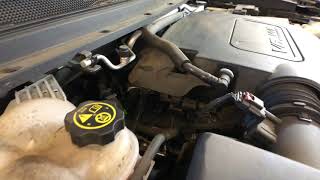
![[HOW TO] Remove the Engine Cover / Intake Tube on 2017-2022 Chevy Colorado 3.6L V6](https://img.youtube.com/vi/KXNf17izm6o/mqdefault.jpg)
We Have This Part in Stock




The information in this article is provided for general reference and educational purposes only. Vehicle specifications, procedures, and part compatibility can vary by production date, trim level, and region. Always consult your vehicle's factory service manual and verify part numbers before purchasing or performing repairs. Safety-critical components such as airbags, seat belts, and braking systems should be installed by a qualified professional.
- Chevrolet Colorado:
- 🧭 Diagnostic Flowchart
- 🎬 Helpful Videos
- 🛍️ Shop This Part
- What's Unique About the 2017-2022 Chevrolet Colorado
- Symptoms You May Notice
- Most Likely Causes
- Rare But Worth Checking
- Diagnosis Steps
- Parts You'll Likely Need
- Related Codes That Often Appear With This One
- Technical Service Bulletins (TSBs) & Recalls
- Platform-Specific Known Issues
- Mechanic-Grade Diagnostic Values
- Scan Tool Commands That Help
- Wiring & Ground Locations
- Real Owner Repair Stories
- "I Checked Everything" — The Actual Cause
- OEM Part Supersession History
- Model Year Variations Within This Range
- Other Known Issues on This Vehicle
- Used vs. New Parts: Buying Guide for This Vehicle
- Real Owner Stories
- 2020-2021 Chevrolet Colorado 3.6L V6 — ~1500 miles
- 2019 Chevrolet Colorado 3.6L V6
- 2017-2022 Chevrolet Colorado 3.6L V6
- 2017-2022 Chevrolet Colorado 3.6L V6
- Related OBD-II Codes
- Frequently Asked Questions
- 🎟️ Get 5% Off