

P0174 on 2005-2013 Chevrolet Corvette: Lean Condition Causes and Fixes
On a C6 Corvette, P0174 (System Too Lean, Bank 2) is most often caused by a vacuum leak from a cracked PCV hose, loose intake manifold bolts, or a bad intake manifold gasket. Cleaning the Mass Airflow (MAF) sensor is also a common and easy first step. Expect to spend $10-$150 on parts depending on the cause.
- P0174 on a C6 Corvette almost always points to unmetered air entering the engine after the MAF sensor.
- The most likely culprit is a vacuum leak. Thoroughly inspect all PCV and vacuum hoses before buying any parts.
- Cleaning the MAF sensor is a cheap, easy, and effective step that should be done early in your diagnosis.
- Do not replace the oxygen sensor unless you have definitively ruled out all other possibilities.
- If both P0171 and P0174 are present, the problem is something that affects the whole engine, like the MAF sensor or a leak at the intake manifold itself.
What's Unique About the 2005-2013 Chevrolet Corvette
The LS engines in the C6 Corvette are generally reliable, but they are sensitive to unmetered air. Aftermarket cold air intakes are a very common modification, and if not installed perfectly or tuned for, they can cause turbulent airflow across the MAF sensor, leading to lean codes. Additionally, the plastic and rubber components of the PCV system and intake gaskets can become brittle with age and heat cycles, making vacuum leaks a frequent issue. It's not uncommon for the intake manifold bolts to loosen over time, also causing leaks.
Symptoms You May Notice
- Check Engine Light is on
- Rough or unstable idle
- Hesitation or surging during acceleration
- Reduced fuel economy
- Engine misfires (may be accompanied by misfire codes)
- A 'hanging' idle that stays around 1500 RPM before dropping
- Engine chokes or stops revving under heavy throttle/high RPMs
- Replacing the oxygen sensor first. The O2 sensor is a reporter; it's usually accurately detecting a problem elsewhere, like a vacuum leak. Replacing it rarely fixes a P0174 code on its own.
Most Likely Causes
- Vacuum Leak 🔴 High Probability The PCV hoses and intake manifold gaskets are made of plastic and rubber that can crack and become brittle from engine heat over time. This is the most common cause cited by Corvette owners. It is also common for the intake manifold bolts to loosen slightly over many heat cycles, creating a leak.
How to confirm: Perform a visual inspection of all vacuum and PCV hoses for cracks or loose connections. The PCV fresh air tube connects the valley cover to the intake manifold, often under the throttle body, and is a prime suspect. The best method is to use a smoke machine to feed smoke into the intake system and watch for where it escapes. 🎬 See how to find vacuum leaks using smoke and spray. Alternatively, you can spray carburetor cleaner or starter fluid in small bursts around potential leak areas (like the intake manifold gasket); a change in engine idle indicates a leak. Re-torquing the intake manifold bolts to spec (typically 89 lb-in) is a common diagnostic step.
Typical fix: Replace the cracked hose or faulty gasket. Re-torque intake manifold bolts. PCV hoses are often inexpensive, while intake manifold gaskets require more labor.
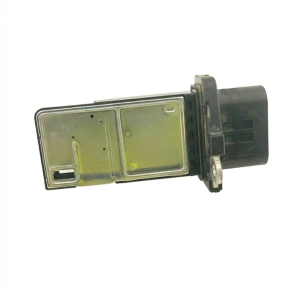
Est. part cost: $15 - $100 - Dirty or Faulty Mass Airflow (MAF) Sensor 🟡 Medium Probability → Shop Fuel Injection Air Flow Meter Oiled aftermarket air filters (like K&N) are common on Corvettes. If over-oiled, the oil can contaminate the sensitive wires of the MAF sensor, causing incorrect airflow readings. Even with a stock filter, the sensor can become dirty over time. A faulty aftermarket sensor can also be the culprit.
How to confirm: Remove the MAF sensor from the intake tube and inspect the small wires inside. If they appear dirty or coated, they need cleaning. A scan tool can also show erratic or out-of-spec MAF readings. Cleaning is a common first step before suspecting a vacuum leak. 🎬 Watch: A quick 2-minute guide to cleaning your MAF sensor.
Typical fix: Clean the sensor using a dedicated MAF sensor cleaner spray. Do not touch the sensor wires. If cleaning doesn't work, the sensor must be replaced. It is highly recommended to use an OEM AC Delco sensor, as aftermarket sensors are a common source of issues.
Est. part cost: $10 (cleaner) - $150 (new sensor) - Fuel Delivery Issue ⚪ Low Probability While less common than vacuum leaks, a weak fuel pump, clogged fuel filter, or dirty fuel injectors can fail to provide enough fuel. C6 Corvettes are known for issues with the fuel sending unit, but a failing pump can also be a cause for lean codes, especially when other causes are ruled out.
How to confirm: Check fuel pressure at the fuel rail using a fuel pressure gauge; it should be around 58-60 PSI for a C6 Corvette. Clogged injectors can sometimes be diagnosed by listening to them with a mechanic's stethoscope or by observing fuel trim data on a scan tool. A tell-tale sign of a failing pump can be hesitation only at high RPMs under load.
Typical fix: Replace the failing component. The fuel filter is part of the fuel pump module in the tank and is not a simple standalone replacement. Replacing injectors or the fuel pump is more involved and costly.
Est. part cost: $70 (single injector) - $600+ (fuel pump assembly) - Leaking or Loose Intake Air Duct ⚪ Low Probability → Shop Engine Air Intake Duct The large plastic or rubber air bridge between the MAF sensor and the throttle body can be removed for service or to install an aftermarket intake. If not reinstalled correctly with clamps fully tightened, or if the bellows is torn, it can allow unmetered air to enter the engine after the MAF sensor.
How to confirm: Visually inspect the air intake tube and all connections between the air filter housing and the engine's throttle body. Ensure all clamps are tight and the ducting is not cracked or torn.
Typical fix: Tighten clamps or replace the damaged air duct.
Est. part cost: $0 (tightening) - $200 (new duct)
Rare But Worth Checking
- Exhaust Leak Before Oxygen Sensor: → Shop Oxygen Sensor An exhaust leak between the cylinder head and the upstream O2 sensor can draw outside air into the exhaust stream. This makes the O2 sensor 'think' the engine is running lean, causing the ECM to incorrectly add fuel and potentially trigger a lean code.
- Faulty Upstream Oxygen Sensor: → Shop Oxygen Sensor This is often misdiagnosed. The O2 sensor is usually doing its job correctly by reporting a lean condition. However, a lazy or failing sensor can sometimes give false lean readings. It should only be replaced after all other causes have been ruled out.
Diagnosis Steps
- Check for other codes. If P0171 is also present, focus on causes that affect both banks.
- Visually inspect the engine bay. Look for obviously disconnected vacuum hoses, cracked PCV lines, or a torn/loose intake air duct, especially the bellows between the MAF and throttle body.
- Use a scan tool to monitor short-term (STFT) and long-term (LTFT) fuel trims for Bank 2. High positive numbers (e.g., +15% or higher, approaching +25%) confirm the lean condition. 🎬 Watch: A step-by-step DIY diagnosis of Corvette lean codes.
- While monitoring fuel trims, raise the engine RPM to 2,500-3,000. If the fuel trims decrease significantly toward zero, you likely have a vacuum leak.
- If a vacuum leak is suspected, perform a smoke test to pinpoint the exact location of the leak. This is the most effective method.
- As an easy and common step, re-torque the intake manifold bolts to the factory specification of 89 lb-in. Do this in the proper sequence. Many owners find them loose.
- If no vacuum leak is found, remove and clean the Mass Airflow (MAF) sensor with dedicated MAF cleaner spray. Let it dry completely before reinstalling.
- If the problem persists, test fuel pressure at the fuel rail to rule out a weak fuel pump or clogged filter. Expect ~58-60 PSI.
- As a final step, consider testing the response of the Bank 2 upstream oxygen sensor.
Parts You'll Likely Need
- PCV Hose/Tube
(OEM #12597723 (for LS3/LS7, connects valley cover to intake))— This specific U-shaped hose under the throttle body is a known failure point, becoming brittle and cracking, causing a significant vacuum leak.
Trusted brands: ACDelco, GM Genuine
OEM price range: $20-$50
Aftermarket price range: $15-$40 - Intake Manifold Gaskets
(OEM #ACDelco 19301685 (for LS3, set of 8))— A common source of vacuum leaks on higher-mileage LS engines. If a smoke test reveals a leak here, or if re-torquing bolts doesn't solve the issue, they must be replaced.
Trusted brands: ACDelco, Fel-Pro
OEM price range: $40-$80
Aftermarket price range: $25-$60 - Mass Airflow (MAF) Sensor Cleaner — Often, the MAF sensor is just dirty, not broken. Cleaning it is a cheap and effective diagnostic step.
Trusted brands: CRC, WD-40 Specialist
OEM price range: $10-$15
Aftermarket price range: $10-$15 - Mass Airflow (MAF) Sensor
(OEM #ACDelco 213-4222 (for LS3/LS7))— If cleaning the sensor doesn't resolve the issue and it's confirmed to be faulty, it will need replacement. Using a genuine OEM part is strongly recommended.
Trusted brands: ACDelco, Delphi, Bosch
OEM price range: $150-$250
Aftermarket price range: $50-$150
Related Codes That Often Appear With This One
- P0171 — P0171 is the same 'System Too Lean' code but for Bank 1 (passenger side). When both P0171 and P0174 appear together, it strongly suggests a problem that affects the entire engine, such as a faulty MAF sensor, a large vacuum leak at the intake manifold, or a fuel delivery problem.
Technical Service Bulletins (TSBs) & Recalls
- 21-NA-105 — While not for the Corvette specifically, this GM TSB addresses P0171 and P0174 on other LGZ engines, noting that software anomalies can cause the codes on very low mileage vehicles. It advises checking for basic vacuum leaks (PCV, oil cap) before reprogramming the ECM.
Platform-Specific Known Issues
- Aftermarket cold air intakes can cause lean codes if they create turbulent airflow over the MAF sensor or are not properly tuned for.
- The plastic ends of PCV hoses can become brittle and fail to seal properly, causing vacuum leaks.
Mechanic-Grade Diagnostic Values
- Fuel Pressure at Rail (Key On, Engine Off or Idling) — expected: 58-60 PSI (400-414 kPa). Failure: Pressure dropping below 55 PSI, especially under load, or bleeding down quickly after shutdown.
- Long Term Fuel Trim (LTFT) at Idle — expected: Between -10% and +10%. Failure: Sustained positive values approaching +25% trigger the code.
- MAF Sensor Reading at Idle (fully warm, no accessories) — expected: For LS2 (6.0L): ~5-7 g/s. For LS3 (6.2L): ~6-8 g/s. For LS7 (7.0L): ~7-9 g/s.. Failure: Readings significantly lower than expected for the engine size may indicate a vacuum leak (unmetered air entering after the MAF). Readings that are erratic or don't increase smoothly with RPM can indicate a faulty sensor.
- LS3/LS7 MAF Sensor Connector Voltages (Key On, Engine Off) — expected: Pin C (Pink): ~12V Ignition Voltage. Pin B (Black/White): Ground. Pin E (Tan): 5V Reference for IAT.. Failure: Missing voltage or ground indicates a wiring or ECM issue.
Scan Tool Commands That Help
- Tech2 / GDS2: Fuel Trim Reset — After replacing a component that caused the lean condition (e.g., MAF sensor, intake gasket), this command should be used to clear the old learned fuel trim values. This forces the ECM to relearn the fuel strategy immediately, which can confirm the fix and prevent the code from returning during the relearn period.
- Tech2 / GDS2: Injector Balance Test — If a single bank is lean (P0174 without P0171) and a vacuum leak has been ruled out, this test can help identify a clogged or failing fuel injector on Bank 2. The tool individually fires each injector and measures the pressure drop, highlighting any injector that is flowing less fuel than the others.
Wiring & Ground Locations
- G105 / G106 — On the outside of the frame rails in the engine compartment, forward of the front wheels. G105 is on the driver's side, G106 is on the passenger's side.. These are major ground points for the engine harness and ECM. Corrosion or looseness at these grounds, particularly G105 on the driver's side, can cause erratic sensor readings and intermittent issues that are hard to trace.
- Ground under Battery Tray — Directly underneath the battery tray on the passenger side frame rail. Requires removing the battery and the tray to access.. This is a critical ground point that is highly susceptible to corrosion from battery acid or fumes. A poor connection here can cause a wide range of electrical issues, including problems with the ECM and its sensor inputs.
- LS3/LS7 MAF Connector (5-pin) — On the intake air tube just after the air filter box.. Provides power, ground, and signal lines for both the MAF and IAT sensors. Testing here is critical. Pin A: MAF Signal (Yellow), Pin B: Ground (Black/White), Pin C: Ignition 1 Voltage (Pink), Pin D: Low Reference (Tan), Pin E: IAT Sensor Signal (Tan).
- ECM Connector X1 (Blue) — The Engine Control Module (ECM) is located in the passenger side front fender well.. Allows for continuity testing of sensor wires directly at the control module to rule out harness damage. For example, on an LS3, the MAF signal wire (Yellow) goes to Pin 33 on the X1 connector.
Real Owner Repair Stories
- CorvetteForum user (2007 Corvette (LS2), 33K miles) — Car loses power at full throttle above 5,000 RPM only when fully warmed up. Eventually set P0171 and P0174.
❌ Tried (didn't work) Dealer diagnosed a vacuum leak and replaced the intake manifold gasket. The problem persisted.
✅ What actually fixed it Live diagnostics revealed a loss of fuel pressure when the car was heat-soaked. The final diagnosis was a failing fuel pump, which was replaced to solve the issue. - CorvetteForum user (2010 Corvette Grand Sport (LS3), 80k miles) — Check engine light with codes P0171 and P0174. Long term fuel trims were very high (+23% and +24%).
❌ Tried (didn't work) User cleaned the MAF sensor and checked for obvious vacuum leaks with no success.
✅ What actually fixed it The user found the intake manifold bolts were loose. After torquing them to spec, the fuel trims returned to normal and the codes were resolved.
"I Checked Everything" — The Actual Cause
- In one documented case, a car passed an initial inspection for vacuum leaks (intake gasket was replaced), but the actual cause was a failing fuel pump that only exhibited low pressure when the engine and fuel were fully heat-soaked. This is missed by a standard smoke test and even a cold fuel pressure test.
OEM Part Supersession History
15865791→ACDelco 213-4222— Standard part number update and consolidation by GM/ACDelco. Functionally identical.
Model Year Variations Within This Range
- 2005-2007 (LS2): Uses a 3-wire, 75mm MAF sensor. The PCV system pulls foul air from the valley cover via a U-shaped hose directly into the intake manifold behind the throttle body. Fresh air is drawn from the air intake bridge into the passenger side valve cover.
- 2008-2013 (LS3/LS7): Uses a 5-wire 'card-style' MAF sensor (ACDelco 213-4222) which also incorporates the IAT sensor. The PCV system is similar but uses different part numbers for hoses and connects to a different intake manifold design.
Diagnostic Flowchart
Other Known Issues on This Vehicle
Issues unrelated to this code that are worth knowing about as an owner of this generation:
- Harmonic Balancer Wobble/Failure 🔴 High — Very common across all C6 model years (LS2/LS3/LS7). The rubber elastomer bonding the inner and outer rings fails, causing a wobble that can be visually confirmed. (Ref: TSB #05-06-01-001A (for early 2005 models with a loose bolt, but the separation issue is more widespread).)
- Fuel Level Sending Unit Failure 🟠 Medium — Common problem causing the fuel gauge to read empty or erratically, especially after filling the tank. Often triggers codes P2068. (Ref: Special Coverage Adjustment 15822 (Expired) covered fuel pump module flange leaks, a related issue.)
- LS7 Valve Guide Wear 🔴 High — Specific to the 7.0L LS7 engine in the Z06. Premature wear of the valve guides can lead to catastrophic engine failure if a valve head drops. Caused by a machining error. (Ref: GM Bulletin #13-06-01-001A acknowledges the issue and provides a (disputed) test procedure.)
- Active Handling System Errors 🟠 Medium — Affects 2005-2008 models. Repeated movement of the telescoping steering column can damage wiring to the steering wheel position sensor, causing the 'Service Active Handling' message and potentially unwanted brake application. (Ref: TSB #06-02-35-002B and NHTSA Action Number PE08056 detail the problem.)
- Removable Roof Panel Adhesive Separation 🟠 Medium — Common on 2005-2007 coupes. The adhesive bonding the roof panel to its frame can fail, causing noise, leaks, or in the worst case, the roof panel flying off while driving. (Ref: Recalls NHTSA #06V181000 and #09V491000 were issued to address this.)
Used vs. New Parts: Buying Guide for This Vehicle
When a used part is the smart pick: For this repair, obtaining a used OEM intake manifold from a reputable salvage yard can be a cost-effective choice if yours is found to be cracked. Other large mechanical components like the throttle body are also good candidates for used parts.
Donor-vehicle mileage cap: roughly under 80000 miles for the part to have meaningful remaining life.
What to inspect on the donor part:
- For an intake manifold, ensure all threaded inserts are intact and there are no visible cracks, especially around the gasket surfaces and mounting points.
- Check that all vacuum port nipples are present and not broken off.
- Avoid parts from vehicles that show signs of a major engine fire or have heavy front-end collision damage.
OEM-only on this vehicle (don't cheap out):
- Mass Airflow (MAF) Sensor: Aftermarket MAF sensors are a notorious source of problems on LS engines. Stick with genuine ACDelco parts to avoid persistent tuning and code issues.
- Oxygen (O2) Sensors: While not a primary cause, if they need replacement, use ACDelco or original equipment supplier (e.g., Denso) parts for accurate readings.
Aftermarket brands forum-validated for this vehicle:
- Fel-Pro for intake manifold gaskets.
- CRC or WD-40 Specialist for MAF sensor cleaner.
Brands owners have reported issues with on this vehicle:
- Off-brand, no-name electronic sensors (especially MAF sensors) from online marketplaces. Many forum users report these are often dead-on-arrival or fail quickly.
Real Owner Stories
Aggregated from forums and TSBs cited above. Mileages and costs reflect what owners reported in those sources.
2023 Chevrolet Corvette (context mentions 80k mile discussion) — 80000 miles
Symptoms: The owner experienced both P0171 and P0174 codes. They had already attempted to clean and then replace the MAF sensor without success.
What fixed it: The community suggested checking for tears in the intake bellows post-MAF, re-torquing intake manifold bolts, and verifying PCV hose connections.
Source hint: CorvetteForum: Dreaded p0171 and 0174
2007 Chevrolet Corvette (Stock)
Symptoms: Engine running lean with P0171 and P0174 codes.
What fixed it: After a dealer replaced a deteriorated intake manifold gasket and the problem persisted, the final fix was replacing a failing fuel pump.
Source hint: CorvetteForum: Engine Running Lean, P0171 and p0174 codes
2005-2013 Chevrolet Corvette (LS-series)
Symptoms: P0171/P0174 codes present.
What fixed it: A smoke test confirmed a leak at the intake manifold gaskets, leading to their replacement.
Source hint: CorvetteForum: Intake manifold gasket replacement, what else to do while I’m in there?
Related OBD-II Codes
Frequently Asked Questions
Does TSB 21-NA-105 apply to my 2005-2013 Corvette?
What is the specific torque specification for my intake manifold bolts to prevent a lean condition?
Can my K&N or other oiled aftermarket air filter cause a P0174 code?
What fuel pressure should I see at the fuel rail on my C6 Corvette?
Should I use an aftermarket MAF sensor if mine is faulty?
Where is a common place for vacuum leaks to occur on the LS2/LS3/LS7 engines?
Helpful Videos

Used OEM Parts in Stock
New Aftermarket Parts Available


The information in this article is provided for general reference and educational purposes only. Vehicle specifications, procedures, and part compatibility can vary by production date, trim level, and region. Always consult your vehicle's factory service manual and verify part numbers before purchasing or performing repairs. Safety-critical components such as airbags, seat belts, and braking systems should be installed by a qualified professional.
- Chevrolet Corvette:
- 🧭 Diagnostic Flowchart
- 🎬 Helpful Videos
- 🛍️ Shop This Part
- What's Unique About the 2005-2013 Chevrolet Corvette
- Symptoms You May Notice
- Most Likely Causes
- Rare But Worth Checking
- Diagnosis Steps
- Parts You'll Likely Need
- Related Codes That Often Appear With This One
- Technical Service Bulletins (TSBs) & Recalls
- Platform-Specific Known Issues
- Mechanic-Grade Diagnostic Values
- Scan Tool Commands That Help
- Wiring & Ground Locations
- Real Owner Repair Stories
- "I Checked Everything" — The Actual Cause
- OEM Part Supersession History
- Model Year Variations Within This Range
- Other Known Issues on This Vehicle
- Used vs. New Parts: Buying Guide for This Vehicle
- Real Owner Stories
- 2023 Chevrolet Corvette (context mentions 80k mile discussion) — 80000 miles
- 2007 Chevrolet Corvette (Stock)
- 2005-2013 Chevrolet Corvette (LS-series)
- Related OBD-II Codes
- Frequently Asked Questions
- 🎟️ Get 5% Off