

P0174 on 2014-2019 Chevrolet Corvette: LT1 System Too Lean (Bank 2) Causes and Fixes
On a C7 Corvette, the P0174 code is most often caused by a dirty Mass Airflow (MAF) sensor or plastic 'flashing' in the airbox housing near the sensor, per GM TSB #PIP5446A. Cleaning the sensor and inspecting the airbox is a low-cost first step. Aftermarket air intakes are also a frequent trigger for this code.
- For a P0174 code on a C7 Corvette, your first and most important check should be the Mass Airflow (MAF) sensor. Clean it before attempting other repairs.
- If both P0171 and P0174 codes are present, the cause is almost certainly a component shared by both engine banks, like the MAF sensor or a large vacuum leak.
- Do not replace the oxygen sensor unless you have confirmed it is faulty through scan tool data; it is usually just reporting the lean condition correctly.
- Check for a GM Technical Service Bulletin (TSB #PIP5446A) related to flashing in the MAF sensor housing, as this is a known issue on this platform.
What's Unique About the 2014-2019 Chevrolet Corvette
For the C7 Corvette with the LT1 engine, this code is very frequently linked to the Mass Airflow (MAF) sensor. Contamination from aftermarket oiled air filters is a common culprit. Additionally, a GM Technical Service Bulletin (TSB #PIP5446A) points to a potential manufacturing defect where excessive plastic casting flash inside the a-ir filter housing can disrupt airflow and cause this code, often along with P0171 and P0101. Owners often find that simply cleaning the MAF sensor and deburring the housing resolves the issue without needing to replace any parts.
Symptoms You May Notice
- Check Engine Light is on
- Rough or unstable idle
- Engine hesitation or stumbling during acceleration
- Reduced engine power
- Potential for engine misfires, sometimes triggering a flashing CEL
- Decreased fuel economy
- Increased backfiring on deceleration
- A hissing or whistling sound from the engine bay, indicating a vacuum leak
- Replacing the oxygen sensor first. The O2 sensor is often just doing its job by reporting the lean condition. Always diagnose air intake leaks, MAF issues, and fuel pressure before replacing the O2 sensor.
Most Likely Causes
- Dirty or Faulty Mass Airflow (MAF) Sensor 🔴 High Probability → Shop Fuel Injection Air Flow Meter The MAF sensor is sensitive to contamination, especially from oiled aftermarket air filters which are a popular modification for this car. A GM TSB (#PIP5446A) also notes that flashing in the MAF sensor housing from manufacturing can cause turbulent airflow, leading to this code.
How to confirm: Visually inspect the MAF sensor's internal wires for dirt, oil, or debris. Use a scan tool to monitor MAF readings; they should increase smoothly with engine RPM. A typical reading at idle is around 5-9 g/s. A CorvetteForum user with a 2014 Z51 reported fixing P0171/P0174 codes simply by cleaning the dirty MAF sensor, even with a dry (non-oiled) filter.
Typical fix: Clean the sensor with a dedicated MAF sensor cleaner and let it dry completely. If cleaning doesn't work or the sensor fails diagnostic tests, replace it.
Est. part cost: $10-$15 for cleaner, $70-$150 for a new sensor - Vacuum Leak 🟡 Medium Probability Leaks can occur at the intake manifold gaskets, PCV hoses, or the air intake tube between the MAF sensor and the throttle body. On supercharged Z06 models, a vacuum line under the supercharger's bypass valve has been identified as a specific failure point.
How to confirm: Perform a smoke test to definitively locate the leak. A diagnostic trick from forums is to watch fuel trims with a scan tool: if Long Term Fuel Trims are high at idle but decrease toward 0% at 2,500-3,000 RPM, a vacuum leak is very likely.
Typical fix: Replace the leaking gasket or hose. A CorvetteForum user with a Z06 found a disconnected vacuum line under the supercharger with a $70 smoke machine after extensive troubleshooting.
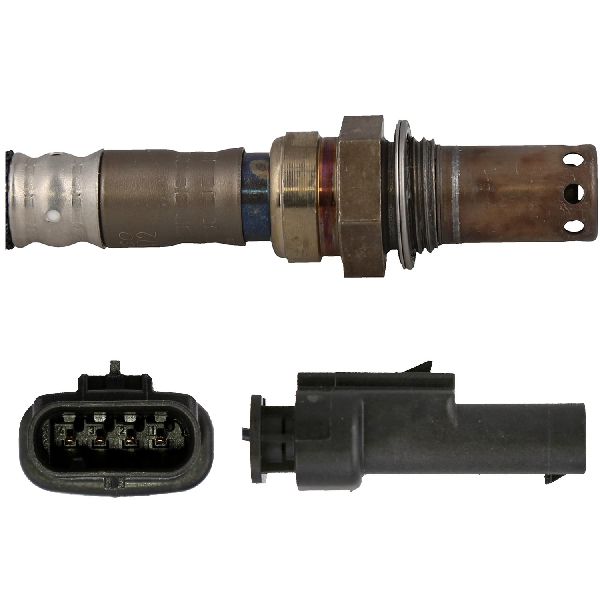
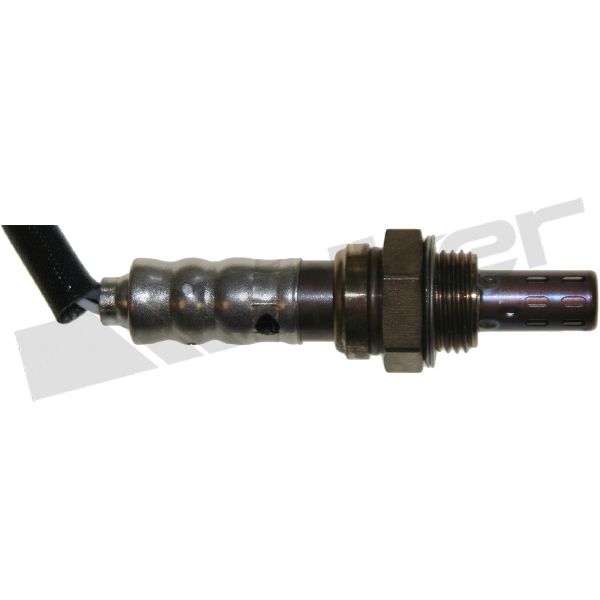
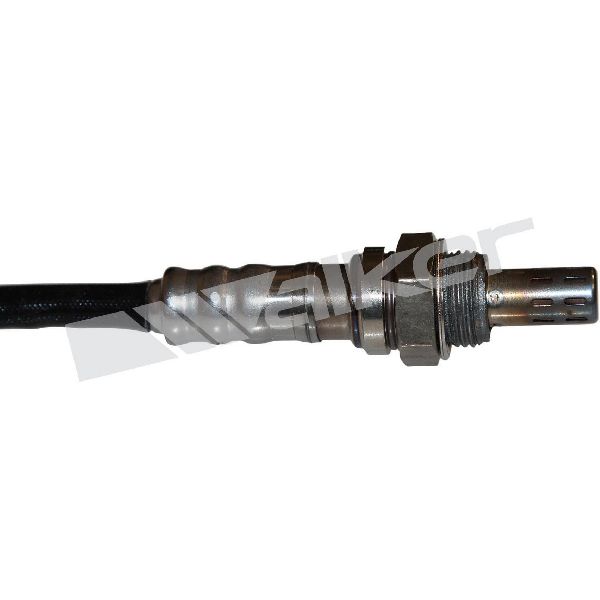
Est. part cost: $5-$20 for hoses, $50-$100 for intake gaskets - Failing Upstream Oxygen (O2) Sensor ⚪ Low Probability → Shop Oxygen Sensor O2 sensors wear out over time, but they often report the lean condition correctly rather than being the root cause. However, a sensor can fail, especially after installing aftermarket headers which can sometimes damage the sensor or wiring.
How to confirm: Use a scan tool to graph the O2 sensor's voltage. A healthy upstream sensor should fluctuate rapidly between ~0.1V and ~0.9V. A slow, biased, or stuck reading (e.g., stuck below 0.2V) indicates a bad sensor. One owner solved a P0174 code after installing headers by replacing a brand new but faulty NTK O2 sensor with a Denso unit.
Typical fix: Replace the Bank 2, Sensor 1 (upstream, passenger side) oxygen sensor.
Est. part cost: $50-$120 - Low Fuel Pressure ⚪ Low Probability A weak in-tank fuel pump or a failing high-pressure fuel pump (HPFP) can restrict fuel flow. This is less common than air metering issues but can cause lean codes, especially under load.
How to confirm: Use a scan tool to monitor the high-pressure fuel system, comparing desired vs. actual fuel rail pressure. If fuel trims are normal at idle but increase significantly under load, it points towards a fuel delivery issue.
Typical fix: Diagnose and replace the weak low-pressure fuel pump or high-pressure fuel pump.
Est. part cost: $20-$50 for a filter, $300-$600 for a low-pressure pump, $500+ for an HPFP
Rare But Worth Checking
- Exhaust Leak: An exhaust leak before the upstream O2 sensor (e.g., at the manifold-to-head gasket or header collector) can allow outside air to be drawn into the exhaust stream. This makes the sensor incorrectly report a lean condition, causing the ECM to add unnecessary fuel. This is a common issue after installing aftermarket long-tube headers.
- Clogged Fuel Injector(s) on Bank 2: → Shop Fuel Injector If one or more injectors on the passenger's side bank are dirty or failing, they may not deliver enough fuel, causing a localized lean condition on that bank only.
Diagnosis Steps
- Check for other stored trouble codes. If P0171 is also present, focus on causes that affect both banks, like the MAF sensor or fuel pump.
- Using a scan tool, observe the Long Term Fuel Trim (LTFT) for Bank 2. A value consistently over +15% confirms the lean condition, with the code typically setting above +23%.
- Inspect the air intake system thoroughly for any cracks, loose clamps, or disconnected hoses between the MAF sensor and the engine, especially with aftermarket intakes.
- Remove and inspect the MAF sensor. Clean it with a dedicated MAF sensor cleaner and inspect the air filter housing lid for any plastic flashing as described in TSB #PIP5446A. Carefully file down any flashing found.
- Check for vacuum leaks. A smoke test is the most reliable method. Pay close attention to the intake manifold gaskets and all PCV system hoses. On Z06 models, specifically check the vacuum line under the supercharger. Alternatively, use a scan tool: if LTFT is high at idle but drops at 3,000 RPM, a vacuum leak is likely.
- Test fuel pressure. Use a scan tool to monitor the high-pressure fuel system. If LTFT is normal at idle but increases under load, a fuel delivery problem is more likely than a vacuum leak.
- If all other tests pass, test the Bank 2 upstream O2 sensor using a scan tool to ensure it is functioning correctly and not stuck or slow to respond.
Parts You'll Likely Need
- Mass Airflow (MAF) Sensor
(OEM #23428242 (supersedes 12671624))— This is the most frequent cause of P0174 on the C7 Corvette, often due to contamination or a housing defect. Cleaning is the first step, but replacement may be necessary if it has failed electronically.
Trusted brands: ACDelco (OEM)
OEM price range: $100-$150
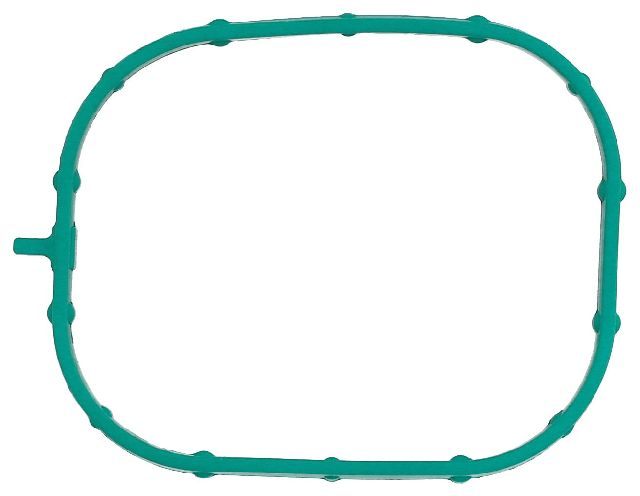
Aftermarket price range: $70-$120 - Intake Manifold Gasket Set
(OEM #12626354)— Vacuum leaks from aged or failed intake gaskets are a common source of unmetered air leading to lean codes.
Trusted brands: ACDelco, Fel-Pro
OEM price range: $60-$90
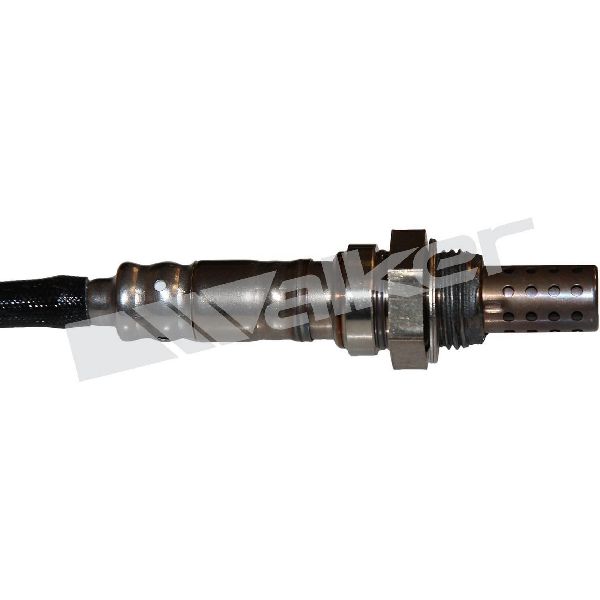
Aftermarket price range: $40-$70 - Upstream Oxygen Sensor (Bank 2, Sensor 1)
(OEM #12666673)— While less common to be the root cause, a failed O2 sensor can cause this code and may need replacement if it fails diagnostic tests, especially after exhaust work.
Trusted brands: ACDelco, Denso, NTK
OEM price range: $80-$120
Aftermarket price range: $50-$90
Related Codes That Often Appear With This One
- P0171 — This is the code for 'System Too Lean (Bank 1)'. When P0171 and P0174 appear together, it strongly points to a problem affecting both engine banks, such as the MAF sensor, a major vacuum leak at the intake manifold, or a fuel delivery issue.
- P0101 — This code means 'Mass Air Flow (MAF) Circuit Range/Performance'. It often accompanies P0174 because a dirty or failing MAF sensor is a primary cause of the incorrect air measurement that leads to the lean condition. TSB #PIP5446A specifically lists P0101 along with lean codes as a symptom of the MAF housing flashing issue.
Technical Service Bulletins (TSBs) & Recalls
- PIP5446A: Mentions that lean codes (P0171/P0174) and rich codes (P0172/P0175), sometimes with P0101, can be caused by excessive plastic casting flash in the air filter housing near the MAF sensor.
Platform-Specific Known Issues
- A known issue, documented in GM TSB #PIP5446A, involves excess plastic flashing inside the MAF sensor housing that can disrupt airflow and trigger P0174 and/or P0171 codes. The fix is to inspect and carefully remove the flashing or replace the air filter housing lid.
- On supercharged Z06 models, a vacuum line located under the supercharger bypass valve mechanism can become disconnected, causing a significant vacuum leak that triggers lean codes. This can be difficult to see and is best found with a smoke test.
Mechanic-Grade Diagnostic Values
- Long Term and Short Term Fuel Trims (LTFT/STFT) — expected: Should not exceed ±10% at idle or steady RPM.. Failure: A Long Term Fuel Trim for Bank 2 consistently above +15%, with the code setting around +23% to +25%, indicates a lean condition.
- High-Pressure Fuel Rail Pressure (Scan Tool) — expected: Varies with load. Around 300-600 PSI at idle, increasing to over 2,100 PSI under load.. Failure: If actual pressure does not meet desired pressure under load, it indicates a fuel delivery problem.
- Low-Pressure Fuel System Pressure (Mechanical Gauge) — expected: High 40s to low 50s PSI at idle, rising to around 70 PSI at wide-open throttle.. Failure: Pressure that is significantly lower or does not rise with demand points to a weak in-tank pump or clogged filter.
- Mass Airflow (MAF) Sensor Reading at Idle — expected: Approximately 5 to 9 grams per second (g/s) for a healthy, warm engine at idle.. Failure: Readings that are significantly off or do not increase smoothly with RPM can indicate a faulty sensor.
- Upstream O2 Sensor (Bank 2, Sensor 1) Voltage — expected: Rapidly fluctuating between approximately 0.1V and 0.9V in closed loop.. Failure: A sensor that is stuck low (e.g., < 0.2V), stuck high, or responds very slowly is likely faulty.
Scan Tool Commands That Help
- GDS2 / Professional Scan Tool: Fuel Trim Reset — After performing a repair for a fuel system issue (like replacing an injector, fixing a vacuum leak, or cleaning the MAF), resetting the fuel trims forces the ECM to relearn the baseline fuel delivery strategy immediately, rather than slowly adapting over time.
- DIY Method (No Scan Tool): ECM/Fuel Trim Reset — Disconnecting the negative battery terminal for several minutes can reset the ECM and its learned fuel trims. Some forum users suggest touching the disconnected cables together to ensure all capacitors are discharged. This is a less precise method but is often effective after a repair.
Wiring & Ground Locations
- G101 — Located at the left front of the engine, lower block.. This ground is critical as it serves the Engine Control Module (ECM), Mass Air Flow (MAF) Sensor, and Intake Air Temperature (IAT) Sensor. A poor connection here can cause erratic sensor readings, leading directly to fuel trim problems and codes like P0174.
- G102 — Located at the left rear of the engine.. This ground serves all 8 ignition coils. While not a direct cause of a lean code, a poor ground here could lead to weak spark and misfires, which can sometimes be misinterpreted by the O2 sensors or accompany lean conditions.
- O2 Sensor Harness — Runs down the transmission tunnel area near the exhaust pipes.. After the installation of aftermarket long-tube headers, the O2 sensor wiring harness is susceptible to melting if not properly secured away from the hot exhaust tubes. A shorted or damaged wire can cause incorrect O2 sensor readings, leading to P0174.
Real Owner Repair Stories
- CorvetteForum user with a 2015 Z06 M7 (2015 Chevrolet Corvette Z06 (Supercharged)) — P0171 and P0174 codes appeared after replacing the high-pressure fuel pump.
❌ Tried (didn't work) Extensive visual inspection of all vacuum lines.
✅ What actually fixed it A vacuum line located under the supercharger's bypass valve mechanism had slipped off its nipple but looked connected. A smoke test immediately revealed the leak. Reconnecting the hose solved the codes. - CorvetteForum user with a C7 Z06 (Chevrolet Corvette C7 Z06 with ported supercharger, 103mm throttle body, and aftermarket catch can.) — P0171 and P0174 codes with Long Term Fuel Trims at +30%.
❌ Tried (didn't work) Swapping the aftermarket throttle body back to the stock unit.
✅ What actually fixed it The drain valve on the recently installed aftermarket catch can had been left open, creating a massive, unmetered vacuum leak. Closing the valve immediately corrected the fuel trims and cleared the codes. - CorvetteForum user with a 2016 Z51 (2016 Chevrolet Corvette Z51 with supercharger and long-tube headers.) — P0174 code only, engine stumbling, and misfires on Bank 2. LTFT for Bank 2 was pegged at +30%.
❌ Tried (didn't work) Spraying carb cleaner to check for vacuum leaks (none found).
✅ What actually fixed it The problem only occurred when the engine was warm (in closed loop). Graphing the O2 sensors showed the Bank 2, Sensor 1 was stuck lean. The issue was traced to the O2 sensor wiring harness, which had melted against the aftermarket header pipe, causing a short. Repairing the wiring fixed the issue. - Reddit user r/MechanicAdvice (2014 Chevrolet Corvette Stingray with Holley Intech intake and Diablo tune.) — Persistent P0171 and P0174 codes immediately after using Seafoam top-engine cleaner.
❌ Tried (didn't work) Cleaning and replacing MAF sensor, Replacing MAP sensor, Cleaning throttle body, Replacing passenger-side O2 sensor, Checking for vacuum leaks with propane
✅ What actually fixed it The owner took the car back to their tuner. The tuner re-flashed the custom tune, which resolved the issue. The theory was that the Seafoam treatment or the process of restoring to the factory tune somehow corrupted the tune file, causing the lean condition.
"I Checked Everything" — The Actual Cause
- In one documented case, a user with P0171/P0174 spent significant time troubleshooting, including replacing sensors. The final fix was having the custom engine tune re-flashed by a professional tuner, suggesting the tune file itself had become corrupted, causing the lean condition despite no mechanical faults.
OEM Part Supersession History
12671624→23428242— Standard part revision and update by the manufacturer.
Model Year Variations Within This Range
- 2014: The 2014 model year used the 6-speed 6L80 automatic transmission. From 2015-2019, the automatic option was the 8-speed 8L90. This does not directly affect the P0174 code causes but is a key difference in the powertrain.
- 2014-2019: While the base LT1 engine remained consistent, GM offered flow-rated fuel injectors designated as 'High,' 'Nominal,' and 'Low.' Replacing a single bank of injectors with a different flow rating than the original bank could potentially cause a bank-to-bank fuel trim split, though it should stay within the acceptable +/-10% range.
Diagnostic Flowchart
Other Known Issues on This Vehicle
Issues unrelated to this code that are worth knowing about as an owner of this generation:
- A8 Automatic Transmission Shudder/Vibration 🔴 High — Common issue on 2015-2019 models with the 8-speed automatic. Tends to appear during light throttle acceleration. (Ref: TSB #18-NA-355. The fix involves a 'triple flush' of the transmission fluid with an updated Mobil 1 Synthetic fluid. If caught early, this often resolves the issue permanently.)
- Cracked Wheels (Z06 and Grand Sport) 🔴 High — A widely reported problem on 2015-2019 Z06 and 2017-2019 Grand Sport models, which use wider, cast aluminum wheels. Wheels are prone to bending and cracking even from normal driving or minor road imperfections, leading to air loss and potential blowouts. (Ref: No TSB or recall was issued, but multiple class-action lawsuits were filed. GM eventually created a limited reimbursement program for owners who could prove the damage was from a manufacturing defect.)
- Torque Tube Bearing/Coupler Failure 🟠 Medium — Can occur on all C7 models. Symptoms include a rattling noise at idle or when shutting the engine off, and a noticeable vibration around 1,700-2,500 RPM, even in neutral. Heat from the exhaust is a suspected cause of the rubber couplers and bearings failing prematurely. (Ref: TSB #13-04-17-001B provides critical alignment procedures for reinstallation to prevent crankshaft thrust bearing damage, but does not address the root cause of the failure.)
- Overheating on Track (Z06) 🟠 Medium — Primarily affects 2015-2018 Z06 models during extended high-performance driving or track use, causing the car to enter limp mode. (Ref: No specific TSB, but this led to a class-action lawsuit. Later model years and a parts update from Chevrolet helped mitigate the issue for some owners.)
Used vs. New Parts: Buying Guide for This Vehicle
When a used part is the smart pick: For this repair, used parts like an OEM intake manifold, airbox assembly, or PCV hoses from a low-mileage donor car are generally safe and cost-effective. These parts have low failure rates from wear and are mostly subject to accidental damage or age-related brittleness.
Donor-vehicle mileage cap: roughly under 50000 miles for the part to have meaningful remaining life.
What to inspect on the donor part:
- For intake manifolds, ensure all mounting surfaces are flat and free of cracks, especially around bolt holes and gasket channels.
- For airbox assemblies, check for the specific plastic 'flashing' mentioned in TSB #PIP5446A and ensure all clips and mounting points are intact.
- For hoses, squeeze them to check for pliability. Avoid any that are hard, brittle, or show visible cracks.
OEM-only on this vehicle (don't cheap out):
- Mass Airflow (MAF) Sensor: While some aftermarket brands work, the OEM ACDelco sensor is highly recommended. The ECM is calibrated specifically for its output, and many forum users report that cheaper aftermarket MAF sensors can be poorly calibrated, causing persistent or new fuel trim issues.
Aftermarket brands forum-validated for this vehicle:
- O2 Sensors: Denso and NTK (a brand of NGK) are the original equipment suppliers for many GM vehicles and are considered reliable, often identical to the ACDelco part without the branding.
- Intake Gaskets: Fel-Pro is a widely trusted brand for gaskets and seals and is a reliable alternative to OEM.
Brands owners have reported issues with on this vehicle:
- No-name/generic electronic sensors (MAF, O2): These are frequently cited on forums as being a waste of money, often failing quickly or being dead-on-arrival. It's better to pay more for a known good brand or OEM part.
Real Owner Stories
Aggregated from forums and TSBs cited above. Mileages and costs reflect what owners reported in those sources.
2014 Corvette Z51 6.2L LT1 — 43000 miles
Symptoms: Check engine light for P0171 and P0174 accompanied by a rough idle.
What fixed it: Cleaning the MAF sensor, despite using a dry (non-oiled) aftermarket air filter.
Source hint: CorvetteForum.com - 'OBDII codes P0171 & P0174 (system too lean)'
2015-2019 Corvette Z06 6.2L LT4
Symptoms: P0171 and P0174 codes appearing after the high-pressure fuel pump was serviced; visual inspection showed no obvious leaks.
What fixed it: Reconnecting a vacuum line that had slipped off under the supercharger, which was identified using a $70 smoke machine.
Cost: $70-$70
Source hint: CorvetteForum.com - 'P0171 and P0174 codes after changing High-Pressure Fuel Pump'
2014-2019 Corvette 6.2L LT1
Symptoms: The car ran fine on a cold start (open loop) but developed a misfire and P0174 code once the engine warmed up.
What fixed it: Replacing a failed Bank 2 upstream O2 sensor.
Source hint: CorvetteForum.com - 'Misfire, running rich, and P0174 [Solved]'
Related OBD-II Codes
Frequently Asked Questions
I have a 2014-2019 Corvette with P0174; does GM TSB #PIP5446A apply to my car?
Can my aftermarket oiled air filter cause a P0174 code on my LT1 engine?
I own a supercharged Z06 and have a P0174 code. Is there a specific part I should check?
How can I tell if my P0174 is a vacuum leak or a fuel pump issue using a scan tool?
Should I replace my O2 sensor immediately if I get a P0174 code after installing headers?
Helpful Videos
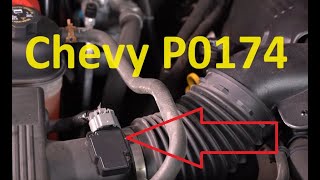
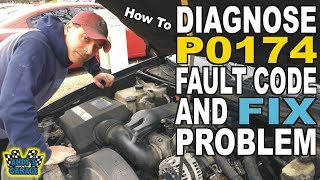
Used OEM Parts in Stock
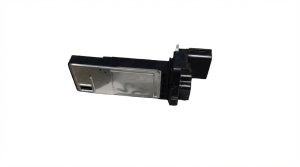
New Aftermarket Parts Available

The information in this article is provided for general reference and educational purposes only. Vehicle specifications, procedures, and part compatibility can vary by production date, trim level, and region. Always consult your vehicle's factory service manual and verify part numbers before purchasing or performing repairs. Safety-critical components such as airbags, seat belts, and braking systems should be installed by a qualified professional.
- Chevrolet Corvette:
- 🧭 Diagnostic Flowchart
- 🎬 Helpful Videos
- 🛍️ Shop This Part
- What's Unique About the 2014-2019 Chevrolet Corvette
- Symptoms You May Notice
- Most Likely Causes
- Rare But Worth Checking
- Diagnosis Steps
- Parts You'll Likely Need
- Related Codes That Often Appear With This One
- Technical Service Bulletins (TSBs) & Recalls
- Platform-Specific Known Issues
- Mechanic-Grade Diagnostic Values
- Scan Tool Commands That Help
- Wiring & Ground Locations
- Real Owner Repair Stories
- "I Checked Everything" — The Actual Cause
- OEM Part Supersession History
- Model Year Variations Within This Range
- Other Known Issues on This Vehicle
- Used vs. New Parts: Buying Guide for This Vehicle
- Real Owner Stories
- 2014 Corvette Z51 6.2L LT1 — 43000 miles
- 2015-2019 Corvette Z06 6.2L LT4
- 2014-2019 Corvette 6.2L LT1
- Related OBD-II Codes
- Frequently Asked Questions
- 🎟️ Get 5% Off