

P0174 on 2010-2017 Chevrolet Equinox V6: Causes for System Too Lean Bank 2
For a 2010-2017 Equinox with a V6, code P0174 is most often caused by a vacuum leak from a cracked air intake duct or a faulty PCV system component. A dirty Mass Airflow (MAF) sensor is another common culprit; cleaning it is a good first step.
- Start your diagnosis by thoroughly inspecting the plastic air intake duct between the air filter and the engine for cracks. This is a very common failure.
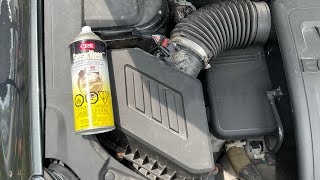
- A dirty Mass Airflow (MAF) sensor is another likely culprit. Cleaning it with a dedicated spray is a cheap and easy diagnostic step.
- Check the PCV hoses for cracks or loose connections, as this is another known weak point on these V6 engines.
- Do not replace the O2 sensor first. It is almost always correctly reporting a lean condition caused by a vacuum leak or sensor issue elsewhere.
- If both P0171 (Bank 1) and P0174 (Bank 2) are present, the cause is almost certainly a large vacuum leak or MAF sensor problem affecting the entire engine.
What's Unique About the 2010-2017 Chevrolet Equinox
On the second-generation Equinox V6 (both the 3.0L and 3.6L), a very common failure point is the plastic air intake duct and resonator assembly. Constant heat and vibration cause the plastic to become brittle and crack, creating a significant vacuum leak after the MAF sensor. This leak is a frequent cause for both P0171 and P0174 codes to appear simultaneously. GM also issued bulletins for these engines regarding lean codes caused by leaks at the PCV tube connection to the intake manifold, making the PCV system another key area to inspect.
Symptoms You May Notice
- Check Engine Light is on
- Rough or unstable idle
- Engine hesitation or stumbling on acceleration
- Reduced engine power
- Hissing or sucking noise from the engine bay due to a vacuum leak
- Decreased fuel economy
- Engine stalling
- Replacing the oxygen (O2) sensor. The O2 sensor is often just doing its job by correctly reporting the lean condition. The P0174 code means the sensor is working; the problem lies elsewhere in the air or fuel system.
Most Likely Causes
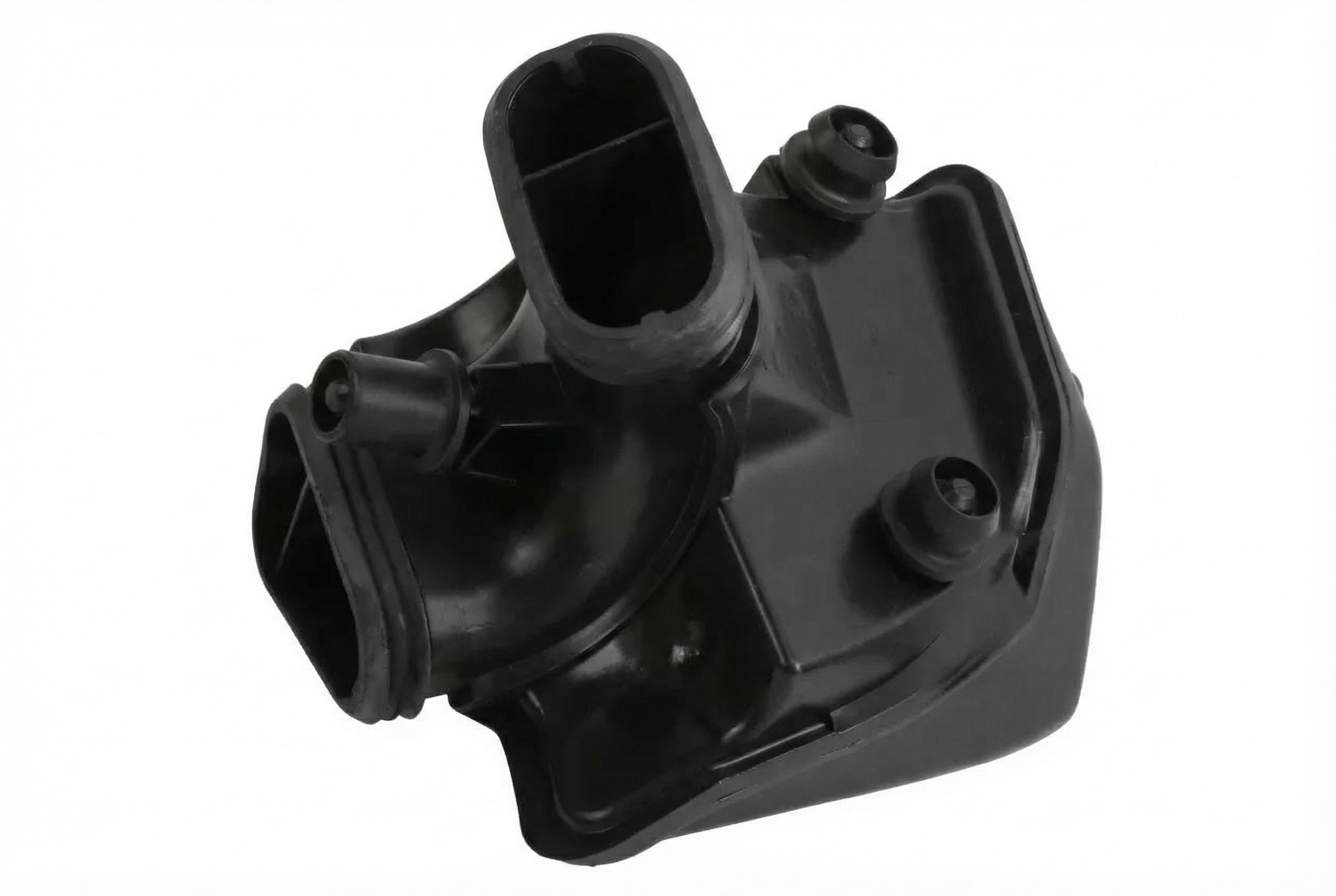
- Cracked Air Intake Duct or Resonator 🔴 High Probability → Shop Engine Air Intake Resonator The plastic components in the intake system between the MAF sensor and the throttle body become brittle from engine heat and vibration, leading to cracks. This is a widely documented failure on this platform and its platform mates like the GMC Terrain and Cadillac SRX.
How to confirm: Visually inspect the entire air intake tube and the plastic resonator box for cracks, especially in the accordion sections or where components join. Wiggling the intake tube with the engine running may cause a change in idle speed. 🎬 See how to diagnose these lean codes on a GM V6. A smoke test is the most definitive way to confirm a leak.
Typical fix: Replace the cracked air intake duct or resonator assembly. This is a single component.
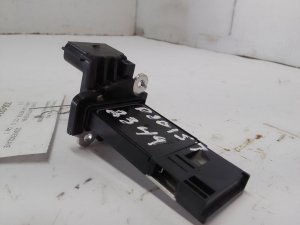
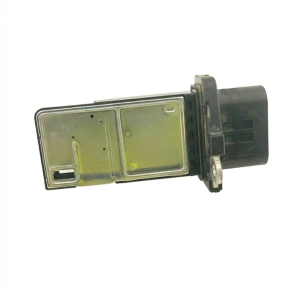
Est. part cost: $60-$120 - Dirty or Faulty Mass Airflow (MAF) Sensor 🟡 Medium Probability → Shop Fuel Injection Air Flow Meter Oil vapors from the PCV system or fine dust can contaminate the delicate sensor wires, causing it to under-report the amount of air entering the engine. The ECM then commands too little fuel, creating a lean condition.
How to confirm: Remove the sensor and inspect for contamination. Cleaning with a dedicated MAF sensor cleaner is a good first step. A scan tool can monitor MAF readings; they should increase smoothly with RPM.
Typical fix: Clean the MAF sensor with a specialized, electronics-safe cleaner. If cleaning does not resolve the issue, the sensor must be replaced.
Est. part cost: $10-$150 - PCV System Vacuum Leak 🟡 Medium Probability GM issued bulletin PIE0433A for the 3.6L engine regarding lean codes (P0171/P0174) due to leaks at the PCV foul air tube connection to the intake manifold. The plastic tubes and rubber elbows can crack or become loose. In cold weather, the system can also freeze, leading to pressure issues and leaks.
How to confirm: Inspect all PCV hoses, tubes, and connections for cracks, brittleness, or loose fittings. Pay special attention to the tube connecting to the rear of the intake manifold. A smoke test can help pinpoint leaks in the PCV system.
Typical fix: Replace the faulty PCV tube, valve, or grommet. The PCV tube is often sold as an assembly.
Est. part cost: $20-$60 - Leaking Intake Manifold Gaskets ⚪ Low Probability → Shop Engine Intake Manifold
How to confirm: With the engine running, spray short bursts of carburetor cleaner or propane around the edges of the intake manifold where it meets the cylinder heads. If the engine idle changes, a leak is present. A smoke test is a safer and more effective method.
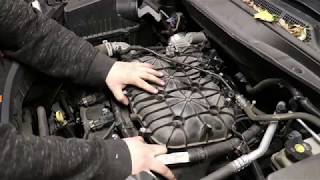
Typical fix: Replace the intake manifold gaskets. This is a more labor-intensive repair. 🎬 Watch this walkthrough for removing the 3.6L intake manifold.
Est. part cost: $40-$100
Rare But Worth Checking
- Low Fuel Pressure: A weak fuel pump or clogged filter can cause lean conditions. This usually affects both banks and may set P0171 and P0174 together. Check fuel pressure with a mechanical gauge if vacuum leaks and MAF issues are ruled out.
- Clogged or Faulty Fuel Injectors: → Shop Fuel Injector A fuel injector on Bank 2 may be clogged or failing, preventing it from delivering enough fuel. This is less common than vacuum leaks but can be a cause if the lean code is isolated to one bank and no other cause is found.
- Exhaust Leak: A leak in the exhaust manifold or pipe before the upstream O2 sensor on Bank 2 can allow oxygen to be pulled into the exhaust, causing a false lean reading.
- Fuel Rail Mismatch: TSB Bulletin #PIP5187 notes that a P0174 code may occur after a cylinder head replacement if the replacement head had fuel injectors already installed; the bulletin recommends replacing the fuel rail with the original fuel rail from the vehicle.
Diagnosis Steps
- Check for other stored DTCs that could provide more clues (e.g., P0171, P0300, P0101).
- Visually inspect the entire air intake system from the air filter box to the throttle body. Pay close attention to the plastic resonator and flexible ducts for any cracks or loose connections.
- Inspect all accessible vacuum and PCV hoses for cracks, brittleness, or disconnection. Pay special attention to the PCV tube connecting to the intake manifold.
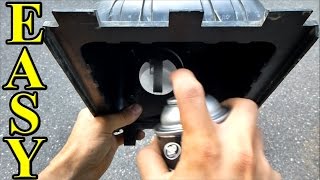
- If no obvious leaks are found, clean the Mass Airflow (MAF) sensor using a dedicated MAF sensor cleaner. 🎬 Watch: How to clean the MAF sensor on an Equinox. Do not touch the sensor wires.
- If the code persists, perform a smoke test. This involves injecting smoke into the intake system to easily visualize any hard-to-see vacuum leaks from gaskets, seals, or hidden cracks.
- While monitoring live data on a scan tool, check the long-term fuel trims for Bank 2 (and Bank 1). High positive numbers (e.g., > +20%) confirm the lean condition. Watch the short-term fuel trims while spraying starter fluid or propane around potential leak areas (use extreme caution); a jump in the readings indicates a leak.
- If no vacuum leaks are found, test fuel pressure using a mechanical gauge to ensure the fuel pump and regulator are functioning correctly.
- As a final step, consider testing the Bank 2 fuel injectors and the upstream O2 sensor, though these are less likely to be the root cause.
Parts You'll Likely Need
- Air Intake Duct / Resonator Assembly
(OEM #23497383 (supersedes multiple older part numbers))— This is the most common failure point on this platform leading to a vacuum leak and a P0174 code. This part fits both V6 and 2.4L models across the generation.
Trusted brands: ACDelco, Dorman
OEM price range: $100-$160
Aftermarket price range: $60-$120 - Mass Airflow (MAF) Sensor
(OEM #ACDelco 213-4691 (for 3.6L LFX))— A dirty or failing MAF sensor is a frequent cause of lean codes when it under-reports airflow. Cleaning is a first step, but replacement is sometimes necessary.
Trusted brands: ACDelco, Bosch, Delphi
OEM price range: $120-$200
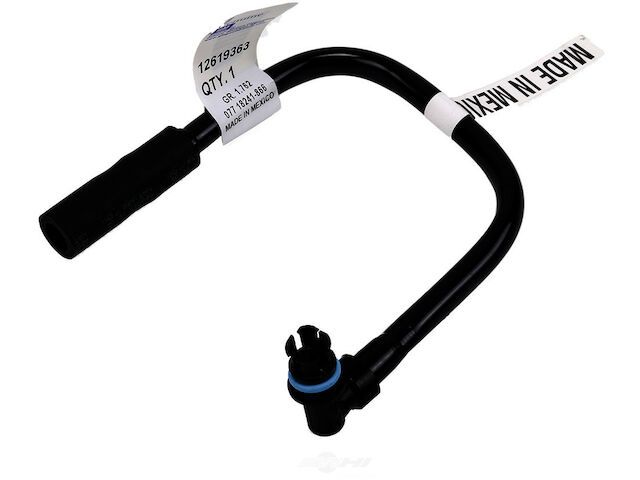
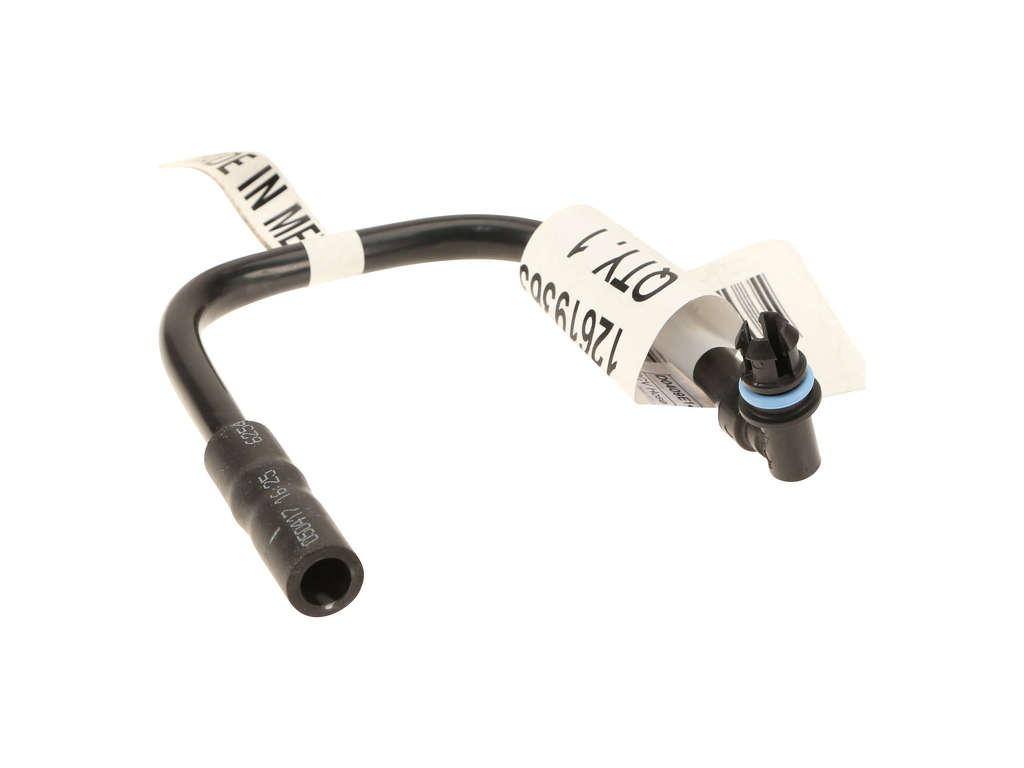
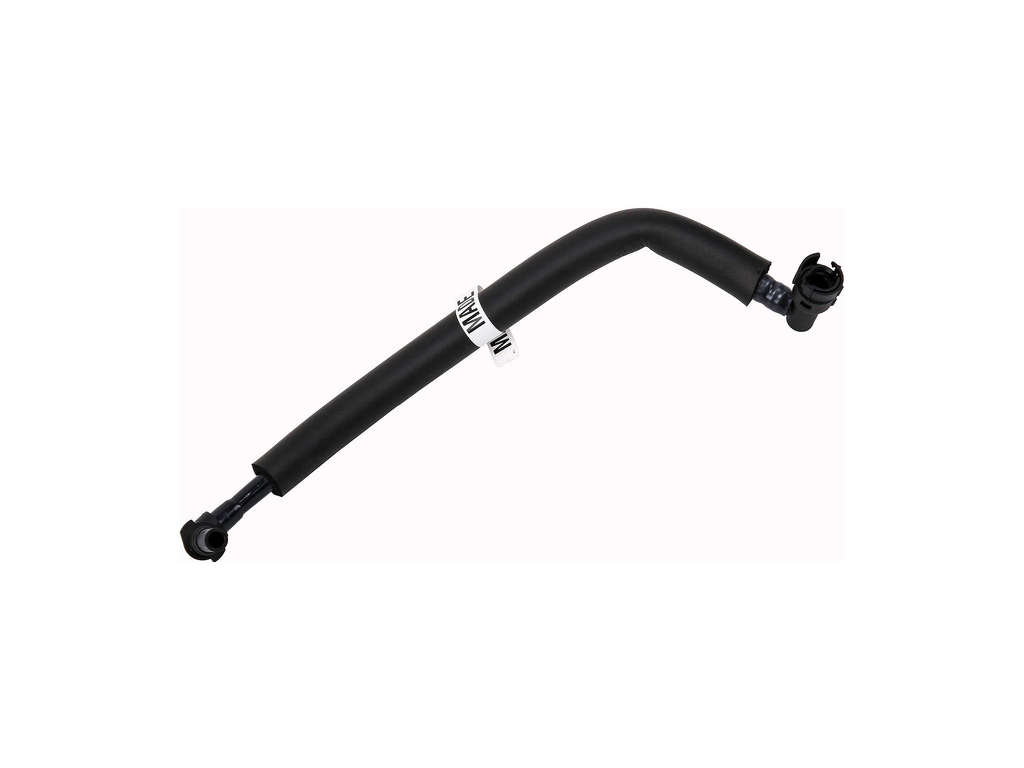
Aftermarket price range: $70-$150 - PCV Hose / Tube
(OEM #ACDelco 12673866 (for 3.6L LFX))— The PCV hoses, particularly the connection to the intake manifold, are known to crack or leak, causing a vacuum leak as noted in GM service information.
Trusted brands: ACDelco, GM Genuine
OEM price range: $25-$50
Aftermarket price range: $15-$35
Related Codes That Often Appear With This One
- P0171 — This is the lean code for Bank 1. When both P0171 and P0174 are present, it strongly indicates a problem affecting the entire engine, such as a cracked air intake duct, a faulty MAF sensor, or low fuel pressure.
- P0300 — A 'Random/Multiple Cylinder Misfire' code. A severe lean condition can prevent proper combustion, leading to misfires across multiple cylinders.
- P0496 — An 'EVAP Flow During a Non-Purge Condition' code. A stuck-open EVAP purge solenoid can create a vacuum leak, which can be significant enough to cause lean codes like P0174.
Technical Service Bulletins (TSBs) & Recalls
- {'id': 'PIE0433A', 'description': 'Investigates lean codes P0171/P0174 related to leaks at the PCV foul air tube connection to the intake manifold on 3.6L engines.'}
- {'id': 'Special Coverage 14882', 'description': 'Addresses clogged PCV orifice on the 2.4L engine, but highlights GM\'s acknowledgement of PCV system issues on the platform that can cause pressurization and leaks.'}
- {'id': 'TSB Bulletin #PIP5187', 'description': 'Addresses Malfunction Indicator Lamp on with DTC P0174 after cylinder head replacement; advises replacing the fuel rail with the original rail if the replacement head had injectors pre-installed.'}
- {'id': 'TSB Bulletin #PIE-0433A', 'description': 'Engineering Information regarding Malfunction Indicator Lamp (MIL) on with DTCs P0171 and/or P0174 Fuel Trim System Lean.'}
Platform-Specific Known Issues
- GM Engineering Information bulletin PIE0433A was issued to investigate P0171/P0174 codes on 3.6L engines, specifically pointing to leaks at the PCV foul air tube connection to the intake manifold.
- The plastic air intake resonator assembly is highly prone to cracking from heat and vibration, causing a significant vacuum leak that often triggers both P0171 and P0174.
Mechanic-Grade Diagnostic Values
- Mass Air Flow (MAF) Sensor Reading at Idle — expected: Approximately 3.0 g/s for the 3.0L engine and 3.6-4.8 g/s for the 3.6L engine at warm idle.. Failure: A significantly lower reading suggests a vacuum leak (unmetered air entering after the sensor). A significantly higher reading can indicate a faulty sensor.
- Long-Term Fuel Trim (LTFT) at Idle — expected: Between -10% and +10%.. Failure: For P0174, the LTFT for Bank 2 will be a high positive number, often exceeding +20%, as the ECM adds fuel to compensate for the lean condition.
- LTFT Behavior: Idle vs. 2500 RPM — expected: Fuel trims should remain relatively stable across the RPM range.. Failure: High positive trims at idle (e.g., +20%) that decrease significantly towards 0% at a steady 2500 RPM strongly indicate a vacuum leak. High trims that persist at higher RPMs point more toward a MAF sensor or fuel delivery issue.
- Low-Pressure Fuel System Pressure (In-tank pump) — expected: 35 to 75 PSI.. Failure: Pressure below the specified range indicates a weak in-tank fuel pump or a clogged fuel filter.
- High-Pressure Fuel System Pressure (Engine-mounted pump) — expected: Desired vs. Actual pressure should match closely on a scan tool, typically 500-2900+ PSI depending on load.. Failure: If the actual pressure cannot meet the desired pressure, it may indicate a failing high-pressure fuel pump (HPFP), which is a more likely cause of lean codes on these direct-injection engines than the low-pressure pump.
Scan Tool Commands That Help
- GDS2 / Tech2: Fuel Injector Balance Test — To isolate a potentially clogged or failing fuel injector on Bank 2 after vacuum leaks and MAF issues have been ruled out. The tool fires each injector and measures the fuel rail pressure drop, allowing comparison between cylinders.
- GDS2 / Tech2: Cylinder Power Balance — To confirm which cylinder(s) are not contributing correctly, which can be caused by a lean condition on one cylinder due to a faulty injector. The tool deactivates cylinders one by one and measures the RPM drop.
- GDS2 / High-End Aftermarket Scan Tool: Fuel Trim Reset — After replacing a component that caused the lean code (like an intake duct, MAF sensor, or fuel injector), this function must be used to clear the ECM's learned long-term fuel trim values, allowing for a faster re-learn and confirmation of the fix.
- GDS2 / High-End Aftermarket Scan Tool: EVAP Purge/Seal — If a stuck-open EVAP purge solenoid is suspected (especially if P0496 is also present), this command allows the technician to command the valve closed and monitor short-term fuel trims. If the trims immediately start to drop towards 0%, it confirms the purge valve was the source of the vacuum leak.
Wiring & Ground Locations
- G103 / G105 / G112 — For the 3.6L V6: G103 is on the left front of the engine compartment under the battery. G105 is on the left rear of the engine. G112 is also on the left rear of the engine.. The Engine Control Module (ECM) and its critical sensors (MAF, O2 sensors) rely on these grounds. A corroded or loose ground at these locations can cause erratic sensor readings, leading to incorrect fuel calculations and codes like P0174.
- ECM Location — The Engine Control Module (ECM) is located in the left front of the engine compartment.. Knowing the ECM's location is critical for checking for corrosion at its connectors or performing pin-out tests on sensor circuits (e.g., MAF, O2 sensors) if a wiring issue is suspected.
- Engine Harness Chafe Points — A known issue on GM V6 platforms involves the engine harness rubbing against engine brackets or the back of the cylinder head.. While more commonly associated with injector circuit codes, chafing could potentially affect O2 sensor or other critical sensor wiring, leading to erroneous signals that could contribute to a P0174 code.
Real Owner Repair Stories
- Reddit user on r/AskMechanics (2011 Chevrolet Equinox LT 3.0L V6) — P0171 and P0174 codes present.
❌ Tried (didn't work) Replaced the MAF sensor, Replaced one of the O2 sensors
✅ What actually fixed it A shop diagnosed a vacuum leak at the PCV valve/hose system. The owner purchased the part to replace it, which involves removing the intake plenum to access the connection point on the valve cover. This aligns with GM's service information about PCV leaks causing these codes. - YouTube channel 'New Level Auto' (on a similar GM 3.6L LFX engine) (2012 Chevrolet Traverse 3.6L V6) — P0171 and P0174 codes with very high Long Term Fuel Trims (+36% and +40%).
❌ Tried (didn't work) The mechanic immediately suspected the most common cause, so no other parts were replaced.
✅ What actually fixed it The EVAP purge solenoid was stuck open. The mechanic confirmed this by disconnecting the electrical plug with the engine running and feeling for vacuum at the valve's port. Plugging the port with a finger caused the fuel trims to drop immediately, confirming it as the source of the vacuum leak.
"I Checked Everything" — The Actual Cause
- A common scenario for P0174 on these GM V6 engines is for the vehicle to pass a smoke test, leading to the incorrect assumption that no vacuum leak exists. The actual cause is often a contaminated or failing Mass Airflow (MAF) sensor that is not leaking but is under-reporting the amount of air entering the engine. The ECM injects too little fuel based on this bad data, creating a lean condition that perfectly mimics a vacuum leak. The fix is to clean or, more often, replace the MAF sensor.
OEM Part Supersession History
Multiple older numbers, e.g., 22880664 (for 3.6L)→23497383— GM consolidated part numbers for the air intake duct/resonator assembly. The new part number covers a wider range of models and years.
Heads up: While 23497383 is listed for both 2.4L and V6 models, always verify fitment with the vehicle's VIN, as minor connection differences may exist between the 3.0L and 3.6L engines.
Model Year Variations Within This Range
- 2010-2012: These models used the 3.0L V6 engine (LF1). While susceptible to similar vacuum leaks, part numbers for the intake manifold, PCV components, and some sensors are specific to this engine.
- 2013-2017: These models used the updated 3.6L V6 engine (LFX). This engine is more commonly associated with the cracked air intake resonator and the clogged PCV orifice within the valve cover as causes for P0174. The fuel system is direct injection, featuring both a low-pressure and high-pressure fuel pump.
Diagnostic Flowchart
Other Known Issues on This Vehicle
Issues unrelated to this code that are worth knowing about as an owner of this generation:
- Timing Chain Stretch (3.0L LF1 & 3.6L LFX) 🔴 High — Common on earlier models, particularly pre-2012, but can occur on all years, typically after 100,000 miles. Exacerbated by extended oil change intervals. (Ref: Multiple TSBs exist regarding timing chain wear and oil life monitor reprogramming for earlier GM 3.6L engines.)
- High-Pressure Fuel Pump (HPFP) Failure 🟠 Medium → Shop Fuel Pump — Can occur at various mileages, leading to stalling, rough running, and specific fuel system trouble codes.
- Clogged/Frozen PCV System 🟠 Medium — More common in cold climates. Moisture in the PCV system can freeze, causing crankcase over-pressurization, leading to blown seals (e.g., rear main seal) and oil leaks. (Ref: GM issued Special Coverage 14882 for the related 2.4L engine, highlighting the severity of this issue.)
- Water Pump Failure 🟠 Medium — The water pump is driven by the timing chain on the 3.6L LFX. A failure can cause coolant leaks and overheating, and replacement is labor-intensive.
Used vs. New Parts: Buying Guide for This Vehicle
When a used part is the smart pick: A used part from a junkyard can be a cost-effective option for structural components like the intake manifold if it's confirmed to be free of cracks. However, for the most common failure items related to P0174, new parts are strongly recommended.
Donor-vehicle mileage cap: roughly under 60000 miles for the part to have meaningful remaining life.
What to inspect on the donor part:
- For an intake duct/resonator: Inspect THOROUGHLY for any hairline cracks, especially in the flexible bellows and at seams. Squeeze the plastic; if it feels brittle or makes crackling sounds, reject it.
- Check the date code on the part if visible; a newer part is preferable.
- Avoid parts from vehicles that show signs of a major front-end collision, which could have stressed the plastic components.
OEM-only on this vehicle (don't cheap out):
- Mass Airflow (MAF) Sensor: Aftermarket MAF sensors are notoriously unreliable for GM vehicles and can cause persistent performance issues or incorrect fuel trims. It is highly recommended to use an ACDelco or GM Genuine part.
- Oxygen (O2) Sensors: If an O2 sensor is confirmed to be faulty, using OEM (ACDelco) or OEM-supplier (e.g., Denso) is critical for accurate readings. Cheaper sensors often have different response characteristics that the ECM cannot properly interpret.
Aftermarket brands forum-validated for this vehicle:
- Dorman: Offers a widely available replacement for the failure-prone air intake duct/resonator assembly.
Brands owners have reported issues with on this vehicle:
- No-name/white-box electronic sensors: Avoid unbranded, ultra-cheap MAF sensors and O2 sensors from online marketplaces, as they frequently fail out of the box or have incorrect calibrations.
Real Owner Stories
Aggregated from forums and TSBs cited above. Mileages and costs reflect what owners reported in those sources.
2011 Chevy Equinox LT 3.0L V6
Symptoms: Check engine light with codes P0171 and P0174. Owner attempted to fix it by changing the MAF sensor and one O2 sensor, but the codes persisted.
What fixed it: A shop identified a leak by the PCV valve where the part snaps into the valve cover, requiring the removal of the plenum to access the connection.
Source hint: Reddit - r/AskMechanics - '2011 Chevy equinox LT 3.0 codes P0171 P0174'
Related OBD-II Codes
Frequently Asked Questions
Does GM Bulletin PIE0433A apply to my 3.6L Equinox regarding the P0174 code?
I have a 2011 Equinox with P0174; why did the shop say the intake resonator is the problem?
Can cold weather cause my Equinox to throw a P0174 lean code?
Is there a special coverage for PCV issues that might relate to my lean condition?
If I have a P0174, should I replace the timing chain on my 3.6L V6?
Why is my GMC Terrain showing the same P0174 code as the Chevrolet Equinox?
Helpful Videos
Used OEM Parts in Stock
New Aftermarket Parts Available

The information in this article is provided for general reference and educational purposes only. Vehicle specifications, procedures, and part compatibility can vary by production date, trim level, and region. Always consult your vehicle's factory service manual and verify part numbers before purchasing or performing repairs. Safety-critical components such as airbags, seat belts, and braking systems should be installed by a qualified professional.
- Chevrolet Equinox:
- 🧭 Diagnostic Flowchart
- 🎬 Helpful Videos
- 🛍️ Shop This Part
- What's Unique About the 2010-2017 Chevrolet Equinox
- Symptoms You May Notice
- Most Likely Causes
- Rare But Worth Checking
- Diagnosis Steps
- Parts You'll Likely Need
- Related Codes That Often Appear With This One
- Technical Service Bulletins (TSBs) & Recalls
- Platform-Specific Known Issues
- Mechanic-Grade Diagnostic Values
- Scan Tool Commands That Help
- Wiring & Ground Locations
- Real Owner Repair Stories
- "I Checked Everything" — The Actual Cause
- OEM Part Supersession History
- Model Year Variations Within This Range
- Other Known Issues on This Vehicle
- Used vs. New Parts: Buying Guide for This Vehicle
- Real Owner Stories
- 2011 Chevy Equinox LT 3.0L V6
- Related OBD-II Codes
- Frequently Asked Questions
- 🎟️ Get 5% Off